Gemma Banham

1.9K posts

Gemma Banham

Gemma Banham

@BanhamGemma

Nephrologist. Interests vasculitis/immune mediated kidney disease, dysautonomia, mast cells. Translational medicine/therapeutics PhD. Views own
Coventry, England Katılım Ocak 2016
592 Takip Edilen496 Takipçiler
Gemma Banham
Gemma Banham@BanhamGemma·
@angryhacademic When offering I will ask a patient whether they feel psychological support would be helpful & what they would like to focus on. I say that some find it useful but others don't. What info do you think people should be given?
English
1
0
1
32
Gemma Banham
Gemma Banham@BanhamGemma·
@angryhacademic We have a psychologist who offers individual therapy (opt-in following referral). When I asked was told it was often ACT based. Had few who did not go back after 1st session but most have said useful. There is a clear benefit of support from specialist nurses.
English
2
0
1
36
Harriet Carroll: Long Covid Scientific Consultancy
Kidney disease risk is higher in those who have experienced traumatic childhood events. Papers discuss how trauma impacts biology, and how improving childhood experiences may be a preventative measure. They dont suggest therapy as a treatment/cure for kidney disease.
English
1
1
10
501
Gemma Banham
Gemma Banham@BanhamGemma·
@angryhacademic It's a completely different landscape to the 'chronic illness' world. Though are overlaps. Hopefully one day all care comparable and patients will be able to access targeted treatments, supportive care, MDT support, trials, specialist centres etc.
English
0
0
1
26
Gemma Banham
Gemma Banham@BanhamGemma·
@angryhacademic I do think the 'psychologically' targeted therapies impact disease activity too. By modulating ANS, inflammation. Kidney disease itself is traumatic & it is really important that we recognise this and are trauma informed. Same mechanisms as ACE at play I guess if don't.
English
1
0
0
26
Gemma Banham
Gemma Banham@BanhamGemma·
@angryhacademic It does help that there are clear biomarkers (creatinine, ACR, BP etc) and histological patterns of disease. Lots of autoantibody associations. But we are also comfortable treating seronegative conditions, with research identifying the antibodies directing/stratifying therapy.
English
1
0
1
38
Gemma Banham
Gemma Banham@BanhamGemma·
@JackHadfield14 @TLDnoR A lot of studies in other diseases exclude the most severe patients. But that tends to be where there is established tissue damage so too late to impact. Or would be unethical not to give a standard of care treatment. V different here re choice treatment. ?? re damage
English
0
0
1
9
Jack | amatica health
Jack | amatica health@JackHadfield14·
There’s a common argument that we need validated biomarkers before running clinical trials in Long COVID and ME/CFS. I think this is wrong. First, you don’t need disease-specific biomarkers to track whether a treatment is working. Nearly all clinical trials across medicine rely on symptom-based endpoints. Change in disease status is measured through patient-reported outcomes, functional capacity, and clinical assessments. This is standard. It’s also what we care about, do we care if biomarker X improved if function is still the same? Yes for research, no for approving that drug, which is the purpose of the trial. Second, biomarkers can help guide which drugs are worth trialing, but their absence isn’t a blocker. We already have plausible mechanistic targets. There’s evidence pointing to mitochondrial dysfunction, so there’s logic to try mitochondrial drugs etc. Where biomarkers genuinely matter is in identifying responding subgroups, and this is a different problem than having a “disease biomarker.” It’s exploratory, study-specific work: you run omics-based blood profiling on trial participants, or leverage established subgrouping frameworks, and look for signatures that predict who responds and who doesn’t. That’s valuable post analysis, not a prerequisite. What actually needs to change is the study design itself. Trials in this space need to stop recruiting patients too early in their illness. Enrolling people within the first year creates artificially inflated placebo response rates, because natural improvement is still occurring. Trials also need to run far longer than the one-to-three-month durations that are common now. Six to twelve months is more realistic for detecting meaningful therapeutic effects. In mastocytosis, a disease with mast cell involvement that parallels the theorized mast cell dysfunction in Long COVID and ME/CFS, the most promising therapeutics showed significantly greater improvements at six months and one year compared to short-term endpoints. Combine longer trials and later-stage recruitment with the subgroup biomarker exploration described above, and the clinical trial landscape in these diseases improves dramatically. The framing that biomarkers must come first risks becoming an excuse for inaction in diseases where patients are waiting for trials that could start today.
English
10
17
98
9.3K
Gemma Banham
Gemma Banham@BanhamGemma·
@JackHadfield14 @JPeaceJPeace Agree don't need to know everything though. And studies can help define mechanisms if have drug with effect. And secondary & exploratory outcomes to understand mechanism of action. Careful trial design and patient selection key.
English
0
0
1
22
Gemma Banham
Gemma Banham@BanhamGemma·
@JackHadfield14 @JPeaceJPeace Except that treating patients early to prevent progression is important in most diseases, once hit threshold where need treatment. If treat too late may be secondary effects that are difficult to unpick especially if only using PROM. Biomarkers may stratify who to treat with what
English
1
0
1
23
Gemma Banham
Gemma Banham@BanhamGemma·
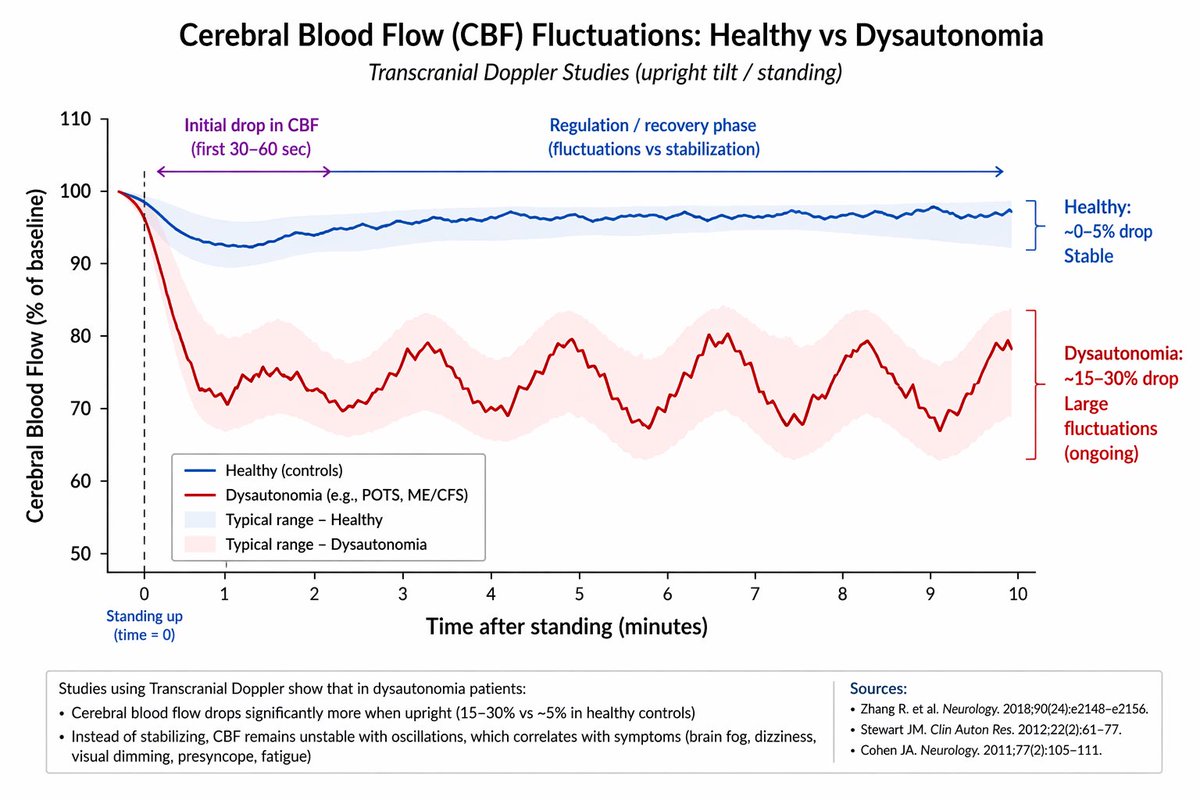
@AutonomicBrad77 @DrMichaelScoma It's not surprising the body gets a little confused and struggles to regulate. Overshoots causing unpleasant symptoms as tries to correct. Throw in some asymmetry and how is the body meant to respond?
English
0
0
0
32
Brad
Brad@AutonomicBrad77·
@DrMichaelScoma yes I agree with you. I believe it is driving all of the cellular dysfunction too.
English
1
0
4
353
Gemma Banham
Gemma Banham@BanhamGemma·
@ImmunoFever Really looking forward to watching it! You've built the suspense well!
English
0
0
0
15
Michal Tal, PhD
Michal Tal, PhD@ImmunoFever·
When I was watching some TEDx talks to try to get a feel for the format when I was preparing for my own, someone very wise suggested I watch this one on invisible illness and it's still in my top 5 favorites: youtu.be/VPWiCGSYtlw?si…
YouTube video
YouTube
Michal Tal, PhD@ImmunoFever

My TEDxMIT talk on The Dominoes of Chronic Illness: Reframing a Medical Mystery won't be on Youtube for another few weeks, so I've tried to capture the essence here in a 29 part thread.

English
1
2
21
2.2K
Gemma Banham
Gemma Banham@BanhamGemma·
@ImmunoFever Really looking forward to seeing more. Objective measurable tests needed to then delve into mechanisms across diseases ➡️ common pathways. Validating pattern recognition at bedside. Was test fatigue an issue? How did you accommodate for this with intense protocol?
English
0
0
0
17
Michal Tal, PhD
Michal Tal, PhD@ImmunoFever·
I can't see how a disease this complex will have a single magic bullet. It's likely going to require a stacked combination of treatments and supportive care. That combo will depend on what's going on for that particular person. It's time to leap towards personalized medicine!!!
Todd Davenport@sunsopeningband

People are reading this like ivabradine didn't work. But I'm reading that it may have worked (pending review of the full study) when used with other things that enhance its effect. This totally tracks with clinical experience. Of course it's not one thing. It's never one thing.

English
5
4
57
2.5K
Sterling Cooley
Sterling Cooley@SterlingCooley·
Neuromodulation is advancing toward precision physiological control. A randomized, double-blind, sham-controlled trial has confirmed the efficacy of transcutaneous auricular vagus nerve stimulation (taVNS) in suppressing systemic inflammation. By applying 80 Hz pulses to the cymba concha for 30 minutes, researchers observed a 22% reduction in TNF-α and a 15% reduction in IL-6. These results were achieved without pharmaceutical intervention. The data reveals a critical distinction: taVNS modulates the immune system without impacting heart rate variability or baroreflex sensitivity. This indicates the stimulation bypasses cardiac vagal tone entirely. Functional MRI confirms the mechanism involves the nucleus tractus solitarius (NTS). This activates a splenic nerve cholinergic pathway that inhibits macrophage cytokine release at the source. This non-invasive approach provides a blueprint for treating chronic conditions like rheumatoid arthritis and IBD. It represents a paradigm shift toward targeted bioelectronic medicine - even possible further applications in preventing Alzheimer's from developing in the first place. Very big news ! pmc.ncbi.nlm.nih.gov/articles/PMC12…
Sterling Cooley tweet media
English
1
0
26
923
Gemma Banham
Gemma Banham@BanhamGemma·
@subversivepsych @sanilrege Chicken and egg since not openly involved in targeting symptoms. Much misunderstanding. Expertise lacking - not just in psychiatry. And history understandably created barriers. Services limited within mental health services too. Best approach is MDT approach including patient
English
0
1
4
349
Gemma Banham
Gemma Banham@BanhamGemma·
@subversivepsych @sanilrege And traditional psychiatric medications as post started. Really need to remove stigma and all work together. MDT is extremely valuable when happens right. Sad that generally patients can only access psychiatry expertise in crisis when too late.
English
1
1
4
571
Dr Sanil Rege FRANZCP | MRCPsych
The Great Contradiction in ME/CFS and Long Covid Care 🚨 Why Are We Using ‘Psychiatric’ Drugs but Still Shunning Psychiatry? Lamotrigine.
Stimulants.
Memantine.
Guanfacine.
Fluvoxamine.
Clonidine.
Naltrexone.
NAC. Benzodiazepines ….. Why do so many medications used to target symptoms in ME/CFS and Long Covid overlap with everyday psychiatric prescribing… yet the very mention of psychiatry is shunned? Before a psychiatrist even sees them, many patients are already on layers of “medical” treatments: 
antihistamines, beta blockers, ivabradine, supplements, sleep agents, pain agents…… As a clinician treating these conditions what is striking for me is so many modifiable targets remain untouched because each specialty keeps viewing the problem through its own silo. Several things can be true at once: 1. Brain-body dualism is dead. 2. Many psychiatric medications have immunomodulatory, anti-inflammatory, autonomic, cognitive, and central regulatory effects. 3. Once illness becomes chronic, the brain’s predictive processing changes around that state. Expectation, salience, threat signalling, effort regulation, sleep, reward, and interoception all become part of the illness. 4. Excluding psychiatry because of past conceptual errors leaves multiple treatable targets untouched. 5. And a message for Psychiatrists - We should stop seeing ME/CFS and Long Covid as “not ours”.
 These conditions sit directly within our skill set, if we are willing to build the expertise. Clinicians who preserve the mind-body split only reinforce the very dualism these illnesses expose; our role is to integrate, provide clear psychoeducation about brain-body regulation.
Dave Conte@Davemconte

Why does Ativan/Lorazepam work so well in #MECFS? Immediately, you’ll hear folks shout, “IT’S A MAST CELL STABILIZER.” Yes, we know. But for those of us without MCAS, it’s still extremely effective. Central nervous system depressant, yes. Why can’t researchers manipulate that drug and combine it with another? If I took 10mg of Ativan a day, I could probably lead a normal life. Or make the drug safer. I dunno. Just thinking out loud since some of us don’t have 15-20 years to wait for an approved treatment.

English
12
12
50
10.8K