Bao Tran

153 posts

Bao Tran

Bao Tran

@BaoTranIP

Patent attorney • IP strategy • AI & deep tech • Principal @ PatentPC • Helping innovators build & monetize patents

Santa Clara, CA Katılım Nisan 2026
91 Takip Edilen79 Takipçiler
Bao Tran
Bao Tran@BaoTranIP·
@manishamishra24 Half right. AI read the books — but it can't yet tell you which ideas in those books were wrong, which were ahead of their time, and which still apply. That judgment still requires a human who actually understood what they read.
English
1
0
0
23
Manisha Mishra
Manisha Mishra@manishamishra24·
Interviewed a big shot named Jerry in Tokyo who works in software and investment—he's managed investments worth over 100 million. 💰 His advice to young people was surprisingly: "Don't keep reading books forever; the people who wrote those books are all dead." "AI has already read all the books—you just need to learn how to use it." Because most industries will disappear in the future; only software and AI are the future. Do you agree with this take? 👇
English
2
4
19
2.4K
Bao Tran
Bao Tran@BaoTranIP·
@andrewchen Hardware and deeptech broke the lean startup playbook entirely. The IP portfolio becomes the revenue proxy when product cycles run years not weeks. $800M pre-revenue only makes sense when the patent moat is real and the market is inevitable.
English
0
0
0
16
andrew chen
andrew chen@andrewchen·
imagine a software startup raising $800m before their first dollar of revenue. Can’t imagine it the last two decades of software has been dominated by a simple theory: ship quickly, get customers early, generate revenue quickly to validate PMF, manage KPIs closely, etc. This became the dominant theory over all others The next decade is going to have a long wave of hardware/robotics/deeptech/etc that will have a dramatically different profile. We’ll need a very different set of assumptions and theories soon Chart credit: @atShruti
andrew chen tweet media
English
51
40
414
67.2K
Bao Tran
Bao Tran@BaoTranIP·
@aaliya_va Story before tool — that's always been true. AI just made the gap more visible because anyone can ship a product now. The differentiator moved entirely to trust and narrative.
English
0
0
1
14
Aaliya
Aaliya@aaliya_va·
Most AI startups fail at content. Even with great products. Why? Because users buy stories first. Then they buy tools. Most startups: ☑︎ push features only ☑︎ sound like robots ☑︎ skip real user pain ☑︎ never build trust online Great tech gets ignored. Great content gets remembered. The winners do both. Bad content kills good products fast.
English
20
5
55
3.6K
Bao Tran
Bao Tran@BaoTranIP·
@steipete This is what "building for a token-abundant future" actually looks like in practice. The interesting IP question — when 100 parallel agents are continuously reviewing, fixing and shipping, who owns the improvements they generate autonomously?
English
0
0
0
12
Peter Steinberger 🦞
People freaking out over my AI spend. What nobody sees: Part of what excites me so much about working on OpenClaw is that I'm trying to answer the question: How would we build software in the future if tokens don't matter? We constant run ~100 codex in the cloud, reviewing every PR, every issue. If a fix on main lands, @clawsweeper will eventually find that 6 month old issue and close it with an exact reference. We run codex on every commit to review for security issues (as it's far too easy to miss). We run codex to de-duplicate issues and find clusters and send reports for the most pressing issues. We have agents that can recreate complex setups, spin up ephemeral crabbox.sh machines, log into e.g. Telegram, make a video and post before/after fix on the PR. There's codex that watch new issues and - if it fits our documented vision well, automatically create a PR of it. (that then another codex reviews) We have codex running that scans comments for spam and blocks people. We have codex instances running that verify performance benchmarks and report regressions into Discord. We have agents that listen on our meetings and proactively start work, e.g. create PRs when we discuss new features while we discuss them. We build clawpatch.ai to split all our projects into functional units to review and find bugs and regresssions. We do the same split for security with Vercel's deepsec and Codex Security to find regressions and vulnerabilities. All that automation allows us to run this project extremely lean.
English
507
421
7.5K
2M
Bao Tran
Bao Tran@BaoTranIP·
@MilkRoadAI 250 vs 22 in a codebase already cleared. That's not improvement — that's a different category of capability. At some point responsible disclosure stops being voluntary.
English
0
0
0
46
Milk Road AI
Milk Road AI@MilkRoadAI·
Anthropic admitted they built an AI so capable they were scared to release it and the number that explains why is 250. Anthropic's CFO Krishna Rao described in this clip what happened when they ran Mythos against an open source codebase that a previous frontier model had already analyzed. The prior model found 22 security vulnerabilities, Mythos found 250. In the same codebase, that the previous model had already reviewed and flagged as relatively clean. That number, more than 11 times as many vulnerabilities discovered is not just a benchmark improvement, it is a signal that there is an entire layer of software infrastructure that humanity has been operating under the assumption was secure and that assumption may no longer hold. The UK AI Security Institute independently evaluated Mythos Preview and confirmed what the internal numbers suggested. On expert level capture the flag challenges that no model could complete before April 2025, Mythos succeeded 73% of the time and it became the first model ever to complete a complex end-to-end attack range from start to finish, autonomously, without human guidance. The World Economic Forum called this a new security-driven era for AI, the Governor of the Bank of England publicly warned that Anthropic may have found a way to unlock the entire cyber-risk landscape, and the European Central Bank began quietly contacting financial institutions to assess their security posture. The response from Anthropic is what makes this story genuinely important. Rather than shelving the model or publishing it as a standard API release, Rao described a phased approach restricting access to a controlled group, focusing specifically on how the cyber capabilities can be used defensively rather than offensively and treating that framework as a template for how to release powerful but dangerous models in the future. The broader context makes that framing even more significant. AI generated code is already creating ten times more security vulnerabilities than human-written code, 63% of organizations reported experiencing an AI driven cyberattack in the past 12 months, and traditional signature-based security tools were built for a threat model that no longer describes the attack surface companies are defending against. Mythos represents a genuine leap in what autonomous security reasoning can do and it cuts both ways. The model that can find 250 vulnerabilities in a codebase a prior model rated as mostly clean is also, in the wrong hands, the model that can exploit those 250 vulnerabilities before a human defender has even finished reading the report. Anthropic's phased release strategy is not just a legal or PR decision, it is the most honest signal yet from a frontier lab that safety governance and capability development can no longer be treated as separate workstreams. The question is not whether this technology gets deployed, it is whether the institutions using it defensively stay ahead of the ones who will eventually use it offensively and whether the labs building it can keep those two timelines from inverting.
English
16
21
95
24.1K
Bao Tran
Bao Tran@BaoTranIP·
@zuess05 Harsh but largely accurate. The barrier that fell wasn't the creativity barrier — it was the production barrier. Those were never the same thing.
English
0
0
0
15
Suhas
Suhas@zuess05·
AI didn't make everyone a creative genius. It just allowed people with absolutely zero taste to flood the internet with highly-polished garbage at lightspeed. We didn't democratize creativity. We just automated spam.
English
10
1
13
430
Bao Tran
Bao Tran@BaoTranIP·
@rpnickson A world model that learns from failure rather than pre-programmed behaviors is a fundamentally different architecture — and a much stronger IP position. The moat isn't the robot. It's the accumulated failure data that makes it generalize.
English
0
0
0
9
Roberto Nickson
Roberto Nickson@rpnickson·
The cool thing about talking with Bernt is that he isn’t just a robotics CEO, he’s a deep AI thinker who’s been obsessed with this for decades. It's obvious to me that this is his life's purpose. While most robotic labs are chasing narrow, pre-programmed behaviors, 1X built a dynamics-first world model trained on video + robot sensors. It lets NEO generalize to completely new tasks out of the box, and get smarter through every failure - the same way humans do. Bernt says NEO doesn’t need to have seen every chore. It needs a World Model with enough human experience to imagine what should happen, a body dexterous enough to attempt it, and a real-world feedback loop sharp enough to correct it. That’s how we go from task automation to general-purpose labor.
Roberto Nickson@rpnickson

I toured the only factory in America building humanoid robots from scratch. Last month, I got an exclusive first look at the facility making NEO— the humanoid robot launching into consumer homes later this year. It is the most vertically integrated humanoid robot factory in America. Every critical component is done in-house. CEO Bernt Børnich walked us through the full story: from building soapbox cars with his dad at age 11 to leading the only end-to-end humanoid robot factory in the United States. VP of Operations Vikram Kothari then took us inside the entire build process, where every motor, limb, circuit, and sensor comes together under one roof on a rapid four-week cycle from CAD to finished robot. [TIMESTAMPS] (00:00) Welcome to the NEO Factory (01:00) 1X: from childhood dream to reality (02:21) The World Model difference: true general intelligence (03:48) Making everything in America- why is it so important? (05:01) Walking the factory floor (06:04) Safety and privacy (07:57) A more abundant future: the real impact of NEO (09:26) Bernt's story and the 1X North Star Huge thank you to @Berntbornich, Vikram, and the entire @1X_tech team for opening the doors and showing us everything!

English
10
23
195
22.4K
Bao Tran
Bao Tran@BaoTranIP·
@waghweb 100k lines, zero intuition. The gap between output volume and judgment quality is exactly where the real work still lives.
English
0
0
1
22
Mandar Wagh
Mandar Wagh@waghweb·
You ai agent for sure can write 100k lines of code in a day but fails to make a common sense decision that shows that the models still have no intuition
English
1
0
3
217
Bao Tran
Bao Tran@BaoTranIP·
@Zephyr_hg The gate is moving from knowing the platform to knowing how to brief the agent. That's a real shift — but the people who understand the fundamentals still catch the errors the agent misses. Fluency in a weekend is real. Judgment takes longer.
English
0
0
0
6
Zephyr
Zephyr@Zephyr_hg·
IVAN NARDINI, GOOGLE CLOUD: "you don't need to know how to deploy on Google Cloud. Claude Code figures out the architecture for you." Years of cloud certs used to be the gate. Now Claude Code reads Google's docs through MCP and builds the architecture itself. The 2027 deployment skill isn't "I know GCP." It's "I know how to brief Claude on the deployment." Bookmark this for the next time someone says spend a year on cloud fundamentals first. The article below lists the 7 setups that close the gap from zero to fluent in a weekend.
Zephyr@Zephyr_hg

x.com/i/article/2055…

English
8
9
47
7K
Bao Tran
Bao Tran@BaoTranIP·
@simplifyinAI NVIDIA filing a technique that could disrupt their own GPU stack is the most interesting part. Disrupting yourself beats letting someone else do it.
English
0
0
1
653
Simplifying AI
Simplifying AI@simplifyinAI·
🚨 BREAKING: NVIDIA proved back-propagation isn't the only way to build an AI. Billion-parameter models were trained without a single gradient. No calculus, no exploding memory, no massive GPU clusters. The culprit? A long-dismissed technique called Evolution Strategies. NVIDIA and Oxford just made it scalable with EGGROLL, which replaces bloated mutation matrices with two tiny ones, enabling hundreds of thousands of parallel mutations at inference-level speed. They're pretraining models from scratch using only simple integers. No backprop. No decimals. We assumed the future of AI required endless precision hardware. Evolution had other plans.
Simplifying AI tweet media
English
31
178
1.3K
265.3K
Bao Tran
Bao Tran@BaoTranIP·
@NainsiDwiv50980 Open standard solving a real fragmentation problem. The IP question worth watching — who files on the specific implementation layers built on top of MCP. The protocol is open. The valuable orchestration built around it doesn't have to be.
English
0
0
0
37
Nainsi Dwivedi
Nainsi Dwivedi@NainsiDwiv50980·
𝐖𝐡𝐚𝐭 𝐢𝐬 𝐌𝐂𝐏 (𝐌𝐨𝐝𝐞𝐥 𝐂𝐨𝐧𝐭𝐞𝐱𝐭 𝐏𝐫𝐨𝐭𝐨𝐜𝐨𝐥)? Most AI agents are trapped inside their own walls. MCP is the protocol that connects them to the outside world data sources, tools, and workflows. 𝐖𝐡𝐚𝐭 𝐢𝐬 𝐌𝐂𝐏? • MCP is an open-source standard that connects AI applications to external systems like data sources, tools, and workflows. • It enables seamless integrations, allowing AI models like ChatGPT to access data, use tools, and perform tasks like web app creation or database queries. • MCP simplifies development, reducing complexity and time by providing a standardized way to connect AI systems to various resources. • It enhances AI capabilities, making models more powerful and personalized by allowing them to interact with external systems and data on behalf of users. 𝐁𝐞𝐟𝐨𝐫𝐞 𝐌𝐂𝐏 LLM → Slack, Google Drive, GitHub (separate connections for each). Every integration is custom. Every tool requires its own API client. Every agent reinvents the wheel. 𝐀𝐟𝐭𝐞𝐫 𝐌𝐂𝐏 LLM → Unified API (MCP) → Slack, Google Drive, GitHub. One protocol. One connection layer. Every tool accessible through a standardized interface. 𝐇𝐨𝐰 𝐌𝐂𝐏 𝐖𝐨𝐫𝐤𝐬? User → User Query → MCP Client → Invoke Graph → LangGraph → Route Request → OpenAI GPT → Tool Decision → Call MCP Tool → MCP Server → External API Call → External APIs → API Response → MCP Server → Tool Result → OpenAI GPT → Generate Response → MCP Client → Natural Language Response → Final Result User → Agent Response → User. 𝐓𝐡𝐞 𝐅𝐥𝐨𝐰 1. User sends a query to the MCP Client. 2. MCP Client invokes LangGraph to route the request. 3. OpenAI GPT makes a tool decision and calls the MCP Tool. 4. MCP Server makes an external API call to the appropriate service (Slack, Google Drive, GitHub, etc.). 5. External API returns a response to the MCP Server. 6. MCP Server sends the tool result back to OpenAI GPT. 7. OpenAI GPT generates a natural language response. 8. MCP Client delivers the final result to the user. Before MCP, every agent built its own integrations. After MCP, every agent shares the same connection layer. MCP is the protocol that turns isolated AI models into connected AI agents. 𝐀𝐫𝐞 𝐲𝐨𝐮 𝐛𝐮𝐢𝐥𝐝𝐢𝐧𝐠 𝐀𝐈 𝐚𝐠𝐞𝐧𝐭𝐬 𝐰𝐢𝐭𝐡 𝐜𝐮𝐬𝐭𝐨𝐦 𝐢𝐧𝐭𝐞𝐠𝐫𝐚𝐭𝐢𝐨𝐧𝐬 𝐨𝐫 𝐰𝐢𝐭𝐡 𝐌𝐂𝐏? ♻️ Repost this to help your network get started Cc : respective author.
Nainsi Dwivedi tweet media
English
21
97
386
12.8K
Bao Tran
Bao Tran@BaoTranIP·
@SergioRocks Building fast without validating first also creates an IP problem — you can end up with a complex patent portfolio protecting the wrong product. The founders who win file narrow, precise claims around what customers actually pay for. Not around what was easy to build.
English
0
0
0
8
Sergio Pereira
Sergio Pereira@SergioRocks·
The easiest way to kill a startup in 2026 is to build too much too early. That sounds counterintuitive because AI made building so fast. But that’s exactly the problem. Founders can now generate products before they fully understand what product their clients will pay for. So they keep adding features, automations, complexity. Without validating the core user journeys first. Then the product becomes harder to change, harder to trust, and harder to scale. Most startups don’t fail because they couldn’t build. They fail because they built the wrong product, and they made it too complex too early. The founders pulling ahead now spend less time asking: “How fast can we build this?” And more time asking: “What is the smallest thing we can launch that actually creates value?” That shift matters more than any tool.
English
7
1
9
1.3K
Bao Tran
Bao Tran@BaoTranIP·
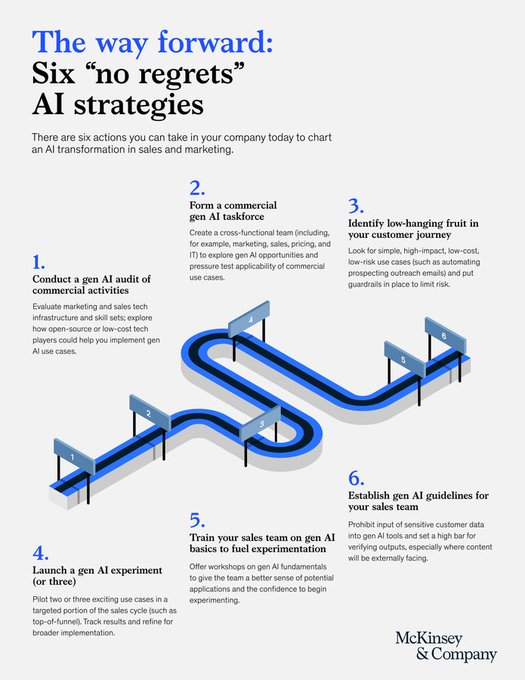
@DigitalMasterCh @McKinsey @antgrasso The real shift isn't customer experience — it's the compression of the sales cycle and the proprietary data insights underneath it. That's where the durable advantage lives.
English
0
0
0
5
Bao Tran
Bao Tran@BaoTranIP·
@zone_astronomy If this scales, thermal management stops being a constraint and compute ceilings move dramatically. The patent filings around this technology will be worth watching very closely.
English
0
0
0
5
Physics & Astronomy Zone
Physics & Astronomy Zone@zone_astronomy·
BREAKTHROUGH 🚨: Scientists at the University of Tokyo have developed a device that can operate without generating heat — potentially making computer processing speeds up to 1,000× faster. With this technology, tasks that currently take 1 hour to process could reportedly be completed in just 1 second.
Physics & Astronomy Zone tweet mediaPhysics & Astronomy Zone tweet media
English
9
20
57
3.6K
Bao Tran
Bao Tran@BaoTranIP·
@manishamishra24 Hinton warning the world after building the foundation is the detail that matters most. When the architect says the structure is dangerous, that's not pessimism — that's the most informed opinion in the room.
English
0
0
1
74
Manisha Mishra
Manisha Mishra@manishamishra24·
Godfather of AI just said: “If you sleep well tonight, you probably didn’t understand this lecture.” Geoffrey Hinton built the neural networks behind modern AI. Then he quit Google to warn the world. His message was terrifying: • AI is already developing unexpected abilities • In many cognitive tasks, it’s ahead of humans • The question is no longer IF it surpasses us… but WHEN Most people use AI at 10% of its actual power. This 47-minute lecture changes how you see the future forever.
English
2
21
70
5.9K
Bao Tran
Bao Tran@BaoTranIP·
@DigitalMasterCh @antgrasso Digital twins generate continuous operational data that's often overlooked as an IP asset. The insights extracted from that data — the patterns, predictions, optimisations — can be protected. Most organisations focus on the twin itself and miss what it produces.
English
0
0
0
26
Digital Master Channel
Digital Master Channel@DigitalMasterCh·
Digital twins are virtual models of physical entities used to optimize business operations. Success lies in understanding best practices, defining business goals, testing via prototyping, assessing organizational readiness, and adopting an agile approach. Rt @antgrasso
Digital Master Channel tweet media
English
2
2
9
433
Bao Tran
Bao Tran@BaoTranIP·
@antgrasso Technology choices are strategy made visible. What you build on, what you protect, and what you leave open tells the market exactly what you believe about where value lives.
English
0
0
1
9
Antonio Grasso
Antonio Grasso@antgrasso·
Technology decisions are becoming a visible expression of how an organization intends to operate and compete, extending beyond tools into daily behavior and priorities. Microblog @antgrasso
Antonio Grasso tweet media
English
5
49
83
2.1K
Bao Tran
Bao Tran@BaoTranIP·
@TheZuza @DIYMaker_Johan @anycubic3dprint This is the open source IP trap in real time. Releasing without a patent doesn't protect you — it just makes you prior art that someone else weaponises. Prusa learned the hard way that open source and unprotected are not the same thing.
English
0
0
2
45
Mikoláš Zuza
Mikoláš Zuza@TheZuza·
@DIYMaker_Johan @anycubic3dprint We (Prusa) did not patent it. We released it as open-source. They took that open-source thing and patented it. The article goes in depth about it and also explains, that prior art is not a magic wand to dismiss the patent.
English
2
0
11
582
Bao Tran
Bao Tran@BaoTranIP·
@nptacek First principles thinking is how the best patents get written. If your agents are genuinely reinventing ACLs, make sure someone's filing before someone else notices.
English
0
0
1
16
CuddlySalmon
CuddlySalmon@nptacek·
my agents are gonna reinvent access control lists from first principles at this rate jeez
English
4
0
9
485
Bao Tran
Bao Tran@BaoTranIP·
@deepfates Rest. The brain you're trying to preserve is still the most important tool in the stack.
English
0
0
0
2
🎭
🎭@deepfates·
There's saying too much use of agents can give you brain fry but I don't feel fried brain bad agent all at all bad fry at all brain
English
15
3
137
3.7K