Béate Vervaecke 💬

108.3K posts

Béate Vervaecke 💬 banner
Béate Vervaecke 💬

Béate Vervaecke 💬

@Beatever

@beatever.bsky.social Geboren in Midwest. ♥️Hauts-de-France. Datalover, Google Ads en Google Analytics. beate.vervaecke op threads
Marquise, France Katılım Mart 2007
4.6K Takip Edilen4.2K Takipçiler
Sabitlenmiş Tweet
Béate Vervaecke 💬
Béate Vervaecke 💬@Beatever·
eindelijk eens die Twitter uitgeprobeerd.
Nederlands
3
0
6
0
Béate Vervaecke 💬 retweetledi
CATFLIX
CATFLIX@CatFlixer·
ZXX
54
552
4.1K
261.2K
Béate Vervaecke 💬 retweetledi
Shanaka Anslem Perera ⚡
The war in the Strait of Hormuz will reach your local pharmacy within six weeks. Not because your pharmacist follows geopolitics. Because the active pharmaceutical ingredients in roughly half of America’s generic prescriptions begin as petrochemical derivatives manufactured in India, and India’s petrochemical industry begins as crude oil that transited 21 miles of water that closed on March 4. Nearly 70 percent of the active ingredients in US generic drugs are produced in India. India imports approximately 40 percent of its crude oil through the Strait of Hormuz. The crude feeds refineries that produce naphtha. The naphtha feeds petrochemical crackers that produce intermediates. The intermediates feed pharmaceutical plants in Gujarat, Maharashtra, and Hyderabad that produce the API, the active pharmaceutical ingredient, that is shipped to contract manufacturers in the United States, Europe, and across Asia. The chain from the strait to the tablet is six steps long. Every step requires the one before it. CNBC reported that the Hormuz closure puts America’s generic drug supply at risk. Fierce Pharma warned of longer-term effects on US manufacturing and generics. Think Global Health mapped the pharmaceutical supply chains most vulnerable to disruption. The consensus across trade publications, health policy analysts, and industry executives is identical: four to six weeks of current inventory exists in the pipeline. After that, shortages begin with the most complex formulations first. Cancer drugs are the highest risk. Biologics requiring cold-chain storage have the shortest shelf life and the longest replenishment cycle. Clinical trial medications depend on uninterrupted supply chains that are now interrupted. Insulin analogues, antivirals, and cardiac medications all contain intermediates sourced from Indian manufacturers whose input costs are rising with every day the strait remains closed. Air cargo is the emergency bypass. But air freight rates from India have climbed 200 to 350 percent on some routes since the war began, according to logistics tracking firms. Gulf air capacity is down 79 percent because airports in the UAE, Kuwait, and Qatar have been damaged or operate under restricted conditions. The Suez Canal route adds 10 to 14 days to maritime shipping times. The Cape of Good Hope route adds 21 to 28 days. Both alternatives assume the Red Sea remains navigable, which the Houthi threat has complicated since 2024. The World Health Organisation reported a 70 percent funding gap for its operational response in the region. Medical supply chains to Iran itself have been devastated, with hospitals reporting shortages of surgical supplies, blood products, and anaesthetics. But the downstream pharmaceutical effect extends far beyond the war zone. Every Indian manufacturer that pays more for crude pays more for naphtha, pays more for intermediates, and passes the cost forward into API prices that American generic drug companies absorb until they cannot absorb any further. The molecule does not know it is a medicine. The strait does not know it is a pharmacy. The petrochemical derivative that becomes a blood pressure tablet transits the same water as the petrochemical derivative that becomes a fertiliser pellet. Both are trapped. Both have shelf lives. Both have planting windows or prescription refill cycles that do not negotiate with blockades. Six weeks. Then the pharmacy starts calling patients about substitutions. open.substack.com/pub/shanakaans…
Shanaka Anslem Perera ⚡ tweet media
Shanaka Anslem Perera ⚡@shanaka86

Your paracetamol is made from oil. The phenol comes from a cumene process that starts with naphtha. The naphtha comes from a refinery. The refinery’s feedstock transits the Strait of Hormuz. Ninety-nine percent of pharmaceutical feedstocks, solvents, reagents, and packaging are petrochemical-derived. The American Gas Association confirmed it. The medicine cabinet is the sixth layer of the Hormuz crisis and nobody is talking about it. The war started with uranium. It moved to oil. Then fertiliser. Then water. Then plastic. Now medicine. Paracetamol is 100 percent petrochemical. Phenol from cumene, converted to para-aminophenol, then acetylated. Ibuprofen is 100 percent petrochemical. Isobutylbenzene plus propionic acid derivatives. Metformin, the most prescribed diabetes drug on Earth, is 80 to 90 percent petrochemical. Dicyandiamide from natural gas derivatives. Antibiotics like amoxicillin and ciprofloxacin require methanol, acetone, and dichloromethane as solvents for extraction and crystallisation. Oncology drugs need cold-chain energy and plastic packaging. Every blister pack, every pill bottle, every syringe is PE, PP, or PET from Gulf naphtha. India makes 40 to 47 percent of American generic medicines by volume. It imports $4.35 billion in active pharmaceutical ingredients annually, 74 percent from China. But the critical precursors, the methanol and ethylene glycol that feed Indian API synthesis, are 87.7 percent and roughly 100 percent Hormuz-dependent respectively. The Indian government has prioritised household LPG over industrial petrochemical feedstock, starving the downstream pharmaceutical chain. API costs have surged 30 percent in the last two weeks. The typical buffer is two to three months of inventory. The war is nineteen days old. The clock started before the buffer was designed for this scenario. A diabetic in Ohio takes metformin every morning. The dicyandiamide that becomes the active ingredient traces back through a Chinese intermediate to a natural gas derivative that originated in the Gulf. The methanol used to crystallise the compound in a Hyderabad factory was shipped from a terminal that now sits behind the same strait controlled by provincial commanders with sealed orders. The blister pack was moulded from polyethylene derived from naphtha that loaded at a facility the IRGC published satellite targeting images of yesterday. One pill. Four petrochemical dependencies. One chokepoint. The farmer in Iowa cannot plant corn because nitrogen costs $610. The diabetic in Ohio may not be able to fill a prescription because methanol costs whatever the strait permits. Both crises trace to the same 21 miles of water. Both are governed by the same sealed packets. Both operate on biological clocks that do not negotiate with doctrine. Nitrogen decides whether the food grows. Methanol decides whether the medicine is synthesised. Polyethylene decides whether it reaches the shelf in a blister pack. Energy decides whether the cold chain holds for oncology and biologics. Every molecule in the pharmaceutical supply chain is now compromised by the same chokepoint that trapped the fertiliser, the gas, the plastic, and the water. Europe said Iran is not their war. Their existing drug shortages, 400 to 1,500 medicines depending on the country, will deepen regardless. Bangladesh, Egypt, and sub-Saharan Africa depend on Indian generics for infectious disease and maternal health. The API depletion clock runs for everyone. The strait does not distinguish between a urea molecule and a methanol molecule. Both are gated. Both are biological. And both determine whether human beings survive the next quarter. Full analysis - open.substack.com/pub/shanakaans…

English
47
889
1.4K
136.9K
Arnaud Bertrand
Arnaud Bertrand@RnaudBertrand·
Few things have annoyed me more since the start of the war on Iran than to hear some European politicians repeat the narrative that it was "all about China." One surprising (and disappointing) example was France’s Jean-Luc Mélenchon, the leader of La France Insoumise, France's main left-wing opposition party, who claimed that the war's objective was to “limit China's oil supply capabilities” (x.com/JLMelenchon/st…). By saying this he literally parrots - almost word for word - the narrative of Lindsey Graham on Fox News (x.com/OunkaOnX/statu…) or that of the Hudson institute, an American right-wing neoconservative think tank (hudson.org/foreign-policy…). Which, you'll agree, is rather unexpected company for Mélenchon... Why does it annoy me so much? Because it's painfully obvious that the consequences of this war are far, far worse for Europe than they are for China. Heck, if anything, this war may even ironically prove beneficial for China: it is quite literally the best advertisement for green energy the world has ever seen. Every day the Strait of Hormuz remains contested, every oil price spike - all of it is a live demonstration of exactly why fossil fuel dependency is a massive strategic liability. This war is vindicating China's bet in spectacular fashion, and there is little doubt it will further encourage much of the world to buy exactly what China is selling: replacing dependence on whoever controls oil and gas chokepoints with energy from the sun and wind. See, in large part due to its green energy ramp-up China, as of last year, reached an 85% energy self-sufficiency rate (chinadaily.com.cn/a/202602/03/WS…) which is absolutely remarkable for a country that consumes as much energy as the U.S. and the EU... combined. The same, however, very much cannot be said of Europe. Where China is at 85% they're at an appalling 41% (ec.europa.eu/eurostat/stati…), less than half. So already, for this alone, Mélenchon should be worrying about Europe, not China. But that's just the beginning - the full picture is much worse. What is this war, when one strips it to its essence? What is the precedent being set? You have the world’s most powerful country attacking a sovereign nation, assassinating its leader, and attempting regime change - without even bothering to provide a casus belli (insanely the "casus belli" advanced by Rubio was that the victim would defend itself: x.com/RnaudBertrand/…). In other words, the world this precedent establishes is a “might makes right” world on steroids, like we haven’t seen in many generations. And, by definition, in a “might makes right” world what matters is… might. And let's be real: today China has it, and Europe just doesn’t. For instance, what do you think happens to Greenland if Iran goes the way Trump wants and the lesson he gets out of it is that he can simply do anything he wants with impunity if the other party is weak? And when the Europeans who cheered that precedent then turn around and ask the world to respect their sovereignty? Europe is the kind of power that only survives in a world with rules and they’re foolishly cheering their destruction. My latest article makes the full case, with the data to back it up. China will be fine, Europe won't and I feel like I'm taking crazy pills because even the precious few politicians who aren't totally vassalized to the U.S. - the Mélenchons of Europe - are starting to work off the exact same delusional script as U.S. neocons, just reading from the opposite side (replying “they’re encircling China” and objecting to neocons saying “we’re encircling China” and cheering). Which raises the question: who exactly is looking out for Europe? I don't have an answer but my article, I believe, makes a pretty strong case for why this question has never been more urgent. Read it here: open.substack.com/pub/arnaudbert…
Arnaud Bertrand tweet media
English
172
670
2.5K
558.3K
Béate Vervaecke 💬 retweetledi
TNW
TNW@thenextweb·
$2.5B in NVIDIA chips vanished. Auditors found fake servers. The real ones were already running in China. thenextweb.com/news/supermicr…
English
1
4
4
1.4K
Johan Ronsse
Johan Ronsse@wolfr_2·
@Beatever Ik zou daat ook kunnen zeggen denk ik, ware het niet dat dit mijn 2e account is
Nederlands
1
0
0
28
Steve Van Herreweghe
Steve Van Herreweghe@SteviesQuotes·
🚨Studie met 1,7 miljoen kinderen (!!) heeft aangetoond dat myocarditis en pericarditis alleen voorkwamen bij kinderen die COVID mRNA-vaccins hadden gekregen. Geen enkel (!!) niet-gevaccineerd kind in de groep leed aan deze hartgerelateerde problemen. Laat dat even bezinken. Onomstotelijk bewijs van de desastreuze — nog steeds ontkende — impact van het mRNA-Experiment. De wereld werd belogen en bedrogen, met angst en gif geïnjecteerd, met voorbedachtheid, en tegen elkaar opgezet. Dat het genoeg is. Dat we onze verschillen opzij zetten, de Waarheid mag zegevieren, schade kan herstellen en vereffend worden, bandieten worden opgesloten en dat onze kinderen gevrijwaard blijven hiervan.
Steve Van Herreweghe tweet media
Nederlands
77
573
998
16.8K
Béate Vervaecke 💬
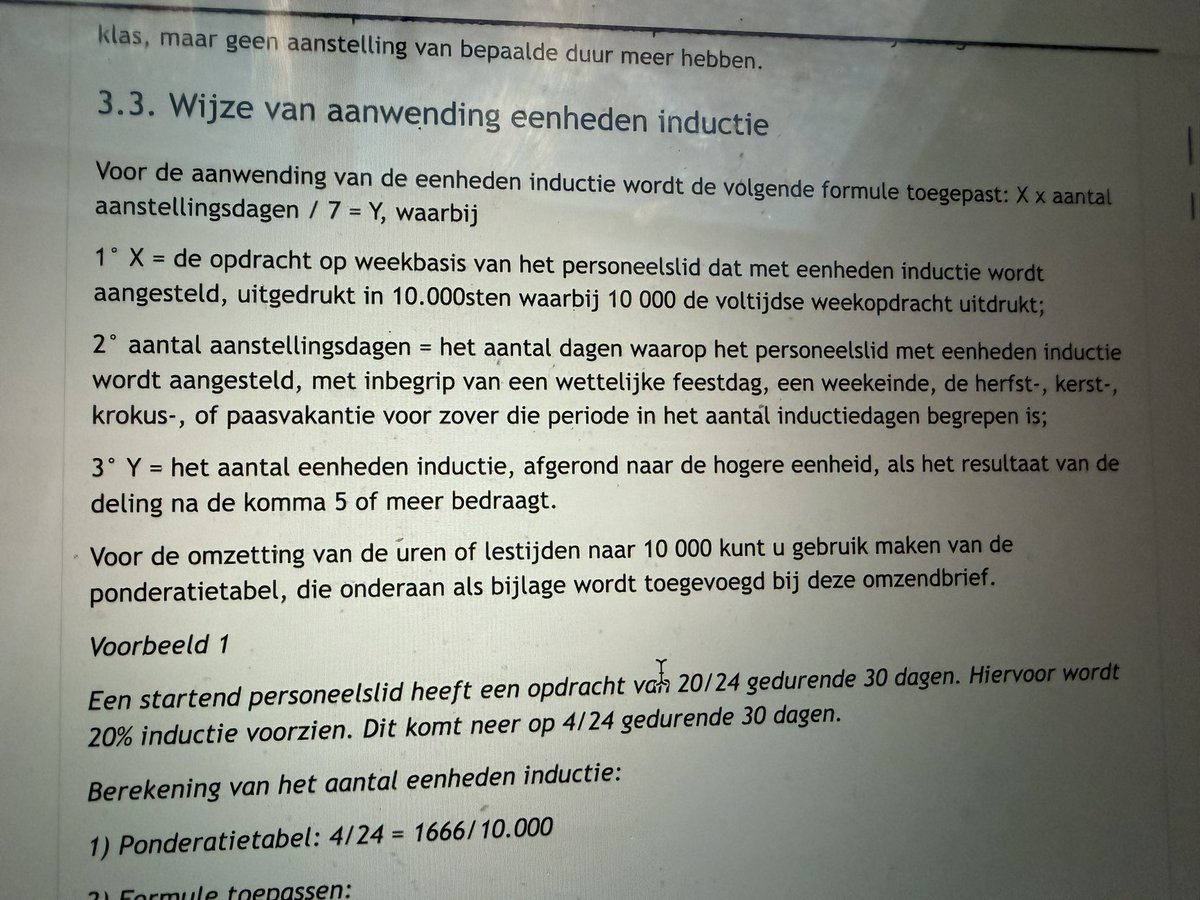
Claude heeft in zijn/haar/hun instructies: kort en bondig :-)
Béate Vervaecke 💬 tweet media
Nederlands
0
0
0
115
Bram Bombeek
Bram Bombeek@bimbombram·
@ancapoen Chance dat de Vlaamse regering de stoof nog niet verboden heeft 😬
Nederlands
9
9
48
2.6K
Béate Vervaecke 💬 retweetledi
tendollar
tendollar@tendollardanny·
passing through the strait of hormuz if anyone needs anything
English
553
6.7K
75.5K
1.1M
Béate Vervaecke 💬 retweetledi