

'And also now …'
775 posts

'And also now …'
@BeckFamilie
«Wer meine Gebote hat und sie hält, der ist es, der mich liebt» «He who has my commandments and keeps them, it is he who loves me» – Jesus Christ. | 👂› 💬
Katılım Haziran 2022
133 Takip Edilen22 Takipçiler

@DanitheSett It looks valuable, indeed, and it sounds like that. Looks like kind of brass. What is it called? Is it historical?
English
@BeckFamilie I wish homemade.
No it's handcrafted and pretty expensive, got this one from a specific store in Tel Aviv.
Thank you for sharing that beautiful verse 🙏
English
"Nahamu Nahamu Ami..." 🎶
59 years ago, Jerusalem was reunited, and the Jewish people finally returned to the Old City and this beautiful, ancient heartland - Judea and Samaria.
Happy Jerusalem Day 🇮🇱🕎
English
@inside_IL_intel Remarkable blend of a full range of insights.
Yet, it's not just "because Israel sits at the front line between the West and the forces attempting to dismantle it" but that "the collapse of moral distinction" in the christianized West has a strong link to Genesis 12:3.
English

🚨OPERATIONAL UPDATE: THE NEXT BATTLEFIELD IS SOVEREIGNTY
The last 24 hours has been increasingly about political control: who governs, who holds the guns, and whether Iran’s regional proxy architecture can survive in a postwar Middle East.
━━━━━━━━━━━━━━━━━━
🇱🇧 LEBANON: THE STATE IS QUIETLY PUSHING BACK AGAINST IRAN
One of the most important developments today received surprisingly little attention.
Lebanon formally accused Iran at the United Nations of violating diplomatic protocol, interfering in Lebanese sovereignty, and embedding IRGC personnel inside Lebanon under diplomatic cover. The complaint also referenced alleged IRGC coordination with Hezbollah on large-scale missile operations against Israel.
That matters because this is no longer just Israel accusing Iran of hijacking Lebanon. It is elements of the Lebanese state itself beginning to internationalize that argument.
At the same time, a third round of Israel-Lebanon talks is opening in Washington, and for the first time military representatives are participating directly. The Trump administration is reportedly pressuring Beirut to take concrete steps if it wants the ceasefire framework to survive.
Hezbollah understands exactly where this is heading. That is why Hezbollah officials are now openly resisting disarmament discussions and demanding a referendum on negotiations with Israel instead. The organization is trying to transform the issue from:
“Should Hezbollah remain armed?”
into:
“Who has legitimacy to decide Lebanon’s future?”
That is a very different battle. Meanwhile, the military pressure continues. The IDF struck more than 40 Hezbollah targets over the last 24 hours, including launchers, military compounds, operatives, and tunnel infrastructure in southern Lebanon.
The contradiction defining Lebanon continues with diplomacy moving toward sovereignty restoration,
Hezbollah fighting to preserve permanent armed autonomy, and Iran trying to ensure Lebanon never fully escapes its orbit.
━━━━━━━━━━━━━━━━━━
🇵🇸 GAZA: HAMAS IS BLOCKING RECONSTRUCTION TO PRESERVE POWER
The same sovereignty struggle is continues to unfold in Gaza.
New reporting indicates Hamas operatives blocked UAE-backed reconstruction efforts in Rafah, threatening contractors and preventing work from beginning in areas coordinated with Israeli and American authorities. Why does Hamas want to prevent reconstruction? Because it's about determining who controls Gaza afterward.
The U.S.-backed Board of Peace framework has increasingly tied reconstruction, Israeli withdrawal, and long-term stabilization to Hamas disarmament. Hamas continues refusing.
Mladenov publicly stated today that Hamas could potentially retain a political role in postwar Gaza, but only if it gives up its weapons. Hamas of course rejected the premise.
That tells you the core problem remains unresolved. Hamas wants the legitimacy of a governing authority while preserving the military structure of an armed revolutionary movement.
Israel, the UAE, and the Board of Peace remain aligned on the opposite position: there will be no meaningful reconstruction while Hamas retains sovereign military power.
So perhaps the correct framing as about what's happening in Gaza in now determining whether the Strip will become a rebuilt civilian territory, or a permanently armed enclave under Hamas dominance.
━━━━━━━━━━━━━━━━━━
🇨🇳🇺🇸 BEIJING: IRAN NOW SITS INSIDE GREAT-POWER DIPLOMACY
Trump and Xi’s summit in Beijing is increasingly revolving around the Iran war and the Strait of Hormuz, even if neither side wants to publicly frame it that way.
Both Washington and Beijing now share an immediate interest in preventing total collapse of Gulf shipping. The White House said both leaders agreed Hormuz must remain open and that Iran cannot obtain nuclear weapons.
But beneath that agreement sits a deeper strategic tension. China wants Iranian oil, a weakened American global posture, and continued pressure on U.S. resources in the Middle East.
What China does not want however is the normalization of maritime choke-point warfare. Because if Iran can successfully weaponize Hormuz, Beijing knows Washington could one day apply similar pressure in the Strait of Malacca or broader Indo-Pacific shipping lanes that China depends on far more heavily than the United States.
That is why Beijing is now trying to walk a narrow line:
keep Iran alive, avoid regime collapse, but also prevent Tehran from destabilizing global shipping badly enough that it creates a precedent dangerous to China itself.
Meanwhile, reports that the U.S. may ease some enforcement pressure on Chinese purchases of Iranian oil suggest Washington is still trying to pull Beijing partially away from Tehran’s orbit through economic leverage rather than direct confrontation.
━━━━━━━━━━━━━━━━━━
🧠 STRATEGIC ASSESSMENT
While the military phase of this conflict remains in a paused state, the phase about political control is ....
Iran built its regional influence around armed movements that became stronger than the states hosting them:
*⃣ Hezbollah stronger than Lebanon,
*⃣ Hamas stronger than Gaza’s institutions,
*⃣ Iraqi militias stronger than Baghdad’s authority,
*⃣ and the IRGC itself functioning as a state within a state inside Iran.
For years, that model gave Tehran enormous leverage. But now, for the first time in a very long time, the region is beginning to push back against the model itself, not just the violence it produces.
Lebanon is starting to challenge Iranian interference as a sovereignty issue. Gaza reconstruction is being tied directly to Hamas disarmament. The Gulf states are moving closer together because they increasingly view Iran’s proxy system as a threat to their own long-term stability. And even China appears increasingly uncomfortable with the level of disorder Iran is introducing into global shipping and energy markets.
This does not mean Iran is collapsing. It does not mean Hezbollah or Hamas are finished. And it certainly does not mean the conflict is close to resolved.
But it does suggest something important. The debate is slowly shifting from how to contain Iran’s proxies militarily to whether those proxies should continue functioning as "sovereign" armed authorities at all.
English
🚨OPERATIONAL UPDATE: IRAN–ISRAEL–U.S. WAR
Reporting Window: Last 24 Hours
Iran has been badly damaged. Its economy is under pressure, its export routes are strained, its internal security apparatus is tightening, and its regional partners are absorbing continued Israeli and Western pressure.
But Iran has not been neutralized.
New reporting on Iran’s restored access to missile sites along the Strait of Hormuz complicates earlier claims that Tehran’s capabilities had been decisively broken. At the same time, Gulf states are hardening against Iran, Israel and the UAE are openly coordinating defensive capabilities, Kuwait is confronting alleged IRGC activity on its own territory, and Trump is meeting Xi in Beijing with Hormuz now sitting directly inside great-power diplomacy.
That is the real story today:
not Iranian victory, not Western failure, and not a clean path to de-escalation. The war is clearly now a test of endurance.
Iran is trying to prove it can survive the pressure.
The United States and Israel are trying to prove the pressure can be sustained. The Gulf states are trying to protect themselves without being swallowed by the war. And every major actor is discovering that the first phase of the conflict was easier to define than the one now taking shape.
━━━━━━━━━━━━━━━━━━
⚓️HORMUZ STILL REMAINS THE CENTER OF THE WAR
The Strait of Hormuz is still the single most important strategic pressure point in the conflict. The emerging intelligence picture suggests:
*⃣ many Iranian missile positions remain operational,
*⃣ mobile launch systems survived in significant numbers,
*⃣ and Iran retains enough capability to continue threatening maritime traffic and Gulf infrastructure.
That does not mean Iran emerged unscathed. It means Tehran still possesses enough survivable infrastructure to maintain coercive pressure.
And that pressure is spreading. A UAE-owned tanker struck earlier in the conflict is now leaking fuel off the coast of Oman, reinforcing growing fears about environmental and commercial risks tied to instability in the shipping corridor.
Meanwhile:
*⃣ ships continue reducing visibility and rerouting,
*⃣ insurance costs remain elevated,
*⃣ and Gulf states are increasingly treating Hormuz as a direct national security issue rather than simply an economic one.
Iran’s strategy remains clear. It does not need to fully close Hormuz. It only needs enough instability to make the world feel economically trapped inside the conflict.
━━━━━━━━━━━━━━━━━━
🇦🇪🇸🇦🇰🇼THE GULF STATES ARE MOVING CLOSER TO OPEN ALIGNMENT
Today’s reporting reinforced one of the most important strategic trends of the war. Iran’s pressure campaign is accelerating Gulf coordination against it. The UAE-Israel relationship is now openly operational.
Reporting confirmed Mossad chief David Barnea visited the UAE multiple times during the war, Israeli and Emirati security coordination deepened substantially, and Israel deployed Iron Dome systems and personnel to help defend the Emirates from Iranian attacks.
At the same time, Reuters and other outlets reported Saudi Arabia secretly conducted retaliatory strikes on Iranian territory earlier in the conflict. That is one of the most strategically important developments of the entire war.
Saudi Arabia historically preferred indirect competition with Iran through proxies and diplomacy. Direct Saudi military action on Iranian soil represents an entirely different threshold.
Kuwait also entered the picture more forcefully today. Kuwaiti authorities summoned Iran’s envoy after IRGC-linked operatives allegedly infiltrated Bubiyan Island and exchanged fire with Kuwaiti forces.
The Gulf states increasingly appear to believe that neutrality itself is becoming unsafe.
━━━━━━━━━━━━━━━━━━
🇨🇳🇺🇸TRUMP IN BEIJING: THE WAR IS NOW GLOBAL DIPLOMACY
Trump’s summit with Xi Jinping opened with Iran dominating the strategic backdrop. The key issue is no longer simply sanctions or nuclear negotiations. It is energy stability.
China, the United States, and Gulf states all now share overlapping interests in preventing total collapse of Hormuz traffic, even while disagreeing sharply on broader geopolitical questions.
At the same time, Beijing reportedly pushed Pakistan to intensify mediation efforts, Qatar continues trying to refine Iranian proposals, and diplomatic channels remain active despite increasingly visible frustration from Washington.
Reports that Iranian aircraft were temporarily sheltered or facilitated through Pakistan during ceasefire diplomacy have intensified scrutiny in Washington over Islamabad’s role in the conflict. Pakistan denies any formal preservation arrangement, but the controversy underscores how the war is increasingly entangling regional states trying to balance mediation, self-preservation, and strategic alignment.
Trump publicly continues signaling openness to a deal.
But administration discussions about renaming the operation to “Operation Hammer” or “Operation Sledgehammer” strongly suggest the White House is simultaneously preparing for the possibility of renewed combat operations. That dual-track approach now defines the American posture:
keep negotiations alive while visibly preserving escalation dominance.
━━━━━━━━━━━━━━━━━━
💲THE COST OF THE WAR IS BECOMING ITS OWN STRATEGIC ISSUE
Another major story today was growing scrutiny over the long-term sustainability of the war itself. The Pentagon’s public estimate now places direct war costs around $29 billion.
But the deeper concern emerging across defense reporting is munitions depletion. According to multiple reports the United States fired roughly 1,100 stealth cruise missiles, over 1,000 Tomahawks, and more than 1,300 Patriot interceptors during the conflict.
Defense analysts increasingly warn that replenishment timelines for advanced precision munitions may become a strategic constraint if simultaneous crises emerge across multiple theaters. That matters because the strategic question is widening beyond Iran itself. Washington is now openly confronting a broader issue. The war is intensifying scrutiny of whether the U.S. defense-industrial base can rapidly replenish high-end precision munitions during prolonged multi-theater conflict.
That question increasingly sits in the background of every escalation discussion.
━━━━━━━━━━━━━━━━━━
🧠STRATEGIC ASSESSMENT
Today’s developments reinforced a central reality:
This war is coming down to durability.
*⃣ Iran survived the opening phase damaged but still functional.
*⃣ The Gulf states survived the pressure but are moving closer together.
*⃣ The United States maintained escalation dominance but at enormous cost.
The region is most certainly not stabilizing. It is reorganizing. And the deeper this war goes, the more it stops looking like a short regional conflict and starts looking like a long-term restructuring of the Middle East security order itself.


English
🚨OPERATIONAL UPDATE: IRAN, ISRAEL, U.S. WAR
Reporting Window: May 11 to 12, 2026
The war is continuing to widen, but beneath the surface.
Today's most important stories include: the emergence of a broader regional contest in which Iran’s pressure campaign is producing the opposite of what Tehran intended is becoming clearer. The Gulf is hardening. Hezbollah is rejecting disarmament. Hamas is stalling on the Board of Peace framework. And the United States appears increasingly unconvinced that diplomacy alone will force Tehran across the nuclear finish line. All these stories and more, covered below...
━━━━━━━━━━━━━━━━━━
IRAN AND THE GULF: THE UAE STORY CHANGES THE MAP
One of the most important developments remains the public revelation that the UAE secretly struck Iranian assets earlier in the war, including the Lavan Island refinery. That suggests the coalition footprint against Iran was wider than publicly understood, and that Gulf states may already have crossed from passive alignment into direct action.
That matters because Iran’s strategy has depended on intimidation. Tehran assumed that threatening Gulf infrastructure, shipping, and airspace would make Arab capitals more cautious. Instead, the pressure appears to have pushed parts of the Gulf closer to the American and Israeli security architecture.
That trend is reinforced by reports that Israel sent Iron Dome batteries and personnel to the UAE, confirmed by Ambassador Mike Huckabee.
A decade ago, Israeli air defense deployed to the Emirates would have been politically unthinkable. Today, it is an operational answer to Iranian escalation.
━━━━━━━━━━━━━━━━━━
HORMUZ: IRAN IS STILL TRYING TO TURN SHIPPING INTO LEVERAGE
The Strait of Hormuz remains the central economic battlefield.
Lloyd’s List reporting continues to describe severe volatility in tanker markets, GPS interference, disruption to vessel movement, and major swings in shipping costs. Iran’s insistence on “management” and sovereignty over the strait has intensified concerns in the maritime market as Iran uses freedom of navigation as a bargaining chip.
The pressure is now also visibly spreading beyond oil. Japan’s largest snack maker is reportedly shifting some products to black and white packaging because shortages of petroleum-derived ink ingredients tied to Hormuz disruptions are affecting industrial supply chains.
This is the point of Iran’s strategy. It does not need to close the strait completely. It just needs to continue with enough disruption to make governments, markets, insurers, and manufacturers feel the war in their own economies.
━━━━━━━━━━━━━━━━━━
WASHINGTON: TRUMP IS LOSING PATIENCE
The diplomatic track is still alive, but it is on thinner ground.
Trump reportedly rejected Iran’s latest proposal as unacceptable and described the ceasefire as being on “life support.” Multiple sources also indicate he is now more seriously considering renewed military operations than at any point in recent weeks.
At the same time, Washington is tightening the financial front. New sanctions targeted Iranian oil shipments to China through IRGC-linked networks, including front companies in Hong Kong, the UAE, and Oman.
That combination is important: military pressure is being kept available, but economic strangulation is still Trump's preferred instrument for now.
━━━━━━━━━━━━━━━━━━
IRAN’S NUCLEAR THREAT RETURNS TO THE FRONT
Iranian parliamentary spokesman Ebrahim Rezaei publicly warned that Iran could enrich uranium to 90 percent if attacked again. That level is considered weapons-grade. Furthermore the fate of roughly 400 kilograms of 60 percent enriched uranium remains unresolved.
That is the central problem.
Even after major strikes on Iran’s nuclear architecture, the stockpile question has not gone away. Infrastructure can be bombed. Scientists can be killed. Weaponization sites can be degraded. But if highly enriched uranium remains inside Iran, likely deep underground and in multiple locations, the nuclear file remains alive.
━━━━━━━━━━━━━━━━━━
LEBANON: HEZBOLLAH IS REJECTING THE VERY PREMISE OF THE DEAL
The northern front deserves attention today as well.
Hezbollah published footage it says shows a drone strike on an Iron Dome battery in northern Israel. The IDF did not comment on the video, but Times of Israel reported that Hezbollah continues to use FPV drones, including fiber optic guided models that are immune to ordinary electronic jamming.
The tactical implication is clear: Hezbollah is trying to prove it can still penetrate Israeli defenses after months of Israeli strikes.
The diplomatic implication is bigger: Hezbollah is rejecting any path that turns the Lebanon ceasefire into actual disarmament.
Naim Qassem, Hezbollah's secretary-general, declared Hezbollah’s weapons an internal Lebanese matter and said the group would not put them on the table in negotiations. He also threatened that Hezbollah would “turn it into hell for Israel.”
That is not ceasefire language. It is a declaration that Hezbollah intends to preserve its military veto over Lebanon regardless of the outcome of any negotiations.
Israel, meanwhile, is not treating the ceasefire as a restraint on operational freedom. The IDF struck more than 20 Hezbollah targets in southern Lebanon in one day, including weapons depots, launchers, command centers, and military-use buildings. It also reported that Israeli and Lebanese representatives are expected to hold a third round of talks in Washington, this time including military representatives to discuss concrete steps toward Hezbollah disarmament.
That is the ongoing three way contradiction of the northern front:
Diplomacy is moving toward disarmament while Hezbollah is publicly rejecting disarmament and Israel is actively destroying Hezbollah infrastructure.
━━━━━━━━━━━━━━━━━━
HOUTHIS: EILAT BACK IN THE WAR
The IDF intercepted an apparent Houthi drone near Eilat earlier today, described in Times of Israel live coverage as the first attack on the city since the Iran ceasefire.
The Houthis, part of Iran's proxy strategy, are often the first sign that Iran wants to widen pressure without directly escalating from Iranian territory.
If Houthi attacks resume in a sustained way, it suggests the ceasefire is losing coherence across the axis, not just in Lebanon or Hormuz.
━━━━━━━━━━━━━━━━━━
HAMAS AND GAZA: THE BOARD OF PEACE IS STUCK ON THE ONLY QUESTION THAT MATTERS
The Gaza track also remains stalled over Hamas disarmament.
Hamas continues to refuse to disarm under the Trump administration’s 20-point Gaza peace plan, with negotiations still focused on Israeli withdrawal, security guarantees, and the role of the International Stabilization Force.
That is the whole issue.
A Board of Peace can administer reconstruction. It can coordinate aid. It can supervise civil governance. But if Hamas keeps its weapons, Hamas remains the sovereign force in Gaza regardless of what diplomatic structure is placed above it.
The strategic read is simple: Hamas wants the benefits of a postwar political arrangement without surrendering the military power that caused the war.
━━━━━━━━━━━━━━━━━━
OCTOBER 7: THE WAR CRIMES FILE DEEPENS
A new 300-page Civil Commission study found that sexual and gender-based violence during the October 7 massacre was systematic, widespread, and a calculated component of the attack. The report documented rape, gang rape, sexual torture, mutilation, postmortem sexual abuse, and attacks carried out in front of family members, based on 430 interviews, testimonies, and meetings.
October 7 was not merely a mass casualty attack. The study argues that sexual violence was used as a method of terror against Israeli society itself. While the confirmation of this information is likely not a revelation to Israeli society, it is key to the legal and moral framing of Hamas’s war in the rest of the world.
━━━━━━━━━━━━━━━━━━
DIASPORA FRONT: INTIFADA CHANTS IN A JEWISH NEIGHBORHOOD
In New York, anti-Zionist protesters marched through Midwood, Brooklyn, chanting for intifada and waving a Hezbollah flag. Times of Israel reported scuffles with residents, police separation between protesters and counter-protesters, and chants including “Globalize the intifada,” “Death to the IDF,” and “Israel will fall.”
This is not a side story.
It shows how the war’s ideological front is traveling into Jewish neighborhoods abroad. The line between anti-Israel activism and intimidation of Jewish communities is becoming harder to pretend away.
━━━━━━━━━━━━━━━━━━
STRATEGIC ASSESSMENT
The strongest throughline today is that Iran’s system of pressure continues to spread beyond Iran.
It is visible in Hormuz.
It is visible in Lebanon.
It is visible through the Houthis.
It is visible in Gaza negotiations.
It is visible in Gulf security coordination.
It is visible in Jewish communities abroad.
But the pressure is also producing counterpressure.
The UAE may have struck Iran directly. Israel is reportedly helping defend the UAE. Washington is tightening sanctions and reconsidering military options. Lebanon talks are moving toward Hezbollah disarmament even as Hezbollah rejects the premise. Hamas is being forced to answer the question it has always avoided: whether it will ever surrender the gun.
This is where the war stands now. Iran and its proxies are still dangerous. But their strategy is increasingly forcing regional actors to choose sides. And more of them are choosing against Tehran, all while the world waits on President Donald Trump's next move.

English
Thank you so much to everyone who participated and supported the reporting. Please continue sharing the reports when you see them. Your support truly helps expand the reach of this work and bring these updates to a wider audience.
Inside_Israel_Intel@inside_IL_intel
🚨A quick note and request for help: Like many accounts reporting on Israel and the Middle East, my reach has collapsed. Even my original videos, reports, and in-depth analysis only reach about 5% of you, despite consistent high-effort work. Unfortunately I'm starting to think the squeeze may not be worth the juice anymore. Before I give up though I'd like to run a quick experiment together. I'm wondering if I bypass the algorithmic changes by having a user base who turns on notifications for my posts: If you value my content, please turn on post notifications for my account (see image below). I’ll track the results over the next 7–10 days and report back honestly on whether notifications help cut through the algorithmic changes. And to respect your time and avoid bombarding you with notifications all day, I’m stopping the daily news wire. Going forward I’ll post only original reports, videos, and deeper analysis (much lower volume). Will you join the test? Reply “ON” below if you turn them on. Thanks so much and I appreciate every one of you.
English
🚨A quick note and request for help:
Like many accounts reporting on Israel and the Middle East, my reach has collapsed. Even my original videos, reports, and in-depth analysis only reach about 5% of you, despite consistent high-effort work. Unfortunately I'm starting to think the squeeze may not be worth the juice anymore.
Before I give up though I'd like to run a quick experiment together. I'm wondering if I bypass the algorithmic changes by having a user base who turns on notifications for my posts:
If you value my content, please turn on post notifications for my account (see image below). I’ll track the results over the next 7–10 days and report back honestly on whether notifications help cut through the algorithmic changes.
And to respect your time and avoid bombarding you with notifications all day, I’m stopping the daily news wire. Going forward I’ll post only original reports, videos, and deeper analysis (much lower volume).
Will you join the test? Reply “ON” below if you turn them on. Thanks so much and I appreciate every one of you.
English
@BenTzionMacales Is it safe to access this place, given it's so close to, well, Shechem?
English

תמונה שהתקבלה אחרי בוקר עם ראות מצוינת ונדירה מאתר "מזבח יהושע" על הר עיבל.
הר הלבנון התגלה במרחקים, בייחוד הרי שוף וג׳בל צנין.
*ג׳בל צנין נמצא כ-195 ק"מ מנקודת הצילום.*
תודה לעוקב ישראל מגיד על השיתוף

עברית
@CptAllenHistory Some are glad and appreciate to hear just what really happened. Like me.
Thank you so much!
English

24 years ago, the Palestinian propaganda machine invented one of its most notorious fake massacres — and (shockingly, I know) the world believed it instantly.
In the spring of 2002, suicide bombings had become almost daily events inside Israel. They reached their horrifying peak with the Passover Massacre on March 27, when a terrorist walked into the Park Hotel dining room in Netanya and murdered 29 people — many of them elderly Holocaust survivors.
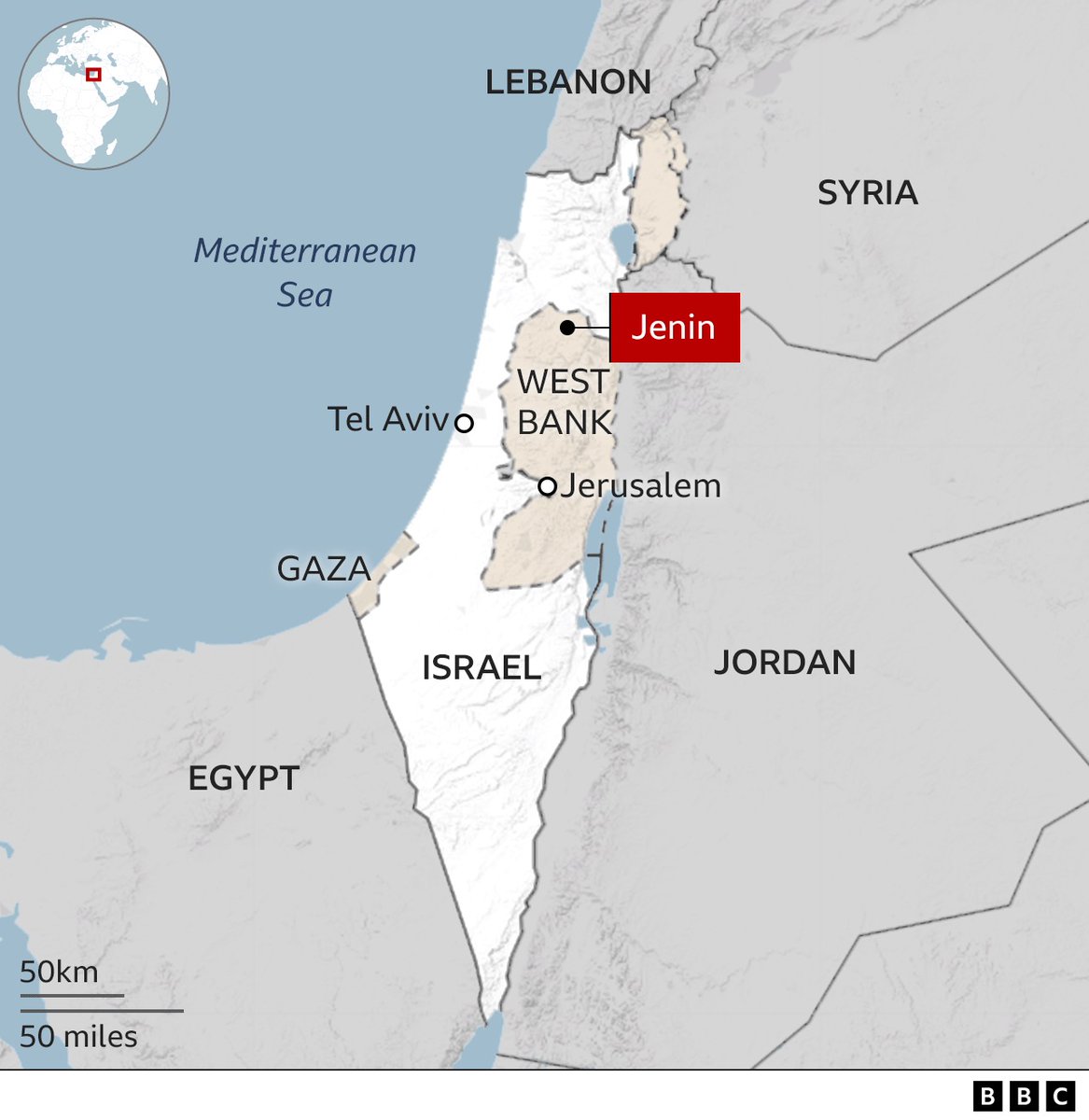
Israel had had enough. On March 29, the IDF launched Operation Defensive Shield to dismantle the terrorist infrastructure in Palestinian cities that had become safe havens for Hamas, Islamic Jihad, and the Al-Aqsa Martyrs Brigades.
Nowhere was that infrastructure more entrenched than in Jenin — the self-proclaimed “suiciders’ capital.”
During the operation, the Palestinian "brand-Israel-as-war-criminals" routine immediately went into overdrive.
They screamed the IDF had conducted a “massacre” in Jenin - more than 500 Palestinians slaughtered in cold blood, they said.
The international media and the UN swallowed it whole. Headlines screamed about “Jenin: the new Srebrenica.” Demands for war crimes investigations poured in.
Then the truth slowly dribbled out.
The actual Palestinian death toll? Around 52, the vast majority of whom were armed terrorists. Oh, and roughly the same number of Israeli soldiers died clearing the camp house-by-house — because Israel deliberately chose the riskier ground-troop route to spare civilian lives instead of leveling the place from the air.
The “massacre” was a lie. A deliberate, coordinated lie.
This is the standard playbook in the anti-Israel propaganda war: invent a shocking atrocity, flood the media with it, let the world condemn Israel in real time … and by the time the facts prove it was fake, nobody cares anymore.
We saw the exact same pattern again in October 2023 at Gaza’s Al-Ahli Hospital.
Palestinian officials and their allies screamed that Israel had bombed a hospital and murdered 500 civilians (same false number claimed in Jenin 21 years earlier). World leaders rushed to condemn Israel. The libel raced around the globe.
Then the evidence emerged: it was a misfired Islamic Jihad rocket. No Israeli strike was involved, and the death toll was far lower. But by then, the damage was done.
Large parts of the international community love to tell and share the story of Jews as bloodthirsty killers. They buy it hook, line, and sinker - every ... single ... time.
I try to push the historically verifiable facts into the open, one post at a time; but I know, by sheer numbers, that I can never "win" this battle. The anti-Israel propaganda machine is too loud, too well-funded, and too massive.
But I can chip away at it, little by little, every day. Because the truth still matters. Even when the world would rather believe the lie.
English
@WolfReuter3 @HoolauHoop1234 @BuettnerAndreas @RA_Boos @TobiasHuch @Ron_Prosor Die Melde-Möglichkeit ist das eine, Community Note (siehe nächster Post) steht dann unter dem OP und flaggt ihn für jeden Leser. Die CN kann benotet oder bestätigt werden, so ganz nach der Breitenlogik von X
Um Brandolinis Gesetz kommt man aber nie herum… :(
Deutsch

Frau Schweizer verbreitet immer noch die Lüge das dies Israel sei!!
@WolfReuter3 @BuettnerAndreas @RA_Boos @TobiasHuch @Ron_Prosor
Melanie Schweizer 🇩🇪@schweizermel
Das ist Israel
Deutsch
@WolfReuter3 @HoolauHoop1234 @BuettnerAndreas @RA_Boos @TobiasHuch @Ron_Prosor Vielleicht eine Community Note unter solche Posts setzen, mit dem entsprechenden Material?
Deutsch

Ich weiß gar nicht wie viele Posts ich von ihr schon gemeldet habe. Einige Meldungen resultierten dann auch in einer Löschung. Ich habe das mit dem hier auch gemacht. Da sie mich blockiert hat, ist eine Interaktion nicht möglich, aber ehrlich gesagt bei mir auch nicht erwünscht. Die Frau hat mich sogar mal angezeigt glaube ich 🤣
Deutsch
@LilaR Ganz gleich, wann und wo, es ist immer der absurde Hass gegen Juden, und es hat nichts damit zu tun, was sie getan oder unterlassen hätten, sondern nur weil sie da sind.
Lange bevor es Zionismus oder gar einen Staat gab:
x.com/i/status/20441…
Captain Allen@CptAllenHistory
It definitely didn’t start in 1948. Let’s look back at the 1834 pogroms - more than a century before the modern State of Israel; but Jews in Jerusalem and the surrounding areas were already being attacked simply for being Jews. During the 1834 Peasants’ Revolt in the Ottoman Levant (under Egyptian rule), Arab peasants and local mobs violently attacked Jewish communities: (1) In Hebron, at least 12 Jews were murdered (including 5 young girls), with widespread rape, beatings, and looting of the Jewish quarter; (2) In Jerusalem, the Jewish quarter was attacked and plundered by rioting mobs; and (3) The worst violence occurred in Safed, where the pogrom lasted 33 days — Jews were robbed, beaten, raped, and killed while synagogues were desecrated. Was this “resistance to occupation” 114 years before the modern State of Israel? Was this anger about “Jewish immigration” 50 years before the First Aliyah? There certainly were no “settlements.” And this was almost 190 years before the war in Gaza. Let’s call it what it is and what it always was: centuries-old religious hatred. Violence against Jews in the Land of Israel, quite simply, long predates every modern political grievance or excuse.
Deutsch

Den ganzen Tag gehen die Angriffe weiter. Vorhin Raketen auf Akko und Haifa, von 10 Minuten Raketen auf Hanita und Yaara, vor einer Stunde Raketen auf Metulla und Tel Hai, vor etwas über einer Stunde Raketen und Drohnen auf Nahariya und Umgebung, am Mittag Alarm bei uns, am Vormittag Alarm in Obergaliläa, um 10 Alarm bei uns in in der Gegend, um 9 in Misgav Am, um 8 in Pekiin und Karmiel, um halb sieben in der Frühe in obergaliläa, um 3 Uhr in der Frühe in Hanita, um 2 Uhr nachts in Metulla, um halb zwei in unserer Gegend nördlich von Nahariya, und der Tag ist noch nicht vorbei.
Kann man so leben? Ja, klar kann man das. Wir leben schon lange so. Sollte man so leben? Nein. Selbstverständlich tut die israelische Regierung etwas dagegen. Das würdet ihr auch von eurer Regierung erwarten, oder?
Und an all die Trolle, die es noch immer nicht kapiert haben: Israel hat NICHT angefangen. Hisbollah hat uns IMMER zuerst angegriffen. Und manchmal hat Israel gar nichts dagegen getan und abgewartet. Und ratet mal, was passiert ist? Sie haben wieder angegriffen, und wieder, und wieder.
Deutsch
@lavinia_colzani Just the other day,I saw all humanity merged into a single person who has abandoned me after all it had done, and didn't do to me …
but I didn't see the truth then though all of this did happen.
Quite the other way, I see they are too weak to sustain themselves. They need us.
English
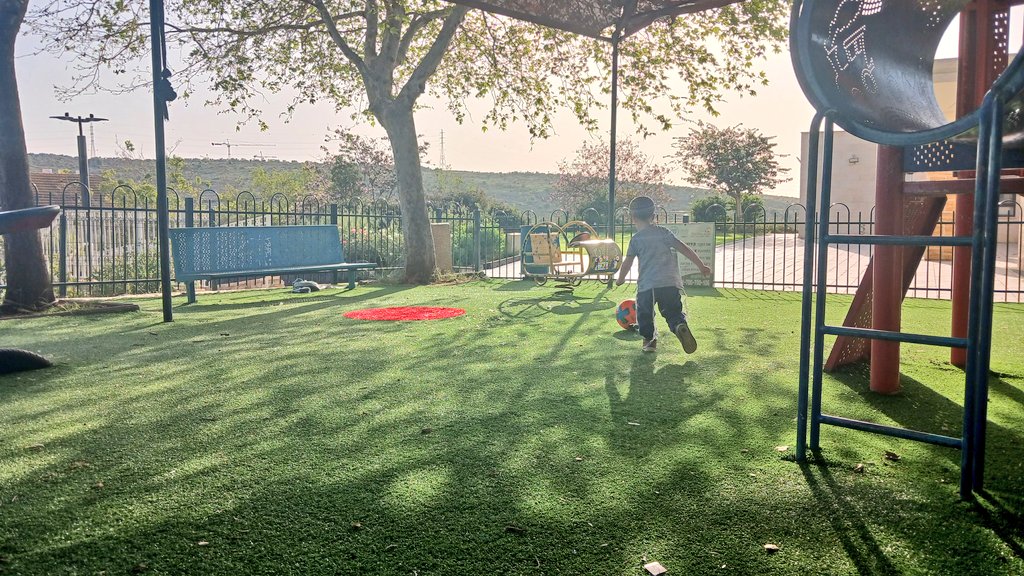
@DanitheSett Surprises me much! Perfect lawn. Non-spiked low fence. Peaceful. Has a future, obviously.
English
How much does this picture of our son playing in the park in a "settlement" in Samaria surprise you?
English
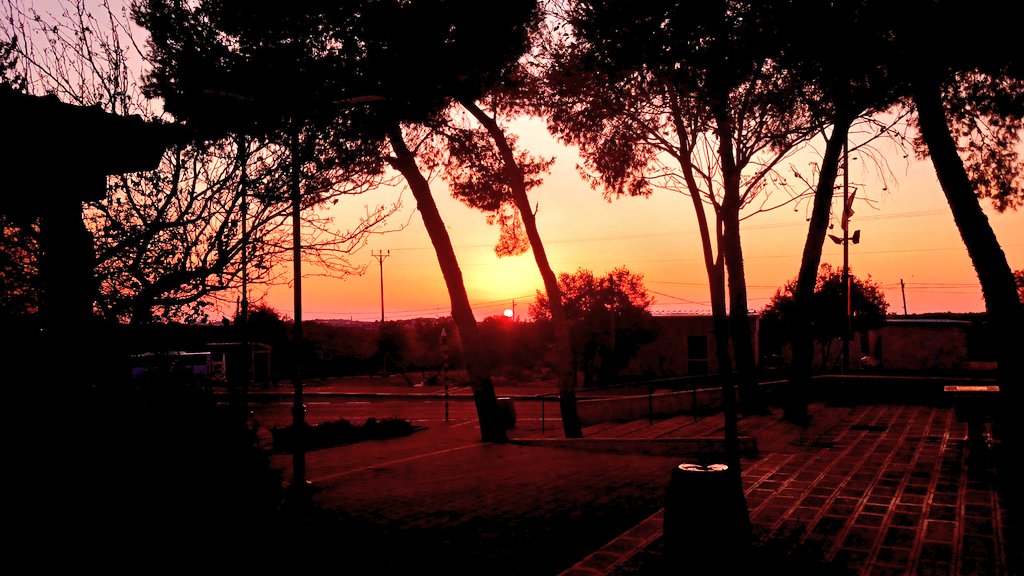
@DanitheSett Indeed. There are some coolish color nuances which remind of morning, but it fits sunset better. Though a bit confusing, still beautiful!
English
*picture of the beautiful sunset the other day.
Did anyone think "that looks more like sunset than sunrise"?
English
"But despite their pain, they were full of love … a family that understood love and loss"
(It's often asserted that these deeply touching accounts often wouldn't be shared by the first and second generation because of trauma.)
Shoshanna Keats Jaskoll@skjask
I am the granddaughter of Holocaust survivors. My grandmother, Rifka, was married with four children when the Nazis murdered her husband. Alone with children to raise, her young son Avrumi, 12 years old, took her shift working so that she could prepare for Passover with her other children, sister and sister’s children. When shouts of “Yudenrein!” “Jew round up” rang through the streets, Rifka took the children to the empty space below the floor boards to hide. As she was closing the hatch, Avrumi ran into the house. “Come! Come!,” she called frantically. “I can’t,” he said. “The Germans saw me, if I don't come out, they will know there is a hiding place. I just came to say goodbye.” When the Nazis barged in, Rifka listened through the floorboards as her son told them he had run into the house in a random search for food. She would never see him again. Two more of her children as well as her sister, nieces and nephews were killed in subsequent round ups. Her brother had been killed earlier in the war. Rifka was left with one son, Shlomo. 14 years old. They worked and hid in farms, in hay stacks and behind false doors. Exposed in the fields one day, they ran together, chased like animals by the Nazi’s. Shlomo told his mother, “If you don't let go of my hand, we will both die.” He let go. Shlomo went one way, Rifka went the other. The Nazis shot him in the back. With no husband or children to live for, Rifka joined the Partisans in the woods. After the war, she lay sick in bed with no will to live. Shlomo, meanwhile, had survived the gunshot. After the war as he searched for family, he heard a woman singing a familiar song. “Where did you hear that song?” he asked her. She told him a woman who lay dying had been humming it. “Is she still alive? Please, bring me to her.” And so Shlomo was reunited with his mother. In a displaced persons camp in Germany, Rifka married a man named Zalman whom she had met in the partisans. Zalman had lost his wife and three children to the Nazis but had one surviving son, Al. Together, Rifka and Zalman had two more children. Shep, born in the DP camp and Fayge (my mother) born in Bolivia where they moved after being sponsored by cousins. Zalman fell ill and the family moved to NY for treatment. Unfortunately he died when my mother was 2.5 years old. Left alone with children to raise, Rifka bought a farm in NJ. Back then, being a single parent meant your children could be taken from you. She needed a husband fast. A man named Berche, also a survivor, whose wife and two children were murdered, remarried after the war and had a daughter. His second wife, Dubye, died on the boat to America. A widower with a daughter to raise, he needed a wife to keep his daughter from a state run orphanage. Someone introduced Berche to Rifka and they married. I was raised with their memories. Their tears and their fears. There was no Sabbath when my grandfather didn’t cry, no day my grandmother didn’t stare silently into a past I could not accompany her to. Each spoke 4- 5 languages. Each had rebuilt their lives over and over again...But despite their pain, they were full of love. Their pride in their families, their belief in goodness...I cannot imagine the depth of their loss and how much strength it took to simply continue breathing. Believing. Hoping. And loving. I grew up with a family of half, whole and step siblings. A grandfather with whom I shared no blood but with whom I shared a heart. Cousins who drove me nuts but drove hours to see me. Aunts who were crazy and who I was crazy about. Uncles who slobbered me with kisses and showered me with love. I grew up in a family that understood love and loss, the value of sacrifice and the vital importance of loyalty. I love them all for who they are and who they are to me. They are all part of the story and part of who I am. #YomHashoa
English