Michael Young

23.3K posts

Michael Young banner
Michael Young

Michael Young

@BeirutCalling

Senior editor, Carnegie Middle East Center. Author of The Ghosts of Martyrs Square: An Eyewitness Account of Lebanon's Life Struggle (Simon & Schuster 2010).

Beirut Katılım Ocak 2011
2.4K Takip Edilen29.1K Takipçiler
Sabitlenmiş Tweet
Michael Young
Michael Young@BeirutCalling·
In 1984, I shot a militiaman. Story at the Lebanese Without Frontiers substack, to which I highly recommend you subscribe. It's full of fascinating material aimed at creating a collective Lebanese memory through personal recollection (and it's free): lebanesewithoutfrontiers.substack.com/p/how-i-shot-a…
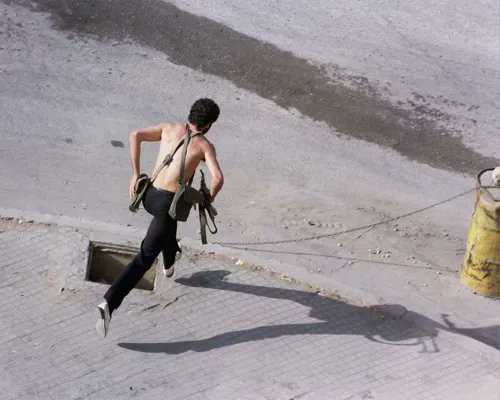
Michael Young tweet media
English
6
18
98
40.7K
Michael Young retweetledi
Lebanese Without Frontiers
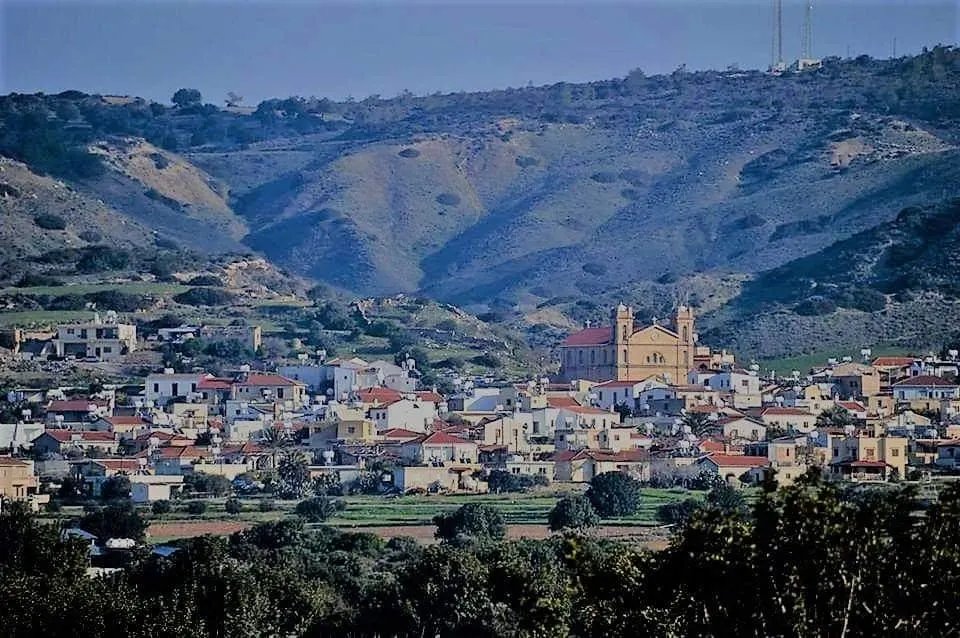
بين الذاكرة والحرب، بين المعاناة والصمود، تروي قرى دبل، وعين إبل، ورميش والقوزح حكاية تعلّقٍ بالأرض قلّ مثيله. من ذاكرة الجنوب الحدودي... lebanesewithoutfrontiers.substack.com/p/b36
Lebanese Without Frontiers tweet media
العربية
0
1
2
534
Michael Young
Michael Young@BeirutCalling·
Lebanese Without Frontiers spoke to inhabitants of four southern villages where people are still living—Rmeich, Debel, Ain Ebel, and Qawzah—for an overview of these places through personal narrative and memory. An eye into a ravaged, disappearing world.
Lebanese Without Frontiers@mireille961

For generations, the villages of Debel, Ain Ebel, Rmeich and Qaouzah have stood firm on a fragile border. Discover their inhabitants' incredible attachment to their land in this article on the Lebanese Without Frontiers Substack: lebanesewithoutfrontiers.substack.com/p/four-villages

English
0
4
10
4.2K
Michael Young
Michael Young@BeirutCalling·
What has put these parties "on steroids" is the failed plan, adopted by Trump and pushed hard by Netanyahu, Barnea, and their mouthpieces in Washington, to overthrow Iran's regime--a plan any half wit in the region could have told you was likely to go nowhere.
Lindsey Graham@LindseyGrahamSC

If it is perceived in the region that a deal with Iran allows the regime to survive and become more powerful over time, we will have poured gasoline on the conflicts in Lebanon and Iraq. A deal that is perceived to allow Iran to survive and possess the ability to control the Strait in the future will put Hezbollah in Lebanon and the Shia militias in Iraq on steroids.

English
0
3
18
3K
Michael Young
Michael Young@BeirutCalling·
@JenniferLoewe10 It was useless because the Israelis and Americans did everything to make it useless—Israel by securing an opt-out condition from the U.S. to hit Hezbollah at will; and the U.S. by trying to push for a venue that could advance a plan to force Lebanon into a new Abraham Accord.
English
0
0
0
31
Jennifer Loewenstein
Jennifer Loewenstein@JenniferLoewe10·
That monitoring mechanism proved useless between late Nov. 2024 & Mar. 2, 2026. Unless it is strengthened to a point where Israel can be forced to end its daily (& nightly) attacks on Lebanon, why revive it? And if it should become that strong, it is doing what Iran is demanding by linking any peace agreement to ending Israel’s aggression.
English
1
0
0
32
Michael Young retweetledi
Ali Hashem علي هاشم
Less than 24 hours after optimism emerged around a possible Iran-US memorandum, negative vibes are already surfacing. A well-informed Iranian source tells me there are signs of U.S. retreat on two central issues: the mechanism for unfreezing Iranian assets, and the scope of a ceasefire in Lebanon. According to the source, the memorandum includes a Lebanon ceasefire framework, but Israel is reportedly uncomfortable with the arrangement and is pushing Washington to include language allowing it to carry out military operations in Lebanon under the justification of responding to “any threat.” Iran is rejecting that formulation and insisting on a sustainable and lasting ceasefire. Tehran has informed all mediators, including Pakistan, that it will not sign the memorandum unless all clauses are fully agreed and guaranteed. Pakistan reportedly suggested moving forward with agreed sections while postponing contentious points, but Iran rejected that approach, insisting the disputed clauses are fundamental and non-negotiable. The overall picture suggests Tehran increasingly views Washington as backing away from earlier understandings reached through mediators.
Ali Hashem علي هاشم@Alihashem

According to my sources, the draft proposal that’s supposed to be finalised include: -End of war on all fronts including Lebanon -Freeing several billion dollars of Iran's blocked funds -Lifting the U.S. naval blockade and opening the strait of Hormuz -Withdrawal of American forces from the immediate vicinity of Iran After this, the parties will have 30 days to agree on the nuclear issue. These 30 days can be extended by mutual agreement. During these thirty days, passage will be facilitated through the strait. According to Iran, management of the Strait of Hormuz will be an Iranian-Omani issue, and is being negotiated with Muscat.

English
198
848
2.2K
921.6K
Michael Young
Michael Young@BeirutCalling·
It’s really enlightening, and pathetic, to see them writhing on Trump’s deal. They pushed hard for a military campaign that failed; they want Trump to resume military operations, knowing full well it will change nothing; now they’re utterly lost because the deal on the table only confirms their defeat, while any success in opposing the deal would only again highlight the bankruptcy of their military strategy. They’ve covered all the bases in ensuring Iran comes out of this war stronger, much to the chagrin of many in the region—and I’m not talking about Israel but others paying for this unnecessary war.
Mark Dubowitz@mdubowitz

Imagine achieving all of this on the battlefield only to surrender it at the negotiating table. President Trump wants to be seen as a winner, not as the president who created the greatest leverage ever against Iran and then traded it away for a deal even worse than Obama’s.

English
0
21
64
8.5K
Michael Young
Michael Young@BeirutCalling·
@guy_carmell Envy of what? Israel’s genocidal campaign in Gaza? It’s systemic annihilation of southern Lebanon? What’s to envy in a country wedded to permanent war and deep contempt for the societies that surround it?
English
4
1
78
1.5K
Guy
Guy@guy_carmell·
@BeirutCalling All this talk of hubris, is your hostility towards Israel a little bit fueled by wounded honor? Do you admit to yourself that your enmity has in it an element of envy?
English
1
0
4
2K
Michael Young
Michael Young@BeirutCalling·
He’s right, Israel will face a more dangerous strategic reality, on in which the Iron Wall doctrine favored by Netanyahu will hit up against a coalition of states which, whatever their internal disagreements, are united in wanting to oppose Israeli regional dominance. With the U.S. likely to disengage more from the region, after having been burned by an Israeli-encouraged war, a new regional architecture may emerge, one with which Israel will have to deal, without hubris. The Iron Wall cannot survive as a realistic concept in this environment, and some sort of Israeli reassessment will impose itself sooner or later.
Danny (Dennis) Citrinowicz ,داني سيترينوفيتش@citrinowicz

It’s hard to overstate how deeply Netanyahu views this moment as a possible personal and political defeat. A U.S.–Iran agreement under Trump would be a major blow to him mainly diplomatically, but above all politically. For years, Netanyahu built his political identity around being “Mr. Iran,” the leader who insisted that only pressure, deterrence, and force could stop the Iranian regime. And now, after multiple rounds of operational successes but one resounding strategic failure, and after finally succeeding in drawing the United States into direct confrontation with Iran, he may be forced to accept an agreement that not only legitimizes the very regime he sought to weaken, but also exposes the collapse of his long-standing Iran doctrine. His approach was based on the belief that more pressure, more military power, and tighter coordination between Israel and the United States would eventually either force Iran into submission or destabilize the regime itself. Instead, the result has been a more radicalized, more resilient, and more dangerous Iran, one that even Washington now hesitates to confront militarily again. If this confrontation ends with an agreement, an even bigger strategic question emerges: what future American president would be willing to commit U.S. forces to another major Middle Eastern conflict after seeing the political and military costs of this one? Netanyahu had what may have been his greatest opportunity to prove his central strategic theory: that a close Israeli-American military partnership could fundamentally reshape Iran and perhaps even threaten the regime’s survival. By every indication, that assumption failed. Against this backdrop, reports of a tense conversation between Trump and Netanyahu become much easier to understand. They also help explain the extraordinary level of pressure now coming from Jerusalem, and the extent to which Netanyahu is trying to persuade, or pressure, the administration not to move toward a deal with Tehran. The bottom line is that a U.S.–Iran agreement would not only signal the failure of the military confrontation Netanyahu pushed for, but also the collapse of the broader strategic doctrine he has championed since entering Israeli politics, all on the eve of what could be the most critical election of his career. In that sense, the next Israel’s leadership need to learn the fundamental lessons of this war. More than ever, this conflict demonstrates the urgent need for Israel to develop a different long-term strategy for dealing with Iran and especially to understand the following: Israel’s confrontation with Iran will not bring normalization with the Arab world, nor will it resolve Israel’s most fundamental security challenges, first and foremost, the Palestinian issue. The belief that regime change in Iran would transform Israel’s position in the Middle East was always detached from reality. In fact, the consistent opposition of Gulf leaders and major Arab states to further escalation against Iran has demonstrated this repeatedly throughout the conflict. Israel will not be able to use the “Iran card” as a substitute for addressing the core political issues shaping the region. Anyone arguing that military confrontation with Iran alone can unlock normalization is mistaken and, more importantly, misleading others about the strategic reality of the Middle East. Because despite the undeniable tactical and operational achievements of the campaign, this failure may ultimately leave Israel facing a more dangerous strategic reality, one that has not fundamentally improved its position in the Middle East. #IranWar

English
9
92
486
87.6K
Michael Young
Michael Young@BeirutCalling·
@abdu @RenaNetjes As s matter of fact yes, and this is hardly coincidental, showing wariness toward both Iran and Israel.
English
1
0
0
64
Michael Young retweetledi
Michael Young
Michael Young@BeirutCalling·
Can the coalition of Sunni states mediating in this deal address outstanding regional issues with Iran, beyond what interests the U.S. and Israel, and put in place a package deal to stabilize the region while downgrading reliance on the U.S. and containing Israel’s aggressiveness? If it succeeds, it would be welcome, since only a regional architecture that secures a balance of power, against U.S., Israeli, or Iranian domination, would create a hope for a less conflictual future: nytimes.com/2026/05/23/wor…
English
1
6
19
4.3K
Michael Young retweetledi
Ramy Abdu| رامي عبده
Jewish-American orthopedic surgeon Mark Perlmutter, who worked in Gaza, said Israeli soldiers took two Palestinian children, tied their hands behind their backs, and buried them alive at Nasser Hospital — their cries muffled by the dirt poured over them.
English
834
18.4K
27K
600.3K
Michael Young
Michael Young@BeirutCalling·
Lebanese Without Frontiers spoke to inhabitants of four southern villages where people are still living—Rmeich, Debel, Ain Ebel, and Qawzah—for an overview of these places through personal narrative and memory. An eye into a ravaged, disappearing world: lebanesewithoutfrontiers.substack.com/p/four-villages
English
0
3
9
1.6K