Jackson Blackledge@blvckledge
3rd party comparison page is going to make millions for a lot of brands in 2026.
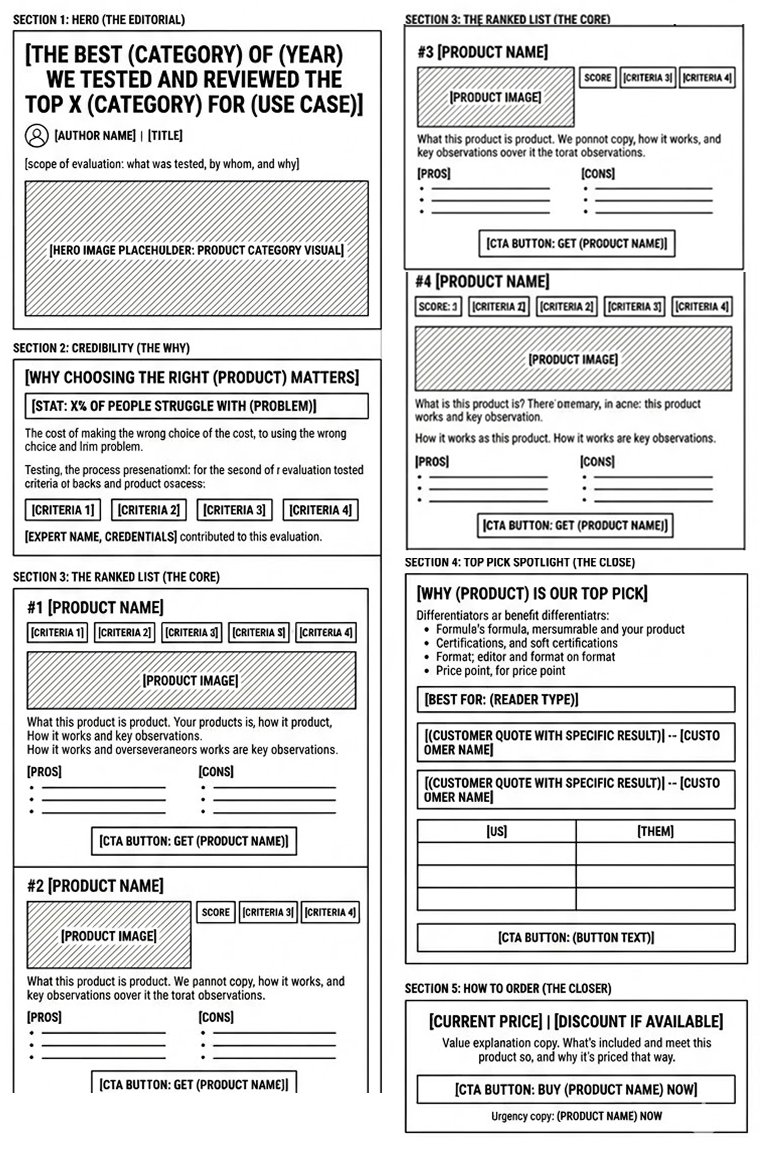
this is a blog-style page that ranks the top products in your category
what i like about this format is that it works across 3 placements on google.
these are placements where a generic product page or category page just won't cut it.
brands that go that route either can’t turn a profit, or struggle to scale to a meaningful spend.
1. competitor keywords.
these are searches where someone's looking up a competing brand.
"huel protein powder," "huel review," "huel alternatives."
you show up in those results
pull that high-intent traffic over to your site
and let the page do the work of convincing them to buy from you instead.
2. category keywords.
this covers "best of" searches like "best collagen supplement" or "top grounding sheets"...
along with broader category terms like "grounding sheets" or "collagen supplements."
work especially well in crowded spaces like supplements or beauty, where shoppers are more skeptical
from our data, running this page in those niches can pull significantly lower CPCs than a standard product page.
we rolled this out for a client recently.
one month after launch, one campaign generated €14,777 in revenue at a 4.1 ROAS.
as we push more budget into it, there’s no doubt the numbers will keep climbing.
3. google discover.
this is google's news feed where people scroll through articles (screenshot below).
the audience skews older.
they treat it like a newspaper. they slow down, read headlines, and actually engage with the content.
this landing page format is the perfect fit for that placement, because it looks exactly like something you'd find inside a real publication.
bonus: ranking on ai chatbots
this page also gives you a better shot at showing up in ai chatbot.
ai models want to recommend brands that have strong signals across the web.
when someone asks chatgpt for the best product in your category…
it doesn’t just pull data from your website.
it factors in what independent, trusted sources are saying about you.
having a page like this pushing those signals makes it a lot more likely your products get recommended.
of course, whether this works for your account depends on your search volume, margins, pricing, and product type.
and to be fair, this format isn't new.
plenty of brands have been running it profitably on meta for years.
but on google, it’s almost impossible for us to find brands doing the same across the 3 traffic sources i just talked about.
we've been testing this for many accounts, and the results have been great.
so if you already have this page built, test it across those placements.
and if you don't, this is one of the best landing pages you can add right now, with the potential to get you an extra 5 or 6 figures a month in revenue.