
Ben Guptill

4K posts

Ben Guptill banner
Ben Guptill

Ben Guptill

@BenGuptill

I love Jesus, and believe in the inerrancy of The Bible. Husband. Dad. Provisionist. Creationist. I love God's word, fishing, pipe smoking. IT Guy. 2A

Otsego, MN Katılım Mart 2021
268 Takip Edilen431 Takipçiler
Sabitlenmiş Tweet
Ben Guptill
Ben Guptill@BenGuptill·
This is the most important video I've ever made. It contains within it that which the Lord has revealed to me over the last 25 years or so of studying His scripture. I hope it blesses you! youtu.be/73R8xdJTRlI?si…
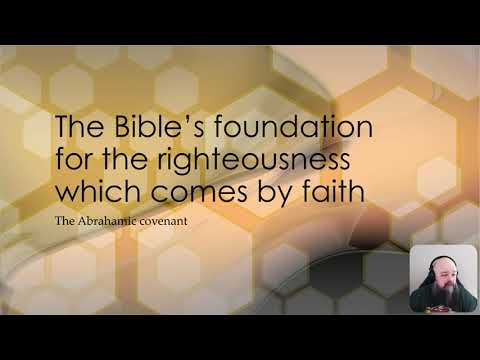
YouTube video
YouTube
English
5
3
24
3.8K
Ben Guptill
Ben Guptill@BenGuptill·
God chose Abraham because of his faith in the gospel. Nehemiah 9:7-8 (NASB95) 7 “You are the LORD God, Who chose Abram And brought him out from Ur of the Chaldees, And gave him the name Abraham. 8 “You found his heart faithful before You, And made a covenant with him To give him the land of the Canaanite, Of the Hittite and the Amorite, Of the Perizzite, the Jebusite and the Girgashite-- To give it to his descendants. And You have fulfilled Your promise, For You are righteous. This passage points directly to Genesis 15. Genesis 15:5-6 (NASB95) 5 And He took him outside and said, “Now look toward the heavens, and count the stars, if you are able to count them.” And He said to him, “So shall your seed be.” 6 Then he believed in the LORD; and He reckoned it to him as righteousness. Genesis 15:18-21 (NASB95) 18 On that day the LORD made a covenant with Abram, saying, “To your descendants I have given this land, From the river of Egypt as far as the great river, the river Euphrates: 19 the Kenite and the Kenizzite and the Kadmonite 20 and the Hittite and the Perizzite and the Rephaim 21 and the Amorite and the Canaanite and the Girgashite and the Jebusite.” Galatians 3:8 (NASB95) The Scripture, foreseeing that God would justify the Gentiles by faith, preached the gospel beforehand to Abraham, saying, “ALL THE NATIONS WILL BE BLESSED IN YOU.” 16 Now the promises were spoken to Abraham and to his seed. He does not say, “And to seeds,” as referring to many, but rather to one, “And to your seed,” that is, Christ. Hebrews 11:8 (NASB95) By faith Abraham, when he was called, obeyed by going out to a place which he was to receive for an inheritance; and he went out, not knowing where he was going. … 12 Therefore there was born even of one man, and him as good as dead at that, as many descendants AS THE STARS OF HEAVEN IN NUMBER, AND INNUMERABLE AS THE SAND WHICH IS BY THE SEASHORE. Genesis 12:1-4 (NASB95) 1 Now the LORD said to Abram, “Go forth from your country, And from your relatives And from your father’s house, To the land which I will show you; 2 And I will make you a great nation, And I will bless you, And make your name great; And so you shall be a blessing; 3 And I will bless those who bless you, And the one who curses you I will curse. And in you all the families of the earth will be blessed.” 4 So Abram went forth as the LORD had spoken to him; and Lot went with him. Now Abram was seventy-five years old when he departed from Haran. Genesis 18:18 (NASB95) since Abraham will surely become a great and mighty nation, and in him all the nations of the earth will be blessed? Galatians 3:8 (NASB95) The Scripture, foreseeing that God would justify the Gentiles by faith, preached the gospel beforehand to Abraham, saying, “ALL THE NATIONS WILL BE BLESSED IN YOU.” Gen 18:18 describes God re-articulating the gospel to him, so yes, I agree, it does describe why Abraham was chosen - because he believed the gospel. Genesis 18:19 (NASB95) “For I have chosen him, so that he may command his children and his household after him to keep the way of the LORD by doing righteousness and justice, so that the LORD may bring upon Abraham what He has spoken about him.” What is “the way of the Lord?” The law of Moses didn’t exist in Abraham’s day, so the law is not “the way of the LORD.” What is? Romans 4:13 (NASB95) For the promise to Abraham or to his descendants that he would be heir of the world was not through the Law, but through the righteousness of faith.
English
0
0
1
30
Cheryl Schatz 🩸
Cheryl Schatz 🩸@CherylSchatz·
In Genesis 18:17–19, God Himself explains why He chose Abraham. From this passage, what reason does God give for choosing Abraham? A: So that Abraham may command his children and his household after him to keep the way of the Lord B: No reason C: God can do what He wants D: I don't like this passage so I won't give an answer
English
9
0
4
538
Ben Guptill
Ben Guptill@BenGuptill·
I think an allegorical interpretation is wholly dependent upon the literal interpretation to give it substance & meaning. We can’t dismiss allegory because Paul uses it. Galatians 4:24 (NASB95) This is allegorically speaking, for these women are two covenants: one proceeding from Mount Sinai bearing children who are to be slaves; she is Hagar. Paul himself tells us his allegorical interpretation of literal events without succumbing to the notion that the allegorical meaning is the true meaning and the literal meaning is not. He explains the allegory using the literal details, and the allegorical meaning gets its shape from the literal. Galatians 4:21-31 (NASB95) 21 Tell me, you who want to be under law, do you not listen to the law? 22 For it is written that Abraham had two sons, one by the bondwoman and one by the free woman. 23 But the son by the bondwoman was born according to the flesh, and the son by the free woman through the promise. 24 This is allegorically speaking, for these women are two covenants: one proceeding from Mount Sinai bearing children who are to be slaves; she is Hagar. 25 Now this Hagar is Mount Sinai in Arabia and corresponds to the present Jerusalem, for she is in slavery with her children. 26 But the Jerusalem above is free; she is our mother. 27 For it is written, “REJOICE, BARREN WOMAN WHO DOES NOT BEAR; BREAK FORTH AND SHOUT, YOU WHO ARE NOT IN LABOR; FOR MORE NUMEROUS ARE THE CHILDREN OF THE DESOLATE THAN OF THE ONE WHO HAS A HUSBAND.” 28 And you brethren, like Isaac, are children of promise. 29 But as at that time he who was born according to the flesh persecuted him who was born according to the Spirit, so it is now also. 30 But what does the Scripture say? “CAST OUT THE BONDWOMAN AND HER SON, FOR THE SON OF THE BONDWOMAN SHALL NOT BE AN HEIR WITH THE SON OF THE FREE WOMAN.” 31 So then, brethren, we are not children of a bondwoman, but of the free woman. This is Paul telling us how we are justified as righteous - whether by the law or by faith in Christ. He sees the literal story of Hagar & Sarah as an allegory for this tension. He equates Hagar with the righteousness based on the law of Moses (Sinai covenant) and Sarah with the righteousness based on faith (Abrahamic covenant). Many confuse this to mean Jews & Christians, but this is not the dichotomy Paul is explaining. Paul is pitting covenant vs covenant, not people vs people. Paul spent chapters 2-3 explaining this dichotomy. Galatians 2:16 (NASB95) nevertheless knowing that a man is not justified by the works of the Law but through faith in Christ Jesus, even we have believed in Christ Jesus, so that we may be justified by faith in Christ and not by the works of the Law; since by the works of the Law no flesh will be justified. Galatians 3:17-18 (NASB95) 17 What I am saying is this: the Law, which came four hundred and thirty years later, does not invalidate a covenant previously ratified by God, so as to nullify the promise. 18 For if the inheritance is based on law, it is no longer based on a promise; but God has granted it to Abraham by means of a promise. So the literal history of Sarah & Haggar gives shape to and informs the allegorical meaning. If there is no literal meaning, then there is no allegorical meaning as the literal meaning is necessary to create the allegorical meaning. You can’t behave an allegorical meaning without a literal meaning to give it substance and shape. If the literal meaning is dismissible, then it gives shape to a dismissible allegorical meaning. If God can reject his promises to the Jews in favor of Christians it means God will and must reject Christians. The literal meaning creates the allegorical reality.
English
0
0
0
34
Jalapeño 🌶️ 🇺🇸
Jalapeño 🌶️ 🇺🇸@chris_jolliff·
I’m beginning to wonder if “trading the truth for a lie” = trading a literal reading of scripture for an allegorical reading. They get so much wrong at the wrong time, like what is seen in the 1st Century. An allegorical interpretation bakes in a distrust of Biblical prophecy.
Jalapeño 🌶️ 🇺🇸 tweet media
English
20
18
81
2.4K
Ben Guptill
Ben Guptill@BenGuptill·
@DrFrankTurek NASB. I like the word for word translations, the more literal the better. I also like how it capitalizes quotes from the OT when it finds them in the NT.
English
4
1
14
769
Frank Turek
Frank Turek@DrFrankTurek·
What is your favorite Bible translation?
English
947
17
315
61.1K
Ben Guptill
Ben Guptill@BenGuptill·
@AtheistTakes The same meme can be made about Atheists. Marxism is atheistic, so put communists & socialists Mao, Stalin, Hitler, etc on the Atheist balance sheet.
English
0
0
0
24
Ben Guptill
Ben Guptill@BenGuptill·
Yes… if they believe in the same person Abraham did (Jesus), they are good. Christians need to understand that the reason the righteousness based on faith in the gospel is APART from the law is because it preceded the law by 430 years. When Abraham was made righteous for his faith in the gospel, the law of Moses didn’t exist… so what part of it is required for salvation? None of it. Galatians 3:6-9 (NASB95) 6 Even so Abraham BELIEVED GOD, AND IT WAS RECKONED TO HIM AS RIGHTEOUSNESS. 7 Therefore, be sure that it is those who are of faith who are sons of Abraham. 8 The Scripture, foreseeing that God would justify the Gentiles by faith, preached the gospel beforehand to Abraham, saying, “ALL THE NATIONS WILL BE BLESSED IN YOU.” 9 So then those who are of faith are blessed with Abraham, the believer. Galatians 3:14-17 (NASB95) 14 in order that in Christ Jesus the blessing of Abraham might come to the Gentiles, so that we would receive the promise of the Spirit through faith. 15 Brethren, I speak in terms of human relations: even though it is only a man’s covenant, yet when it has been ratified, no one sets it aside or adds conditions to it. 16 Now the promises were spoken to Abraham and to his seed. He does not say, “And to seeds,” as referring to many, but rather to one, “And to your seed,” that is, Christ. 17 What I am saying is this: the Law, which came four hundred and thirty years later, does not invalidate a covenant previously ratified by God, so as to nullify the promise. The Abrahamic covenant is the covenant of righteousness through faith.
English
1
0
0
12
Frankly My Dear...
Frankly My Dear...@FranklinDzioba·
@BenGuptill @theocraticking1 So because you rightly understand that Christianity is based on the OT that means Jews are good if they just chill in the OT ? Just because Jesus is based on OT doesn’t mean Jews can justify themselves based on their genetics. You can’t reject the Jewish Messiah and claim Jewish
English
1
0
0
27
BiblicalCovenantalist
BiblicalCovenantalist@theocraticking1·
I don't use the term Replacement theology much. I still do, usually it is by accident because I am used to using it. When it comes to that approach to Scripture, I refer to it as anti-covenant theology. It makes my issue with that view a lot clearer.
English
7
1
17
522
Ben Guptill
Ben Guptill@BenGuptill·
I think one of the biggest problems with PSA as church doctrine is every denomination has a slightly different version of it… and there doesn’t seem to be any standard definitions. Many may believe PSA simply because they’ve never been taught about it. For the longest time, I thought PSA just meant “Jesus died for us.” Once I saw an exhaustive definition I could actually say “I don’t agree with a lot of this.”
English
1
0
1
6
Daniel Jones
Daniel Jones@Jondaphemp·
@ScottRoberts If you are a proponent of PSA you can you even call yourself a Christian? Its a bastardaztion of EVERYTHING about scripture. It is one of the most elegant lies of hell.
English
1
0
1
11
Scott Roberts
Scott Roberts@ScottRoberts·
Non-negotiable truths of Christianity: The Trinity The deity & humanity of Christ The virgin birth The sinlessness of Christ Penal substitutionary atonement Justification by faith alone Salvation by grace alone Salvation through Christ alone The authority of Scripture The bodily resurrection The return of Christ
English
56
59
321
8.7K
Ben Guptill
Ben Guptill@BenGuptill·
Gen 1 is an overview of creation… Gen 2 gives the step-by-step details of day 6. Genesis 2:16-19 (NASB95) 16 The LORD God commanded the man, saying, “From any tree of the garden you may eat freely; 17 but from the tree of the knowledge of good and evil you shall not eat, for in the day that you eat from it you will surely die.” 18 Then the LORD God said, “It is not good for the man to be alone; I will make him a helper suitable for him.” 19 Out of the ground the LORD God formed every beast of the field and every bird of the sky, and brought them to the man to see what he would call them; and whatever the man called a living creature, that was its name. Here we see a chronological sequence during day six is that God told Adam not to eat before He created Eve. The word “then” in v18 shows that sequential order. Genesis 2:21 (NASB95) So the LORD God caused a deep sleep to fall upon the man, and he slept; then He took one of his ribs and closed up the flesh at that place.
English
0
0
1
39
Cheryl Schatz 🩸
Cheryl Schatz 🩸@CherylSchatz·
@BenGuptill In Genesis 1:28–29, God speaks to both Adam and Eve about what they are free to eat. What reason is there to believe that Eve was excluded from hearing God’s words directly?
English
1
0
0
59
Cheryl Schatz 🩸
Cheryl Schatz 🩸@CherylSchatz·
Some people say that Eve added to God’s words. What evidence is there that God charged her with the serious sin of adding to His words?
English
17
0
8
1.1K
Ben Guptill
Ben Guptill@BenGuptill·
Yes, Abraham’s faith was in Jesus. All a Jew has to do to be saved is do what Abraham did. They don’t have to embrace “Christianity” because the Abrahamic covenant already has a faith in Jesus component. They can embrace the Torah’s faith in Jesus. Galatians 3:16 (NASB95) Now the promises were spoken to Abraham and to his seed. He does not say, “And to seeds,” as referring to many, but rather to one, “And to your seed,” that is, Christ. Galatians 4:24 (NASB95) This is allegorically speaking, for these women are two covenants: one proceeding from Mount Sinai bearing children who are to be slaves; she is Hagar. The two covenants Paul pits against each other in Gal 2-4 are Abraham & Moses… not Moses & the “new covenant.” Galatians 4:30-31 (NASB95) 30 But what does the Scripture say? “CAST OUT THE BONDWOMAN AND HER SON, FOR THE SON OF THE BONDWOMAN SHALL NOT BE AN HEIR WITH THE SON OF THE FREE WOMAN.” 31 So then, brethren, we are not children of a bondwoman, but of the free woman. So Paul tells the Jews to revert back to Abraham (righteousness through faith) because Moses’ covenant (righteousness through works of the law) can’t justify them. The mistake Christians make is to say faith in Christ is a “New Testament” doctrine. It is actually a Torah doctrine as Genesis is in the Torah, and Abraham’s faith was in Jesus.
English
1
0
0
12
Frankly My Dear...
Frankly My Dear...@FranklinDzioba·
@BenGuptill @theocraticking1 Are you sure? Cause Jesus said that “Abraham say my day and was glad” John 8. So I would argue you can’t have Abrahamic faith if you reject what Abraham had faith in. Not to mention the violation of Duet 18:15 as corporate people. There are not two covenants.
English
1
0
0
22
Ben Guptill
Ben Guptill@BenGuptill·
@LaymansSeminary Most people criticize me for having untraditional unorthodox views… it was funny to be called traditional since I don’t see anyone holding my view since Paul himself. Though, I will say my view is more common amongst messianic Jews who readily accept their Abrahamic kinship.
English
1
0
0
10
The Layman's Seminary
The Layman's Seminary@LaymansSeminary·
@BenGuptill Ok, well the way you rejected the term positional salvation , and accused others except yourself of tradition , led me to believe you did not welcome this
English
1
0
0
23
The Layman's Seminary
The Layman's Seminary@LaymansSeminary·
𝗤𝘂𝗲𝘀𝘁𝗶𝗼𝗻: Is the Modern State of Israel Theologically Irrelevant to the Bible? (A Super Layman / GPT5 response) ⏱ TL;DR: Dispensationalists do not argue Christians must support the modern state of Israel as a doctrinal command. The claim is simpler: God’s covenant promises to national Israel remain future and territorial. The modern state may be historically significant, but theology comes from the text—not geopolitics. Text / Observations The debate turns on whether the Bible’s promises to Israel were: 1.Transferred to the Church, or 2.Still reserved for ethnic/national Israel. Key passages: • Genesis 15:18 – God grants Abraham’s descendants a specific land. • Jeremiah 31:35–37 – Israel’s national identity endures as long as the cosmic order. • Romans 11:25–29 – Israel’s future restoration is guaranteed because “the gifts and calling of God are irrevocable.” These passages speak of a national entity distinct from the Church. Lexical / Context In Romans 11 Paul contrasts: • Israel • Gentiles • the Church If “Israel” meant the Church, Paul’s argument collapses. The whole chapter depends on the continuing identity of ethnic Israel. Discourse Paul explains a timeline: 1.Israel experiences partial hardening. 2.Gentiles are gathered. 3.“All Israel will be saved.” That implies a future national restoration, not replacement. Literary Structure (Romans 9–11) 9 – Israel’s election 10 – Israel’s present unbelief 11 – Israel’s future restoration The structure assumes Israel still exists as a covenant people. Covenant The Abrahamic covenant included: • Seed • Land • Nation The NT never cancels the land promise; it postpones its fulfillment to the Messianic kingdom. Canon The prophets repeatedly predict Israel’s regathering to the land before the kingdom (Ezek 36–37; Zech 12–14). Whether the 1948 state fulfills that or simply prepares the stage is debated even among dispensationalists. System So the issue isn’t political loyalty. It’s hermeneutics: Replacement view: Israel → Church Dispensational view: Israel ≠ Church Promises remain with their original referent. Supporting Israel politically is not a gospel doctrine. But denying Israel’s future in God’s plan contradicts the plain flow of Scripture. Decision The Catholic critique misfires. Dispensationalism does not require blind political support for the modern state. It simply maintains covenant continuity with ethnic Israel. Confidence: High. The argument follows the narrative logic of Romans 9–11 and the OT covenant structure.
English
1
0
3
69
Ben Guptill
Ben Guptill@BenGuptill·
@LaymansSeminary I get that from conversations like this when people challenge my views and give me their own take.
English
1
0
0
7
The Layman's Seminary
The Layman's Seminary@LaymansSeminary·
@BenGuptill I get refinement. I eliminate options. I’m Trying to disprove certain views within free grace.
English
1
0
0
16
The Layman's Seminary
The Layman's Seminary@LaymansSeminary·
@BenGuptill I understand. But we both have presented competing models and if we had a month or more to prepare then we could present and test our models well
English
1
0
0
16
Ben Guptill
Ben Guptill@BenGuptill·
I don’t trust ChatGPT’s ability to listen to the inner witness of the Holy Spirit to be guided in truth ;) Is Adam’s judgment universal or individual? The Bible says Rom 5 by one man & one transgression sin came into the world. Genesis 3 describes Adam, Eve, their offspring, the animals, the plants, and the ground were all judged in that judgment. That is a universal judgment. But Eze 18:20 says each person is being judged for their own sin. We know the GWTJ is individual. So are the judgments in Eze talking about a universal judgment or an individual judgment?
English
1
0
0
13
The Layman's Seminary
The Layman's Seminary@LaymansSeminary·
❓Does Ezekiel 18 teach a future “Great White Throne individual judgment” replacing Adamic death? (A Super Layman / GPT5 response) ⏱ TL;DR: No. Ezekiel 18 is addressing individual responsibility within Israel’s covenant discipline, not Adamic death or the Great White Throne. The proverb about “sour grapes” corrects a misuse of covenant blame during exile. Reading Revelation 20 into Ezekiel 18 imports an eschatology the passage never discusses. Text / Observations Ezekiel 18:2–3 addresses a proverb circulating “in the land of Israel.” “The fathers eat sour grapes and the children’s teeth are set on edge.” God rejects this proverb and explains: “The soul who sins will die… the son will not bear the punishment for the father.” The chapter repeatedly describes case-law scenarios: • righteous father • wicked son • righteous grandson The point: each person is judged for his own conduct. Nothing in the chapter mentions: • Adam • universal inherited condemnation • the lake of fire • the Great White Throne Lexical “Die” (מוּת) in prophetic covenant contexts frequently refers to judicial death / covenant punishment, not necessarily final eschatological condemnation. Options (A-Chart) A1 Eternal life / final salvation A2 Covenant standing A3 Covenant discipline / temporal judgment A4 Resurrection arrival A5 Final inheritance A-Chart Reasoning Ezekiel 18 repeatedly speaks about turning from wickedness and living in the land (18:21–32). The issue is whether Israelite sons must suffer automatic covenant punishment for their fathers’ sins. Thus the passage fits A3 (covenant discipline / national judicial accountability), not A1 or A4. Decision Ezekiel 18 corrects a fatalistic proverb during the exile. God affirms that individuals are responsible for their own covenant obedience. It does not describe Adam’s universal death nor the Great White Throne judgment. Inference The proposed reading conflates three unrelated categories: 1.Adamic mortality (Genesis / Romans 5) 2.Israel’s covenant discipline (Ezekiel 18) 3.Final eschatological judgment (Revelation 20) Those belong to different covenantal and narrative contexts. System Proper canonical flow: Genesis → Adamic death Ezekiel → covenant responsibility in exile Revelation → final eschatological judgment. Collapsing them into a single concept of “death” creates the confusion. Confidence: High.
English
1
0
0
16
Ben Guptill
Ben Guptill@BenGuptill·
I am rarely impressed with formal debates. No one ever wins and no one’s position ever changes and no one ever learns anything from them. It might be the worst format imaginable for edifying the body through learning scripture. I would rather sit down with a pipe and have an in person discussion … a normal human to human conversation. It’s still the best model for learning because the Holy Spirit can guide you organically in that kind of interaction… and truth be told He’s the only thing that transforms a person.
English
1
0
0
15
The Layman's Seminary
The Layman's Seminary@LaymansSeminary·
No wonder you didn’t want me to use Super Layman. ❓Is Ben Guptill’s argument actually “just Scripture,” or a rhetorical framing of an interpretation? (A Super Layman / GPT-5 response) ⏱ TL;DR: Ben’s rhetoric reframes the debate as “Scripture vs your system,” shifts the burden of proof, and equates quoting passages with proving an interpretation. That’s persuasive online, but it avoids the real issue: which interpretation of those texts fits the context best. Text / Observations Ben argues that you have not produced a “biblical refutation” because you have not simply counter-quoted passages like Gal 3:8. He frames your critique as relying on “traditions and systems” such as “positional salvation.” But the actual disagreement is not whether Scripture is authoritative—both sides appeal to Scripture. The disagreement is how the passages should be interpreted. Rhetorical Moves 1. Burden-Shift Framing Ben reframes the discussion as: Scripture (him) vs system (you) But in reality both sides are interpreting Scripture. Calling an interpretation “systematic theology” does not invalidate it. 2. Berean Moral Framing Appealing to Acts 17:11 rhetorically places him in the role of the Berean examiner and implicitly places you outside that category. But the Bereans examined interpretations of Scripture, not just raw quotations. So the appeal functions rhetorically as moral positioning, not an argument. 3. Citation Density Strategy Ben quotes long passages (Deut 30, Rom 10, etc.) to give the impression that his view is simply what the text says. However the key interpretive steps—such as: Deut 30 → Abrahamic covenant → justification → salvation are theological inferences, not explicit statements in the passages themselves. So the persuasion relies on association rather than demonstration. 4. Category Compression His rhetoric merges multiple biblical concepts into one chain: faith → Abrahamic descendant → inheritance → salvation. But Scripture uses these categories differently: • salvation • justification • inheritance • covenant blessing Treating them as identical simplifies the argument rhetorically but weakens it analytically. 5. Narrative Flow Persuasion His argument works rhetorically because it tells a clean story: hear gospel → believe → enter Abrahamic covenant → receive salvation blessings. The story sounds biblical, but the key assumption—that Abrahamic covenant inheritance equals salvation itself—is asserted rather than demonstrated. Decision Ben’s rhetoric is effective in a social-media debate because it frames him as simply “quoting Scripture.” But the real dispute is interpretive logic, not citation quantity. Conclusion The question is not “Who quoted more verses?” The real question is: Which interpretation actually fits the context of the passages being cited? Confidence: High.
English
1
0
0
8
Ben Guptill
Ben Guptill@BenGuptill·
The lake of fire judgment doesn't happen until the end of Revelation... if you have to actually be saved from the lake of fire to be "saved" then are we not "saved" until the Great White Throne judgment or are we "saved" now? So your "saved from what" is "the second death?" If that is the case, then we are saved from the second death by Christ's righteousness. Romans 5:16-17 NASB95 - 16 The gift is not like [that which came] through the one who sinned; for on the one hand the judgment [arose] from one [transgression] resulting in condemnation, but on the other hand the free gift [arose] from many transgressions resulting in justification. 17 For if by the transgression of the one, death reigned through the one, much more those who receive the abundance of grace and of the gift of righteousness will reign in life through the One, Jesus Christ. The "one transgression" is Adam's death (the first death). The "many transgressions" is the Great White Throne Judgment's individual judgments... the second death (the lake of fire). So Christ's free gift of righteousness is what "saves" us from the Lake of Fire. The Lake of Fire was created for the Devil and his angels. His children inherit his destiny just as Abraham's children inherit his destiny. Ecc tells us the current state since Adam's death is still in effect: Ecclesiastes 9:2-3 NASB95 - 2 It is the same for all. There is one fate for the righteous and for the wicked; for the good, for the clean and for the unclean; for the man who offers a sacrifice and for the one who does not sacrifice. As the good man is, so is the sinner; as the swearer is, so is the one who is afraid to swear. 3 This is an evil in all that is done under the sun, that there is one fate for all men. Furthermore, the hearts of the sons of men are full of evil and insanity is in their hearts throughout their lives. Afterwards they [go] to the dead. But God tells us that a change to that current state will occur in the future when people will no longer be under a universal judgment, but each one will be judged individually: Ezekiel 18:2-3, 20 NASB95 - 2 "What do you mean by using this proverb concerning the land of Israel, saying, 'The fathers eat the sour grapes, But the children's teeth are set on edge'? 3 "As I live," declares the Lord GOD, "you are surely not going to use this proverb in Israel anymore. ... 20 "The person who sins will die. The son will not bear the punishment for the father's iniquity, nor will the father bear the punishment for the son's iniquity; the righteousness of the righteous will be upon himself, and the wickedness of the wicked will be upon himself. Whereas V2-3 talks about Adam's universal death judgment, v20 talks about the Great White Throne Judgment's individual judgments (rev 20:11-15).
English
2
0
0
16
The Layman's Seminary
The Layman's Seminary@LaymansSeminary·
@BenGuptill Salvation as I’m defining it is one moment of faith in the gospel results in you actually being saved from the lake of fire
English
1
0
0
11
Ben Guptill
Ben Guptill@BenGuptill·
But you haven’t used any scripture to do so, so it is evident you are not “searching the scriptures to see if what I say is true” but rather comparing what I say to your knowledge of traditions & systems like “positional salvation.” A Biblical refutation would be “Gal 3:8 doesn’t mean God preached the actual gospel to Abraham, it means God told him a sort of gospel-like message.” It would say what part of the Bible I got wrong, why it is wrong, and what the correct interpretation is and why that is correct. But you’re not doing that. You are denying my claims because [systems] and [traditions] don’t meet your expectations. So far you have yet to make any argument from scripture as to why I am wrong or as to what the correct view is instead.
English
1
0
0
11
Ben Guptill
Ben Guptill@BenGuptill·
I agree... the covenant is not salvation. However, you need to define what you mean by salvation. The covenant facilitates salvation and is the legal (and mechanical) framework for salvation. But our salvation is in Christ alone. Christ and His righteousness are the cause of life which is salvation (from both deaths). Abraham's covenant is the distribution system for that righteousness (life) to those who believe. The Biblical process fully integrates the Abrahamic covenant as part of the process of salvation, but without Christ Abraham's covenant is useless. During your rebuttal to Chris in the video you sent, you said: "If you want to say to simplify things that that there's a result that whenever you believe the gospel, you enter into the blessings of the Abrahamic covenant, then I don't have a problem with that. " Isn't this exactly my claim? Does knowing the steps from A to Z negate that the claim that faith in the gospel results in entering into the blessings of the Abrahamic covenant? No. Does it start with hearing the gospel? Yes. Is faith next? Yes. Do the blessings of Abraham come thereafter? Yes. Could salvation occur without the Abrahamic covenant? Yes, if the Bible were re-written. It's only required insomuch as that's what the Bible describes as the process. But truly the active ingredient is Christ. Why does Paul explicitly state that having faith in the gospel makes you a descendant of Abraham and an inheritor of his blessings in the context of justification? Why is eternal life and regeneration and the gift of the Spirit and righteousness all referred to in scripture as an inheritance?
English
1
0
0
7
The Layman's Seminary
The Layman's Seminary@LaymansSeminary·
Issac was the son of the covenant but that’s not salvation. It was only when he believed God and was already saved that he became a theocratic Administator for the covenant. So you are conflating Sonship and inheritance probably because you are getting Galatians 3 wrong then reading that back into Genesis
English
1
0
0
7
Ben Guptill
Ben Guptill@BenGuptill·
Incorrect. You should do what the Bereans did: Acts 17:11 NASB95 - 11 Now these were more noble-minded than those in Thessalonica, for they received the word with great eagerness, examining the Scriptures daily [to see] whether these things were so. They didn't learn from Paul ... they searched the scriptures for what Paul told them so that they may learn from God what was true. My goal is the same, which is why every post I write has so much scripture in it.
English
1
0
0
11
The Layman's Seminary
The Layman's Seminary@LaymansSeminary·
By that logic we should reject your teaching because you are a msn trying to create a new tradition of saying your view of covenants explains salvation. You can’t have it both ways. If you don’t want to engage in academic conversation then you should have never replied. If you didn’t want your system critiqued then you should not have offered it. So either you learn these words or accept the fact that you are attempting to do theology without allowing your opponents to do it also. You have used theological terms in your post but you appear to not know their origin. So will you step up your learning or will you bow out?
English
1
0
0
12