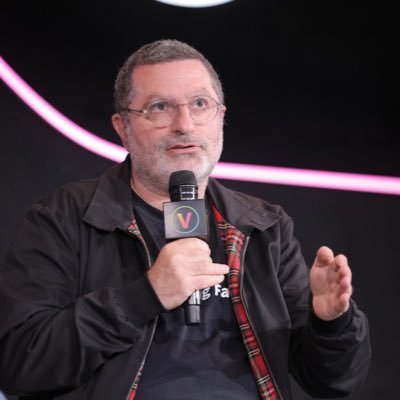

Ben Haynes

801 posts

Ben Haynes banner
Ben Haynes

Ben Haynes

@benhaynes

Founder & CEO of @Directus

Brooklyn, NY Katılım Temmuz 2008
259 Takip Edilen27.1K Takipçiler
Ben Haynes retweetledi
Alvaro アルバロ
Alvaro アルバロ@alvarosabu·
It's finally here! My new portfolio is available now. Made with @tresjs_dev and @nuxt_js as result of my study of @threejs shaders over the last couple of years. The home page contains 3 different variations, can you find them all? More about the project on thread 👇 (01/04)
English
9
20
117
9.2K
Ben Haynes
Ben Haynes@benhaynes·
@staysaasy Haha, sounds about right! Have you considered using a data backend platform for this AI-assist frontend? That might help give some proper access to your data model... and provide a solid foundation to vibe off of.
English
0
0
1
1.1K
staysaasy
staysaasy@staysaasy·
There’s also this weird thing happening where because I don’t know the actual underlying code and data model particularly well, I find myself guessing at what problems are instead of knowing from first principals. Said another way - in thinking through product requirements, sometimes a deep knowledge of the implementation creates a rich understanding of the limitations. Without that, requirement iteration is much slower.
English
8
12
547
43.1K
staysaasy
staysaasy@staysaasy·
I’m on week five of trying to vibe code a replacement for some dumb saas that we use and it’s so incredibly frustrating that I’m slowly realizing it’s actually a quite complex and thoughtful piece of software.
English
122
181
6.7K
725.4K
Ben Haynes retweetledi
Marc Backes
Marc Backes@marcba·
Son of a bitch, it worked! 🥳 - Bun backend with Vue-powered reactivity - Controlling a synchronized routine 1000 phone screens - Sync corrected for system time offset with NTP It worked better than I would have ever imagined. Thanks for everything supporting me on this talk ❤️
English
24
16
427
49.5K
Ben Haynes retweetledi
Rijk van Zanten
Rijk van Zanten@rijkvanzanten·
@AnthropicAI hey our thousands of $ annual team plan suddenly got canceled for "suspicious signals", but I have no clue what could've caused that and have no way to resolve on my end. This is very impactful to my business, how can we resolve this?
English
1
1
4
788
Ben Haynes
Ben Haynes@benhaynes·
Two years ago we ran Leap Week. Then life happened, and we didn't. We're bringing it back. March 24–26. The reason now feels right: something is shifting in how software gets built. The interface used to be the differentiator. When anyone can spin up a frontend in minutes, it stops being the moat. The value doesn't disappear... it moves. Where it moves to is exactly what we want to figure out together. Nine sessions. Partners we'll be announcing over the next two weeks. And the kind of conversations I've been wanting to have with our community about everything happening right now. If you're a builder (or are becoming one), this one's for you. Register → leapweek.directus.io
English
0
0
2
262
Ben Haynes retweetledi
Massimo
Massimo@Rainmaker1973·
Programmers were asked to make the worst volume control for a contest
English
66
338
3.6K
329.5K
John Daniels
John Daniels@iamjohndaniels·
What’s your favorite software that you use all the time but is rarely talked about? Mine is @CleanShot
English
3
0
8
421
Ben Haynes
Ben Haynes@benhaynes·
Snowed in here in Connecticut today. Good day to reflect. Last week we had a quarterly board meeting… and it had me thinking about the people around that virtual table. My exec team. My chairman (who started as my first and most trusted advisor). Board members from our investors. A few observers. When you zoom out, it’s kind of surreal. Bootstrapping is hard. Fundraising is harder... especially right now, when VCs are comparing everything to AI companies posting absurd year-one growth numbers… or writing big checks into pre-revenue, pre-PMF AI dreams (hallucinations??). And even if you raise successfully, money is just money. It only gets you so far. The real variable is who you partner with. VCs come with capital... but also ops teams, recruiting help, experienced pattern recognition, and networks that can open doors you simply can’t on your own. Choosing a firm isn’t just about terms/valuation. It’s about alignment. Are they active or passive? Are they the kind of partner you’re nervous to bring hard news to… or grateful to have helping your through it? Do they truly understand your model and ethos (eg: OSS, dev tooling, exit ambitions)? Have they actually lived it as operators? If they’re leading your round, they’ll likely take a board seat. That means real influence over your project’s future. Are you choosing a firm’s logo… or their specific sponsor? What happens if your sponsor leaves the firm? Do they want growth at all costs... or responsible growth? More importantly… which do you want? A few years ago, I knew literally nothing about any of this. No MBA. No playbook. No ChatGPT. Just a design degree, some light technical skills, and an equally capable, excited, and motivated co-founder (hey Rijk!! 👋). YouTube got me started, haha... but my investors helped me actually grow into my role as CEO. That’s why it matters who you team up with (in business and in life). It can feel like you should jump at the first term sheet. Maybe sometimes you should... survival matters. But these are long-term relationships. Do your diligence. Ask them for references. Talk to their founders (not just the successful ones). Five years after converting our OSS project into a DE C-Corp and raising a $1.5M SAFE (microscopic by today’s standards)… I still feel great about those early choices. Yesterday’s meeting was long. Some topics were more controversial. But it was honest dialogue around things that mattered, it was about alignment, and it was respectful and exciting (from what I’ve heard, this isn’t the norm). And that’s not luck. I’m extremely grateful for Handshake Ventures, True Ventures, F-Prime, Eight Roads, and PWV (Preston-Werner Ventures). Not just for their initial trust, but for their ongoing support in this shared vision of Directus. Capital helps you grow. The right partners help you build something that actually matters.
Ben Haynes tweet media
English
0
0
4
243
Ben Haynes retweetledi
Marc Backes
Marc Backes@marcba·
SO EXCITED. To show you what we’re working on at @directus 🐰
English
3
3
29
2.4K
Ben Haynes
Ben Haynes@benhaynes·
All these AI-generated apps are awesome… right up until they become important. 🫣 They look great. They work. They solve a real problem. Then they go into production or maybe just need a bit more scale, and they're handed off to engineering... who quietly starts over. An AI demo is the easy part. Production... not so much. For the last 20 years, software has been judged by its interface… innovative UIs, polished design systems, and endless front-end frameworks. AI is starting to flip that upside down. Today, a decent interface can be generated in minutes. Tools like Lovable and Replit are turning marketers, founders, and operators into builders. We're moving from a society of software users to a society of software creators. 🙌 That's exciting. It's also a little chaotic. At the Enterprise level, most of these AI-generated apps are closer to proofs of concept than production systems. They don't account for permissions, audit trails, structured APIs, automation, or long-term data integrity. They weren't designed for scale, governance, or reliability. So when they become mission-critical… they get rebuilt. And as the number of front-ends explodes, another problem appears: you can't have a one-to-one backend for every AI-generated interface. Ugh, no thank you… my browser couldn't handle the tabs. What you need instead are durable backends that can power many front-ends at once (I thought we already learned this when sites went "headless" haha)… stable systems of record that outlive any single interface. Another option is removing the backend entirely for simple cases. Cursor recently shared how they replaced their AI-generated website's CMS with raw code and markdown. That works when your whole company is made of highly technical devs and the system isn't "mission-critical"... but most orgs don't live in that world. And while AI can generate interfaces today, building a truly production-ready backend with AI alone isn't really an option yet. For now, the data engine still needs consistency, carefully considered structure, future-looking specs, and proven systems. In the next era of software, interfaces may change every day. The front-end is becoming disposable. The backend is becoming the product. 🧱
English
0
0
2
700
Ben Haynes retweetledi
Directus 🐰
Directus 🐰@directus·
Every team needs backup. Your own AI Assistant in Directus. Coming soon!
English
0
6
20
1.7K
Ben Haynes retweetledi
Rijk van Zanten
Rijk van Zanten@rijkvanzanten·
Very excited to be back at this blast of a conference. See you there? 😃 @vuejsamsterdam
Rijk van Zanten tweet media
English
2
2
7
473
Ben Haynes retweetledi
Bassem Asseh
Bassem Asseh@asseh·
Last week in Brooklyn was a strong reminder of why in-person time still matters. Back in October, I joined a great team at Directus that, until now, I had only worked with through Meet, Slack, and other remote tools. I had my first face-to-face working sessions with the Directus GTM team: aligning on FY26 priorities and going deep on concrete customer use cases where Directus is truly mission-critical — powering large-scale consumer voice assistants embedded in physical devices, shipped at industrial scale. I also had my first in-person meetings with the Executive Leadership Team, discussing roadmaps and long-term vision that are both ambitious and very grounded in customer reality. I’m a strong believer in remote work — 10+ years. It scales, it focuses, it respects time. But regular, intentional face-to-face moments still play a unique role in alignment, trust, and velocity. A week that set a strong foundation for what’s ahead 🚀
Bassem Asseh tweet media
English
0
2
8
337
Ben Haynes retweetledi
Rijk van Zanten
Rijk van Zanten@rijkvanzanten·
The way in which we write syntax changes constantly. Changing from raw html to templated languages felt like black magic back in the day. Changing from JS to TS has been a force multiplier in how much work we can put out in the same amount of time, and now AI now does the same..
Ryan Dahl@rough__sea

This has been said a thousand times before, but allow me to add my own voice: the era of humans writing code is over. Disturbing for those of us who identify as SWEs, but no less true. That's not to say SWEs don't have work to do, but writing syntax directly is not it.

English
1
5
18
2.1K
Ben Haynes retweetledi
Varun Anand
Varun Anand@vxanand·
I want to give every startup founder permission to hire candidates based off vibes. But I'm going to give you the vocabulary to feel better about it. Leaders resist "vibes hiring" because it sounds lazy. Like you’re not doing due diligence. People don’t love feelings-based decisions and revert to only what the evidence says. But recruiting is a human game and humans have feelings. That’s why you must incorporate how someone makes you feel in the decision. So, what does this mean in practice with candidates? It means that you pay attention to the intangible. Do you get energy from the conversations? Do they inspire you with confidence and peace of mind? Do you feel excitement not anxiety when you see their caller ID on your phone? Do you feel conversational chemistry? Do you naturally gravitate towards and want to spend more time with them? Good news - at a startup, you’re basically living with them. With these hires, everything just feels right. Decisions are made easily, conflict and arguments resolve in seconds not hours, and the building blocks of trust stack on top of each other. You have people like this on your team right now. You know who they are. Interviewing is an information gathering exercise, and how a candidate makes you feel (The Vibes) is as important as their take home assessment, behavioral interview and specific competencies. Even if someone is perfect on paper, you can’t get things done at the quality and speed a startup requires if you keep having those little moments of friction that fracture the trust and communication needed to excel. You are about to spend your life building with them. You need to enjoy the vibes!
English
23
14
205
133K
Ben Haynes
Ben Haynes@benhaynes·
The holidays are a great excuse to build something you definitely don’t need. Case in point 👉 directus.is/carols We built The Merry Carol Machine 🎄 It turns LinkedIn profiles into personalized Christmas carols. Yes, really 😆 Behind the scenes, it’s also a fun example of how we think about AI systems. Clay validates LinkedIn profiles and crafts the lyrics. Suno turns it all into actual songs. Directus is the orchestration layer beneath it all, taking in all of the data/content output, running workflows, and serving up the personalized content on each landing page. One backend. One place to manage it all and serve it to the frontend. Just a flexible system doing its thing, even when the outcome is a little ridiculous. Try it. Have a laugh. And if your profile turns into a carol you secretly love, we won’t judge. 💜
English
0
0
2
214
Ben Haynes retweetledi
Directus 🐰
Directus 🐰@directus·
Setting up a Model Context Protocol can be more intimidating than it actually is. That’s why we built our new native MCP to have the easiest, piece of cake set-up possible. 🍰 In this walkthrough, Bryant and Lindsey break down the whole process step-by-step:
English
2
2
8
1.4K
Ben Haynes retweetledi
Bassem Asseh
Bassem Asseh@asseh·
We’re hiring two Account Executives at Directus: • US West-based AE • Germany/DACH/CEE-based AE Directus is a Series A startup with a strong user and developer community and an impressive customer base. As #AI adoption accelerates, having the right #data platform has become critical — and that’s exactly where Directus makes a difference. If you want to drive full-cycle sales in high-potential regions and help teams build their AI projects on solid data foundations, we’d love to talk. Role details and application: directus.io/careers/accoun…
English
0
3
4
600