Benjamin Henriksson

21 posts

Benjamin Henriksson

Benjamin Henriksson

@BenjaminEmHe

Stockholm Katılım Haziran 2025
359 Takip Edilen46 Takipçiler
Benjamin Henriksson
Benjamin Henriksson@BenjaminEmHe·
@noquierocoima @ben_sdl Kind of? FlashSplat figures out how much each gaussian contributes to any pixel, then uses many 2D segmentations to find which gaussians match a segmented object. You get "scores" for how closely each gaussian links to a concept, which I just thresholded in the viewer.
English
0
0
0
2
Benjamin Henriksson
Benjamin Henriksson@BenjaminEmHe·
@pablo_troyse @lichtfeldstudio The source images were actually taken from a camera rig mounted on an airplane, which was somewhat challenging to work with due to viewpoint sparsity and the extreme resolution of the images (roughly 20k by 14k).
English
0
0
0
14
Benjamin Henriksson
Benjamin Henriksson@BenjaminEmHe·
@ben_sdl I used SAM 3 with text prompts on the source imagery and then projected it into 3D with FlashSplat!
English
1
0
5
109
Bilawal Sidhu
Bilawal Sidhu@bilawalsidhu·
Semantically annotating 3D gaussian splats on the fly using gemini 3.1 + sparkjs 1. Load any 3D scene and hit scan 2. Get 2D detections from VLM 3. Cluster outputs & project into 3D world space 4. Save as a persistent 3D semantic layer Inspired by @alexanderchen's experiments with gemini visual intelligence. Just had to try to lift it from 2D to 3D!
English
23
119
956
53.4K
Jens Nylander
Jens Nylander@nylanderjens·
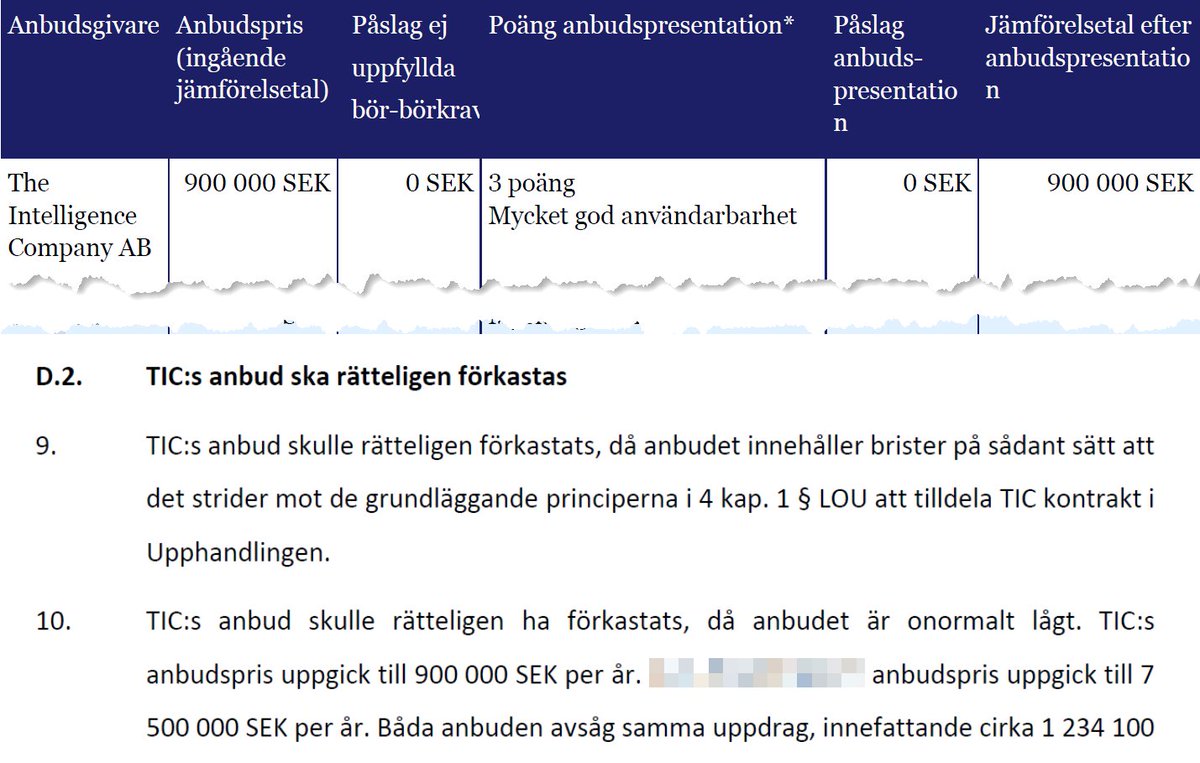
@BenjaminEmHe Om priset skiljer sig markant ska den upphandlade organisationen begära in en förklaring. Då förklarar man exakt hur man beräknat och vad som gör att man kan leverera för priset, vi har sådan standardrutin som inleds med...
Jens Nylander tweet media
Svenska
1
0
29
2.7K
Jens Nylander
Jens Nylander@nylanderjens·
En myndighet har betalat 6,3 MKR/år för enkel data. Mitt AI-bolag lämnar in ett anbud på 0,9 MKR vs 7,5 MKR/år. Konkurrenten överprövar och tycker det är för billigt m.m. AI kommer plocka bort allt "fluff" som finns. AI-startups ska in i upphandlingar - fråga gärna om råd.
Jens Nylander tweet media
Svenska
24
72
1K
63.3K
Ian Curtis
Ian Curtis@XRarchitect·
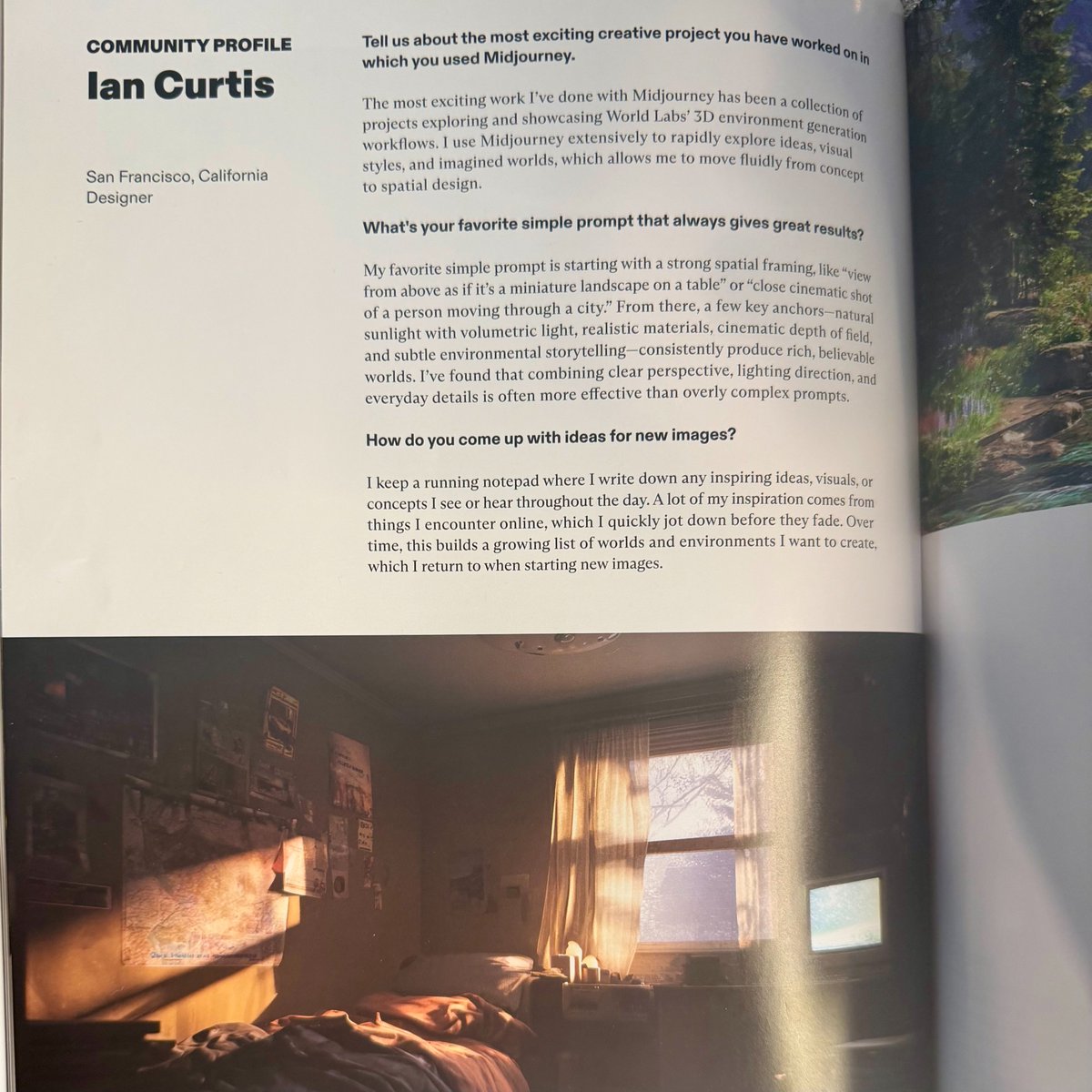
Pumped to be featured in the latest Midjourney Issue 36 I’ve been using it as an iteration system to explore inputs for persistent 3D creation with World Labs across the web and mixed reality. Excited about where this is all heading 🌎
Ian Curtis tweet media
English
1
1
36
2.5K
Benjamin Henriksson
Benjamin Henriksson@BenjaminEmHe·
@naribubu Any recommendations for ICP packages? Had some trouble aligning LIDAR and SfM point clouds before (especially with drone images and ground LIDAR) :/
English
1
0
1
116
kotohibi
kotohibi@kotohibi_3d·
Livox mid 360 + GLIMでSLAMした点群にポスト処理で色付けしてみた。 手順: ①OSMO360で同じ場所を撮影 ②12方向reframeしてColmapでSfM ③SfMの点群とLiDAR点群をICPで合わせて変換行列を得る ④Colmapのimages.txtを上記変換行列でLiDAR座標に合わせる ⑤LiDAR点群をカメラの画像座標系に透視投影変換する ⑥LiDAR点群に色を付ける(一番近いカメラを選択する) ※LiDARとOSMOは撮影日が異なり移動した車は色付けズレてます。また地面は自身が映りこんでる(-_-;)
kotohibi@kotohibi_3d

OSMO360 + ColmapのSfM後のsparse point cloudとLivox mid 360 LiDARデータをICPで合わせてみた。密度が全然違うのによくもこれだけ合致するなぁーと感心してます💦。変換行列が解ったので、LiDAR点群をOSMO360の画像座標系に変換して色付けできる筈。

日本語
4
16
110
17.3K
martin_casado
martin_casado@martin_casado·
Insane LoD/streaming test of experimental @sparkjsdev branch. 100 scenes with ~150m splats. 16million local splat budget for streaming, 2million visible budget for LoD. Once this stabilizes I think we can support persistent splat worlds of arbitrary size ...
English
10
26
223
13.1K
Benjamin Henriksson
Benjamin Henriksson@BenjaminEmHe·
@DSkaale Interesting, might it work with image segmentation models? e.g. SAM3, etc.
English
1
0
2
58
Daniel Skaale
Daniel Skaale@DSkaale·
🎨 WIP: My Gaussian Splatting editor now has a revolutionary color-coded copy/paste workflow. Addition to box tools, I'm using dual GPU selection buffers visualized as colored overlays. You just paint what you want and paint where it goes. Technical Highlights: • Dual-buffer selection: Orange for source, Blue for target regions. • Auto-alignment: Captures camera orientation to compute target-to-source quaternion deltas. • Occlusion culling: Two-pass GPU depth test using InterlockedMin to filter for front-most splats. • Real-time refinement: Specialized compute kernels for incremental transforms with zero Euler drift. • Performance: Sub-millisecond latency for 100k+ splats via massive GPU parallelism. Still in development but already changing how I edit splats. #GaussianSplatting #Unity3D #ComputeShaders #GameDev #WIP #GameDev
English
3
14
132
8.7K
Benjamin Henriksson
Benjamin Henriksson@BenjaminEmHe·
@nearcyan Yeah, unfortunately the Quest 3 struggles performance-wise with viewing splats through WebXR etc. (although there is some form of experimental native support?). Would be nice to see more optimizations for native viewing.
English
0
0
0
37
near
near@nearcyan·
Meta and Apple put a ton of resources into this, and it doesn't seem to get much attention yet because XR hardware is still rare as soon as real XR glasses come out (...so never), the quality will be pretty amazing. i'm already amazed with SOTA if you feed it 100s of images
English
3
0
90
6.7K
Brad Lynch
Brad Lynch@SadlyItsBradley·
I tried out that newly released Apple “single image to gaussian splat” model today It’s actually incredible. Unlike the current spatial scenes feature, you can actually WALK INTO the memory you captured on your phone It only took about 10 seconds on my MacBook Pro to generate
English
108
301
5.2K
622.7K
Benjamin Henriksson
Benjamin Henriksson@BenjaminEmHe·
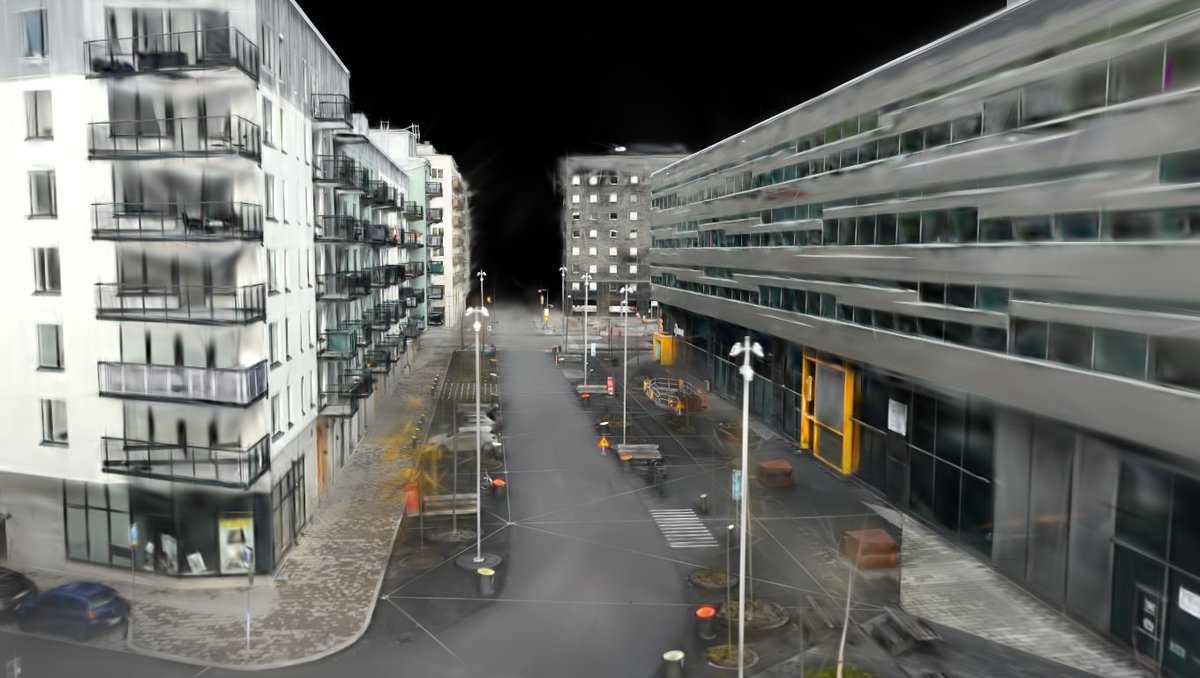
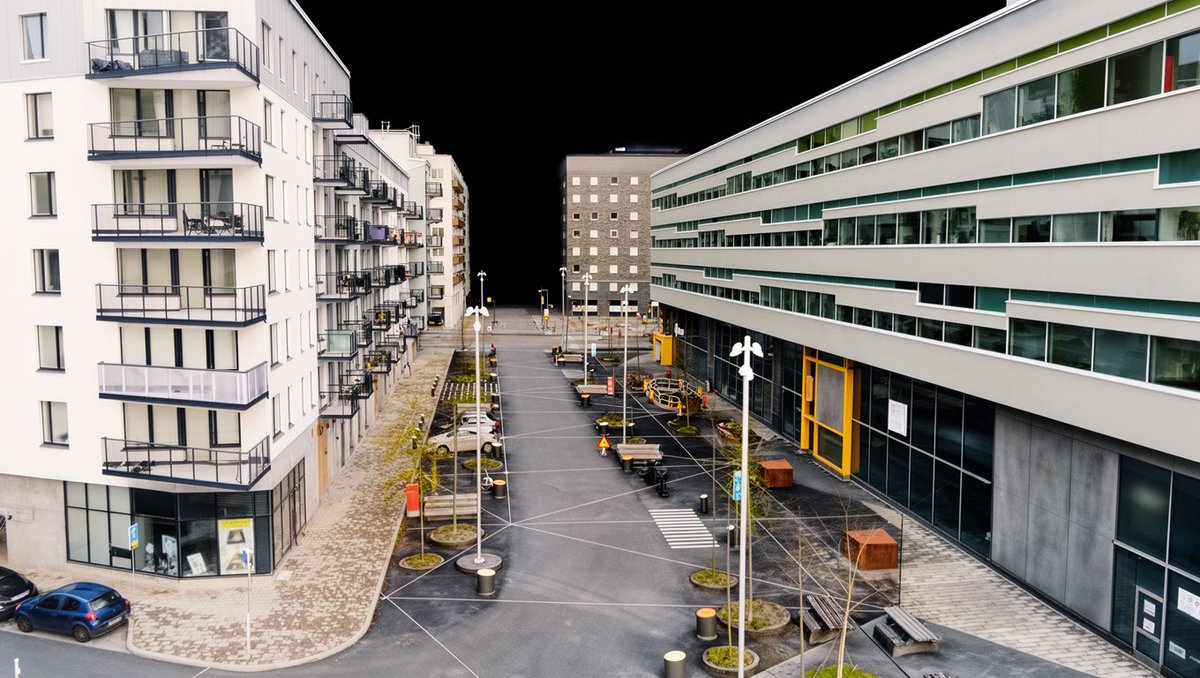
Messing around with Flux.2 for upscaling OOD viewpoints in a Gaussian splat, works surprisingly well running locally on an RTX 5090.
Benjamin Henriksson tweet mediaBenjamin Henriksson tweet media
English
1
0
6
504
CIX 🦾
CIX 🦾@cixliv·
POV you turn a small Airbnb kitchen into a humanoid robot testing room before a NYC robot fight. The Airbnb just left me a positive review, I can post this picture now.
CIX 🦾 tweet media
English
8
5
144
7.1K
Benjamin Henriksson
Benjamin Henriksson@BenjaminEmHe·
@janusch_patas Would love to get Skyfall GS running, but I can't seem to find any pre-trained checkpoints. Can they be found anywhere, or does it have to be trained from scratch?
English
1
0
0
246
MrNeRF
MrNeRF@janusch_patas·
3DGS, satellite imagery, and drones are game changers for disaster recovery and modern warfare. Progress in real-time 3D reconstruction will lift the fog of war. Drones are cheap and ubiquitous, and with Gaussian Splatting, anyone can build near-instant spatial awareness. This can even happen in a feed-forward way, similar to how Tesla approaches autonomous vision. The first LichtFeld Studio bounty already demonstrated that seven scenes can be trained in about twenty minutes on an RTX 4090, even with a classical optimization-based approach. Combine this with feature embeddings that let you prompt directly within the scene for objects like humans, tanks, or buildings. Almost every week, new research papers are published doing exactly this. Projects like Skyfall GS already turn satellite images into explorable 3D urban environments using diffusion models with real-time rendering performance. Companies are beginning to experiment with decentralized mapping, where different actors contribute their own 3D data that merges into one coherent world model. In disaster zones, this means instant 3D situational maps. Collapsed buildings, flooded streets, and blocked roads can be reconstructed and shared within minutes to guide rescue teams. In warfare, it becomes a massive intelligence amplifier, combining drone and satellite imagery into live 3D maps of terrain, movement, and infrastructure faster than any traditional reconnaissance could. The next step is not just seeing the world but reconstructing it in real time.
MrNeRF@janusch_patas

Skyfall-GS: Synthesizing Immersive 3D Urban Scenes from Satellite Imagery TL;DR: Skyfall-GS converts satellite images to explorable 3D urban scenes using diffusion models, with real-time rendering performance. Contributions: • We introduce Skyfall-GS, the first method to synthesize immersive, real-time, free-flight navigable 3D urban scenes solely from multi-view satellite imagery using generative refinement. • An open-domain refinement approach leverages pre-trained text-to-image diffusion models without domain-specific training. • A curriculum-learning-based iterative refinement strategy progressively enhances reconstruction quality from higher to lower viewpoints, significantly improving visual fidelity in occluded areas.

English
11
83
517
36.5K