Benjamin Goolsby

604 posts

Benjamin Goolsby banner
Benjamin Goolsby

Benjamin Goolsby

@BenjaminGoolsby

Here just to complain about the Jags

Katılım Eylül 2012
2.1K Takip Edilen133 Takipçiler
Benjamin Goolsby retweetledi
tphuang
tphuang@tphuang·
Wow, Chinese researchers have developed direct coupling of atmospheric CO2 w/ ammonia to produce urea using solar energy as sole input. Up until now, they have been synethesizing "green" methanol & urea through waste straws, animal wastes & such. Would be a game changer to directly take carbon from air & produce different kind of chemicals we need.
tphuang tweet media
English
14
78
582
73.3K
Benjamin Goolsby retweetledi
Hiroki Kurashige
Hiroki Kurashige@hir_kurashige·
脳のクリアランス系の研究現状がよくわかるレビュー レビュー論文にしては著者がめちゃ多い 個人的にはイントロの第一段落が気に入った 要は、以前は神経科学はニューロンと神経回路網の科学だったけど、それがグリアや体液輸送や免疫監視にも広がり、結果、脳機能の基礎的理解が再構成された的な内容
Neuron@NeuroCellPress

Online now: Resolving the mysteries of brain clearance and immune surveillance dlvr.it/TPRglJ

日本語
2
39
193
17.7K
Benjamin Goolsby retweetledi
Michael Okun
Michael Okun@MichaelOkun·
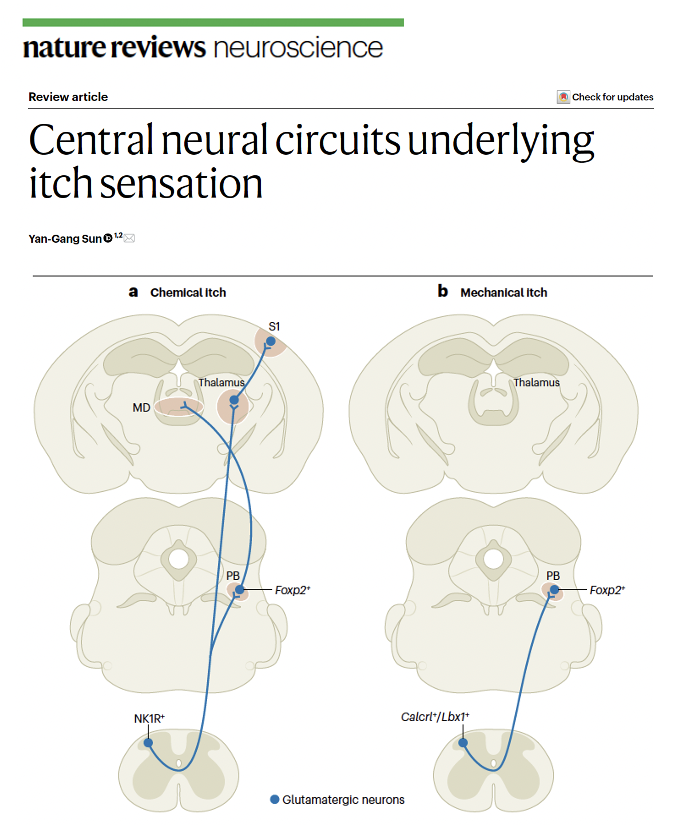
What does your brain have to do w/ itching? Spoiler alert: The brain plays an important role in itch. Itch is a somatosensory signal that your brain interprets and shapes, linking sensation, emotion and action. Sun describes in a new paper in Nature Reviews Neuroscience how the brain and spinal cord coordinate the entire itch experience. Key points: - Itch signals begin in the skin, are sculpted in the spinal cord and then relayed to higher brain regions that determine what you feel emotionally and what you decide to do about it, including scratching. - Spinal circuits process chemical and mechanical itch using distinct excitatory and inhibitory neuron populations and these circuits gate how strongly itch signals rise up toward the brain. - Ascending pathways to the thalamus and parabrachial nucleus transmit itch information and engage broad brain networks that represent sensation, emotion and motivation. - Brain circuits linking the prefrontal cortex, insular cortex, amygdala and reward pathways determine both the negative and the positive affective components of itch, influencing whether folks scratch and how strongly they respond. My take: If you don't think the brain plays a role in itching, then think again. Here are 5 points that resonated w/ me: 1- Itch begins in the skin and is shaped in the spinal cord before you consciously feel it. Ultimately the brain acts as a final interpreter. 2- Chemical and mechanical itch follow different pathways, which helps explain why some itches sting, some tickle and some persist. 3- Brain regions that generate emotion play a major role, so itch frequently triggers discomfort, anxiety or an urge to escape the feeling. 4- Scratching is rewarding because brain reward circuits activate, which reinforces the itch scratch cycle and makes stopping difficult. 5- Chronic itch reflects plastic changes in spinal and brain circuits, meaning effective treatments will need to target both sensation and also address the brain’s emotional and motivational responses. nature.com/articles/s4158… @SfNtweets @movedisorder @ParkinsonDotOrg @greenjournal @JAMANeuro @Nature @NatureNeuro
Michael Okun tweet media
English
3
57
299
19.2K
Benjamin Goolsby retweetledi
Nature Neuroscience
Nature Neuroscience@NatureNeuro·
Parietal cortex output neurons form a specialized population code that enhances the propagation of information to a downstream target and potentially improves the accuracy of decision-making nature.com/articles/s4159…
English
4
27
120
23.3K
Benjamin Goolsby retweetledi
Hiroki Kurashige
Hiroki Kurashige@hir_kurashige·
少し前に, 「ノルアドレナリン→アストロサイト→ニューロン」の経路による脳状態の制御に関わる論文が, 3報同時にScienceに掲載されていたことがありまして, 個人的にはアストロサイトすごい!よりも青斑核すごい!のお気持ち ↓はその3論文へのリンクを含む展望論文 science.org/doi/10.1126/sc…
日本語
0
12
90
4.5K
Benjamin Goolsby retweetledi
Prof. Michael Lin
Prof. Michael Lin@MichaelLinLab·
Head-mounted 2-photon miniscope voltage imaging! Weijian Yang's group at UC Davis sped up 2p scanning by multiplexing to achieve 400-Hz voltage imaging of ~20 neurons, using ASAP4e. These are the first freely moving single-cell voltage recordings as far as I know.
Prof. Michael Lin tweet media
English
4
38
139
8.1K
Benjamin Goolsby retweetledi
Science Magazine
Science Magazine@ScienceMagazine·
Comparative whole-brain and single-cell analyses are identifying neurons orchestrating neurological functions. Learn more in a new #SciencePerspective: scim.ag/3WMwLDR
Science Magazine tweet media
English
2
56
232
30.8K
Benjamin Goolsby retweetledi
Imaging Neuroscience
Imaging Neuroscience@ImagingNeurosci·
New paper in Imaging Neuroscience by Vicky He, David F. Abbott, et al: Common pitfalls during model specification in psychophysiological interaction analysis doi.org/10.1162/IMAG.a…
Imaging Neuroscience tweet media
English
1
7
22
1.9K
Benjamin Goolsby retweetledi
Luiz Pessoa
Luiz Pessoa@PessoaBrain·
Hidden Markov Models Really enjoyed this paper on dynamics underlying resting state and other conditions. The idea of a baseline state from which excursions lead to more integrated states is really interesting. elifesciences.org/articles/85487…
Luiz Pessoa tweet media
English
3
68
360
15.6K
Benjamin Goolsby retweetledi
Neuron
Neuron@NeuroCellPress·
Online now: Human cortical dynamics of auditory word form encoding dlvr.it/TP7snV
Neuron tweet media
English
5
68
203
34.8K
Benjamin Goolsby retweetledi
Danny Huang, MD
Danny Huang, MD@YuhaoHuangMD·
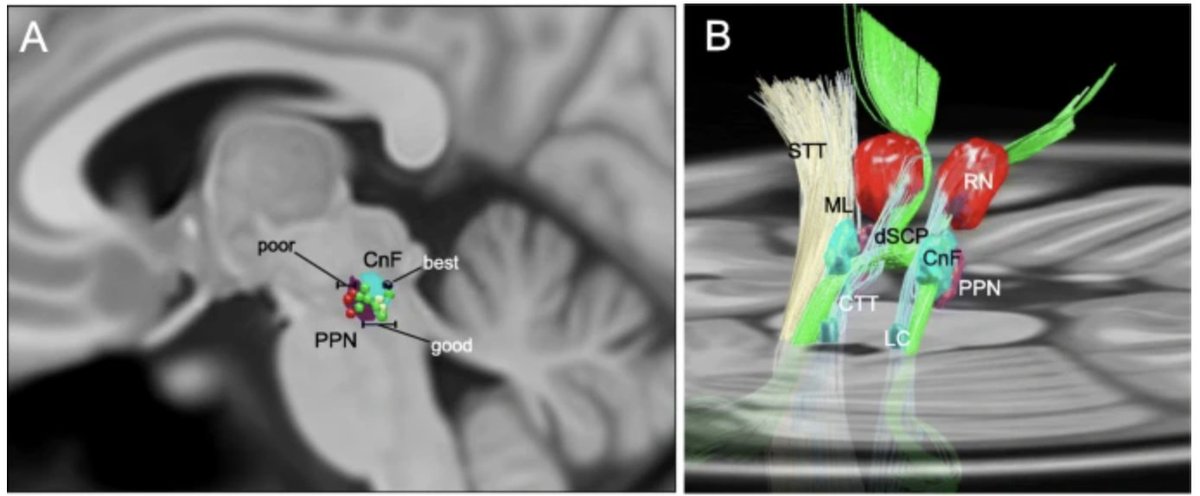
Fascinating @ANA_journals study inadvertently found that deep brain stimulation of the human midbrain (pedunculopontine nucleus) can induce sleep on-demand. High-frequency stimulation (80Hz) produced NREM sleep within minutes. pubmed.ncbi.nlm.nih.gov/20437591/ video ⬇️
Danny Huang, MD tweet media
English
3
55
227
24.6K
Benjamin Goolsby retweetledi
F. Perry Wilson, MD MSCE
F. Perry Wilson, MD MSCE@fperrywilson·
NIH has announced a cut in the "indirect rate" to 15% across the board, in a move that appears to be retroactive to even existing grants. This is a bloodbath for research institutions throughout the country. Brief explainer for those not in this world: buff.ly/3EtML7D
English
173
783
3.4K
472.7K