Prof. Michael Lin

1.6K posts

Prof. Michael Lin

Prof. Michael Lin

@MichaelLinLab

Stanford Neurobiology and Bioengineering Precision molecular design / synbiochem. Also @michaelzlin

Greenberg → Tsien → Katılım Temmuz 2022
210 Takip Edilen2.6K Takipçiler
Prof. Michael Lin retweetledi
Itai Yanai
Itai Yanai@ItaiYanai·
How science works according to Nobel Prize winner Thomas Südhof: Very often, politicians think that you can tell scientists what they’re supposed to discover. You can’t! Scientists don’t know what they are going to discover. They have to try things. They have to have curiosity and ideas, but they also have to have the knowledge to try things. Very often, it leads to nothing; it’s a waste. But we didn’t know when we started it’s a waste. But when something does work. When something clicks, it is exciting and rewarding but it’s never just one click. You get a result on it, you’re hopeful, you build on it. Maybe it’s confirmed you’re even more hopeful. So it’s an incremental process. It is never one thing - boom we discovered a major thing, my god this is it. It is more like walking up a flight of stairs where each step counts and the higher up the stairs you go the better you can see what’s on top and become excited about what’s there and how you can use.
English
8
94
281
33.3K
Soyon Hong
Soyon Hong@soyonhonglab·
Thrilled to share: we show that neuronal hyperactivity drives C1q-mediated synapse loss via brain-recruited B cell/IgM, showing unexpected neuroimmune crosstalk in adult brain. CONGRATS to @Ger_Crowley13 who led w/ resilience & creativity & whole team! science.org/doi/10.1126/
English
13
16
65
7.6K
Anshul Kundaje
Anshul Kundaje@anshulkundaje·
I haven't dismissed any "promising" "ambitious" directions. 1. Using buzzwords does not imply that the work is ambitious. 2. Words have meaning. You can't describe A as B, when A is clearly not B. 3. Usually in science you make a claim when you actually show evidence.
Bo Wang@BoWang87

With all due respect, I'd like to offer a few points of clarification. First, I have no issue with "shortcut models." In fact, many of my own papers use relatively simple models to solve important real-world problems. If a simpler model ultimately proves capable of capturing complex cellular biology and helping cure disease, I'd be delighted. Science should reward what works, not what is most sophisticated. Second, terms like virtual cells, foundation models, and world models are high-level concepts that describe a class of models rather than a specific algorithm. Similar terminology has emerged naturally in computer vision and NLP as the field evolved. I think it's reasonable to adopt analogous concepts in biology as we explore whether they can unlock similar advances. Whether these ideas ultimately live up to their promise is, of course, an empirical question. Rigorous validation will decide. This is exactly what my original post is about. Healthy skepticism is essential, but so is giving ambitious new directions the opportunity to prove (or disprove) themselves. I don't think we should dismiss a promising research direction simply because the terminology sounds aspirational 🙏🙏

English
1
1
119
15.8K
Prof. Michael Lin retweetledi
Eric Betzig
Eric Betzig@Eric_Betzig·
I was fortunate enough to hear Feynman on several occasions. First, he made it point to go with the Caltech freshman class to orientation on Catalina Island every year, where he would mingle with all of us. Second, he held an informal "class" called Physics X, which only undergrads could attend, and which consisted solely of him answering any physics question posed by those in attendance. He was the first to show me that professors are ordinary people too, and can be kind, warm, and passionate as well as brilliant. Feynman is one of those few larger than life figures who absolutely deserves their reputation.
English
4
7
107
8.6K
Prof. Michael Lin retweetledi
Andrew Akbashev
Andrew Akbashev@Andrew_Akbashev·
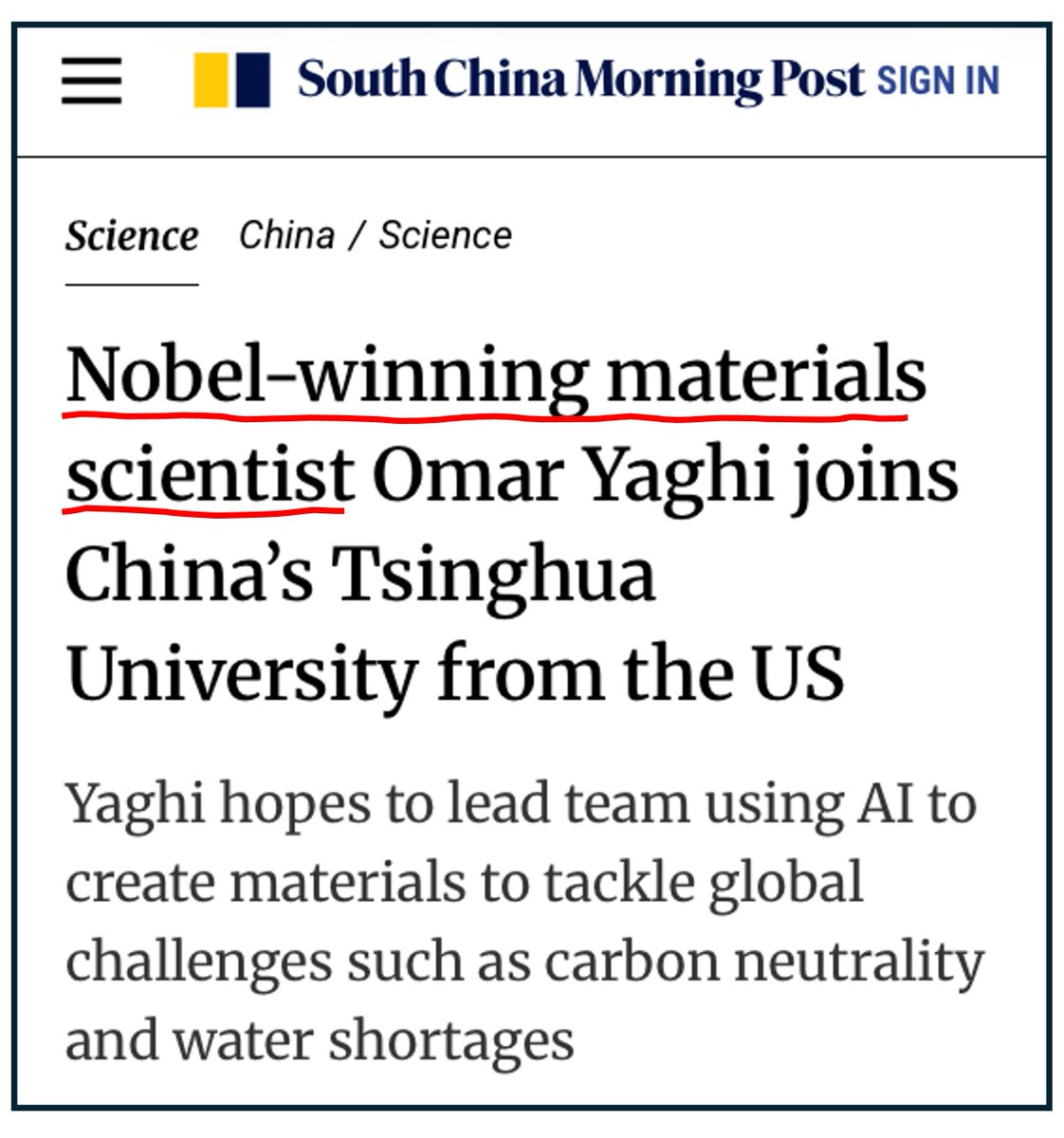
The 2025 Nobel Laureate leaves UC Berkeley for China. (Please read this post carefully) This follows announcements (public & private) of other high-profile professors moving from top places like MIT, U. Chicago, Yale, to Asia. I moved countries myself and know a lot of professors who’ve done the same. There are many reasons why we do it. But… 📍FUNDING is often the major reason for mid-to-late career scientists, from my observation. 1️⃣ Academia in the United States is built on high competition. There’s almost no free money. You always have to prove your ideas are worth it. On average, it makes science better. But at the individual level, it drives people up the wall. Not everyone is wired for constant competition, rejections and seeing their dreams put on hold. 2️⃣ In some European and Asian institutions, there is BASE FUNDING. You can use it for almost whatever you want. You can buy equipment. You can hire. You can travel. Whatever you wish. And it comes “for free”. No application required. It’s often annual and part of your employment package. It may be really big, or it may be small (e.g. for a couple of PhD students). For example - Max Planck Institutes are well known for it. The Director position at MPI (basically, a lab head) is a dream for many professors at regular universities. I know people from Harvard who immediately accepted such positions when they received offers. You have enormous resources at Max Planck compared to other places. So, when a professor sees an opportunity like that…. When you’re offered tens of millions of dollars that will let you focus on realizing your dreams and do big projects… It may be hard to resist. Very hard. 📍 Is it a loss for the country? In my view, research by one professor usually has limited impact by itself. But their REAL impact is the mentees and graduates who grow to become top experts in their domains, who will become professors, tech entrepreneurs, policy makers, and so on. And this becomes a real societal loss. 📍 What it all shows (in my experience): Without base funding, without concentrated non-competitive funding, the US will continue to lose talent, mentors and research leaders. The US needs base funding. Either mission-directed or in the Max Planck Institute (MPI) style. National labs often have less competitive funding. But it’s still far from MPI. And universities rarely give anything for free. Unless you get a counter-offer from a competitor, they won’t lift a finger to support you with internal resources. Integration of base funding into the US system is really tricky but long overdue. (It’s my opinion. Based on observations and private communications.)
Andrew Akbashev tweet media
English
9
28
151
27.9K
Prof. Michael Lin retweetledi
Alfonso Martinez Arias
Alfonso Martinez Arias@AMartinezArias·
This nature.com/articles/s4158… is a very troublesome paper. Either human embryos are totally different from other mammals, or there is a problem with the specimen 🧵
English
2
20
127
39.3K
Prof. Michael Lin retweetledi
Takaki Komiyama
Takaki Komiyama@takaki_komiyama·
Our new paper is out in Nature, congrats to Sonja et al.! An excellent collab with Irina Dudanova's group. We promoted neuroplasticity to improve behavior in a mouse model of a neurodegenerative disease. nature.com/articles/s4158…
English
3
34
193
25.2K
Prof. Michael Lin
Prof. Michael Lin@MichaelLinLab·
Proud to say Connie was my PhD academic (non-research) advisor. Maybe only met 2 or 3 times, but it was enough to make a lasting impression and motivate me to do research curiously, carefully, and deeply. It's not the favored style on X, but I'd never trade it for anything else.
HHMI@hhmi_science

Over a 32-year career as an #HHMIInvestigator, @harvardmed’s Connie Cepko helped transform how we understand the retina, and how blindness might be treated. Her advice? "If you have a novel idea you believe in, go for it." bit.ly/4gN9Zqp

English
1
0
38
11.2K
Prof. Michael Lin retweetledi
Jason Shepherd
Jason Shepherd@JasonSynaptic·
Very excited for our new paper, now out in @CellCellPress! /🧵The protein Tau forms intracellular toxic tangles in neurons in Alzheimer’s disease and Tauopathies. Tau pathology slowly spreads from cell-to-cell but the mechanisms of Tau transmission are not clear. /1
Jason Shepherd tweet media
English
33
96
425
48.1K
Prof. Michael Lin retweetledi
Prof. Nikolai Slavov
Prof. Nikolai Slavov@slavov_n·
Since the 1960s, the genetic code has been used to predict protein sequences from DNA and mRNA sequences.  Our @Nature article demonstrates that these predictions miss thousands of protein sequences present in human tissues. Across >1,000 human samples, we identified numerous abundant proteins whose amino acid sequences differ from those predicted by the genetic code. These proteins are not rare translation byproducts. They accumulate to thousands of copies per cell. Some are more abundant than the proteins predicted by the genetic code from the same transcripts. Their abundance reflects a combination of alternate RNA decoding mechanisms — including codon-anticodon mismatches, tRNA abundance, and RNA modifications — and selective stabilization of the resulting proteins. The last factor – protein stability – emerges as a major determinant of protein abundance across proteins, proteoforms and cell types: #Proteostasis" target="_blank" rel="nofollow noopener">slavovlab.net/research.htm#P… Alternate RNA decoding is pervasive across functional groups of proteins, healthy and diseased tissues. It affects proteins playing key roles in neurodegeneration, and some alternately decoded proteins show strong enrichment in tumors compared to their surrounding tissues. This discovery has been a long and exhilarating journey with Shira Tsour and the @slavovLab team. It started in 2019 and proceeded through many challenges and thrilling highs. A journey that has opened new perspectives that we long to explore! 1/
Prof. Nikolai Slavov tweet media
Slavov Laboratory@slavovLab

We report many proteins not predicted by the genetic code. They are stable & abundant O( 10³ ) copies / cell. Generative mechanisms include codon-anticodon mismatches & RNA modifications. Their abundance depends on codon frequency & protein stability. biorxiv.org/content/10.110…

English
18
236
782
117.3K
Prof. Michael Lin retweetledi
Yulong Li Lab
Yulong Li Lab@yulonglilab·
Excited to share our first red ACh sensor! We developed GRAB_rACh1h, the first genetically encoded red fluorescent sensor for recording acetylcholine dynamics in vivo. (1/3)
Yulong Li Lab tweet media
English
5
53
239
25.6K
Prof. Michael Lin retweetledi
Anshul Kundaje
Anshul Kundaje@anshulkundaje·
I am really digging this kind of frank presentation of very impressive results from a startup. More of this please. Budding scientists take note. You can do impressive stuff while highlighting important caveats. It creates more trust.
Gabriele Corso@GabriCorso

Don’t get fooled: these designs are still far from zero-shot therapeutic biologics. BoltzProt-1 does not remove the need for downstream optimization, but it can give you a meaningful head start by reducing the time and cost required to reach strong starting points for your therapeutic program.

English
4
21
171
17.4K
Prof. Michael Lin retweetledi
Jiannis Taxidis
Jiannis Taxidis@JiannisTax·
🧵 Thrilled to share our new paper, just out in @NatureComms! 🎉 BTSP is known to rapidly form place cellsin hippocampal CA1 via plateau potentials. Here, we found that BTSP isn't just for spatial maps. It works for non-spatial information too! 🧠⬇️ 📄doi.org/10.1038/s41467…
English
5
16
60
4.7K
Prof. Michael Lin retweetledi
CUHK Gerald Choa Neuroscience Institute
✨Join us for GCNI seminars: 🗓 Date: June 25, 2026 🎤 Speaker: Prof. Andreas Schaefer - The Francis Crick Institute 🗓 Date: June 26, 2026 🎤 Speaker: Prof. Michael Lin - Stanford University Can’t wait to see you there! 🎉 lnkd.in/ep5YMBur
CUHK Gerald Choa Neuroscience Institute tweet mediaCUHK Gerald Choa Neuroscience Institute tweet media
English
0
1
2
370