Luiz Pessoa

22.5K posts

Luiz Pessoa banner
Luiz Pessoa

Luiz Pessoa

@PessoaBrain

Neuroscientist interested in cognitive-emotional brain Author of The Entangled Brain (MIT Press); The Cogitive-Emotional Brain Neuroscience & Philosophy Salon

University of Maryland Katılım Mayıs 2009
1.1K Takip Edilen49.8K Takipçiler
Sabitlenmiş Tweet
Luiz Pessoa
Luiz Pessoa@PessoaBrain·
*The Entangled Brain* is out now! I wrote it with the general reader in mind, so if you want to learn about the brain from a fresh perspective give it a try. I'll write some threads with some of the main themes soon 🧠 mitpress.mit.edu/9780262544603/…
English
64
195
947
0
Luiz Pessoa retweetledi
Fei-Fei Li
Fei-Fei Li@drfeifei·
1/N Long horizon, complex tasks that truly matter in everyday life are not solved problems by today’s robotics, requiring planning, object detection, object manipulation, and failure recovery. That's why Stanford's BEHAVIOR Challenge is back for year 2! Last year, the winning solution reached only 12.4% full task success. This year, the BEHAVIOR challenge has more tasks, better evaluation, and is easier to use. 🚨 ⏰ Submission deadline: 10/16/2026 📣 Winners announced: 11/04/2026 🏆 Prize pool: $11,000
English
19
81
464
81.7K
Luiz Pessoa retweetledi
Earl K. Miller
Earl K. Miller@MillerLabMIT·
Function is not tied to specific brain structures or time scales. The brain is not just a set of parts that each “do their own job”. Instead, networks are multifunctional and active across different speeds simultaneously. doi.org/10.1073/pnas.2… #neuroscience
English
5
54
225
15.9K
Earl K. Miller
Earl K. Miller@MillerLabMIT·
This seems like a bold claim, given that we still don’t understand how consciousness works and current evidence suggests the brain operates differently from AI. A Silent Workspace In Claude Mirrors Key Features of Human Consciousness m.slashdot.org/story/456104 #neuroscience
Cambridge, MA 🇺🇸 English
8
10
64
4.4K
Luiz Pessoa
Luiz Pessoa@PessoaBrain·
Don't forget our Salon discussing 𝘄𝗵𝗮𝘁 𝗯𝗿𝗮𝗶𝗻𝘀 𝗱𝗼 𝗮𝗻𝗱 𝗱𝗼 𝗻𝗼𝘁 𝗱𝗼... July 9. Open to all but you need to register (zoom account is necessary)
Luiz Pessoa@PessoaBrain

𝗪𝗵𝗮𝘁 𝗮𝗿𝗲 𝗯𝗿𝗮𝗶𝗻𝘀, 𝗮𝗴𝗮𝗶𝗻?? Biological systems unlike computers, but what does that mean? Join us in Neuroscience & Philosophy Salon discussion with Romain Brette of his great book. July 9, noon (USA-EST) umd.zoom.us/meeting/regist… Open to all; registration required.

English
1
10
55
5.2K
Luiz Pessoa retweetledi
Abakcus
Abakcus@abakcus·
In 1964 C. P. Willans wrote down a single closed-form expression that returns the n-th prime number exactly. The formula is perfectly exact — and gloriously useless to compute — but it settles a quiet question: yes, such a formula exists.
Abakcus tweet media
English
22
123
1.1K
105.9K
Luiz Pessoa retweetledi
Paul Middlebrooks
Paul Middlebrooks@pgmid·
Before going full cyborg and replacing all your neurons with artificial units, it's good to think about the consequences. Yogi Jaeger on AI vs life and mind. braininspired.co/podcast/241/
Paul Middlebrooks tweet media
English
1
6
23
5.6K
Luiz Pessoa retweetledi
Jason Locasale
Jason Locasale@LocasaleLab·
This paper highlights one of the greatest failures in modern scientific publishing. At top journals, papers routinely spend 2–3 years in peer review. Those years consume millions of dollars in grant funding and years of student and staff labor performing experiments that were never part of the original scientific question. Yet the central scientific claims barely change. The reason is that journals abandoned editorial responsibility. Instead of evaluating whether a discovery was important, editors substituted the volume of work for scientific merit. They built a system where the labs willing to produce the most additional data were rewarded, regardless of whether those experiments materially changed the paper. The incentive was obvious: corporate publishers wanted to derisk editorial decisions. Rather than relying on scientific judgment, they demanded overwhelming amounts of data so responsibility shifted away from the editor. Peer review also changed fundamentally. Editors were once neutral arbiters between reviewers and authors. Today, editors frequently align with reviewers in demanding years of additional work while authors have little choice but to comply. AI has the potential to make much of this obsolete. If the central claims are already evident in the preprint, there is no justification for burning years of scientific talent and millions of taxpayer dollars generating figures that do not meaningfully change the conclusions.
Ruslan Rust@rust_ruslan

How much does a scientific claim actually change between the preprint and the final published paper? We used a large language model to track it across all available 72,644 bioRxiv -> journal pairs from 2018 - 2025 in this new work with @HaoYin. 🧵

English
9
42
148
18.1K
Luiz Pessoa
Luiz Pessoa@PessoaBrain·
@JulioMTNeuro Agree, not mutually exclusive. Overall I'm more interested in multiregion circuits so I'll bet on key computational properties emerging from distributed circuits. With notable contributions from local properties ofc. (But, yes, mostly a matter of where one puts most weight.)
English
0
0
1
35
Julio Martinez
Julio Martinez@JulioMTNeuro·
@PessoaBrain They are not exclusive views. Neurons in PFC are larger but fewer than V1, they have more NMDA and spines. Basically the ability to connect depends on morphology and intrinsic properties. That includes interneurons. Circuit computations and cell types are linked.
English
1
0
1
33
Luiz Pessoa retweetledi
Complexity Cat 🐱
Complexity Cat 🐱@amahury0·
🚨 DEADLINE EXTENDED 🚨 Due to high demand & #CCS2026 synergy, submissions stay open until July 22 (AoE)! Got a breakthrough in decentralized computation or collective behavior? Submit your abstract & get published in our @SpringerNature proceedings. 👇 guided-self.org/gso-2026.html
Complexity Cat 🐱 tweet media
Complexity Cat 🐱@amahury0

Thrilled to announce the keynote lineup for #GSO2026 ! 🚀 Join us in Binghamton this October to explore how complex systems process information to become open-ended. Don't miss the chance to present alongside pioneers, submit by July 1st! Details: guided-self.org/gso-2026.html 🧵👇

English
1
3
6
1.8K
Luiz Pessoa
Luiz Pessoa@PessoaBrain·
@JulioMTNeuro Interesting, my view is a bit different. Mostly about, reciprocal, reentrant, nonlinear circuits. Sure, new neuron types might help too.
English
1
0
2
64
Julio Martinez
Julio Martinez@JulioMTNeuro·
@PessoaBrain It is more about computational capacity of single neurons and how they contribute to network processing. The complexity of the transfer functions matter. Cognition is not about adding more of the same hardware and connections but has that other aspect. IMO.
English
1
0
2
131
Luiz Pessoa
Luiz Pessoa@PessoaBrain·
Learning coordination
Luiz Pessoa tweet media
English
0
0
5
590
Luiz Pessoa
Luiz Pessoa@PessoaBrain·
**Hacking Collective Behavior*" meeting at Politecnico di Torino, Italy Engineering Collective Behavior by Mario Di Bernardo
Luiz Pessoa tweet mediaLuiz Pessoa tweet media
English
1
0
22
2.3K
Luiz Pessoa
Luiz Pessoa@PessoaBrain·
Found this if you read Italian!
Luiz Pessoa tweet media
English
1
1
10
1.4K
Paul Thompson
Paul Thompson@PTenigma·
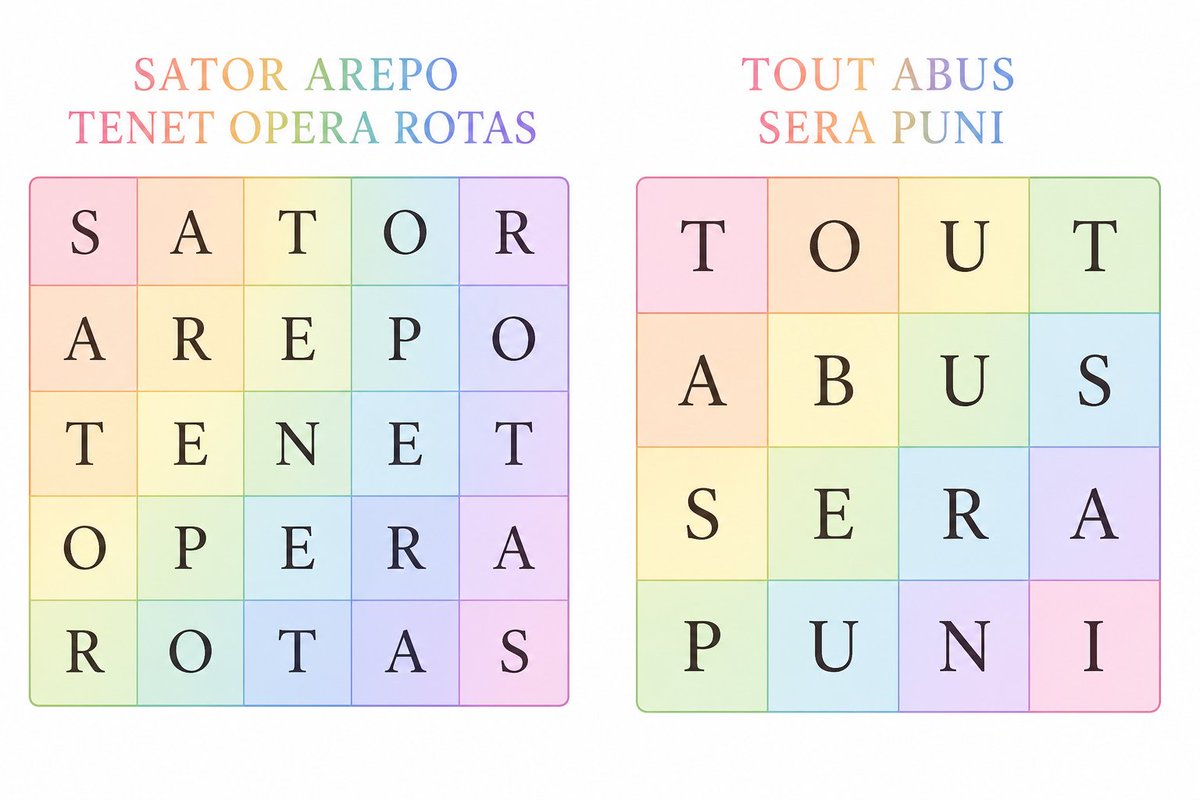
2 weeks ago at OHBM it was a good opportunity to speak French, parce que c'est l'occasion. I wanted to thank Hervé for finding us a great venue for our ENIGMA meeting and the taxi driver helped me to pronouce it correctly. French is a very interesting language as people think of it as an expansive language, but look at its very high compression: look at the example "Tout abus sera puni". I think this cannot be said in any other language in 16 letters?
Paul Thompson tweet mediaPaul Thompson tweet mediaPaul Thompson tweet mediaPaul Thompson tweet media
English
1
0
7
1.3K
Luiz Pessoa retweetledi
Earl K. Miller
Earl K. Miller@MillerLabMIT·
More evidence for a causal role of brain rhythms in cognition. Analyzing different brainwave frequencies shows how the brain mixes multiple sources of information when forming decisions. doi.org/10.1371/journa… #neuroscience
English
1
29
122
6.6K
Luiz Pessoa retweetledi
Yu Mu
Yu Mu@muyuuyum·
A short Research Briefing on our recent work: “How the zebrafish brain weaves recent experiences into future decisions” Grateful to the Nature team for helping tell the story clearly. nature.com/articles/d4158…
English
0
14
65
5.4K