Massimo@Rainmaker1973
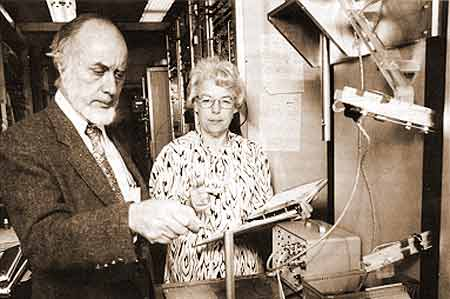
In 1986, a tiny 75-cent discrepancy in a computer billing report set off one of the most remarkable detective stories in the early days of computing. Clifford Stoll, an astronomer at Lawrence Berkeley Laboratory, could have dismissed the missing amount as a rounding error. Instead, his curiosity turned it into a full-blown investigation.
What started as a simple accounting puzzle stretched into a ten-month odyssey. By poring over login records, network traffic, and unusual nighttime activity, Stoll realized someone was systematically breaking into the lab’s systems. What first looked like possible student mischief quickly revealed something far more serious.
The intruder turned out to be Markus Hess, a skilled German hacker who had penetrated U.S. research and government networks, including systems linked to the Department of Energy and military programs. He wasn’t merely browsing: he was stealing sensitive data and selling it to the KGB.
With almost no established cybersecurity practices to draw from, Stoll had to invent his methods on the fly. He created custom monitoring tools, set digital traps, meticulously logged every move the hacker made, and worked closely with authorities. His persistence and ingenuity eventually traced the intrusions across the Atlantic, providing the evidence needed to expose Hess and shut down the espionage ring.
All of it traced back to that single overlooked 75 cents.
In 1990, Stoll chronicled the entire saga in his bestselling book The Cuckoo’s Egg: Tracking a Spy Through the Maze of Computer Espionage, which offered an early, gripping look at digital spying and helped lay the groundwork for the cybersecurity profession.
Stoll’s story remains a powerful reminder that curiosity, attention to detail, and relentless determination—even when focused on something as small as 75 cents—can reveal hidden threats and alter the course of technology’s development. It served as one of the first clear signals that information systems were becoming strategic assets, every bit as valuable and vulnerable as physical ones.