Andrejka

146 posts

Andrejka banner
Andrejka

Andrejka

@Bernatova

Energy + Infrastructure + Digital Assets. Founder and CEO of @DynamixHQ (Nasdaq: ETHM)

United States Katılım Mayıs 2009
614 Takip Edilen216 Takipçiler
Andrejka
Andrejka@Bernatova·
Next stop: Washington, D.C. 📍 I’m honored to join @semafor World Economy 2026 as a Principal and part of the CEO Program, alongside leaders from across finance, technology, and policy. Over five days, we’ll be digging into questions at the intersection of AI, geopolitics, energy, and long-term growth. I’m especially interested in how capital is being allocated to the energy transition and what it will take to align infrastructure, innovation, and policy at the pace this moment needs. #SemaforWorldEconomy #GlobalEconomy #CEOLeadership #AIEconomy #EnergyTransition #CapitalAllocation #Geopolitics
English
0
0
0
86
Andrejka
Andrejka@Bernatova·
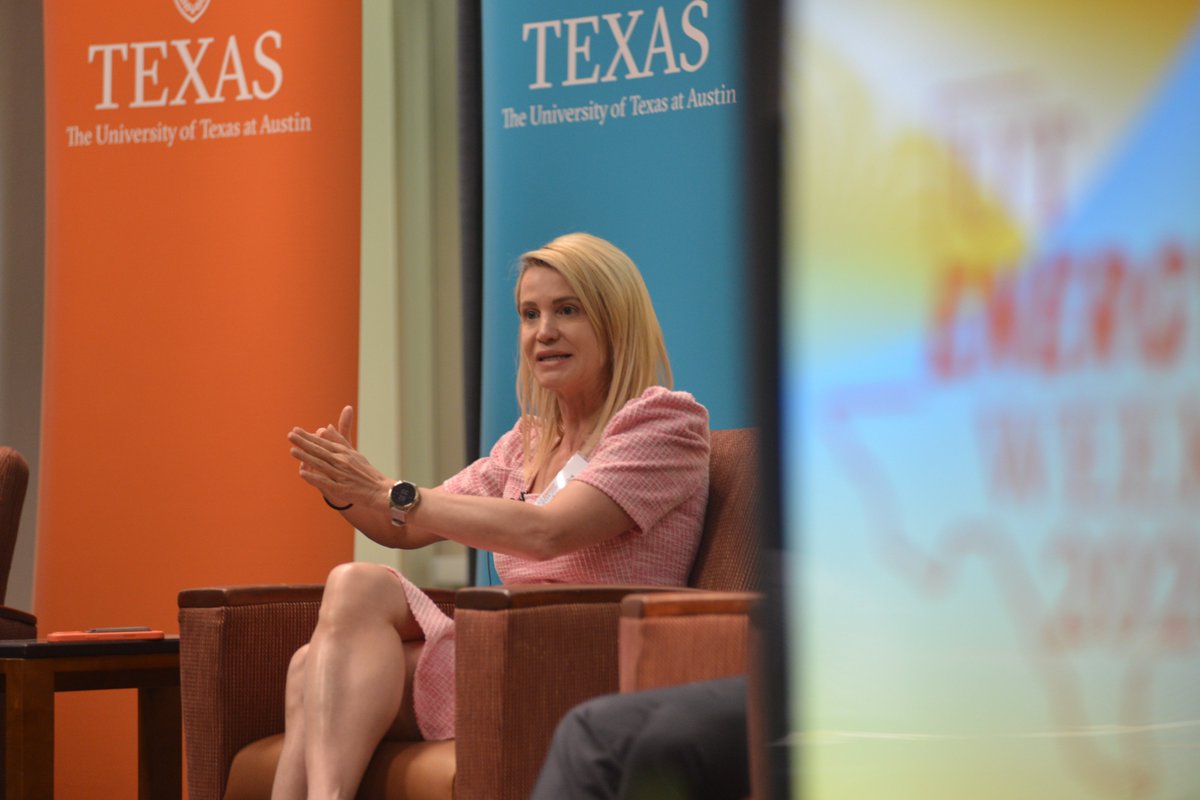
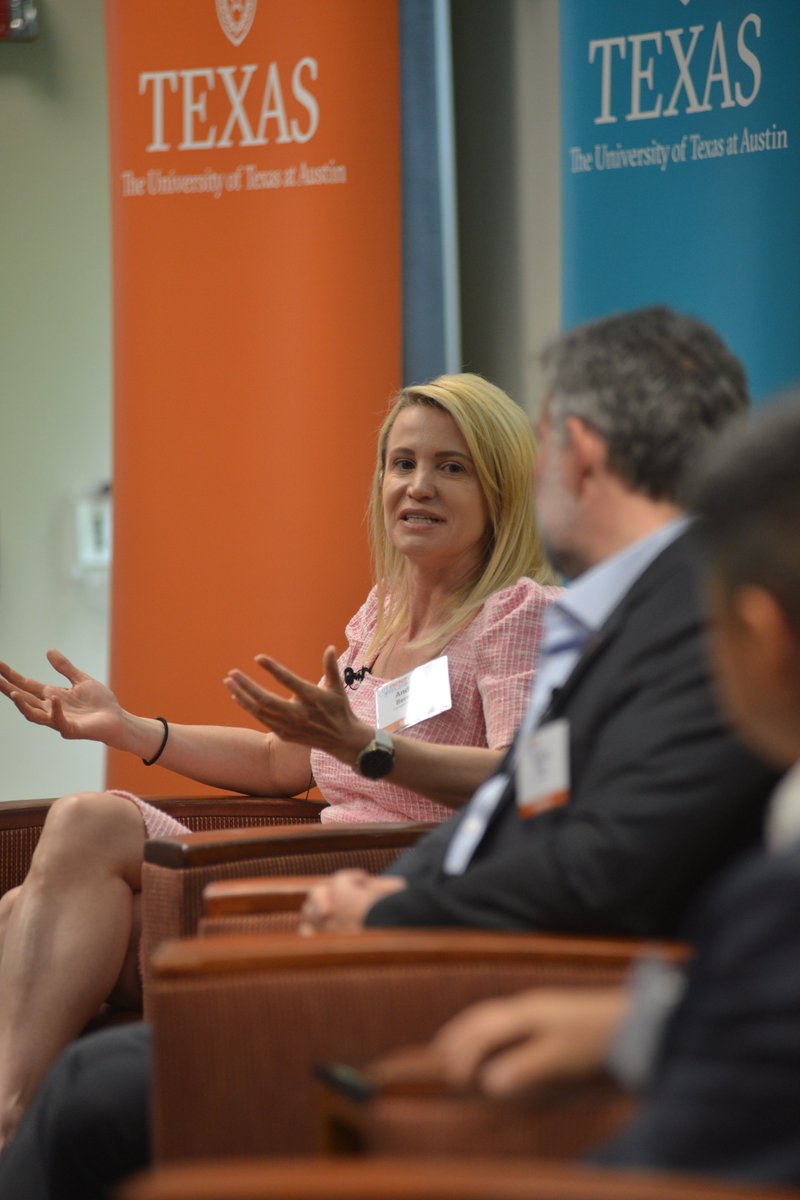
Wrapping up a full few days at @EnergyUT Week. A few themes that stood out for me: → Students are thinking holistically, about climate, security, affordability, and equity, all at once. → Interest in entrepreneurship and startups around energy is surging. → Mentorship isn’t one-directional; industry leaders are learning just as much from students’ questions and expectations. I’m leaving campus optimistic about the pipeline of talent coming into energy and adjacent sectors and motivated to keep creating more structured opportunities for them. Thank you to @timurxu, Jean-François Leleu-Eponville, and Sylvain Riba for sharing the stage with me! #UTEnergyWeek #EnergyInnovation #EnergyEntrepreneurs #MentorshipMatters #FutureOfEnergy #TalentPipeline #STEMCareers
Andrejka tweet mediaAndrejka tweet mediaAndrejka tweet mediaAndrejka tweet media
English
0
0
3
160
Andrejka
Andrejka@Bernatova·
Hello from Austin! I’m on campus this week for UT Energy Week at the @EnergyUT Institute, The University of Texas at Austin, joining students, researchers, and industry leaders for a full slate of conversations and mentorship. On Wednesday, April 8, I’ll be speaking on an afternoon panel and then joining the Energy Career Mixer in the evening. I’m especially looking forward to the mentorship and career programming, it’s one of the best ways to stay close to what the next generation is building and hoping for. If you’re at UT Energy Week, I’d love to connect. #UTEnergyWeek #EnergyInstitute #FutureOfEnergy #EnergyEducation #Mentorship #NextGenLeaders #EnergyCareers
English
0
0
1
92
Andrejka
Andrejka@Bernatova·
If we allow sustained supply destruction, we’re not just talking about “demand destruction” from high prices, we’re talking about genuine shortages that can echo through the broader economy. I don’t think the world can operate in that scenario for long. That’s why I believe we’ll ultimately see more decisive action to stabilize supply and resolve conflict faster than many expect.
English
1
0
0
70
Andrejka
Andrejka@Bernatova·
I’ve been having a lot of conversations about where energy markets go from here.
English
1
0
0
92
Andrejka
Andrejka@Bernatova·
This April I get to spend time at both ends of the energy conversation, on campus with the next generation of innovators at @EnergyUT, The University of Texas at Austin, and in Washington, D.C. with global CEOs and policymakers at @semafor World Economy. From mentorship lunches and career mixers to CEO roundtables, I’m excited to talk about how capital, technology, and talent come together to accelerate the energy transition. Stay tuned for my reflections from both weeks. #EnergyTransition #FutureOfEnergy #EnergyLeadership #InfrastructureInvesting #CapitalMarkets #AIEconomy #PublicPolicy
English
3
0
2
88
Andrejka
Andrejka@Bernatova·
That means energy drives inflation far beyond fuel, and years of underinvestment in oil, gas, and infrastructure leave consumers exposed when there’s a shock. It’s why I keep a meaningful share of my own savings in the sector.
English
2
0
1
53
Andrejka
Andrejka@Bernatova·
Most people experience “energy” at the gas pump. In reality, it sits underneath almost everything they touch, wear, and use.
English
1
0
1
65
Andrejka
Andrejka@Bernatova·
Global oil production was ~96M barrels/day in 2016; today it’s closer to ~103M – after a decade of “transition” headlines. We’ve underbuilt core energy infrastructure, and that shows up as higher prices and more fragility every time there’s a shock.
English
1
0
1
33
Andrejka
Andrejka@Bernatova·
People talk like we’re “past” oil and gas. The numbers continue to say the opposite.
English
1
0
4
63
Andrejka
Andrejka@Bernatova·
Roughly 20% of global oil and gas moves through the Strait of Hormuz. That volume is not currently replaceable if it’s cut off. This is a security story as much as a price story: you don’t “swap in” 20% of global supply overnight, and everything from manufacturing to consumer goods sits on petrochemicals. Reducing that fragility means diversified supply, more LNG and pipeline infrastructure, and a more honest conversation about how dependent we still are on oil and gas. #StraitOfHormuz #Geopolitics #EnergySecurity #OilMarkets #GlobalTrade #RiskManagement
English
0
0
0
51
Andrejka
Andrejka@Bernatova·
On the floor of the @NYSE, I shared a simple view of what’s really powering AI: We have an “AI addiction” from the big models behind our favorite tools to everyday agents and it depends on two things: 1. Energy to keep data centers and training facilities running 2. Trust, which is increasingly delivered through blockchain infrastructure and networks We operate at the intersection of those worlds: where power systems, digital infrastructure, and long-term capital all have to line up to make AI scalable and resilient. 🎥 NYSE TV Live segment below.
English
0
0
0
55
Andrejka
Andrejka@Bernatova·
When ~20% of global oil flows through one narrow strait, you can’t afford to ignore it. I joined @CNBCArabia to talk about what this moment actually means for energy security and prices. A few takeaways: 1. Normally ~20M barrels/day move through Hormuz; today it’s closer to 5M. You don’t just “plug in” the missing 15M barrels/day, even with the US stepping up as an alternative supplier. 2. Markets are still pricing a short‑lived disruption – roughly a 60% probability we get a political solution, which is why oil is sitting around $100 instead of already at crisis levels. 3. The real tail risk is a prolonged or expanded shutdown of Hormuz and other routes, where we start talking $150–$200 oil and knock‑on effects across petrochemicals, manufacturing, and everyday goods globally. That’s why investors are already pushing to diversify production and infrastructure across the US, Venezuela, Brazil, Guyana, and beyond. You can’t run a global system through a single chokepoint. #CNBCArabia #OilPrices #StraitOfHormuz #EnergySecurity #GlobalMarkets #MiddleEast
English
0
0
2
80
Andrejka
Andrejka@Bernatova·
The AI conversation is finally catching up to reality. For years, the focus was on models, chips, and software breakthroughs. But the real constraint on AI is no longer purely technological. It is physical. It is power. Data centers are moving into a scale of energy demand they have never had to manage before. Long dated commercial power contracts, fuel sourcing, grid interconnection risk. These are not minor details. They determine whether projects succeed or fail. If operators misprice risk or sign poorly structured contracts, the consequences are predictable. Either the economics collapse, or prices reset sharply once reality sets in. Neither outcome benefits hyperscalers, investors, or the communities connected to the grid. This is where operational infrastructure expertise becomes critical. Energy cannot be treated as an afterthought. It requires contracting discipline, understanding of supply chains, environmental reviews, community dynamics, and the realities of generation capacity. In many ways, AI hubs are being forced to learn what energy markets have understood for decades. Growth is constrained by infrastructure. If AI is going to scale responsibly, we have to talk less about theoretical compute and more about tangible megawatts. You cannot separate AI from energy. And you cannot separate capital allocation from operational execution. – #AIInfrastructure #EnergyMarkets #DataCenters #NaturalGas #InfrastructureInvesting #PowerGeneration
English
0
0
0
47
Andrejka
Andrejka@Bernatova·
There is a conversation happening in private markets that deserves more honesty. Continuation vehicles were built to be a tool, not a go-to strategy. They make sense when markets are closed, when strategic buyers disappear, and when liquidity genuinely dries up. But that is not the environment we are in today. Public markets are open. Capital formation is happening. Real exits exist. So when an asset is rolled instead of sold, it is fair to ask why. From a beneficiary perspective, whether that is a teacher, nurse, or city employee whose retirement capital is invested, the questions are straightforward. Why are we extending this hold? Who benefits most from the structure? What will actually change operationally over the next five years that did not happen in the first five? If a company was overpaid for, lightly managed, and never fundamentally improved, more time is not a strategy. That is not an alignment issue. It is an operational issue. Private equity absolutely has the ability to outperform public markets. But that outperformance must come from real operating involvement, disciplined underwriting, and a willingness to exit when the market gives you a window. It cannot come from layering financial engineering on top of underperformance. Secondaries and continuation vehicles have their place. They just should not be the first instinct when other viable paths exist. That tension between what is most convenient for a GP and what is most aligned with an LP is why this topic continues to surface in institutional conversations. – #PrivateEquity #Secondaries #CapitalMarkets #InstitutionalInvesting #GPvsLP #PrivateMarkets
English
1
0
1
56