
Sabitlenmiş Tweet

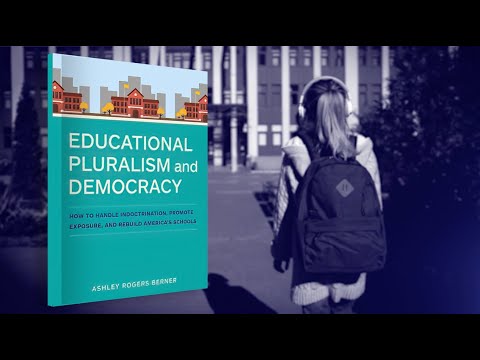
Can education help solve the problem of polarization? Yes it can! Check out my book trailer on Youtube talking about educational pluralism, and exposure versus indoctrination. youtube.com/watch?v=Iapalm…
YouTube
English
Ashley Rogers Berner
571 posts

@BernerEd
Dir, JHU Institute for Education Policy @JHUEdPolicy and loving it! D.Phil History, Oxford @UniofOxford Tweets are my own.
Americans are spending more time alone on their devices, further eroding civil society. How can schools help reverse that trend? @rickhess99 discusses w/@BernerEd. edweek.org/policy-politic…
"Diplomas for all" isn't "equity." Without exit exams, high school grads can't show they have minimal skills needed for jobs, training or college. tinyurl.com/nj9vuuf3 @ExcelinAction @MichaelPetrilli @rickhess99 @rpondiscio @MrDanielBuck @BernerEd @Dale_Chu @VodkaPundit
We’re constantly told by tech bros & education impresarios that “the age of AI” demands less focus on traditional academics and more on “soft skills” like “communication” and “collaboration.” Harvard’s Howard Gardner predicts that, by 2050, children will need just a few years of “reading, ’riting, ’rithmetic, and a little bit of coding” because “most cognitive aspects of mind . . . will be done so well by large language machines and mechanisms that whether we do them as humans will be optional.” Instead of academics, OpenAI CEO Sam Altman advises students to pursue a “deep familiarity with the tools” and “sort of evolve yourself with technology.” Economist Tyler Cowen says “the curriculum itself is now radically obsolete” and filled with “wasteful instruction.” TL;DR: Academic content is out; skills and learning “how to think” are in. If this all feels familiar, it should. The purveyors of 21st Century Skills have spent decades insisting that it’s foolish for students to spend so much time learning academic content when there are so many more valuable things for students to learn. Two decades ago, in the 2006 TIME Magazine cover story on “How to Build a Student for the 21st Century,” Deborah Stipek, the then-dean of Stanford University’s esteemed Graduate School of Education, mocked the idea that students should still learn South American geography, Civil War battles, or the periodic table of elements. Why? As she put it, “You can look it up on Google.” Harvard’s Tony Wagner has gone even further,declaring, “Knowledge has become a commodity. Free like air, like water . . . available on every internet connected device. There is no longer a competitive advantage in knowing more than the person next to you because they’re going to Google it and figure it out just in time.” The impulse isn’t new, but it was terrible advice then and it’s terrible advice now.
OIDEL is pleased to share this great article by Ashley Berner @BernerEd , member of our Executive Committee: "Education in an Age of Polarization". A valuable contribution to ongoing debates on education, pluralism, and democracy. 📚🗣️ Read here: democracyproject.org/posts/educatio…
From @BernerEd, Director @JHUEdPolicy, "Education in an Age of Polarization" -
🟣 Idea #63 — New by @BernerEd, Director @JHUEdPolicy — "Education in an Age of Polarization" Part of @nyulaw Democracy Project's "100 Ideas in 100 Days" series Read the full piece here: democracyproject.org/posts/educatio…

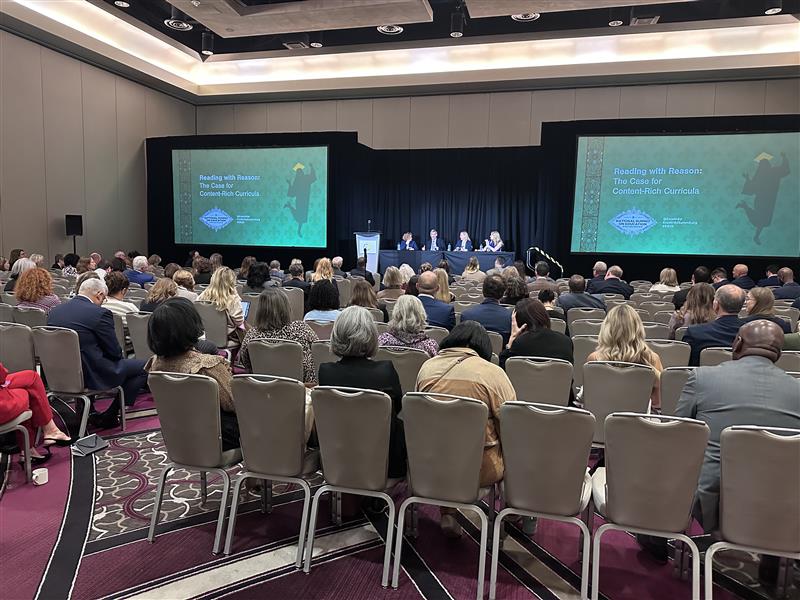

“Reading with Reason: The Case for Content–Rich Curricula” ➡️ #EIE25 Strategy Session with @rpondiscio, @BernerEd, @MsKurto and @CandalCara on the importance of content-rich instruction, what sets strong curricula apart and how states are improving literacy outcomes. Learn more: nationalsummit.streampoint.com/schedule/ #LiteracyMatters


The new federal scholarship tax credit was a historic win for school choice in the U.S. But questions remain: Will states opt in? How many students will be supported? What types of schools will be eligible? @rickhess99 & @BernerEd break it down @educationweek ⬇️