Bertrand Delsuc

91.7K posts

Bertrand Delsuc banner
Bertrand Delsuc

Bertrand Delsuc

@BertrandBio

Views=mine only, RT-like=/=endorse, no advice. 16y in Tech (chip design) & 10y following bios. Preplanned pause.

Lyon, France Katılım Nisan 2015
238 Takip Edilen18.9K Takipçiler
Bertrand Delsuc
Bertrand Delsuc@BertrandBio·
Hi all, I plan to be in London around the dates of the HC investor events there (17-20 Nov). DM open if you want to get in touch. Cheers!
English
8
1
23
5.4K
Bertrand Delsuc
Bertrand Delsuc@BertrandBio·
Just a little thread, out of my retreat, because this stock and its story has been important to me. Maybe a mini-victory lap as well, but with quite some general learnings overall, and hard ones. I have been long $ABVX since the disclosure of the POC data in UC in September 2018 (you will find some tweets on $ABVX in my history back to that time, although I tried to never pump it). At that time, I didn't even know Abivax had an UC phase 2a study, because it was a drug candidate investigated in HIV, to deplete the reservoir, thus potentially offering patients periods off therapy, and preventing the rebound that inevitably comes if HIV patients stop any antiviral treatment (due to that latent viral reservoir). Even if there were some positives in early-stage studies, the major improvements in HIV therapies had made the case in HIV much less compelling. And already at that time, in my view, it was questionable to continue the clinical development in HIV. But at the same time, it's ***because*** it was tested in HIV that the signal in IBD was discovered. Indeed, some HIV patient anecdotes led to the repurposing in IBD. At that time, the company hadn't even communicated much on that. This repurposing was coming out of blue, at least for the persons external to Abivax. So yes, obefazimod is yet another serendipity story in drug development, repurposed from HIV to I&I (also tested in clinics in RA). In a recent call, it was said that mir-124 is often downregulated in HIV, so that's the link. I believe that Pr Severine Vermeire (Belgium) was instrumental to that pivoting, along with 2 other US KOLs (Bruce Sands and William Sandborn [that last name should ring a bell to some US investors]). So indeed, the MoA is non-conventional, but it's been interesting to read such an amount of BS on X/twitter about this asset, its MoA, the speed of recruitment of the ph3, or the data, etc, over the time. I can't completely blame the US investors, since the track record of the European companies on Nasdaq has, overall, been underwhelming. But they also tend to throw out the baby with the bathwater, when it comes to consider ex-US companies (and I am not even talking about the Chinese companies…). The MoA of obefazimod (NB, an "-imod") in inflammation is that this small molecule binds to the Cap Binding Complex, which in turns induces an increased splicing of anti-inflammatory lncRNA miR-124, itself modulating (downregulating) the production of inflammatory cytokines like IL-6/TNFa and inflammatory signals for macrophages like MCP1. Historically, the company had also talked about the upregulation of anti-inflammatory IL-22, but they eventually talked less about this signal over time (maybe a bit controversial - also Roche has tried an IL-22 in UC iirc, but that program was discontinued, so assumedly nothing really great). Some apparently keep questioning that it binds the Cap Binding Complex, but it was demonstrated by CRYO-EM, and shown on a slide/shared publicly, and I presume there was even a paper showing this. I can even say who did that work: it was Pr Jamal Tazi (the 'inventor' of the molecule), from Montpellier University, and a co-founder of the company if I'm not mistaken. So apparently, if the MoA is not a complete signal blockade, like with obefazimod, bioX is lost... LOL. And also, so much about the absence of a clear dose-effect... for a pleotropic immunomodulator... in an inflammatory disease where no agent has ever shown more than 20% PBO-adj delta in clinical remission ie highlighting the heterogeneity of the presentations. How come :) And it's not like it was a first, was it? Other non-sensical thing from bioX: why paying more attention to inconclusive tissue biopsy data from small n's, when you have unequivocal endoscopic data (the most objective measure in IBD) and long-term maintenance data telling you that the drug works, not well, but very well. That's a mystery to me. Adam May pointed this out in the first point of the deck he timely posted about ABVX on twitter, like "I don't care about the funky MoA because the hard data already tells you what you need to know". Hell yeah, high five Adam. One of the few who eventually found out there was something worth looking there. You didn't need to dig deep on the MoA to understand that this drug works. Then, you had to prove it in large-scale, well-controlled, pivotal trials in this indication, which can be tricky (ask Roche about that), based on prior data not always pristine, I agree. But the body of evidence reached after the ph2a & ph2b (incl. long-term efficacy and safety) was one of the best I've seen. Also, what is incredible here is that the modulation of miR-124 is selective! What were the odds, that a specific way to bind the CBC ends up to increase (or decrease) the splicing of a SINGLE microRNA ????!!!! I believe that many would love to find molecules that just do that, and here, that's the case even if I don't think it was done intentionally. Also, those looking at UC should understand that the endpoints evolved, with the Mayo score evolving over time to be more objective, and with the stricter criteria (reclassification of no friability), and with the exclusion of the (subjective) PGA to make the pMMS today's gold standard. So if you know that, you understand that the endoscopic data are those you should pay attention to, when looking early for an efficacy signal. Then, there is no such thing as staying in remission at such a high rate after 1-2-3y maintenance if you are on PBO, in this patient population. Personally, I have been nervous about the SAP of the induction ph3 readout. Because to frame it simply, the induction, in my view, is a technical hurdle. Not a real-world hurdle. Let me explain. The goal in IBD is to treat for as long as possible. For many years, there weren't many classes approved, and therefore there was a lot of cycling in the TNF class (ada, inflix, goli, certo). But assumedly due to ADAs, the pts are losing response and it was estimated that roughly 50% remained on drug after just a year. Now, it's more 1-2y, from what I have read/heard. But now, you have the anti-integrin, the IL23s, the JAKs, the S1Ps (and the TL1As in the future). But the problem remains the same wrt durability on treatment. And here, obefazimod excels (I'll let you parse the published data - and note that you have to pay attention to the denominators here, VERY IMPORTANT). And the MoA (not a full blockade on 1 axis, but a modulation of several) may explain why this molecule is great at maintaining a remission and a response. Indeed, like in onco, and outside the immunogenicity considerations, a selective pressure on an axis may induce escape mechanisms over time on another axis. But here, obefazimod does not act as a full blockade, but as an immunomodulator on several axis. That's why it's also described as a homeostasis inducer. So one can understand (although there is no hard proof of that), that it's possible that the 'induction' of homeostasis may last for longer if you don't act like a selective pressure. At least, that's how I connected the dots. Now, back to the induction part. The regulators want both induction and maintenance data. but in the real world, the physicians I have heard are more flexible. And you also see that from RW data. The median duration on drug in RW is LONGER than in clinical trials (at least until recently). Because gastroenterologists tend to give more time to see a response than what was done in clinical trials. And once a patient is on something they both know (the patient, and the prescriber), there was a little hurdle to switch. I presume this is less the case with the introduction of the last classes. So overall, the induction of a response (ideally of a remission) is important, but since the response rates is quite higher over the spectrum (the remission rate is not high after induction usually), and that the response/remission rates keep increasing over time [ie after 8-12wks, the usual timepoint range for induction parts in ph3s], the treatment course is actually less dichotomic in real-world. You can also see the results of the studies done with a threat-through design, incl. for obefazimod. Normally (and that's how ph3s are done usually), you only keep the responders from the induction period, to allow them to participate to the maintenance period. But that's like putting an artificial, hard limit in time for a drug to 'work'. In a heterogeneous patient population, this is not ideal. That's why some mid-stage studies allowed pts who hadn't reached response yet at the end of induction, to participate to open-label maintenance (ie, more a prolonged induction+maintenance). And guess what, many more responses (and remissions!) are achieved when you do that. So that's why I call the induction a technical hurdle from a regulatory standpoint. Because there is much more flexibility in real-world. Switching gears to that readout, that last thing I wanted to hear about was that the SAP would be hierarchical. Simply because it induces another level of risk that is not easy to quantify: indeed, if you fail at the first stage or early in the hierarchy stages, even if you have great data in the lower ranked endpoints, these cannot be formally tested, which can be catastrophic. The company would not provide that info to the investors prior to yesterday. Many of us tried, but nobody got the answer apparently. And actually, the company did well not to provide that info, because they avoided me some huge headaches. Indeed, since 2 doses were tested in this induction part, the question was whether they had split the alpha, or if they had a hierarchy, assuming in that case, that the highest dose (with which there was the largest amount of data) had been prioritized - but who knows how the hierarchy was determined. Actually, this was very tricky, since the predefined hierarchy was FDA primary => FDA key secondary => EMA primary => EMA key secondary, as I understand, with different endpoints for EMA and FDA (first time I see that in UC). Anyways, to summarize, the top dose succeeded for the FDA endpoints, and both doses for the EMA. I guess the data will be presented at the coming UEGW meeting. And I expect the maintenance data to be very positive as well, in a year or so. I was not, and I am still not convinced yet that the lowest dose (introduced at the request of physicians apparently, since they like to ‘downtitrate’ in maintenance) is a given, knowing the MoA, but why not. Dr Rubin (KOL on yesterday’s call) even said that he believed that the FDA would care about the fact that there was no underdosing in induction. The company also teased other reasons (to be disclosed later), as to why they intend to push forward the 2 doses for registration. So, we’ll see if there could be a discrepancy between FDA & EMA on doses. Maybe 25mg & 50mg could be good in induction in bio/JAK-naïve, while 50mg could be restricted in the US in bio/JAK-experienced? That’s pure speculation from me, but that’s one of the scenarios I thought about. Now, going to safety, I believe the phase 3 program was mainly powered to strengthen the safety DB, rather than sized for only for efficacy (the n's there were large enough to discriminate even a small PBO-adjusted deltas), although the multiple endpoints requested there added to the complexity of the powering. Just to say, the safety over only 8wks study in induction is hardly what matters. This is too short to see the effect on most of the AEs of Specials Interests (AESIs) we've seen with prior classes, especially with the JAKs. But so far, obefazimod has had an excellent safety profile (I think some patients from the ph2a are still dosed today for free, after like 7y+). So in my view, no surprise. Low dropouts, no new signal. Headaches were even shorter than in prior studies apparently (median 'less than a week' according to yesterday's call). I think it was 1-2 weeks before. But that's the profile in maintenance that matters, and that will confirm (or not) that obefazimod can be the 'first and only' (a term that bigP loves to insert in headlines) oral drug in UC with ZERO monitoring or testing (rolling eyes to the JAKs and the S1Ps), and proven efficacy as soon as 8wks. On top of hopefully, confirming that it works well both in bio/JAK-naive, and bio/JAK-experienced subpopulations (the ph3 was stratified to that regard). I'm not going to comment more on the data. Everyone will make up their mind on them. That's not even the point of this post. But from an equity story point of view, that stock has been extremely frustrating for me. I will start by the anecdote of that morning of early September 2018, when the POC data were released (small n's but already interesting remission rates). I remember that day very well, as if it was yesterday: the stock opened up a bit, and then it ended red, and went down even more the following days. I had bought around the open and sold very shortly after, since seeing the stock fading and the market selling again and again. So, in Europe, you can show to the markets that a drug can be worth billions, and they would not even see it (which in turn, also offers ooportunities). I don't think it has changed much today. The efficiency is very low there. The retail investors prefer to be cultists in some pumped companies. That's pretty crazy if you think of it. So, then, I started to build, ending with a single-digit cost basis. The stock tripled or even quadrupled in 2020-21 (when investigated in COVID). And then from February 2021, everyone knows that times for biotech were much tougher. Of course, it didn't work in COVID, and the ph2b data were not pristine from a dose-dependence perspective. And since the Chair of the Board (P. Pouletty) had only one obsession, i.e. sell the company after the ph2b data (on top of not being willing to dilute himself, which costed a lot to the company, and to him, since he ended having no other choice), but had no backup plan, while still needing hundreds of million $ to fund the phase 3, it didn't go well, from the stock price perspective. I kept the hopes of a buyout that never came, and ‘bagheld’ all the way... I remember I had spoken with a seasoned, and well-known VC about that company, and he told me his reservations on the Chair of the Board (to put it nicely)... and he ended up to be very right! At that time, I thought that the data themselves would prevail and lead to a positive outcome, but the post-COVID period proved him right, and me wrong. I even wanted to pitch him on this company, and this asset. For some reason, I never did so. The stock tumbled, with that financing overhang. So, in that part, I want to stress that without Sofinnova & the syndicate of US investors they managed to gather for the financing of July 2021, Abivax would have stalled as a zombie for years, especially when we see the long drought we're in. That's the same story as Verona (basically a takeover of US investors of European companies that are worth something). The Board & management of the company were ‘reshaped’. I still believe the timing of the US IPO was horrible, and that just 1 month later, the effect of the dilution would have been lower. And I don't buy that the urgency was absolutely for October in 2023. But overall, it would not have changed the negative take of the US investors, I acknowledge that. I ended up with a tiny position that I kept (and basically sold this morning in Europe, for full disclosure), but it's very, very far from what I used to have. So no, I am not going to be rich with Abivax, far from that, while it held such a great potential. This where my frustration stems from. Having IDed that potential so early, and basically seeing the stock price yesterday basically being the same as it was after the POC data in 2018! To conclude, I wish the best to that company, with or without me in. I think it could be the success story that the French bios have been looking for 2 decades now. But there are also learnings here. On importance of serendipity in drug development, on how to assess a case, what really matters, the quality of the governance, the credibility of their strategy, how they can navigate a storm, the inefficiency of the European markets with the opportunities they can also offer, the fact that you can hardly build a large biotech company (from a European perspective) without the backing of US investors at some point, and much more… Plus on my side, how to better manage my investments :) A lot of cliché in that summary, but food for thoughts nevertheless, I guess/hope. Going back in retreat mode now.
English
16
13
217
45.5K
Bertrand Delsuc
Bertrand Delsuc@BertrandBio·
@chuminhua432 YolTech Therapeutics (🇨🇳 $BEAM) Announces FDA Clearance of Investigational New Drug (IND) Application for YOLT-101, an In Vivo Base Editing Therapy to Treat Heterozygous Familial Hypercholesterolemia (HeFH) prn.to/4kPYJch
English
0
0
2
566
Minhua Chu
Minhua Chu@chuminhua432·
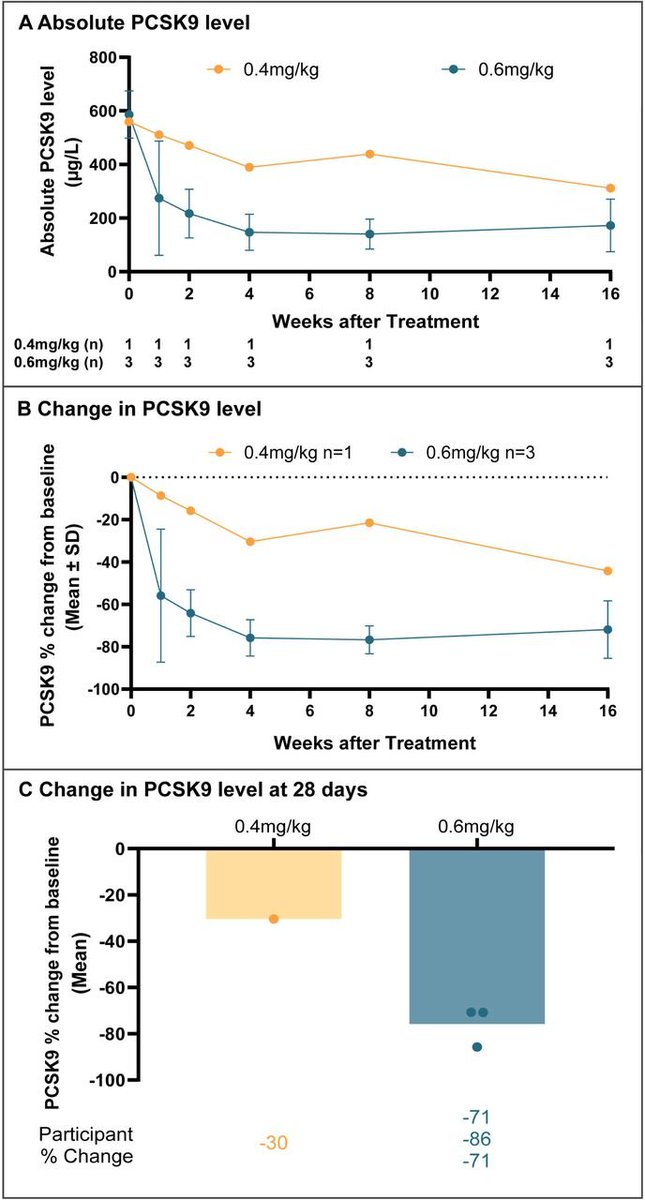
@BertrandBio detailed data published on medrxiv.org/content/10.110… Figure 1. Mechanism of YOLT-101 in Reducing PCSK9 and Lowering LDL-C. Panel; Figure 2. Changes in PCSK9 Levels Following YOLT-101 Administration. Figure 3. Changes in LDL-C Levels Following YOLT-101 Administration.
Minhua Chu tweet mediaMinhua Chu tweet mediaMinhua Chu tweet media
English
1
3
5
2.1K
Bertrand Delsuc
Bertrand Delsuc@BertrandBio·
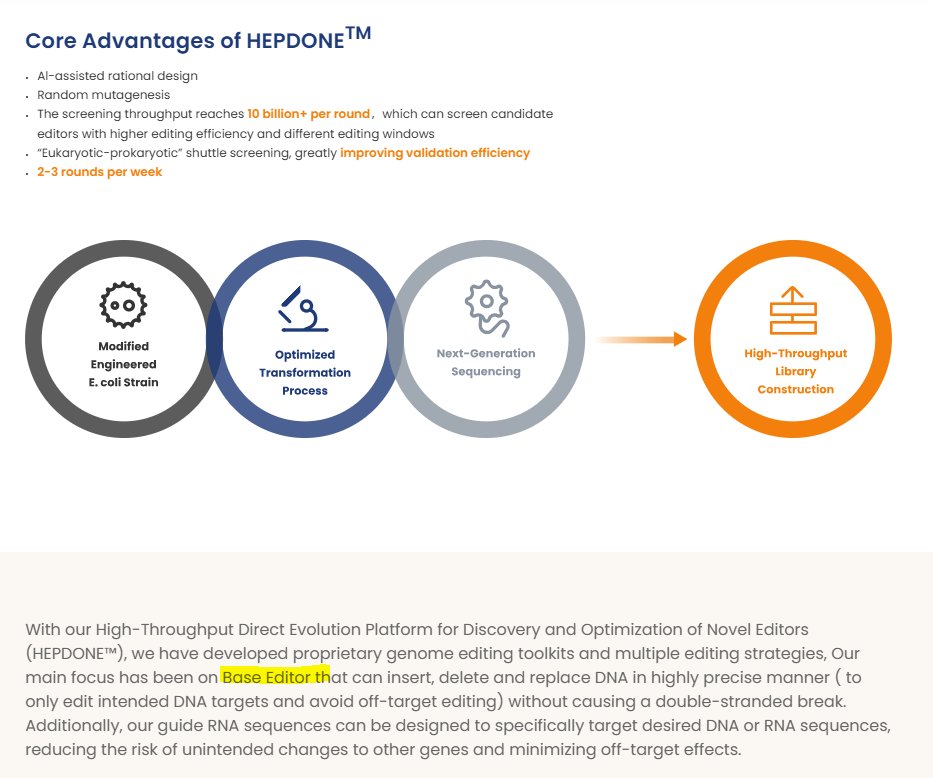
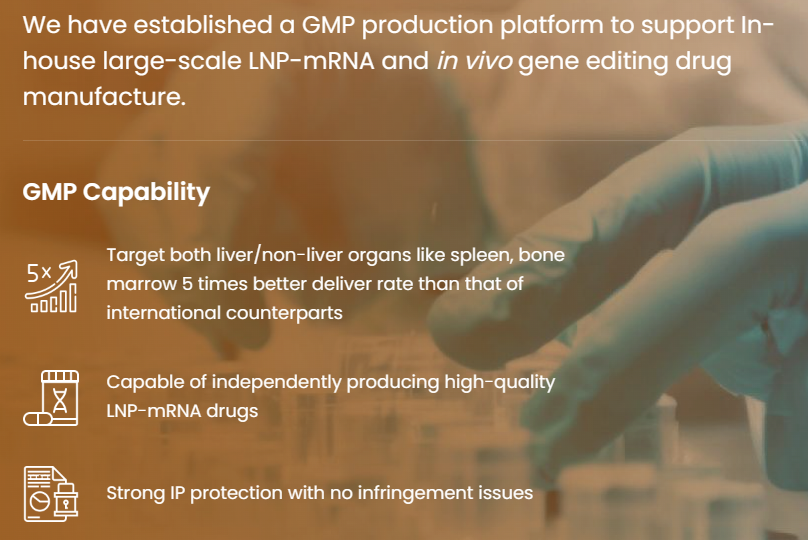
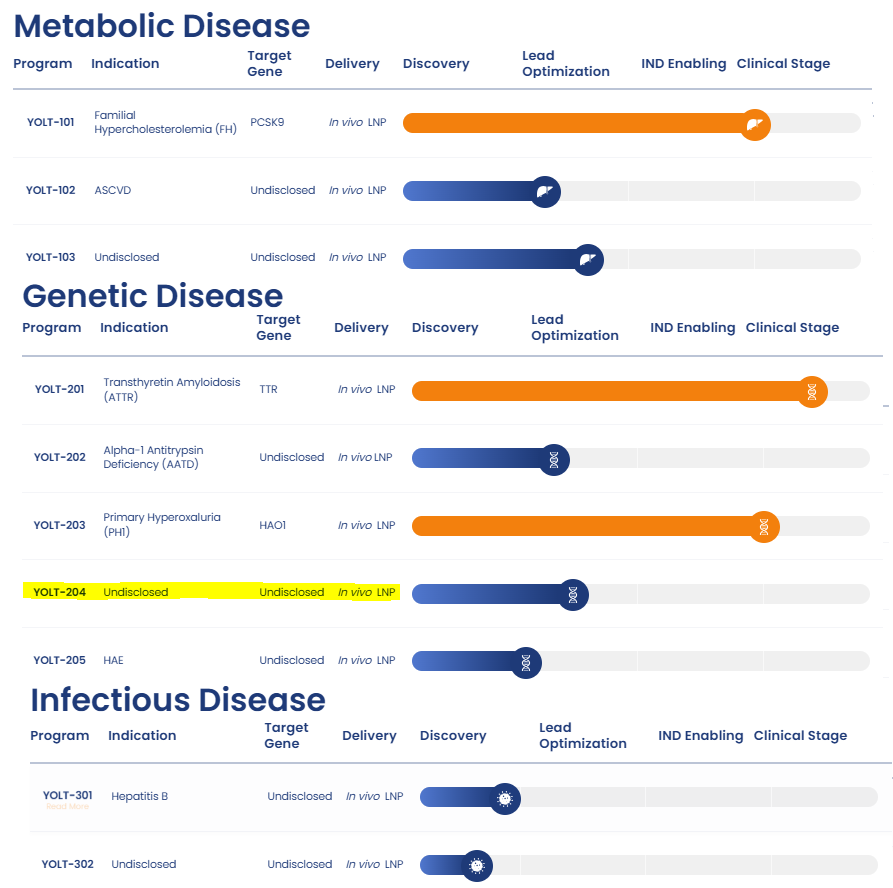
🇨🇳 YolTech (apparently an equivalent of $BEAM since a Base Editor co) seemingly has its 4th in vivo gene-editing program in clinics (1st 3 clinical programs in ATTR, FH, PH1) #BaseEditing #GeneEditing YolTech Therapeutics to Initiate a Clinical Trial for YOLT-204, a First-in-Class Bone Marrow-Targeted In Vivo Gene Editing Therapy for β-Thalassemia prn.to/40p0uUL
Bertrand Delsuc tweet mediaBertrand Delsuc tweet mediaBertrand Delsuc tweet mediaBertrand Delsuc tweet media
English
3
1
26
16.1K
Bertrand Delsuc
Bertrand Delsuc@BertrandBio·
🇨🇳 #ADC player Duality Bio on 🔥 (+135%) in HK trading for its IPO - 213m$ raised China's Duality Biotherapeutics shares rise more than double in Hong Kong debut "It was the best first-day performance for an IPO that raised more than $100 million since Angelalign Technology (6699.HK), opens new tab rose 132% on its first day in June 2021, Dealogic data showed." and conversely to some takes on bioX: "The majority of its products are unlikely to be subject to U.S. import tariffs because of licensing agreements, analysts said. That contributed to the stock's popularity, they said." reuters.com/business/healt…
English
1
0
14
6.8K
Bertrand Delsuc
Bertrand Delsuc@BertrandBio·
I don't know what is the standard or recommended method in that case. Fundamentally, I agree with you. But at the same time, practically, if you have too much censoring, it can increase the target accrual significantly. And usually, I guess you would not expect a dramatic impact on PFS from the next line, so I guess that's why they may have not implemented that censoring rule.
English
1
0
1
629
Bertrand Delsuc retweetledi

Jacob Plieth
Jacob Plieth@JacobPlieth·
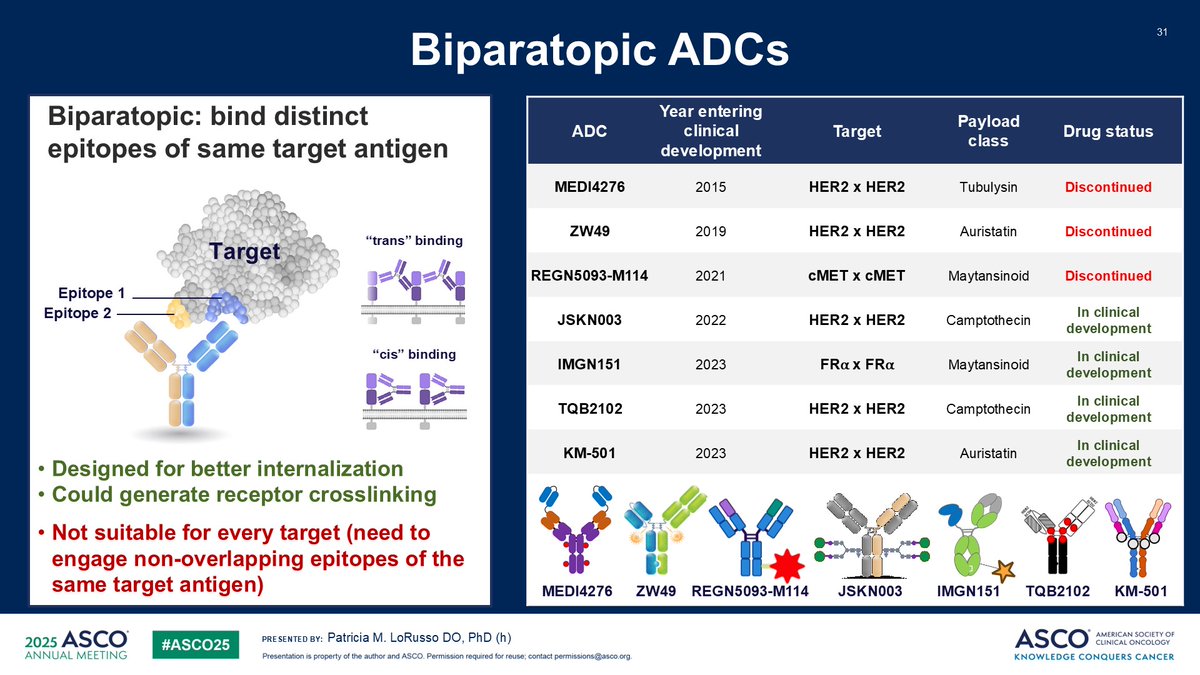
From the same #ASCO25 talk: biparatopic ADCs and bispecific ADCs
Jacob Plieth tweet mediaJacob Plieth tweet media
English
2
4
16
5.6K
Bertrand Delsuc retweetledi
Jacob Plieth
Jacob Plieth@JacobPlieth·
Catching up on some #ASCO25 sessions, I came across this on dual-payload ADCs from Patricia LoRusso's clinical science symposium
Jacob Plieth tweet media
English
3
10
23
6.9K
Bertrand Delsuc
Bertrand Delsuc@BertrandBio·
@JacobPlieth it depends on who is the sponsor: if it's industry, it's bad news, if it's academia, you have to look industry not really prone to do less is more with their drugs, for obvious reasons
English
0
0
0
952
Jacob Plieth
Jacob Plieth@JacobPlieth·
@BertrandBio And yet the standard response to a failed trial is that it's "bad news for patients".
English
1
0
3
1.1K
Bertrand Delsuc
Bertrand Delsuc@BertrandBio·
outside the numerous insights from #ASCO25, interesting update on pot. WH move in favor of allowing pharma to adopt a rebate model re: 340B program (would be a +ve for bigP), in the next weeks or months
Sam Fazeli@SamFazeli8

Listen to Deep ASCO Review; BioNTech & Regeneron Deals: BI Drug Call; Bloomberg Intelligence #np on #SoundCloud on.soundcloud.com/MnqU57Bv7gQkjB… $REGN $HNSPF $JNJ $BNTX $BMY $SMMT $TIL $PFE $TRSBF $AKESF $AZN $IVBXF $RHHBY $JAZZ $AMGN $ZYME $RVMD $DSNKY $GILD $MRK $RCUS $LEGN $MRUS $BCAX

English
0
0
1
3.5K
Bertrand Delsuc retweetledi
Katsuaki Maehara 🇯🇵
Katsuaki Maehara 🇯🇵@KatsuakiMaehara·
💫 Immunology 🔬 TDLN ⭐️ The role and clinical significance of tumor-draining lymph nodes in tumor progression and immunotherapy. #immunity #tdKN
Katsuaki Maehara 🇯🇵 tweet media
English
1
2
3
2.3K
Bertrand Delsuc retweetledi
Jeff Blehar is *BOX OFFICE POISON*
Truth Social has crashed from the traffic surge and in so doing accidentally created a hauntingly poignant image.
Jeff Blehar is *BOX OFFICE POISON* tweet media
English
668
25.8K
239K
5.3M
Bertrand Delsuc
Bertrand Delsuc@BertrandBio·
@semodough "by the end if the year you will know if we are on the good trajectory wrt our 2030 guidance of 80B$ rev" says it all
English
0
0
0
779