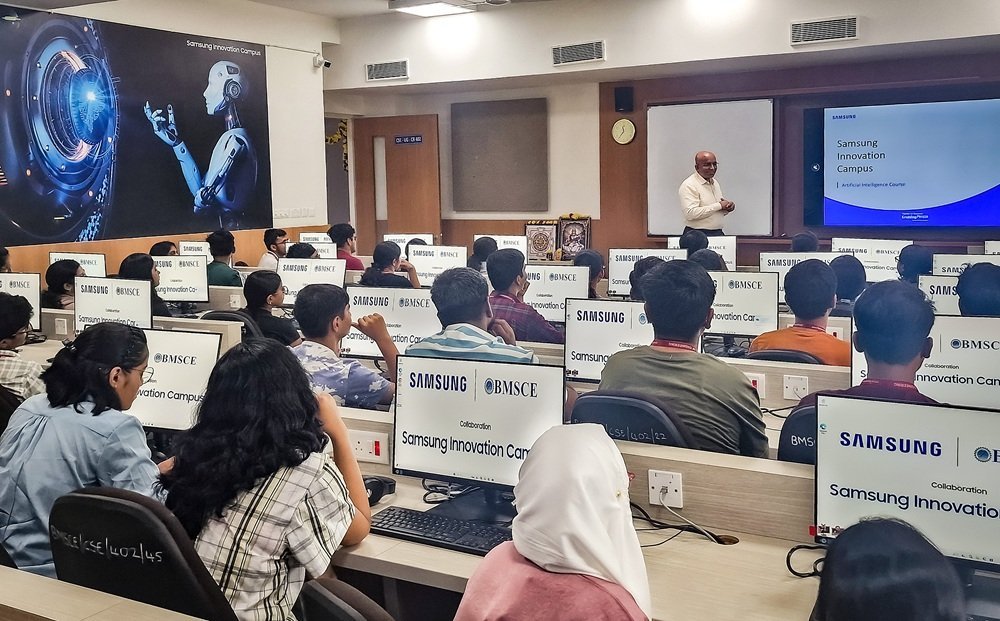
@bangalore Don't trust Samsung. They might be using your students data and selling them
English
Dumspter
805 posts








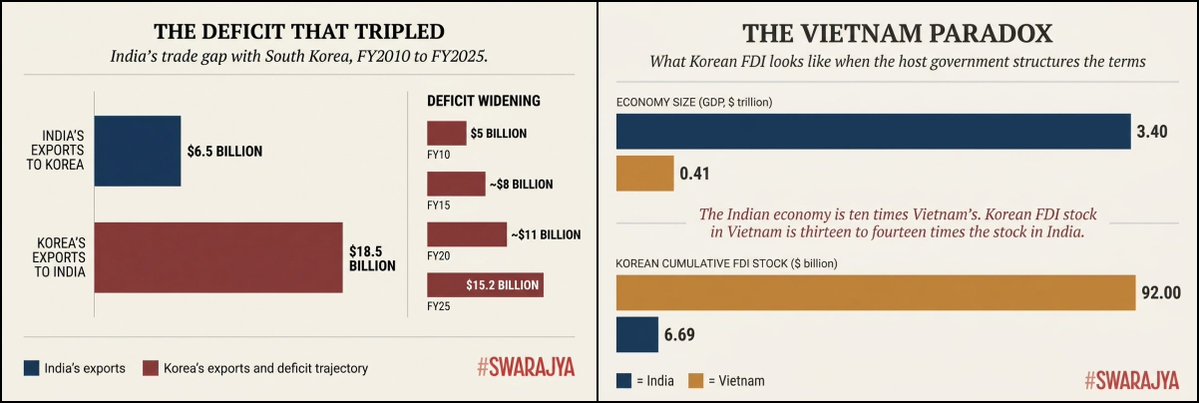


Korea's cumulative FDI in Vietnam: $92 billion. In India: $7 billion. India's economy is ten times Vietnam's size. Samsung exports $54 billion a year from Vietnamese factories. India gets the products. Vietnam gets the supply chains and the jobs.


Cheese from India makes its mark globally… India made an impressive debut at the Mundial do Queijo do Brasil 2026, which is a vibrant international competition for cheese and dairy products. Four Indian products won medals, including 1 Super Gold, 2 Golds and 1 Silver. The Super Gold was won by Eleftheria Gulmarg (Brie Style), the Golds were won by Yak Churpi-Soft, Nordic Farm, Leh, Ladakh and Eleftheria Brunost (Whey Cheese) while the Silver was won by Eleftheria Kaali Miri (Belper Knolle Style). Congratulations to Mausam Narang and Thenlay Nurboo. Such successes strengthen India’s artisanal dairy sector on the world stage.

The India–Republic of Korea FTA, signed in 2009 and brought into effect in 2010 during UPA II, is the result of a poorly negotiated, imbalanced agreement tilted against India. Since then, bilateral merchandise trade between the two countries has increased by 92.7%, with India’s imports rising by 103.7%, clearly not favouring India. Thus, while overall trade expanded, the trade deficit also widened. In 2015, PM @NarendraModi ji and the President of the Republic of Korea met and agreed to commence negotiations to amend the India–Korea CEPA, with a view to achieving both qualitative and quantitative growth in trade through an agreed roadmap. Thereafter, at the Ministerial-level Meeting of the Joint Committee under the IKCEPA, the Ministers announced the launch of renegotiations, under which eleven rounds were held, and an Early Harvest Package was agreed upon. Now, through sustained and concerted efforts, the two countries have decided to go beyond the earlier agreed aspects and prioritise a more reciprocal and mutually beneficial partnership, with a strong focus on key sectors of shared interest, while also addressing non-tariff barriers and rules of origin. The renegotiation talks are expected to conclude by the end of 2026 or, at the latest, by mid-2027. At the same time, consistent follow-up to enhance localisation and reduce import dependency of Korean companies operating in India has begun to yield results. We are now witnessing genuine indigenisation and improved reciprocity. Additionally, during the recent State Visit of the Hon’ble President of the Republic of Korea to India, it was announced that JSW Steel and the Republic of Korea’s POSCO have formed a 50:50 joint venture to establish a 6 MTPA greenfield integrated steel plant in Odisha, with an estimated investment of ₹35,000 crore. This joint venture route of investment is unlike earlier investments by Korean companies, which were in the form of wholly owned subsidiaries. In addition, multiple MoUs have been signed between the two nations, aimed at: ✅ Strengthening bilateral economic ties across trade, industry, strategic resources and clean energy ✅ Enhancing technical cooperation and business matchmaking, with a focus on the MSME sector ✅ Improving supply chain resilience and boosting industrial co-production The Modi Government’s approach is clear: ensuring fair trade, more balanced outcomes, and a steady push to strengthen domestic manufacturing, while firmly safeguarding national interests, making this a win-win partnership.



In the last 12 months, Hyundai & LG together took $4.7 billion out of their Indian subsidiaries and sent it to their Korean parents. Samsung's royalties to Seoul rose 50% in a single year to ₹3,322 crore. All of this is legal under India's trade agreement with Korea. 🧵

Modi government has allowed 100% FDI in hospital chains and pharmaceutical companies, which means full foreign control if investors choose and claims it as a positive step. Can any one help me to understand the pros and cons?


- Localization takes time. Firms will invest when the business environment is competitive and that env in India is improving. Korean firms like Hyundai are already localizing, and this will likely accelerate thanks to regulatory reform, infra development, PLI etc. (3/n)


Breaking: "South Korea has provided two phases of K9 Vajra anti-aircraft systems. We are looking at a third phase with more tech transfer. We are also looking at more guns and anti aircraft systems," says MEA