Lee Berry

3.2K posts

Lee Berry banner
Lee Berry

Lee Berry

@Bezza_lee

RN , ACCP, USS and POCUS enthusiast. Deluded football player / manager. Ex 90s dance child.

Southampton, England Katılım Mart 2013
237 Takip Edilen290 Takipçiler
Lee Berry retweetledi
POCUS Med Ed
POCUS Med Ed@pocusmeded·
B-lines are most often discussed in the context of pulmonary edema. But the spacing between them carries a different kind of information — one that reflects structural lung disease rather than fluid overload.
English
1
6
31
1.6K
Lee Berry retweetledi
Dr. Chacón-Lozsán F .'.
Dr. Chacón-Lozsán F .'.@franciscojlk·
🫁PEEP in ARDS is no longer just a number. It is a phenotype test. The last 3 years of PubMed indexed literature show a clear shift in ARDS ventilation: from oxygenation based PEEP tables toward individualized assessment of recruitability, overdistension, transpulmonary pressure, regional ventilation, and mechanical power. The 2023 ESICM ARDS guideline strongly supports lung protective ventilation and recommends against prolonged recruitment maneuvers, but does not give a universal recommendation for one PEEP titration strategy (Grasselli et al., 2023). The 2024 ATS guideline, however, conditionally suggests higher PEEP without lung recruitment maneuvers in moderate to severe ARDS and strongly recommends against prolonged recruitment maneuvers (Qadir et al., 2024). This disagreement is clinically important. Why? Because PEEP can be protective or harmful depending on the lung. In a recruitable lung, PEEP may reduce cyclic opening and closing, improve homogeneity, lower dynamic strain, and reduce ventilator induced lung injury. In a poorly recruitable lung, the same PEEP may mainly increase overdistension, dead space, right ventricular afterload, and mechanical power. Recent PubMed indexed evidence supports this personalized approach. Electrical impedance tomography guided PEEP titration improves compliance, reduces driving pressure, and lowers mechanical power compared with conventional strategies, although larger trials are still needed before routine outcome based recommendations can be made (Songsangvorn et al., 2024). The recruitment to inflation ratio is attractive because it can be measured at the bedside, but recent CT validated data show important limitations. In a 2025 study, the R/I ratio had poor diagnostic performance for identifying high recruitability, especially in focal ARDS, although very low values may still help identify low recruiters (Richard et al., 2025). Esophageal pressure remains physiologically elegant because it separates lung stress from chest wall pressure. This is especially relevant in obesity, abdominal hypertension, pleural effusion, and extrapulmonary ARDS. However, it requires technical expertise and should not be treated as a simple number. The future of PEEP titration will probably not be one method, It will be an integrated bedside phenotype. The key question is no longer: “What PEEP gives the best PaO₂?” The better question is: At this PEEP, is the lung being recruited, protected, or injured? References📚 *Grasselli, G., Intensive Care Medicine, 49, 727–759. doi.org/10.1007/s00134… *Qadir, N., American Journal of Respiratory and Critical Care Medicine, 209(1), 24–36. doi.org/10.1164/rccm.2… *Songsangvorn, N.. Intensive Care Medicine, 50(5), 617–631. doi.org/10.1007/s00134… *Pavlovsky, B., Annals of Intensive Care, 14, 1. doi.org/10.1186/s13613… *Richard, J. C., Critical Care, 29, 220. doi.org/10.1186/s13054…
English
0
28
76
2.9K
Lee Berry retweetledi
Dr. Chacón-Lozsán F .'.
Dr. Chacón-Lozsán F .'.@franciscojlk·
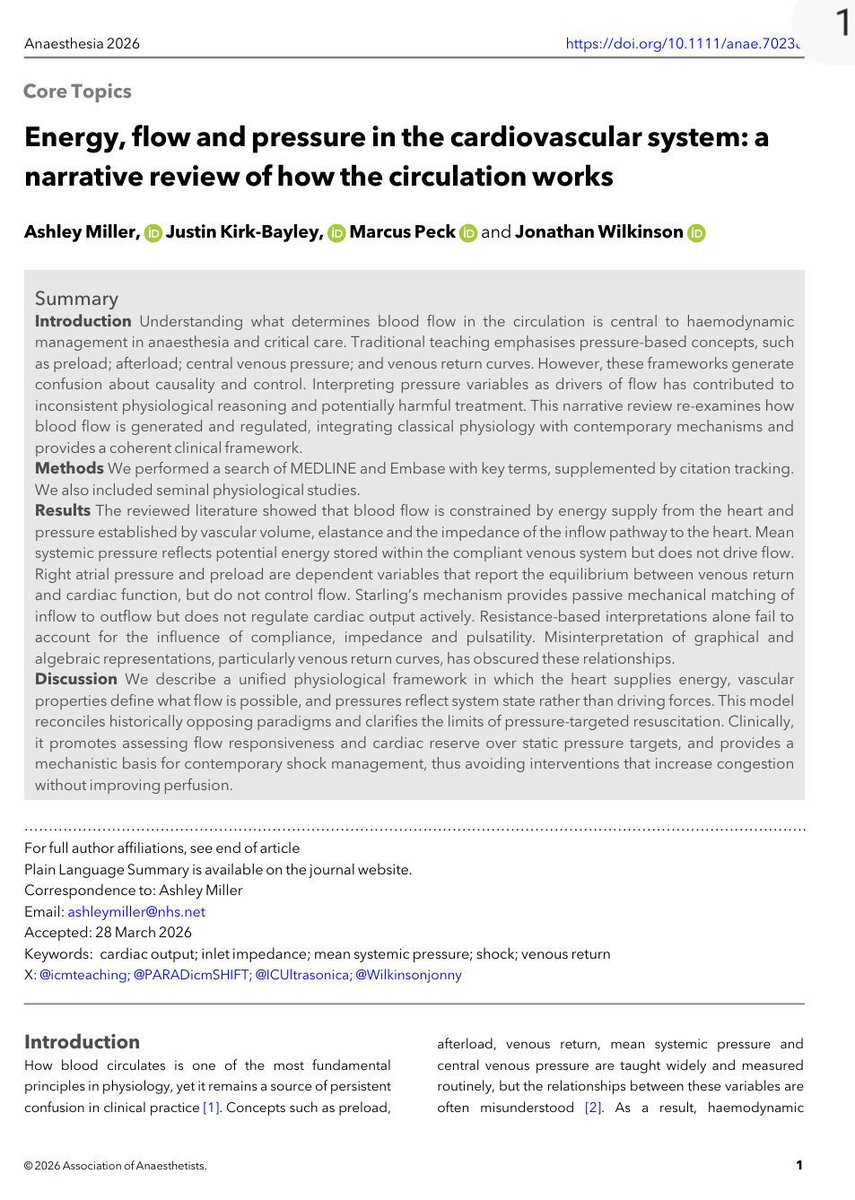
🫀🤓Pressure does not move blood. Energy does. This outstanding review challenges one of the most deeply rooted concepts in haemodynamic management: the idea that pressure variables are the primary drivers of circulation. Instead, the authors propose a physiology framework where the heart supplies energy, the vasculature defines constraints, and pressures merely reflect system state. Several concepts deserve special attention for critical care clinicians: • Mean systemic pressure does not “drive” flow • Right atrial pressure is a dependent variable, not a therapeutic target • Venous return depends on inflow acceptance and inlet impedance • Raising pressure without improving flow may worsen congestion • Shock should be interpreted as either impaired venous delivery or impaired cardiac acceptance Clinically, this framework helps explain why: • CVP-guided fluid loading often fails • Vasopressors may normalize MAP without restoring perfusion • Congestion can coexist with preserved arterial pressure • Flow responsiveness matters more than static pressure targets One of the strongest messages of the paper is simple but powerful: “Pressure is not perfusion.” For intensivists, anesthesiologists, and cardiogenic shock teams, this review is worth reading in full. It reconnects bedside haemodynamics with first-principles physiology. Miller A, Anaesthesia. 2026. doi.org/10.1111/anae.7…
Dr. Chacón-Lozsán F .'. tweet media
English
7
91
227
12.1K
Lee Berry retweetledi
Fluid Academy
Fluid Academy@Fluid_Academy·
Peter Stewart changed how we think about acid–base. He reduced it to 3 independent variables: Strong Ion Difference (SID) Total weak acids (Atot: albumin, phosphate) PCO₂. Everything we care about — pH, bicarbonate, base excess — just responds to changes in those three. Why this matters for fluids: 0.9% saline has SID ≈ 0 and a very high chloride. Large volumes drive hyperchloremic metabolic acidosis. “Balanced” crystalloids keep SID closer to plasma and use metabolizable anions (lactate, acetate, gluconate) instead of so much chloride. And potassium? Saline can worsen K⁺ by causing acidosis and pushing K⁺ out of cells. Balanced fluids often lead to less hyperkalemia despite a small K⁺ content in the bag. So when you’re on call and hitting “fluid bolus”: Don’t ask “What’s the pH of this bag?” Ask “What does this do to SID?” 👉 Want to go deeper into fluids, SID and real‑life cases? Join our International Fluid Academy online courses and community: fluidacademy.mn.co/collections/10…
Fluid Academy tweet media
English
1
11
18
1.5K
Lee Berry retweetledi
Dr. Chacón-Lozsán F .'.
Dr. Chacón-Lozsán F .'.@franciscojlk·
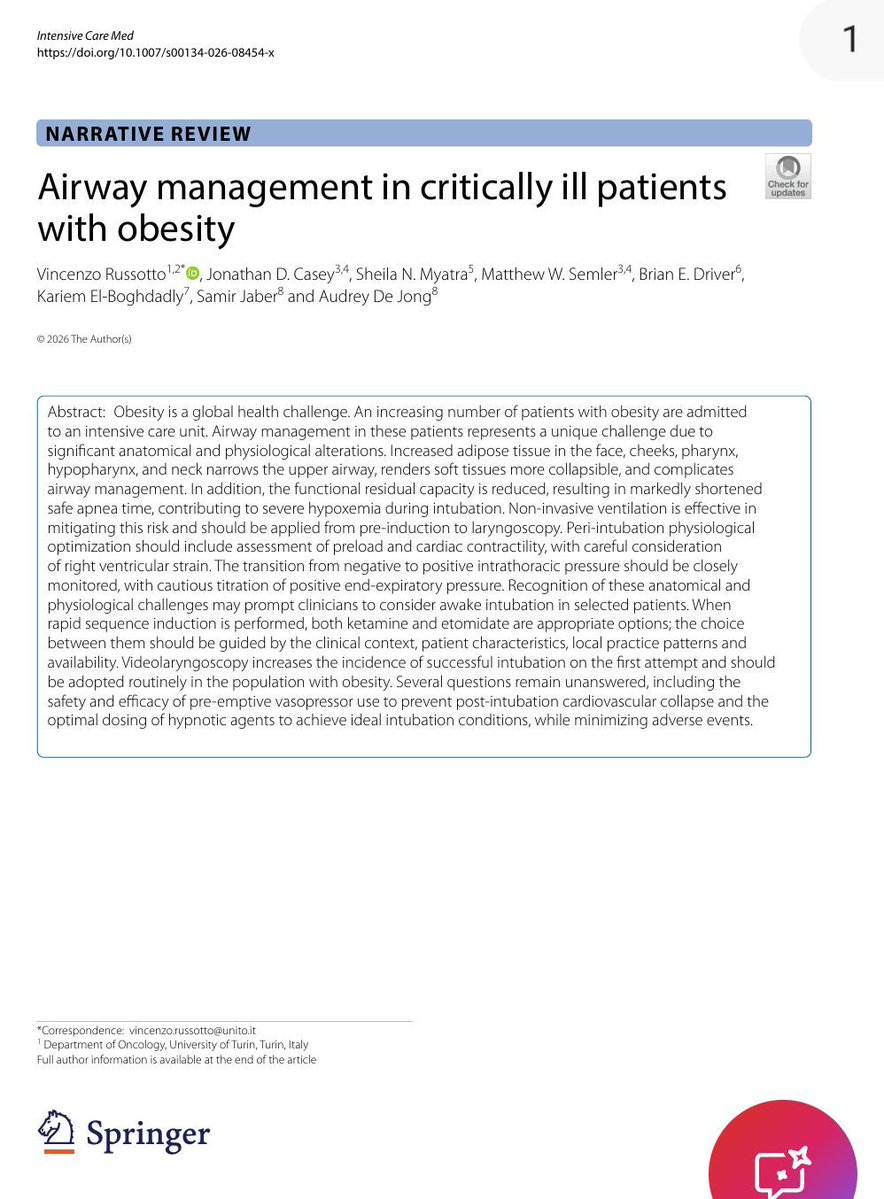
🫄🏻Airway management in critically ill patients with obesity is not simply a “difficult airway” problem. The classic airway mindset often focuses on: • Mallampati score • neck circumference • glottic view • laryngoscopy technique Patients with obesity experience: 📉 reduced functional residual capacity (FRC) 📈 increased oxygen consumption 📉 shorter safe apnea time 📈 increased work of breathing 📈 higher rates of peri-intubation hypoxemia and cardiovascular collapse This explains why desaturation during intubation in obesity can become catastrophic within seconds. The authors strongly support: ✅ noninvasive ventilation based preoxygenation ✅ positive pressure before laryngoscopy ✅ avoiding prolonged apnea ✅ ramped or upright positioning during preoxygenation The PREOXI trial findings cited in the review are particularly striking: 🫁 NIV preoxygenation reduced hypoxemia dramatically in critically ill patients with obesity compared with standard oxygen strategies. Another key concept: 📌 positioning is a physiological intervention. This is not merely ergonomic optimization. It directly influences: 🫁 diaphragmatic mechanics 🫁 ventilation perfusion matching 🫁 oxygen reserve 🫀 venous return and RV loading conditions The hemodynamic discussion is equally important. Critically ill patients with obesity frequently exhibit: ⚠️ right ventricular vulnerability ⚠️ elevated intrathoracic pressures ⚠️ chronic hypoxic pulmonary vasoconstriction ⚠️ preload dependence This creates a dangerous peri-intubation transition: from spontaneous negative pressure breathing → to positive pressure ventilation. In unstable patients, that transition alone can precipitate: 🫀 severe hypotension 🫀 RV failure 🫀 cardiovascular collapse The review therefore emphasizes: 📌 preload assessment 📌 cautious PEEP titration 📌 early vasopressor consideration 📌 careful induction drug selection Interestingly, propofol emerged as a major modifiable predictor of cardiovascular collapse in prior ICU airway datasets discussed in the paper. Another strong recommendation: 🎥 videolaryngoscopy should become routine in critically ill patients with obesity. Not because it looks modern. Because: ✅ first pass success matters. Every additional attempt: • worsens hypoxemia • increases sympathetic stress • raises aspiration risk • increases cardiac arrest probability The review consistently supports: 📌 videolaryngoscopy 📌 stylet or bougie adjuncts 📌 experienced operators 📌 preparation for awake intubation in selected cases Perhaps the most important lesson from this review: The obese critically ill airway is not “just harder.” It is physiologically fragile. 📖 Russotto V et al. Airway management in critically ill patients with obesity. Intensive Care Medicine, 2026. doi.org/10.1007/s00134…
Dr. Chacón-Lozsán F .'. tweet media
English
0
22
54
2.3K
Lee Berry retweetledi
CardiovascularCorner
CardiovascularCorner@TrackYourHeart·
Echocardiographic assessment of the right ventricle Credit: @bebulwer
CardiovascularCorner tweet media
English
1
82
281
8.4K
Lee Berry retweetledi
POCUS Med Ed
POCUS Med Ed@pocusmeded·
Lung auscultation has been the standard tool for bedside pulmonary diagnosis for 200 years. What's rarely discussed in clinical training is how poorly it actually performs when tested empirically. A thread on the evidence.
POCUS Med Ed tweet media
English
3
7
44
7.2K
Lee Berry retweetledi
Dr. Chacón-Lozsán F .'.
Dr. Chacón-Lozsán F .'.@franciscojlk·
🩺 Cirrhosis is no longer just a “liver disease.” This review summarizes how inpatient cirrhosis management has fundamentally evolved from static “end stage liver disease care” into dynamic risk stratification and organ support. One of the most important modern concepts highlighted: ⚠️ “Cirrhosis” is increasingly being replaced by the concept of compensated advanced chronic liver disease (cACLD). A particularly important ICU and ward management point: 🩸 Variceal bleeding management has changed. Modern evidence supports: • restrictive transfusion strategy • early vasoactive therapy • early antibiotics • rapid endoscopy • selective early TIPS in high risk patients One major physiological misconception continues to harm patients: ❌ Elevated INR in cirrhosis does NOT equal auto anticoagulation. Cirrhosis creates a “rebalanced” coagulation state where patients can simultaneously: • bleed AND • thrombosis This explains why routine FFP correction before paracentesis is no longer recommended and why portal vein thrombosis remains common. Another critical update: 💧 Ascites management is not simply “give diuretics.” The review reinforces that: • sodium restriction is foundational • albumin remains physiologically crucial • aggressive fluid shifts can precipitate renal collapse • diagnostic paracentesis should be routine in hospitalized patients with ascites, even without symptoms Perhaps one of the most important modern concepts: 🧠 Hepatic encephalopathy is not merely “high ammonia.” The article emphasizes: • systemic inflammation • infection triggers • electrolyte disturbances • medications • renal dysfunction • gut microbiome interactions as central drivers of encephalopathy. And importantly: 🍖 Protein restriction is now contraindicated. This is a major paradigm shift from older teaching. Patients with cirrhosis require: • aggressive nutritional support • high protein intake • sarcopenia prevention • late night protein supplementation One of the strongest messages of the paper: ⚠️ Every hospitalization for decompensated cirrhosis should trigger transplant thinking. Not “end stage management.” Not passive stabilization. But active reassessment of: • prognosis • reversibility • candidacy • goals of care • frailty • transplant referral timing For intensivists and hospitalists, cirrhosis management is increasingly becoming a discipline of: • hemodynamic physiology • renal protection • inflammation control • nutritional optimization • procedural timing • multidisciplinary coordination rather than isolated hepatology alone. 📖 Rogal S. Inpatient Management of Patients With Cirrhosis. Annals of Internal Medicine. 2026. doi:10.7326/ANNALS-26-00513
Dr. Chacón-Lozsán F .'. tweet media
English
5
82
219
9.7K
Lee Berry retweetledi
NephroPOCUS
NephroPOCUS@NephroP·
#POCUS #echofirst #Nephpearls thread of the day 🧵 The concept of estimating stroke volume and cardiac output. See thread for some pearls and pitfalls ⚠️
NephroPOCUS tweet media
English
3
52
163
13.9K
Lee Berry retweetledi
Dr. Nikhil Agrawal
Dr. Nikhil Agrawal@DrNikhilMD·
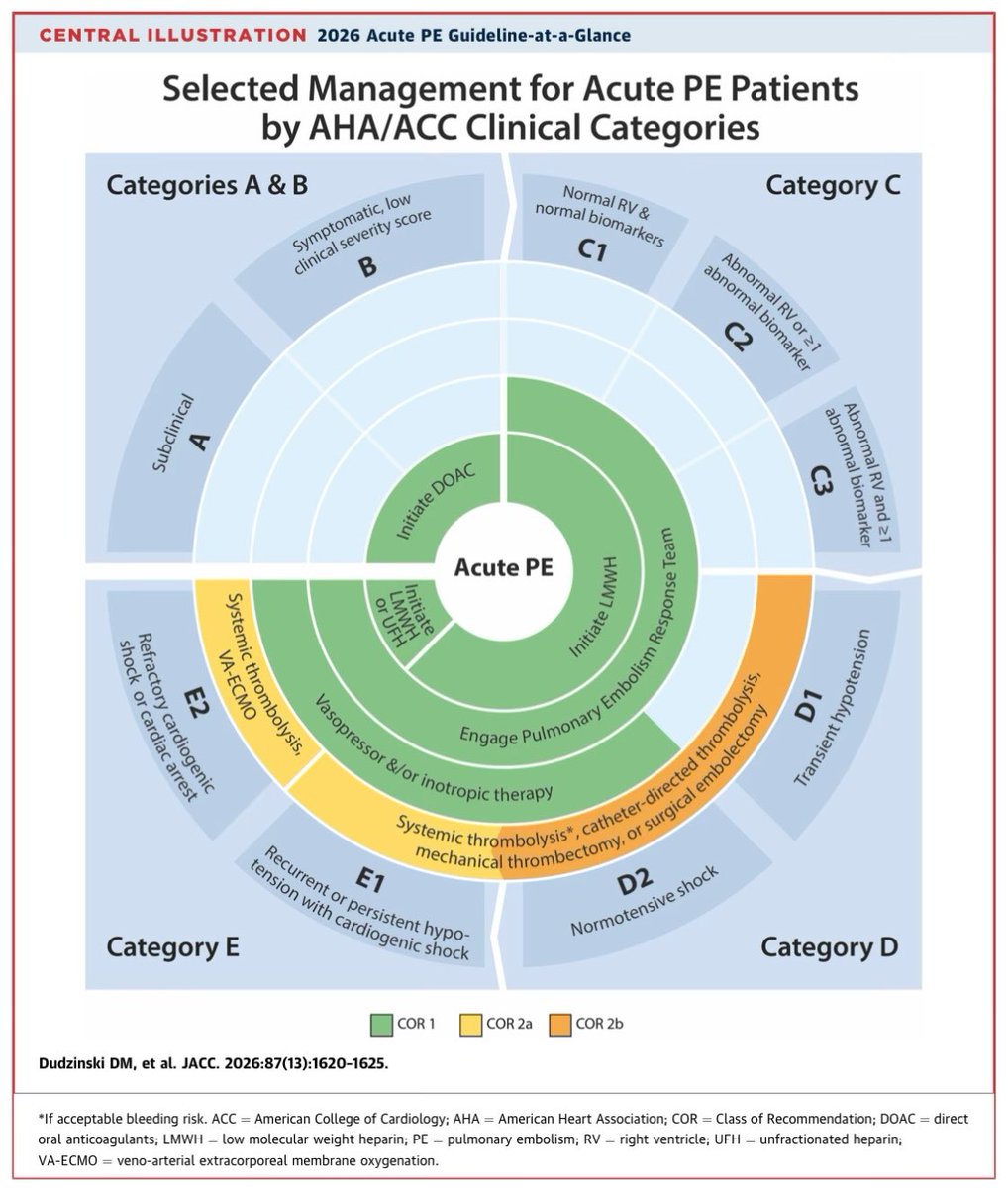
1️⃣5️⃣ Key takeaway: The 2026 PE guideline shifts management from: “Massive vs submassive PE” ➡️ Toward a far more nuanced physiology based model. Core themes: • Better risk stratification • Earlier discharge for low risk patients • Stronger role of PERTs • Expanded use of advanced therapies in selected patients • Structured long term follow up PE care is becoming increasingly personalized. 🔚 Like ❤️ + Repost 🔁 👉 Follow @DrNikhilMD for more
Dr. Nikhil Agrawal tweet media
English
0
3
4
635
Lee Berry retweetledi
Dr. Chacón-Lozsán F .'.
Dr. Chacón-Lozsán F .'.@franciscojlk·
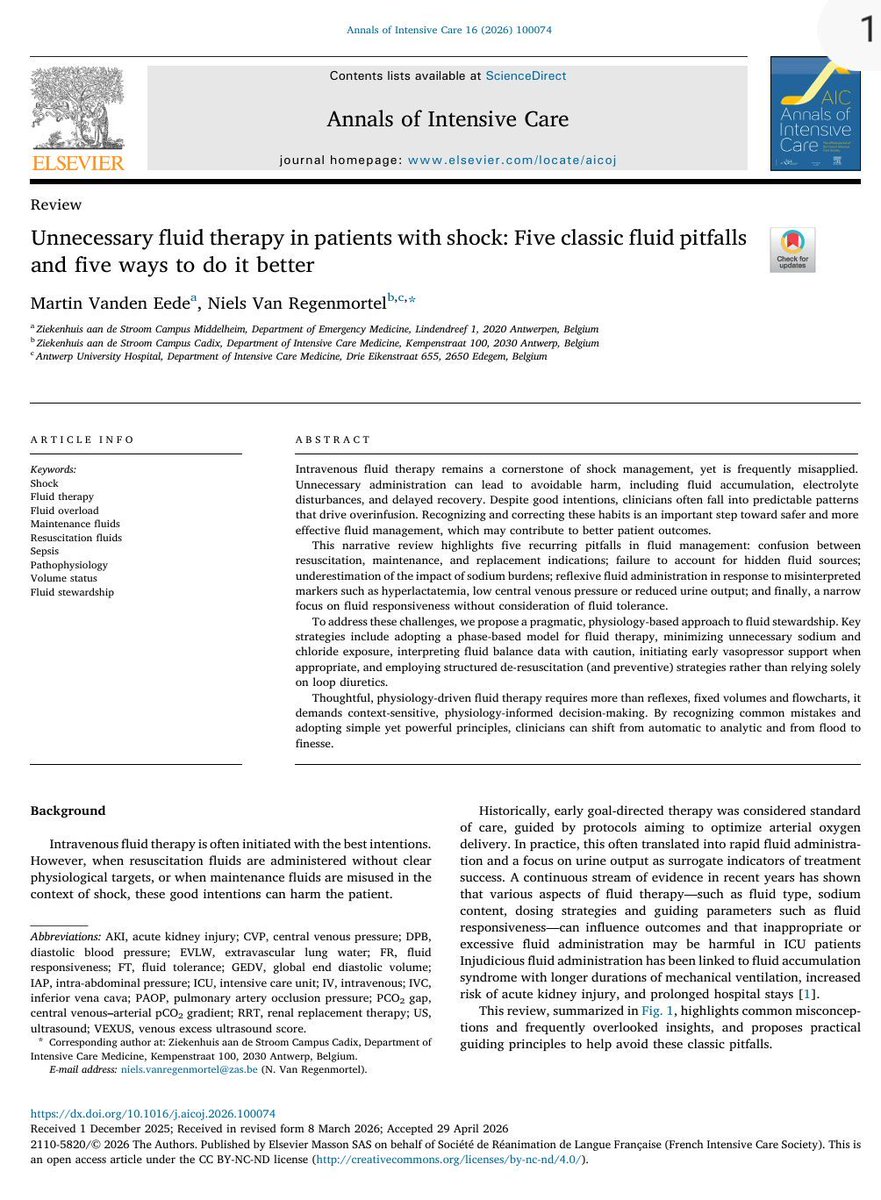
💧 Fluids are not benign. They are pharmacologic interventions with indications, contraindications, dose limits, adverse effects, and cumulative toxicity. “If hypotensive, give more fluid.” 😬 The paper highlights five classic pitfalls in fluid therapy that most intensivists encounter daily: 1️⃣ Confusing: • resuscitation fluids • maintenance fluids • replacement fluids 2️⃣ Ignoring “hidden fluids” (medication diluents, flushes, fluid creep) 3️⃣ Focusing on volume while underestimating sodium burden 4️⃣ Using nonspecific markers as automatic fluid triggers 5️⃣ Assessing fluid responsiveness while ignoring fluid tolerance One of the strongest concepts in the review: 🧠 “Fluid responsiveness does not equal fluid tolerance.” A patient may increase stroke volume after a bolus and still deteriorate from: • venous congestion • pulmonary edema • renal congestion • abdominal hypertension • impaired microcirculation That distinction is fundamental. The article strongly supports integrating: 📡 Lung ultrasound 📡 VExUS 📡 venous Doppler 📡 congestion assessment 📡 organ specific fluid tolerance 🚨 Lactate is a clue. Not a fluid order. Also • hyperlactatemia • oliguria • tachycardia • low CVP are often misinterpreted as direct triggers for fluid administration despite poor specificity for hypovolemia. Especially after: • ANDROMEDA SHOCK • early vasopressor strategies • capillary refill guided resuscitation • fluid stewardship concepts One of my favorite lines conceptually from this review: 🧂 “Sodium may matter more than volume.” That idea deserves much more discussion. The authors emphasize that: fluid accumulation is frequently driven not only by liters, but by cumulative sodium and chloride exposure. Including: • maintenance fluids • replacement fluids • medication diluents • “fluid creep” This is a critical but frequently ignored concept in ICU practice. The paper also revisits the ROSE model: 🌹 Resuscitation 🌹 Optimization 🌹 Stabilization 🌹 Evacuation A framework that encourages phase specific fluid therapy instead of continuous indiscriminate fluid loading. Particularly interesting: the review supports earlier vasopressor initiation in vasoplegic shock. Not every hypotensive patient is “fluid depleted.” Sometimes the real pathology is: 🩸 vasoplegia 🩸 endothelial dysfunction 🩸 vascular leak 🩸 loss of vascular tone In these situations: more fluid may simply worsen interstitial edema while norepinephrine addresses the actual pathophysiology. My main takeaway: Future fluid management will probably become: less protocolized, less volume centered, and far more physiology driven. The intensivist of the future may think less in terms of: “how many liters?” And more in terms of: 🧠 perfusion 🧠 tolerance 🧠 congestion 🧠 sodium load 🧠 vascular tone 🧠 phase of shock From flood to finesse. 📖 Reference Vanden Eede, M. Annals of Intensive Care, 16, 100074. doi.org/10.1016/j.aico…
Dr. Chacón-Lozsán F .'. tweet media
English
1
87
253
16.5K
Lee Berry retweetledi
NephroPOCUS
NephroPOCUS@NephroP·
Practical example
NephroPOCUS tweet media
English
0
1
15
1.6K
Lee Berry retweetledi
POCUS Med Ed
POCUS Med Ed@pocusmeded·
As aortic stenosis progresses, the normal sharp carotid upstroke gradually rounds and slows. The waveform shape mirrors the severity — from a crisp peak in normal valves to a broad, delayed dome in severe stenosis.
POCUS Med Ed tweet media
English
2
7
41
3.2K
Lee Berry retweetledi
NephroPOCUS
NephroPOCUS@NephroP·
#POCUS can reduce cognitive burden, but it doesn’t replace clinical thinking. Even in the AI era, the probe is still just a tool. Interpretation, integration, and judgment remain the clinician’s job. #Nephpearls
NephroPOCUS tweet media
English
0
14
71
2.8K
Lee Berry retweetledi
Dr. Chacón-Lozsán F .'.
Dr. Chacón-Lozsán F .'.@franciscojlk·
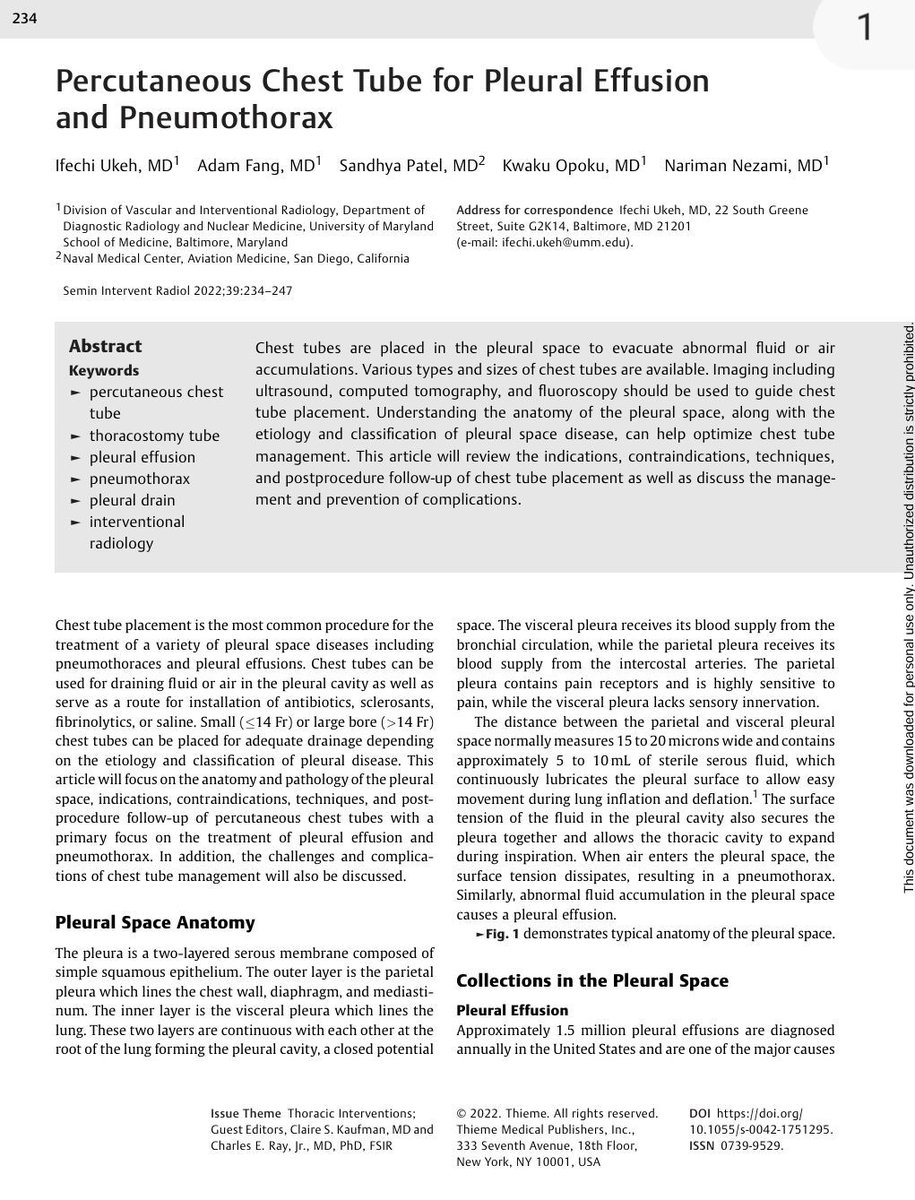
🫁 Chest tubes are far more than “just a drain.” This review is an excellent reminder that successful pleural management depends on understanding physiology, imaging, drainage mechanics, and complications. Several practical concepts stand out: 📡 Image guidance matters. Ultrasound is now the standard for pleural drainage, improving success and reducing complications compared with blind insertion. CT guidance becomes essential for loculated, fissural, or complex collections. 📏 Bigger is not always better. Small bore pigtail catheters are increasingly supported for many pleural effusions and pneumothoraces, often causing less pain and fewer complications. Large bore tubes still retain value in: • hemothorax • empyema • persistent air leak • mechanically ventilated pneumothorax ⚠️ One of the most misunderstood areas remains chest drainage systems. The paper clearly explains: • tidaling • bubbling interpretation • water seal physiology • suction management • digital drainage systems Importantly, continuous bubbling is not automatically “normal.” It may indicate a persistent air leak, tube malfunction, or incomplete pleural sealing. Another excellent point: 🧠 excessive suction may sometimes prolong alveolar or bronchopleural fistula healing. Finally, the review highlights serious complications clinicians must actively anticipate: • tube malposition • arterial injury • persistent air leak • reexpansion pulmonary edema Chest tube management is not a nursing afterthought. It is dynamic pleural physiology at the bedside. 📖 Ukeh I et al. Seminars in Interventional Radiology. 2022;39:234–247. doi.org/10.1055/s-0042…
Dr. Chacón-Lozsán F .'. tweet media
English
0
58
198
8.8K
Lee Berry retweetledi
NephroPOCUS
NephroPOCUS@NephroP·
Clot-in-transit ⚠️🚨 #POCUS #FOAMed #CriticalCare Courtesy 🔗 Loebig, et al. European Heart Journal - Case Reports, Volume 9, Issue 2, 2025.
English
2
27
134
14.4K
Lee Berry retweetledi
POCUS Med Ed
POCUS Med Ed@pocusmeded·
Physicians have been studying the pulse for over 4,000 years. The ancient Egyptians knew it reflected the heart. Herophilus measured it with a water-dripping clepsydra. Galen wrote 18 books on it. Today, we can see it with pulsed-wave Doppler. A thread.
POCUS Med Ed tweet media
English
1
17
91
5.3K