Luke, The Bridge Builder

224 posts

Luke, The Bridge Builder banner
Luke, The Bridge Builder

Luke, The Bridge Builder

@BiblicalBridges

Building Bridges Between Brothers Initiative. Join us if you want to connect with like-minded believers and grow in your Biblical Knowledge.

Katılım Kasım 2025
112 Takip Edilen51 Takipçiler
Sabitlenmiş Tweet
Luke, The Bridge Builder
Luke, The Bridge Builder@BiblicalBridges·
"60 Days In Genesis 1-11" is out! 📖 This is a FREE e-book containing a collection of all of the studies that we did on Genesis 1-11 here at the @BiblicalBridges profile. This devotional book walks you verse by verse through the opening chapters of Genesis, providing rich theological commentary throughout the daily studies. To get the PDF, it's very simple: - Make sure you are following our page. - Like AND repost this post. - Leave a comment saying "I want the 60 Days In Genesis 1-11 e-book." - Share this page with at least one person from your family or church. I will DM you the PDF of the e-book as soon as possible. *Credits for the cover: @ShekinahVisor #Genesis #BibleStudy #Devotional P.S. The e-book is 100% FREE, but if you do want to support this project financially, you can see how to here: shortlink.uk/1oQxC+
Luke, The Bridge Builder tweet media
English
2
5
6
153
Luke, The Bridge Builder
Luke, The Bridge Builder@BiblicalBridges·
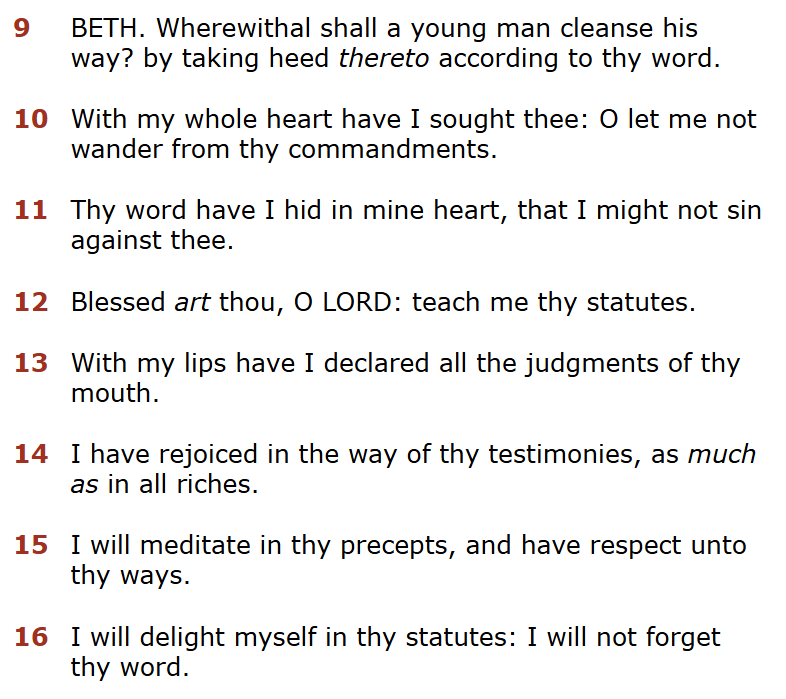
Final Summary: The Duty and Pleasure of Life with God (Psalm 119:9-16) Psalm 119:9-16 asks and answers straight away: “How can a young man keep his way pure?” By taking heed according to God’s Word. The psalmist models the way: wholehearted seeking, hiding Scripture deep in the heart, and crying out for God to keep him from wandering. Purity and holy living come from daily alignment with the Bible. That hidden Word then overflows outward. Praise bursts forth (“Blessed are You, O Lord!”), and truth is declared (to yourself and to others). Obedience is not restriction — it is delight and full satisfaction in Him. Verses 15-16 lock it in with lifelong resolve: “I will meditate… I will respect… I will delight… I will not forget.” Duty and pleasure in God are inseparable. Let’s take heed to His Word today, seek Him with all our hearts, and walk this joyful path forever. Thank you for journeying through the 8-part study! May it shape our daily walk with Christ.
Luke, The Bridge Builder tweet media
English
0
2
3
60
Luke, The Bridge Builder
Luke, The Bridge Builder@BiblicalBridges·
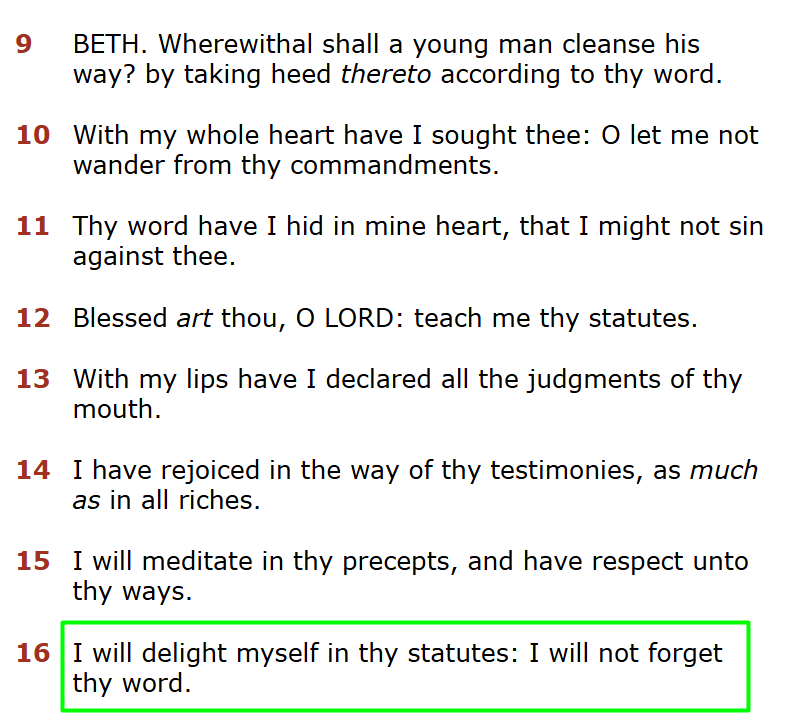
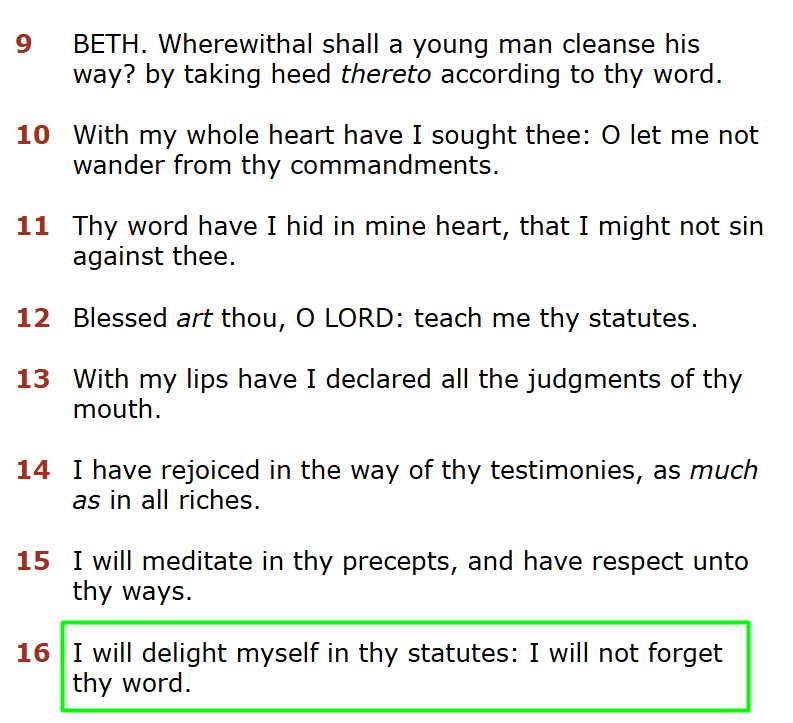
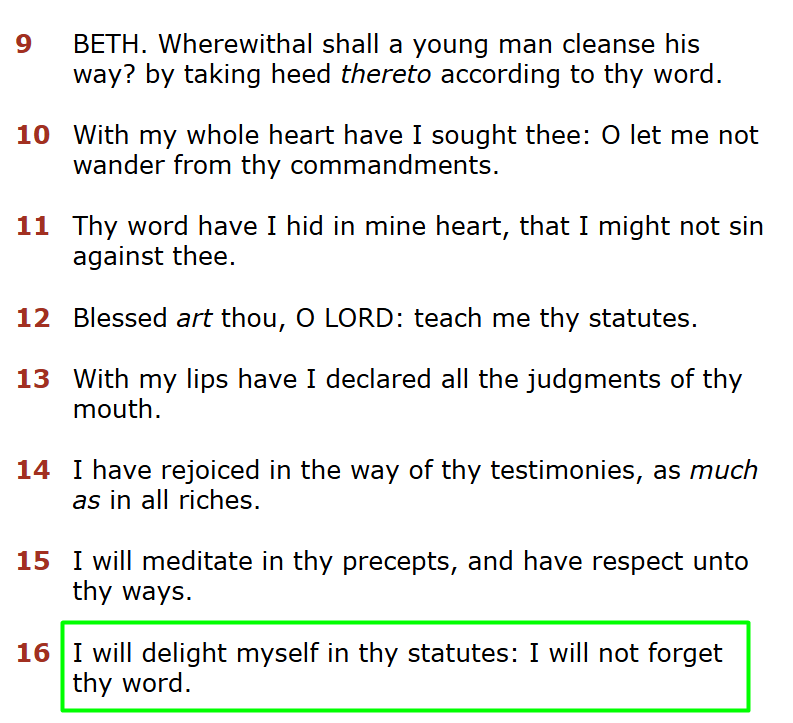
And he says here, “I will not forget thy word.” This ties everything together beautifully with verse 11. After all, when we talk about “knowing something by heart,” that expression means exactly that—knowing it from the heart. That’s why we say “I know that by heart” when we remember something easily. It means: I know it very well; it’s inside me. And as we saw in verse 11, that’s precisely how God’s Word must be in our hearts. And of course, it would be impossible to seek the Lord in His Word, to not stray from His commandments, to declare His judgments with our mouth, to find joy in the Lord’s testimonies, to meditate on God’s precepts, and to do everything we’ve seen today without... knowing and remembering what God has said. The final commitment in the text is basically the first and necessary condition for fulfilling everything else. So, brothers and sisters, let us not forget the Word of God. (5/5)
Luke, The Bridge Builder tweet media
English
0
0
3
7
Luke, The Bridge Builder
Luke, The Bridge Builder@BiblicalBridges·
Finally, the end of verse 16 says: “I will not forget thy word.” This is a brilliant way to close this poetic section. It ties everything we’ve seen together right from the beginning. Just look: The Hebrew word used here for “word” is the exact same one we saw in the first verse. So the passage begins by talking about the necessity of God’s Word and ends using the very same term, making it crystal clear that from start to finish, the focus is on the Word of the Lord. This is called an “inclusio”—it begins and ends with the same theme. (4/5)
Luke, The Bridge Builder tweet media
English
1
0
3
26
Luke, The Bridge Builder
Luke, The Bridge Builder@BiblicalBridges·
The Duty And Pleasure Of Life With God (Psalm 119:9-16) [8/8] The Psalmist’s third commitment, now in verse 16, is this: “I will delight myself in thy statutes.” It’s incredible that this phrase appears right after the one we just read. Because it’s possible for someone to look at the issues I’ve been talking about, to look at what the Bible requires of us as Christians, and think: “Wow, being a believer is really boring,” or “This whole church thing is way too restrictive.” And I don’t believe any of the brothers and sisters here think that way, but the question is: do we really understand that the boundaries God sets are actually good for us? That they exist for our pleasure and for our joy? (1/5)
Luke, The Bridge Builder tweet media
English
1
1
4
75
Luke, The Bridge Builder
Luke, The Bridge Builder@BiblicalBridges·
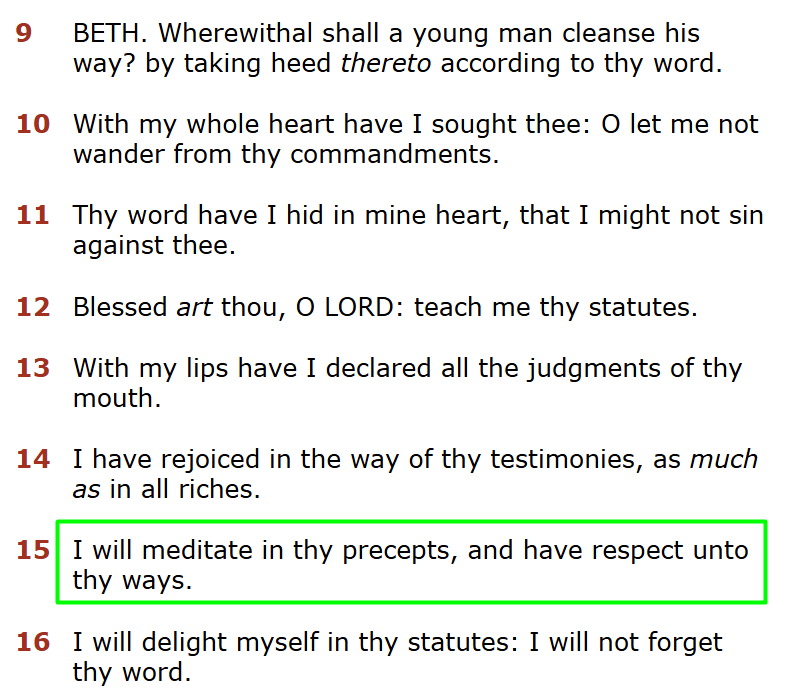
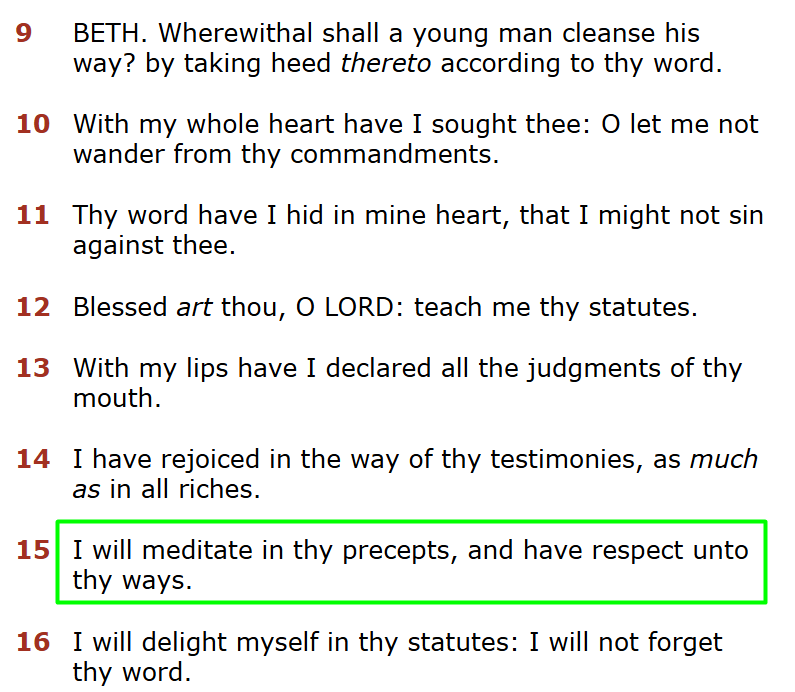
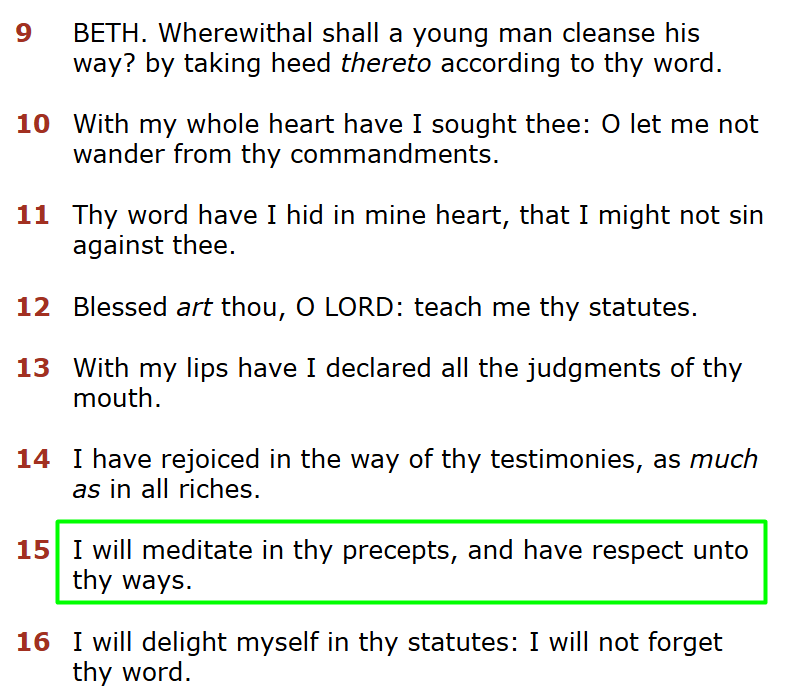
Another example: do we actually listen to what the Bible says about relationships? That it is better to be alone than in bad company (which is basically what is said three times in Proverbs)? That light has no fellowship with darkness? That we are the temple of the Holy Spirit, the dwelling place of the Most High God? When we ask: “Ah, but can’t I really do this anyway? Is it really a sin?”, is that having respect for God’s ways? Or do we sometimes have the mentality of “how close to the edge of the abyss can I get without actually falling”? So, “I will meditate on Your precepts, I will respect Your ways.” Next time we'll see the last 2 commitments of the Psalmist (5/5)
Luke, The Bridge Builder tweet media
English
0
0
2
13
Luke, The Bridge Builder
Luke, The Bridge Builder@BiblicalBridges·
"I will have respect unto thy ways" is the next commitment the Psalmist makes. This is something important for us to understand. Here the idea is to have respect like someone who actually listens to what is being said. You know that situation where one person is trying to talk to the other, but you can clearly see that the other person isn’t listening, isn’t paying any attention? If we saw that, we would definitely say that this person doesn’t respect the other — she just doesn’t care about what the other is saying. And maybe you or I would say: ‘No, but I do respect the Word of God,’ ‘I do listen to what God says in His Word.’ Really? Are we actually living like that in practice? Or are there areas of our lives where we don’t even want to know what the Bible says about them, because that would confront us and call us to change? Or do we prefer to live in a financially disorganized way — not knowing how much we earn or how much we spend — because it’s too much work to organize and keep track of it, and so we simply ignore what the Bible teaches about money and personal finances? That we should be good stewards, good managers of what God has given us, that we should contribute to the local church, and that to do so we need at least some basic control over our finances? (4/5)
Luke, The Bridge Builder tweet media
English
1
0
2
15
Luke, The Bridge Builder
Luke, The Bridge Builder@BiblicalBridges·
The Duty And Pleasure Of Life With God (Psalm 119:9-16) [7/8] Before we analyze the content of these verses here, let’s quickly reflect on the use of the future tense. What is the idea behind this change? Look, the Psalmist began by pondering the main theme question: “Wherewithal shall a young man cleanse his way?” He gave an answer: “by taking heed thereto according to thy word." And then he went on to put this theory, this proposal for life, into practice. And up to verse 14 we saw what happened in his life and in his heart as a result of this. But now? Why are these verses here and why are they in the future tense? The point here is that his search for God and for holiness was so good, so beneficial to him, it was so full of blessing, that he decides, from now on, to live this way forever. This was not something random or just a one-time event in the Psalmist’s life — something he did, thought was nice, and that changed nothing for him. No! Here he makes a vow, a commitment to follow this path for the rest of his life. (1/5)
Luke, The Bridge Builder tweet media
English
1
1
4
65
Luke, The Bridge Builder
Luke, The Bridge Builder@BiblicalBridges·
Why are you motivated by earthly treasures, which moth and rust destroy, thieves break in and steal, but you are not motivated to store up treasures in heaven, where they are not corrupted or taken from you? Do you understand the value that this has for your life, both for this life and for eternity? For where your treasure is, there your heart will be also. So, may we learn to give the Word of God its due value in our lives. To conclude our passage, verses 15 and 16 now change the verb tense. Up to this point the Psalmist has used the present and past tenses, but now he concludes the last two verses using the future. Let’s see what this brings us next time! (5/5)
Luke, The Bridge Builder tweet media
English
0
0
1
9
Luke, The Bridge Builder
Luke, The Bridge Builder@BiblicalBridges·
I heard an illustration about this that I found really interesting and that spoke deeply to my heart: If, for one month, I were to pay you US$1,000.00 for each verse you memorized, how much of the Bible would you know by the end of the period? And if I told you there was a limit of only one verse per day — that is, during the 30 days of the month, only one verse per day would count — would you ask me to raise the limit so you could memorize more? Now, I don’t have the resources to make this idea happen. But if you got motivated to memorize the Bible because of this… then where is your heart? (4/5)
Luke, The Bridge Builder tweet media
English
1
0
1
50
Luke, The Bridge Builder
Luke, The Bridge Builder@BiblicalBridges·
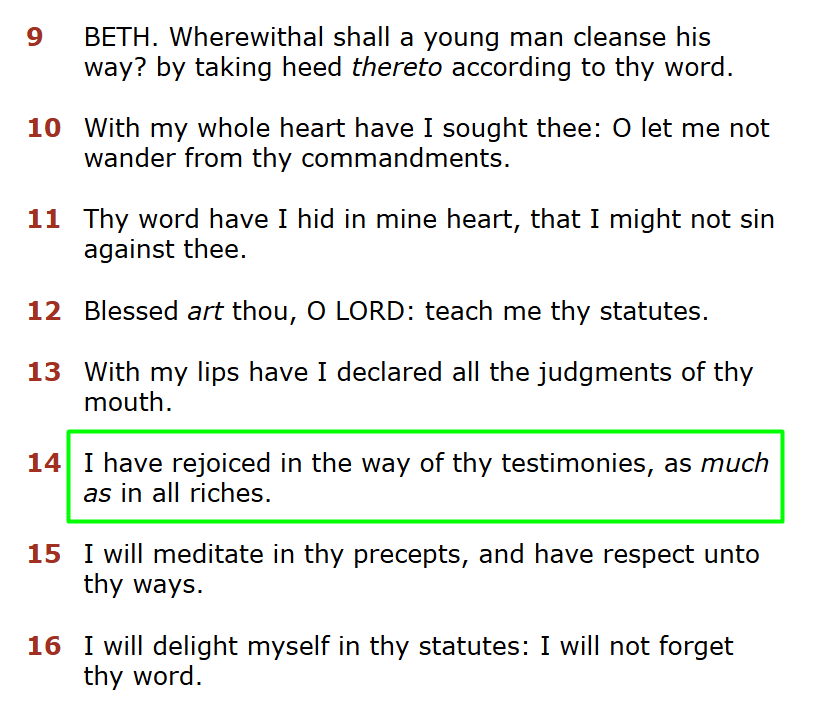
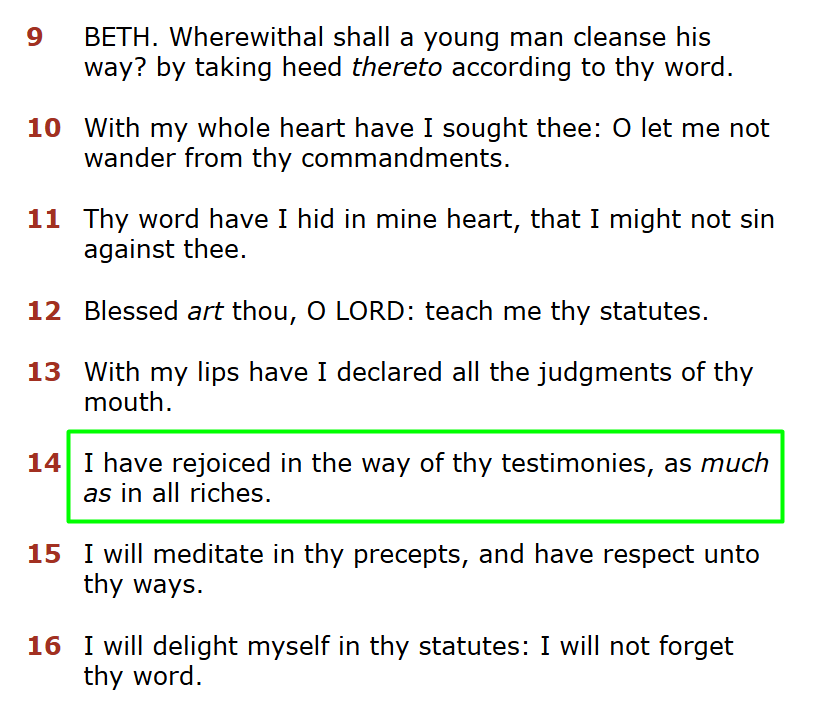
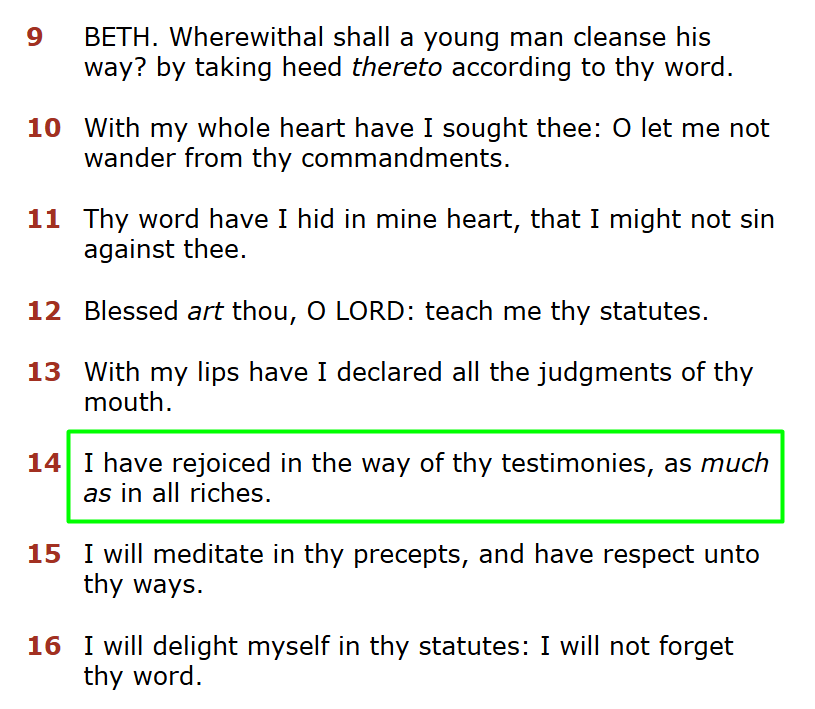
The Duty And Pleasure Of Life With God (Psalm 119:9-16) [6/8] The Psalmist here makes a comparison that reveals how delightful it is for him to live in the ways of God. Just as having great riches — or, as the text says, all riches — would bring him much joy and great pleasure, in the same way he declares that he has found in the path of the Lord’s testimonies a joy equally great. What will happen to any one of us who seeks to live a life like the one described here in this passage up to verse 13 is that we will find full and complete joy in the presence of God. (1/5)
Luke, The Bridge Builder tweet media
English
1
0
1
13
Luke, The Bridge Builder
Luke, The Bridge Builder@BiblicalBridges·
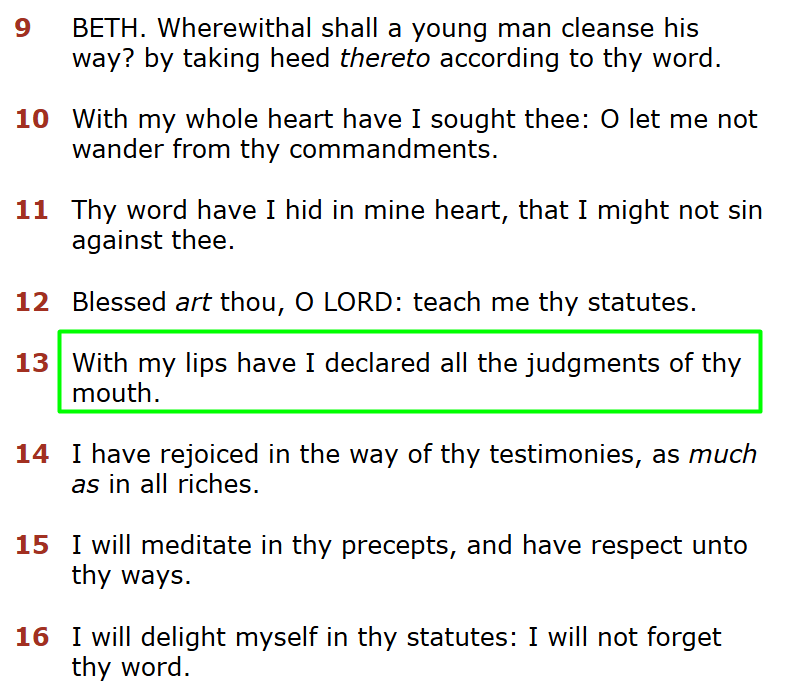
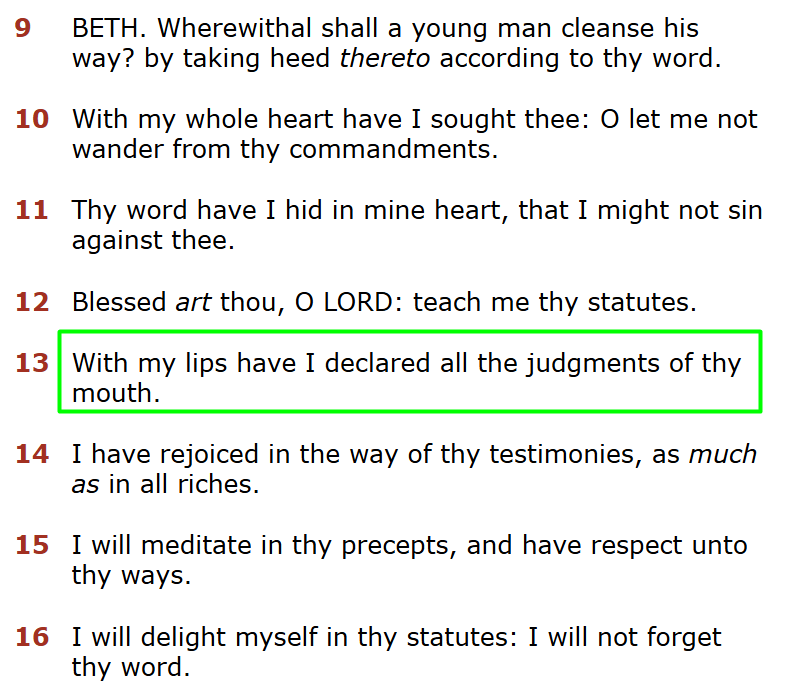
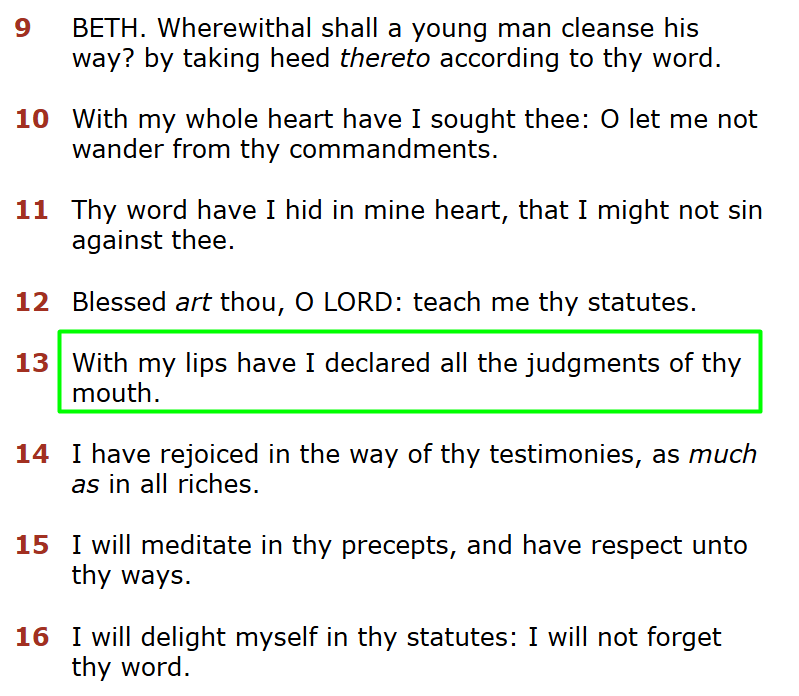
The Duty And Pleasure Of Life With God (Psalm 119:9-16) [5/8] Look at where the story of this young man seeking God is heading. Up to this point, the process has been from the outside in, right? There’s the Word out there, and we seek to bring it inside us, into our hearts. There’s God, and we seek Him with all our hearts. Well then: it is impossible for us to fill ourselves with something greater than ourselves without it overflowing and spilling over. And certainly the Word of God and God Himself are far greater than we are. This overflowing has already begun in the previous verse, as we saw. That exaltation of God is something that springs up and is born within us when we are full of the Spirit and full of the Word. And in verse 13 we see that now the process is from the inside out. Up to this point it was about seeking and knowing. Now it is about speaking, declaring, and announcing. (1/4)
Luke, The Bridge Builder tweet media
English
1
3
3
90
Luke, The Bridge Builder
Luke, The Bridge Builder@BiblicalBridges·
And that would only be a list of the things you actually noticed. There are 10,000 invisible situations every single day in which God is taking care of us, and we don’t even realize it. Here in the verse, the idea is more specific: it’s not just about recounting blessings, but about the judgments of God - what He determines, what He commands. Do we really know what God’s commandments are? Are we aware of what God expects from us as His children, as His servants? We would do well, brothers and sisters, to “declare to ourselves,” to “preach to ourselves” the Word of God — to tell ourselves, whether out loud or in meditation, what we ought to do as Christians: love our neighbor, take care of our family, serve the church, contribute financially to the church, proclaim the good news, fight against our sin, and so on. So what is the great consequence of living this way? Of following this journey of seeking holiness and seeking more of God? We'll see that next time on verse 14. (4/4)
Luke, The Bridge Builder tweet media
English
0
0
2
31
Luke, The Bridge Builder
Luke, The Bridge Builder@BiblicalBridges·
However, this verb here “declared” in Hebrew can also carry the sense of enumerating to oneself, as if the Psalmist were recounting to himself the judgments of God. And this too is something that should be part of our Christian life. The idea here is like that hymn: Count your blessings, name them one by one; Count your blessings, see what God hath done; Count your blessings, name them one by one; Count your many blessings, see what God hath done. The point is this: if we stopped at the end of the year and listed —actually wrote down— all the ways God has been good to us that year, our hearts would be filled with gratitude and praise to God, because we would realize that His goodness is far greater than we imagine or deserve. (3/4)
Luke, The Bridge Builder tweet media
English
1
0
2
29