Mount🅰️in Bluebird ⛰️🛰️

2.3K posts

Mount🅰️in Bluebird ⛰️🛰️ banner
Mount🅰️in Bluebird ⛰️🛰️

Mount🅰️in Bluebird ⛰️🛰️

@BigBlueBirdies

“Consumers do not currently expect this service, but in a few years they will all demand it” $ASTS

Chicago Katılım Temmuz 2020
207 Takip Edilen452 Takipçiler
Mount🅰️in Bluebird ⛰️🛰️ retweetledi
Kevin Chen
Kevin Chen@Defiantclient2·
$ASTS: 🚨AST SPACEMOBILE HINTS AT POTENTIAL DEDICATED GOVERNMENT CONSTELLATION + 10 distinct non-communications use case + Emphasis on radar application + Big satellites can do things that small satellites can't So we're doing testing in orbit today with the satellites in orbit for multiple government opportunities revenue producing opportunities with the US government. The way to think about US government opportunities they kind of go through a cycle where they have a Phase 1, Phase 2, Phase 3 contract and then ultimately the pot of gold is usually a Program of Record that's a 5 to 10 year thing with pretty sizable revenue opportunity per year, and so that is what we're chasing across what we've said about 10 different use cases between comms and non-communications. Non-communications for satellites like ours mean a lot of things but it, you know one of the things we mentioned on our call was radar and we can do things with a big satellite that you can't do with a small satellite that's the core of it and these are the biggest. are the biggest phased arrays ever deployed in low Earth orbit. And so if you put up 100 or 200 of them, you can do a lot of incredible things. And so our network is dual use, which means our commercial satellites can also support government applications. We also have the ability to build modified satellites that have government use only, of course, if that's the way the US., government wants to go. So we see a lot of opportunity. And of course, the backdrop here is the the biggest spending on space since the 60s. The backdrop is incredible. The Space Force budget just doubled to about $70 billion is what's in front of Congress now. There's a number of opportunities related to what we do that are very sizable. And, for Golden Dome, there's a lot of pressure on how to get something out in this administration. That's a value for our country. And to do that on any short timeline like that, you had to start five years ago. And fortunately, we did. - @scottwisniews at the @jpmorgan Global Technology, Media, and Communications Conference
English

6
47
408
18.5K
Aaron Rupar
Aaron Rupar@atrupar·
EISEN: But if SpaceX controls the infrastructure and also become a gatekeeper, isn't that anti-competitive? FCC CHAIR BRENDAN CARR: We don't see it developing that way
English
23
68
224
45.4K
Mount🅰️in Bluebird ⛰️🛰️ retweetledi
Morgan Brennan
Morgan Brennan@MorganLBrennan·
My INTV w/ @AbelAvellan about the telco satellite jv and the role @AST_SpaceMobile play, Bluebird production and launch plans, and how the SpaceX IPO will impact the sector $ASTS
Morning Call@CNBCMorningCall

.@AbelAvellan, Chairman and CEO of @AST_SpaceMobile, says the company is leading direct to device satellite broadband and expects rapid growth as space based connectivity expands globally. cnbc.com/video/2026/05/…

English
38
80
482
33.1K
Mount🅰️in Bluebird ⛰️🛰️ retweetledi
Anp🅰️nman
Anp🅰️nman@spacanpanman·
$ASTS: AST SPACEMOBILE SCOTT WISNIEWSKI SPEAKS AT JP MORGAN TMT CONFERENCE Bloomberg Transcript - Filler Words Removed Speakers: Scott Wisniewski – President & Chief Strategy Officer, AST SpaceMobile Sebastiano Petti – Telecom, Cable, and Satellite Analyst, J.P. Morgan Sebastiano Petti: Good afternoon, everyone. I am Sebastiano Petti, and I cover the telecom, cable, and satellite space here at J.P. Morgan. I would like to welcome Scott Wisniewski, President and Chief Strategy Officer of AST SpaceMobile. Scott, thanks for joining us. Scott Wisniewski: Thank you for having me. Sebastiano Petti: Let's start by zooming out. As we sit here in mid-2026, with BlueBirds launching, commercial service activation approaching, and the government pipeline accelerating, where are you spending most of your time as President and Chief Strategy Officer? More broadly, what are your two to three highest priority objectives over the next 18 months as you transition from an R&D and manufacturing focus into a scaled, revenue-generating operating company? Scott Wisniewski: AST SpaceMobile was founded about a decade ago around the direct-to-device opportunity. That is our entire strategy. We build our own satellites, operate them, and sell capacity on them. At our core, we are a direct-to-device pure play. Over the years, when telling our equity story, people always asked three questions: Does it work? Can you fund it? How big will the market be? Those are traditional private company questions that we faced even as a public company, but we retired those risks between 2023 and 2025. This year, we are focused on traditional scaling and growth. Our two primary priorities are: Network Deployment: The vast majority of our team is focused on deployment to generate revenue in 2026, 2027, and beyond. Building the Market: This is a brand-new service at the heart of connectivity. We can provide better coverage than any terrestrial footprint by its very nature. Our focus is making connectivity work for our mobile network operator (MNO) partners and ultimately for the consumer mass market. Sebastiano Petti: Let's address the news from last week. AT&T, Verizon, and T-Mobile announced a proposed joint venture to extend mobile connectivity using satellite-based direct-to-device (D2D) technologies. AST SpaceMobile issued a statement commending the announcement. What does this mean for you in practice? Does it change your commercial positioning with the carriers, and does it accelerate or complicate your path forward? Scott Wisniewski: We highly value our carrier relationships. Everything we do—our business structure, technology, and go-to-market strategy—is focused on improving connectivity for mobile network operators. We built our technology and network stack with the Radio Access Network (RAN) on the ground so operators maintain control. We share their spectrum, though we also have our own spectrum now. This approach has led to partnerships with nearly 60 operators globally, representing approximately 3 billion subscribers. Strategic investors make up 15% of our cap table, including AT&T, Verizon, Vodafone, Google, American Tower, Bell Canada, Telus, and Rakuten. We pride ourselves on being the partner of choice, positioning this as a growth area for them rather than a vendor-style cost center. Two years ago, we brought Verizon into our network alongside our historical partner, AT&T. We view this new joint venture announcement in the same vein: it is about how US operators organize around a major strategic growth and innovation opportunity. We are supportive because it expands the US market, and we will continue to push forward. Sebastiano Petti: Does this joint venture validate the market, and does it diminish the competitive moat around your controlled spectrum? Scott Wisniewski: Our strategy has always been to be carrier-neutral. While we developed some exclusivities early on with early investors, our long-term vision was always neutrality. This transition is simply happening sooner than expected in the US, which is positive. Regarding our moat, when evaluating Low Earth Orbit (LEO) satellite constellations, we are on track to be the second to reach the finish line without going bankrupt. This is an incredibly challenging task. Over the last decade, we developed the plan and the technology, building the largest satellites ever deployed in low Earth orbit. We have the spectrum backing, the business model, first-mover advantage, and established partnerships. We were always prepared for competition. While there will be a healthy market over time, in the near, medium, and potentially 5-to-10-year term, this will be a high-growth market where we hold a leadership role. Sebastiano Petti: FCC Chairman Brendan Carr mentioned three scaled D2D providers today, following Amazon's announced agreement to purchase Globalstar. Has the tone of your conversations with operators changed since that announcement? Scott Wisniewski: No. Nearly every network operator globally wants to work with us. Those conversations have deepened and broadened every month as we have de-risked our approach. We are partnered with operators everywhere outside of China and Russia. Their main question remains: How soon can I offer service to my subscribers? Solving this problem is challenging and takes significant time to ramp up. While large players with scale may pursue this opportunity, we remain the partner of choice for operators. We are well-capitalized for our initial rollout, and our technology solution features the largest phased arrays ever deployed in low Earth orbit. That is a significant competitive moat. Sebastiano Petti: Turning to deployment, you are targeting approximately 45 satellites in orbit by year-end through a combination of Blue Origin and SpaceX. Your next launch of BlueBirds 8, 9, and 10 on a Falcon 9 is expected in mid-June. With New Glenn grounded following the recent upper-stage anomaly, how many launches do you need between now and December to hit that 45-satellite target? What is the margin of error if Blue Origin's return to flight slips? Scott Wisniewski: Our guidance of 45-plus satellites in orbit provides full commercial service in our initial target markets, including the US. We reiterated this target even after losing a satellite on a prior launch. LEO networks offer great resiliency; we currently have production through satellite 33 underway at our factory and shipped two more satellites to Cape Canaveral yesterday. While we experienced a launch anomaly last month, we will return to the launch pad next month in a 60-day turnaround, which highlights our launch-vehicle-agnostic strategy. Our satellites are designed to fit any launch vehicle. Two years ago, we established a resilient launch plan across Blue Origin, SpaceX, and ISRO. To meet our year-end target, the math is straightforward. We can fit two to three times more satellites on a Blue Origin rocket, which is why they are our largest launch partner. We need a handful of Blue Origin flights and a handful of Falcon 9 or equivalent flights. If the timeline slips by a couple of months, it does not materially impact the net present value (NPV) of the company. The launch cadence is moving forward, and being vertically integrated with multiple launch partners gives us high confidence. Sebastiano Petti: Regarding your launch-vehicle-agnostic approach, how much flexibility do you have with United Launch Alliance's Vulcan rocket? Can they absorb more of your capacity, or will that take time? Scott Wisniewski: We maintain relationships with all major heavy-launch providers globally. Beyond our large contracts with Blue Origin and SpaceX, and our recent launch with ISRO, we have signed other agreements that haven't yet been assigned firm launch dates. Having this flexibility de-risks our deployment plan. We are comfortable with our current contracted launches and the additional ones we will secure for later in 2027. We launch with SpaceX in 30 days and are optimistic about Blue Origin's upcoming return to flight. Sebastiano Petti: Moving to manufacturing, you have disclosed phased arrays through BlueBird 28 and advanced assembly through BlueBird 33. At a production rate of roughly six fully assembled satellites per month, is manufacturing now the easiest part of the equation, or do yield testing and composite structure challenges still create quarter-to-quarter variability? Scott Wisniewski: Our manufacturing capabilities have matured significantly over the last 18 months. As we successfully raised capital over the past three years, we scaled our facilities continuously. We recently opened a new 100,000-square-foot facility in Midland, Texas, dedicated to producing "microns"—the active payloads on our satellites. Production yields are improving, though there is still progress to be made. Manufacturing a network of this scale is not easy, and it remains a core focus of the company, but our current capacity fully supports our rollout targets. Variations of a satellite or two per quarter are operational nuances rather than existential risks. We have successfully deployed seven satellites in low Earth orbit so far, meaning they have fully unfolded in space. As these are the largest commercial satellites ever deployed in LEO, maintaining a seven-for-seven success rate is a major achievement. Sebastiano Petti: The next New Glenn launch will carry four satellites, eventually ramping up to eight. Can you explain the engineering or regulatory factors involved in stacking these "tunicans" inside the fairing, and what the timeline looks like to reach fully stacked capacity? Scott Wisniewski: We expect to achieve full stacking configurations over the course of 2026. A key part of our launch-vehicle-agnostic strategy is a flexible design based on stackable components. We attach the bottom component to the second stage of the rocket and stack them vertically. If the stack becomes too tall, we reinforce the base units, but the mechanism is straightforward. This flexibility allows us to load three satellites into a Falcon 9, four to eight into a New Glenn, five into a Vulcan, two on an ISRO rocket, three on a Mitsubishi Heavy Industries vehicle, or five on an Ariane 6. There is a matching process with Blue Origin as they scale their performance plan. They have successfully landed two boosters across their last three New Glenn launches, which will support a rapid launch cadence into late 2026 and 2027. Beyond that, we will focus on standard vehicle upgrades and optimizing performance to maximize the yield of each launch. Sebastiano Petti: Shifting back to the commercial ecosystem, you have nearly 60 MNO partners covering 3 billion subscribers, with definitive agreements announced with AT&T, Verizon, STC, and others. Has the tenor of conversations changed now that you have FCC authorization, a funded balance sheet, and a demonstration of 100 Mbps speeds from orbit? Scott Wisniewski: Our relationships always started strong on the technology side because our system represents a highly efficient solution for operators. We can deploy a digital tower anywhere in their network across multiple frequencies simultaneously, allowing for dynamic network planning. We translated that technical alignment into our commercial go-to-market strategy, bringing operators into the tent as strategic investors. Securing C-suite alignment is vital for long-dated strategic initiatives that lack immediate quarterly payoffs. De-risking the business through capital, secured spectrum, proven technology speeds, and a partner-first approach has strengthened these dynamics. The regulatory environment has also improved. We chose to flag our network in the US a few years ago based on the FCC's evolving stance on direct-to-device technology, which has paid off well. We received our full commercial authorization from the FCC a few weeks ago, creating positive network effects for our global partners as we work to bring them online. Sebastiano Petti: You mentioned expecting additional MNO agreements with "increasing velocity" through 2026. What is driving this acceleration in partner signings? Will this next wave of definitive agreements come from existing Memorandums of Understanding (MOUs) within your 50-plus partners, or from entirely new relationships? Scott Wisniewski: We have an extensive funnel of opportunities. While expanding our existing partnerships represents a massive win, there are still major telecom operators outside our current formal network that we expect to sign in the coming months. We have built a highly attractive proposition for operators that helps them succeed, introduces innovative technology, and brings spectrum assets to the table. We have spent the last 12 to 18 months scaling our commercial and telecom operations teams alongside our space engineering organization. As commercial service approaches, MNOs are factoring us into their budget cycles for 2027. Furthermore, our focus is broadband-first, delivering 100 Mbps directly to a standard smartphone. Comparing early text-based or emergency satellite services to our broadband capability is not just apples and oranges; it is apples and aircraft carriers. They are entirely different tiers of service. Sebastiano Petti: Turning to your financial trajectory, you reiterated 2026 revenue guidance of $150 million to $200 million, with Q1 coming in just shy of $15 million. You also described the 2027 revenue opportunity as approaching $1 billion. How much of that 2027 target is underpinned by existing contracts and minimum commitments versus commercial service activation and subscriber adoption? Scott Wisniewski: Our commercial model targets both the consumer mass market and the US government. The US government opportunity, driven by programs like the Golden Dome project, aligns perfectly with our timeline. Over the next one to three years, we expect our revenue split to be roughly 50/50 between commercial and government contracts, though either side could outperform. Our current pre-commercial revenue involves executing on 10 different use cases for the US government across three primary contracts, while helping commercial operators deploy the necessary ground infrastructure. We hit the high end of our revenue guidance last year and expect to grow sequentially each quarter to achieve our $150 million to $200 million guidance for 2026. For 2027, the opportunity remains a balanced mix of government and commercial revenue. Regarding existing contracts, more than half of our remaining 2026 guidance is already in our contracted backlog, with the rest well-covered by our pipeline. For future years, we have secured $1.2 billion in cumulative, long-term, take-or-pay minimum revenue commitments. While these commitments represent a baseline portion of our total revenue opportunity, they demonstrate that operators are backing us with contractual guarantees tied to getting our network into orbit. Sebastiano Petti: oes commercial service revenue contribute meaningfully in 2026, or is that primarily an upside case for 2027? Scott Wisniewski: The $1.2 billion backlog is spread over the life of our contracts, which include two-, five-, six-, and ten-year agreements. It is distributed relatively evenly across those terms, so you can expect a baseline contribution of over $100 million annually right out of the gate. Sebastiano Petti: On the government side, you have described use cases spanning tactical communications, non-communications capabilities, Golden Dome, and HALO Europa, representing significant annual revenue potential. Where are you currently in the government contracting cycle? Are you still in the testing phase, or are you approaching an inflection into multi-year programs of record? Scott Wisniewski: We are conducting in-orbit testing with our active satellites for multiple revenue-generating US government opportunities. Government contracts typically progress through Phase 1, Phase 2, and Phase 3 awards before transitioning into a program of record, which delivers recurring revenue over a five-to-ten-year period. We are pursuing programs of record across 10 distinct use cases. Because our satellites feature the largest phased arrays ever deployed in low Earth orbit, we can perform non-communications applications, such as radar, that smaller satellites cannot achieve. Our network is dual-use, meaning commercial satellites can support defense applications, though we can also build modified, government-only satellites if required. This occurs against a backdrop of historic space defense spending, with the Space Force budget in front of Congress reaching approximately $70 billion. For initiatives like Golden Dome, there is significant pressure to deploy capabilities quickly. Meeting those tight timelines requires having started development five years ago, which we did. Sebastiano Petti: Let’s pivot to spectrum, which is foundational to your long-term value. You hold 45 MHz of L-band spectrum in North America and 60 MHz of S-band priority rights internationally, layered on top of 1,100 MHz of shared MNO spectrum globally. What is the activation timeline for your controlled bands, what regulatory approvals remain outstanding, and what capital is required to bring them online commercially? Scott Wisniewski: Spectrum is a unique investment asset because it is scarce, but activating new bands traditionally requires significant capital—often $5 billion to $10 billion for ground equipment. Our strategy with acquiring the L-band lease and pursuing S-band rights works because we were already building the satellite constellation, making our marginal cost to add these frequencies relatively low. This allowed us to move quickly before the direct-to-device market grew highly competitive. We secured an 80-year lease for 45 MHz of L-band spectrum in the United States and Canada, which represents the majority of available L-band capacity in the world's most valuable market. This gives us an anchor position similar to what SpaceX acquired from EchoStar. The final step for this asset is regulatory approval from the FCC. FCC Chairman Carr publicly noted that AT&T already has access to this spectrum via our agreement, and the approval rests with the Commission. In terms of device integration, these bands will begin appearing widely in new smartphones starting in 2027. We will deploy the network infrastructure to support it, pairing our controlled frequencies with our partners' shared spectrum. Our foundational strategy relies on a revenue-share model using the operators' spectrum, giving us access to 1,100 MHz of low- and mid-band frequencies. Over time, layering in our controlled frequencies will allow us to deliver superior service, support more subscribers, and maximize the value of our direct-to-device platform. Sebastiano Petti: Does the joint venture announced by the three major US carriers accelerate the proliferation of compatible devices within the domestic ecosystem? Scott Wisniewski: We are already on that trajectory. Device manufacturers want to enable the frequencies that their MNO partners support to drive phone sales. The joint venture reinforces elements we were already facilitating, such as device availability and spectrum pooling—which was the core rationale for why we brought AT&T and Verizon together on our network two years ago. It helps at the margin, but the ecosystem was already in a strong position. Sebastiano Petti: Should investors expect AST SpaceMobile to remain opportunistic regarding future spectrum acquisitions, whether L-band, S-band, or otherwise? Scott Wisniewski: We are very pleased with our current spectrum assets. Securing our Mobile Satellite Services (MSS) spectrum was a major milestone. We will continue to look at S-band opportunities internationally where the regulatory framework makes sense. While L-band is heavily utilized worldwide—making our North American lease incredibly valuable—S-band remains largely underutilized globally. For example, our partner in Saudi Arabia acquired S-band spectrum that we look forward to activating. Our primary approach will remain partnership-driven; investors should not expect us to engage in expensive spectrum acquisitions. Sebastiano Petti: You have a European joint venture with Vodafone called Satellite Connect Europe. What is the latest update on that initiative? Scott Wisniewski: Vodafone is one of our largest partners and earliest investors, having invested three times and holding over $1 billion of our stock. We maintain a five-year mutual exclusivity agreement with them across Europe and Africa. We formed our European joint venture to build out ground infrastructure in a pooled configuration. This structure manages close international borders effectively and positions us for regional spectrum allocations. The joint venture has been operating for about a year with a dedicated European management team of roughly 20 people. I sit on the board alongside another representative from AST and two from Vodafone. At Mobile World Congress two months ago, the team signed up approximately 10 new partners that they are actively developing. Sebastiano Petti: Let’s conclude with your path to profitability. You ended the first quarter with approximately $3.5 billion in cash and stated that you are fully funded for over 100 satellites with no plans for additional convertible debt. How should investors think about the glide path to free cash flow breakeven, and do you need to reach that $1 billion revenue target in 2027 to achieve it? Scott Wisniewski: Our financial model is highly attractive. Building a global satellite constellation has been an industry ambition since the 1990s, but once you achieve operational scale with a high-demand service, the economics are compelling. After upfront capital expenditure (CapEx) to deploy the network, future investments transition into a highly predictable maintenance CapEx stream over a seven-to-ten-year satellite lifecycle. The wholesale satellite industry historically generates EBITDA margins in excess of 80% when functioning efficiently. We have a fixed operating expense (OpEx) base of approximately $300 million to $400 million per year. Our target of $1 billion in revenue is not a requirement to reach free cash flow breakeven; we expect to become free cash flow positive well before reaching that milestone. Our focus is structuring the market correctly to capture the full value we deliver to consumers and government clients while managing our growth CapEx efficiently. Sebastiano Petti: That brings us exactly to time. Thank you, Scott, for joining us.
Anp🅰️nman tweet media
English
37
84
571
67.7K
Mount🅰️in Bluebird ⛰️🛰️ retweetledi
Anp🅰️nman
Anp🅰️nman@spacanpanman·
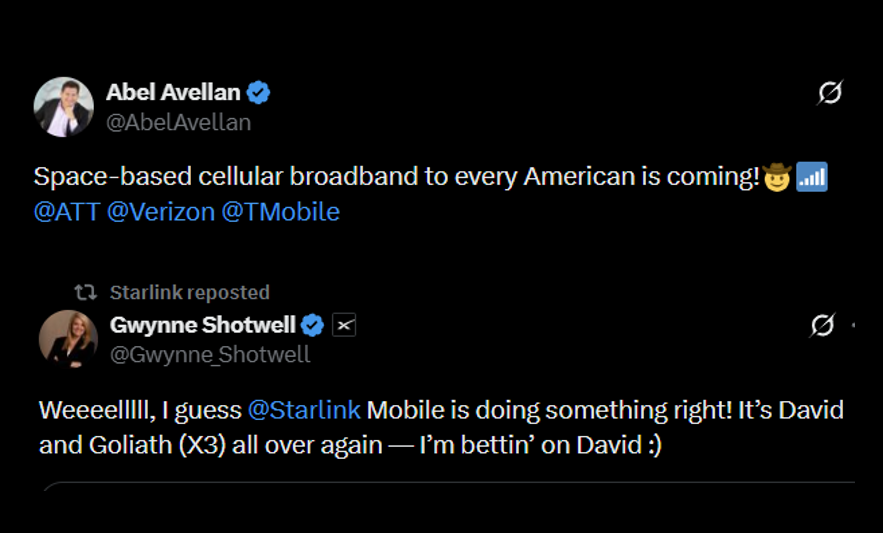
$ASTS = working in partnership w/ AT&T, Verizon and T-Mobile Starlink = competing against AT&T, Verizon and T-Mobile
Anp🅰️nman tweet media
English
5
26
315
13.9K
Mount🅰️in Bluebird ⛰️🛰️ retweetledi
Anp🅰️nman
Anp🅰️nman@spacanpanman·
$ASTS: 🚨 ABEL AVELLAN ANNOUNCES THAT BLOCK-2 BLUEBIRD SATELLITES HAVE BEEN SHIPPED TO CAPE CANAVERAL AND CONFIRMS AST SPACEMOBILE WILL PLAY KEY ENABLING ROLE IN AT&T/VERIZON/T-MOBILE JOINT VENTURE Credit: u/TheEventualHorizon - Reddit
English
65
238
1.5K
128.9K
Mount🅰️in Bluebird ⛰️🛰️ retweetledi
AST SpaceMobile
AST SpaceMobile@AST_SpaceMobile·
A BlueBird convoy is officially underway. Two BlueBirds are already making their way to Cape Canaveral, with the third close behind. Next stop: the launch pad.  🚀 🚀 🚀 🚀 🚀 🚀 🚀 🚀 🚀 🚀 Built in Texas. Broadband from space. Designed to connect directly to everyday smartphones.🌎📶📱 #ASTSpaceMobile #Broadband #ConnectingtheUnconnected #BlueBirds
English
167
528
2.8K
263.6K
Mount🅰️in Bluebird ⛰️🛰️ retweetledi
Anp🅰️nman
Anp🅰️nman@spacanpanman·
$ASTS: Real-time short interest hit an all-time high of 69.3M on Friday. I'm ready, are you?
English
40
38
502
49.3K
Mount🅰️in Bluebird ⛰️🛰️ retweetledi
ASTS Investors 🅰️
ASTS Investors 🅰️@ASTS_Investors·
HENNESSY FUNDS UPDATES AST SPACEMOBILE THESIS Hennessy Funds has written a new update and has doubled down on the AST SpaceMobile bull case: - AST is positioned as the only direct-to-smartphone global broadband network - 50+ MNO relationships reaching ~3B subscribers - Commercial service expected to accelerate binding revenue agreements - Scaling production to 6 satellites/month with 60+ launches planned - U.S. DOW revenue estimate of $1.0 to $2.5 billion per annum - Massive defense + first responder opportunity estimated at $2.4B–$4.4B annually - Hennessy sees Amazon LEO as unlikely to be a meaningful D2D competitor before 2030 hennessyfunds.com/insights/compa…
ASTS Investors 🅰️ tweet media
English
14
61
434
59.3K
Mount🅰️in Bluebird ⛰️🛰️ retweetledi
Anp🅰️nman
Anp🅰️nman@spacanpanman·
$ASTS: SOON™️ AST SpaceMobile secures 🇺🇸 100% of the US Market 🇪🇺 100% of the European Market
Anp🅰️nman tweet mediaAnp🅰️nman tweet media
English
18
76
859
50K
FREESPEECH101
FREESPEECH101@FREESPEECH1017·
@Just1nMKE Well, for the short term, it appears Verizon and ATT are joining Starlink
English
6
0
0
271
FREESPEECH101
FREESPEECH101@FREESPEECH1017·
Every time ATT, Verizon, or T-Mobile Subsidise the purchase of this IPhone. The are paying for the inclusion of Apple's "Direct to Consumer" Direct to Device hardware that completely bypasses the MNO revenue stream. Soon Samsung will include Starlink Mobile in all of their handsets and the MNO's will be paying for/subsidizing the functionality. Whether they like it or not. The MNO's have no option.
FREESPEECH101 tweet media
English
8
1
5
2.8K
Alexander
Alexander@AlexfromBabylon·
$ASTS UNDERHIGHLIGHTED: The reason SpaceX management is so pissed, because it is a major blow to their MNO conversion pipeline just before IPO. They spent so much time to try and sweep MWC 2026 and failed horribly. Their closest partner in the US and probably also in the EU is actively trying to diversify away from Starlink Mobile. No billion dollar marketing budget could replace the free marketing for AST and damage Starlink incurred to their international branding. This JV is the signal that Starlink Mobile is coming for your businessand MNO’s worldwide are going to take note!
Alexander@AlexfromBabylon

$ASTS Refreshing that the Street understands what is going on. This analyst is on point! What is happening in a nutshell is AT&T / Verizon helping T-Mobile to get rid of Starlink, because Starlink Mobile is a threat for the entire industry. Theoretically and in 5+ years open for all but in the short-medium term a massive tailwind for AST Spacemobile. Which long and short term will keep a US monopoly on lowband with future partners joining for midband including AST as well. Big win! Watch satellite consultants spin this narrative. They really have no clue!

English
7
28
224
20K
Mount🅰️in Bluebird ⛰️🛰️ retweetledi
C🅰️tSE
C🅰️tSE@CatSE___ApeX___·
Telecom & space defense just shifted. T-Mobile USA pooling spectrum with AT&T & Verizon for AST is a massive geopolitical pivot It is at its core about national security. 1/
English
9
36
292
32.9K
TheKOOKReport
TheKOOKReport@thekookreport·
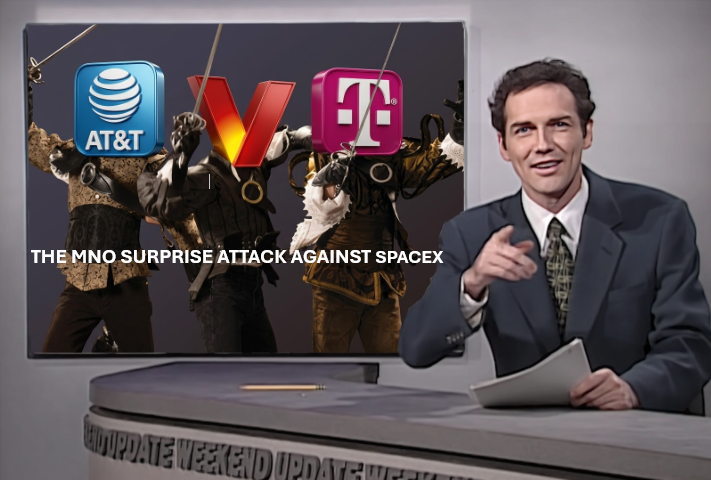
🚨🚨 $ASTS WEEK IN REVIEW🚨🚨 ASTS delivers an encouraging Q1 update, but the news of the week is that the MNOs are teaming up to thwart SpaceX from doing an end run around their valuable franchises. That, and more, on this week's Weekly…
TheKOOKReport tweet media
English
11
34
273
19.2K
Mount🅰️in Bluebird ⛰️🛰️ retweetledi
Anp🅰️nman
Anp🅰️nman@spacanpanman·
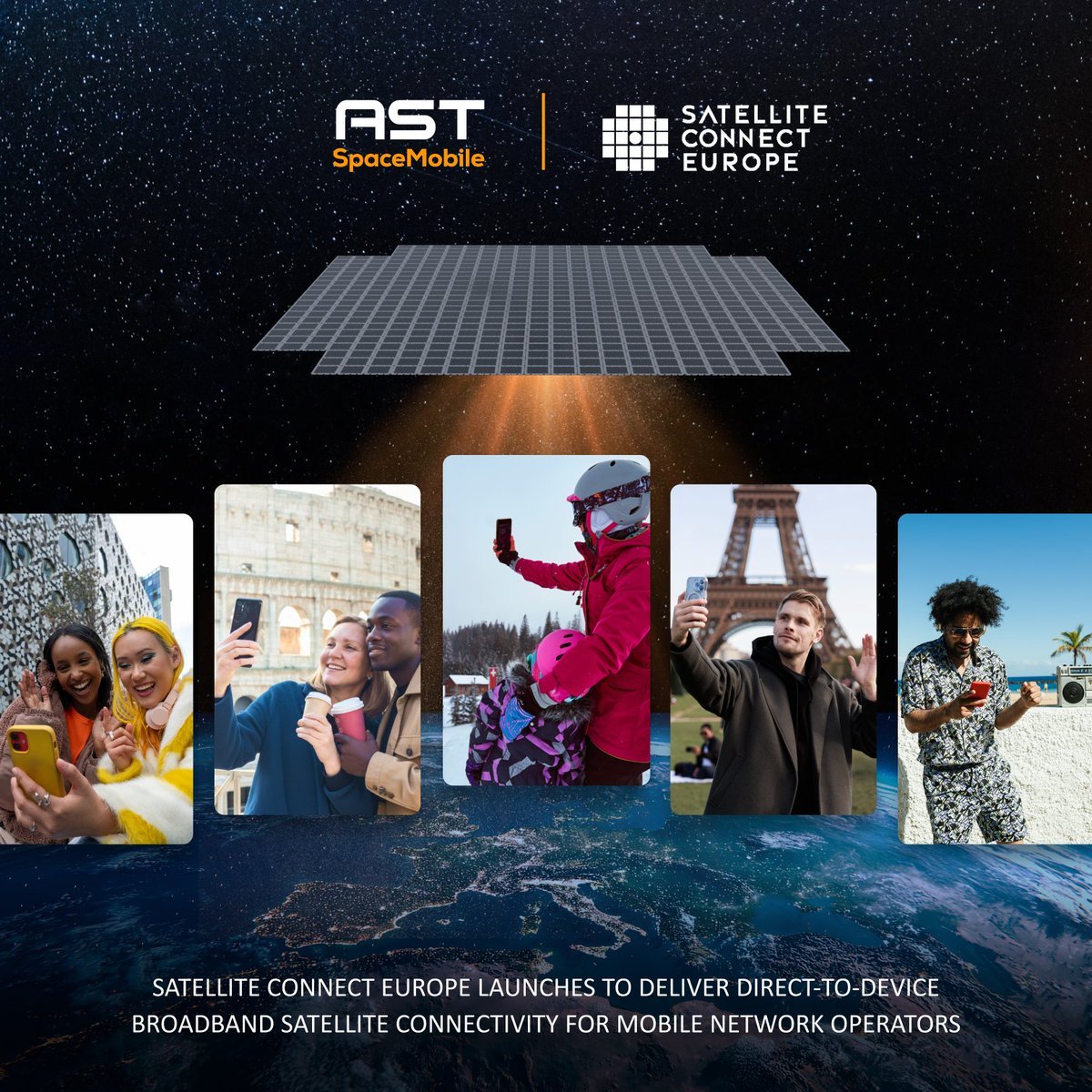
$ASTS: Where have I seen this joint venture structure before? Oh right Satellite Connect Europe JV = Vodafone, Orange, Telefonica, CK Hutchinson and Sunrise powered by AST SpaceMobile Satellite Connect USA JV = AT&T, Verizon and T-Mobile powered by ... AST SpaceMobile
Anp🅰️nman tweet media
English
8
34
379
14.6K