

BitMEX Research
10.8K posts
BitMEX Research
@BitMEXResearch
Filtering out the hype with evidence-based reports on the cryptocurrency space, with a focus on #Bitcoin - https://t.co/pgRGU9D2Ac https://t.co/TBCRcFfEcp
Katılım Eylül 2017
200 Takip Edilen118.4K Takipçiler



@start9labs @TJMacD @PortlandHODL @dathon_ohm > Why would miners mine blocks that only a portion of the network accepts when they could mine blocks that the entire network accepts?
By that logic a hostile softfork would be easy to activate and could happen all the time. Bitcoin needs to be reslient to rule changes to work
English

@TJMacD @PortlandHODL @dathon_ohm Why would miners mine blocks that only a portion of the network accepts when they could mine blocks that the entire network accepts?
Especially when doing the former puts them at risk of being wiped out if other miners do the latter? They'd have to be crazy, or malicious.
English

ATTENTION. THIS IS NOT A DRILL.
BIP-110 mandatory signaling begins at block height 961632 (in about 6580 blocks or about 45 days from now).
All miners must begin signaling readiness for BIP-110 (versionbit 4) by that time, or their blocks will be discarded as invalid.
(1/8)
English
@start9labs @PortlandHODL @dathon_ohm > quickly switch over to avoid forking themselves off the network, the inverse is also possible.
The idea of a bluff is that you keep the fact that its a bluff secret!
English
While it is more likely that people running Core will need to quickly switch over to avoid forking themselves off the network, the inverse is also possible.
We will do our best to message the options and risks as best we can, especially as the activation height approaches, but I suspect there will be no shortage of information.
We made it extremely easy to switch between Bitcoin implementations on StartOS 0.4.0 without needing to resync or reconfigure anything. It's just a button. And dependents, like LND/CLN are satisfied either way.
English
@clarkmoody @bluegrass_matt @GrassFedBitcoin @mattkratter @MartyBent What is your source for the User Agent?
You have Core 31 at 16.6% and a source of Bitnodes.io, yet that website has been down since before Core 31 had such a high share

English

@bluegrass_matt @BitMEXResearch @GrassFedBitcoin @mattkratter @MartyBent Yeah, I need to take Liquid off the Dashboard. The scanner has been buggy for a long time. It's not on v2 dashboard.clarkmoody.com
English

BitMEX Research retweetledi

BitMEX Research retweetledi

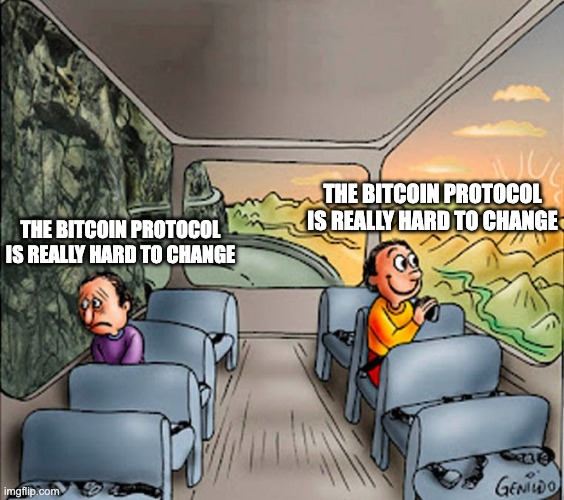
It's strange to start the discussion by ignoring all the fork risk like splitting the network and so fourth but here's a few:
-Protocol/Ledger neutrality - By moving "Standardness" filters into "Consensus" rules Bitcoin ceases to be a neutral settlement layer and starts looking like a curated platform and this sets a precedent where a 55% majority can decide that your valid transaction is "spam" simply because they dislike the use case
-It doesn't actually solve the problem - As Peter Todd demonstrated these filters are easily bypassed as he successfully embedded the entire 6,000-word text of BIP 110 into a single transaction by fragmenting the data across multiple 256-byte PUSHDATA elements and 83-byte OP_RETURNs so this proves the fork doesn't stop data it only increases the transaction fee "tax" for users
-Incentivizes Centralizing BlockSpace Market - Capping the public relay at 83 bytes forces high-volume data users to bypass the P2P network and instead pay large mining pools directly via private APIs to include "illegal" non-standard data which creates a private blockspace market that small home-node miners cannot see or profit from
-Risk of confiscation / disruption to backwards compatibility - As Gregory Maxwell noted Bitcoin nodes have no "global state" of pre-signed transactions so if a user has a multi-year inheritance plan or a "Vault" emergency exit signed offline that uses a 500-byte script or an OP_IF branch BIP 110 welds that exit shut and since the transaction is now consensus-invalid the funds are effectively confiscated for the duration of the fork
-Anti-Scaling (Kills eltoo/ln-symmetry) - BIP 110 explicitly invalidates the Taproot Annex which directly blocks the ln-symmetry upgrade which is the industry's best hope for a Lightning Network that dramatically reduces the need for constant watchtower monitoring and enables simpler multi-party channels
-Creates UTXO bloat - BIP 110 incentivizes spammers to hide data inside fake addresses/UTXOs (like multisig-encoded data) and while an OP_RETURN can be ignored by a lean node, a fake UTXO must be tracked by every node forever so BIP 110 intended to "save" nodes but actually creates a more expensive permanent burden on them
-Breaks Miniscript & Vaults - Miniscript is the industry standard for writing readable secure smart contracts (used for inheritance, multi-party escrow, timelocked recovery) and relies heavily on OP_IF to branch between conditions so by banning OP_IF in Tapscripts BIP 110 effectively breaks Taproot-based custody setups that represent the direction the entire industry is moving
-Lobotomizes BitVM - BitVM is one of very few viable paths to trustless Layer 2 bridges and requires deep "Taproot Trees" (Merkle paths) to verify computation and a 257-byte limit caps the tree depth at roughly 7 levels (128 leaves) when BitVM protocols often require thousands of leaves to function
-Loss in fees for miners - If you filter out the highest paying transactions because you don't like their content you are effectively asking miners to take a pay cut which could lower the "hash price" and as block subsidy continues to halve transaction fees become increasingly critical to security
-Rushed Timeline / Governance Precedent - BIP 110 activates unconditionally by September 2026 regardless of support with early activation possible at just 55% signaling within a tiny 3-month window and this "emergency" style of governance is a radical departure from Bitcoin's traditional 90%+ consensus model, if rushed "emergency" consensus changes become normalized that governance precedent is permanent even if the technical changes expire
English
Article now up on the BitMEX blog:
bitmex.com/blog/The-Block…
English
@zndtoshi > Only nodes that verify coins matter.
Even nodes that don't have any wallet attached can matter, if they are trying to loosen incentive incompatible relay rules
English

Sybil nodes don't matter.
Of course bip110 people don't care about these nuances. Only nodes that verify coins matter.
Knut Svanholm ∞/21M@knutsvanholm
"If socialists understood economics, they wouldn't be socialists." - F.A. Hayek. "If people who say nodes don't matter understood Bitcoin, they would be slightly less retarded" - yours truly
English
A lot of those exampled were OP_Return
* Luke mined the first ever OP_Return in March 2013 (mempool.space/block/00000000…)
* Luke mined the first non-standard OP_Return in July 2013 (mempool.space/block/00000000…)
* Luke mined the first music lyrics in OP_Return in Nov 2013 (mempool.space/tx/d29c9c0e8e4…)
English
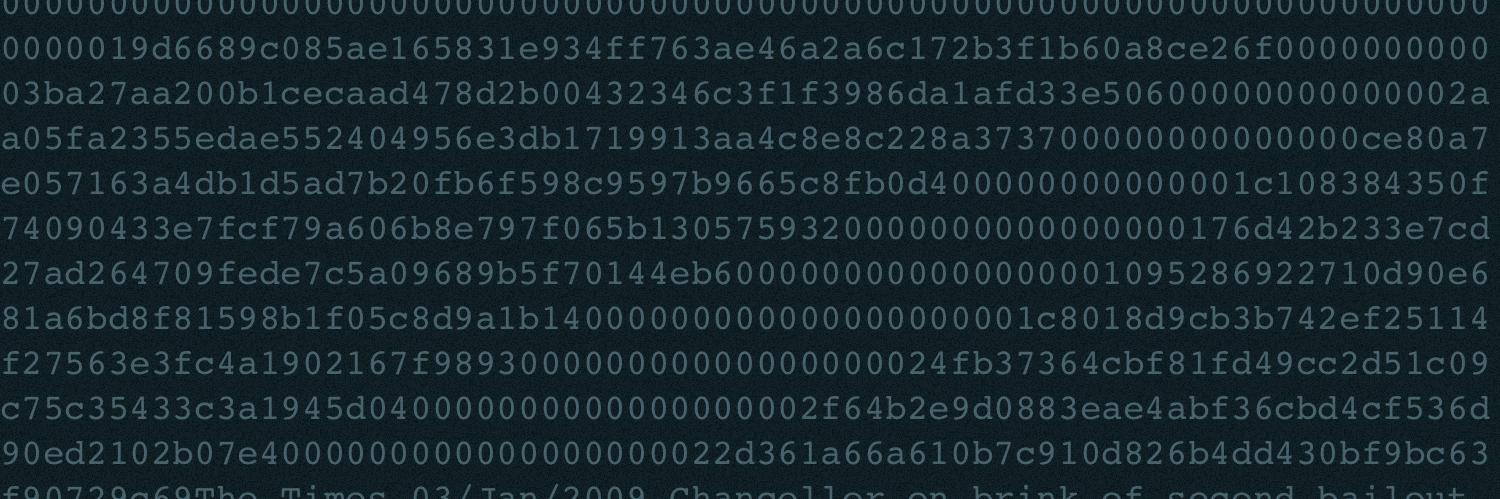
@frankcorva @BitMEXResearch @NEEDcreations @LukeDashjr Bitmex Reeeesearch is lying. Conflating coinbase text with Taproot inscriptions and 100kb OP_RETURN is propaganda to fool non-technical people. What's worse is I've heard supposed smart devs repeat this lie
English

I’ve recently opened my mind to BIP 110 for the sake of trying to hear where supporters for it are coming from, as I believe many of them care about Bitcoin as much as I do.
I get some of the arguments, but what I can’t wrap my head around are notions like the one below.
Are BIP 110 supporters okay with getting rid of Bitcoin’s PoW algorithm?
I’m asking this out of genuine curiosity, not trolling.

English
@coinjoined > Blockstream, Blockstream Capital Partners, and BSTR
Not clear the BMN issuer is related to any of those three entities
That said it does have "Blockstream" in the name and was promoted by Blockstream
English

Blockstream, Blockstream Capital Partners, and BSTR are three separate entities. The original article blurs those distinctions and implies a level of interconnectedness and financial exposure that simply isn't there.
I read and dismissed it as a FUD piece especially given its conveniently timed publication just ahead of the BSTR launch.
English

yes, there was a bug in The Mempool Open Source Project where we did not get new federation wallet addresses from the elements node correctly. of course we fixed it right away, but since the new addresses were missing from the audit it appeared on liquid.network that the federation wallet had less bitcoin in it than it actually did, for maybe a day or two, after which time we re-ran a full audit just to double check. all of the code is public in our open source git repos, so anyone can verify it without trusting me
English
@bluegrass_matt @GrassFedBitcoin @mattkratter @MartyBent @clarkmoody What has that got to do with mempool/space though? Or did they just get the wrong company?
English

@BitMEXResearch @GrassFedBitcoin @mattkratter @MartyBent called this out on an RHR within the past couple of weeks too. He noticed what appeared to be an API bug on @clarkmoody dashboard pertaining to LBTC. Something about it was negative, not sure though.
English
> the Mempool.space dashboard briefly showed L-BTC only 82.4% collateralized 3,463 actual Bitcoin backing 4,199 L-BTC in circulation before going blank with “Indexing in progress.”
I wasn't aware Mempool.space had such a dashboard. So maybe another false accusation.
@mempool ?
> The massive Bitcoin obligations Blockstream is carrying in the form of BMNs we feel should be disclosed to BSTR investors
This is repeated again. And again seems highly likley to be false. These were high risk notes. I do not think there was a legal guarentee from Blockstream or an expected guarentee from Blockstream.
That said, if Chris Cook did steal from the fund (which the article does NOT have strong evidence for at all, other than his spending habits), that is pretty bad for Blockstream's reputation. However, it seems more likely at this point that Chris did NOT steal from the fund. A fund which was always a high risk investment
English
> My suspicion is the article is at least mostly correct.
Probably by the raw count of accusations or implied accusations, the article is mostly false:
> The Christopher Cook fraud conviction does not appear in the registration filings
So what? Chris isn’t a director of the pubco, as far as I can tell. Accusation false.
> Neither do the massive BMN obligations of Blockstream show up in the BSTR filings
So what? From reading the BMM notes, these is no talk of a group guarantee. This was a high risk investment. It shouldn’t show up as a BSTR obligation in the fillings, because as far as I can tell its not a BSTR obligation
> we believe Komainu is compromised
No evidence for this. Probably a false accusation.
That said, many of the more supported allegations seem quite serious and concerning. Including the 20% yield supposedly on offer for the latest BMM offering. Maybe requires further digging and comment from the company
English
@Arthur_van_Pelt @LukeDashjr @lopp @rodarmor @adam3us > was called out for it and he stopped
Pretty sure he still thinks his spam was ok for some reason 🤣🤣🤣
English

So awesome to see this. 👍 @LukeDashjr experimented with data spam, was called out for it and he stopped, to become an outspoken data spam opponent who actively builds and supports anti spam solutions.
@lopp, @rodarmor and @adam3us will hopefully follow Luke's lead someday soon.
BitMEX Research@BitMEXResearch
> Agreed that he’s done great work for Bitcoin, especially in the early days. Agreed. @LukeDashjr is a pioneer and legend * Luke put the following "Yandere" message in the blockchain in August 2011. As far as we can tell, the first ever onchain spam "yandere game is starting in 60 seconds! Please type "]yandere" to join.FN #yandere" Source: mempool.space/block/00000000… * Luke put the following "Hamburger" message in the blockchain in August 2011 “'I am eating a big juicy hamburger" Source: mempool.space/block/00000000… * In 2011, Luke put all these "prayers" in the blockchain: Eligius/Benedictus Deus. Benedictum Nomen Sanctum eius. Eligius/Benedictus Deus. Benedictum Nomen Sanctum eius. *************************************************** Benedictus Iesus Christus, verus Deus et verus homo. Benedictum Nomen Iesu. Benedictum Cor eius sacratissimum. Benedictus Sanguis eius pretiosissimus. Benedictus Iesus in sanctissimo altaris Sacramento. Benedictus Sanctus Spiritus, Paraclitus. Benedictus Sanctus Spiritus, Paraclitus. Benedicta excelsa Mater Dei, Maria sanctissima. Benedicta sancta eius et immaculata Conceptio. Benedicta sancta eius et immaculata Conceptio. Benedicta eius gloriosa Assumptio. Benedictum nomen Mariae, Virginis et Matris. Benedictum nomen Mariae, Virginis et Matris. Benedictus sanctus Ioseph, eius castissimus Sponsus. Benedictus Deus in Angelis suis, et in Sanctis suis. Amen. In nomine Patris et Filii et Spiritus Sancti. Amen. O my God, I am heartily sorry for having offended Thee and I detest all my sins... O my God, I am heartily sorry for having offended Thee and I detest all my sins... Eye'm the strongest! ...because of Thy just punishments, but most of all because they offend Thee, ... ...my God, who art all good and deserving of all my love. I firmly resolve, with the help of Thy grace, to sin no more... I firmly resolve, with the help of Thy grace, to sin no more... ...and avoid the near occasions of sin. Amen. O my God! I firmly believe that Thou art one God in three Divine persons, ... O my God! I firmly believe that Thou art one God in three Divine persons, ... ...Father, Son, and Holy Ghost; I believe that Thy Divine Son became man, ... ...and died for our sins, and that he will come to, judge the living and the dead. I believe these and all the truths which the Holy Catholic Church teaches, ... ...because Thou hast revealed them, who canst neither deceive nor be deceived. O my God! relying on Thy infinite goodness and promises, ... ...I hope to obtain pardon of my sins, the help of Thy grace, ... ...and life everlasting, through the merits of Jesus Christ, my Lord and Redeemer. ...and life everlasting, through the merits of Jesus Christ, my Lord and Redeemer. O my God! I love Thee above all things, with my whole heart and soul, ... ...because Thou art all-good and worthy of all love. ...because Thou art all-good and worthy of all love. Yukkuri Shiteitte ne I love my neighbor as myself for the love of Thee. I forgive all who have injured me, and ask pardon of all whom I have injured. I forgive all who have injured me, and ask pardon of all whom I have injured. I forgive all who have injured me, and ask pardon of all whom I have injured. O my Jesus, forgive us our sins, save us from the fires of Hell, ... ...lead all souls to Heaven, especially those in most need of Thy mercy. I confess to Almighty God, to blessed Mary ever Virgin, ... ... to blessed Michael the Archangel, to blessed John the Baptist, ... ... to the holy Apostles Peter and Paul, and to all the Saints, ... ... that I have sinned exceedingly, in thought, word, and deed, ... ... through my fault, through my fault, through my most grievous fault. Therefore I beseech blessed Mary ever Virgin, blessed Michael the Archangel, ... ... blessed John the Baptist, the holy Apostles Peter and Paul, ... ... and all the Saints to pray to the Lord our God for me. Amen. St. Michael the Archangel, defend us in battle; be our safeguard against ... St. Michael the Archangel, defend us in battle; be our safeguard against ... ... the wickedness and snares of the Devil. May God rebuke him, ... ... we humbly pray, and do Thou, O Prince of the Heavenly Host, ... ... we humbly pray, and do Thou, O Prince of the Heavenly Host, ... ... we humbly pray, and do Thou, O Prince of the Heavenly Host, ... ... we humbly pray, and do Thou, O Prince of the Heavenly Host, ... ... by the power of God, cast into Hell, Satan and all the other evil spirits, ... ... who wander throughout the world, seeking the ruin of souls. Amen. Angel of God, my guardian dear, to whom His love commits me here, ... ... ever this night be at my side, to light and guard, to rule and guide. Amen. Ave Maria, gratia plena, Dominus tecum. Benedicta tu in mulieribus, ... ... et benedictus fructus ventris tui, Iesus. Sancta Maria, Mater Dei, ... ... et benedictus fructus ventris tui, Iesus. Sancta Maria, Mater Dei, ... ... et benedictus fructus ventris tui, Iesus. Sancta Maria, Mater Dei, ... ... ora pro nobis peccatoribus, nunc, et in hora mortis nostrae. Amen. Salve, Regina, mater misericordiae: vita, dulcedo, et spes nostra, salve. Ad te clamamus exsules filii Hevae. Ad te suspiramus, gementes et flentes ... Ad te clamamus exsules filii Hevae. Ad te suspiramus, gementes et flentes ... ... in hac lacrimarum valle. Eia, ergo, advocata nostra, illos tuos ... ... misericordes oculos ad nos converte. Et Iesum, benedictum fructum ... ... ventris tui, nobis post hoc exsilium ostende. O clemens, O pia, ... ... O dulcis Virgo Maria. Ora pro nobis, sancta Dei Genetrix. Ut digni efficiamur promissionibus Christi. Amen. Pater noster, qui es in caelis, sanctificetur Nomen tuum. Adveniat regnum tuum. Pater noster, qui es in caelis, sanctificetur Nomen tuum. Adveniat regnum tuum. Fiat voluntas tua, sicut in caelo et in terra. Panem nostrum quotidianum ... ... da nobis hodie, et dimitte nobis debita nostra sicut et nos dimittimus ... ... debitoribus nostris. Et ne nos inducas in tentationem, sed libera nos a malo. Domine Iesu Christe, Filius Dei, miserere me peccatorem! Sanae is a good girl We adore Thee, O Christ, and we bless Thee; We adore Thee, O Christ, and we bless Thee; because by Thy holy Cross Thou hast redeemed the world. May the Holy Trinity be blessed. People were pretty angry about the spam and Luke defended himself as follows: "there is no technical problem with the prayers" "Nevermind the fact that it was actually started with political propaganda in the Genesys block by Satoshi himself, setting a clear and undeniable precedent." * In Feb 2013, Luke gave the first ever philosophical of non-standard transactions, saying: "Blocking out "non-standard" transactions in general just harms potential innovation." Source: #msg1494788" target="_blank" rel="nofollow noopener">bitcointalk.org/index.php?topi…
* Luke mined the first ever OP_Return in March 2013 (mempool.space/block/00000000…) * Luke mined the first non-standard OP_Return in July 2013 (mempool.space/block/00000000…) * Luke mined the first music lyrics in OP_Return in Nov 2013 (mempool.space/tx/d29c9c0e8e4…) Yes Luke is a pioneer. And he has contributed a lot to Bitcoin outside of the area of spam. But as far as onchain spam goes, Luke is the absolute OG! Luke set the precedent for the inscriptions we have today, like nobody else. English

English
@BitMEXResearch @NEEDcreations @LukeDashjr Super interesting. While I was aware he’d inscribed on the chain, I didn’t know people were that angry about it back then.
English
People were MAD at Luke for doing it. Saying they didnt want to store his "fucking" spam. I remember at the time seeing Luke's spam and thinking: "I do not like this, but there is nothing one can do. Oh well". Luke taught me this lesson!
History is repeating, with Luke now on the other side
English
@BitMEXResearch @NEEDcreations @LukeDashjr Thanks for sharing. I was aware that he’d inscribed on the chain before. Just didn’t know what. This helps.
English
> Agreed that he’s done great work for Bitcoin, especially in the early days.
Agreed. @LukeDashjr is a pioneer and legend
* Luke put the following "Yandere" message in the blockchain in August 2011. As far as we can tell, the first ever onchain spam
"yandere game is starting in 60 seconds! Please type "]yandere" to join.FN #yandere"
Source: mempool.space/block/00000000…
* Luke put the following "Hamburger" message in the blockchain in August 2011
“'I am eating a big juicy hamburger"
Source: mempool.space/block/00000000…
* In 2011, Luke put all these "prayers" in the blockchain:
Eligius/Benedictus Deus. Benedictum Nomen Sanctum eius.
Eligius/Benedictus Deus. Benedictum Nomen Sanctum eius.
***************************************************
Benedictus Iesus Christus, verus Deus et verus homo.
Benedictum Nomen Iesu.
Benedictum Cor eius sacratissimum.
Benedictus Sanguis eius pretiosissimus.
Benedictus Iesus in sanctissimo altaris Sacramento.
Benedictus Sanctus Spiritus, Paraclitus.
Benedictus Sanctus Spiritus, Paraclitus.
Benedicta excelsa Mater Dei, Maria sanctissima.
Benedicta sancta eius et immaculata Conceptio.
Benedicta sancta eius et immaculata Conceptio.
Benedicta eius gloriosa Assumptio.
Benedictum nomen Mariae, Virginis et Matris.
Benedictum nomen Mariae, Virginis et Matris.
Benedictus sanctus Ioseph, eius castissimus Sponsus.
Benedictus Deus in Angelis suis, et in Sanctis suis. Amen.
In nomine Patris et Filii et Spiritus Sancti. Amen.
O my God, I am heartily sorry for having offended Thee and I detest all my sins...
O my God, I am heartily sorry for having offended Thee and I detest all my sins...
Eye'm the strongest!
...because of Thy just punishments, but most of all because they offend Thee, ...
...my God, who art all good and deserving of all my love.
I firmly resolve, with the help of Thy grace, to sin no more...
I firmly resolve, with the help of Thy grace, to sin no more...
...and avoid the near occasions of sin. Amen.
O my God! I firmly believe that Thou art one God in three Divine persons, ...
O my God! I firmly believe that Thou art one God in three Divine persons, ...
...Father, Son, and Holy Ghost; I believe that Thy Divine Son became man, ...
...and died for our sins, and that he will come to, judge the living and the dead.
I believe these and all the truths which the Holy Catholic Church teaches, ...
...because Thou hast revealed them, who canst neither deceive nor be deceived.
O my God! relying on Thy infinite goodness and promises, ...
...I hope to obtain pardon of my sins, the help of Thy grace, ...
...and life everlasting, through the merits of Jesus Christ, my Lord and Redeemer.
...and life everlasting, through the merits of Jesus Christ, my Lord and Redeemer.
O my God! I love Thee above all things, with my whole heart and soul, ...
...because Thou art all-good and worthy of all love.
...because Thou art all-good and worthy of all love.
Yukkuri Shiteitte ne
I love my neighbor as myself for the love of Thee.
I forgive all who have injured me, and ask pardon of all whom I have injured.
I forgive all who have injured me, and ask pardon of all whom I have injured.
I forgive all who have injured me, and ask pardon of all whom I have injured.
O my Jesus, forgive us our sins, save us from the fires of Hell, ...
...lead all souls to Heaven, especially those in most need of Thy mercy.
I confess to Almighty God, to blessed Mary ever Virgin, ...
... to blessed Michael the Archangel, to blessed John the Baptist, ...
... to the holy Apostles Peter and Paul, and to all the Saints, ...
... that I have sinned exceedingly, in thought, word, and deed, ...
... through my fault, through my fault, through my most grievous fault.
Therefore I beseech blessed Mary ever Virgin, blessed Michael the Archangel, ...
... blessed John the Baptist, the holy Apostles Peter and Paul, ...
... and all the Saints to pray to the Lord our God for me. Amen.
St. Michael the Archangel, defend us in battle; be our safeguard against ...
St. Michael the Archangel, defend us in battle; be our safeguard against ...
... the wickedness and snares of the Devil. May God rebuke him, ...
... we humbly pray, and do Thou, O Prince of the Heavenly Host, ...
... we humbly pray, and do Thou, O Prince of the Heavenly Host, ...
... we humbly pray, and do Thou, O Prince of the Heavenly Host, ...
... we humbly pray, and do Thou, O Prince of the Heavenly Host, ...
... by the power of God, cast into Hell, Satan and all the other evil spirits, ...
... who wander throughout the world, seeking the ruin of souls. Amen.
Angel of God, my guardian dear, to whom His love commits me here, ...
... ever this night be at my side, to light and guard, to rule and guide. Amen.
Ave Maria, gratia plena, Dominus tecum. Benedicta tu in mulieribus, ...
... et benedictus fructus ventris tui, Iesus. Sancta Maria, Mater Dei, ...
... et benedictus fructus ventris tui, Iesus. Sancta Maria, Mater Dei, ...
... et benedictus fructus ventris tui, Iesus. Sancta Maria, Mater Dei, ...
... ora pro nobis peccatoribus, nunc, et in hora mortis nostrae. Amen.
Salve, Regina, mater misericordiae: vita, dulcedo, et spes nostra, salve.
Ad te clamamus exsules filii Hevae. Ad te suspiramus, gementes et flentes ...
Ad te clamamus exsules filii Hevae. Ad te suspiramus, gementes et flentes ...
... in hac lacrimarum valle. Eia, ergo, advocata nostra, illos tuos ...
... misericordes oculos ad nos converte. Et Iesum, benedictum fructum ...
... ventris tui, nobis post hoc exsilium ostende. O clemens, O pia, ...
... O dulcis Virgo Maria. Ora pro nobis, sancta Dei Genetrix.
Ut digni efficiamur promissionibus Christi. Amen.
Pater noster, qui es in caelis, sanctificetur Nomen tuum. Adveniat regnum tuum.
Pater noster, qui es in caelis, sanctificetur Nomen tuum. Adveniat regnum tuum.
Fiat voluntas tua, sicut in caelo et in terra. Panem nostrum quotidianum ...
... da nobis hodie, et dimitte nobis debita nostra sicut et nos dimittimus ...
... debitoribus nostris. Et ne nos inducas in tentationem, sed libera nos a malo.
Domine Iesu Christe, Filius Dei, miserere me peccatorem!
Sanae is a good girl
We adore Thee, O Christ, and we bless Thee;
We adore Thee, O Christ, and we bless Thee;
because by Thy holy Cross Thou hast redeemed the world.
May the Holy Trinity be blessed.
People were pretty angry about the spam and Luke defended himself as follows:
"there is no technical problem with the prayers"
"Nevermind the fact that it was actually started with political propaganda in the Genesys block by Satoshi himself, setting a clear and undeniable precedent."
* In Feb 2013, Luke gave the first ever philosophical of non-standard transactions, saying:
"Blocking out "non-standard" transactions in general just harms potential innovation."
Source: #msg1494788" target="_blank" rel="nofollow noopener">bitcointalk.org/index.php?topi…
* Luke mined the first ever OP_Return in March 2013 (mempool.space/block/00000000…)
* Luke mined the first non-standard OP_Return in July 2013 (mempool.space/block/00000000…)
* Luke mined the first music lyrics in OP_Return in Nov 2013 (mempool.space/tx/d29c9c0e8e4…)
Yes Luke is a pioneer. And he has contributed a lot to Bitcoin outside of the area of spam. But as far as onchain spam goes, Luke is the absolute OG! Luke set the precedent for the inscriptions we have today, like nobody else.

English
@NEEDcreations Are you making that first statement with absolute certainty, and, if so, how do you know?
Agreed that he’s done great work for Bitcoin, especially in the early days. He deserves to be acknowledged for that.
English