Jonathan Hall

1.9K posts

Jonathan Hall banner
Jonathan Hall

Jonathan Hall

@Bitcollector

Bitcoin is good for the future. There will only be 21 Million Bitcoins made There are 62 Million millionaires in the world. Each one can only own 0.33 Bitcoins

Katılım Mart 2017
1.1K Takip Edilen2.2K Takipçiler
Sabitlenmiş Tweet
Jonathan Hall
Jonathan Hall@Bitcollector·
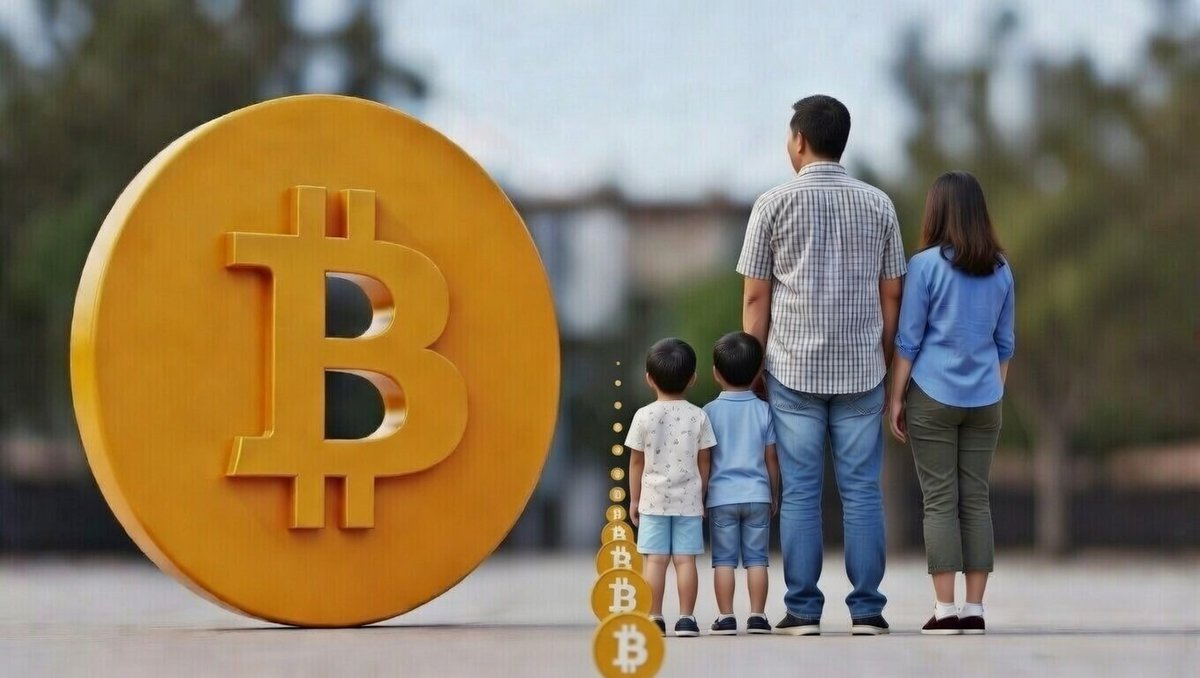
Bitcoin in the Future Many people are surprised to learn just how limited Bitcoin's truly available supply really is—despite the circulating total hovering around 19.99 million BTC as of February 2026 (out of the absolute hard cap of 21 million), the amount that's realistically up for sale on the open market at any given time is far smaller. Glassnode's latest data shows liquid supply (coins held by entities that actively spend or transact) at around 2.5 million BTC, while exchange reserves across major platforms total roughly 2.4–2.5 million BTC. A significant portion—often 70% or more—is held illiquid by long-term holders, institutions, lost wallets, or entities that rarely transact, leaving only a few million BTC in more liquid forms like exchange reserves or actively traded coins. This built-in scarcity is what makes Bitcoin fundamentally different from traditional assets that can be inflated or printed endlessly. Owning even a modest amount like 0.33 BTC—worth about $22,500 at the current price of roughly $68,000 per BTC—positions someone as holding more than the vast majority of people globally, given that on-chain data shows fewer than 1 million unique wallets hold at least 1 full BTC, and even fewer individuals control significant portions after accounting for multiple wallets per person. In contrast, the average millionaire (with a typical net worth around $1.3–$1.4 million, including assets like homes and investments) owns very little Bitcoin, if any at all. Recent surveys indicate that while about 68% of American millionaires own some cryptocurrency, Bitcoin specifically is held by around 60% of those crypto owners, but their average holdings are minimal—often just a small portfolio allocation of 1–5% of their wealth, equating to perhaps 0.05–0.1 BTC per person on average across all millionaires, as the bulk of Bitcoin wealth is concentrated among a tiny fraction of dedicated holders and institutions. This means most traditional millionaires, focused on stocks, real estate, and bonds, have yet to fully embrace Bitcoin's potential, leaving early adopters with a substantial edge. Now, consider a powerful hypothetical that illustrates this scarcity in action: Imagine that 10% of the world's roughly 60 million millionaires—about 6 million people—suddenly decide they want to add a meaningful amount of Bitcoin to their portfolios. For simplicity, let's define "meaningful" as aiming for a substantial holding, and assume that current holders are willing to part with a more realistic portion of the available supply—perhaps 4 to 8 million BTC (closer to highly liquid/exchange-held coins plus some additional selling from semi-liquid holders amid surging demand). In this simplified scenario—where we set aside real-world dynamics like rapidly rising prices causing hesitation or reduced buying—the available sold supply would be distributed among these 6 million new buyers. If divided evenly, each millionaire could end up owning approximately 0.67 to 1.33 BTC. At recent prices around $68,000 per BTC, that equates to a roughly $45,000 to $90,000 investment per person—still a notable allocation for many high-net-worth individuals, yet it would absorb a substantial portion of what's realistically sellable without extreme price pressure. Of course, reality would be far more dynamic. Such massive inbound demand from wealthy participants wouldn't occur in a vacuum: prices would likely climb sharply as buyers compete for the limited liquid supply, potentially bringing even more sellers into the market at higher levels or causing some buyers to scale back. Sellers might hold out for better prices, and not all of the assumed 4–8 million BTC would actually change hands before equilibrium sets in. This is precisely why Bitcoin is frequently likened to "digital gold"—its protocol-enforced cap creates genuine scarcity that can lead to explosive value appreciation when broad adoption accelerates. Realistic price predictions for 2030 from analysts like ARK Invest (base case around $710,000) or Standard Chartered ($150,000–$200,000) suggest BTC could multiply 2–10x from current levels, driven by halving events, ETF inflows, and global economic factors, making even small holdings today potentially life-changing. Drawing a parallel to traditional wealth, today's average millionaire might own 1–2 homes (a primary residence valued at around $900,000–$1 million, plus perhaps a vacation property) and 2–3 cars (often practical brands like Toyota, Honda, or Ford rather than luxury models, with total vehicle value under $100,000), reflecting a lifestyle of comfort but not extravagance. Their real wealth stems from diversified assets averaging $1.3 million in net worth, allowing for annual spending of $50,000–$100,000 on travel, dining, and hobbies without depleting principal. In the near future, however, dedicated Bitcoiners holding even 0.33 BTC could eclipse this if prices hit conservative 2030 targets like $200,000 per BTC (turning that holding into $66,000) or more optimistic ones like $500,000 (yielding $165,000)—but the true parallel emerges at higher projections, where scarcity pushes prices to $1 million or beyond, making 0.33 BTC worth $330,000, rivaling the equity in a millionaire's home or stock portfolio. As supply tightens and fiat money's purchasing power erodes through inflation, Bitcoiners won't just match millionaire lifestyles; they'll surpass them in terms of uncensorable, portable wealth that appreciates independently of traditional markets. For someone new to Bitcoin, this thought experiment highlights a core truth: the network's design intentionally limits new supply to tiny amounts (currently around 450 BTC per day post-halving, dropping further over time), while demand can spike unpredictably from institutions, corporations, ETFs, or even a fraction of global wealth holders. Early participants benefit from this asymmetry, but as more people recognize Bitcoin's role as a potential store of value in an uncertain world, the competition for those finite coins intensifies—meaning late-entering millionaires might struggle to acquire even 0.1 BTC without paying premiums that dilute their fiat-based buying power. Finally, consider the transformative potential for a "poor" person buying Bitcoin now: Suppose someone with limited means invests $1,000 today (acquiring about 0.015 BTC at $68,000), or even stretches to $10,000 (0.147 BTC). In a realistic 2030 scenario with BTC at $300,000 (a 4x increase aligned with historical post-halving cycles and adoption trends), that $1,000 becomes $4,500, and $10,000 turns into $44,100—already outpacing typical savings account growth and providing a buffer against inflation. But if scarcity drives prices to $1 million by 2030 (as some bull cases from ARK or others project), the $1,000 investment yields $15,000, and $10,000 becomes $147,000, putting them on par with the lower end of millionaire asset classes like a modest home or investment account. Extending to 2040 with prices potentially at $1–$2 million amid hyper-adoption, that initial $10,000 could grow to $147,000–$294,000, enabling purchases like multiple homes or luxury cars that today's millionaires take for granted. In extreme long-term views where Bitcoin captures trillions in global wealth (reaching $5–$10 million per BTC), even a $1,000 starter position could balloon to $75,000–$150,000, making early adopters as wealthy as current billionaires in purchasing power terms—all because fiat's endless supply can't keep up with Bitcoin's fixed 21 million cap, rewarding those who buy and hold early over those who wait.
Jonathan Hall tweet media
English
0
0
3
235
Xi Van Fleet
Xi Van Fleet@XVanFleet·
Yesterday a friend of mine took me to visit an Old Order Mennonite one-room school in Blair County, PA. The Mennonite community does not accept govt funding, choosing instead to remain independent and preserve their way of life. A few years ago, after becoming dissatisfied with both public and Catholic school options, my friend considered this school for his daughter. As part of the admissions process, the school conducted a home visit. They wanted to understand the family’s values—specifically whether they attended church and whether there was a television in the home. After receiving satisfactory answers (yes to church, no to TV), his daughter was accepted. She spent three years at the Mennonite school and is now a strong, conservative young woman attending an elite liberal arts college. My friend credits the Mennonite community with giving her a solid moral foundation. In the video, the teacher describes what a typical day in her classroom looks like.
English
233
1.2K
8.7K
426.3K
Jonathan Hall
Jonathan Hall@Bitcollector·
@angijones @Auspatriot33 Fair enough, but if there was something important the doctor would call you/him. Nothing important, —see ya later, bye. Stop wasting my time.
English
0
0
0
6
Angie Jones
Angie Jones@angijones·
@Auspatriot33 He’s going to call them tonight and give his consent to talk to me.
English
19
1
140
13.8K
Angie Jones
Angie Jones@angijones·
15 year old son had a blood test. Doctor asked me to ring on Friday for the results. Receptionist said “we can’t give you his results because he is over 14 and hasn’t given explicit consent.” This isn’t to empower or protect kids, this is the State incrementally removing parents as the primary guardian of children while children are still naive and suggestible.
English
581
2.1K
13.4K
200.9K
Jonathan Hall
Jonathan Hall@Bitcollector·
After seeing this video, I now think the best thing to do, so everyone is not wasting time, is to start with the pay. Imagine spending 30 mins to 1 hour just to find an inexperienced kid asking for unreal numbers. Imagine just wasting all that time, when you could have saved it. She solved her own 6 figure problem. "Good bye" 🤣🤣🤣
English
0
0
2
847
Ryan T. Clark
Ryan T. Clark@Ryan_Clark_1974·
As a hiring manager, I had a similar interaction in an interview. After verifying that I didn't misunderstand, the next words out of my mouth were, "Great, that's all I need, we will let you know if we decide to move forward." 1. This is a person not grounded in reality. 2. This person has zero understanding of business. 3. This person would constantly be unsatisfied and in the 10% of employees that take 90% of your time and energy. Hard pass.
English
25
15
1.9K
113K
ELITE MASCULINE
ELITE MASCULINE@MasculineM7·
Good luck hiring Genz Females 😇
English
650
825
13.7K
1.4M
Brent
Brent@Yatertron·
@MorbiusMind @XVanFleet Tragic what became of liberal arts schools. The classic ones from mid twentieth century and before taught a well rounded education.
English
1
0
1
53
Morbius
Morbius@MorbiusMind·
@XVanFleet "... attending an elite liberal arts college" Great story, tragic ending.
English
5
1
138
5.7K
Jonathan Hall
Jonathan Hall@Bitcollector·
Daddy: Fence Daddy: Bird Daddy: Bus Daddy: Snacks Daddy: Snacks Daddy: Snacks Daddy gets the snacks. Munch, munch, munch. 🤣🤣🤣
English
4
2
88
1.8K
Oku
Oku@oku_yungx·
The best video on the internet today ❤️
English
239
1.6K
8.5K
162.6K
Jonathan Hall
Jonathan Hall@Bitcollector·
On the night that the wall came down, there was a woman in East Germany drinking with her friends. When they heard about the wall coming down, they all wanted to go see the News-in-the-making. Everybody except one person. That one person was so p!ssed that Communism had failed, she just went straight home. She later become the Chancellor of Germany for 16 long years. The German people continued to vote for Communism. Can somebody help me understand this?
English
3
6
22
1.8K
Handre
Handre@Handre·
The Berlin Wall created the most brutal controlled experiment in human history: identical people, split by ideology, watched for 41 years to see which system would prevail. West Germans embraced market economics while East Germans suffered under socialist central planning. The results? Devastating. By 1989, East German GDP per capita sat at roughly 30% of West Germany's level. East Germans consumed 40% fewer calories, owned cars at one-tenth the rate, and waited 12 years for a telephone connection. Meanwhile, their western cousins enjoyed rising living standards, technological innovation, and personal freedom that made West Germany an economic powerhouse. But the socialists had excuses ready. "East Germany started from a worse position after the war," they claimed. Bullshit. Both regions faced identical devastation in 1945. The Soviets actually stripped more industrial equipment from their zone (roughly $10 billion worth), yet this affected rural areas less than urban centers. And East Germany possessed abundant natural resources like lignite coal and uranium that should have provided economic advantages. The real difference? Property rights, price signals, and entrepreneurship versus state ownership, price controls, and bureaucratic allocation. West Germans could start businesses, invest capital, and respond to consumer demands. East Germans filled quotas set by party officials who had never run so much as a lemonade stand. You can't coordinate an economy through committee meetings and five-year plans when prices tell you nothing about real supply and demand. East Germans voted with their feet—2.7 million fled west before the Communists built their wall in 1961. After reunification, investigators found Stasi files on one-third of the population. When you need secret police watching every third citizen, your economic system has already failed.
Handre tweet media
English
211
1.5K
4.1K
148.9K
Sundance Construction
Sundance Construction@SundanceConstr1·
Kenny has this right. The problem is now finding a doctor who can help you recover, and heal rather than one that prescribes via broken protocols. It's like we must all find a way to heal ourselves because our system isn't designed to do it anymore. It's depressing
Kenny Carmody@KennyCarmody

Let us be honest about something that makes a lot of people uncomfortable. The average doctor is not a victim of the system. They are a product of it. Years of medical education designed not to produce independent thinkers but compliant practitioners. Trained to prescribe within approved protocols, defer to institutional authority, and treat the guidelines as gospel regardless of what the evidence or the patient in front of them is actually saying. And then there is the money. The financial architecture of modern medicine is not built around healing. It is built around management. Repeat prescriptions. Ongoing treatment. Chronic conditions maintained rather than resolved. A system in which a patient who gets better is far less profitable than a patient who stays sick and comes back every three months for the rest of their life. Most doctors are not consciously corrupt. That is almost what makes it worse. They are willfully blind. They took the vaccines themselves. They lined up eagerly, some of them visibly and publicly, and then turned around and promoted them to their patients, to their own families with the same confident authority they apply to everything else they have never independently questioned. And when the injured arrived at their doors when the people they had vaccinated came back with symptoms they could not explain, most of them did not pause. Did not investigate. Did not sit with the discomfort of the possibility that they had been wrong. They reached for the prescription pad. They sent people to psychiatrists. They wrote anxiety in the notes and moved on to the next patient. Because admitting the truth would mean admitting complicity. And that is a weight that most people, doctors included are simply not built to carry. The ones who did pause, who looked honestly at what was in front of them and followed the evidence wherever it led, paid an enormous price for it. Struck off. Defamed. Silenced by the very institutions they had spent their careers serving. That tells you everything about what the system was built to protect. It was not built to protect the patient. It never was.

English
3
0
10
229
Jonathan Hall retweetledi
Mark Kaplan
Mark Kaplan@markkaplan20·
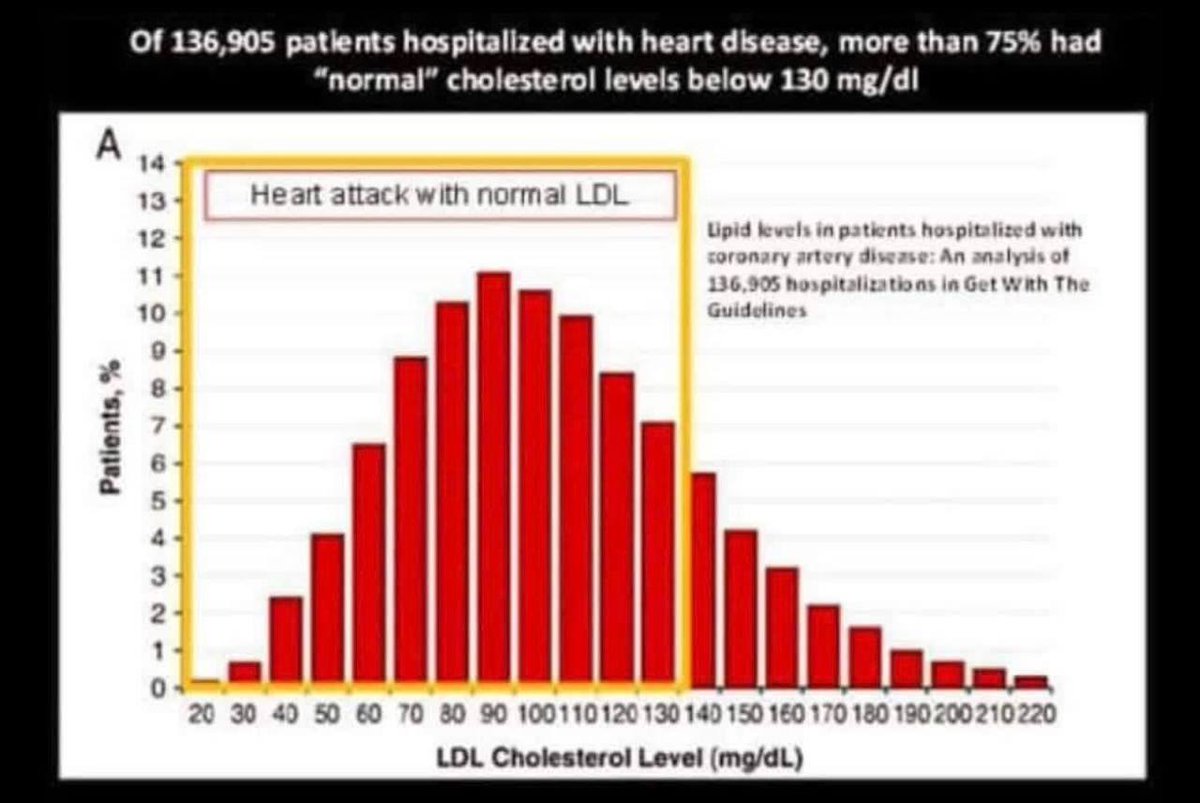
Now the science. 136,905 heart attack patients studied. 75% had "normal" cholesterol. The map of where Americans die youngest lines up almost perfectly with the obesity map. It was never about cholesterol. It's metabolic disease.
Mark Kaplan tweet mediaMark Kaplan tweet media
English
4
7
127
14.8K
Mark Kaplan
Mark Kaplan@markkaplan20·
I was a professional tennis player. I competed at Wimbledon. I ranked 117 in the world. I was the healthiest person I knew. At 52, I drove myself to the ER mid-match and had a heart attack. Here's what I found when I refused to accept the answer my doctor gave me 🧵
English
93
239
2K
834K
Jonathan Hall retweetledi
Mark Kaplan
Mark Kaplan@markkaplan20·
But I kept thinking about everyone who doesn't have the time or resources to do what I did. The functional medicine knowledge I found. It's locked behind expensive concierge doctors. $300-500 a month. Most people never get there. That's what we built Health Truth to solve.
English
3
10
275
80.7K