Sabitlenmiş Tweet
Andreas Kirsch 🇺🇦
13.7K posts

Andreas Kirsch 🇺🇦
@BlackHC
My opinions only here. 👨🔬 RS DeepMind, Midjourney 1y 🧑🎓 DPhil AIMS 4.5y 🧙♂️ RE DeepMind 1y 📺 SWE Google 3y 🎓 TUM 👤 @nwspk
Oxford, England Katılım Ağustos 2009
6.4K Takip Edilen15.5K Takipçiler
Andreas Kirsch 🇺🇦 retweetledi

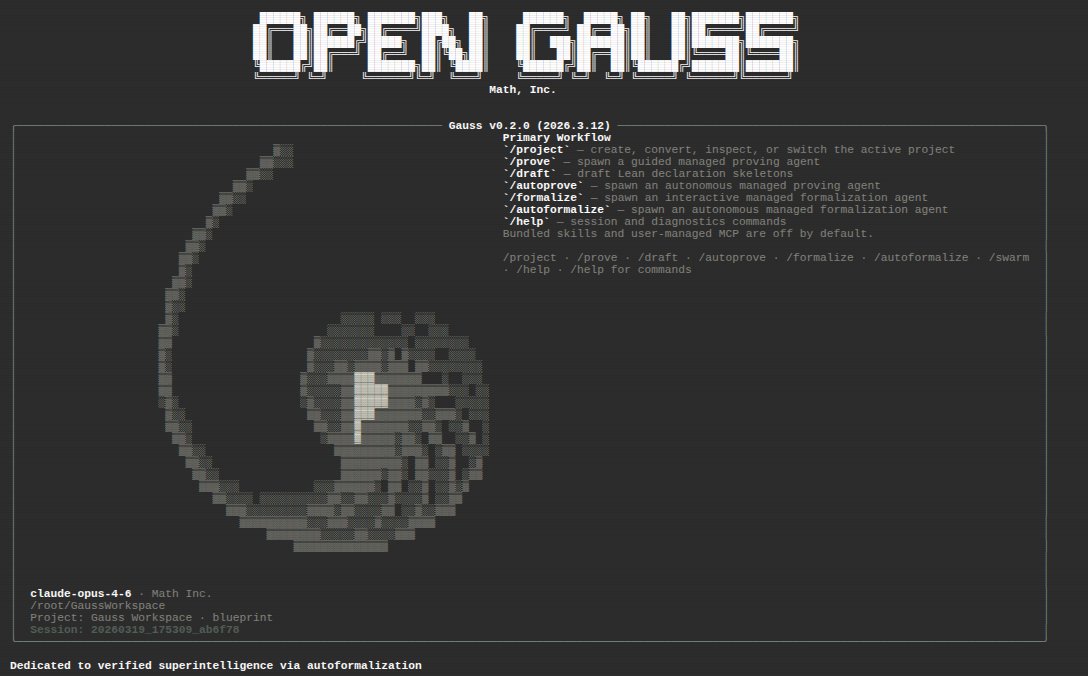
Today, at the @DARPA expMath kickoff, we launched 𝗢𝗽𝗲𝗻𝗚𝗮𝘂𝘀𝘀, an open source and state of the art autoformalization agent harness for developers and practitioners to accelerate progress at the frontier.
It is stronger, faster, and more cost-efficient than off-the-shelf alternatives. On FormalQualBench, running with a 4-hour timeout, it beats @HarmonicMath's Aristotle agent with no time limit.
Users of OpenGauss can interact with it as much or as little as they want, can easily manage many subagents working in parallel, and can extend / modify / introspect OpenGauss because it is permissively open-source. OpenGauss was developed in close collaboration with maintainers of leading open-source AI tooling for Lean.
Read the report and try it out:

English

@BlackHC No, this is not a correct characterization. Ephemeral software is exactly what it implies with by the meaning of the word "ephemeral".
English

@someRandomDev5 Okay, and how do you constrain it sufficiently and ensure that this is indeed the case? And more importantly, how do you verify that?
English

@BlackHC If the LLM can interpret your prompt and context 1000 different ways, but each of those one thousand different ways is something that you're satisfied with, then who cares? The non-deterministic nature of the system still exists, but has been reduced to the point of irrelevance.
English

@someRandomDev5 But you do say exactly that: vibe coding works and that is ephemeral software.
So if Amjad Masad says “The value of all application software will eventually go to zero," how do you contextualize that?
English

@BlackHC Baader Meinhof phenomenon in action.
It's as though you just recently learned of the “motte-and-bailey fallacy” within the past few months, and now you see everything that might be vaguely interpretable as this as an instance of it.

English

The TL;DR of your statements is "vibe coding works and I rename it to personal ephemeral software and this is what all people are talking about when they say ephemeral software is the future." I agree that vibe coding works but I also think people often go way beyond that, all the way to we don't need code anymore and "LLMs are the new compilers"
English

@BlackHC Something that I've noticed from people that were overly-educated and suffered through too many Scantron tests: they forget that there's more than 1 way to be right. Sometimes countless ways to be right. In rare circumstances there are even more ways to be right than to be wrong.
English

@someRandomDev5 You are actually doing a motte-and-bailey here. I actually cite a few articles that claim exactly that. While I agree with you that is not what everyone claims
English

@BlackHC Ephemeral individualized software will not fully take over mass-produced software, for similar reasons that 3D printed parts did not fully take over mass-produced plastic parts. In other words: This has more to do with human psychology than technical feasibility.
English

@moocat999 Most things will eventually but it will also still take time to do real-world/production testing. Similar to Amdahl's law, the time to generate trust that code works as intended will not collapse to 0 as quickly as one could predict just from considering much faster code gen
English

1. For the weaker form, the only assumption is the claim that we won't preserve code anymore but go to specs as main artifact. And I lay out several arguments why that either won't work or you'll end up with essentially code again
2. I've seen people claim that LLMs will be the compiler of the future, and again, that we will not persist code and only keep the specs
3. There is a whole section with evidence on how the stronger version has been suggested as throwaway apps that last a day or up to a month (with the implication that we won't reuse the code)
English

@BlackHC “If I create a personal redefinition for ‘ephemeral software’ that doesn’t match what anyone actually means in practice when they say it, I can define that term such that it’s infeasible by definition.”
English

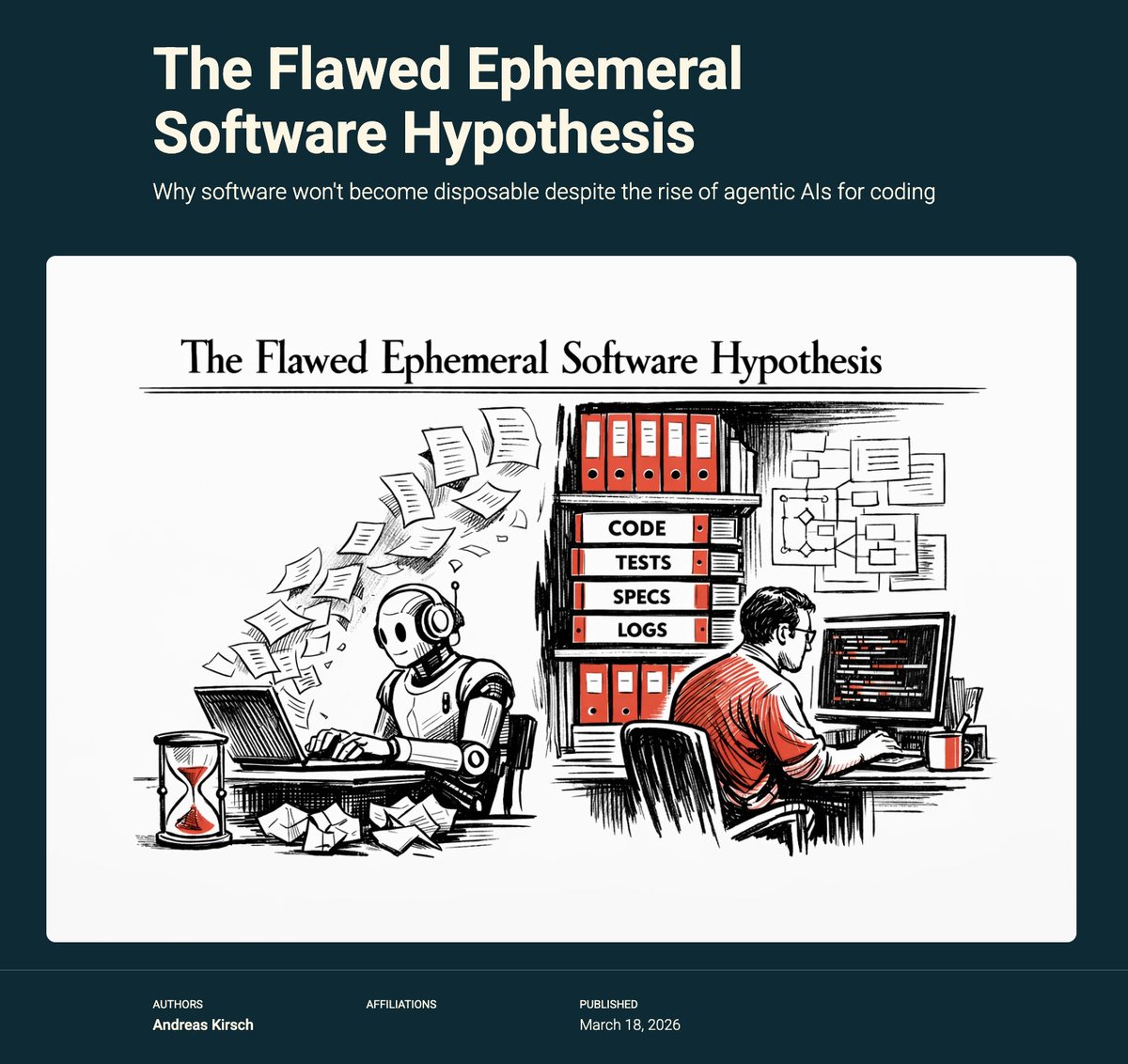
Good analysis on "disposable" or "ephemeral" software created by vibe coding
Andreas Kirsch 🇺🇦@BlackHC
A while back, Andrej Karpathy said the app store will be replaced by generated, disposable software," and Amjad Masad predicted that the value of all application software will go to zero I think this "ephemeral software hypothesis" is wrong, though, and I want to explain why:
English

Really? Ephemeral apps means that you don't preserve the code but recreate from specs every time you need a change or the binary needs to be rebuilt.
In the strongest form, it's continuous regeneration, so every time you want to use the app (if you want truly ephemeral apps, you'll only keep the data, and generate on the fly).
Would cause friction if the app layout changes even every couple of months?
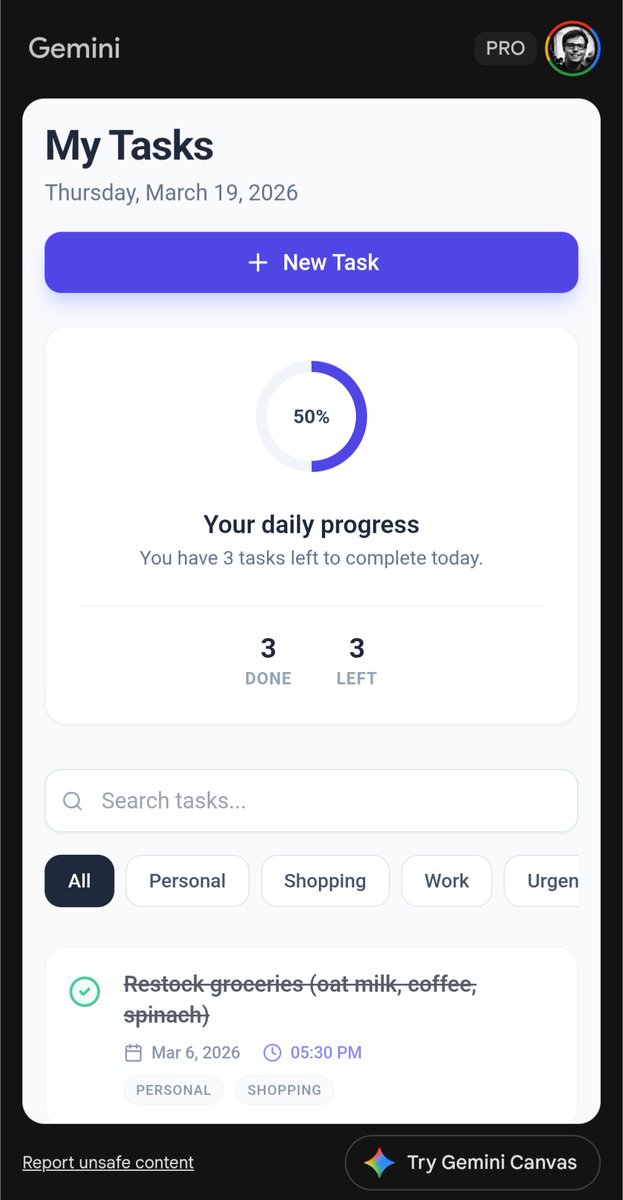
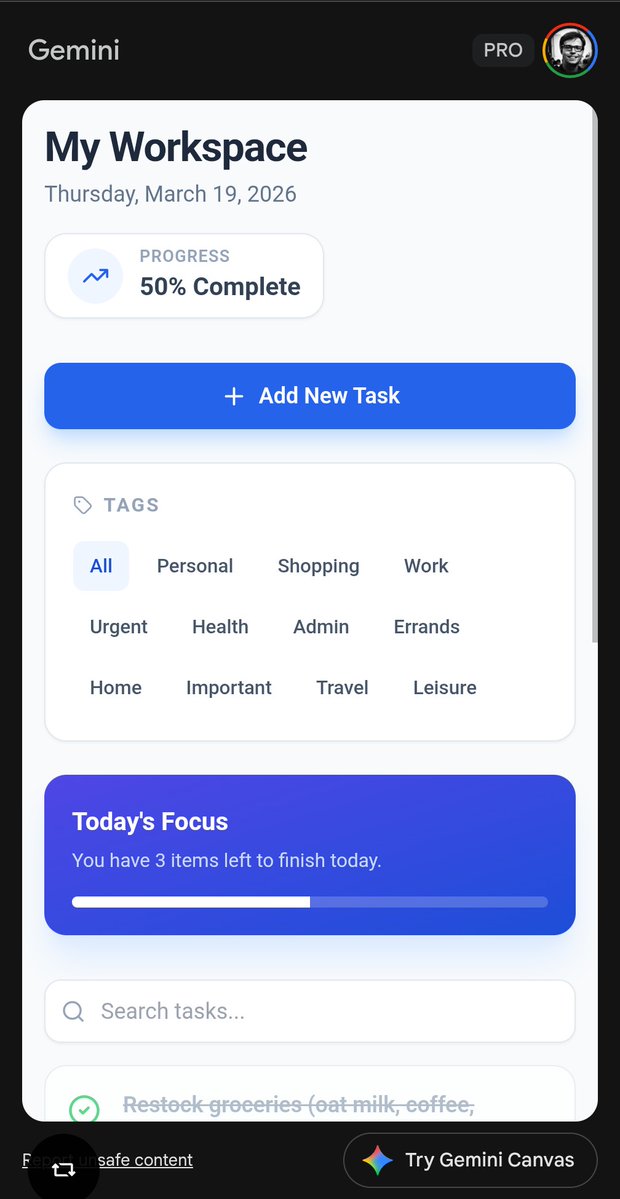
E.g. here are three different generations for the same data of a to-do app (exact same prompt):


English

@Rghv_Bali Thanks! It applies especially to bespoke small apps though bc you also want consistency of UI and UX.
A personalized to-do app is a great example bc it isn't in the training set, so you'll have variance in the layout or behavior, which will become annoying and cause friction
English

@BlackHC Nicely articulated essay. However, I believe the basic premise of ephemeral software is it's limited and personal scope. A very basic example being todo apps where everyone has a different way of using them. For everything else, what you said makes sense 🙌🏽
English

@AI_WarriorNQ Yeah that's a great partial TL;DR. I connect this to Amdahl's law: it's very similar in that everything else that real systems need requires time > 0 like you say, so ephemeral won't work
English

@BlackHC The maintenance burden alone kills this hypothesis. Code that works once isn't software, it's a script. Real systems need tests, docs, versioning. AI accelerates but doesn't replace that.
English

@tkukurin @geoffreylitt @inkandswitch @NotionHQ The argument of the essay is that malleable software will not become 0 effort. At least any customization still requires effort and validation in the real world. But it will get much easier via AI automation and workflows. So not ephemeral but maybe at least again more artisanal
English

@BlackHC @geoffreylitt @inkandswitch @NotionHQ yeah I got this sense!
IMO however the two work in tandem (nice analogy is vim or vscode extensions or "upstreaming" git changes); you almost pitted them against one another? :D
but to be fair I skimmed the article hope I don't misrepresent, curious for your 2nd take. :)
English

@BlackHC this is good, but:
"At that point, you have arrived at a malleable software thesis instead." is this not just describing the softer version of the ephemeral hypothesis, where durable artefacts above the code are the persistent value?
English
Andreas Kirsch 🇺🇦 retweetledi

Everybody should (re)read "Things You Should Never Do."
Andreas Kirsch 🇺🇦@BlackHC
We can also look at the history of software: In 2000, "Things You Should Never Do" told about Netscape's disastrous rewrite: it took 3 years, IE ate their market, and the rewrite shipped full of bugs because the team had to rediscover edge cases already resolved in the original
English

@tkukurin @geoffreylitt @inkandswitch @NotionHQ Actually I only linked to a reply from Andrej Karpathy in an unrelated post from Litt 🙈 I'll read @inkandswitch's essay in full and compare. I use malleable more in the sense of malleable software engineering and not software. I'll update the term and add footnotes
English

@BlackHC I agree w/many points, seems however the post links @geoffreylitt but not engage w core idea of @inkandswitch inkandswitch.com/essay/malleabl…?
IMO a future where you build a good env ("reliability") + user becomes the dev (via ux of LLMs) is likely
@NotionHQ likely betting on this
English
Andreas Kirsch 🇺🇦 retweetledi

The United States is no longer a democracy and is sliding towards autocracy faster than Hungary and Turkey, according to the annual report of the Varieties of Democracy (V-Dem) Institute at Gothenburg University. theguardian.com/world/commenti…
English