@BlackKnight717@001Cryptomania@GetTangi At this point, I agree with you! I invested with them 5 years ago and still waiting for my ROI; which at this point will likely never happen.
We’re beyond proud to officially welcome Mario Nawfal and the IBC Group to the Tangi project.
We’ve brought in one of the most connected, respected, and influential groups in global crypto.
Their decision to work with Tangi speaks volumes about our credibility, our progress, and where we’re heading next.
A huge thank-you to Mario Nawfal and the entire IBC Group for recognising Tangi’s potential and choosing to be part of our journey.
Let's be very clear.
The reason that the mainstream media ignores the threat of the far-left is because the media are part of the far-left.
Don't believe their propaganda.
President Trump just announced a 100% tariff on China and markets are down sharply.
I am joining @ErinBurnett on CNN on at 7:30 PM ET tonight to discuss @KobeissiLetter's outlook.
As tariffs resurface, we view the volatility as opportunity.
Tune in LIVE on CNN at 7:30 PM ET.
Representative Debbie Wasserman Schultz of Florida said the Trump administration is using "intimidation tactics" to avoid negotiating on a short-term spending plan bloom.bg/46IM3hq
Business schools will study Bud Light and Cracker Barrel’s missteps for decades. Two executives failed to understand their customers, and their boards failed to recognize that the leaders they chose were out of touch with the people they served.
@charliebilello They are choosing to protect jobs instead of fighting inflation. I guess it’s better to be employed and broke versus unemployed and broke? Asset holders will again be getting rewarded.
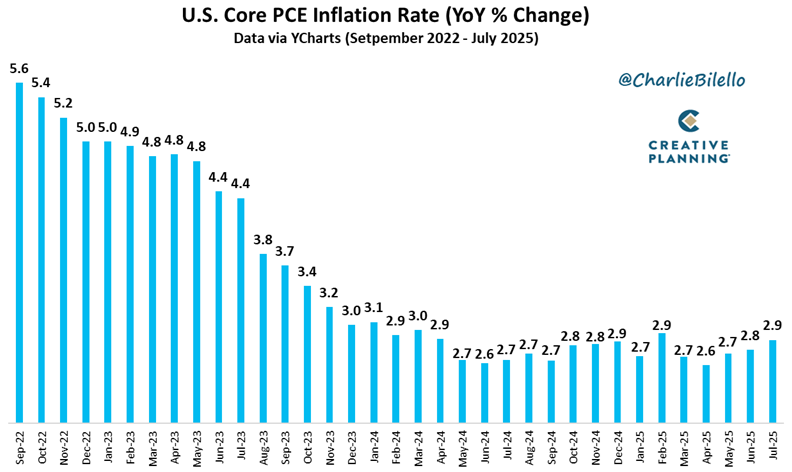
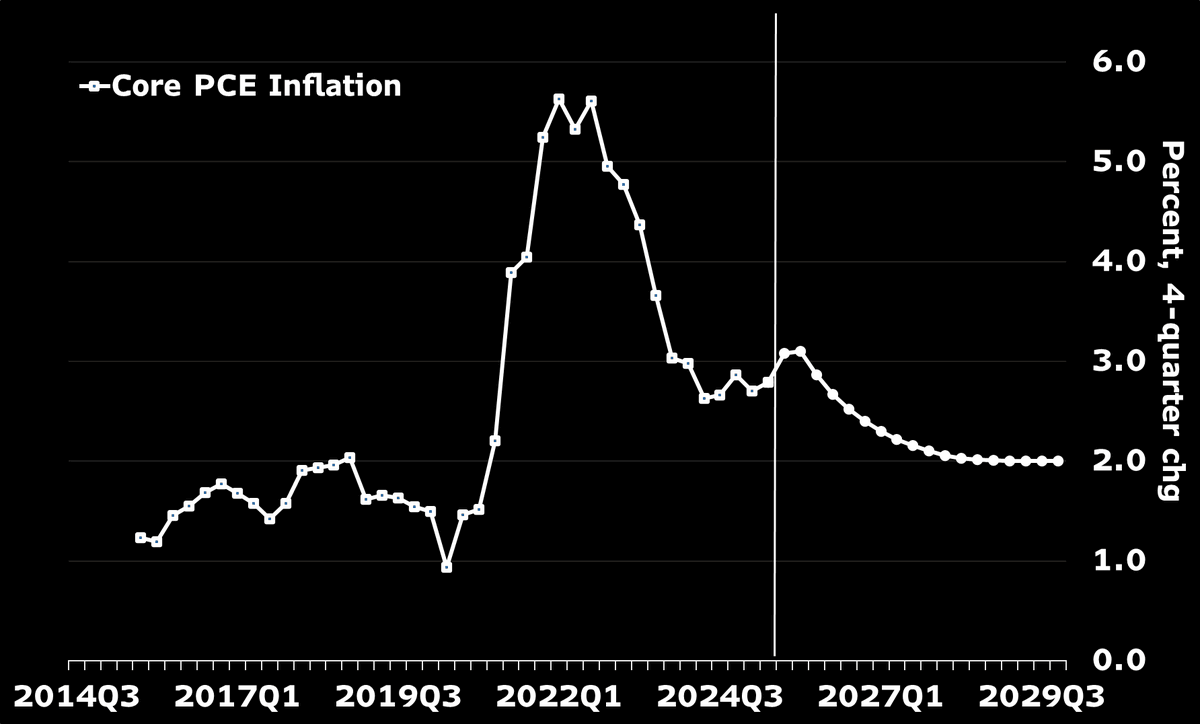
The Fed's preferred measure of inflation has moved up to 2.9%, the highest since February.
Is that going to stop them from cutting interest rates next month?
The market is saying no, with the probability of a cut still at 87%.
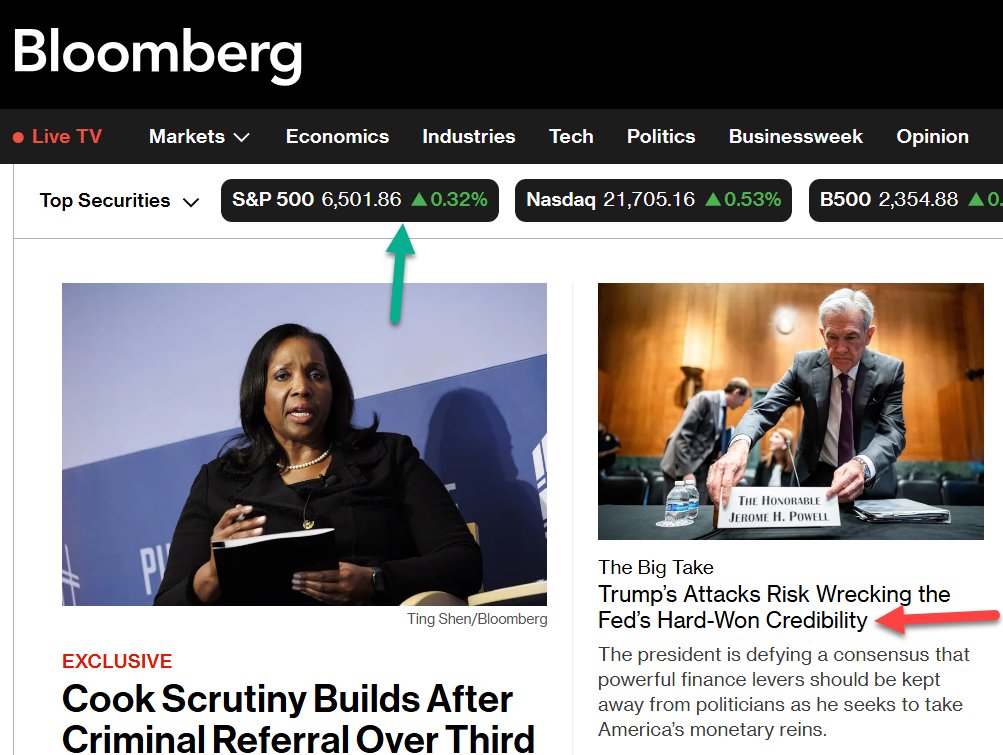
The Fed has lost all credibility when it comes to fighting inflation. They should be hiking rates, not cutting.
The macro backdrop of the framework review -- which Powell will unveil this Friday....is that core PCE inflation has top 2% for 5 years...and assuming FOMC's SEP forecast materializes, will be more than 7 years of >2% inflation by 2028.
Peter Thiel on why 70% of Millennials say they are pro-socialist:
“When one has too much student debt or if housing is too unaffordable, then one will have negative capital for a long time… and if one has no stake in the capitalist system, then one may well turn against it.”
The AI-Driven Labor Displacement Crisis, Consumer Psyche, and the Limits of Federal Reserve Interest Rate Cuts
Introduction
The rapid advancement of artificial intelligence (AI) is transforming the global labor market, with 2025 poised to be a pivotal year for job displacement, especially in white-collar sectors. Tech giants like Amazon, Microsoft, and Meta are investing billions in AI infrastructure, automating tasks from data analysis to customer service. This shift, spotlighted at Coatue’s East Meets West 2025 conference, threatens widespread layoffs, with Anthropic CEO Dario Amodei estimating a 50% reduction in entry-level white-collar jobs within years. Traditional monetary tools, such as Federal Reserve interest rate cuts, are proving inadequate against this technological upheaval. Beyond employment, AI’s effects are rippling into consumer psyche and spending, amplifying economic uncertainty. This essay examines AI-driven labor displacement, its economic fallout, the psychological and behavioral impact on consumers, and why rate cuts fall short, drawing on recent data, expert insights, and public sentiment.
Section 1: The Scope of AI-Driven Labor Displacement
AI adoption is accelerating, driven by massive investments—Amazon’s $4 billion stake in Anthropic and Microsoft’s $13 billion in OpenAI are just the tip of the iceberg. White-collar roles, once considered safe, are now vulnerable, with Goldman Sachs projecting that AI could automate 25% of the U.S. labor market by 2030, affecting 300 million jobs globally. In 2025 alone, X posts report AI-related layoffs at companies like Duolingo and IBM, while McKinsey predicts 12 million U.S. workers will need to switch occupations by 2030. Public sentiment is shifting from optimism to alarm—X users lament “AI taking over” as job postings decline. Experts like Amodei warn of a “labor market cliff,” yet some argue AI could create new roles, albeit requiring skills many lack.
Section 2: Why Interest Rate Cuts Fall Short
Federal Reserve interest rate cuts, a go-to for stimulating demand, are ill-suited for AI-driven displacement. Unlike cyclical downturns, this is a structural shift—automation reduces labor demand permanently, not temporarily. Lower rates might boost sectors like manufacturing (e.g., a 2% GDP bump post-2023 cuts), but white-collar automation in tech and finance remains unaffected. X data from 2025 shows hiring freezes persisting despite a 25-basis-point cut in March, suggesting monetary policy can’t reverse AI’s march. Moreover, overinvestment in AI—$50 billion in 2024 per PitchBook—could lead to a bubble, with rate cuts merely delaying the reckoning.
Section 3: The Impact on Consumer Psyche and Spending
Introduction to Consumer Impact
AI’s disruption extends beyond jobs, reshaping consumer behavior and economic activity. Growing awareness of AI-driven job losses is breeding fear and uncertainty, altering spending habits, eroding confidence, and spurring demand for retraining. This section explores these psychological and behavioral shifts and their broader economic implications.
Decreased Consumer Confidence
As AI threatens employment, consumer confidence is plummeting. A 2025 Pew Research survey found 62% of white-collar workers fear job automation within five years, up from 45% in 2023. This anxiety is reflected in the Conference Board’s Consumer Confidence Index, which fell to 98.2 in May 2025, the lowest since 2022. With financial stability in question, consumers are saving more and spending less on big-ticket items like homes and cars, a trend that could slow GDP growth, historically driven 70% by consumption.
Shift in Spending Patterns
Economic uncertainty is shifting spending toward essentials—food, housing, healthcare—and away from discretionary items like luxury goods and travel. The Bureau of Economic Analysis reported a 3.5% drop in luxury spending in Q1 2025, contrasted with a 1.8% rise in necessities. The National Retail Federation noted a 4% decline in non-essential retail sales, blaming AI-related job fears. This mirrors the 2008 crisis and threatens industries like hospitality and retail, potentially triggering further layoffs and a downward economic spiral.
Increased Demand for Retraining and Education
Consumers are responding proactively, seeking skills to survive automation. Coursera’s 2025 report shows a 28% surge in online course enrollment for fields like data science and cybersecurity, while vocational training in trades rose 15%, per the National Center for Education Statistics. However, this adaptation widens inequality—those unable to afford retraining risk being left behind. The fast-evolving nature of AI also means today’s “future-proof” skills may soon obsolesce.
Impact on Mental Health
The psychological toll is mounting, with a 2025 American Psychological Association study finding 40% of workers in automatable roles reporting moderate to severe anxiety, up from 25% in 2023. This mental health crisis—stress, depression, anxiety—reduces productivity and spending. The World Health Organization estimates a $1 trillion annual global cost from such issues, a figure set to grow as AI displacement intensifies, further dampening economic activity.
Policy Responses and Their Implications
Governments are exploring solutions. New York’s updated WARN Act mandates AI-layoff disclosures, though no firms complied by June 2025. California’s proposed “AI Safety Net” bill offers $1,000 monthly to displaced workers, potentially stabilizing spending but raising concerns about work disincentives. Retraining and mental health investments could help, but the scale and speed of AI’s impact challenge implementation, leaving consumers and economies vulnerable.
Section 4: Broader Economic and Policy Implications
Monetary policy’s limits necessitate structural solutions—retraining programs, tax incentives for human hiring, or AI regulation. Without them, inequality could widen, and AI overinvestment risks a bust, with $50 billion already at stake in 2024. X posts warn of “AI hype crashing,” a scenario rate cuts can’t avert.
Section 5: Counterarguments and Long-Term Outlook
AI optimists predict job creation in new fields, citing historical tech transitions like the Industrial Revolution. Yet, the pace of change and skill mismatch suggest a rocky adjustment. Long-term growth is possible, but only with proactive adaptation.
Conclusion
AI-driven labor displacement, accelerating in 2025, poses a structural crisis that Federal Reserve rate cuts cannot fix. With tech giants betting big on automation and experts forecasting massive job losses, the labor market faces upheaval. Consumers, gripped by fear, are cutting spending, shifting priorities, and grappling with mental health struggles, amplifying economic risks. Policies like retraining and UBI offer hope, but their success is uncertain. While AI may eventually spark new industries, the transition demands bold action beyond monetary tweaks to balance progress with stability.
@grok assisted.
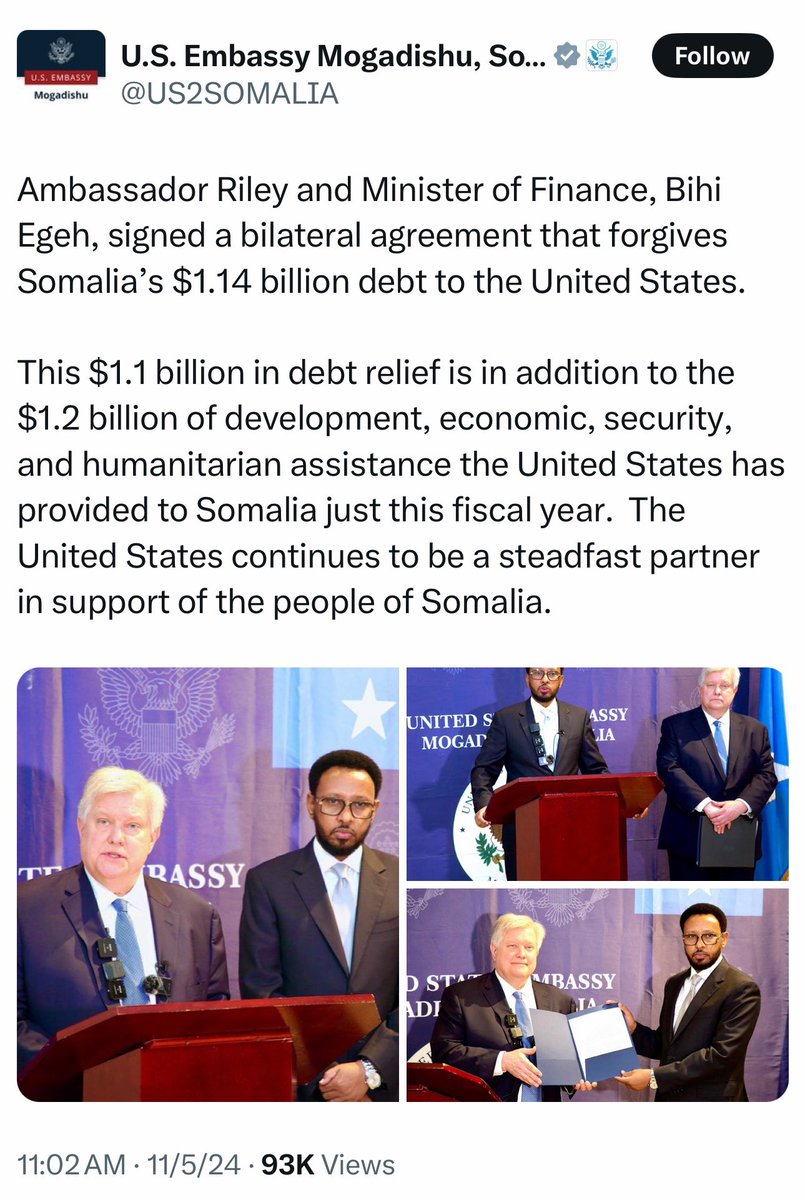
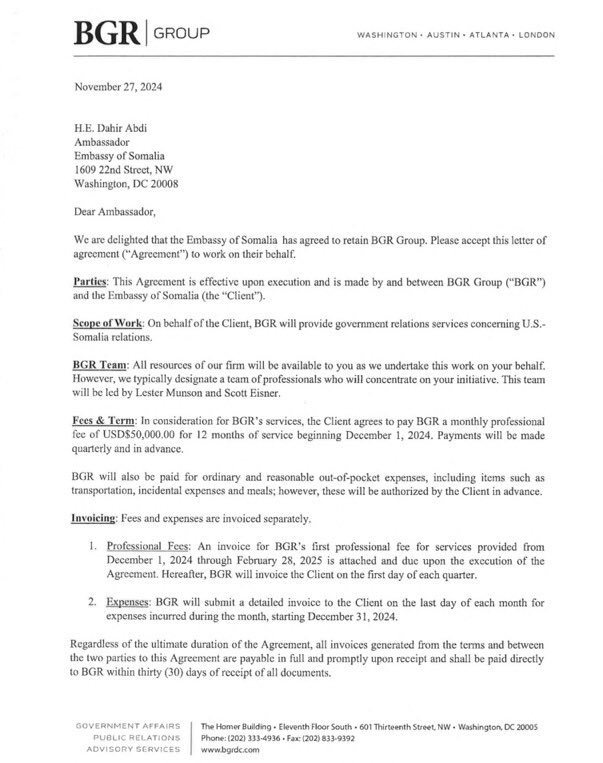
The US just forgave a $1.14 billion loan to Somalia and now Somalia just retained a DC based lobbying firm.
They’re using our own money to lobby for more money and handouts
Meanwhile we are trillions of dollars in debt and Americans can’t afford gas and groceries
@RyanPankey7@KeithMcCullough It's the Twilight zone around Keith. Hedgeye exists for the exact reason he tells you, he failed as a trader. He had to charge fees because he is an amazing salesman! Stop claiming he's giving back! Waste your own money, quit pushing it on others so Keith will retweet you
Hedgeye exists because of my Mom.
Let me explain…
In 2008, I got fired for being too bearish on the U.S. economy. At that time, I was a portfolio manager at Carlyle-Blue Wave.
The Great Financial Crisis would eventually send the stock market down -50% from its peak to its trough. The market peaked a month or so after I got fired, but Carlyle didn’t know that at the time. My bosses fired me because I’d made a classic investing mistake: I got the market call right, and the timing wrong.
Carlyle showed me the door. My hedge fund manager days were done. I was crushed.
As I started to think about what to do next, my Mom asked me a question I’ll never forget: “How do you change the world with your job?"
That’s why Hedgeye exists.
Since getting fired, my teammates and I have been on a nearly two-decade mission to perfect a repeatable market timing process. We don’t get everything right, but we get A LOT of the big moves in Macro right.
I take this job veryseriously. It’s not just the world’s leading hedge funds and asset managers that rely on Hedgeye research. Our subscribers include teachers, financial advisors, small business owners, retirees, plumbers and everything in between.
I’m here to help you protect and grow your precious wealth. Full stop.
The most important thing to remember is that protecting and growing your wealth isn’t your end goal. The money isn’t the point. Protecting and growing your money is about providing a better life for your family and to make a positive impact on the world around you.
Here’s what you need to know. Winning in the market over the long haul isn’t about chasing fads or falling for the latest Wall Street narrative. It’s about having a reliable and repeatable math-based process that’s been battle-tested through every market cycle.
So… how do I change the world? I didn’t have an answer when my mom first asked me that question almost two decades ago.. But I do today. That question is easy to answer. I’m sharing my blueprint for investing success to help people—for FREE.
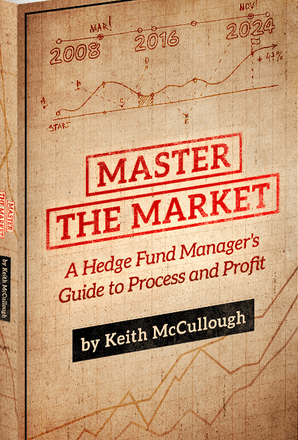
Download my new 53-page eBook today: info.hedgeye.com/keith-master-t…
It’s called: “Master the Market: A Hedge Fund Manager's Guide to Process and Profit.”
I wrote Master The Marketto arm investors with the tools they need not to just survive, but to thrive in all market conditions. The Hedgeye process is built to protect and grow your capital by making smarter, data-backed decisions—every single day.
The repeatable investing process you’ll learn about in this book has helped Hedgeye subscribers…
✅Avoid every major U.S. market crash since 2008.
✅Make money, no matter the market trend
✅ Buy low, sell high across global Macro
Whether you’re new to investing or a seasoned pro, this eBook will help you sharpen your investing skills and elevate your game.
You have nothing to lose and everything to gain!