Blake Darche

1.4K posts

Blake Darche

Blake Darche

@BlakeDarche

Cloudforce One @Cloudflare, Advisor/Investor, Ski Patroller, Formerly Co-Founder/CSO @area1security, formerly @CrowdStrike, @NSAGov Hacker.

Washington, DC Katılım Mayıs 2012
347 Takip Edilen739 Takipçiler
Blake Darche retweetledi
Disclose.tv
Disclose.tv@disclosetv·
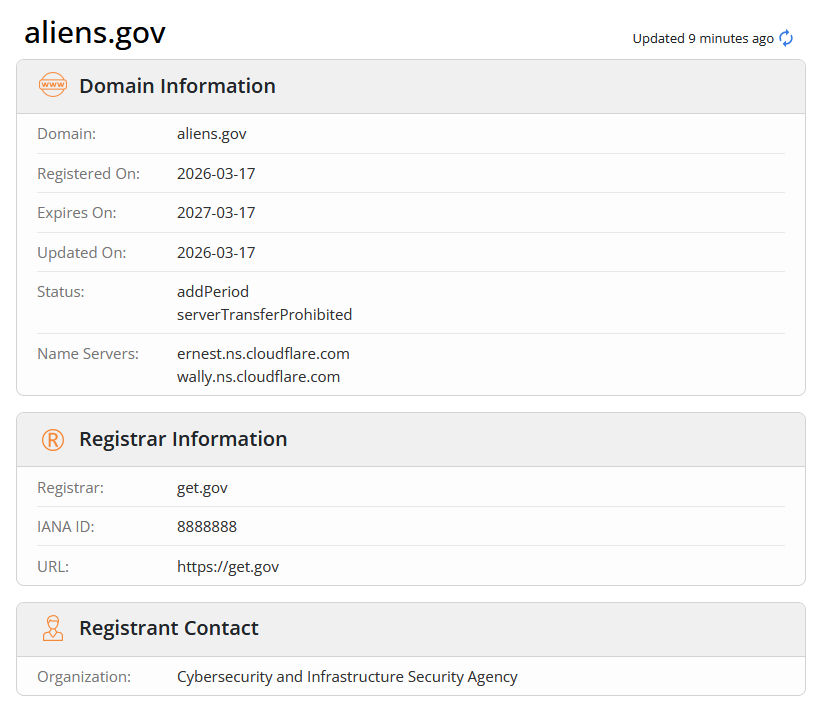
JUST IN - U.S. Cybersecurity and Infrastructure Security Agency quietly purchases "aliens.gov" domain name.
Disclose.tv tweet media
English
459
2.3K
12.2K
1.3M
Blake Darche retweetledi
Blake Darche
Blake Darche@BlakeDarche·
@0xdabbad00 @ejcx_ It turns out the AWS data center model isn’t very scalable for war. The design is inherently flawed.
English
0
0
0
52
Scott Piper
Scott Piper@0xdabbad00·
AWS having 2 of 3 AZs hit in me-central-1 really drives home to me the scale of the situation over there. The UAE is roughly the size of South Carolina and AZs are required to be miles apart. If you assume they weren't targeted specifically, 1/2
English
8
1
30
11.9K
Blake Darche retweetledi
Who said what?
Who said what?@g0njxa·
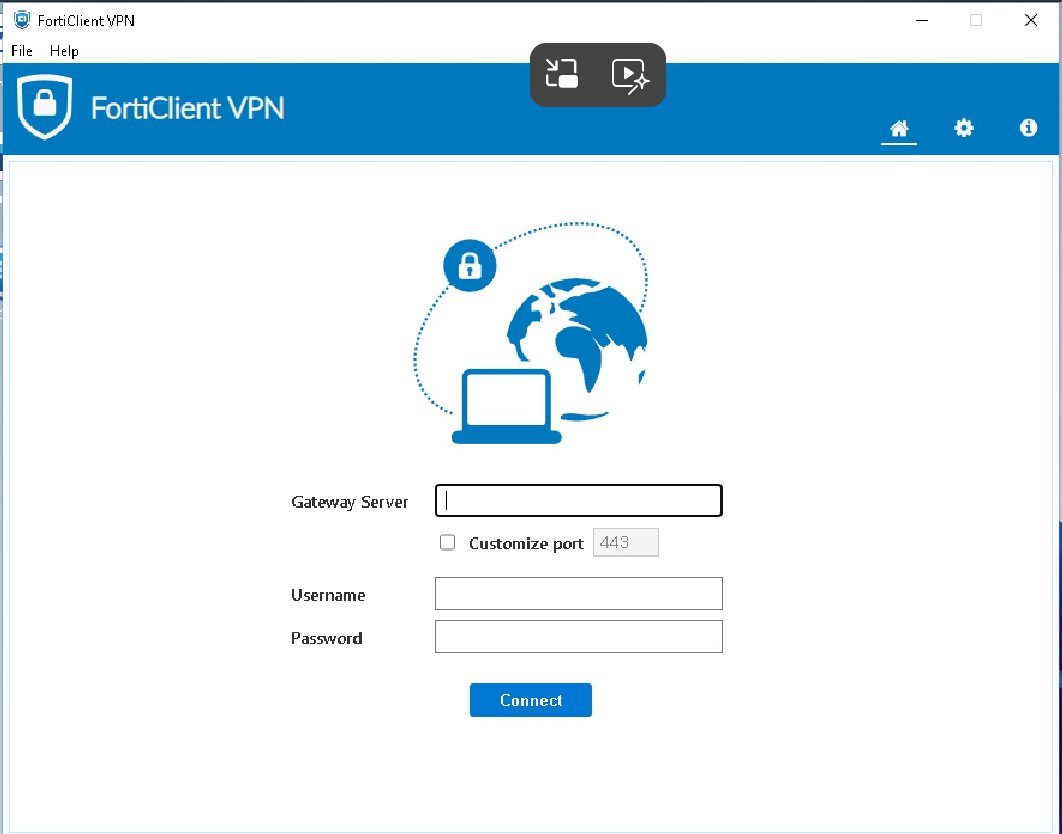
These fake Fortinet websites, still present on top browser search engines results, are now delivering a fake FortiClient app, signed "Taiyuan Lihua Near Information Technology Co., Ltd. (Certum-given)" Its a phishing app, that will send credentials to vpn-connection[.]pro Based on other signed files with same EV cert, recently the TA were also spreading applications impersonating Sophos, WatchGuard and Ivanti. Analysis: app.any.run/tasks/e83886f5…
Who said what? tweet media
Who said what?@g0njxa

Watch out for fake Fortinet websites! Also do not blindly trust search engines AI summarizations as they can also lead to malicious redirects. These redirects lead the user to a phishing site asking FortiClient credentials, sending to myfiles2[.]download, and downloading legit builds as decoy after a valid submission >> Redirect vpn-fortinet[.]github[.]io fortinet-vpn[.]com >> Phishing vpn-fortinet[.]com

English
7
153
564
104.5K
Blake Darche
Blake Darche@BlakeDarche·
It’s not typically wise to your your own protocols and this is a good example of why.
Stanislav Kozlovski@kozlovski

An incredibly awful security vulnerability just got revealed in MongoDB. So much that it got named after HeartBleed. MongoBleed is a vulnerability affecting all MongoDB versions from 2017 to... today. The exploit is simple. It's a buffer over read bug due to compression. Here's how it works 👇 Clients can send compressed requests to MongoDB. The client helpfully includes the uncompressed size of the message so the server knows exactly how much memory to allocate when decompressing. The server allocates a memory buffer with the given space. Due to how memory management and garbage collection in programs work, this allocated memory may already contain sensitive information that was copied earlier and is considered garbage now (eg because it's unreferenced). This is technically fine - every computer program works that way because it is assumed that whatever unclaimed memory exists there will be overwritten. Unfortunately that’s exactly where the bug lies. 🙃 The server stupidly trusts the client’s provided uncompressed size. When a malicious client lies about the uncompressed size - e.g the actual decompressed size is 100 bytes, but the client says its 1MB - Mongo will treat the full 1MB block as the message. It will unload the 100 byte decompressed msg into the buffer, yet treat the full 1MB block as the msg. This is extremely problematic if you can get the server to return back parts of the 1MB block, because it could contain data you may not have access to. That is exactly what the exploit does - it sends a badly-formatted BSON message. The server fails to parse it, and "helpfully" returns an error message containing the invalid message. The invalid message can be that whole 1MB block of foreign data. To understand the exploit a bit better, you need to understand the MongoDB protocol. • Mongo also uses its own TCP wire format (i.e doesn't use HTTP, gRPC or the like). • BSON is Mongo's message format passed within the TCP wire format. BSON is basically JSON in binary form • Commands in Mongo don't have particular endpoints or RPC names - rather, they are simply JSON-like messages. The action is inferred from the first key of the JSON. For example, an insert request looks like this: `{ "insert": "users", "documents": [ { "name": "alice", "age": 30 } ] }` Every request to the server is therefore decoded into the BSON format as it’s parsed. Critically, BSON parsing of field names (which are strings) work by parsing the field until you hit a null terminator byte (0x00). It works exactly like strings in C, which have their own rich history of vulnerabilities. We can now tie things together: 1. The client lies to the the server that its request has a big uncompressed size, so the server allocates a large block of memory 2. The client sends an invalid BSON with a field which does NOT contain the null terminator (0x00) 3. The server naively tries to parse the BSON field in that allocated block until it hits the first null byte. The first null byte is encountered in some foreign data since the BSON literally doesn't have it 4. The server realizes this is a completely invalid BSON message so it responds with an error. 5. The error response contains the invalid BSON "field". Critically, the server parsed garbage data from the heap in step 3), so it returns that data in the response. Congrats. If the garbage contains passwords or other sensitive info, you’ve hacked MongoDB! Hackers exploit this by sending many malicious requests per second and then attempting to reconstruct the pieces of garbage they received back. What’s critical about this vulnerability is that it works on ANY internet-accessible unpatched instance of MongoDB. 💀 You don’t need to authenticate with the server, because this whole request/response parsing cycle happens before the server can even authenticate. Obviously you can’t authenticate a malformed request which doesn’t contain credentials - so that path of the code never gets executed. The server simply responds with an error response. It just so happens that this error response can contain sensitive data. 🤷‍♂️ Merry Christmas

English
1
0
3
562
Blake Darche retweetledi
Cloudforce One
Cloudforce One@Cloudforce_One·
UPDATE: Early activity indicates threat actors quickly integrated React2Shell into scanning routines, targeting critical infrastructure like nuclear fuel and uranium. React also disclosed two new vulnerabilities today—Cloudflare protects against all three. blog.cloudflare.com/react2shell-rs…
English
6
21
85
56.7K
Blake Darche retweetledi
Cloudforce One
Cloudforce One@Cloudforce_One·
Update: on 10/22/2025, IP address 3[.]239[.]45[.]43 made use of an AI LLM as part of the campaign to target a SaaS vendor environment
English
0
1
5
567
Blake Darche retweetledi
Cloudforce One
Cloudforce One@Cloudforce_One·
URGENT SECURITY ALERT IP address 3[.]239[.]45[.]43, associated with the recent Gainsight security breach, has been observed across hundreds of non-Salesforce environments globally.
English
2
8
44
48.3K
Blake Darche retweetledi
Oren J. Falkowitz
Oren J. Falkowitz@orenfalkowitz·
While niche, the community of patriots seeking to farm after distinguished service is large.
Oren J. Falkowitz tweet media
English
0
1
1
136
Maziyar PANAHI
Maziyar PANAHI@MaziyarPanahi·
Our local GitLab server has been under attack by @AnthropicAI, @Google, @OVHcloud and more! These companies have been hammering our GitLab server, trying to scrape every Haskell commit we made in our lab, resulting in the whole server becoming unresponsive! This is only today!
Maziyar PANAHI tweet media
English
217
451
6.4K
844.3K
Blake Darche retweetledi
Cloudforce One
Cloudforce One@Cloudforce_One·
Today, we're announcing new incident response and advisory services. Our experts provide on-demand support to help organizations prepare for and recover from security crises. cfl.re/47fWJW2
English
1
9
28
7K
Blake Darche
Blake Darche@BlakeDarche·
@CBP Watching a US Agency publicly post LES and FOUO in the public domain: PRICELESS.
English
0
0
1
25
CBP
CBP@CBP·
Let’s set the record straight: President Trump’s updated H-1B visa requirement applies only to new, prospective petitions that have not yet been filed. Petitions submitted prior to September 21, 2025 are not affected. Any reports claiming otherwise are flat-out wrong and should be ignored.
CBP tweet media
English
2.9K
1.8K
9.1K
2M
Blake Darche
Blake Darche@BlakeDarche·
@USCIS Watching a US Government agency publicly post a document labeled FOUO in the public domain: PRICELESS.
English
0
0
0
32
USCIS
USCIS@USCIS·
President Trump’s new H-1B visa requirement applies only to NEW, prospective petitions that have not yet been filed. 

Petitions submitted prior to September 21, 2025 are not affected. uscis.gov/sites/default/…
USCIS tweet media
English
1.2K
1.6K
6.1K
1.6M
Blake Darche retweetledi
Cloudforce One
Cloudforce One@Cloudforce_One·
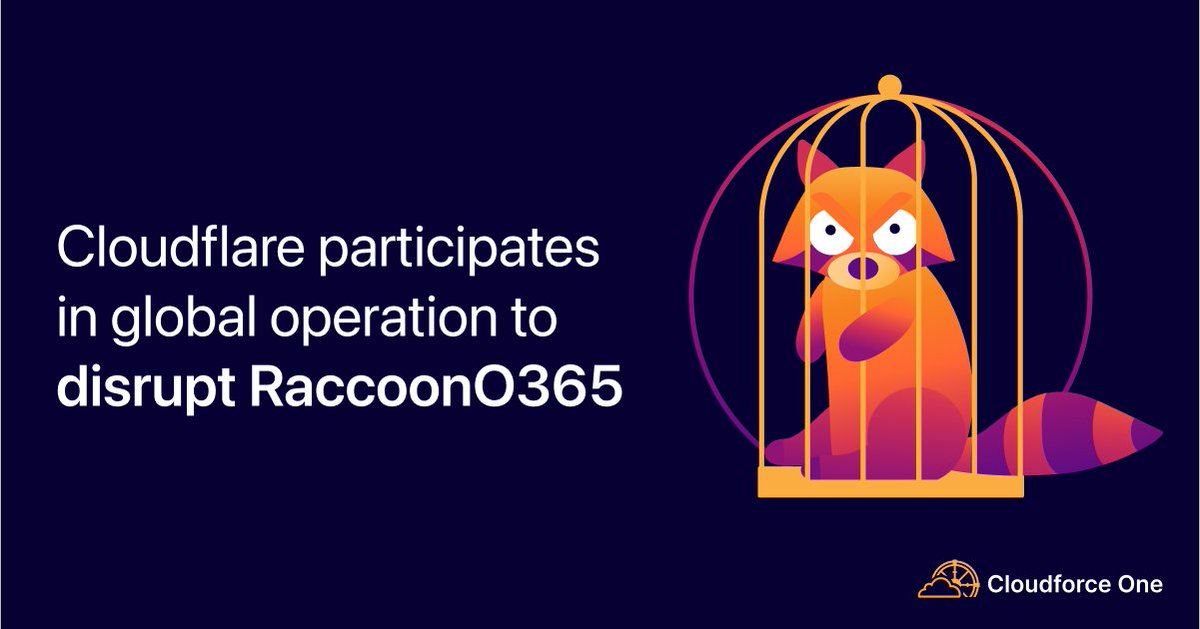
In partnership with Microsoft and law enforcement, we've disrupted RaccoonO365 — a sophisticated Phishing-as-a-Service enterprise targeting Microsoft credentials. Our new report outlines the coordinated action and technical details. Learn more: cloudflare.com/threat-intelli…
Cloudforce One tweet media
English
4
15
41
10K
Blake Darche retweetledi
Microsoft On the Issues
Microsoft On the Issues@MSFTIssues·
@Microsoft By seizing infrastructure, cutting revenue streams, and pursuing legal action across borders, DCU is raising the cost of cybercrime. But lasting progress demands more global coordination, stronger laws, and shared defenses, and Microsoft is committed to doing just that.
Microsoft On the Issues tweet media
English
1
2
2
294
Blake Darche retweetledi
gfw.report
gfw.report@gfw_report·
The Great Firewall of China (GFW) today experienced the largest internal document leak in its history. More than 500GB of source code, work logs, and internal communications have been exposed, revealing details about the development and operation of the GFW. The leak originated from a core technical force — Geedge Networks (with chief scientist Fang Binxing) and the MESA Lab in the Institute of Information Engineering, Chinese Academy of Sciences. The company not only provides services to local governments in Xinjiang, Jiangsu, and Fujian, but also exports censorship and surveillance technology to countries such as Myanmar, Pakistan, Ethiopia, and Kazakhstan under the “Belt and Road” framework. Due to the massive volume of material, GFW Report will continue analyzing and updating on this page: gfw.report/blog/geedge_an…
gfw.report tweet mediagfw.report tweet mediagfw.report tweet media
English
141
1.6K
7.8K
1.2M