Bleap
2.6K posts

Bleap
@BleapApp
The future of finance. Powered by @arbitrum
Spend, save & trade smarter → Katılım Ağustos 2023
809 Takip Edilen11.7K Takipçiler

new cashback perk announcement with @nextblockexpo !
you can now buy any Next Block Expo ticket with the Bleap card and receive $30 back
stay tuned for special benefits you can receive during the conference
Bleap.

English

A few years ago, stablecoins were mostly seen as a tool for trading crypto.
Today they’re quietly becoming something much bigger.
Not just digital dollars.
Financial infrastructure.
Stablecoin supply now sits at roughly $306B, with $100B added in the last year alone.
What makes that remarkable is the timing.
BTC sold off during that period, yet stablecoin supply kept growing.
For the first time, stablecoin expansion has decoupled from the broader crypto market.
That’s usually the moment when an asset stops being speculative and starts becoming structural.
Stablecoins are increasingly behaving less like crypto instruments and more like the plumbing of a new financial system.
And plumbing tends to matter most where the existing system struggles.
Take cross-border payments.
Sending $1,000 from the US to Turkey through traditional rails like SWIFT typically costs 2.5–6%.
Through stablecoin rails, the cost drops to roughly one basis point, plus the on/off-ramp fees.
But the interesting detail isn’t just that it’s cheaper.
It’s why it’s cheaper.
In corridors like Nigeria, Kenya, and Argentina, more than 80% of remittance costs aren’t FX risk at all.
They come from the infrastructure needed to maintain correspondent banking networks.
• Nostro accounts.
• Vostro accounts.
• Intraday liquidity buffers.
• Settlement risk premiums.
Stablecoins remove most of that structure entirely.
Which is why adoption isn’t starting on Wall Street.
It’s starting in emerging markets, where traditional payment rails are the most inefficient.
And while the payments story gets the most attention, another shift is quietly happening underneath.
Stablecoin issuers are now the 19th largest holder of US Treasuries.
Those treasuries yield around 3.89%.
Compare that with what banks offer depositors:
> savings accounts ~0.39%
> interest checking ~0.07%
Banks capture almost the entire spread.
But if stablecoin issuers start passing that yield directly to holders, the economics of deposits change overnight.
Money would no longer need to sit inside banks to earn yield.
And banks rely heavily on those cheap deposits to extend credit.
That’s why yield-bearing stablecoins could become one of the most disruptive financial products of the decade.
Because stablecoins don’t just change payments.
They potentially change how deposits themselves work.
But infrastructure alone rarely wins markets.
History shows something consistent across every payment network.
The companies that capture the most value are rarely the ones building the rails.
They’re the ones controlling distribution.
• @Visa didn’t invent money.
• @PayPal didn’t invent banking.
• @CashApp didn’t invent payments.
They simply built the interfaces people actually use.
And that same pattern is now emerging in crypto.
Stablecoins are building the monetary layer.
But a new category is building the distribution layer.
➤ Crypto neobanks.
These platforms blend traditional fintech products with Web3 architecture, usually running on stablecoin rails underneath.
From the user’s perspective they feel familiar.
• One app.
• One account.
• A debit card.
But under the hood, the architecture looks very different.
Instead of relying purely on bank deposits, these platforms connect directly to stablecoins, wallets, and DeFi yield strategies.
In practice that means a single account can:
> hold both fiat and crypto
> convert instantly between fiat and stablecoins
> spend globally through Visa or Mastercard
> earn yield through DeFi integrations
The result is something that looks like a bank…
but behaves more like a Web3 financial layer.
And this ecosystem is already splitting into several models.
> Some platforms are hybrid fintech apps, combining traditional accounts with crypto features.
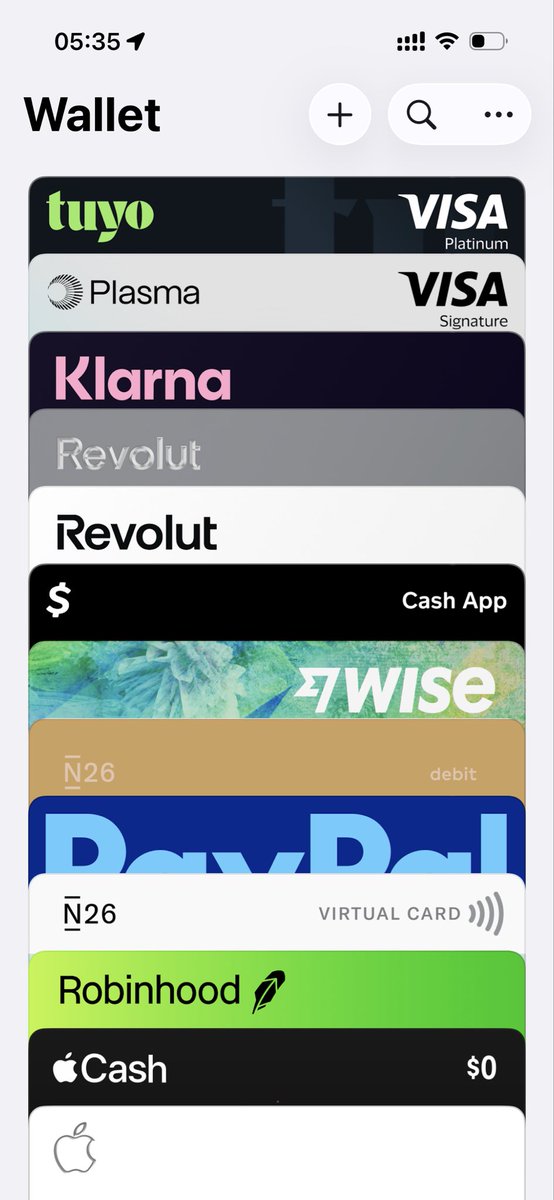
@Revolut is the most obvious example, now operating as a global super-app with 65M+ users and integrated crypto functionality.
> Others are pushing toward fully self-custodial neobanking.
Platforms like @KASTxyz, @AviciMoney, and @superformxyz are experimenting with accounts where the underlying “bank account” is actually a smart contract wallet.
> Then there are exchange-linked cards, where spending connects directly to trading balances.
Examples include cards from @Bybit_Official, @MetaMask, and lending platforms like @Nexo.
Different architectures.
Same direction.
Across the entire space a few product trends are becoming obvious:
> stronger emphasis on self-custody
> stablecoin or crypto cashback rewards
> low or zero FX fees
> Solana-native payment cards optimized for fast settlement
> direct integration with DeFi yield strategies
Your debit card may soon be connected directly to on-chain yield.
And several platforms are already scaling quickly.
• @RedotPay has reached millions of users and billions in card spend.
• @gnosispay is building programmable Visa cards on Safe smart accounts.
• @Fiat24Official provides wallet-linked Swiss IBAN accounts.
• Meanwhile apps like @BleapApp, @holyheld, @ready_co, @UR_global, and @zothdotio are experimenting with different combinations of cards, wallets, and stablecoin savings.
Each approach looks slightly different.
But zoom out and the structure becomes clear.
Stablecoins are building the global money rails.
Crypto neobanks are building the interfaces that people actually use.
And historically, in every payment network, the companies controlling distribution end up capturing the most value.
Which means the most important question in this ecosystem may not be:
Who issues stablecoins.
But rather:
Who puts them in the hands of the world.

English

We’re excited to welcome @BleapApp as a Community Partner of Dutch Blockchain Week 2026.
Bleap is building innovative solutions within the digital asset ecosystem and plays an active role in connecting communities across Web3. Their involvement helps strengthen the broader network around DBW and brings even more Web3 people into the conversation.
Great to have the Bleap team on board as we continue to grow the ecosystem together.
DBW | June 22–28, 2026
DBW Summit | June 24–25 | Johan Cruijff ArenA
Tickets | dutchblockchainweek.com/tickets/

English

we have an exciting partnership announcement with @DutchBlockWeek
it’s official, you can now receive $30 cashback when you buy any Dutch Blockchain Week ticket using a Bleap card
on top of the fixed cashback amount, use Bleap15 for an additional 15% off
it really is that simple

English

tradfi taught people something completely backwards
that controlling your own money is dangerous and that giving it to someone else is safer
so people hand their money to institutions that can:
> freeze it
> block it
> delay it
> question it
or decide where it can and can’t go.
and somehow that is called protection?
the idea that someone else can control your money and stop you using it was framed as safety
when really…it’s the opposite of safety and ownership, it’s control
English