BowTiedNeuron | Neuroscientist

7.6K posts

BowTiedNeuron | Neuroscientist banner
BowTiedNeuron | Neuroscientist

BowTiedNeuron | Neuroscientist

@BowTiedNeuron

Teaching you about neuroscience, nootropics and human physiology 🧠 Get my “Intro to Neurotransmitters” ebook for free in the link below👇

Katılım Mart 2023
421 Takip Edilen12.7K Takipçiler
Sabitlenmiş Tweet
BowTiedNeuron | Neuroscientist
BowTiedNeuron | Neuroscientist@BowTiedNeuron·
Nootropic Review: N-Acetyl Semax Over the past 6 months, I’ve been experimenting with N-Acetyl (NA) Semax For me, Semax produces a very smooth nootropic feel that kicks in within minutes and lasts all day. My mind feels very sharp when I’m on it, and cognitive tasks are less mentally taxing than usual. The feeling it provides me consists of a subtle mental clarity, generally enhanced cognition, improved short-term memory, and increased visual acuity. It’s a similar feeling to that of other compounds that act via neurotrophic factors, but is less outright stimulatory than 4-DMA-7,8-DHF and much more profound than lion’s mane, which gives it a unique feel along with other benefits such as: Less brain fog after intense exercise - This is an issue that has plagued me for a while, especially on weekends when I choose to lift in the morning. Normally, I’m out of commission mentally for several hours after a workout, but using Semax before (and sometimes after) my workout cuts that mental recovery time significantly. It also improves the quality of my lifts by improving my concentration and mind-muscle connection. Potentiation of dopaminergics - This is similar to the effect described in a research study where Semax potentiates the dopamine release induced by amphetamine, and it actually translates to my use (even if I take the dopaminergic several hours after Semax). When I’m using Semax, the effects of dopaminergic compounds (mainly caffeine and sabroxy in my case, not amphetamine) are greatly enhanced—so much so that I’d express caution when pairing the two because it can easily lead to overstimulation. I’m able to use half the dose of sabroxy I normally do, and it still feels like a huge dose. As a result, this combo has been my go-to for productivity and focus. Increased libido - Considering my libido is already normal/high, this can be annoying at times, but is welcome at others. This usually takes a few hours to kick in, but can definitely last 24+ hours in my experience. It’s not an overwhelming uptick, but it’s definitely noticeable. Improved reaction time - This is something that has stuck around even when I’m not using Semax or other neurotrophic nootropics, but is a new phenomena in my life. This is most notable to me when I drop things or knock them off a table. In the past few months, I’ve begun catching things at an alarming rate, which I never did before. Whether or not I can contribute this to Semax entirely is unknown, but it didn’t start until after I started using it. Usage and Dosing: After realizing that it had potent acute effects for me, I determined that I wanted to use Semax intermittently for the time being, as opposed to running a cycle of it (which is still likely better for some use cases, just not necessary for my current goal of acute cognitive enhancement). Although I do still plan to run a cycle in the future. Concerning dose, I’ve stuck to 300-600mcg per day, either all in the morning or split up between morning and noon, and have had great success with that. I’ve tried 900+mcg several times, but I noticed no more benefit than the lower doses. I’ve been trialing NA Selank as well, but I only feel like I derive a benefit from it when used in conjunction with Semax as the two are highly synergistic. If I was dealing with anxiety or other mood issues its effects may have been more apparent, but I’m not, so Selank alone hasn’t done much for me. Using the two together though seems to improve the effects I see when using just Semax, especially reducing brain fog after exercise. Conclusion: In all, NA Semax is definitely not a magic bullet for productivity or focus, but it’s definitely been a great tool for me in improving those when I want/need it most. In an acute context, the most useful effects i’ve noticed are the improved mental recovery after a hard workout and the potentiation of dopaminergic compounds, but the uptick in mental clarity and cognition are certainly great as well. For a full breakdown on Semax, check out the article I wrote linked below and in my bio
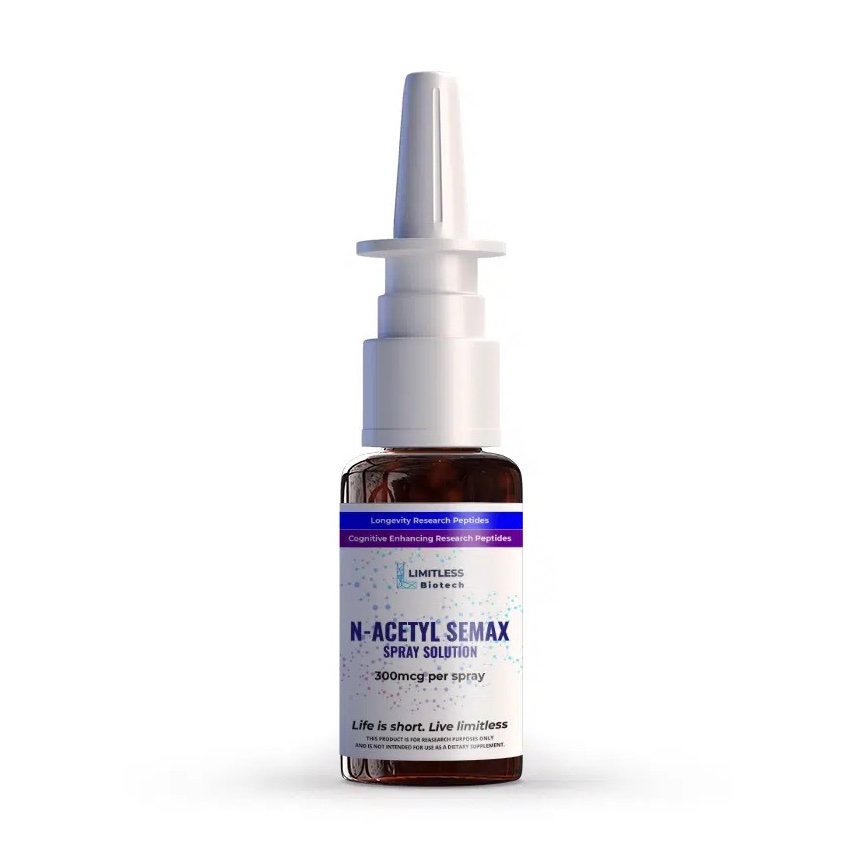
BowTiedNeuron | Neuroscientist tweet media
English
10
12
189
20.9K
BowTiedNeuron | Neuroscientist retweetledi
BowTiedPhys
BowTiedPhys@BowTiedPhys·
It's been a long 10 months of building & tweaking our formula. But today - @JavazaOfficial is finally live. We’ve been critical of the standard practices within the supplement industry over the last couple years. - Inefficacious dosing (rarely enough for even a Wistar rat) - White label, drop shipped Alibaba-coded snake oil - Amino spiked protein blends Kept telling myself: “critiques are fine - but what’re you gonna do about it?” This side of the sovereign health space. The elite salutogenic practitioners. The ones operating at S-tier metabolic health. We deserve better. So we refused to compromise. Now - flavor, potency, & efficacy are dialed in right where we want it. And we did it with the highest quality, all-natural ingredients: > 20g Grass-Fed Whey Protein > 100mg Pure Arabica Caffeine > 200mg L-Theanine > Naturally Sweetened w/ Organic Stevia & Monk Fruit > Organic Cacao Powder We wanted cleaner than an artificially sweetened whey. We wanted more than a regular morning coffee. We wanted to challenge the Blackrock-sponsored Starbucks slop status quo. And that's why we're building Javaza. We wouldn’t be where we're at today without the support of this community. Many thanks are in order. To the Jungle & adjacent communities as a whole. To so many for the continued guidance. And to the many who've inspired us to build something we believe in. We know you're going to love what we've crafted. Javaza - Strength in Every Sip
BowTiedPhys tweet media
English
72
40
289
92.6K
BowTiedNeuron | Neuroscientist
BowTiedNeuron | Neuroscientist@BowTiedNeuron·
@KennyPowers304 It’s sweet like sugar. I like to use it as a sweetener in tea, but it’s a pleasant toss and wash supplement bc of the taste. I’ve never tried dissolving in milk directly though, so I can’t say for sure
English
0
0
1
64
Kenny Powers
Kenny Powers@KennyPowers304·
@BowTiedNeuron how does it taste? pretty neutral or kinda bad like beta-alanine? Would I be able to mix it in with raw milk in the evening before bed?
English
1
0
1
61
BowTiedNeuron | Neuroscientist retweetledi
BowTiedNeuron | Neuroscientist
BowTiedNeuron | Neuroscientist@BowTiedNeuron·
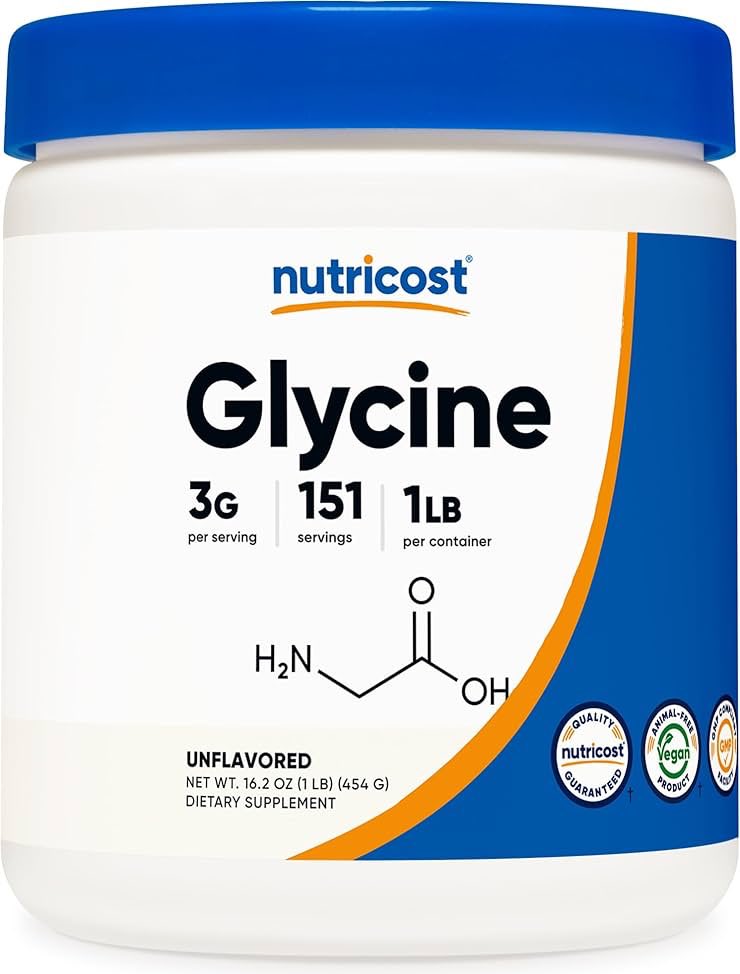
Glycine is one of the most simple but effective sleep supplements out there It’s been shown to: - improve subjective sleep quality - shorten latency to sleep and deep sleep - improve subjective feeling upon waking - lower body temperature (essential for sleep) 3-6g before bed
BowTiedNeuron | Neuroscientist tweet media
English
3
4
30
3K
BowTiedNeuron | Neuroscientist retweetledi
BowTiedNeuron | Neuroscientist
BowTiedNeuron | Neuroscientist@BowTiedNeuron·
Nootropic Review: Rhodiola Rosea What it is How it Works My Protocol Moving Forward Rhodiola Rosea has a long history of use as an adaptogenic herb, well known for its anti-stress, anti-fatigue, and cognitive enhancing effects. Recent studies have even shown that it also boasts other medicinal properties including anti-aging, anti-cancer, anti-depressive, anti-inflammatory, and antioxidant effects. On the surface it seems like a miracle herb, but I wanted to see if Rhodiola could be used as a nootropic. By that I mean taking it only a few times a week and observing any short-term enhancements I may notice throughout the day, as opposed to taking it every day like many people and most studies do. To be frank, it was a great success. Mechanism Before we get into my experience with Rhodiola I want to briefly discuss its mechanisms. They aren’t fully fleshed out, but this is partly because this species of plant has well over 100 compounds in it. Some of its most notable mechanisms may include: -MAO inhibition (increase in monoamines) -Influence HPA axis (anti-stress) -Increasing activity of endorphins (anti-stress) -Scavenging of reactive oxygen species (anti-stress) MAO inhibition sticks out to me the most (the brain is kinda my thing). Monoamine Oxidase is the enzyme responsible for breaking down monoamines in the brain (dopamine, serotonin, norepinephrine). Its inhibition leads to an increase of activity from these molecules since they aren't being broken down. This is likely a large contributor to the antidepressant and cognitive enhancing effects of Rhodiola. I could go on for a while, it really does so much, but in short Rhodiola works to help the body fight stress (physical and mental) and fatigue generally. Rhodiola has 2 primary active components; Salisrosides and Rosavins. These are the two main “forms” you’ll see being sold. This review was done with a high Salidrosides (3%) extract as they tend to be more stimulating, while its counterpart high in Rosavins is more relaxing. This choice was nothing more than a personal preference as to what I wanted to get out of Rhodiola. If you plan to try rhodiola and want a more calming experience, look into an extract high in Rosavins. My Subjective Experience Since I started using Rhodiola there have been 2 kinds of days for me: 1) Those that I have super high energy all day 2) And those that don’t take Rhodiola That’s somewhat hyperbolic, but when I take Rhodiola my energy is sky high all day. Even after stressful, mentally taxing mornings doing surgeries (on mice) or other things that would normally wipe me out for a bit I still have extremely high levels of energy going into the late afternoon. Over the course of my experimentation with this herb, I haven't experienced a single true “afternoon crash”. Most I’ve felt when taking it is a slight energy dip. Not a crash, but a slight decrease for about an hour after lunch. Even then I maintain mental clarity and focus. The crash I normally have isn't entirely detrimental. It usually hinders my mental performance for about an hour after lunch, but it's been great to be able to rid myself of it at will. That’s really only a side benefit to taking Rhodiola though. The real upside is the mental clarity and energy it provides over the course of a whole day. Looking back through my notes during this experimental phase that’s what stuck out to me the most. A lot of “I’ve never had so much energy while driving home” and “energy is still high into late afternoon”. When I refer to the “energy” when taking Rhodiola it's not just a mental feeling, it's a physical manifestation. There's a stark contrast to the “mental energy” that other nootropics provide by boosting acetylcholine or dopamine, and the sheer lack of fatigue I feel when taking Rhodiola. The best way I can describe it is by calling it a whole body energy. That's where Rhodiola truly shines in a nootropic context. The ability to shrug off stressor after stressor and still have immense amounts of energy to take on the rest of the day. It’s unlike any other nootropic or supplement I’ve ever tried. On that same note, I did not observe an immediate effect when taking Rhodiola. It took about 4-5 hours for me to notice any effects when taken. This may be skewed because I had a cup of coffee everyday I took it though. Well, not everyday. Once I tried to go cold turkey on caffeine using this as a way to counterbalance withdrawal induced fatigue. Didnt work one bit. Was tired all day and had a headache at points. Horrible failure of a test. However, Rhodiola is highly synergistic in my experience. High energy in the morning fueled by caffeine, crash mitigated and energy extended by Rhodiola. My Protocol Moving Forward Based on my overwhelmingly positive experience with Rhodiola, it's going to become a permanent addition to my supplement stack as a nootropic moving forward. I’ll outline my general use cases moving forward below: -when I know I have an excessively busy day ahead of me (500mg) -if I need/want high energy all day (500mg) My specific use cases here are limited due to the nature of its effects, but Rhodiola will be an extremely effective tool for me moving forward. I’d like to note that this isn't the usual use case for Rhodiola. Based on both the literature and anecdotal reports it seems to be best used as a long-term supplement taken everyday to help the body deal better with stress and fatigue long-term. My goal with this experimental phase was to test it in a ‘nootropic context’, meaning to observe its short-term effects on me throughout the day. In this context it was a great success for me. It’s not the average ‘nootropic’, but it works extremely well for me and I’ll continue to use it like this moving forward. However, I do plan to test it as a supplement in the near future, taking it every morning for ~4 weeks and seeing how it works. That’ll require its own “Supplement Review” in the future. Conclusion To sum it up, my experience with Rhodiola Rosea was fantastic. If I’m being honest I didn’t expect much from it at all when I ordered it. The first time I used it I was so shocked by the results I labeled it as a one off experience. There was no way it could be that great. Right? I was wrong, it is that great. It’s 10 times better than I anticipated. The overall lack of mental and physical fatigue I feel is unmatched, and I’m still shocked by the amount of energy I have on my drives home at the end of the day when I take it. Supplementary Info Brand used: Nootropics Depot Extract: 3% Salisroside Form: Pills Height & Weight for dosage comparison: 6’2, 190lbs A link to the exact product I used for this review is provided below
BowTiedNeuron | Neuroscientist tweet media
English
17
14
180
28K
BowTiedNeuron | Neuroscientist
BowTiedNeuron | Neuroscientist@BowTiedNeuron·
You’re probably underestimating how much hydration impacts your cognitive performance and mental state The electrolyte balance in the brain is extremely delicate, so any disruption in that can have serious consequences
English
1
1
18
1.2K
BowTiedNeuron | Neuroscientist retweetledi
BowTiedNeuron | Neuroscientist
BowTiedNeuron | Neuroscientist@BowTiedNeuron·
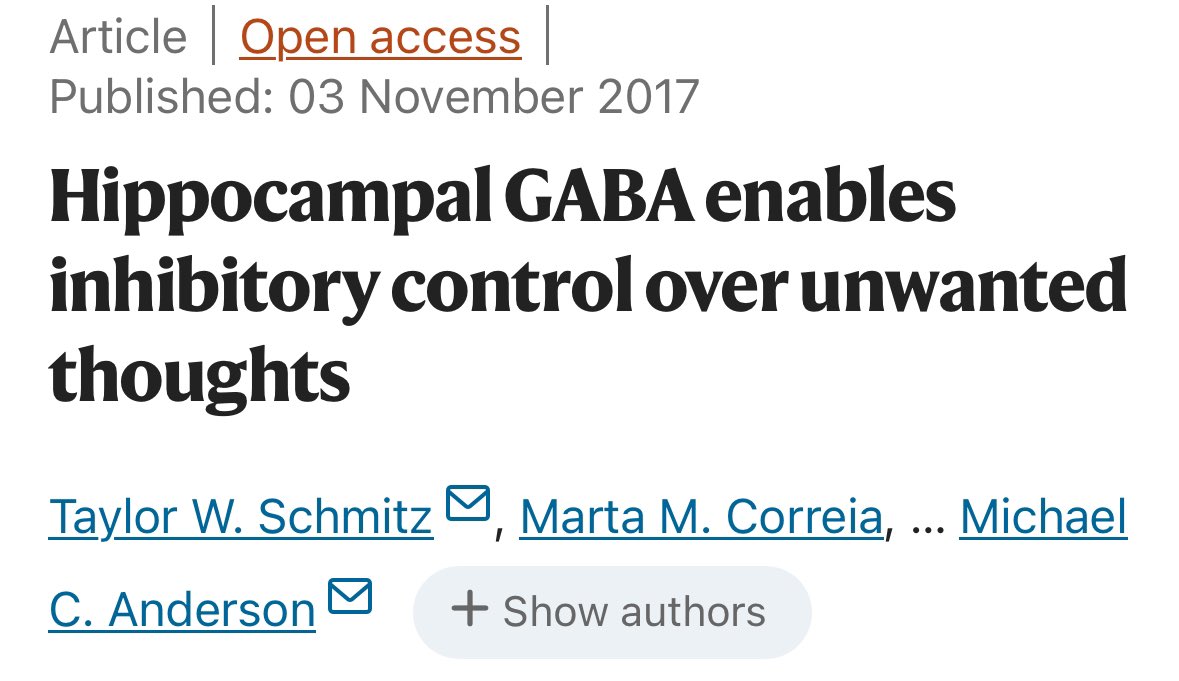
Intrusive/unwanted thoughts are caused by a lack of GABA signaling Basically, if you don’t have enough GABA, then you can’t suppress unwanted thoughts This is especially true of memory related thoughts and GABA in the hippocampus Lack of GABA = Inability to suppress retrieval of unwanted thoughts by the hippocampus (the brains memory center) Interestingly enough, this effect is independent of top-down control from the prefrontal cortex (PFC) PFC projecting neurons activate GABA interneurons in hippocampus to suppress unwanted thoughts/memories, but if your GABA neurons are dysfunctional for some reason, they won’t be able to suppress memory retrieval
BowTiedNeuron | Neuroscientist tweet media
English
10
18
172
26.5K
BowTiedNeuron | Neuroscientist retweetledi
BowTiedNeuron | Neuroscientist
BowTiedNeuron | Neuroscientist@BowTiedNeuron·
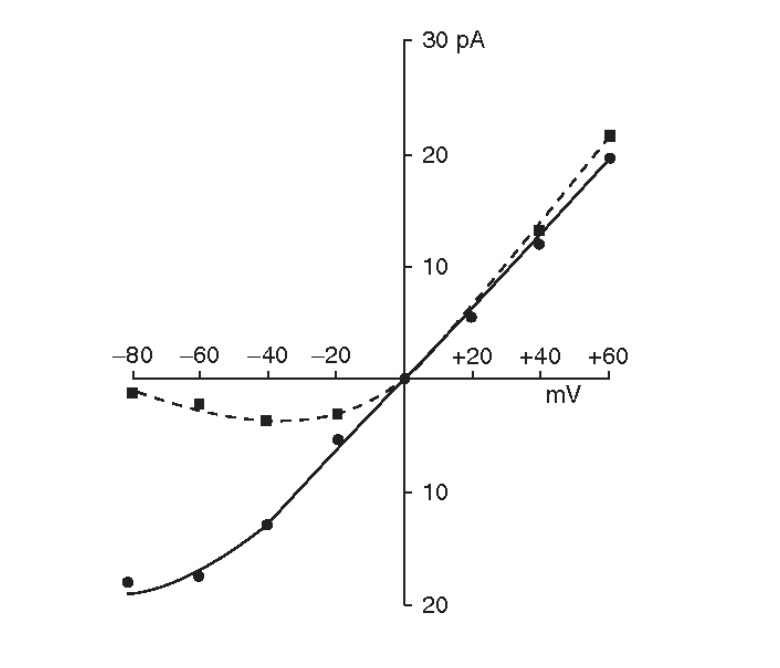
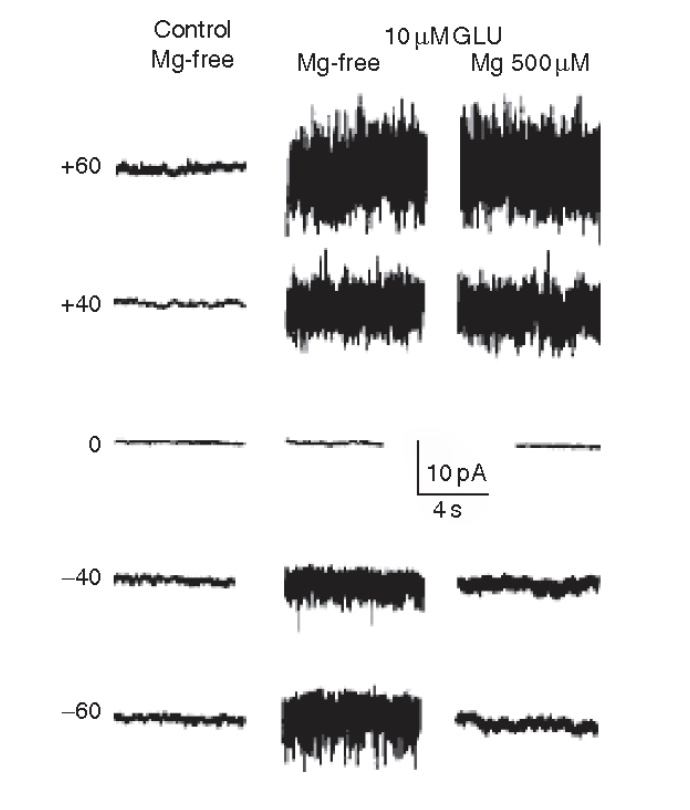
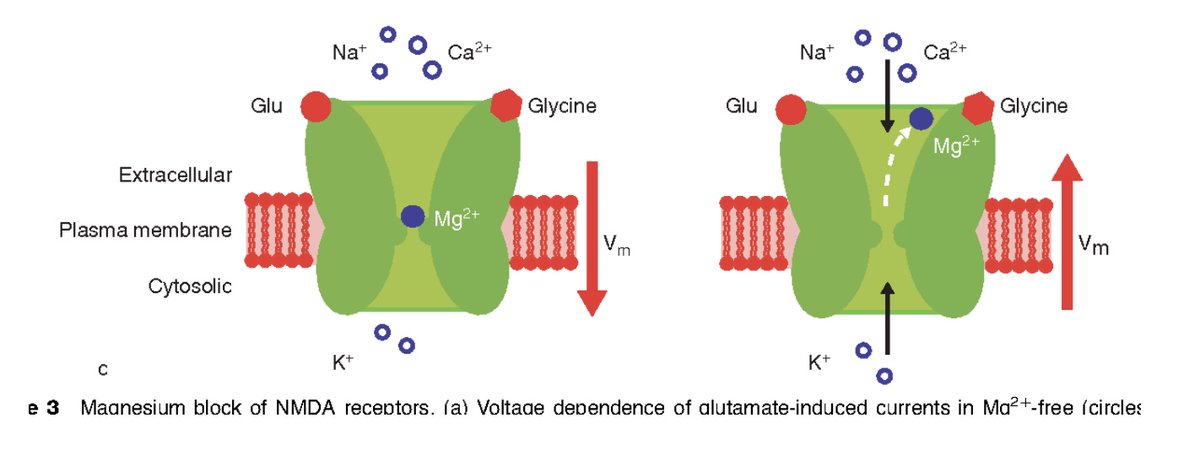
The Connection between Magnesium and NMDA Receptor Why you Need to Supplement Magnesium for the Good of your Brain The NMDA glutamate receptor is the most unique receptor in the brain. Its a ligand gated ion channel like many others but it contains a physical blocker, a magnesium ion. Why does it matter? This channel is permeable to calcium as well as sodium. Calcium is an important signaling molecule, but too much of it drives cell disfunction and death. More on that later. The structure of this channel allows a magnesium ion to sit in it and block ion flow even if glutamate (and glycine a co-agonist) are bound. At rest, the inside of neurons are more negative than the outside of the neuron (about -70 mV), and this attracts the very positive magnesium ion (Mg2+) to sit inside the channel with hopes of entering the very negative space, though it won't. It will just block the action of this receptor when the inside of the neuron is more negative than the outside, or has a negative membrane potential. When the neuron is just as positive or more positive than its outside, the magnesium ion leaves the channel and ions can flow freely when glutamate is bound. An image of this phenomena is shown below. What does this look like in practice though? This graph shows the total current flow through an NMDA channel at different membrane potentials with or without magnesium present (dotted = magnesium, filled = no magnesium). When magnesium is present the channel allows nothing through until a positive membrane potential, when there is no negative charge to attract it anymore. Without magnesium present ions can flow through freely at any membrane potential. The same is shown in the next image, the "spikes" show current and the flatter the line the less ions moving through the channel. With no magnesium, the channel is active at negative membrane potentials, whereas only positive with magnesium. But if the channels are blocked what causes the neuron to become more positive? Activation of AMPA receptors, the other ionotropic glutamate receptor. These are a simple receptor, letting sodium (Na+) into the neuron when activated, making its inside more positive. Therefore, sufficient AMPA activity is needed to allow NMDA receptors to activate. At least when there's sufficient magnesium present. Lack of magnesium allows NMDA receptors to be activated when they normally wouldn't be able to under the correct physiological condition. Today, most are magnesium deficient. Lack of magnesium means a lower concentration in the brain, and therefore more NMDA activity (which isn't a good thing). This receptors activity is supposed to be gated until the neuron receives enough input elsewhere. Then when it finally activates is allows calcium (Ca2+) into the cell. Calcium, being an important signaling molecule, triggers signaling cascades and drives synaptic plasticity, generally to make the connection of the two neurons stronger in some way (like inserting more receptors into the membrane). This mechanism is heavily implicated in learning and memory, but it's thrown out of whack with a lack of magnesium. Excess calcium is also neurotoxic, and can kill neurons if too much is allowed in. This is a driving force of cell death in ischemic stroke. No blood flow means lack of oxygen and glucose, leads to lack of ATP, this causes membrane potential to not be upheld and glutamate to not be reuptaken out of synapses, action potentials fire like crazy activating receptors, and a huge influx of calcium leads to cell death. Supplementing magnesium helps make sure there is a high enough concentration in your brain to actively block NMDA receptors when it should, protecting you against glutamate excitotoxicity, and overall decreasing glutamate activity. This is one of the primary ways magnesium has anti-anxiety effects when taken. In short; take your magnesium, your brain will thank you.
BowTiedNeuron | Neuroscientist tweet mediaBowTiedNeuron | Neuroscientist tweet mediaBowTiedNeuron | Neuroscientist tweet media
English
8
34
208
110.6K
BowTiedNeuron | Neuroscientist retweetledi
BowTiedNeuron | Neuroscientist
BowTiedNeuron | Neuroscientist@BowTiedNeuron·
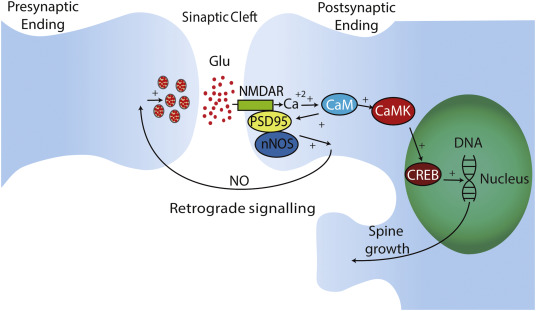
Nitric Oxide doesn't only influence blood flow in the body, it's also a Neurotransmitter. NO is produced in response to NMDAR activation, which allows calcium to enter the cell. Ca2+ enters through NMDAR → Ca2+ activates CaM → activating nNOS → creating NO NO then travels to the presynaptic neuron, stimulating more glutamate release. It's part of a positive feedback loop important in learning and memory. This feedback loop helps induce Long Term Potentiation (LTP), a form of synaptic plasticity that increases the strength of connections. Its a physical change that helps induce learning and memory. The NO loop increases NMDAR signaling, increasing Ca2+ influx which has other effects, like altering gene expression to induce growth of the dendritic spine as a form of LTP.
BowTiedNeuron | Neuroscientist tweet media
English
5
7
54
18.5K
BowTiedNeuron | Neuroscientist
BowTiedNeuron | Neuroscientist@BowTiedNeuron·
More on the role of the NMDAR in learning/memory/plasticity
BowTiedNeuron | Neuroscientist@BowTiedNeuron

A quick lesson: Long-Term Potentiation A form of synaptic plasticity heavily implicated in learning and memory Long-Term Potentiation (LTP) is a type of synaptic plasticity at glutamate synapses. It involves the strengthening of synapses based on its recent activity. LTP is mediated by the NMDA glutamate receptor, which is a special type of ionotropic receptor. It's special because it allows calcium (Ca2+) into the neuron when open. Calcium is more than just a positive ion in neurons, it functions as a messenger molecule. When it enters the neuron it binds to calmodulin, an intracellular calcium sensor, that goes onto activate Calcium–calmodulin dependent protein kinase II (CaMKII). CaMKII is the effector enzyme here, and when it's active it can either modulate activity of AMPA receptor, increasing their activity, or facilitate the entry of more AMPA receptors into the membrane. Both of these actions result in the synapse becoming 'stronger', since it will have an increased response to glutamate. A simplified before and after is shown here. As a result of increased activity, the postsyanptic neuron increases the number of AMPA receptors in its membrane. (enzymes not shown, but those explain how it happens) This whole process happens in response to large increases in calcium influx, a result of a lot of glutamate release. This change lasts hours or even longer at the synapse and is constantly changing. Receptors are being inserted/removed and modulated all the time in response to that synapses activity. The opposite of this also exists, known as Long-Term Depression. In response to little activity, AMPA receptors are modulated to be less effective, or removed from the membrane entirely.

English
0
0
3
969
BowTiedNeuron | Neuroscientist
BowTiedNeuron | Neuroscientist@BowTiedNeuron·
More on magnesium and the NMDAR x.com/bowtiedneuron/…
BowTiedNeuron | Neuroscientist@BowTiedNeuron

The Connection between Magnesium and NMDA Receptor Why you Need to Supplement Magnesium for the Good of your Brain The NMDA glutamate receptor is the most unique receptor in the brain. Its a ligand gated ion channel like many others but it contains a physical blocker, a magnesium ion. Why does it matter? This channel is permeable to calcium as well as sodium. Calcium is an important signaling molecule, but too much of it drives cell disfunction and death. More on that later. The structure of this channel allows a magnesium ion to sit in it and block ion flow even if glutamate (and glycine a co-agonist) are bound. At rest, the inside of neurons are more negative than the outside of the neuron (about -70 mV), and this attracts the very positive magnesium ion (Mg2+) to sit inside the channel with hopes of entering the very negative space, though it won't. It will just block the action of this receptor when the inside of the neuron is more negative than the outside, or has a negative membrane potential. When the neuron is just as positive or more positive than its outside, the magnesium ion leaves the channel and ions can flow freely when glutamate is bound. An image of this phenomena is shown below. What does this look like in practice though? This graph shows the total current flow through an NMDA channel at different membrane potentials with or without magnesium present (dotted = magnesium, filled = no magnesium). When magnesium is present the channel allows nothing through until a positive membrane potential, when there is no negative charge to attract it anymore. Without magnesium present ions can flow through freely at any membrane potential. The same is shown in the next image, the "spikes" show current and the flatter the line the less ions moving through the channel. With no magnesium, the channel is active at negative membrane potentials, whereas only positive with magnesium. But if the channels are blocked what causes the neuron to become more positive? Activation of AMPA receptors, the other ionotropic glutamate receptor. These are a simple receptor, letting sodium (Na+) into the neuron when activated, making its inside more positive. Therefore, sufficient AMPA activity is needed to allow NMDA receptors to activate. At least when there's sufficient magnesium present. Lack of magnesium allows NMDA receptors to be activated when they normally wouldn't be able to under the correct physiological condition. Today, most are magnesium deficient. Lack of magnesium means a lower concentration in the brain, and therefore more NMDA activity (which isn't a good thing). This receptors activity is supposed to be gated until the neuron receives enough input elsewhere. Then when it finally activates is allows calcium (Ca2+) into the cell. Calcium, being an important signaling molecule, triggers signaling cascades and drives synaptic plasticity, generally to make the connection of the two neurons stronger in some way (like inserting more receptors into the membrane). This mechanism is heavily implicated in learning and memory, but it's thrown out of whack with a lack of magnesium. Excess calcium is also neurotoxic, and can kill neurons if too much is allowed in. This is a driving force of cell death in ischemic stroke. No blood flow means lack of oxygen and glucose, leads to lack of ATP, this causes membrane potential to not be upheld and glutamate to not be reuptaken out of synapses, action potentials fire like crazy activating receptors, and a huge influx of calcium leads to cell death. Supplementing magnesium helps make sure there is a high enough concentration in your brain to actively block NMDA receptors when it should, protecting you against glutamate excitotoxicity, and overall decreasing glutamate activity. This is one of the primary ways magnesium has anti-anxiety effects when taken. In short; take your magnesium, your brain will thank you.

English
1
0
2
1.1K
BowTiedNeuron | Neuroscientist
BowTiedNeuron | Neuroscientist@BowTiedNeuron·
The NMDA receptor is the most fascinating receptor in the entire body, and its responsible for many of the psychological effects caused by ketamine, magnesium, glycine, and agmatine Here’s why: Most receptors just need their ligand to bind in order to activate, the NMDAR needs 3 distinct events to occur in order to activate 1. Binding of Glycine or serine, which is important since most people think of glycine as purely an inhibitory neurotransmitter. It’s not 2. Binding of glutamate. Pretty obvious given it’s the primary ligand for the receptor 3. Sufficient activation of surrounding AMPA receptors to remove the magnesium block from the pore in the receptor. This is why Mg deficiency can cause anxiety, racing thoughts, etc. because you’re lacking a crucial regulator of excitatory glutamate activity All of these factors make the NMDA receptor a “coincidence detector”, because all 3 of these conditions must happen at the same time in order for the receptor to activate The significance of this is that this receptor is a key player in all cognition and neuronal signaling (present at 70+% of all synaptic connections in the brain) as well as learning/memory (key modulator of synaptic plasticity), which is why its activation is so tightly regulated Too much NMDAR activity and you’ll damage your brain cells, but too little and you’re left with schizophrenic symptoms It’s fascinating to say the least
English
1
2
14
1.9K
BowTiedNeuron | Neuroscientist
BowTiedNeuron | Neuroscientist@BowTiedNeuron·
@wellONEness I like it much more than the other saffron extract I tried from nootropics depot I’ve recently implemented it again—this time daily—and am a huge fan of it so far. Provides a nice boost in mood and cognition
English
1
0
1
162
BowTiedNeuron | Neuroscientist
BowTiedNeuron | Neuroscientist@BowTiedNeuron·
After not loving the first Saffron extract I tried last year, I’m really excited to give this one a try I’ll share my initial thoughts later today
BowTiedNeuron | Neuroscientist tweet media
English
4
1
27
25.6K
BowTiedNeuron | Neuroscientist retweetledi
BowTiedNeuron | Neuroscientist
BowTiedNeuron | Neuroscientist@BowTiedNeuron·
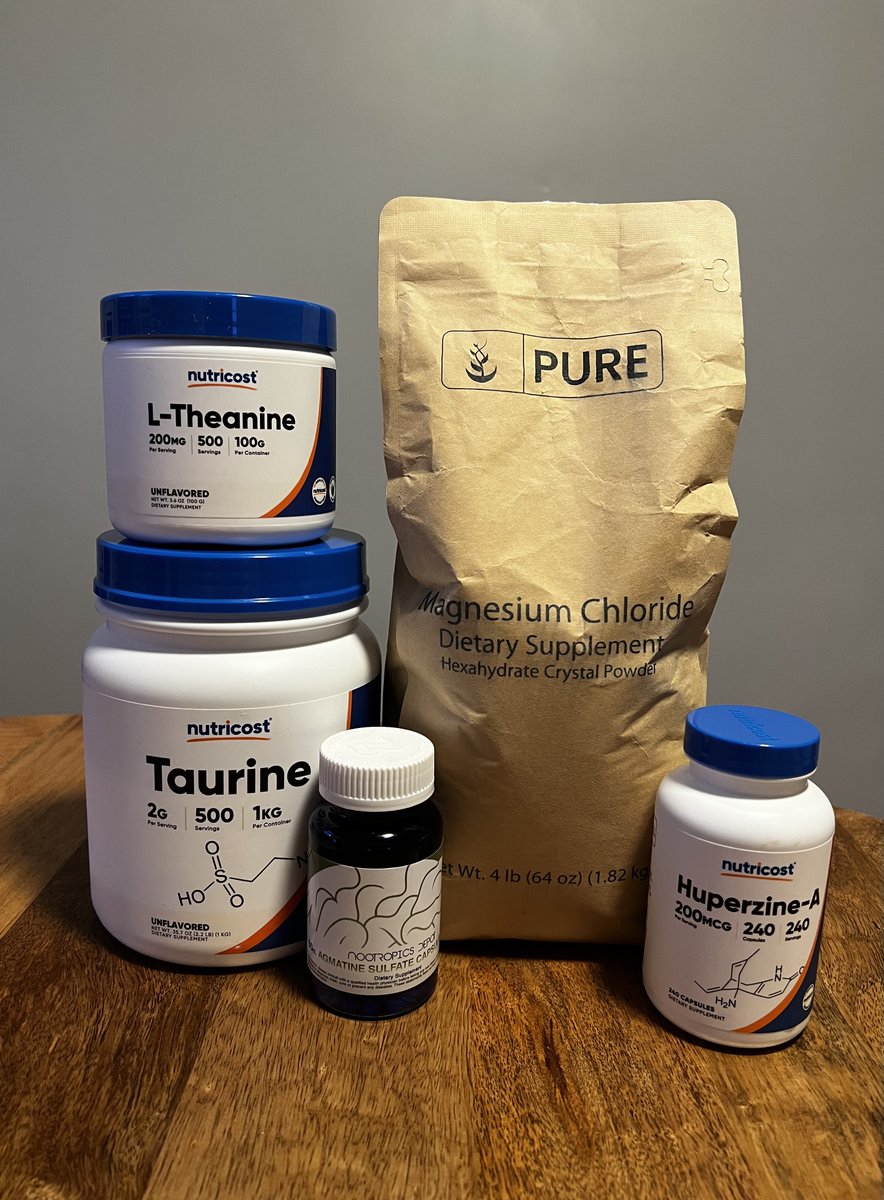
Simple yet Effective Neuroprotection Stack: - Huperzine A (AchEI & NMDAR antagonism) - Magnesium (NMDAR blockade) - Taurine (GABA/Glycine agonism & Ca2+ regulator) - Agmatine Sulfate (NMDAR antagonism & nNOS inhibition) - L-Theanine (AMPA antagonism & glutamine uptake inhibition) Cholinergic activity itself is neuroprotective, which is why other AchEIs (Donepezil & Galantamine) are used to treat Alzheimers. Because of that, any cholinergic nootropic or herb (nicotine, bacopa, etc) can replace Huperzine, although its NMDA antagonism is a nice benefit. Otherwise, the rest of this stack works to decrease glutamate signaling or increase GABA signaling which protects against glutamate induced excitotoxicity directly.
BowTiedNeuron | Neuroscientist tweet media
Română
8
24
284
42.6K
BowTiedNeuron | Neuroscientist retweetledi
BowTiedNeuron | Neuroscientist
BowTiedNeuron | Neuroscientist@BowTiedNeuron·
8 Supplements that Instantly Crush Anxiety Thread🧵
BowTiedNeuron | Neuroscientist tweet media
English
24
77
861
179.9K
BowTiedNeuron | Neuroscientist retweetledi
BowTiedNeuron | Neuroscientist
BowTiedNeuron | Neuroscientist@BowTiedNeuron·
What makes these 5 alpha reductase-dependent neurosteroids so important is that they act on both synaptic and extrasynaptic GABA receptors This has a large impact on the excitability of neurons by increasing inhibitory “tone” Basically, it makes neurons less likely to fire by enhancing GABA dependent inhibition. Both at the synapse, and that of free floating GABA outside the synapse If you don’t have these steroids, neurons are more excitable overall, which can lead to side effects like anxiety and depression with use of 5ar inhibitors
BowTiedNeuron | Neuroscientist tweet media
Abud Bakri MD@AbudBakri

This is why I am concerned about using a 5 alpha reductase inhibitor like finasteride Yes, DHT is a powerful androgen But more importantly, it is converted in metabolites in the brain, neurosteroids like 3α-Androstanediol that are anti-anxiety and important for mental health hypothesis: low DHT levels are a contributor for male mental health issues, independently from low T, especially when the ratio of T/DHT is off

English
2
10
48
16.5K