Conner Whitten

6.1K posts

Conner Whitten banner
Conner Whitten

Conner Whitten

@BrainBehavTalk

Behavioral Neuroscience PhD candidate studying the effects of social dominance on social defeat stress 🐹 Payómkawichum - Pechanga Band (He/His)

Katılım Nisan 2010
1K Takip Edilen520 Takipçiler
Sabitlenmiş Tweet
Conner Whitten
Conner Whitten@BrainBehavTalk·
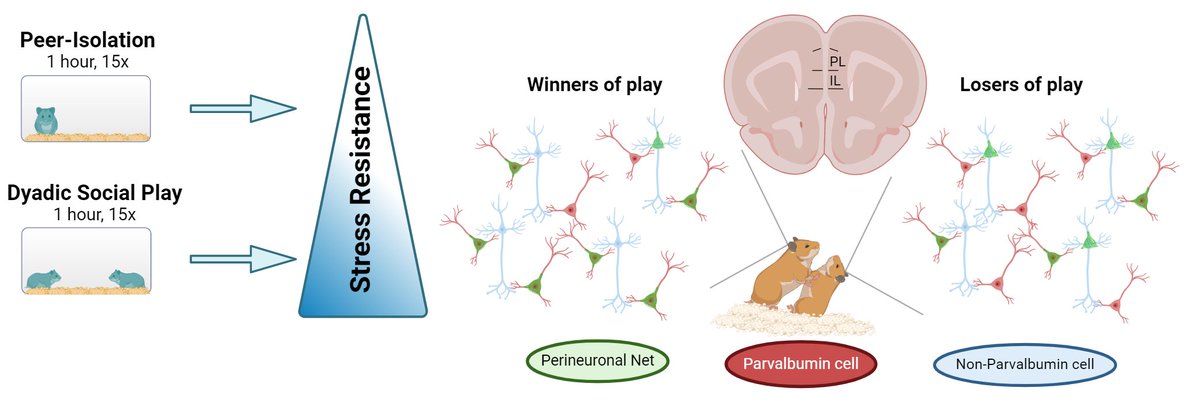
Im excited to share that I published a paper in Developmental Psychobiology: "From Play Date to Stress Fate: Juvenile Social Play Rescues Stress‐Induced Changes in Adult Social Behavior" dx.doi.org/10.1002/dev.70…
Conner Whitten tweet media
English
1
1
8
946
Conner Whitten retweetledi
Culture
Culture@notgwendalupe·
Bad Bunny's Full Super Bowl Halftime show #SuperBowl
English
689
57.9K
224.4K
4.4M
Conner Whitten retweetledi
Niko McCarty.
Niko McCarty.@NikoMcCarty·
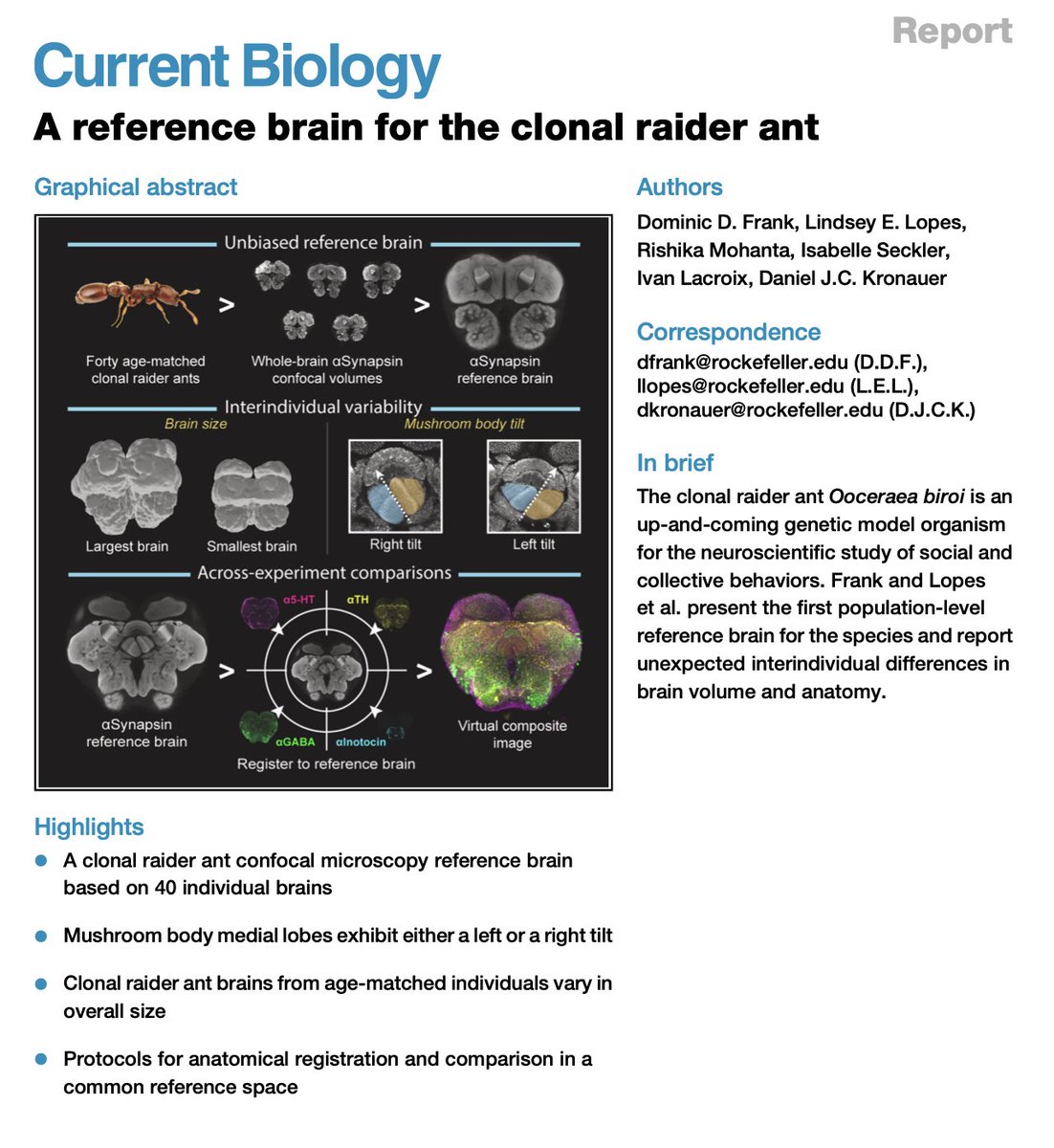
A couple years ago, scientists made the first transgenic ants. They inserted a "calcium reporter" gene into their neurons, exposed the ants to pheromones, and then watched as individual neurons fired in response. The same group has now released the first "reference brain" for these ants. They imaged 40 individual brains using confocal microscopy and mapped their synaptic regions, major brain structures, and even the locations of neurotransmitters like GABA and serotonin. Genetically-identical ants had up to a 2-fold difference in brain size, which is weird. I'm really excited about this paper, though, because these maps are a starting point to do FUNCTIONAL experiments across the whole brain of eusocial insects. With this map, and the ability to engineer these ants with calcium sensors, we can do some wild experiments: - Map all the neural circuits involved in these ants' behaviors. Which neurons "fire" when ants are foraging, reproducing, and so on? - Map all the circuits involved in pheromone sensing. - Begin manipulating their neural circuits using optogenetics. Can we change the behavior of an entire colony by writing new information into their neurons? - Map neural circuits at various stages of development. How does the brain develop in these ants, is the size of each brain associated with an ant's role (forager or nurse, for example), and how do neural dynamics shift as those roles are adopted? - Is the sociality of ants learned or genetically "baked in"? How do the neural circuits underlying social behaviors change over the life of an ant? There is so much fun to be had.
Niko McCarty. tweet media
English
1
12
103
8.3K
Conner Whitten retweetledi
William A. Wallace, Ph.D.
William A. Wallace, Ph.D.@drwilliamwallac·
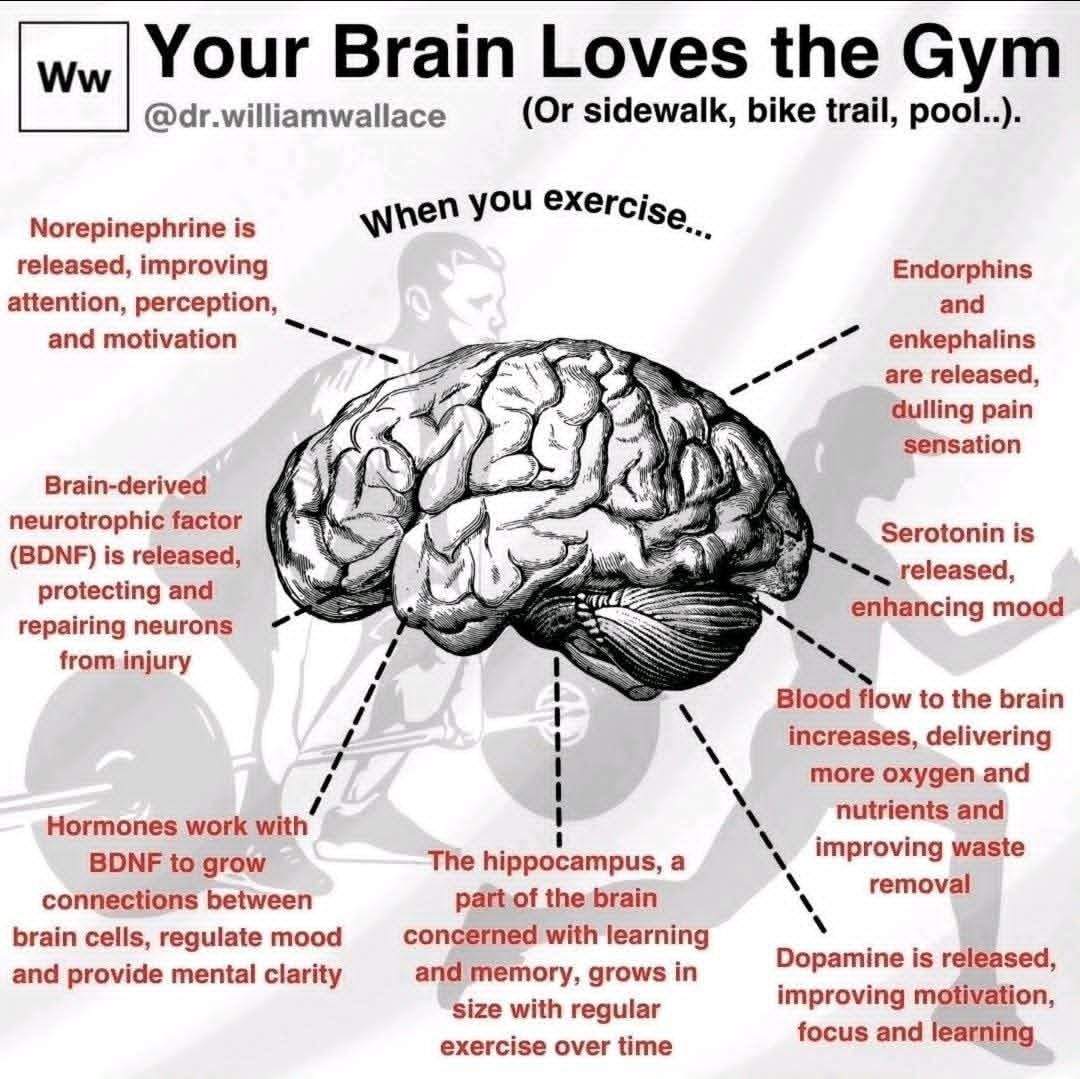
A simple guide to what exercise does to your brain Exercise isn’t just about muscles; it’s one of the most powerful tools for brain health. Every workout sends chemical signals and blood flow to your brain that sharpen thinking, boost mood, and protect neurons. Here’s how: 1️⃣ Sharper Focus & Motivation Exercise releases norepinephrine and dopamine, improving attention, perception, drive, and learning. 🟢 Example: That “clear-headed” feeling after a run isn’t random, it’s brain chemistry. 2️⃣ Better Mood & Stress Relief Serotonin rises, enhancing mood and reducing anxiety. Endorphins & enkephalins dull pain and create a sense of well-being (“runner’s high”). 🟢 Example: A brisk walk can boost serotonin almost as effectively as some mood interventions. 3️⃣ Neuron Growth & Repair Exercise stimulates BDNF (brain-derived neurotrophic factor) — a growth factor that protects neurons, repairs them after stress, and grows new connections. 🟢 Example: Think of BDNF as “fertilizer” for brain cells. 4️⃣ Stronger Memory & Learning With consistent exercise, the hippocampus (key for memory and learning) grows larger and works more efficiently. 🟢 Example: Regular cardio has been shown to preserve memory with age. 5️⃣ More Oxygen & Nutrients Increased blood flow delivers fuel and removes waste, keeping brain cells healthier for longer. 🟢 Example: This is one reason exercise reduces risk of neurodegenerative disease. Exercise is a full-brain workout. It boosts focus, mood, memory, and resilience - while protecting neurons from stress and aging. Every time you move, your brain thanks you.
William A. Wallace, Ph.D. tweet media
English
5
119
424
11.1K
Conner Whitten retweetledi
nature
nature@Nature·
These are 10 essential science reads from the past year go.nature.com/4pOVCD8
English
8
59
289
53.6K
Conner Whitten retweetledi
Alex Kwan 關進晞
Alex Kwan 關進晞@kwanalexc·
We used rabies virus 👾 to map how #psilocybin modifies long-range circuits 🧠, revealing network-specific reorganization that we didn’t expect. Full study now online at Cell @CellCellPress Paper 👉 doi.org/10.1016/j.cell… Thread for a synopsis 👉 x.com/kwanalexc/stat…
Alex Kwan 關進晞 tweet media
Alex Kwan 關進晞@kwanalexc

New preprint + thread 🧵 #Psychedelics induce the formation of new synapses, but where do they connect? Our rabies tracing study reveals that #psilocybin shifts connectivity across specific cortical networks. biorxiv.org/content/10.110… 1/12

English
5
44
175
22.5K
Conner Whitten retweetledi
The Figen
The Figen@TheFigen_·
Jackie and Shadow, a famous bald eagle pair from Big Bear Valley, protect their new eaglets amid 150 mph winds and heavy snowfall.
English
357
5.2K
59.4K
1.6M
Conner Whitten retweetledi
Nirosha J. Murugan
Nirosha J. Murugan@niroshajmurugan·
Fascinating @ScienceMagazine article on magnetosensing and its unexpected ties to mechanobiology. A pigeon’s semicircular canal in their ears, long regarded as a fluid-filled labyrinth that acts as a kind of gyroscope for orientation (much like our own) - is receptive to weak electromagnetic fields, activating evolutionary conserved brain circuits for motion and spatial orientation. What other tissues are covertly multiplexing multiple streams of biophysical information to regulate health and behaviour? Link: science.org/doi/10.1126/sc…
Nirosha J. Murugan tweet media
English
27
121
513
32.2K
Conner Whitten retweetledi
ACNP
ACNP@ACNPorg·
Congratulations to Harriet De Wit, Ph.D., for being awarded the Barbara Fish Memorial Award! ☺️ #ACNP2026 Please click here ➡️tinyurl.com/2ndexz5k to watch the nominator video by Abraham Palmer, Ph.D.
ACNP tweet media
English
1
12
27
5.5K
Conner Whitten retweetledi
Matt Hill
Matt Hill@canna_brain·
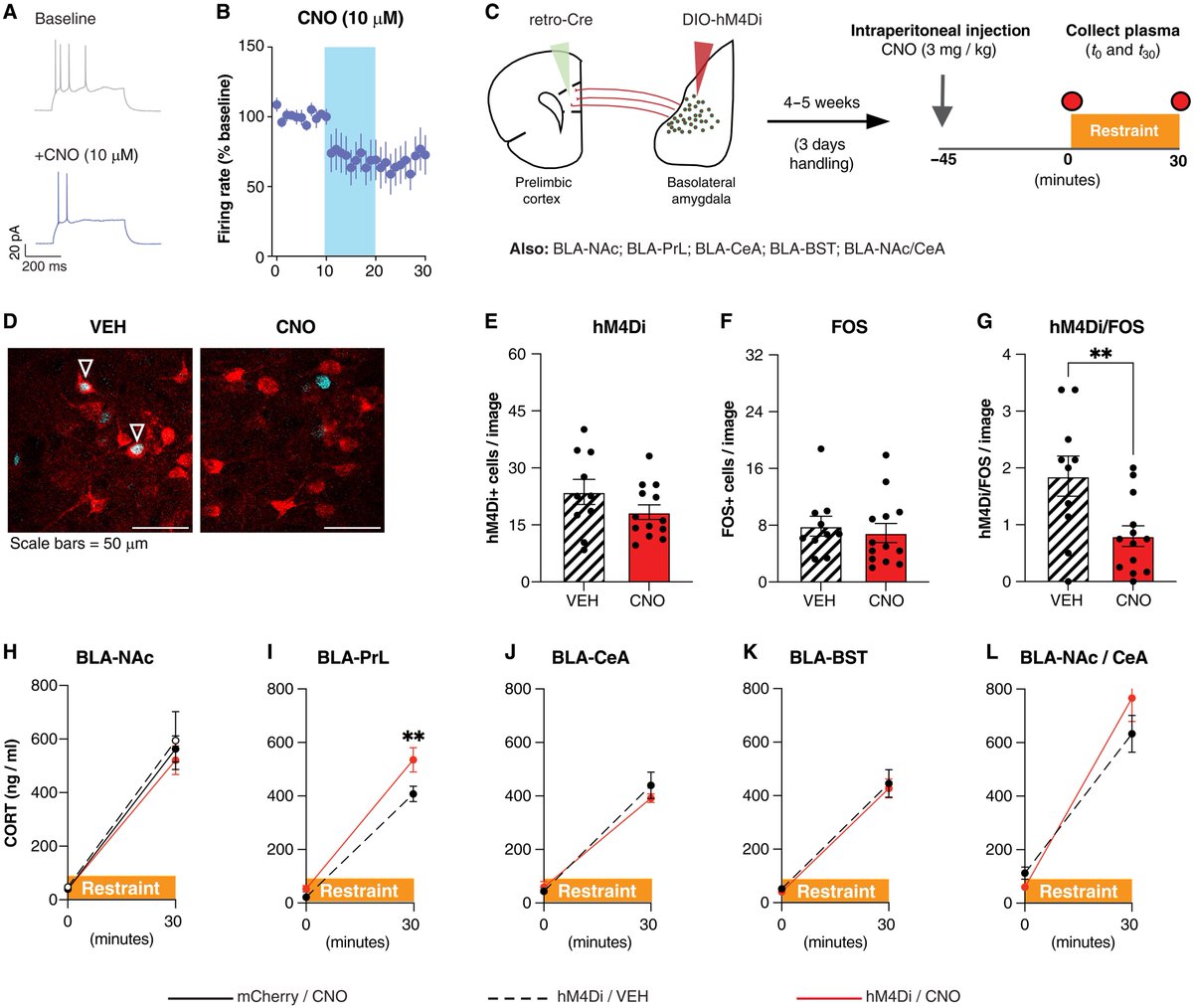
Ultimately, no single or dual projection population emanating from the BLA was responsible for stress-induced glucocorticoid secretion, suggesting that it is likely a distributed network of projection neurons in the BLA which cooperatively orchestrate hormonal responses to stress
Matt Hill tweet media
English
1
3
10
1.2K
Conner Whitten retweetledi
Matt Hill
Matt Hill@canna_brain·
More so, Rob established a roadmap of BLA projection neurons to a host of target regions and examined which ones were sensitive to exposure to stress
Matt Hill tweet media
English
1
3
5
864
Conner Whitten retweetledi
Matt Hill
Matt Hill@canna_brain·
New lab paper drop, this one has been a long time coming! Driven by Rob Aukema (now a postdoc with Kerry Ressler) this paper answered the lingering question of what role the amygdala plays in stress-induced neuroendocrine responses. Link for paper in Science Advances👇👇
English
1
9
37
3.2K
Conner Whitten retweetledi
Matt Hill
Matt Hill@canna_brain·
New very cool paper from @RyanMcPickle, collaborating with our group on establishing predictors of cannabis self administration in rats. What comes out on top……baseline stress hormone levels and performance in tasks of behavioral flexibility.
Neuropsychopharmacology@npp_journal

#ThisWeekInNPP In 🐀 model of cannabis vapor administration, ⬆️baseline corticosterone, ⬇️ morning anandamide, ⬇️set-shifting, ⬆️visual discrimination, &⬆️adolescent social grooming predicted ⬆️ responding for cannabis vapor / @RyanMcPickle nature.com/articles/s4138…
English
0
5
14
5.5K
Conner Whitten retweetledi
Red Pill USA
Red Pill USA@Red_Pill_US·
@MmisterNobody Barbara O'Neal explains, SLEEP. 😴
English
86
1.8K
15.8K
1.2M
Conner Whitten retweetledi
Andrew D. Huberman, Ph.D.
Andrew D. Huberman, Ph.D.@hubermanlab·
Dr Matt Hill @canna_brain did an awesome job explaining the knowns and unknowns about cannabis on the HLP. And we met in a “discussion” right here on @x (just kidding; sorta). But in all seriousness, he knows the data inside out hubermanlab.com/episode/dr-mat…
English
9
17
188
75.8K
Conner Whitten retweetledi
Truth Will Reign 👑
Truth Will Reign 👑@TruthWill_Reign·
The Art of Misdirection.
Truth Will Reign 👑 tweet media
English
456
15.5K
65.7K
1.7M
Conner Whitten retweetledi
LongTime🤓FirstTime👨‍💻
LongTime🤓FirstTime👨‍💻@LongTimeHistory·
She's had a Green Card for 50 years—ICE just detained her anyway. Lewelyn Dixon is a permanent resident legally living in U.S. since 1975. She may have been targeted because her niece works for a Democratic state legislator speaking out against Trump's immigration policies. Emily Cristobal said her family has not "been informed of anything by ICE," relating to the reasoning for her aunt's detention. The 64-year-old Lewelyn Dixon immigrated to the U.S. from the Philippines when she was 14. She currently works as a laboratory technician at the University of Washington. #DemVoice1 #wtpBLUE #DemsUnited
English
3.2K
13.3K
50.1K
5.7M
Conner Whitten retweetledi
Kelton Minor
Kelton Minor@keltonminor·
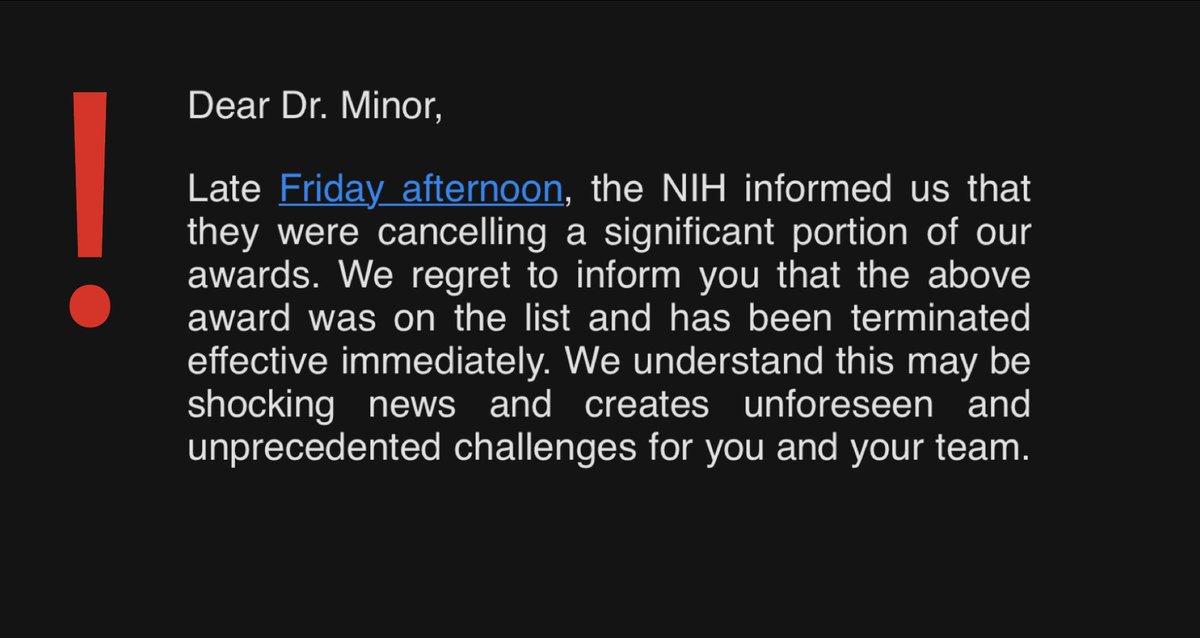
There are days in life that shake you. I’m shattered 💔 to share that I just found out that the US Government terminated my 2024 NIH Director’s Early Independence Award (~$2 million), threatening my long-promised assistant professor job at @Columbia & academic career... 1/🧵
Kelton Minor tweet media
English
355
1.1K
5.1K
613.7K
Conner Whitten retweetledi
Raven Baxter, Ph.D.
Raven Baxter, Ph.D.@ravenscimaven·
Reporter: Tell me about your work in teaching science to kids and minorities Me: I want the whole world to learn science not only specific groups of people Reporter: Tell me about why you create content for women in STEM Me: My content is actually for everyone Their headline:
Raven Baxter, Ph.D. tweet media
English
24
297
2.2K
45.3K
Conner Whitten retweetledi
nature
nature@Nature·
In an unprecedented move, the US National Institutes of Health has begun mass terminations of research grants that fund active scientific projects because they no longer meet “agency priorities”. go.nature.com/4i2EaIb
English
127
958
1.8K
377.3K