The M3.6 quake in the Central Graben of the North Sea on 26 January is one of a number of M3+ events in the vicinity of the Elgin, Franklin and Shearwater fields in recent years including a M4.2 in 2019. @BGSseismology
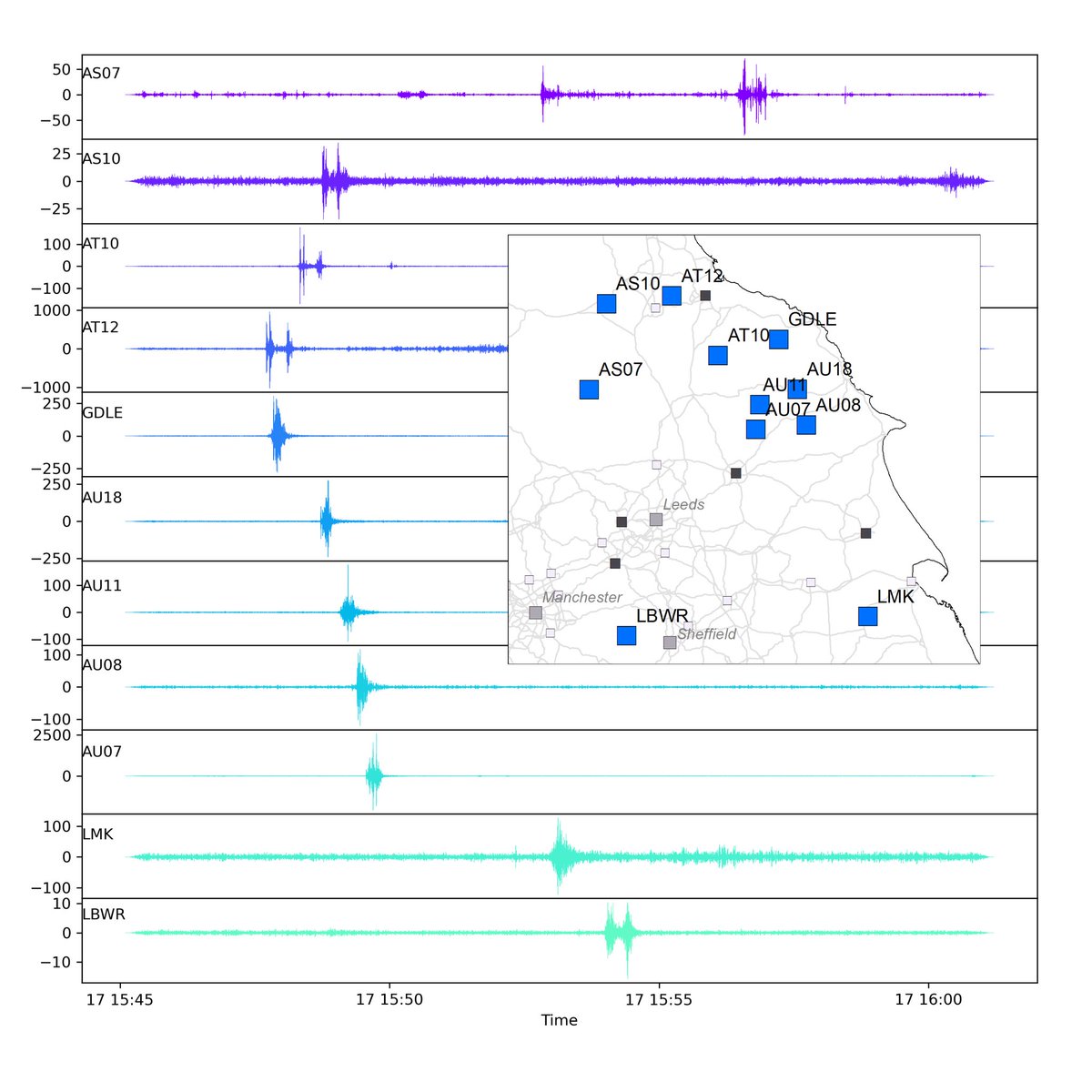
Signals from suspected sonic boom in NE England recorded on BGS seismometers. Low apparent velocity across array is consistent with speed of sound for possible source over North Sea. @BGSseismology@BritGeoSurvey
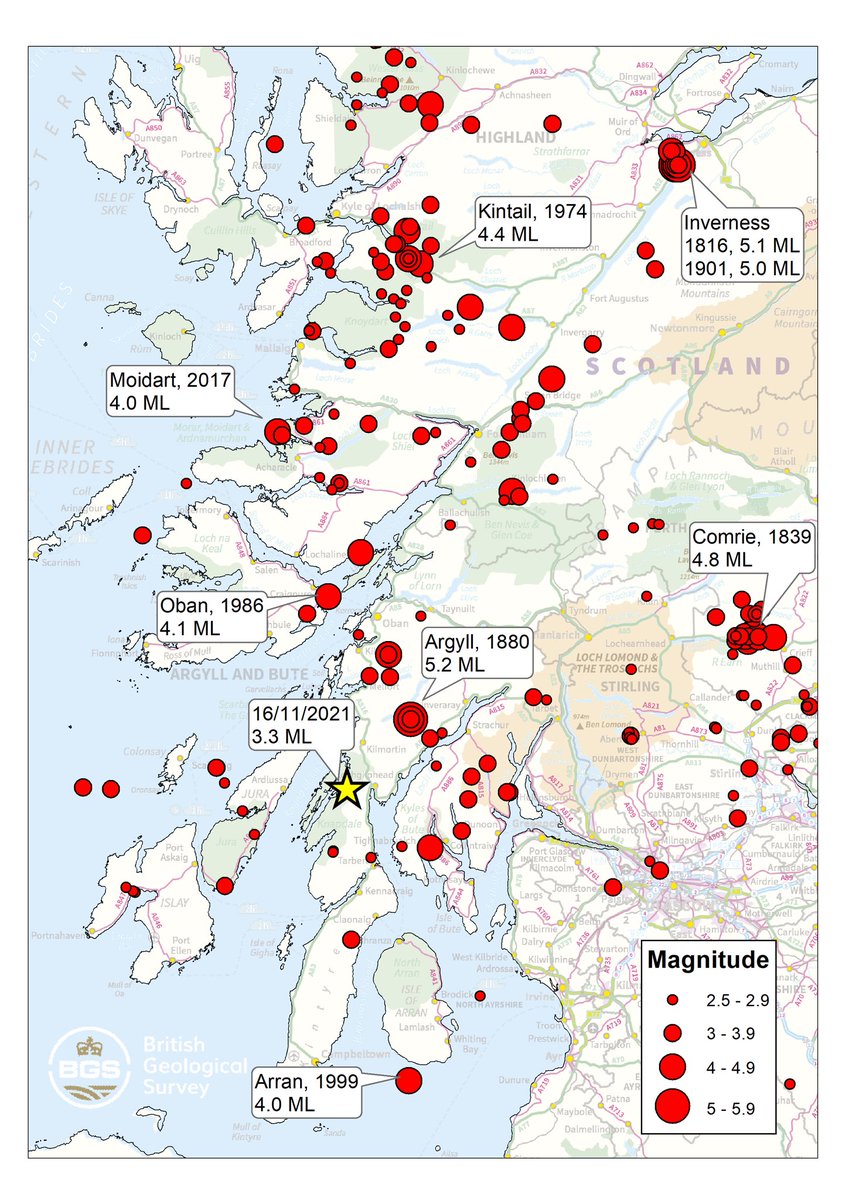
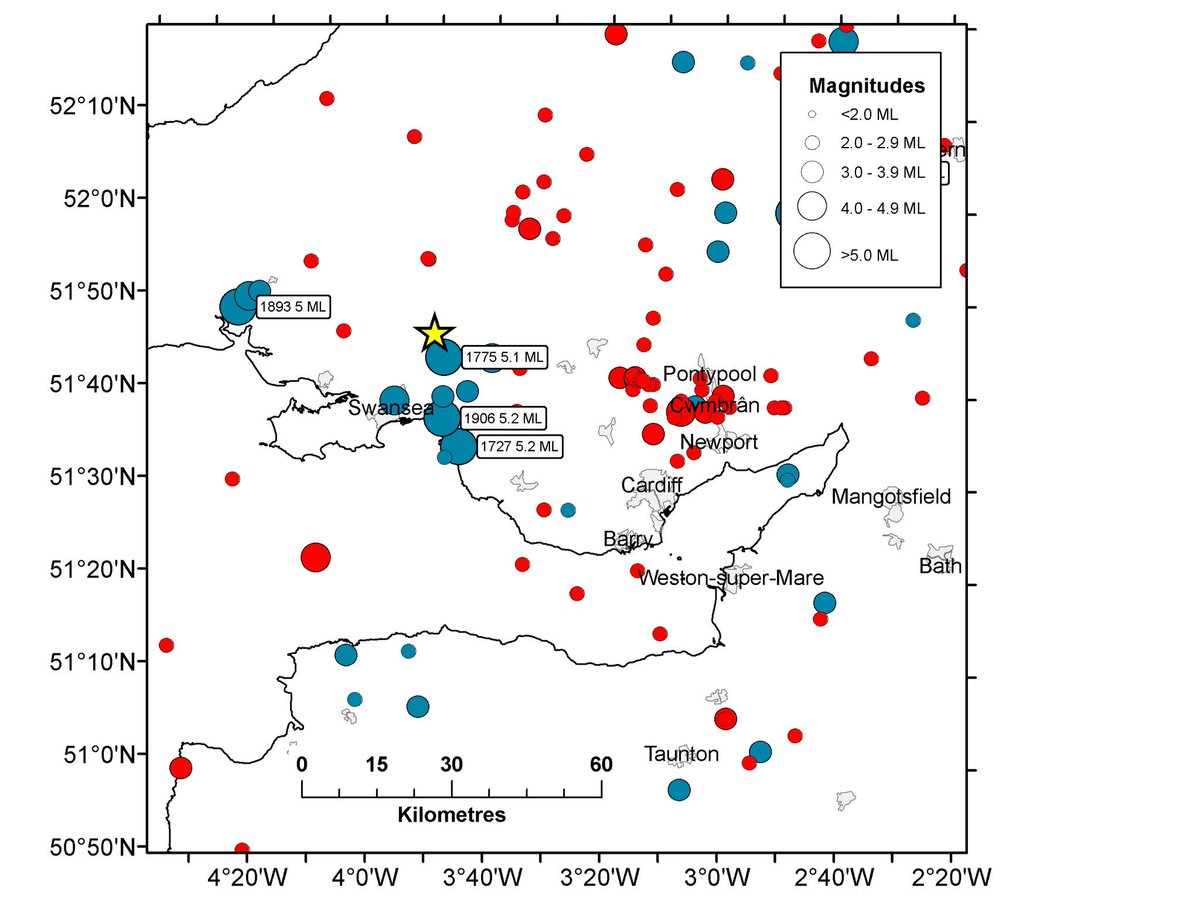
The epicentre of the M3.3 quake in Scotland on 16/11/2021 was approx 25 km southwest of Scotland’s largest known quake. A M5.2 in 1880 that was felt throughout Scotland and N Ireland. Map shows historical seismicity.
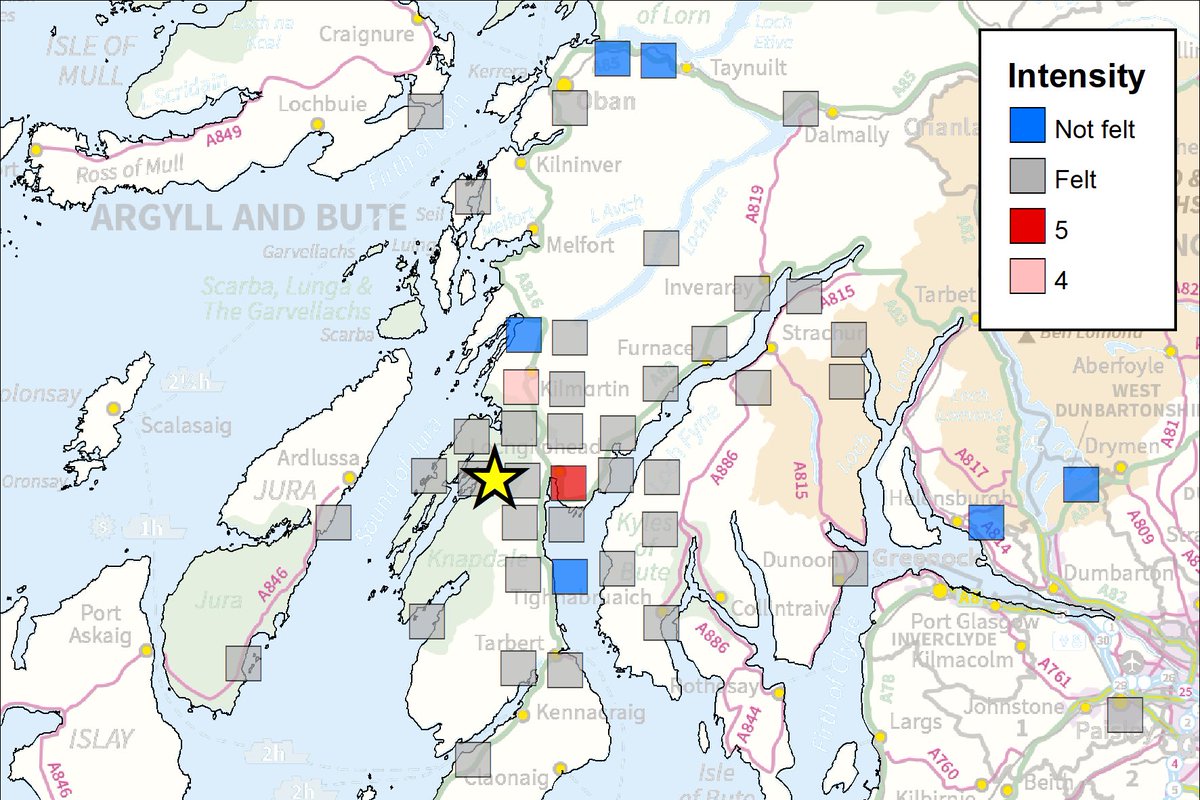
BGS received over 100 reports from people who felt the M3.3 quake in Scotland on 16/11/2021.
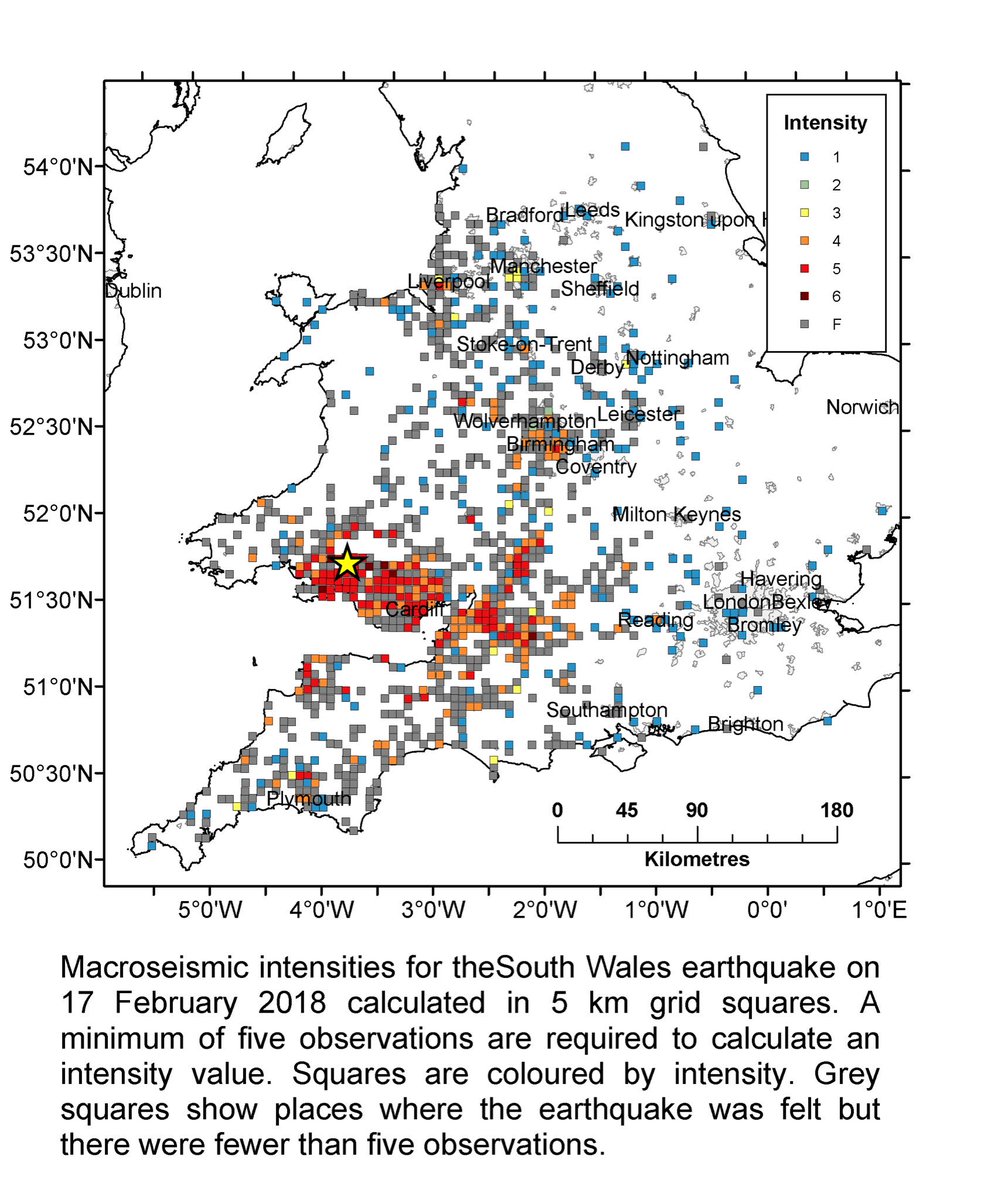
Intensities are calculated for 5 km squares. @BGSseismology@stevejgibbons
@EricFielding@BritGeoSurvey@BGSseismology Good question. Needs a closer look but I think these are sites where the background noise is very low anyway, so the increases just reflect the variability at those sites.
Change in RMS amplitude of daytime seismic noise at BGS seismometers in the two weeks since start of Covid-19 lockdown compared with the rest of 2020. Most sites showing noise levels down by 20-50%. @BritGeoSurvey@BGSseismology
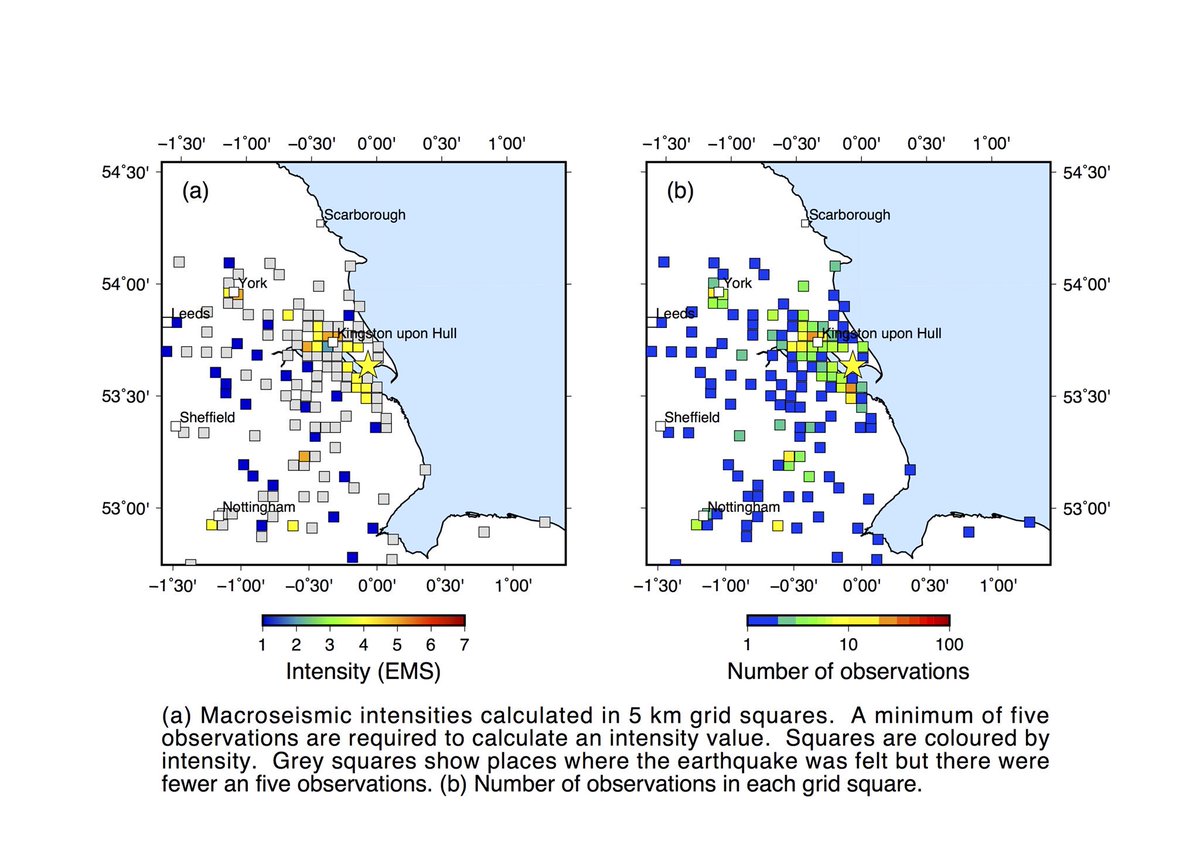
This map show where last night’s quake near Grimsby was felt and how strongly. Max intensity 5 EMS. Felt as far away as York. @BritGeoSurvey@BGSseismology
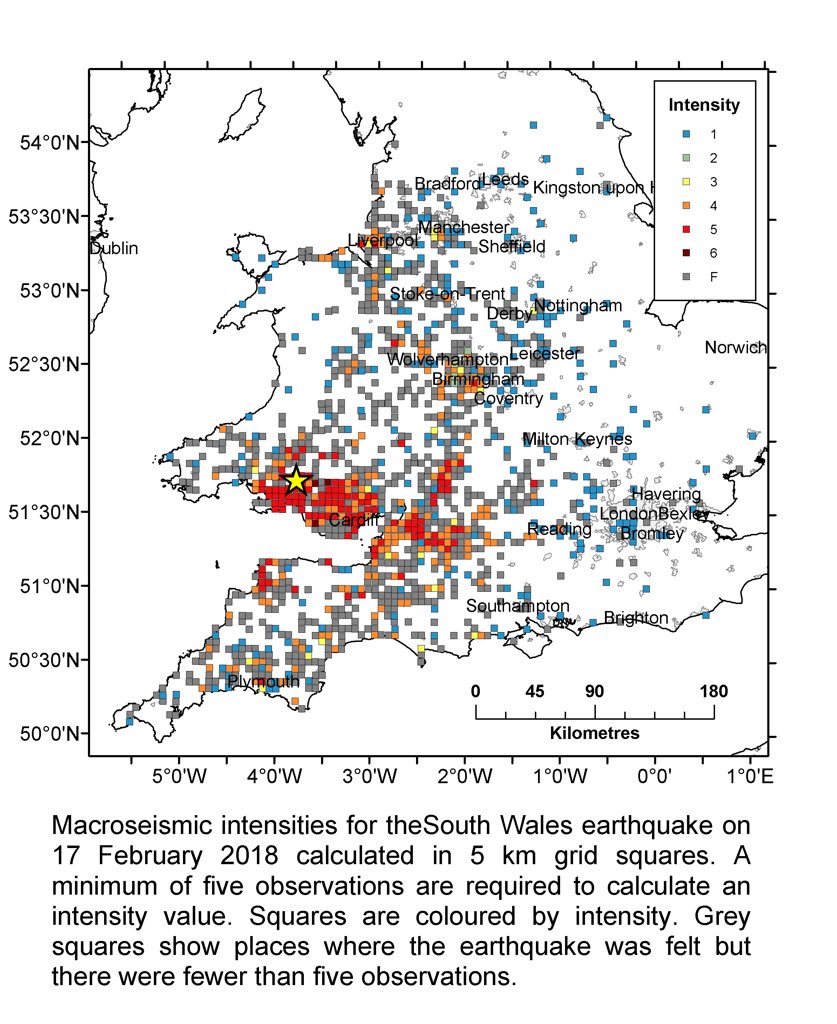
Peak ground velocities recorded by seismometers across the UK from the magnitude 4.4 ML earthquake in South Wales on 17/02/2018. @BritGeoSurvey@BGSseismology
Ground motions from the South Wales quake recorded at BGS seismic stations across the UK. Records show ground displacement in nanometers and are ordered by distance. The waves take about 10 seconds to reach the closest station, 60 km away. @BritGeoSurvey@BGSseismology