Brian Neil
504 posts

Brian Neil
@BrianNeilCorp
IT Professional. Reader. Learner. Gamer,. Music Lover and Lego Aficionado. Stay curious. 🇦🇺 📖 📚 🧱
Katılım Kasım 2024
369 Takip Edilen370 Takipçiler
Sabitlenmiş Tweet

Good morning everybody. We should follow each other if you relate to the following topics.
Meditation
Mindfulness
Stillness
Brain health
Fitness
Xbox
Prince
Jeff Buckley
Live music
Reading
New technology
IT career advice
Productivity
Loss
Astrology
Movies
TV Series
Lego!
I follow back. No really…I do.
English

@BrianNeilCorp @ReadingThePlay I’ve checked out. Used to watch 3-4 games a weekend. Have only watched my raiders play rest of the time I just chek the scores
English

Just checked the stats on NRL app.
11 set restarts and 9 penalties in 49 minutes. How are you people watching this rubbish? #nrlstormbroncos
English
Brian Neil retweetledi

@elonmusk I find the algorithm much better. My feed is showing me my interests. Same with the search area.
English
Brian Neil retweetledi

... What an absolute #C64 time capsule. Loving the humour, reviews, & how vivid each page looks. Also, obsessed with the covers by the legendary Oliver Frey. ... but seriously what's with all the premium rate phone line adverts? Did you ask bill payer's permission 😂📞 (cont...)
English

@KariLawler Graham Gooch World Class Cricket 😂 I didn’t even play it. I simulated my own World Series Cricket championship. Then printed scorecards on a daisy wheel printer. Calculated averages. A total nerd. Probably still the best cricket simulation ever made as far as scores.
English
Brian Neil retweetledi

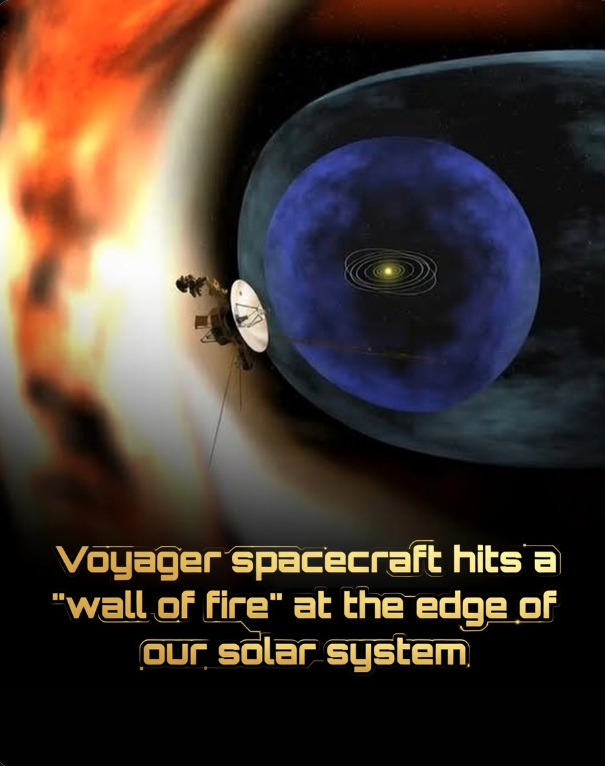
Voyager hit a 90,000°F wall at the solar system’s edge.
NASA’s Voyager 1 spacecraft crossed one of the most dramatic frontiers in the cosmos: the heliopause, the tenuous boundary where the Sun’s influence finally gives way to interstellar space. What the probe discovered there was astonishing—a turbulent zone of superheated plasma with temperatures soaring between 30,000 and 90,000 °F (roughly 17,000–50,000 °C).
This wasn’t a physical wall or barrier, but a dynamic transition region where the outward-flowing solar wind abruptly slows, compresses, and piles up against the incoming pressure of interstellar material. That compression converts kinetic energy into thermal energy, driving the plasma to extreme heat levels far beyond anything found inside the heliosphere.
Remarkably, despite the blistering temperatures, this “wall of fire” would pose no danger to a hypothetical astronaut. The plasma is extraordinarily diffuse—far less dense than the best vacuums achievable in Earth laboratories—so there are simply too few particles to transfer meaningful heat. The region is hot in temperature but cold in practical effect.
Voyager’s instruments captured clear signatures of the crossing: a sudden plunge in solar wind particles, a sharp rise in galactic cosmic rays, and faint plasma oscillations that revealed the density and temperature of this exotic boundary layer for the first time. These vibrations—analogous to ripples on an unseen sea—provided direct measurements of conditions in a realm previously known only through theory.
The heliopause itself serves as a vital shield. The entire heliosphere—the vast bubble carved by the Sun—deflects most of the galaxy’s high-energy cosmic radiation, helping protect life on Earth from constant bombardment. Beyond this protective envelope lies the harsher, unfiltered radiation environment of the interstellar medium.
Today, more than 15 billion miles (24 billion kilometers) from home, Voyager 1 remains the farthest human-made object ever sent into space. Still operational and transmitting precious data, it continues to reveal the secrets of this distant frontier.
At the outer limit of our solar system, space is neither empty nor serene. It is a violent, glowing threshold—and humanity has only begun to map its mysteries.

English

@PhilGould15 Didn’t know you were an astronomy buff, Gus. Loved it since I was a kid. We have to have optimism about life. The future of space is incredibly exciting. Have you seen the footage of SpaceX’s “starship” landing on a space station platform with 2 claws? The size of a skyscraper?
English


@20th_Centurygal John Farnham. 1987. I didn’t have much choice, but it was fantastic.
English

Brian Neil retweetledi

This doesn’t look like much, but it changes everything.
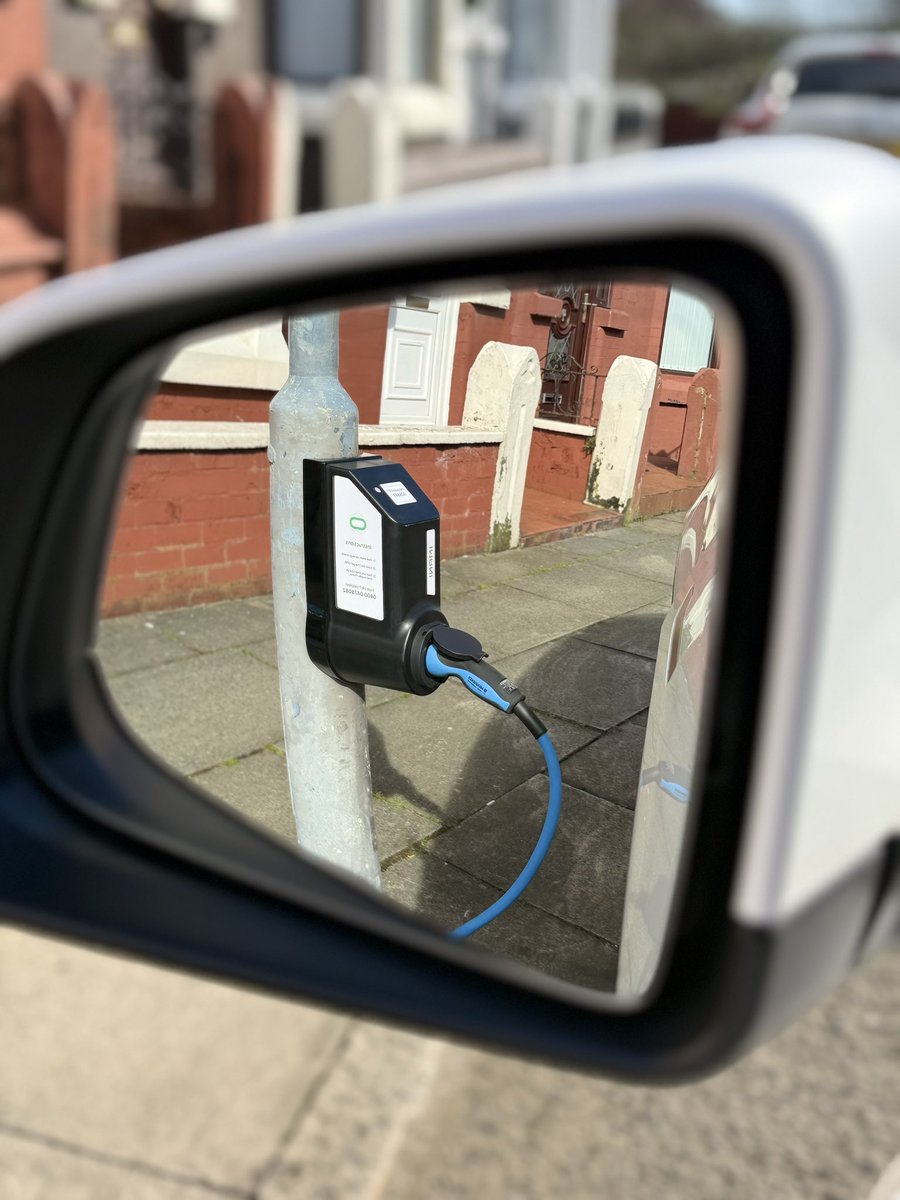
What you’re looking at is an evpzee lamppost charger.
It is the smartest solution to one of the biggest barriers to EV adoption.
A standard street lamp, quietly turned into an EV charger.
No digging up roads, it is installed in just 30 minutes.
No huge infrastructure projects, a full street can be electrified in a matter of hours.
Manufactured and assembled in the UK and fully OCPP.
Using what’s already there.
For millions of people across the UK, especially those without driveways, this is the difference between “I can’t have an EV” and “actually…I can.”
It’s easy to overlook innovations like this because they’re not flashy.
No 350kW ultra-rapid chargers.
No massive charging hubs.
Just practical, scalable, everyday infrastructure doing exactly what it needs to do.
And that’s the point.
The EV transition will be be driven by everyone having the ability to charge when they need to.
Simple.
Effective.

English
Brian Neil retweetledi

Fake news … Not the only Fake News we’ve witnessed this week either … Media is, what media is …
KevinEleven@KEleven93732
@PhilGould15 I heard from a source that Bronson and Critta had it out for each other at training! Is there a cultural issue we should be worried about?
English
Brian Neil retweetledi

@testerlabor There is special place I my heart for the C64 and especially VIC-20, my first ever computer. I stayed up for 3 days programming nonstop when I got it for the sheer love of coding.
English
Brian Neil retweetledi

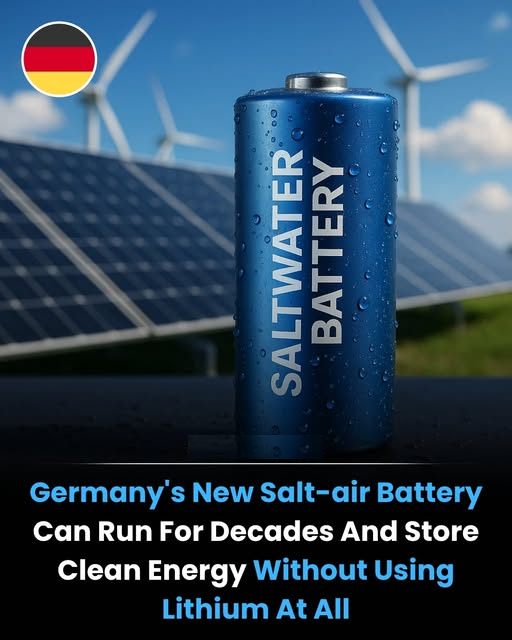
Germany has unveiled a revolutionary salt-air battery that could transform global energy storage. Instead of relying on lithium — a costly, finite, and environmentally challenging resource — this technology uses salt, air, and carbon to create a long-lasting, stable battery with a lifespan measured in decades, not years.
The battery works by converting chemical energy into electricity using a reaction between salt and oxygen. Unlike lithium-ion systems, it doesn’t overheat, doesn’t require rare-earth elements, and is nearly 100% recyclable. It also stores energy at a lower cost, making it ideal for large-scale renewable grids.
If deployed globally, salt-air batteries could make solar and wind power more reliable by storing energy even during long cloudy winters or calm wind periods. It’s a reminder that nature’s simplest materials — salt and air — may hold the key to humanity’s clean-energy future.

English
Brian Neil retweetledi

This guy is the most underrated YouTube creator out there for Apple products. Especially macOS. As an IT professional myself, Gary is always teaching me new things. x.com/macmost?s=11
English
Brian Neil retweetledi