The Working Man

3.4K posts

The Working Man banner
The Working Man

The Working Man

@BrownYarni

Uncommon tactics for working people to build wealth.

Queensland, Australia Katılım Mayıs 2021
796 Takip Edilen1.8K Takipçiler
The Working Man retweetledi
Dave Gow
Dave Gow@strongmoneyaus·
The federal budget is being sold as 'fairness' for young people. It's not. It's a tax grab, and I'll explain why. My new article breaks down the changes, who gets hit the most, and how it impacts investing strategy going forward. Read: strongmoneyaustralia.com/federal-budget…
English
15
9
59
2.8K
The Working Man
The Working Man@BrownYarni·
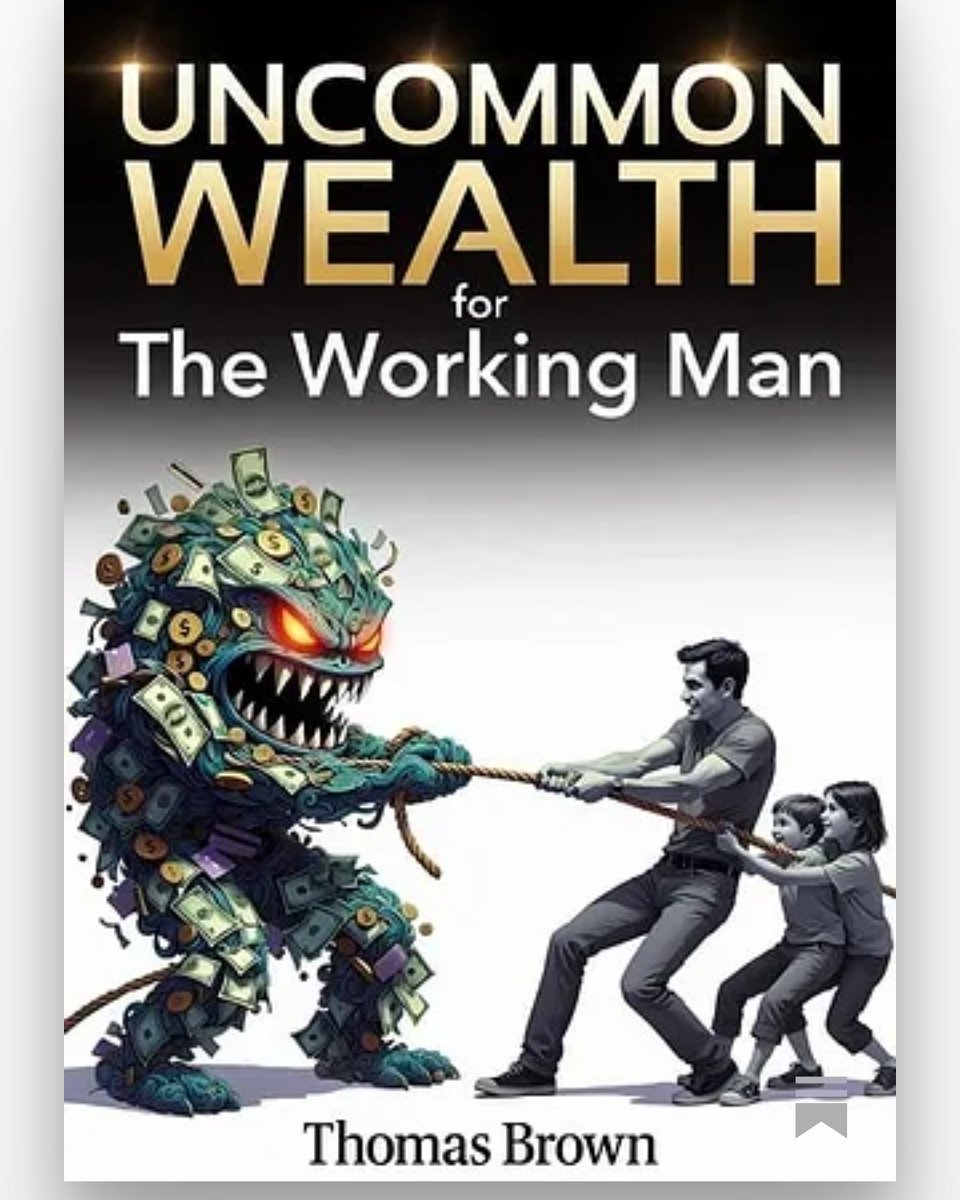
Podcast 3 Why Bother? It Seems Like Too Much Trouble open.substack.com/pub/thomasbrow… This podcast goes with the second supplement for my book. "Uncommon Wealth For the Common Man" and explains how to motivate yourself to take the simple steps to build wealth....
English
0
0
2
16
The Working Man retweetledi
Fin Creighton
Fin Creighton@FinCreighton·
🎙️ Just dropped the LATEST episode with @BrownYarni We discuss: - The “work 40 years” social contract - FIRE + Bitcoin - Systems vs goals Watch full episode below 👇
English
2
4
9
362
The Working Man retweetledi
Daniel Batten
Daniel Batten@DSBatten·
The Part I Didn't Tell You A couple of months ago my daughter and I had a conversation about drinking. My wife and I decided after researching the impacts of drinking on teenage brain development that we had a simple clear "no drinking" rule for our children. But I didn't just say the rule, we explained why "Because we love you, and part of loving you is keeping you safe. Your brain - particularly your cerebral cortex - is still developing. Alcohol interferes with that development. What you have is precious, and we want to protect it so you can reach your potential." Like her Dad, she's been brought up to challenge things that don't make sense - even if they come from me. She's scientific in her mindset and demands evidence for things. She looked at me for a moment, paused. Then she said, "OK. That makes sense" the way she only does when something has landed. That conversation with my daughter at our dinner table is the same thing I did with Greenpeace, with journalists, with policymakers, with central bankers - the same method, the same respect for the other person's autonomy, just at a different scale. I'll back up and explain what I mean by that. For the last four years, I've called myself different things at different times - an ESG analyst, a Bitcoin mining analyst, a climate activist, an environmentalist. All true, but none of them complete. I've correctly said that the Bitcoin narrative changed because we had good data, good collection of data, a good presentation of data, and the truth was coming out. And that's true. But it wasn't truth alone. Truth is like water - it needs a container. And there was a part of the container I wasn't telling anyone about. During the battle, I couldn't. If I'd said publicly that I was applying decades of influence methodology to every soundbite, every chart, every rebuttal - opponents would have said, "See? It's not about the evidence at all." So I kept quiet. And the data became the visible story. But the truth is that every single element was carefully contextualised, nuanced, framed for maximum impact. It was no coincidence that my rebuttals would regularly ratio accounts with ten times my following. It was no coincidence that the head of Greenpeace's anti-Bitcoin campaign sat across from me and said, "We monumentally failed. We should have engaged with people like you from the start." There was no randomness to journalists changing their editorial policies, or critics quietly deleting tweets they'd been posting for years. It was by design. There's a well-known rule that a lie will travel halfway around the world before the truth can get its pants on. The research confirms it - lies spread ten times faster AND disperse ten times further. Which means that to reach parity, the truth doesn't just need to be correct - it needs to be a hundred times better. Truth is like gold. The gold is already there - buried under rock and stone. But without someone willing to chip away at the false layers, nobody sees it. That's what I focused on - not adding anything to the truth, but removing what was obscuring it. The data was real and essential. But data by itself was sitting in papers and spreadsheets that just got ignored. The influence craft - the framing, the sequencing, the story structure, the Socratic approach, the non-attachment to outcome - that's what made the data travel. Neither works without the other. The gold is real, but without the right extraction tools, it stays buried. Now here's where it gets interesting... Ten compliments and one insult - what do you remember? The insult right? What does the media prefer to cover - ten positive things about Bitcoin, or one negative? The negative off course. And when we look at our own capabilities versus our incapabilities - which do we doubt? We doubt our capabilities. We never doubt our incapabilities. The exact same dynamics that create false narratives about Bitcoin create false narratives inside people. The FUD-busting techniques I employed to help change the Bitcoin narrative - I have used for ~20 years to help people bust their own fears, their own uncertainties, their own doubts. I don't use the blunt instruments of positive affirmations or pop psychology. I use a much more deadly weapon against FUD: the sword of indisputable logic, expressed clearly. Used correctly, logic disarms fear, makes the uncertain clear, and turns doubt into certainty. Because fear (F.E.A.R) is false evidence appearing real. And that is true whether it's operating at the scale of a global disinformation campaign against Bitcoin, or inside the mind of a single person. When we present the real evidence to the masses about Bitcoin, people are able to embrace Bitcoin. When I present the real evidence to an individual about their own capabilities, their fears and doubts and uncertainties dispel. They start taking action. And the adoption of their vision imprints itself on the world. The method is the same, the chisel is the same - just different gold. So what am I actually doing now? I'm teaching other Bitcoiners influence. And influence has four applications. 1. You can use it to change narratives - useful for Bitcoin, but also for changing the narrative on your own company so you're more likely to get investment. 2. You can use it to lead effectively. 3. You can use it to coach people in your team. 4. And yes, you can use it to sell - not selling the way it's traditionally done, but selling as an act of service which enriches and empowers the other person. Whether it's through my work with HRF, through Bitcoin policy institutes around the world, or through key individuals who are now influencing at a nation-state level, my job is to work behind the scenes to train the people who are right now influencing investors, politicians, central bankers, national grid operators across four different continents to incorporate Bitcoin. It will never be my name on those conversations. These people already have the talent. Half the time my role is just removing the blindspots they can't see which all humans have - the things standing between them and their full potential when the stakes are highest. When someone walks into a room with a prime minister or a central banker and says exactly the right thing in exactly the right way - that's them. I'm the aanoying person they workshopped this conversation with for weeks become who asked the pointed questions before forcing them to practice before game day, like any good coach should who believes in their players and demands the best of their does: "What does this person already believe?", "What's the bridge between that belief and where you need them to get to?", "How show me how you're going to say it", "I'd say "no" if you said it like that, do that again but add this part in", "There, that's better." Sometimes the person that Bitcoiner is talking to is the president of Chile. Sometimes its the political left, centre, and right in France. Sometimes it is the Prime Minister of New Zealand Sometimes it's a central banker in Ethiopia Sometimes its the national grid operator of South Africa or Sweden. Sometimes it's a merchant banker who's about to fund a company listing at the intersection of HPC and Bitcoin mining onto the NASDAQ. On my book on influence, I wrote that truth is like gold. The stone needs to be chipped away so it can be seen. That chipping away is the art of influence, but influence (at least the type I coach) only works if there the gold, the truth, exists. That's the part I couldn't tell you at the time while we were in the middle of a war about Bitcoin and energy. But it's important I tell you now, because it affects what happens next. Yes, we won the energy narrative. But it's critical that we don't come out of that win thinking truth and data do the job by themselves. They were necessary ... but they were not sufficient. The next battles - nation-state adoption, regulatory frameworks, the conversations happening right now behind closed doors in rooms most Bitcoiners will never see - will not be won by better data alone. They'll be won by people who know how to carry truth into a room and put it down in front of someone in a way they can receive it. Because truth is like water - it needs a container in order to be absorbed and appreciated. And for as long as I'm here, because I care about truth and therefore Bitcoin I'll continue to coach those people to build the container to be their best and destroy their own inner FUD - for Bitcoin, for their companies, for the people they lead, for their families, and for themselves.
English
7
10
78
5.3K
The Working Man
The Working Man@BrownYarni·
Building wealth is like swimming upstream in a river, against the current. Pushing against you is the cost of living, inflation and social media imploring you to consume more and more. Get out of the water and in the boat.....
English
0
0
0
29
The Working Man
The Working Man@BrownYarni·
How much of your working life has passed by? Keep more, from your hard work for what YOU want.
The Working Man tweet media
English
0
1
1
43
The Working Man
The Working Man@BrownYarni·
Building wealth is like swimming upstream in a river. The river's flow pushes back against you continuously. Get in the boat! Help is at hand for the working man. Uncommon wealth requires uncommon tactics. Farq the big boys — we’re playing a different game.
English
0
0
0
31
The Working Man retweetledi
Tyler Green
Tyler Green@GreenTyler27·
The death of a currency…. Anybody think the AUD lasts another 30 years?
Tyler Green tweet mediaTyler Green tweet media
English
25
11
103
10.3K
The Working Man retweetledi
Mark Moss
Mark Moss@1MarkMoss·
Bitcoin had 24% CAGR the last 4 years, even though BTCs price is the same… $67k How’s that? While Bitcoins price is basically the same as 4 years ago, it ignores 2 things 1. Capital Deployment: most are paid weekly or bi-weekly and direct a % to investments, DCA. 2. Volatility is the DCA investors Friend: The magic here is that Bitcoin didn’t just sit flat at $67K for 4+ years — it experienced massive volatility in between Let’s put some math and numbers here… Let’s use a $1k/week DCA amount for illustration As Bitcoin started at $67k and then down into 2022 as low as $16k there was a swing of over $109,000 between the low and the high That volatility is what worked for you, your $1,000 weekly buys were scooping up BTC at $16K-$25K — accumulating far more satoshis per dollar than when prices were high. Half of your total invested capital went in above $50K, but that only bought 25% of your Bitcoin. Meanwhile, just 30% of your capital deployed below $30K bought 53% of your total stack. That’s DCA at its finest. More 👇
Mark Moss tweet media
English
31
46
455
39.1K
The Working Man retweetledi
BTCCLUB
BTCCLUB@ausbtcclub·
A host of monthly expenses common in every Australian home. Insurances: Home - $145 pm Car x2 - $340 pm Health - $380 pm Income - $130 pm Life + TPD (generally in super) Pet ? Utility: Water - $100 pm Electricity - $230 pm Gas - $140 pm Internet - $90 pm Mobile x2 - $160 pm Transport: Fuel - $500 pm Car services x2 - $200 pm (avg) Consumption: Groceries - $1,000 pm Junk food Fridays- $300 pm Doctors / health - $100 pm Household: Mortgage - $3,200 pm Education - $250 pm Total: $7,230 pm or $87,276 annually. A Mum and dad earning the median Australian wage combined is about $149,344 annually. After tax = $122,450 Expenses are paid with AFTER tax dollars. $122,450 - $87,276 = $35,174 remaining per year. We have left out gym memberships, subscription services,childcare, private education, kids sports, clothing, gifts for parties/ weddings, the occasional dinner out, the odd parking fine, miscellaneous stuff like buying a toaster, repairing a washing machine. That $35k won't last long. Back when I was a kid, my Nonna was a widow (from 21 years old) making about $45,000 per year, single income earners, worked hard though could support her family. These days Mum, dad, grandparents are all working full time. No one is at the dinner table. Australia is falling behind big time.
BTCCLUB tweet media
English
13
5
73
5.7K
The Working Man retweetledi
Adam Livingston
Adam Livingston@AdamBLiv·
THE BANKS ARE ABSOLUTELY SCREWED: Let’s rip the mask off this pathetic, century-old cartel of dinosaurs in pinstripes who still think the financial system is their personal ATM. The core issue here is as simple as it is brutal. Stablecoins, those unstoppable, borderless, 24/7 digital dollars like USDC and PYUSD, are now offering real yields (4%+, sometimes more through third-party platforms like Coinbase revenue-share or DeFi protocols) while traditional banks are stuck peddling 0.01% “high-yield” savings accounts that wouldn’t even buy you a coffee. The GENIUS Act tried to kneecap issuers from paying direct interest, sure, but the market instantly route around it. Exchanges, wallets, and smart contracts just pass the Treasury-bill returns straight to holders. And now the CLARITY Act’s March 1, 2026 White House deadline just came and went with zero resolution because the banks are still throwing tantrums in the Senate Banking Committee, begging regulators to ban anything that smells like “idle balance” yield. They know they’re toast and the only move left is to cry to Daddy Government for a regulatory moat. These clowns literally cannot compete in the open marketplace. Their entire business model is a 1950s relic. Take your deposits at 0%, lend them out at 5-7%, pocket the spread, and use fractional reserves to multiply the scam. Overhead? Sky-high. Marble lobbies, compliance departments the size of small countries, legacy COBOL systems that cost millions just to keep breathing, and regulators breathing down their necks every time they sneeze. Stablecoins? Zero branches, zero tellers, zero KYC theater for every transaction. Reserves sit in actual T-bills earning 4-5% that flows back to YOU, the holder, not to some executive’s bonus pool. Velocity of money in crypto is measured in seconds, but in banks it’s measured in “please hold while we verify your identity for the 47th time.” Banks can’t match the yield because their cost structure is bloated with legacy bloatware and they refuse to innovate. They’d apparently rather lobby than code.And lobby they do, like the spineless, intellectually bankrupt parasites they are. Watch them whine in every hearing. “Deposit flight! Systemic risk! We can’t create credit anymore!” Boo-fucking-hoo. What they mean is: “Our cartel pricing on deposits is getting obliterated by superior technology and we’re too lazy and inbred to adapt.” They pressured the OCC into that 376-page monstrosity of a rulemaking precisely to close “loopholes” like Coinbase’s program—because God forbid a customer earns market-rate yield without the bank skimming 300 basis points off the top. They’re the same fossils who screamed about fintech in 2010, screamed about Bitcoin in 2013, screamed about DeFi in 2020, and now they’re screaming about stablecoins because the writing is on the blockchain. THE MIDDLEMAN IS NOW OBSOLETE. Tokenization of real-world assets is already happening on-chain at fractions of the cost and speed. Why park money in Chase when you can hold a tokenized T-bill that yields real interest, settles instantly, and works globally without SWIFT fees or 3-day holds? They’re being rendered irrelevant faster than a Blockbuster executive in 2007. The deposit base, their lifeblood, is evaporating into stablecoins that now hold tens of billions and growing exponentially. JPMorgan’s own analysts quietly admit this could be the biggest catalyst for crypto inflows in H2 2026 if CLARITY passes, while the banks’ own reports show retail and institutional money fleeing to anything that actually pays. Their fractional-reserve Ponzi depends on you being too stupid or too trapped to leave and stablecoins just handed every normie a escape hatch with better rates, no bail-in risk (they’re fully reserved, unlike the banks that needed 2008 bailouts), and programmable money that banks couldn’t build if you gave them a decade and a blank check. These institutions are so incompetent they still can’t even offer same-day ACH reliably, yet they lecture us about “financial stability” while their own risk models blew up in 2023 with Silicon Valley Bank. They don't want you to internalize that the banks aren’t “too big to fail”... they’re too dumb, too slow, and too addicted to regulatory capture to survive in a free market. They’re the dinosaurs who refused to evolve and now they’re hiring K Street lobbyists to pass laws that literally outlaw better products. Every time they kill a stablecoin yield program, they’re just accelerating their own extinction...because the market will route around them anyway via offshore issuers, decentralized protocols, or foreign stablecoins laughing at U.S. regulators. The CLARITY Act stall is a pure bank tantrum. They’re terrified that once market structure clarity hits, the floodgates open and their deposit monopoly dies overnight. The banks are now systemically obsolete. They’re pathetic, rent-seeking middlemen whose only remaining skill is writing strongly-worded letters to senators begging for protection from competition they know they’d lose. Cry harder, banking lobby clowns. The future is on-chain, yield-bearing, unstoppable, and it doesn’t need your permission, or your marble columns. You had a century-long head start and you still lost to code written by kids in hoodies. That’s Darwinian justice served cold on the blockchain.
English
24
47
312
12.5K
The Working Man retweetledi
Sama Hoole
Sama Hoole@SamaHoole·
In 1944, the DuPont Chemical Corporation had a problem. It was not a problem they had anticipated when they were building one of the most powerful industrial empires in American history, and it was not a problem with any obvious solution in the conventional medical literature. The problem was that their executives were fat. Not slightly overweight: conspicuously, functionally fat. Men who ran one of the most advanced companies in the world, could not manage their own weight on the dietary advice their physicians were giving them. Low calorie diets hadn't worked. The men were hungry, irritable, unproductive, and still fat. The company's medical director, Dr. Alfred Pennington, was asked to look into it. Pennington was not a maverick. He was a careful, methodical internal medicine physician who did what careful, methodical physicians do: he read the literature. All of it. The Banting papers, the Stefansson documentation, the early insulin research, the work coming out of European endocrinology. And what he found, reading across decades of quietly buried research, was that carbohydrate, not total calories, not fat, not indulgence, was the primary driver of fat accumulation. He designed a protocol. Unrestricted calories. High fat. Moderate protein. Minimal carbohydrate. He put twenty executives on it. They lost an average of 22 pounds in 3.5 months. Without hunger. Without misery. Without the soul-grinding compliance failure that had dogged every calorie-restriction attempt. The men felt better. They worked better. DuPont was pleased. Pennington published. Not just internally: he published in the New England Journal of Medicine in 1953, in The Lancet, and in popular press outlets that reached ordinary people. Holiday magazine ran a piece. Women's magazines picked it up. There was a genuine cultural moment of recognition: here is a physician at a major corporation saying that fat makes you lose weight and carbohydrates make you gain it, and he has the executive medical records to prove it. The moment did not last. It collided almost immediately with the rising tide of the lipid hypothesis, with Ancel Keys's saturated fat narrative, with an industrialised food system that had bet heavily on seed oils and refined carbohydrates and was not going to welcome the competition. Pennington was not famous enough, or loud enough, or politically connected enough to push back. He published what he found. The men lost the weight. The science was real. And then the conversation moved on to something that suited the food industry better. The executives, presumably, went back to eating lunch.
Sama Hoole tweet media
English
5
55
228
11.3K