Bruce Richards

841 posts

Bruce Richards banner
Bruce Richards

Bruce Richards

@Bruce_Markets

CEO Marathon Asset Management // Follow for Daily Insights on the Markets // Not Investment Advice
United States Katılım Eylül 2023
105 Takip Edilen7K Takipçiler
Sabitlenmiş Tweet
Bruce Richards
Bruce Richards@Bruce_Markets·
Powerful combination built on an exceptional investment platform with consistent performance and strong client partnerships cvc.com/media/news/202…
English
6
3
10
5.3K
Bruce Richards
Bruce Richards@Bruce_Markets·
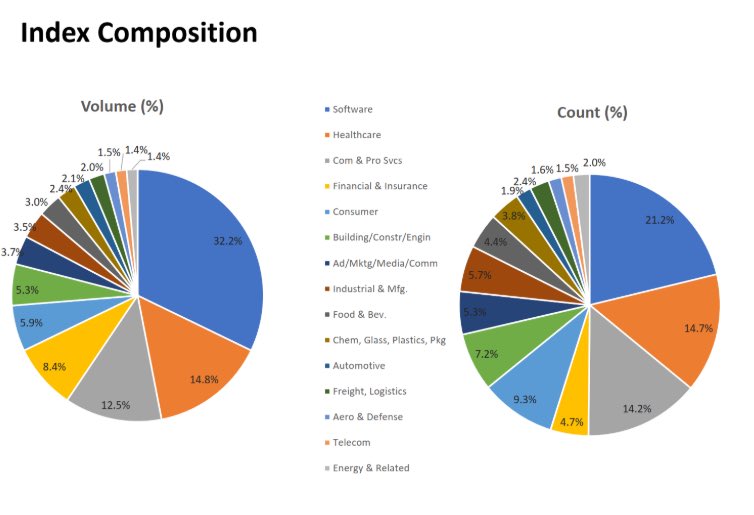
Healthcare vs. Software  Software dominates private credit allocations, yet KBRA's analysis suggests it will also dominate defaults in the years ahead. That asymmetry should give every allocator pause. Consider the backdrop: Healthcare represents 18% of U.S. GDP with ~$6T in annual spending while Software is just 2% of GDP (4% when bundled with broader IT).Despite this gap, software is the single largest segment in private credit today, and according to KBRA's forecast model (see the third pie chart below) Software default risk will surge. Healthcare, by contrast, is expected to see defaults that are less proportionate relative to its outstanding volume, which is precisely why I have favored HC over software. That said, credit selection, business model quality, sponsor, valuation and structure remain everything. Q: For the record, do you know the only type of healthcare company that I've dislike more than software? A: Ill-conceived dental roll-up deals. Investing is never easy, but when you are highly selective, run a tight underwriting process, and maintain discipline, it's fun and rewarding.  Let's have fun!
Bruce Richards tweet media
English
4
7
79
79.8K
Bruce Richards
Bruce Richards@Bruce_Markets·
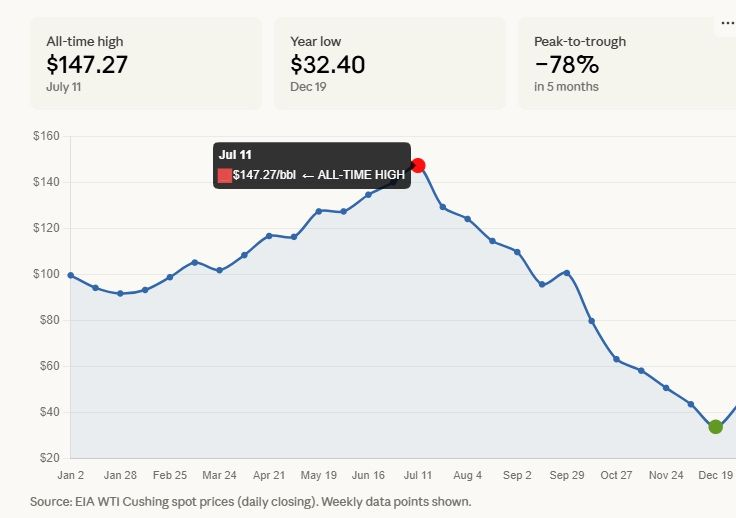
ATH In July of 2008, WTI & Brent oil price surged to an all-time high of $147 per barrel, before crashing 78% to $32, five months later. That volatility is stunning! Oil is priced ~$100 ($105 for Brent/$95 for WTI); the Strait is semi-closed. For now, everyone is focused on the off-ramp; but if things get worse before they get better, the price of oil can surge, and once there is a conclusion to the conflict, the price will move down sharply. There exists an abundance of oil and gas in the world (Strait is re-opened, wars/geopolitics settled: Russia, Iran, Venezuela). When a peaceful resolution in the Middle East emerges, let history be a reminder that commodity markets (especially energy) turn on a dime. Just as higher oil and gas prices weaken demand, lower prices will serve as a stimulant for growth (consumers and companies alike). What are the implications for markets? How will the Fed & ECB respond to higher inflation? What is the impact to GDP? Are you positioned for this volatility? "I’m not going to put a time on it but let’s just pick 50 days of temporary elevated prices, prices will come off on the other side; for 50 years of not having an Iranian regime with a nuclear weapon." by Treasury Secretary Scott Bessent on March 22, 2026, on NBC's Meet the Press.
Bruce Richards tweet media
English
2
0
6
1.5K
Bruce Richards
Bruce Richards@Bruce_Markets·
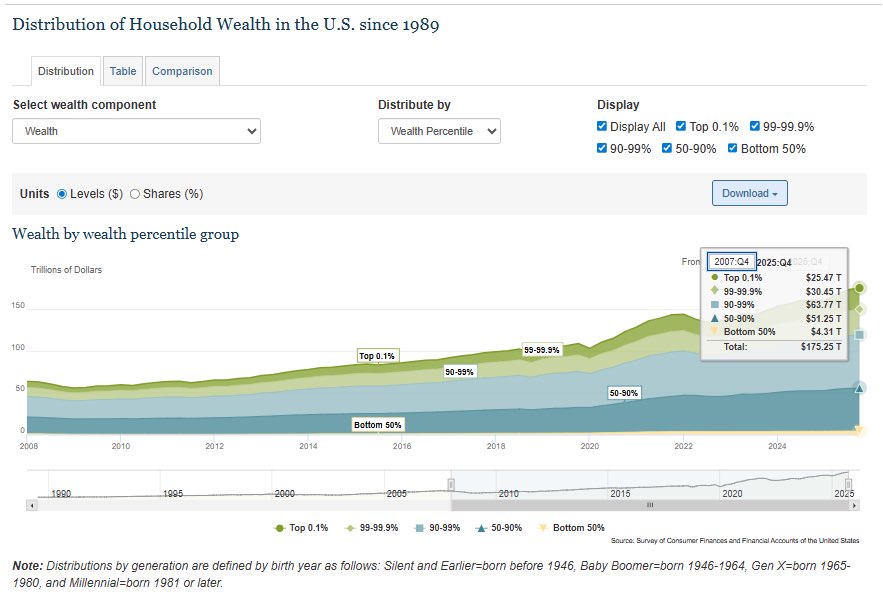
Systemic Risk The popular press has introduced the question suggesting that problem loans and redemptions in Private Credit may lead to systemic risk, bringing back memories of the GFC. This analogy is far-fetched, not grounded in reality, and highly unlikely. The GFC occurred as the banking system was collapsing. Banks held a huge portion of their balance sheets in risk assets and derivatives. Banks now leveraged 10-1, held considerably greater leverage in the GFC, as daily withdrawals of deposits led to a run on the bank that the Federal Reserve was forced to back-stop. Today, the banking system is extremely healthy with very strong asset quality. During the GFC, GDP declined by over 4% during a two-year period with 10+ million job losses and the greatest banking system bailout since the Great Depression. When trust evaporated, the plumbing of the entire economy froze. That's systemic. During the GFC, the Case-Shiller home price index fell 33% nationwide, and the S&P 500 collapsed by a whopping 57%, wiping out significant net worth. Today, net worth for U.S. households has risen 3-fold to $175 trillion, near an all-time high (see Fed chart below). While it sounds like a lot, there is only $11B in redemptions from open-ended Private Credit funds. One money center bank holds more assets than all of the the top-400 direct lending firms combined.  Yes, many lenders have too much software risk at an inopportune time when the software valuation bubble is bursting; and yes, many software LBOs are loaded up with 8–10x leverage.  No, the SaaS-apocalypse will not lead to systemic risk. Not even close. SaaS companies are not at the core of credit creation, nor the global payment system, nor the liquidity flows. Software represents only 2% of GDP and less than 2% of household net worth.   Dislocation, defaults, and tight financial conditions create significant opportunity. That's where smart money will shift focus to.
Bruce Richards tweet media
English
0
1
15
1.7K
Bruce Richards
Bruce Richards@Bruce_Markets·
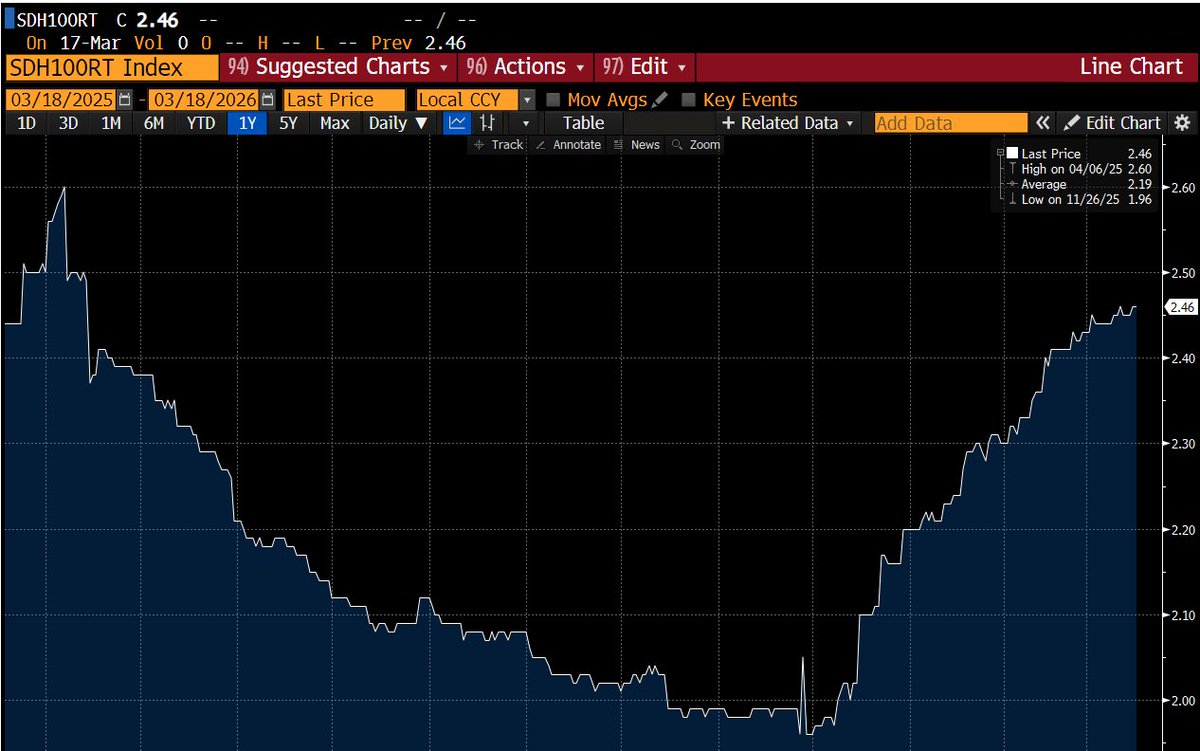
The Price for Compute: The price for Nvidia H100 chips shown below is fascinating (Bloomberg: H100 RT Index). The Blackwell series (B200 and GB200) introduced to the market was a catalyst for this decline, as traders expected H100s to plummet when Blackwell rolled out with superior chips (B200 offers 3x faster training/inference) vs. Nvidia H100. Yet H100 values have held remarkably well at $20K–$30K (used/secondary), with cloud rentals shown on an hourly basis below in the chart. B200s rent for a higher price (5x), so H100s are very much in demand, especially for inference and small-scale training, which will become dominant in the coming years. H100s remain the reliable, cost-effective workhorse for a significant segment of AI workloads, while Blackwell (Rubin, the next generation, will be released Q3/Q4 2026) targets cutting-edge, ultra-large LLMs. Despite concerns from the perma-bears, naysayers who write long white papers, and short sellers like Michael Burry and Jim Chanos (both recognized as brilliant investors), H100s (Nvidia’s old series) remain in huge demand and do not depreciate to zero as they are a highly utilized compute resource. The physical capabilities of these advanced chips have a long useful life that is actually much longer than most realize, since silicon chips don’t degrade in absolute compute power or functionality, as silicon holds up for decades despite what some espouse and despite the 5-6 year balance sheet financial depreciation schedules that hyperscaler cloud companies utilize for GAAP accounting. The markets assume the GAAP accounting depreciation schedule is the useful life of a GPU, which it is not. Takeaway: AI compute demand is structural, not speculative; even last generation chips are mission-critical. Demand for tokens outpaces the ability to bring compute online and the pessimistic forecasts. AI isn’t slowing; it’s accelerating. GPU financing is interesting. The key question is the price-cost for compute, the return profile on the investment, and the tenant-credit risk.
Bruce Richards tweet media
English
0
2
11
924
Bruce Richards
Bruce Richards@Bruce_Markets·
The Fed: Markets took September cut off the table as Powell stayed data‑dependent, leaned slightly hawkish, emphasizing that inflation is not falling as much as hoped, warning cuts are contingent on “further progress,” highlighting upside inflation risks from tariffs and energy and refusing to pre‑commit to a near‑term easing path. Powell stated: "We are balancing these two goals in a situation where the risks to the labor market are to the downside, which would call for lower rates, and the risks to inflation are to the upside, which would call for higher rates, or not cutting, anyway." Chair Powell also disclosed that he will stay on the Board so long as the Department of Justice investigation is ongoing and furthermore, that he intends to serve as the acting Chair until a confirmed nominee has assumed the new role; in my humble opinion, the President and the Justice Department would be will be well advised to drop this case in order to move forward which is the primary goal for the President. Higher for Longer is constructive for credit vs. equities.
Bruce Richards tweet media
English
0
0
3
620
Bruce Richards
Bruce Richards@Bruce_Markets·
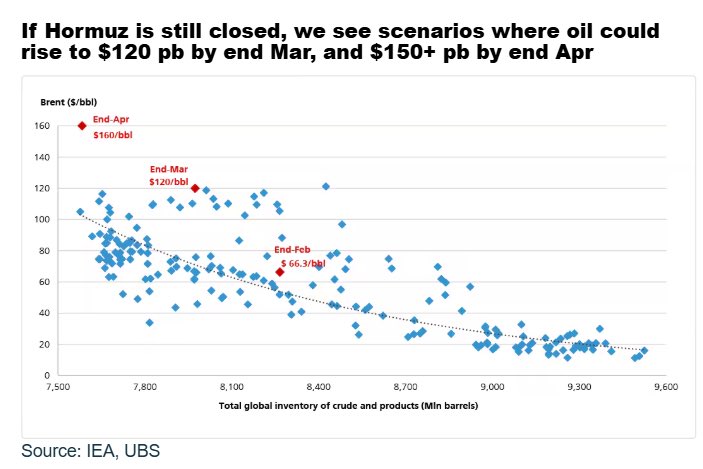
Macro Monday, Six Themes: - Brent closed the week around $104, down from a weekly high of $119 and still well below the all-time high of $145. With the Strait of Hormuz closed, global supply is projected to drop 10 million barrels/day per the IEA, the biggest supply shock ever, yet markets are holding up well since expectations are for a short-term solution. If this turns out not to be the case, markets and the economy are highly vulnerable. Energy is the macro variable that touches everything right now. Duration is the most critical variable that will impact my other comments below (see UBS chart below). - Q4 2025 was just revised down to 0.7%, a sharp deceleration. More importantly, 2026 growth, which I previously expected to be 3%-4% GDP, has become less likely. Fiscal stimulus and consumer spending that drives growth might be offset by the 'energy tax' proves punitive; $120 oil for an extended period = stagflation, potentially recession. - February's payrolls shed 92,000 jobs; 2025 produced just 15,000 jobs per month, so it's essentially a jobless expansion. Employment softness is due to three key themes: 1) Federal Government shrinks by 500,000 jobs, 2) immigration reversal results in 500,000 workers leaving the country, 3) productivity gains with automation (AI, robotics) requires less net hiring. GDP growth absent job gains is the new theme. - February CPI of 2.4% y-o-y is pre-Iran war so the oil's impact on gas, jet fuel, plastics, aluminum, shipping, and fertilizer are coming. CPI to hit 3%, then fall once energy prices adjusts to equilibrium: $60 post-conflict. - FOMC meets Wednesday; no action expected (3.50-3.75% Funds). Fed likely holds rates steady at the next 4 Fed meetings. A weakening labor picture argues for cuts vs. an oil-driven inflation spike argues for patience, pushing the dual mandate in opposite directions, a topic Powell will focus on during his presser. - HY bond spreads widened 50 bps from cycle tights (280 to 330). HY has outperformed BSL since HY bonds only have 3% software, while BSL has 13% exposure to software. Direct Lending under the microscope with 23% software and leveraged DL players now deleveraging. Bottom line: Oil is the BIG story, impacting growth expectations, consumer credit, inflation, jobs, the Fed, and the credit markets. Traders have de-risked. Capital on the sidelines is waiting for clarity; when an exit ramp emerges, oil shipping lanes reopen, risk-on will be swift and powerful. Embrace Opportunistic Credit, it will likely outperform, a theme I'll share in the coming days.
Bruce Richards tweet media
English
0
1
9
763
Bruce Richards
Bruce Richards@Bruce_Markets·
When One Wrong Decision Leads to Complete Failure The Story: In 2000, Netflix co-founders Reed Hastings and Marc Randolph flew to Blockbuster's Dallas headquarters to propose a deal: Blockbuster would buy Netflix for ~$50 million and run its online business while Blockbuster focused on stores. Blockbuster had 9,000 storefronts with 65 million members. Netflix was unprofitable, bleeding cash after the dot-com crash, having laid off a third of its ~120 employees. CEO John Antioco dismissed the offer, viewing Netflix as a niche dot-com wannabe, laughing them out of the room. Two years later, Netflix went public, raising just $95 million. On September 23, 2010, Blockbuster filed for Chapter 11, taking two years to shutter its final 300 stores. Today one Blockbuster remains in Bend, Oregon (shown below). Netflix's market value is $350 billion, far exceeding Disney's $185 billion. The Corollary: Software margins remain compelling, yet valuations are sharply lower. AI models can near-instantly replicate coding that engineering teams spend months building. Moats can be encroached upon by LLMs, though this will take longer than most realize; these systems are deeply embedded and critical to operations. The annual recurring revenue pricing model will be challenged. Customers will adapt, so it's critical that providers move to AI-first. The Lesson: Creative destruction doesn't just punish laggards; it rewards incumbents willing to disrupt themselves. The winners will cannibalize their own features with AI copilots and automated workflows, even when it compresses near-term revenue. They'll redesign products around outcomes, not seats or licenses, and push the marginal cost of software toward zero while expanding usage. They'll invest in proprietary data, domain depth, and distribution, advantages models can't easily clone. This will take time, and until it sorts out, valuations will remain depressed. But that's real disruption: it was eight years from Netflix's IPO to Blockbuster's bankruptcy. The unraveling doesn't happen overnight. It happens gradually, then all at once.
Bruce Richards tweet media
English
0
2
3
857
Bruce Richards
Bruce Richards@Bruce_Markets·
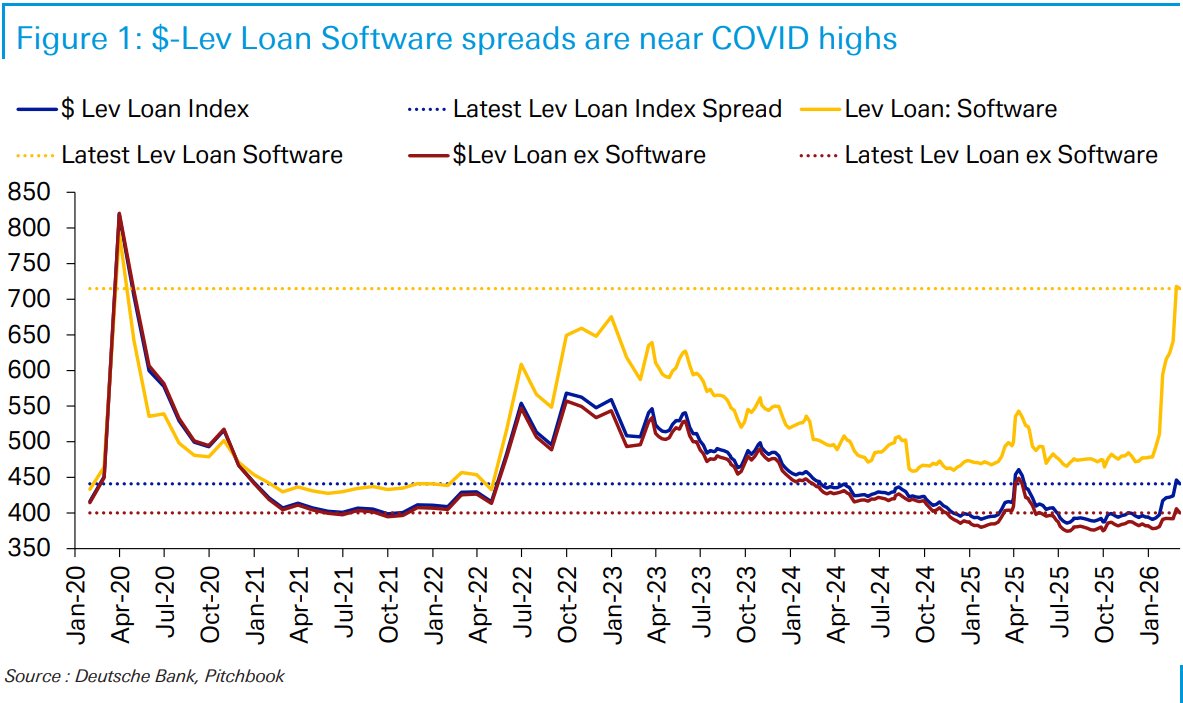
Leveraging Leveraged Finance The FT story that JP Morgan will begin to mark down the value of the private credit loans extended to the Direct Lending community is a wake-up call for risk managers, GPs and capital allocators. This action will force certain managers to deleverage over time. JP Morgan, a thought leader and reliable partner for the largest alternative asset managers, has taken action that may impact DL funds, BDCs (public and private) and interval funds. Other major banks and their regulators will be watching closely. Questions banks will ask: 1.​ Does the firm have any loans in its borrowing base that have experienced negative credit events such as covenant breach, PIK, or burning cash to service debt? 2.​ Can you provide updated information on the performance and level of indebtedness of the company? 3.​ Has there been a material deterioration in the equity cushion; it’s undoubtedly the case with many software loans? 4.​ What is the plan to pay-down a portion of the lending facility once poorly performing loans are marked-to-market with lower valuations (ask for additional collateral or sweep interest-principal payments to naturally deleverage the funding line)? 5.​ Will the borrower provide additional information on the fund (undrawn capital, leverage with other counterparties, total leverage)? 6.​ How much software exposure is in the loan book, knowing that 25% software with leverage has the potential to result in significant losses if the worst case scenario plays out? 7.​ Where should the software loan be valued, since broadly syndicated software loans are down 12 points and BSL loans have less leverage than the average private credit software loan (chart below). 8.​ Is the Fund shrinking to make redemptions, and if so, what loans are being sold, and how does this impact the quality of the remaining collateral for the bank lender? 9.​ DL funds often employ at least 1x leverage, but BDCs can stretch to 2x; how much leverage does the fund currently have across all counterparties? 10.​ What are the terms of your bank facility; some allow for mark-to-market while other bank facilities only revalue a loan after there is a defined negative credit event? JPMorgan has always been a steadfast, conservative, and reliable bank partner. This has not changed; JPM has stood strong throughout every cycle and every crisis. Banks have lent several hundred billion to non-depository financial institutions, now representing more than 10% of total bank lending, nearly triple the level from a decade ago. JPMorgan's move to reassess valuations is prudent risk management, not panic. Reduced leverage leads to wider spreads. Tighter bank standards restore covenants and lender protections that were eroded during the boom years. The market is self-correcting, and that correction creates opportunity for managers who maintained discipline and avoided the software trap. The best private credit returns are earned in this type of environment.
Bruce Richards tweet media
English
2
6
35
4.5K
Bruce Richards
Bruce Richards@Bruce_Markets·
IG Debt Issuance Soars! Global oil production may have slowed (for now), but credit markets are open for business. Yesterday marked the most active single day ever for Investment Grade bond issuance in the US, with $66 billion issued/announced. The biggest deal of the day was Amazon's $37 billion, 11-part offering, the largest IG transaction ever not related to M&A. Honeywell Aerospace issued $16 billion across 9 maturities. This issuance breaks the record that had stood since September 2013, when $53 billion of IG paper priced in a single session (led by Verizon’s $49 billion issuance that day). Salesforce also announced their intention to issue up to $25 billion, but is not included in these numbers as it did not price yet. Amazon has announced its intention to add to its issuance in the European markets tomorrow, as well. The drivers are clear: over $1 trillion of corporate debt needs to be refinanced in 2026, AI capex is accelerating at a pace never seen before, and M&A financing is back with conviction. Wall Street's consensus calls for $2.4 trillion+ of gross IG supply this year, which would shatter the prior annual record of $2.1 trillion set in 2020. Through yesterday, year-to-date issuance hit $516 billion, putting IG on pace to break that record comfortably. The hyperscalers and big tech names that raised over $200 billion in 2025 are only getting started. We are witnessing the largest capital spending cycle in a generation being financed in real time through the IG bond market. The question for credit investors is not whether supply will come, but whether spreads can hold in, something we will all be watching closely. As long as insurance companies, pension plans, and foreign buyers continue to absorb supply, spreads should remain steady. The list of yesterday's issuers below carry credit ratings from A1 to Baa3 (Moody's), and all issues were priced at the tighter end of the range, with dealers moving in pricing by ~25 bps across the board on the back of strong order books. Takeaway: The deep bid for credit is a very bullish sign. Equities were mixed on the day, but credit is expected to perform well.
English
0
2
9
1K
Bruce Richards
Bruce Richards@Bruce_Markets·
The Off-Ramp is Coming, Until Then Buckle Up: The Atlanta Fed GDPNow model just dropped its Q1 2026 real GDP growth estimate to 2.1% (SAAR) on March 6, down sharply from 3.0% just four days earlier. That is a significant move in a Nowcast model. The chart below tells the story: growth was tracking above 3% for six straight weeks and has now declined dramatically. Next week's GDPNow will most likely point lower. The single most important variable for U.S. economic growth right now is the price of oil. It shouldn't be, but it is for now. My framework is simple and linear: $60 oil equates to roughly 3% GDP growth. $120 oil equates to 0% growth, which is recession territory. Yesterday it traded to ~$120 before closing lower on the day. 20% of global crude and LNG go through the Strait of Hormuz. At current levels, I believe U.S. GDP is likely to be ~2% growth, but this is a moving target. The forward curve shows a steep backwardation, pricing in a resolution of the current conflict and a normalization of Persian Gulf oil flows. The market is saying: this is a temporary disruption, not a structural repricing. Markets will realize this, despite short-term panic and volatility. The duration of the conflict is the key variable. If an off-ramp materializes in the coming weeks as is likely the case, oil eventually falls back toward $60, then a 3% GDP trajectory becomes the base case and credit markets carry on. But if markets begin pricing in a sustained period of $100+ oil, the calculus changes dramatically. HY spreads hit 360 basis points yesterday, then closed tighter on the day at +330bp. Spreads at these levels reflect an economy growing above trend with normalized default risk, not one being squeezed by an energy shock. Housing, Chemicals, Airlines, Cruise Lines, Consumer Discretionary, Manufacturing, Consumer Credit are all highly sensitive to an oil shock. Watch the forward curve (expectations) in addition to the spot price, which determines the price at the pump. We will all be watching oil prices closely. It has major implications for GDP, equities, and credit markets.
English
1
2
7
785
Stephanie Link
Stephanie Link@Stephanie_Link·
Thank you all for the great discussion today Hightower’s Day with the Stars event ⁦⁦@fundstrat⁩ ⁦⁦@StrategasRP⁩ Bruce Richards and Adam Parker.
Stephanie Link tweet media
English
6
4
55
7.1K
Bruce Richards retweetledi
Bloomberg
Bloomberg@business·
Marathon Asset Management Chair and CEO Bruce Richards explains why he thinks highly-leveraged software default rates could surge 15% alongside the #BloombergInvest conference in New York bloom.bg/3OMuZBO
English
4
8
17
18.9K
Bruce Richards
Bruce Richards@Bruce_Markets·
Is the Black Swan Coming for Highly Leveraged Software Companies? Some historical perspective: One can argue that it may not be instructive to compare one industry to another when evaluating default rates. Credit Rating Agencies will agree as will most industry experts. However, when a large sector such as Energy or Software goes through a period of severe shock after a rush of capital purchased and financed companies in the sector at peak valuations, and subsequently financial conditions tighten substantially, one might be able to draw parallels. The default rate for the high yield (non-IG) energy sector was subject to such a shock in 2016-2018, and although Energy is dissimilar to Software, it does show how highly leveraged and distressed conditions can result in worse conditions than bear-case model assumptions. S&P reported the global speculative‑grade default rate for energy and natural resources surged during this period, hitting double-digit default rates for 4 successive years. Below, is the JP Morgan default rate data showing this result with an alarming 21.1% default rate for leveraged Energy companies (Oil, Gas, Services) in 2016. This compares with just 2.3% default rate for all speculative‑grade sectors that exclude energy and natural resources during that same year, with recovery rates exceeding low. While the economy performed well in this period (2016-2018) and while other industry sectors of the high yield market did not witness a surge in default rates, non-IG defaults for Energy companies soared during this period, leaving creditors with massive losses. Given this, am I an alarmist to suggest highly levereaged software default rates can surge to 15% in the next couple of years?
English
2
1
8
919
Bruce Richards
Bruce Richards@Bruce_Markets·
@TXhedger No return dispersion will be massive across managers and would depend on one’s exposure to software
English
0
0
3
593
Texas Hedger
Texas Hedger@TXhedger·
@Bruce_Markets In this world - aren’t PC total returns while disappointing still likely positive over the time frame given dist yields? And something like OTF seems to already be pricing a cumulative default rate (~15-20%) of this magnitude already?
English
1
0
1
777
Bruce Richards
Bruce Richards@Bruce_Markets·
15% Default Rate!? On Bloomberg TV yesterday, I was asked the question: How high can default rates go for Private Credit given its heavy concentration to software? Please realize that while 15% default rate in Software is alarming, one can arrive at 15% in various ways: 1. 5% per year for three straight years (2026/2027/2028) = 15% 2. 15% in 2027 (0% in 2026 & 2028); or many various other combinations I have been warning about the risk to Software for ~2 years now - I am not sure how this will precisely play out, but 15% is not an alarmist view given what we know (highly leveraged software companies financed by Direct Lending with peak valuations in 2020-2021). Remember, Private Equity has all the upside, MOICs can be higher than underwritten with the inclusion of AI solutions, so PE can afford a few losses in a portfolio and still win. Private Credit only receives par when the loan matures, so it must be very careful to avoid the downside. 15% default rate within the non-IG leveraged software sector financed by Direct Lending Funds/BDCs means that 85% of the software companies will not default. What percentage do you think defaults in the 2026-2028 time frame? I take 'the over." With that said, I am not worried about larger contagion in the banking sector. For the full interview watch below: bloomberg.com/news/videos/20…
English
5
12
58
29.1K
Bruce Richards retweetledi
Bloomberg
Bloomberg@business·
Private credit is way too exposed to the software industry, according to Marathon's Bruce Richards bloomberg.com/news/articles/…
English
5
17
81
42K
Bruce Richards
Bruce Richards@Bruce_Markets·
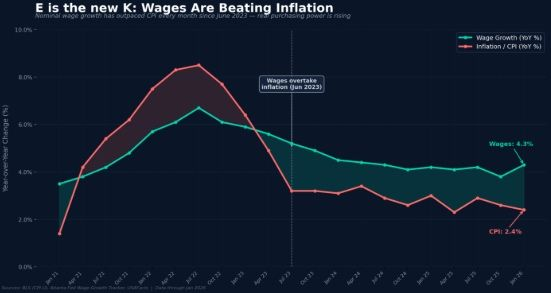
Is 'E' the new 'K'? The U.S. economy has been characterized as a K-shaped economy. The top segment defined by asset owners and upper-income earners vs. the bottom leg of the K represented by low-credit-score consumers with few/no assets who struggle with their debt service. While these two cohorts exist, market commentators often forget about the middle class, which is alive and well. Large in number, the middle class is hard at work and steadily building wealth. As the economy and asset values have risen over time, middle-class households have seen their net worth grow, not disappear. The "E" acknowledges this emerging strength represents the largest segment of the workers. The data backs it up. Wages have outpaced inflation over the past 3 years, as seen in the graph below. Real average weekly earnings have grown nicely as of late: since the start of 2025, 4.3% wage growth vs. 2.4% CPI. Unemployment ticked down to 4.3% in January 2026, with the St. Louis Fed noting early signs the labor market is doing just fine. The middle class will benefit further this tax season, as tax refunds are up 14% this filing season, with the Treasury projecting an average increase of $1,000 per household, injecting meaningful cash into middle-class budgets. Middle-class households hold ~$15 trillion in wealth, averaging ~$500,000 per household, and net of debt, their net worth is ~$250,000 (Federal Reserve). And here's the shift no one's talking about: more people are choosing to rent. In all 50 of the largest U.S. metros, renting is cheaper than buying. Affluent renters are growing in 35 of the top 50 metros. People are staying mobile, skipping inflated home prices, exorbitant home insurance premiums, and high property taxes; with more households directing money toward experiences and priorities they actually value. Politics aside, the consumer is getting stronger, not weaker. Long live the middle class, as the consumer still powers the economy. This narrative should help better inform how investment managers and capital allocators invest, including in the equity market and credit markets, from high yield to structured finance. E is for Everyday Earners.
Bruce Richards tweet media
English
0
0
5
761
Bruce Richards
Bruce Richards@Bruce_Markets·
The Great Wall of Opportunity: Commercial real estate has bottomed, and the recovery is underway. After the Fed's historic 525 basis point rate hike over just 18 months in 2022–2023, the sector absorbed a genuine shock: financing costs surged, cap rates expanded, and equity holders bore the pain. That cycle is now behind us. With rates stabilizing and the front end of the curve declining as the Fed eased policy, CRE is positioned to perform. Marathon Asset Management, we favor strong sponsors and proven asset owners, providing loan in the $50 million to $500 million. Banks have retrenched; a massive wall of maturities looms, and private lenders are filling the gap. Marathon is active in all major segments of CRE lending, yet particularly active in housing-related sectors, from multi-family to senior housing where demographic demand is durable, and supply remains constrained. The aging population is the U.S. results in a shortage of quality housing for senior citizens, which how number 65 million. Marathon has been very active in senior housing, extending loans to strong operators with strong occupancy and cash flow as shown in our most recent CRE loan organization (most recent transaction below). Near full occupancy, rising rents, and robust metrics like NOI and DSCR for well-located properties by top operators is ideal. Senior loans with 65% LTV with the appropriate back-leverage, or mezzanine debt up to 75-80% attachment point that earn several hundred basis points of extra spread can also be highly appealing. With banks taking a more conservative stance with CRE, it is a great time to lend, especially with a $1.5 trillion maturity wall by year-end 2027 per Mortgage Bankers Association. Which CRE lenders navigated the bear market successfully over the past one, two, and three years? What is the 1, 2, 3, 5 10-year track record (e.g. IRR, loss rate)? How many of the loans in the book are underwater with the lender up against maturity, unable to re-pay? Did you know that ~40% of office loans that have come due over the past year are currently unable to currently refinance? The track record is telling, and should help guide capital allocation decisions. google.com/url?rct=j&sa=t…
English
0
1
13
1K