@Aabhas24 Who said you Allah only belongs to Muslims after Mohammad saw ?? Prophet Mohammad was the last messenger of Allah, before that he sent 1.4 lakh of Nabi / rasool. So It is obvious u may find name of Allah in different scripture / tribe/ region. Allah make Islam perfect after Mohd.
Arabic emerged from Nabataean Roots & and “Allah” is a pagan god.
The elegant curves of the Arabic script didn’t fall from the heavens. Rather they rose from the red sands of Petra.
A lot before Qur’anic verses were etched on parchment, another people carved their prayers into stone: the great Nabataeans.
These desert merchants, whose capital stood at Petra, although wrote in a dialect of Aramaic, spoke the tongue that was an early form of Arabic.
Their inscriptions; fluent, cursive, and evolving, became the seedbed of what we now call the Arabic script.
The Nabataean script was born from Imperial Aramaic, and by the 2nd century BCE it had spread across the Levant and northern Arabia. Over the next five centuries, the Nabataeans bent Aramaic letters into a more fluid, joined script, a handwriting that would, by the 4th–5th centuries CE, evolve into early Arabic.
Let’s look at a few evidences.
The Namāra Inscription (328 CE), found in southern Syria, records the epitaph of Imruʾ al-Qays, “King of the Arabs.” The text is linguistically Arabic but written in Nabataean script, bridging the transition between the two systems.¹
Later inscriptions from Harran, Umm al-Jimal, and Jabal Ramm show the same trajectory, Nabataean letters transforming, line by line, into the cursive Arabic hand recognizable by the 6th century.²
As J. Healey observes, “the Nabataean cursive… is the direct ancestor of the Arabic script.”³
In other words, the Arabic alphabet got evolved. The Prophet’s scribes inherited a Nabataean pen.
Long before the Qur’an declared “Lā ilāha illā Allāh” — ‘there is no god but Allah’ — the word “Allah” already echoed through Arabia.
The root of Allāh is linguistic, not theological: al-ʾilāh — literally, “the god” as they claim.
Yet pre-Islamic inscriptions and poetry reveal that the term was used to refer to a supreme deity even among polytheists.⁴
Names like ʿAbd Allāh (“servant of Allah”) existed before Islam, the Prophet’s own father bore that name.⁵
The Zabad Inscription from northern Syria (512 CE) invokes al-ʾilāh in a Christian trilingual text, showing that Arabs used the term generically for “God” centuries before the Qur’an.⁶
But here is the twist. In Nabataean religion, Allah was not unique.
The pantheon of Petra revolved around Dushara, the mountain god, and his consort Allāt, the feminine form of Ilāh (goddess).⁷
This triad: “Dushara, Allāt, and al-ʿUzzā” formed the Nabataean trinity of power.
The masculine Ilāh (“god”) and its definite form Al-Ilāh were part of this divine vocabulary long before Islam’s monotheism cleansed it of plurality.
Thus, a pagan title became a monotheist name.
Let’s look at the Evidences and the Evolution
Nabataean inscriptions (2nd BCE – 3rd CE) show the use of ʾlhʾ (ʾIlāhā), cognate with the Arabic Ilāh, for generic “god.”⁸
South Arabian inscriptions likewise record Ilahān and Alahat in the sense of a high god or goddess.⁹
Classical writers like Epiphanius (4th cent. CE) mention Arabs worshipping Allāt and Alilat, linguistically tied to Ilāh.¹⁰
From these, it’s clear: the semantic field of Ilāh/Allāh predates Islam, stretching from Nabataean to South Arabian domains. What Islam did was monopolize the title, stripping it of its plural company.
Let’s look at the Linguistic Lineage.
Arabic evolved as a North Arabian dialect continuum, existing long before Nabataea rose. What Nabataea contributed was literary visibility, inscriptions preserving spoken Arabic in written form.
The Arabic alphabet descends from Nabataean cursive Aramaic, not directly from the spoken tongue. The Namāra and Zabad inscriptions serve as the missing evolutionary fossils.
The Nabataeans worshipped Dushara (“Lord of the Mountain”), Allāt, Manāt, and ʿUzzā. The term Ilāh floated among these divine titles, which, through linguistic inheritance, became the word Allāh.
@Aabhas24 Similarly, Elohim in Judaism used to refer to a group of gods, which is why it's plural. Yahweh used to be a local deity, which they repurposed as the "only god".
The famous crop circle clip with flying orbs is called the “Oliver’s Castle video”. It was made by John Wabe, a co-owner of a special video effects studio in circa 1996. See: youtu.be/jMeRd5EdBwE Longer analysis here: cropcircleconnector.com/Sorensen/artic…
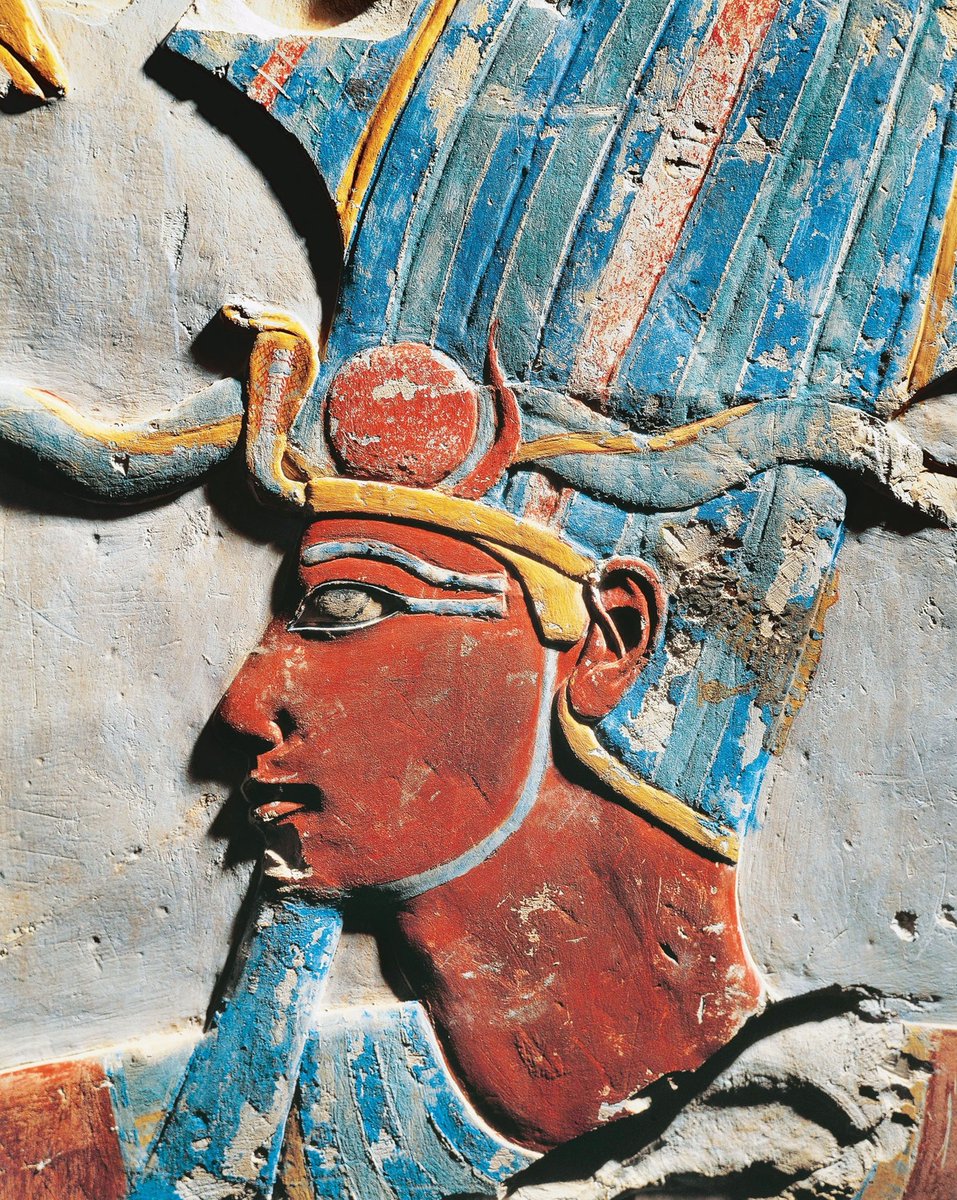
Thutmose III ruled ancient Egypt from 1479 to 1425 BC and earned his place as one of history's most formidable military leaders. Though he became pharaoh at age two, his stepmother and aunt Hatshepsut served as co-regent for the first 22 years of his reign. After her death in 1458 BC, Thutmose III emerged as sole ruler and immediately demonstrated the military genius that would transform Egypt into an ancient superpower.
Over his reign, Thutmose III conducted between 17 and 20 military campaigns—every single one victorious. His most famous achievement came at the Battle of Megiddo in 1457 BC, where he boldly led his forces through a narrow mountain pass his generals deemed too dangerous. This daring tactical decision allowed him to outflank the Canaanite coalition and secure a decisive victory that gave Egypt control of northern Canaan. The battle forced Syrian princes to send tribute and hostages to Egypt, establishing Egyptian dominance throughout the region.
Thutmose's military innovations revolutionized ancient warfare. He created the world's first organized navy, pioneered the strategic use of hostage-taking to ensure loyalty from conquered nobles, and employed revolutionary tactics like portaging boats overland to surprise his enemies. His campaigns stretched Egypt's empire from Syria in the north to the fourth cataract of the Nile in Nubia to the south, crossing the Euphrates River and making the Mitanni kingdom submit to Egyptian power.
Beyond his military prowess, Thutmose III proved himself a prolific builder, constructing over 50 temples and commissioning magnificent architectural projects at Karnak. Historians have dubbed him "the Napoleon of Egypt" for his unprecedented conquests and strategic brilliance. When he died in 1425 BC after 54 years of rule, he left behind an empire at its zenith and a legacy as ancient Egypt's preeminent warrior pharaoh.
Thutmose III's military campaigns fundamentally reshaped the ancient Near East for centuries. His conquests expanded Egypt's territorial control to unprecedented levels, creating a vast empire that brought immense wealth through tribute, trade routes, and access to valuable resources like Lebanese timber and Syrian minerals. The policy of taking noble hostages and garrisoning strategic locations established a system of imperial administration that maintained Egyptian dominance for generations. His military innovations—particularly the creation of a professional navy and advanced chariot tactics—influenced warfare throughout the Mediterranean world. The tribute and plunder from his campaigns funded massive construction projects that employed thousands and enriched Egyptian culture with foreign artistic influences. Most significantly, Thutmose III transformed Egypt from a regional power into an international superpower whose influence extended from Nubia to Mesopotamia, establishing diplomatic relationships with kingdoms as distant as Babylon and the Hittite Empire, and creating a legacy of military excellence that subsequent pharaohs sought to emulate but rarely matched.
#archaeohistories
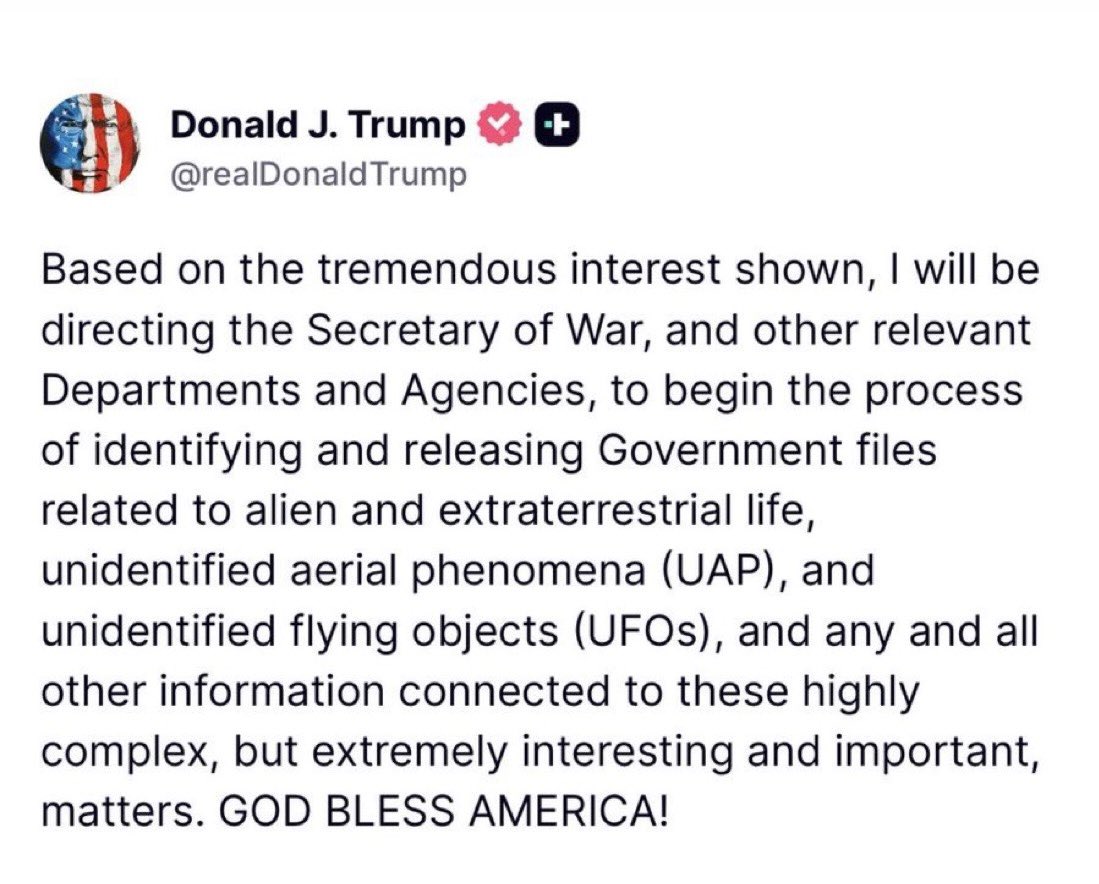
@RepLuna Who in the "Disclosure Movement" is going to have the balls to tell Trump about the Puerto Rico incident in 1988 December involving the two F14 Tomcats and the large triangular ufo into which they disappeared. Named witnesses to this event in the book "The ufo report 1991".
Thank you POTUS! As the Chairwoman of the Task Force that investigates these subjects, we are incredibly grateful for you doing this! I look forward to going through all the footage, photos, and reports with the public!
Comparison of the photo taken of 3IATLAS on 9 November by the British Astronomical Association shows the similarity between 3IATLAS and the proven comet C/2025 F2 SWAN. It's OVER for the alien spacecraft theory😂
@ChrisHenson2169@archeohistories Get your eyes tested by a good optician. The figure getting shagged has no muscles like a typical woman. If you are short on money and need help paying for the eye test - ask me for a loan😂.
@archeohistories Those who think that is two men should visit their local opticians and seek HELP. The figure getting shagged has no muscles like a typical woman.