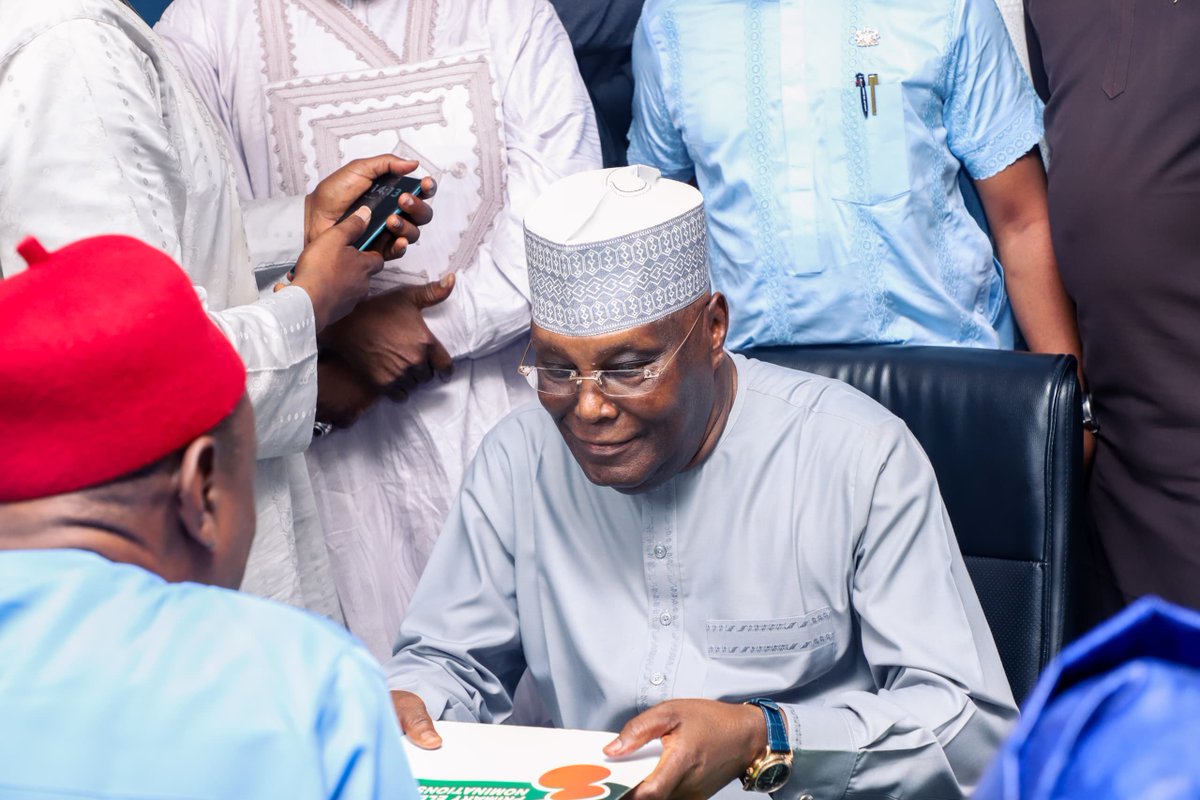
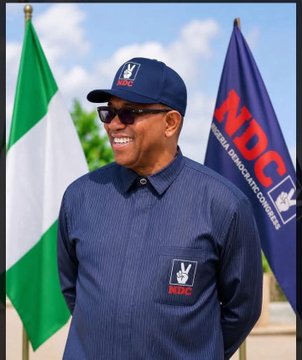
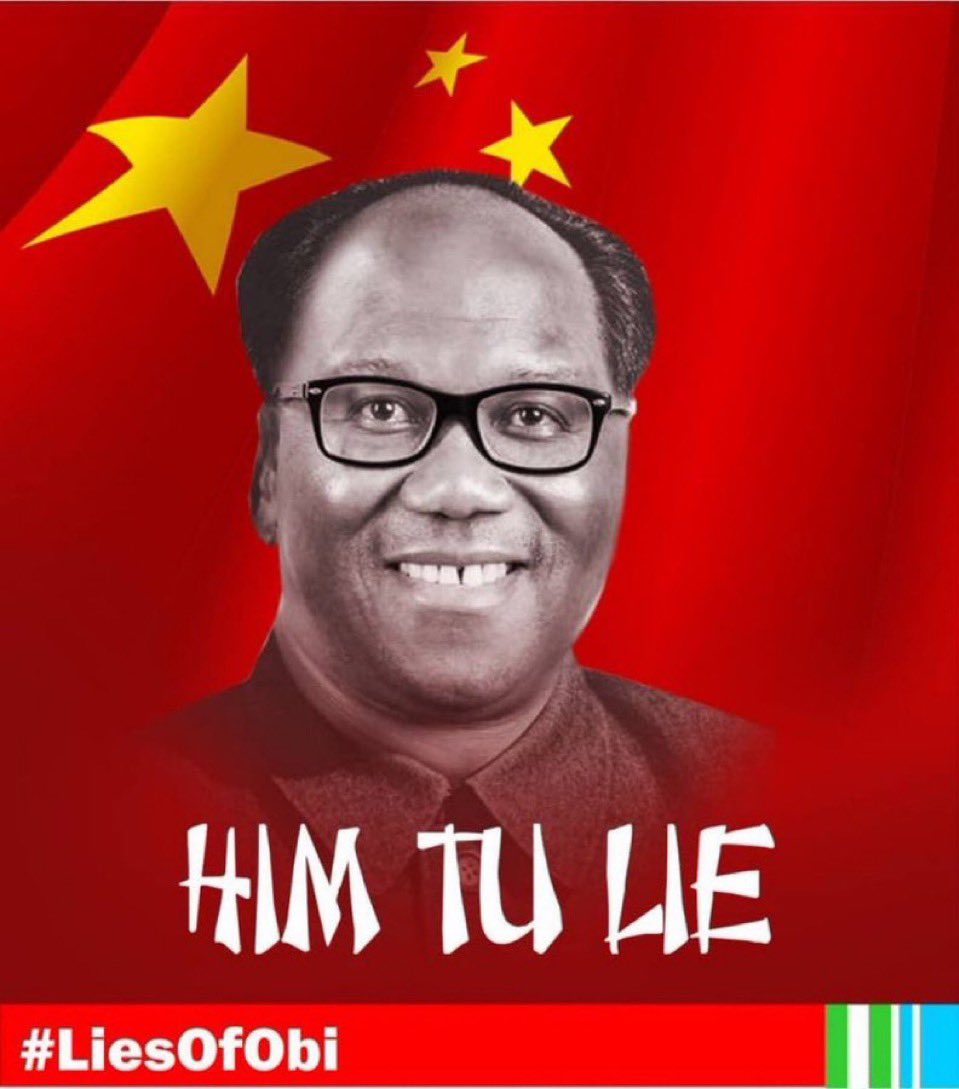
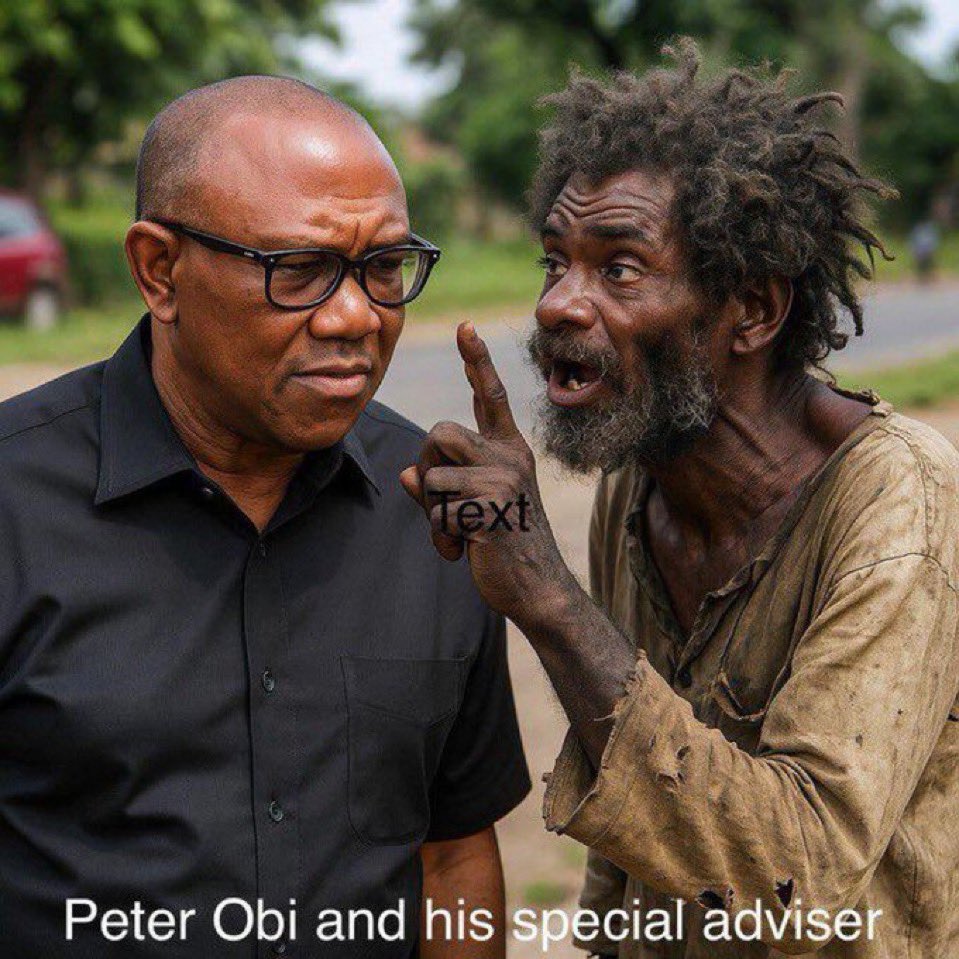
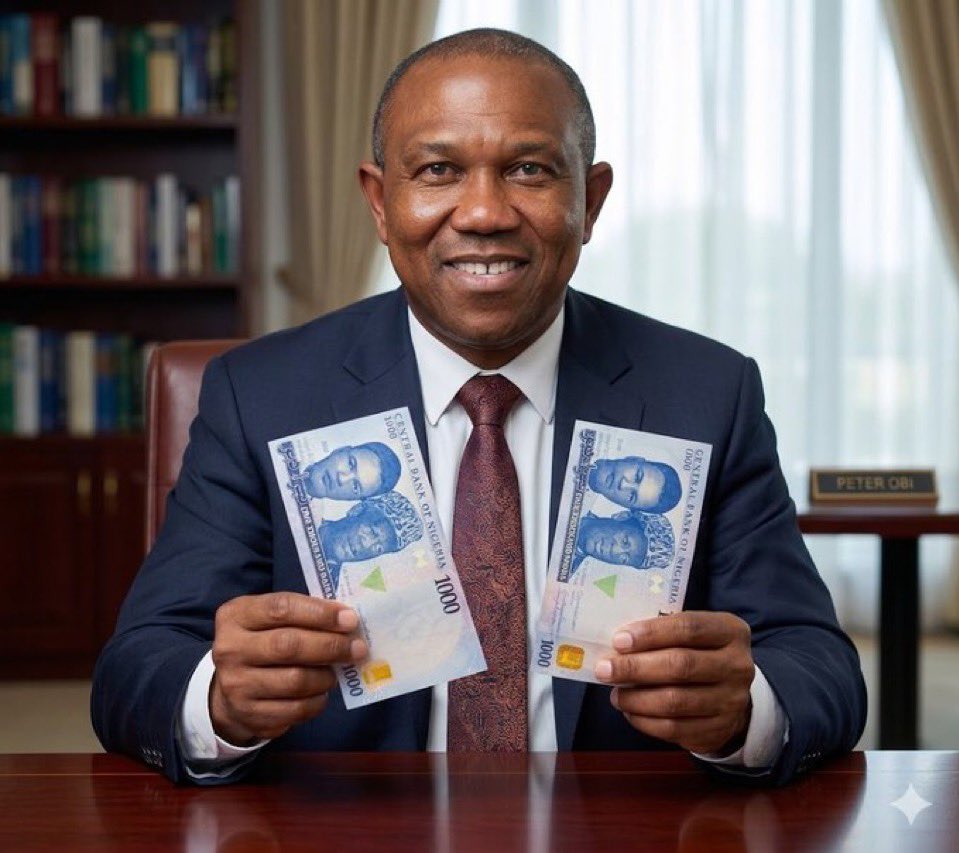
AsoRock is confused as we speak. Their oga is very angry with them for not playing their game well for Peter Obi not to be on the ballot in 2027. He knows that once Peter Obi is on the ballot he's out of AsoRock.
God bless Peter Obi.
A Nation Losing Its HUMANITY.
Some events shatter a society so deeply that words are no longer enough to express the shock; the brutal killing of a teacher and the horrific rape and murder of an elderly woman are among such tragedies. These are not isolated incidents but signs of deeper moral and social decay.
How did we get here? How did we reach a point where teachers are hunted and killed, and the elderly—custodians of memory and wisdom—suffer such dehumanising violence?
This is more than a security crisis; it is a failure of collective humanity. We have become desensitised, consuming tragedy briefly and moving on, allowing indifference to normalise the unacceptable.
To the families affected, I share in your grief. But grief alone is not enough.
We must demand accountability and urgent systemic change. If such atrocities no longer move us to action, then we risk losing our shared humanity. -PO
Debt Servicing, Borrowing, and Nigeria’s Fiscal Priorities
During his recent foreign tour, President Bola Ahmed Tinubu stated that Nigeria will spend about $11.6 billion on debt servicing, a figure that should concern anyone interested in the country’s economic future and long-term development.
There is nothing inherently wrong with borrowing when it is guided by prudence and directed toward productive investment. Countries such as Japan, the United Kingdom, the United States, the United Arab Emirates, Singapore, and Indonesia are all heavily indebted, yet their borrowings are largely channelled into education, healthcare, infrastructure, and innovation - sectors that generate long-term economic returns and sustain repayment capacity. As a result, despite high debt levels, their obligations remain more manageable because they are tied to measurable productivity.
Nigeria’s situation, however, is markedly different. A huge proportion of past borrowing has been directed toward consumption, with limited visible or sustainable developmental outcomes to justify the scale of indebtedness.
It is also important to note that a huge portion of the debt currently being serviced was accumulated under the Tinubu administration itself, while borrowing has continued at a significant pace. The administration’s recent external borrowing alone includes about $6 billion (from First Abu Dhabi Bank in the UAE—$5 billion, and UK Export Finance via Citibank London—$1 billion), a further $1.25 billion under consideration from the World Bank, and an additional $516 million arranged through Deutsche Bank, bringing the latest known external loan commitments to roughly $7.8 billion. In addition, domestic borrowing through monthly bond issuances continues to add to the overall debt stock.
Against this backdrop, Nigeria’s 2026 budget shows that health is ₦2.46 trillion, education is ₦2.56 trillion, and poverty alleviation is ₦865 billion, giving a combined total of about ₦5.885 trillion for these three critical sectors. By comparison, debt servicing at about $11.6 billion (approximately ₦17–₦18 trillion, depending on exchange rate assumptions) is almost three times higher than the total allocation to health, education, and social protection combined. This imbalance highlights a troubling fiscal reality in which debt obligations increasingly crowd out investment in human capital and poverty reduction. Moreover, even within the limited allocations to these sectors, funds may not be fully released, and a significant portion of what is eventually released could be misappropriated.
Ultimately, the central issue is not borrowing itself, but whether borrowed funds are being converted into measurable productivity, inclusive growth, and improved living standards. Without this, debt servicing shifts from being a temporary fiscal obligation to a long-term structural burden that constrains development and deepens economic vulnerability.
A New Nigeria is POssible. -PO
“Peter Obi sold his wristwatch worth N300,000,000 that he received as a gift to sponsor the education of Nigerians.”
These guys are not tired of these lies lol 😆
I extend my sincerest condolences to the High Command and Leadership of the Nigerian Military and the Police over the tragic loss of our courageous officers.
It is with deep sadness that I acknowledge the heartbreaking death of 17 brave police officers, alongside an unspecified number of soldiers, who made the ultimate sacrifice during the recent terrorist attack on a military school in Yobe State. At this moment of profound sorrow, the entire nation stands in solidarity with the leadership of the Armed Forces, the Police, the affected commands, and the wider security community.
Every security personnel killed is a tragedy to our nation. Every fallen officer represents a family thrown into grief, children left without parents, and communities robbed of those sworn to protect them.
The Federal Government must ensure adequate compensation, support, and long-term welfare for the families of all those who paid the supreme price in service to our nation.
A nation cannot continue to normalise the killing of its security personnel and innocent citizens without urgent, decisive, and strategic action. We must confront insecurity with sincerity, professionalism, and the political will necessary to protect lives and restore public confidence.
To the families of the fallen heroes, I offer my deepest and most heartfelt sympathies. We mourn with you, and we honour the courage and sacrifice of your loved ones. May their souls rest in eternal peace. -PO
State visits by Leaders are not tourism, and diplomacy is not a fashion parade. Every foreign trip undertaken by a government must deliver measurable benefits to the people, including investments, technology transfer, trade agreements, factory expansion, industrial partnerships, and job creation.
During President Trump’s recent visit to China, the American delegation reportedly included a few top government officials, and many of the biggest figures in global business and technology:
Consequently, huge trade deals worth several billion dollars including about 200 Boeing orders were achieved.
The list of the entourage included
1. Donald J. Trump – President of the United States
2. Marco Rubio – Secretary of State
3. Pete Hegseth – Secretary of Defence
4. Elon Musk – CEO, Tesla & SpaceX
5. Jensen Huang – CEO, Nvidia
6. Tim Cook – CEO, Apple
7. Larry Fink – CEO, BlackRock
8. Stephen Schwarzman – CEO, Blackstone
9. Kelly Ortberg – CEO, Boeing
10. Brian Sikes – CEO, Cargill
11. Jane Fraser – CEO, Citigroup
12. Larry Culp – CEO, General Electric
13. David Solomon – CEO, Goldman Sachs
14. Sanjay Mehrotra – CEO, Micron Technology
15.Cristiano Amon – CEO, Qualcomm
16. Dina P. McCormick – President of Meta
17. Ryan McInerney – CEO, Visa
18. Michael Miebach – President, Mastercard
19. Jim Anderson – CEO, Coherent
20. Jacob Thaysen – CEO, Illumina
That is how serious nations approach diplomacy, by aligning foreign policy with economic expansion, industrial growth, innovation, and national productivity.
I hope that lessons can be learned from these recent visits comparing them with the President of Nigeria’s recent state visit to the United Kingdom.
A large entourage of politicians, aides, and government officials travelled, yet Nigerians are still asking a simple question: what exactly did Nigeria bring home?
Which factories are coming to Nigeria?
What power, technology, manufacturing, agricultural, or industrial agreements were secured?
How many direct jobs will this visit create for Nigerian youths?
What investments were attracted?
What measurable economic outcomes can the ordinary Nigerian point to?
The delegation reportedly included:
1. President Bola Tinubu
2. Senator (Mrs) Tinubu
3.12 governors
4.9 ministers
5.7 members of the National Assembly
6. Over 20 senior State House staff
7. Over 30 security personnel
8. Over 10 domestic staff
9. Several supporters and associates
It is not enough to ride horses, wear matching uniforms, attend royal banquets, and release glossy photographs. Symbolism without substance cannot feed hungry citizens.
Today, Nigeria is in decline, battling serious insecurity, food insecurity, unemployment, a weakened naira, declining industrial productivity, and worsening poverty.
At a time when millions of Nigerians struggle daily to afford food and survive economic hardship, every kobo spent on foreign trips must produce tangible national value: investments, factories, jobs, exports, infrastructure, and economic opportunities.
Nigeria needs leadership that is focused less on optics and more on productivity; less on ceremony and more on measurable economic results.
A New Nigeria is POssible. -PO
No private jet, no long convoy, just one man hurrying through the airport with his own bag like every other Naija traveller! While others dey fly like dem own the sky, this one still dey catch normal flight. This na the kind of humility wey 2027 go reward heavy!
Peter Obi na man of the people!🇳🇬🧳✈️🔥
My dear Brother, Dr. Datti Baba-Ahmed,
I am deeply shocked and saddened by the sudden passing of your beloved brother, Jallul Baba-Ahmed, yesterday. My heart goes out to you and your entire family.
Please accept my heartfelt condolences. I pray Almighty Allah grants him eternal rest in Al-Jannah Firdaus and gives you and your family patience and strength to bear this painful loss.
I stand with you in this difficult time.
With deepest sympathy,
-PO
The march to restore prosperity and better days to our beloved nation took a firm and decisive step forward today at the National Secretariat of our great party, the African Democratic Congress.
This is more than a political journey; it is a national movement rooted in hope, renewal, and the collective resolve to save Nigeria from despair. I call on all Nigerians, regardless of region, faith, or background, to join us in this noble cause. Together, we will restore the promise of our nation and bring good times back again. -AA