China Banking News

9.6K posts

China Banking News banner
China Banking News

China Banking News

@CBankingEditor

Demystifying China's macroeconomic policy. Sign up for free updates read by the World Bank and J.P. Morgan: https://t.co/sZ5LRckG8j

Hong Kong Katılım Mart 2017
775 Takip Edilen13.1K Takipçiler
China Banking News
China Banking News@CBankingEditor·
China's provincial governments asked to bail out risk-fraught regional banks China’s top economists and bankers remain highly concerned about the potential for the ailing health of regional lenders to trigger a financial crisis. They’ve called for local governments to help bail them out, by issuing special bonds to fund capital injections for unsteady balance sheets. While the move would bolster China’s beleaguered smaller banks, it could also compound long-standing problems with the financial system. These include the immense leverage burden of local governments, as well as the collusion between regional officials and lenders which has historically been a source of debilitating debt risk. Leading pundits argue, however, that increasing local government influence over regional banks via bailouts will prove advantageous for the Chinese economy right now, by enhancing the state’s ability to control credit allocation and tightening the coordination of fiscal and financial policy. Read our briefing on the matter for free and in full right here: chinabankingnews.com/p/chinas-provi…
China Banking News tweet media
English
0
1
2
474
Scott Raines
Scott Raines@scotthraines·
As concerns style, he echos the greats before him beautifully, which means you have to have read the greats in order to understand what he’s doing, which is objectively remarkable if you know how to read.
English
12
1
286
36.1K
Save Your Cinema
Save Your Cinema@SaveYourCinema·
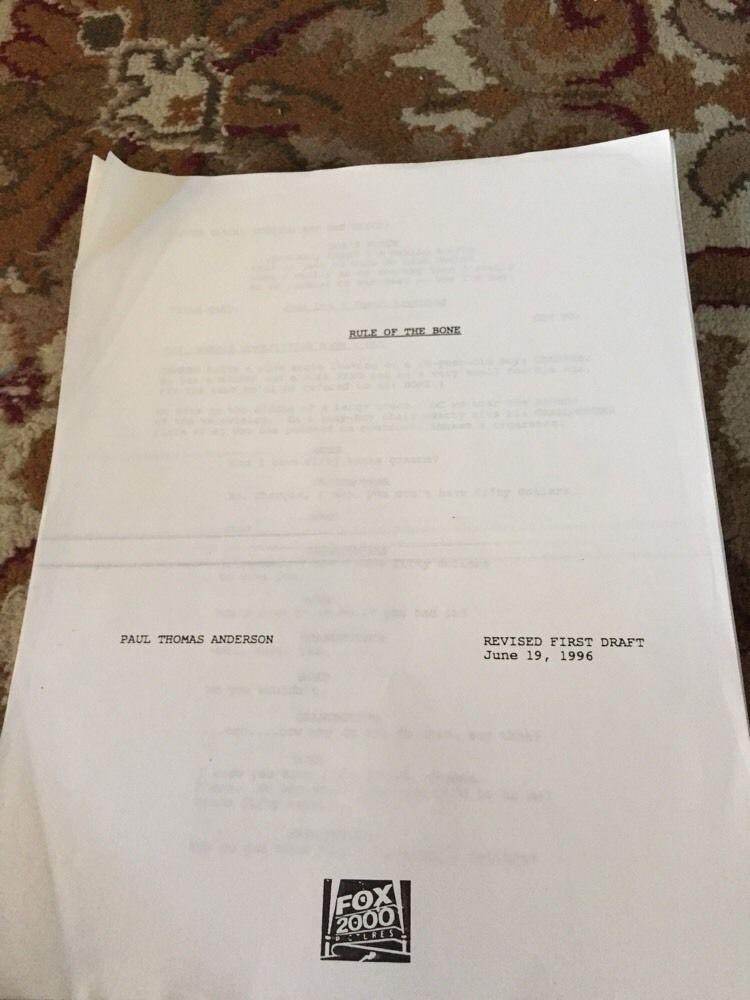
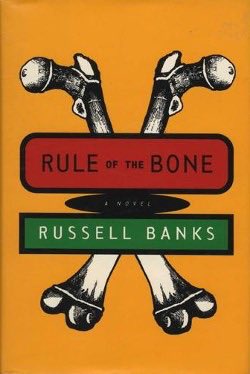
If you’re a Paul Thomas Anderson fan I recommend reading Rule of the Bone. He almost made a film adaptation of it before Boogie Nights. His screenplay was really good
Save Your Cinema tweet mediaSave Your Cinema tweet media
English
4
32
739
33.1K
Rishi
Rishi@rishi841312·
@CBankingEditor To be fair though Uncle Milton visited China between 1980-1992. Nobody could have foreseen anything way back then. Even in the year 2000 nobody knew China's potential let alone 10 years before that.
English
8
0
11
3K
China Banking News
China Banking News@CBankingEditor·
When Milton Friedman visited China, he also argued that Shanghai's Pudong New District was a Potemkin Village designed to fool credulous foreigners. Pudong is now one of China's preeminent finance and tech hubs, with an annual GDP of more than one trillion yuan (USD$145 billion). Worth noting that Friedman made multiple visits to China after the Third Plenum of 1978 - a very clear sign of how open minded and pragmatic Deng Xiaoping's leadership had become by the early reform era.
Handre@Handre

>be Milton Friedman >visit China in 1980 >see thousands of workers digging canal with shovels >ask Chinese official: "Why not use bulldozers?" >official replies: "That would eliminate jobs" >Friedman: "Then why not use spoons?"

English
1
11
443
36.4K
China Banking News retweetledi
John F Sullivan
John F Sullivan@JohnF_Sullivan·
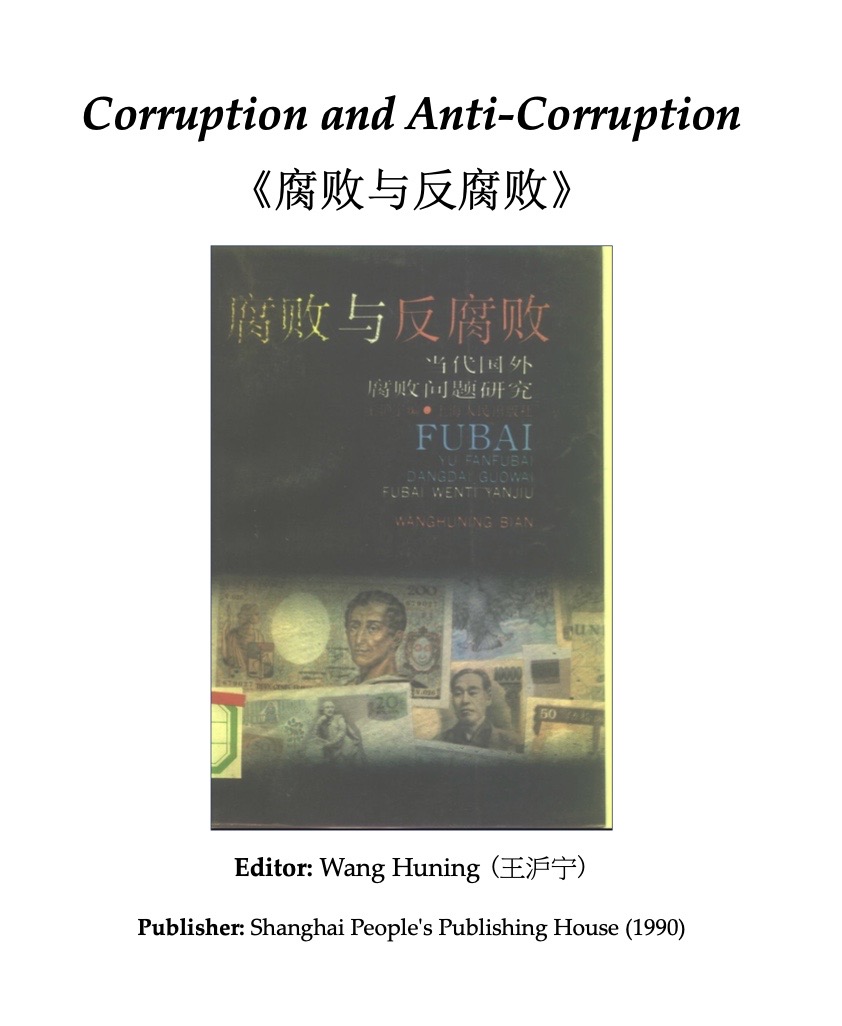
Wang Huning (1989): "Although the establishment of China's socialist system has created the basic premise for preventing corruption, this does not mean that corrupt phenomena will automatically disappear. Due to various reasons such as history, culture, economic development ...
John F Sullivan tweet media
English
2
18
99
5K
People's Art of War 人民兵法
US is the hegemon that divides them the least. Thats why they keep doing it. Basically it is: - least objectionable leader (not my neighbor) - scapegoat - excuse to cooperate - mediator and arms salesman The arrangement is very codependent. All parties benefit from the ambiguity. The smaller allies get security without having to subordinate themselves to a regional rival. They get a scapegoat for tough choices. They get a back channel for cooperation. Hegemon gets basing rights, power projection, and benefits economic and military deals. By playing middle man, negotiator, and clearing house. Also provides diplomatic cover for cooperation. The system gets stressed when the hegemon demands too much. Or when the hegemon disengages. Or when one of the client states decide there's an alternative patron. Gulf states would need an alternative patron. Or one of the GCC states gets strong enough that can force others under their umbrella. This is why I think they're going to double down on security commitments after the war. Neither China nor Russia are offering greater or equal comittments to replace the US.
林 Linnamon@_linnamon_

If this continues I think at some point even the Gulf States would think that working with the US-Israel regime is just not worth it anymore

English
10
22
169
10.7K
China Banking News
China Banking News@CBankingEditor·
Ben Stiller is 100% right - "Reds" is one of the greatest movies ever made, containing one of the most subtle yet powerful scenes in all of historical cinema. The scene depicts an intense confrontation between the anarchist Emma Goldman (Maureen Stapleton) and the Communist journalist John Reed (played by Warren Beatty) over the fallout of Russia's October Revolution. As depicted in Reds, Goldman has the intellectual courage to concede the truth of the failings of the incipient Soviet system - despite having invested the energies of her entire life and identity into the cause of radical left-wing politics. John Reed, however, lacks the strength of character to do similar. He's crushed by confrontation with reality, and when forced to choose opts to engage in self-deception, instead of admit that the consummate endeavours of his life may well have proved misbegotten and fruitless (for the time being at least). Irrespective of the historical veracity of the scene and what you think of socialism's final mission for humanity, this remains an intensely powerful depiction of how the human animal reacts when forced to confront the truth of himself. Beatty's direction and performance of the scene is just superlative - he's right up there with Bernardo Bertolucci as a director of historical epics. "Reds" also contains great cameo interviews with Henry Miller. youtube.com/watch?v=lbRTgr…
YouTube video
YouTube
Ben Stiller@BenStiller

100 percent disagree. One of the great film making achievements. Warren Beatty is one of the best directors of the last 50 years. This is a beautifully made film on every level with one of the great Diane Keaton performances. Any person wanting to make a love story that is both small and epic should watch this. In this era of shorter attention spans REDS stands out as what long form storytelling used to be. This used to be what a big screen movie was with our IMAX or special effects - and it is breathtaking. The witnesses alone - real people from the era telling the story interspersed with the films scenes give of a depth and authenticity we never see anymore in studio movies. See REDS!!

English
1
0
4
1.3K
China Banking News retweetledi
James Medlock
James Medlock@jdcmedlock·
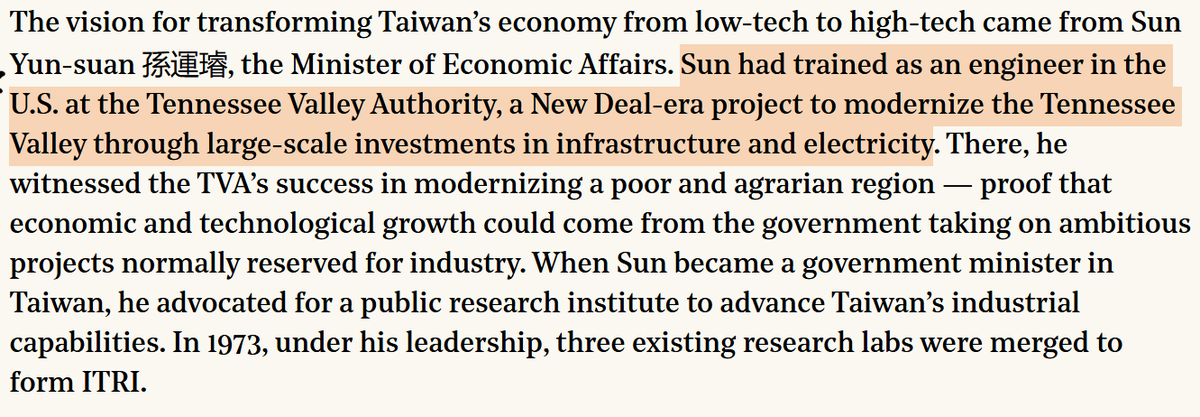
Incredible post. I had no idea the industrial policy that helped spawn the world's biggest semiconductor manufacturer traces directly back to the New Deal's Tennessee Valley Authority.
James Medlock tweet media
Caleb Watney@calebwatney

Neat profile of Taiwan's "Industrial Technology Research Institute", a government-funded lab which helped spin out TSMC and much of Taiwan's chip industry. One of the most impressive industrial policy plays of all time. asteriskmag.com/issues/13/the-…

English
20
351
2K
140.1K
China Banking News retweetledi
npj
npj@TiltingatM3·
The trade integration from Pax Mongolica led to such a large balance of payments deficit in Europe—Europeans didn’t make much Asians wanted, so silver flowed east to pay for net imports—that it caused a “silver famine.” The resulting monetary crisis led to the credit money system that forms the basis for modern capitalism.
Memory Medieval@MemoryMedieval

People will hate this but it has to be said.. Genghis Khan is vastly overrated. Yeah, the Mongols conquered a lot of stuff. They were good at war. But that's it. They didn't contribute to human society in any measurable way that affects anyone today. I will bet money you've never eaten a buuz dumpling or listen to throat singing. A large part of the Mongol's success comes from their sheer brutality towards common folk. And brutalize the common folk they did. Sack a castle and kill everyone. Come back two weeks later when people are rummaging through the wreckage and kill everyone again. Capture a bunch of men, women, and children, and make them march at the head of the army's assault, taking the casualties and filling up moats with their corpses. So sure, the war machine was impressive but the slaughter of millions of peasants is (aside from kind of sickening to consider) entirely unimpressive. And in exchange for the slaughter of so many the world got.... ? Mid asian food and terrible music? Weird horse products? "They are inhuman and beastly, rather monsters than men, thirsting for and drinking blood, tearing and devouring the flesh of dogs and men, dressed in ox-hides, armed with plates of iron... bulky, strong, invincible, untiring... They are without human laws, know no comforts, are more ferocious than lions or bears." - Matthew Paris (English Benedictine monk in the 1240s) "They should be called monsters rather than human beings, thirsting after and drinking blood, tearing apart and devouring the corpses of dogs and humans... Devoid of human laws, they have no knowledge of clemency.." "They are extremely arrogant toward other people, [and] tend to anger... easily... They are the greatest liars in the world in dealing with other people... They are crafty and sly... [and] have an admirable ability to keep their intentions secret... They are messy in their eating and drinking and in their whole way of life, [and] cling fiercely to what they have. They have no conscience about killing other people..." -John of Plano Carpini (1240s) "One cannot sufficiently defame the cruelty and artful ability for deception of that people... a certain ill-bred breed of inhuman humans, whose law is lawlessness, whose wrath is furious... overrunning countless lands, which it is dreadfully devastating, killing and horribly exterminating by fire all who stand in their way." -Ivo of Narbonne (1240s) A disgusting people who happen to get very, very good at warfare but highly overrated by people who value martial excellence.

English
35
139
1.5K
105.5K
thermo
thermo@DionysianAgent·
main difference between americans and europeans is that americans think money and net worth are the ultimate status and intelligence signal while europeans view it as more cross-domain and dependent on a mix of art, aesthetic, philosophy, and so on this is why we have such a conflict between how the two different continents choose their idols young americans desperately idolize people like Elon, Trump, Silicon Valley tech moguls, and anyone who achieves billionaire status, as if their word is law young europeans can’t stand them, doesn’t matter how much money Elon gets, europeans will never respect or like him, because he doesn’t embody the european standard for what is seen as a great man - he is no philosopher, he is no artist, he is no scientist, thus he doesn’t measure up in any meaningful way to the historical european greats, despite how much wealth and resources he may hoard this disconnect in evaluating masculine competence and what defines the admirable traits of man is what creates the greatest conflict between european men and american men we simply don’t respect american men intellectually, and probably never will and they can’t stand that they can’t stand that europeans won’t be bootlickers like them they can’t stand that europeans have a rich deep soul that requires deep stimulation in order to recognise greatness they can’t stand it because it reveals the underlying truth that americans don’t have a soul it reveals the truth beneath the floorboards, the soulless fast food culture of america, the culture of strip mall churches and hyper slop they can’t stand that europeans hold a mirror to their face and show americans what ugly creatures they actually are
English
205
75
880
88.2K
China Banking News
China Banking News@CBankingEditor·
@Stephane_Erler Of course it is. But this is an issue of accessibility for domestic retail and institutional investors - mainland bourses are preferred.
English
1
0
5
99
China Banking News
China Banking News@CBankingEditor·
Renowned economist Daniel LaCalle appears to believe that Beijing's call for "mainland incorporation" of Chinese companies is a ploy by the Communist party, designed to shore up state control of their business operations. A more likely explanation is that it's part and parcel of Xi Jinping's plan to use the Chinese stock market as a macroeconomic tool for the creation of wealth effects that can boost domestic consumption. Xi and his team are highly committed to expanding the role of capital markets in China's financial system - a system that has long been dominated by the big state-owned banks. Beijing has two principal goals here. The first goal is to optimize financing for the Chinese tech sector, with the long-term goal of achieving scientific and technological independence vis-a-vis the US (if not beating the US). Tech start-ups are high-risk high-reward undertakings. Chinese policymakers believe capital markets to be far better suited to the funding of such speculative investments, rather than the state-owned banks which occupy a role of systemic financial importance. The second goal is to use expanded household ownership of domestic equities as a mechanism for generating wealth effects that can boost Chinese consumption. Chinese policymakers and economists have been quite explicit and forceful on this particular point. This is because they generally view insufficient domestic demand - and in particular weak household consumption - to be the biggest macroeconomic challenge faced by China at present. In order for their plan to work, Chinese retail investors - as well as pension funds and insurers - will need access to a broader smorgasbord of dependable assets. This in turn requires that more of China's most promising domestic companies list on mainland exchanges - whether it be in Shenzhen, Shanghai or Beijing - instead of in Hong Kong or on overseas bourses.
Daniel Lacalle@dlacalle_IA

This is very significant. "Mainland incorporation" means government control. via Bloomberg

English
4
3
20
4.1K
China Banking News
China Banking News@CBankingEditor·
This fantastic breakdown from China Policy details just how Beijing's economic calculus has shifted in the wake of seismic demographic shifts. China's core missions now include: - Supporting the growth of elite human capital. - Raising the living standards and lifestyle expectations of ordinary citizens, and - Boosting levels of domestic consumption via higher incomes and better social welfare. From China Policy: "With the birth rate at historic lows and India having overtaken it as the world's most populous country, the state that once managed labour as an abundance problem is now treating human capital as a growth constraint. "More income + less stress = more consumption. Better conditions = more babies and stronger eldercare capacity."
China Policy@policycn

Beijing long treated social welfare as a backstop, not a strategy. That distinction is quietly disappearing. Quality of life dominated discussions at this year's Two Sessions—expanded school breaks, staggered paid leave, stronger labour protections, and hukou reform for the roughly 400 million migrant workers locked out of the urban social safety net. The agenda signals a quiet but notable reframing of policy. The centre’s calculus has shifted. More income + less stress = more consumption. Better conditions = more babies and stronger eldercare capacity. With the birth rate at historic lows and India having overtaken it as the world's most populous country, the state that once managed labour as an abundance problem is now treating human capital as a growth constraint. Wellbeing, labour mobility, and demographic resilience are now explicitly wired into PRC innovation and consumption strategies. A burnt-out, hukou-constrained workforce cannot drive the domestic demand or produce the homegrown talent that Beijing's tech ambitions require. The 15th 5-year plan (2026–30), unveiled this session, sets the stage—but rollout remains the perennial challenge. Li Qiang's 2024 pledge to extend urban residency rights to 300 million workers has stalled, and the gap between livelihood rhetoric and fiscal commitment is wide. Beijing is trying to make it more pleasant to live in China. Whether that translates from delegate corridors into lived policy will be worth watching.

English
4
12
54
6.1K
China Banking News retweetledi
Kyle Chan
Kyle Chan@kyleichan·
After decades of infra-maxxing, many believe China's infrastructure boom is reaching the end. Not so, says Yu Yongding: "The scope for further infrastructure investment in China remains very large." Reminds me of Lu Feng's industrial maximalism. eastisread.com/p/yu-yongding-…
English
5
46
209
17.8K
China Banking News
China Banking News@CBankingEditor·
Thanks so much for your insights Alfred. Isabella Weber writes at length about how the iron and salt monopoly is an example of the Han emperors using the market as a instrument of state policy. IIRC - the odd dichotomy of the salt and iron debates for a modern sensibility was that the advocates of the market were also the advocates of a greater role for the state, while the hidebound Confucians were opposed to both. As for wuwei - worth noting that Murray Rothbard was a big admirer of Taoism.
English
0
0
0
58
Alfred W Croucher
Alfred W Croucher@keanfei47·
There is a chapter called “Biography of the Markets” in the 史记。In fact it is presented in Daoist terms using the term ‘无为’ which beautifully translates as ‘laissez fair’. It is said that the first three Han emperors practiced Daoist economics but as result the treasury was drained so the next emperor implemented the Steel & Salt monopoly and appeased the scholars by adopting Confucianism as the official creed which placed the responsibility for the welfare of the masses clearly on the emperor & the officials. This doctrine survives even under Marxism.
English
1
0
1
49
China Banking News
China Banking News@CBankingEditor·
This is no doubt the most criminally underrated and neglected masterpiece in the corpus of Axial Age Chinese philosophy. In terms of literary beauty, it's at least on the par with the Kafkaesque metaphysical parables of Zhuangzi - the Jeffrey Lebowski of China's Warring States Era. The Han Fei Zi is replete with just as many wondrous and beautiful vignettes of literary art including: - A vivid description of the robot bird that the engineer-philosopher-cult leader Mozi built using timber and string. - An account of how decadent young men in one of the ancient Chinese states would wear make up to corrupt the morals of the young women - a portent of the popularity of K-pop boy bands in the modern era. I won't spoil the ending for you - except to say that Han Fei Zi approves heartily of how the local ruler decides to deal with these ancient Chinese precursors to BTS. - A scathing account of the Confucian obsession with courtly protocols and rites. Han Fei Zi points out that this is a grotesque waste of human capital and labour, given that full mastery of the corpus of ritual etiquette consumes an entire lifetime (could be an effective solution for elite overproduction, however). - Finally - no one that I know of has ever pointed out that Han Fei Zi anticipated Adam Smith by two millenia. He has a great description of how the pursuit of self-interest generates broader material benefits thanks to the mechanism of trade.
Alexandre Lefebvre@alex_usyd

Stoked to read this bad boy for my honours seminar, guest taught by @Tongdong_Bai. Han Fei Tzu, and I quote Tongdong, "makes Machiavelli look like a liberal baby."

English
7
28
233
18.1K
China Banking News retweetledi
Sharing Travel
Sharing Travel@TripInChina·
The wetland park in Hangzhou.
Sharing Travel tweet media
English
10
138
736
12.6K
China Banking News retweetledi
Joe Weisenthal
Joe Weisenthal@TheStalwart·
One of Erica's main conclusions: In the short term, the war will increase pain on China's economy. In the medium term, the war will likely accelerate global demand for Chinese batteries, solar panels and more.
Joe Weisenthal@TheStalwart

NEW ODD LOTS: What War in Iran means for the 'teapot' oil refineries in China. @tracyalloway and I talk to @Erica_Downs_ about what the closure of the Strait of Hormuz means for Chinese energy security. podcasts.apple.com/us/podcast/wha…

English
28
135
784
255.8K
Michael Lucci
Michael Lucci@Michael7ucci·
@CBankingEditor I will spend hours looking in the mirror and reflect upon the wisdom you've kindly shared with me today. And you're totally not closing with a non-sequitur. You're stating the logical conclusion which you've proved out with rigorous and consistent argumentation. Excellent.
English
1
0
0
25
Michael Lucci
Michael Lucci@Michael7ucci·
US defense tech remains a cut above Chinese. Not coincidentally, US defense tech was never off-shored & indigenized to Communist China. The CCP stole our specs. But we never *taught them* to directly replace us, and they stayed behind. That's a lesson for all sectors.
Michael Lucci@Michael7ucci

Chinese defense tech has been embarrassed on the battlefield. But let’s not forget how Elon laughed at BYD only for BYD to indigenize Apple & Tesla tech and then outcompete Tesla. Their defense tech is weak now. It won’t stay that way if we keep handing them our tech.

English
97
113
860
111.9K