Cleveland Clinic Electrophysiology

23 posts

Cleveland Clinic Electrophysiology banner
Cleveland Clinic Electrophysiology

Cleveland Clinic Electrophysiology

@CCF_EP

Cardiac Electrophysiology & Pacing | Cleveland Clinic Leaders in AF/VT ablation, devices, and translational EP research Advancing evidence. Informing practice.

Katılım Mart 2026
106 Takip Edilen107 Takipçiler
Cleveland Clinic Electrophysiology retweetledi

NEJM
NEJM@NEJM·
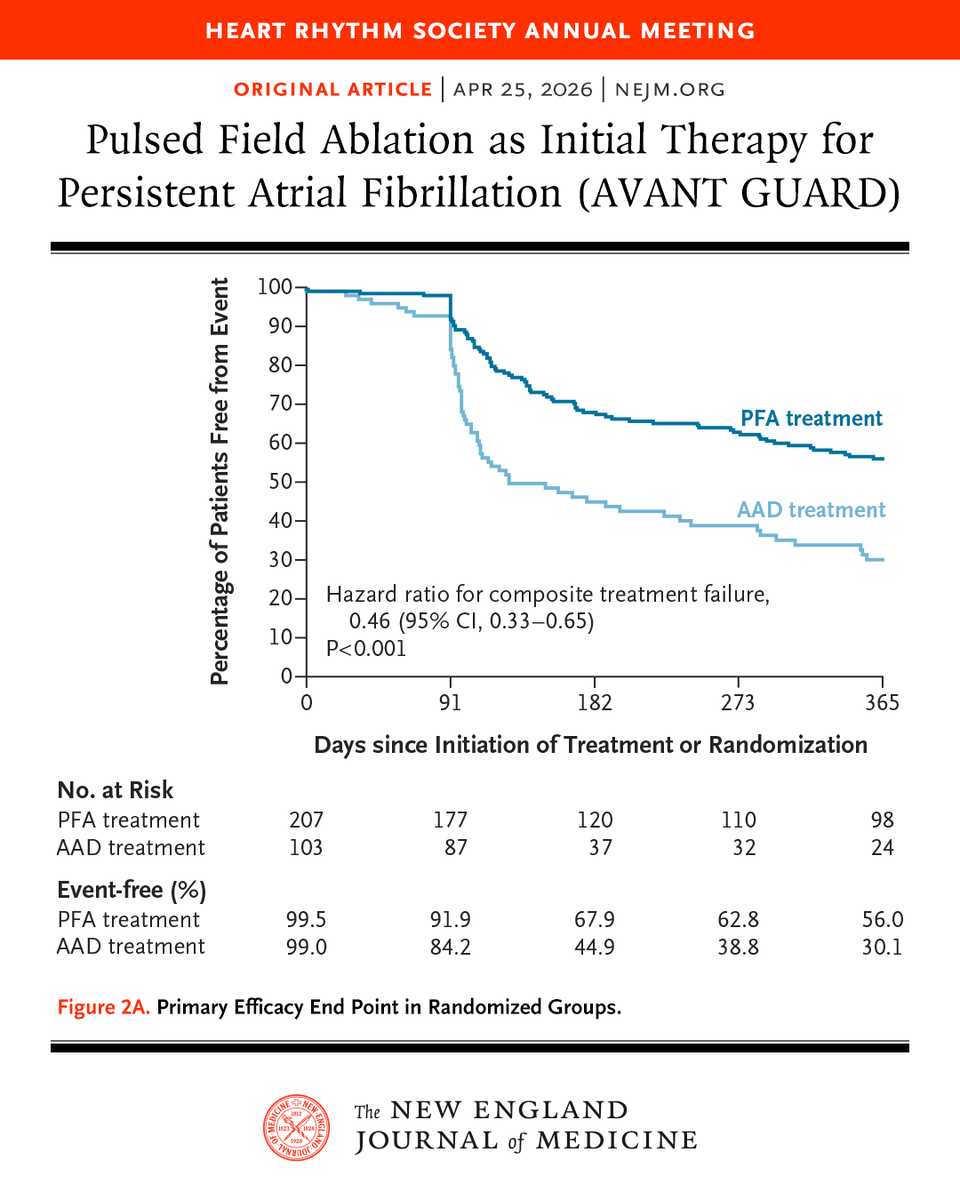
Presented at #HRS2026: In patients with persistent atrial fibrillation, first-line treatment with pulsed field ablation reduced the recurrence of atrial arrhythmias at 12 months as compared with antiarrhythmic drugs. Full AVANT GUARD trial results: nejm.org/doi/full/10.10… @HRSonline
NEJM tweet media
English
2
100
248
98.3K
Cleveland Clinic Electrophysiology
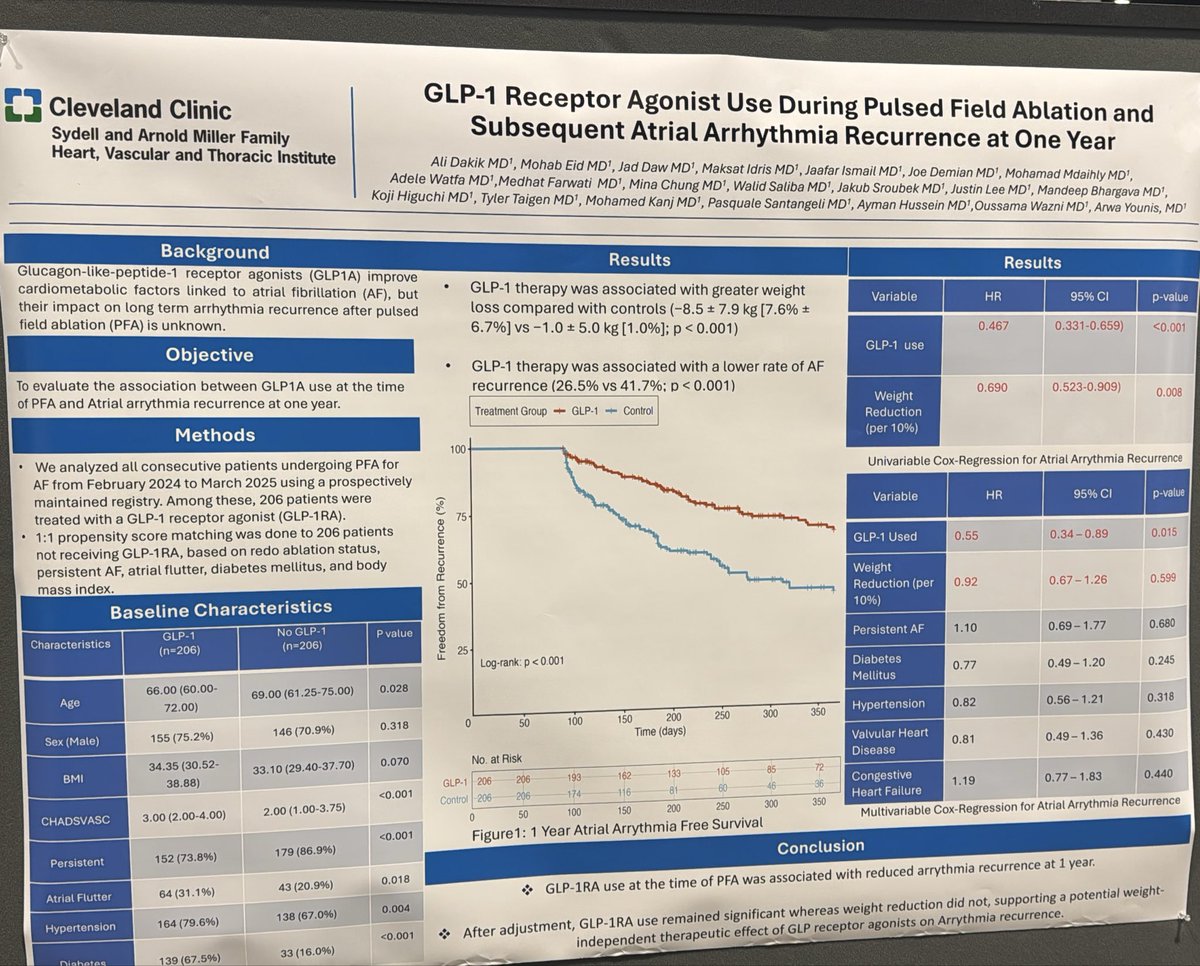
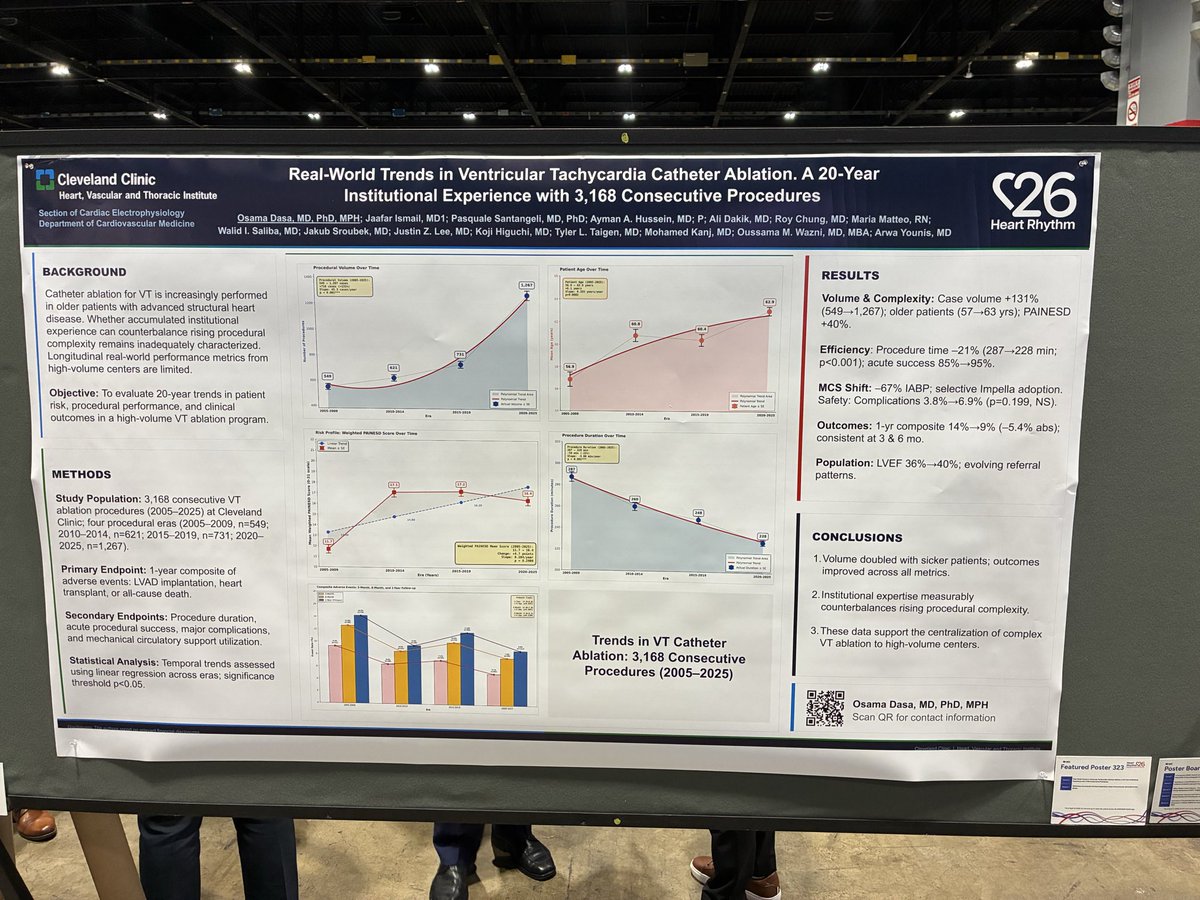
GLP-1 RA signal in AF ablation. Work by Dakik et al., mentored by Younis (Cleveland Clinic EP): GLP-1 use during PFA associated with lower 1-yr atrial arrhythmia recurrence—independent of weight loss. Metabolic modulation meets EP. Cleveland Clinic EP | @CleClinicHVTI
Cleveland Clinic Electrophysiology tweet media
English
0
1
3
187
Cleveland Clinic Electrophysiology retweetledi
Jason Andrade
Jason Andrade@DrJasonAndrade·
More than 10 years ago Oussama and I started our journey of investigation, trying to the define the optimal first treatment for patients with atrial fibrillation.  Separately we pursed randomised studies in populations with treatment-naive paroxysmal AF.  Five years ago we presented our RCTs in the paroxysmal AF population, which ended up sitting side by side in the same issue of the New England Journal of Medicine.  nejm.org/doi/full/10.10… nejm.org/doi/full/10.10… Since then we have been working together to examine the same question of optimal initial therapy, but instead looking at patients with more advanced forms of atrial fibrillation.  Today Oussama presented the results of the AVANT-GUARD study, which definitively demonstrated the value of initial catheter ablation in the treatment naive persistent AF population. Like EARLY-AF, AVAT GUARD used implantable cardiac monitors to evaluate arrhythmia endpoints   Like EARLY-AF - initial catheter ablation reduced recurrences in AVANT GUARD by about 50%, which was about 25% in absolute terms. To put this another way, only 4 patients need to be treated with ablation to prevent a recurrence of arrhythmia.  However, binary recurrence doesn’t tell the whole story. Because we had loop recorders we were able to assess the time spent in AF (or AF burden). In this regard significantly more patients had none or negligible burden after ablation (<0.1%), with significantly more AAD treated patients having a very high burden (>5%). This is important as AF burden is associated with clinical outcomes such as hospitalisation. In terms of risk - the rates of any adverse event or serious adverse event were comparable between randomised arms. Highlighting that persistent AF patients with high CHADS-VASc score are high risk irrespective of treatment provided. This is important as we reflect on treatment options as part of shared decision-making. Congratulations to Oussama for the presentation and leadership, to the co-investigators and study sites for their participation and dedication, and a huge thank you to the Boston Scientific team for their support and commitment to advancing science.  To end, I want to acknowledge and thank Oussama for this shared journey, I’m grateful for our collaboration and friendship, and look forward to what we will do next.
NEJM@NEJM

Presented at #HRS2026: In patients with persistent atrial fibrillation, first-line treatment with pulsed field ablation reduced the recurrence of atrial arrhythmias at 12 months as compared with antiarrhythmic drugs. Full AVANT GUARD trial results: nejm.org/doi/full/10.10… @HRSonline

English
3
50
174
27.6K
Cleveland Clinic Electrophysiology
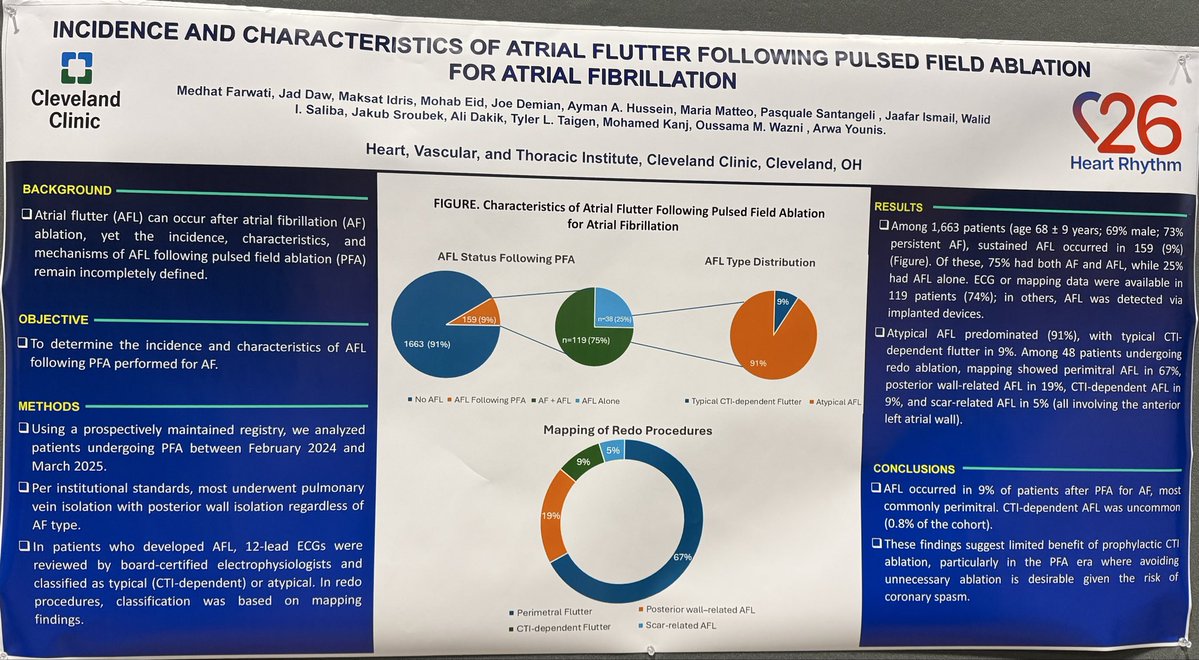
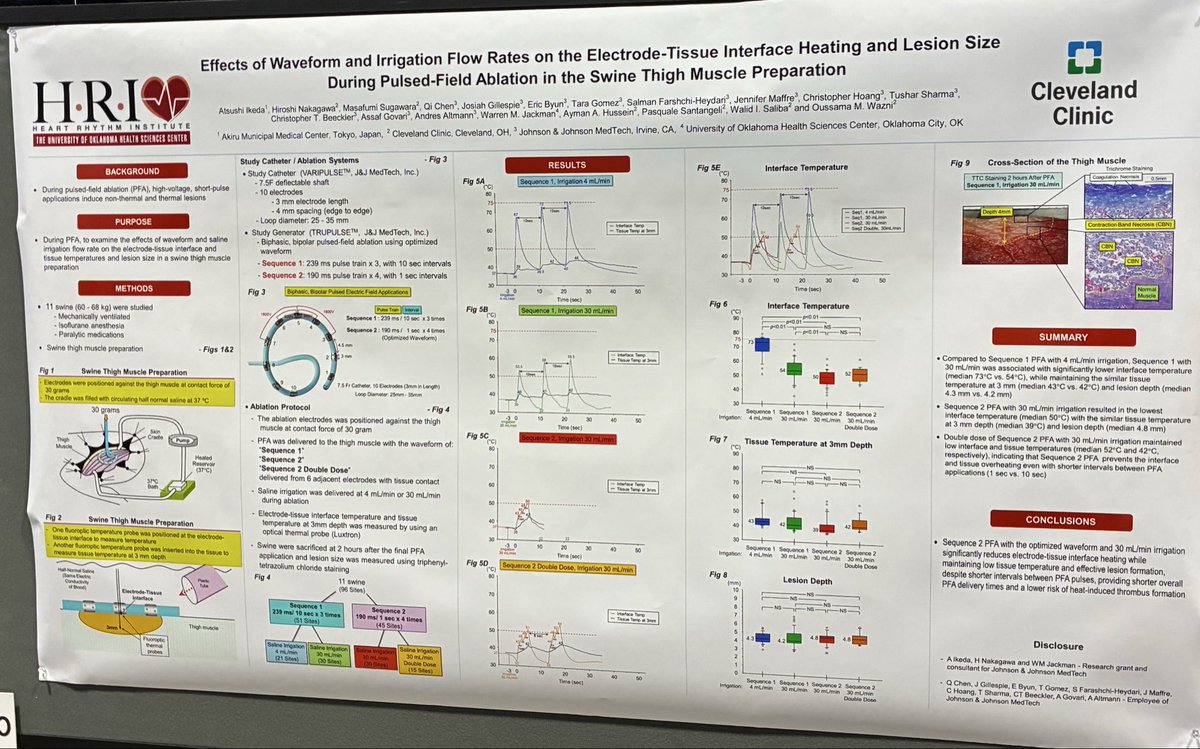
Post-PFA atrial flutter: mechanism matters. Work by @MedhatFarwati (Cleveland Clinic EP): ~9% AFL after AF PFA, predominantly atypical/perimitral; CTI-dependent uncommon. Implication: avoid routine prophylactic CTI: prioritize mechanism-driven mapping. Cleveland Clinic EP
Cleveland Clinic Electrophysiology tweet media
English
0
0
0
73
Cleveland Clinic Electrophysiology
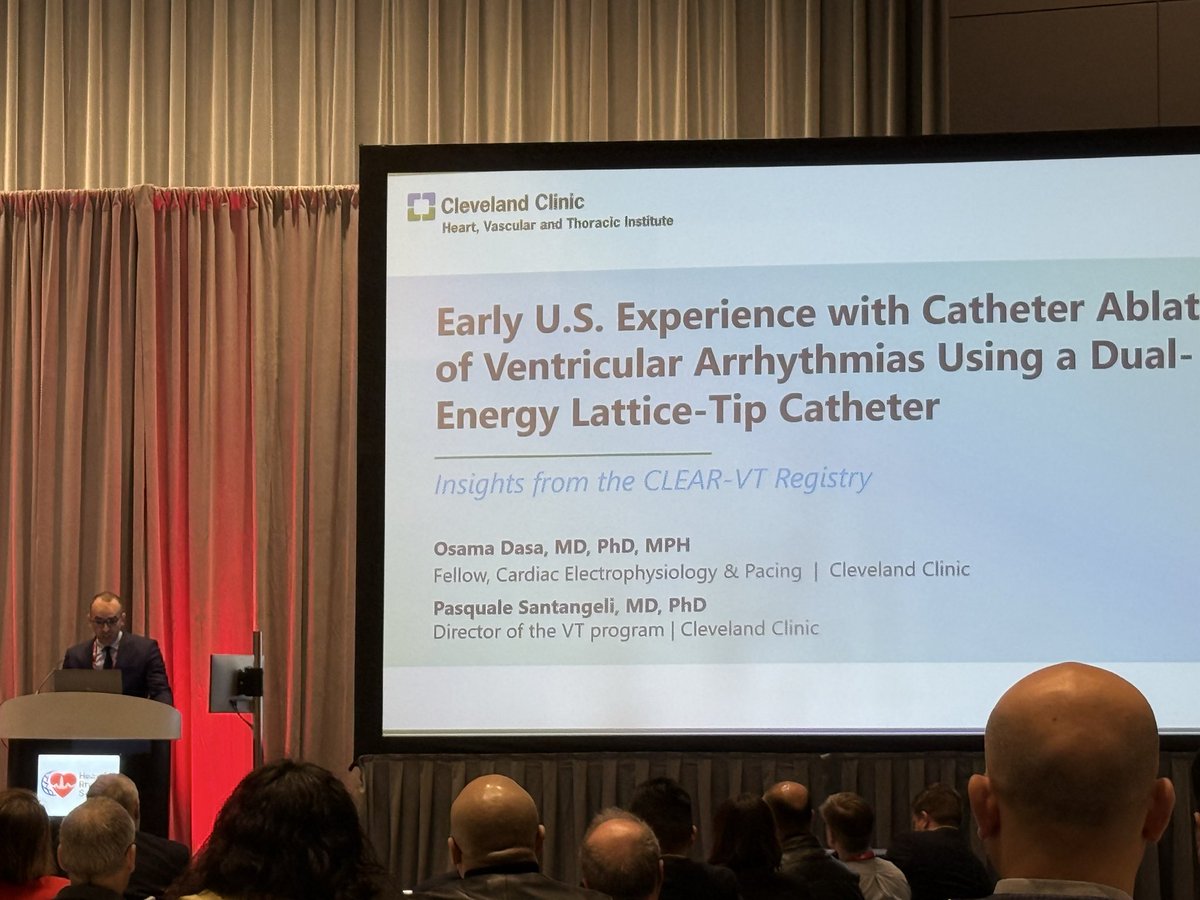
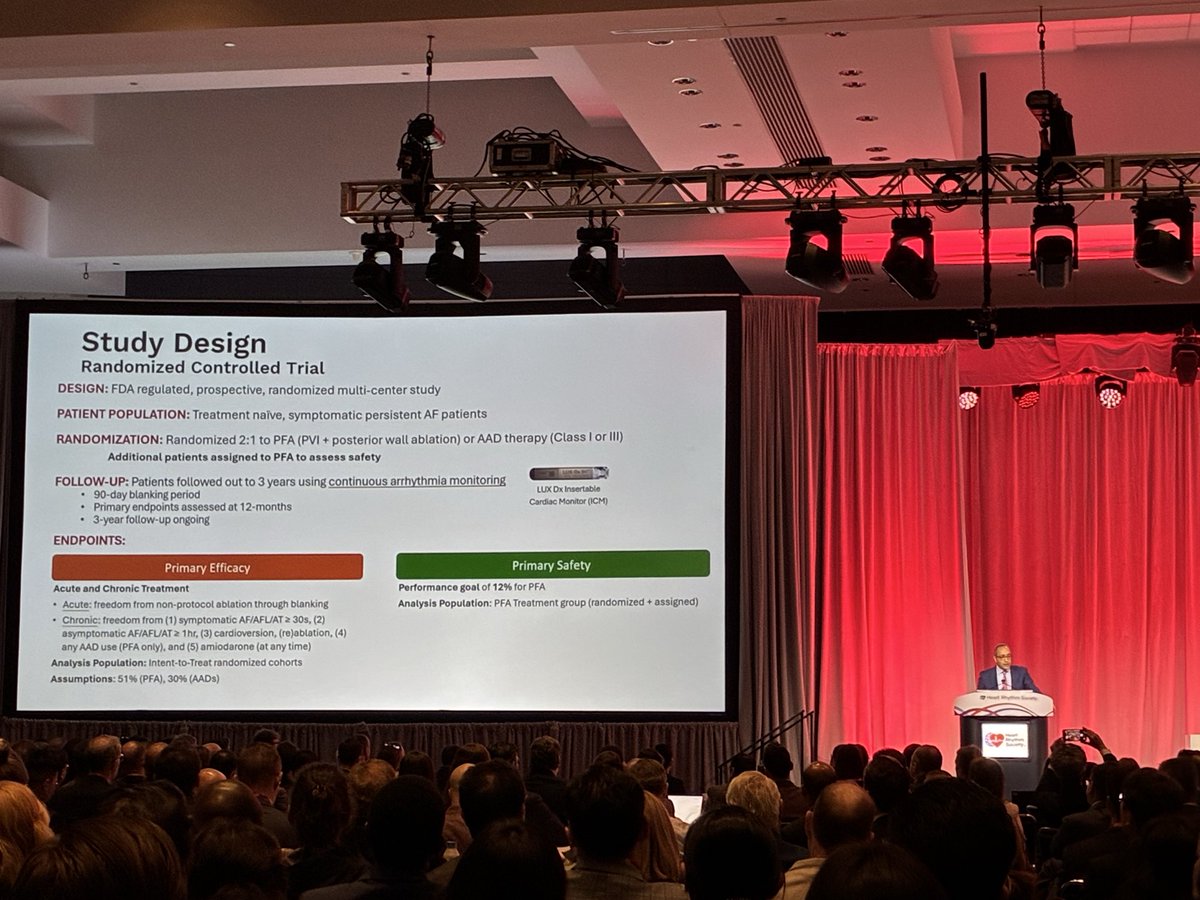
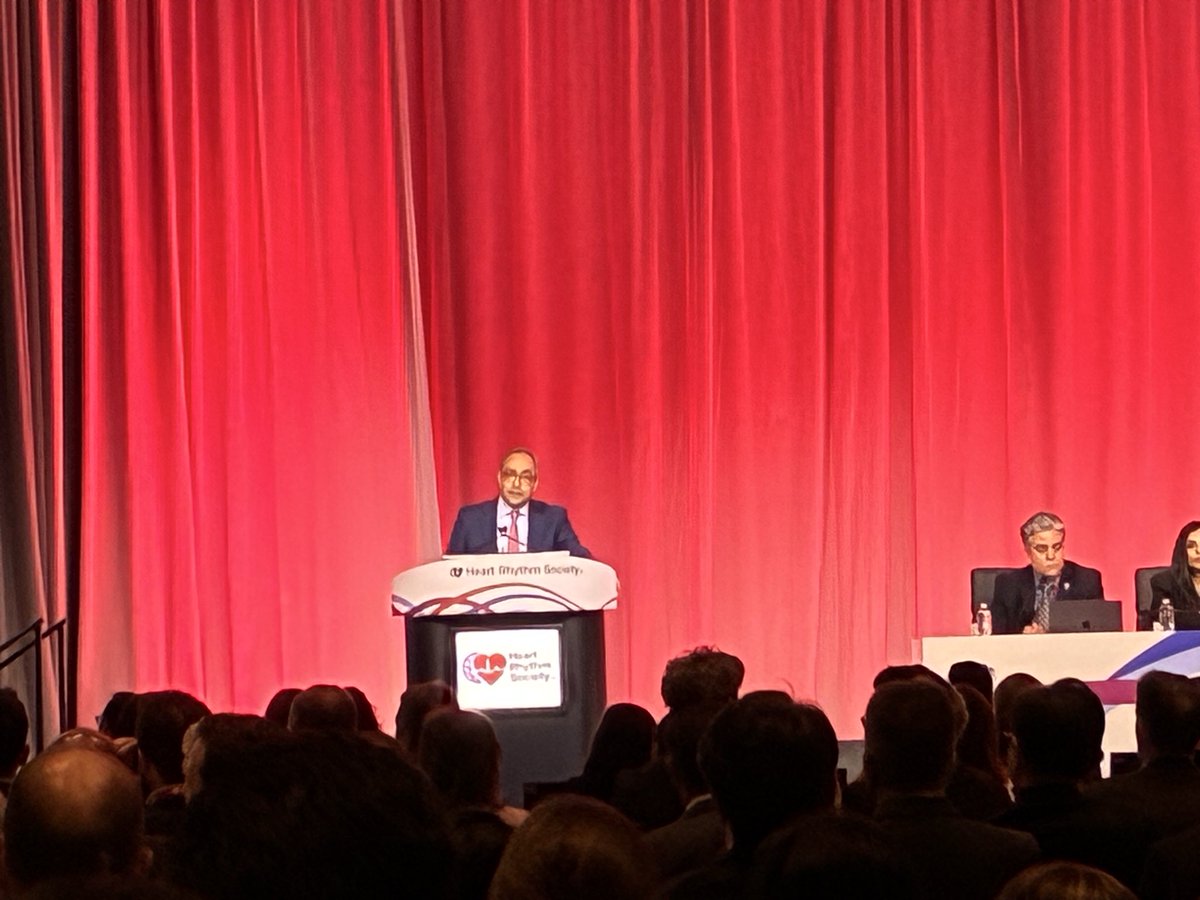
LBCT at Heart Rhythm Society Scientific Sessions 2026: AVANT GUARD: first-line PFA vs AADs for persistent AF, presented by Oussama M. Wazni. Building on STOP AF First Trial (first-line ablation in paroxysmal AF), this extends the “ablation-first” paradigm to persistent AF.
English
1
1
1
89
Cleveland Clinic Electrophysiology
LBCT at Heart Rhythm Society Scientific Sessions 2026: AVANT GUARD—first-line PFA vs AADs for persistent AF, presented by Oussama M. Wazni. Building on STOP AF First Trial (first-line ablation in paroxysmal AF), this extends the “ablation-first” paradigm to persistent AF?
English
0
1
1
100