Charles Coverdale

3K posts

Charles Coverdale banner
Charles Coverdale

Charles Coverdale

@CFCoverdale

lukewarm takes on economics and climate science
London, UK Katılım Ocak 2011
3.8K Takip Edilen497 Takipçiler
Charles Coverdale
Charles Coverdale@CFCoverdale·
It runs policy scans, hits every external URL with a live request, runs R CMD check --as-cran, and cross-checks every function against the rejection playbook before you submit
English
1
0
2
43
Charles Coverdale
Charles Coverdale@CFCoverdale·
I used to dread trying to get my R packages on CRAN. Waiting over a week for an email saying I'd tripped over a rule I'd never heard of. Most of the time I just wouldn't bother at all. But this year, I've shipped 17 packages. Here's the skill that finally fixed it 🧵
English
2
0
3
51
Charles Coverdale
Charles Coverdale@CFCoverdale·
So I built buildRpackage: a Claude Code skill with 7 phases. ideate → name → plan → build → check → submit → resubmit Plus a 12-category code audit and an optional academic methods audit
English
0
0
0
32
Charles Coverdale
Charles Coverdale@CFCoverdale·
Common landmines: • \dontrun vs \donttest • globalenv() prohibition • URL 404s in DESCRIPTION • Mozilla UA for EU servers • cache write rules • cross-platform path traps Each is one line in CRAN policy. Each can bounce your submission
English
0
0
0
7
Charles Coverdale
Charles Coverdale@CFCoverdale·
Hadley's R Packages teaches you to build a working package. It does not teach the CRAN policy layer that sends first submissions back to the newbies queue for 2 to 10 days
English
1
0
0
7
Charles Coverdale retweetledi
Boring_Business
Boring_Business@BoringBiz_·
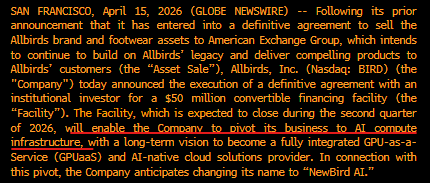
Watching AllBirds stock be +430% after announcing a pivot from being a shoe company to a GPU as a service AI company
Boring_Business tweet media
English
226
1.7K
24.8K
847.1K
Charles Coverdale retweetledi
Tracy Alloway
Tracy Alloway@tracyalloway·
Allbirds, the shoe brand, now says it's an AI compute company.
Tracy Alloway tweet media
English
377
692
9.8K
4.3M
Charles Coverdale retweetledi
Ben Southwood
Ben Southwood@bswud·
Right now, British electricity pricing is bonkers. Prices are disconnected the from the underlying reality in several very important ways. 1. The costs of keeping the grid going, like transmission and balancing, are spread over every unit of electricity sold. This means the price of an extra unit of electricity is vastly higher than the social cost of providing that unit. The cost of having a grid connection at all is, conversely, much lower than it actually costs society to provide you one. Economically, this amounts to a crippling price cap on grid connections, which is part of why we can't expand infrastructure to plug people in: they don't pay for it. It also amounts to an enormous tax, over 2/3 of the price of electricity, on using an extra unit of it. Which is presumably why electricity use has cratered since 2003, when we started driving up the cost of our grid like this. Note how perverse the incentive is here. We are heading into a situation where electricity is extremely expensive because the ratio of grid costs to the amount of electricity put through that grid. Our high prices incentivise everyone to have a connection, but then to use it as little as possible, the EXACT opposite of what we need. We charge the most tax on people use their connection most intensively (i.e., efficiently) and the least on those who use it the least intensively! 2. We impose carbon taxes on electricity produced through gas that we don't impose on gas used directly. This is part of why electricity is so expensive, and means people electrify less than we would like, which leads to less decarbonisation overall. A child, with a basic understanding of supply and demand, would see how perverse this is. 3. We charge the same price for electricity nationwide, and pay the same amount, in a single market, even though electricity is worth more and less at different places. This is part of why people are building solar farms in Scotland, where it is not only less sunny, but which is on the other side of massive grid congestion that we are paying BILLIONS of pounds to relieve. Yet we keep paying people to make the problem worse. 4. We keep buying Contracts for Difference off electricity generators. CfDs say 'we will pay you X for every unit of electricity you produce, whenever you produce it'. (Recent iterations have cut off these payments when prices go negative, but they will still pay them £90 per megawatt hour when the megawatts they are producing are worth 1p each!) Renewables Obligations Certificates were a lot more honest. They just paid producers a top up on what they got on the open market: a straightforward subsidy. CfDs are a totally hidden subsidy. The amount of subsidy is set by the market trajectory after today. So, for example, every time we sign a new wind CfD we increase the subsidy for past tranches. The really messed up thing is that CfD recipients do not cover for when they don't provide any power. If the CfD was set on quantity as well, so generators had to pay back money when they didn't produce, to cover the cost of running the grid to accommodate them, and for the gas needed to keep the lights on, then we would get a good sense of how much we were actually paying. Buying a CfD would be buying new electricity at its going rate. Instead, practically all the important pricing functions are hidden. The result of all these broken pricing systems is poor coordination. Everyone is working exactly as the price system tells them to: plug in but only use your grid connection when the grid is having trouble, use less electricity, don't electrify, add generation far away from where it is consumed, and produce the most electricity possible whenever and wherever you like, not when or where it's rare and expensive. The ultimate result is expensive electricity, industrial decline, and economic stagnation.
English
56
234
1.2K
172.2K
Charles Coverdale retweetledi
Andrej Karpathy
Andrej Karpathy@karpathy·
Judging by my tl there is a growing gap in understanding of AI capability. The first issue I think is around recency and tier of use. I think a lot of people tried the free tier of ChatGPT somewhere last year and allowed it to inform their views on AI a little too much. This is a group of reactions laughing at various quirks of the models, hallucinations, etc. Yes I also saw the viral videos of OpenAI's Advanced Voice mode fumbling simple queries like "should I drive or walk to the carwash". The thing is that these free and old/deprecated models don't reflect the capability in the latest round of state of the art agentic models of this year, especially OpenAI Codex and Claude Code. But that brings me to the second issue. Even if people paid $200/month to use the state of the art models, a lot of the capabilities are relatively "peaky" in highly technical areas. Typical queries around search, writing, advice, etc. are *not* the domain that has made the most noticeable and dramatic strides in capability. Partly, this is due to the technical details of reinforcement learning and its use of verifiable rewards. But partly, it's also because these use cases are not sufficiently prioritized by the companies in their hillclimbing because they don't lead to as much $$$ value. The goldmines are elsewhere, and the focus comes along. So that brings me to the second group of people, who *both* 1) pay for and use the state of the art frontier agentic models (OpenAI Codex / Claude Code) and 2) do so professionally in technical domains like programming, math and research. This group of people is subject to the highest amount of "AI Psychosis" because the recent improvements in these domains as of this year have been nothing short of staggering. When you hand a computer terminal to one of these models, you can now watch them melt programming problems that you'd normally expect to take days/weeks of work. It's this second group of people that assigns a much greater gravity to the capabilities, their slope, and various cyber-related repercussions. TLDR the people in these two groups are speaking past each other. It really is simultaneously the case that OpenAI's free and I think slightly orphaned (?) "Advanced Voice Mode" will fumble the dumbest questions in your Instagram's reels and *at the same time*, OpenAI's highest-tier and paid Codex model will go off for 1 hour to coherently restructure an entire code base, or find and exploit vulnerabilities in computer systems. This part really works and has made dramatic strides because 2 properties: 1) these domains offer explicit reward functions that are verifiable meaning they are easily amenable to reinforcement learning training (e.g. unit tests passed yes or no, in contrast to writing, which is much harder to explicitly judge), but also 2) they are a lot more valuable in b2b settings, meaning that the biggest fraction of the team is focused on improving them. So here we are.
staysaasy@staysaasy

The degree to which you are awed by AI is perfectly correlated with how much you use AI to code.

English
1.2K
2.5K
20.5K
4.3M
Charles Coverdale retweetledi
Kyle Daigle
Kyle Daigle@kdaigle·
Yup, platform activity is surging. There were 1 billion commits in 2025. Now, it's 275 million per week, on pace for 14 billion this year if growth remains linear (spoiler: it won't.) GitHub Actions has grown from 500M minutes/week in 2023 to 1B minutes/week in 2025, and now 2.1B minutes so far this week. So we're pushing incredibly hard on more CPUs, scaling services, and strengthening GitHub’s core features. And as a fine purveyor of hand-crafted shit code for many years, I'm not gonna weigh in on that. 🤣
ThePrimeagen@ThePrimeagen

I would like to make my apologies for defending M$, but I must from time to time. I have to put respect on github for handling the amount of shit code that has been added over the last 3 months. literally 10s of billions of lines of code that will never see the light of a CPU

English
134
445
5.9K
1.9M
Charles Coverdale retweetledi
Jack Meyer 🏛️
Jack Meyer 🏛️@Jackbmeyer·
This is supposed to be a really intense episode of The West Wing, but I’ve been distracted trying to track down the President’s vintage LSE crest tie
Jack Meyer 🏛️ tweet mediaJack Meyer 🏛️ tweet mediaJack Meyer 🏛️ tweet media
English
4
7
424
112K