Christian Prager

2K posts

Christian Prager banner
Christian Prager

Christian Prager

@CHPrager

Coordinator of Project Text Database and Dictionary of Classic Mayan, Bonn University; Digital epigrapher at University of Bonn; 3D epigraphy

Bonn, Germany Katılım Aralık 2014
1.4K Takip Edilen1.1K Takipçiler
Christian Prager
Christian Prager@CHPrager·
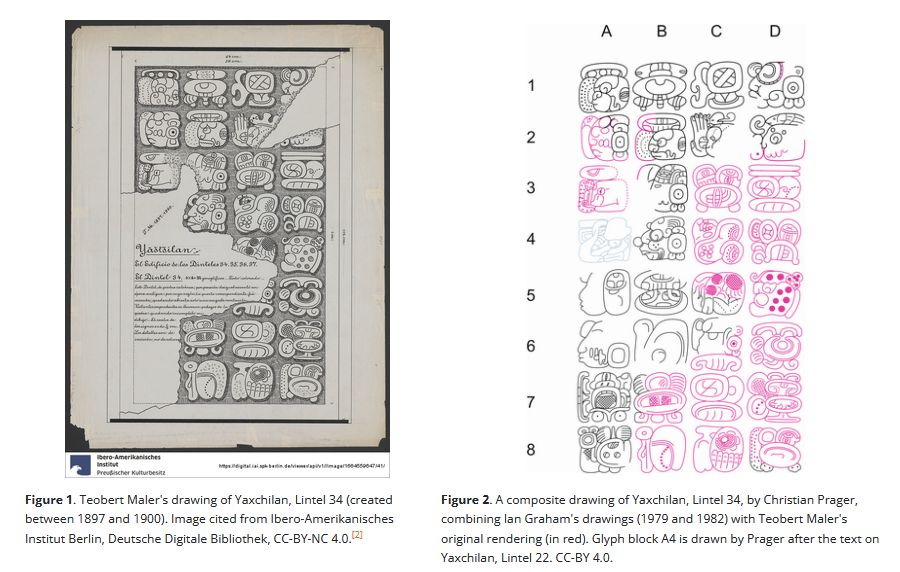
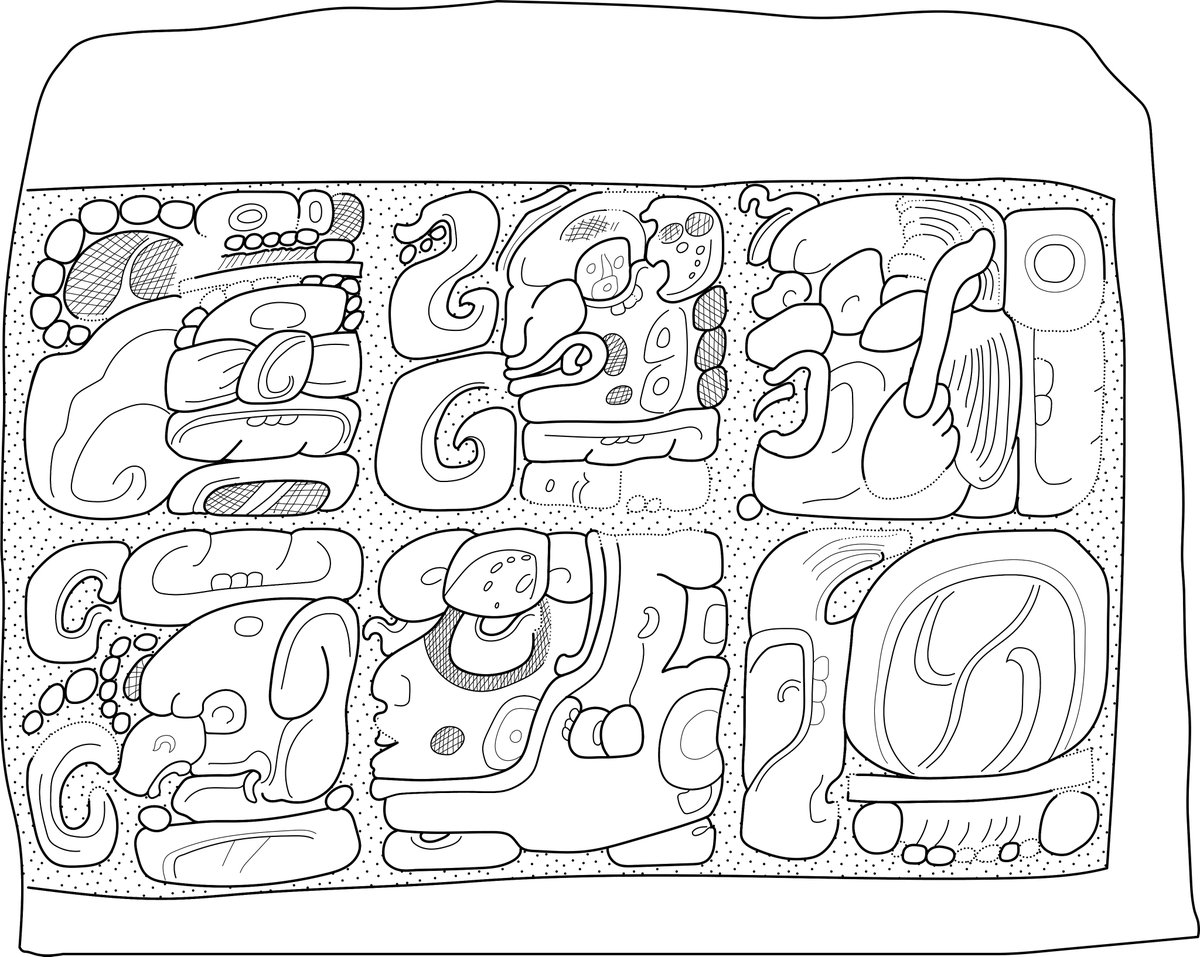
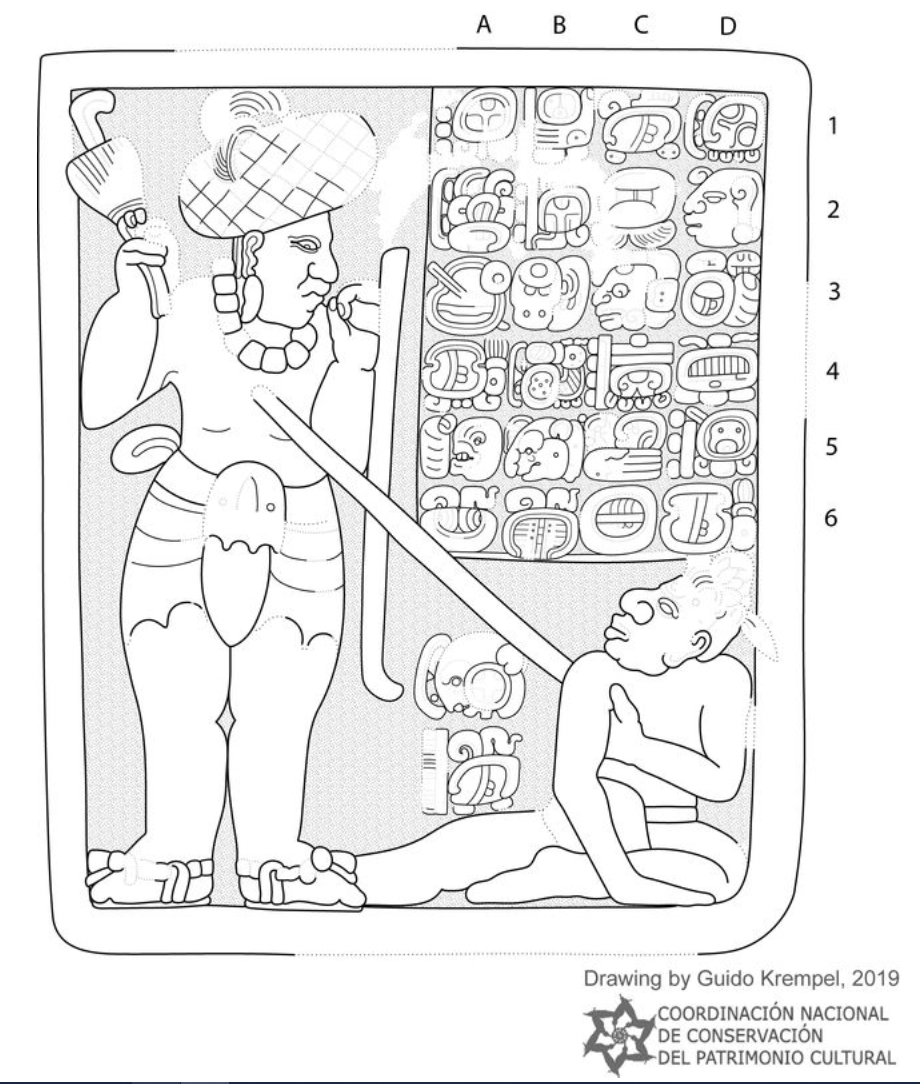
@idiom_project mourns the passing of our friend and colleague Karl Herbert Mayer (1944–2025). He was a dedicated researcher of Maya art and epigraphy, and over nearly five decades, he documented Maya sculpture, contributing over 20,000 photographs to the Maya Image Archive.
Christian Prager tweet media
English
0
1
2
73
Christian Prager retweetledi
Charles Jones
Charles Jones@AWOL_tweets·
Open Access Paulys Realencyclopädie der classischen Altertumswissenschaft ift.tt/TwnIMuH
Charles Jones tweet media
Deutsch
3
58
178
21.8K
Christian Prager retweetledi
@INAHCampeche
@INAHCampeche@inahcampeche·
🗓Miércoles 15 de noviembre ⏰19:15 H 📍Auditorio del Centro Universitario de Exposiciones Descarga el programa en el siguiente enlace: drive.google.com/.../1e25rNGPve…...
@INAHCampeche tweet media
Español
0
5
12
585
Christian Prager
Christian Prager@CHPrager·
The 28th European Maya Conference is co-organised by the European Association of Mayanists (Wayeb) and the Department for the Anthropology of the Americas, University of Bonn. Registration at wayeb.org/conferences-ev…
Christian Prager tweet media
English
0
0
3
132
Christian Prager
Christian Prager@CHPrager·
Want to learn Maya hieroglyphs in four days? Register now for workshops and the 28th European Maya Conference (#EMC2023), on "Regionalism and Unity" in the Maya region, on cultural variations & commonalities. Hosted at the University of Bonn, Dec 4-10 classicmayan.org/portal/doc/234
Christian Prager tweet media
English
2
14
31
2.4K
Christian Prager retweetledi
Institute for the Study of Ancient Cultures
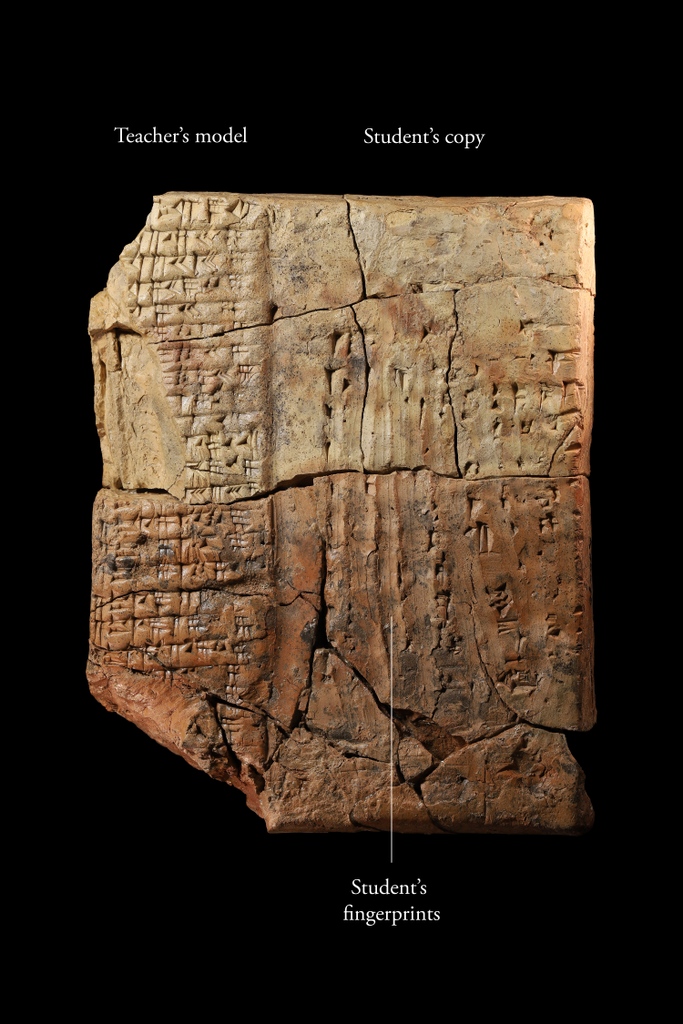
Curious about our highlight tablet of Back to School in Babylonia. What does it say and why do you see fingerprints and marks? Join us on October 4th at 7 pm CT and follow the endeavors of a Babylonian student who wrote this tablet.
Institute for the Study of Ancient Cultures tweet media
English
3
23
149
18.3K
Christian Prager retweetledi
Archaeo - Histories
Archaeo - Histories@archeohistories·
Pi (π) has been known for almost 4000 years, but even if we calculated number of seconds in those 4000 years and calculated π to that number of places, we would still only be approximating its actual value. Ancient Babylonians calculated area of a circle by taking 3 times square of its radius, which gave a value of pi = 3. One Babylonian tablet (1900–1680 BC) indicates a value of 3.125 for π, which is a closer approximation. Rhind Papyrus (1650 BC) gives us insight into mathematics of ancient Egypt. Egyptians calculated area of a circle by a formula that gave the approximate value of 3.1605 for π. First calculation of π was done by Archimedes of Syracuse (287–212 BC), one of greatest mathematicians of the ancient world. Archimedes approximated area of a circle by using Pythagorean Theorem to find areas of two regular polygons: polygon inscribed within circle and polygon within which circle was circumscribed. Since actual area of circle lies between the areas of inscribed and circumscribed polygons, areas of polygons gave upper and lower bounds for area of circle. Archimedes knew that he had not found value of π but only an approximation within those limits. In this way, Archimedes showed that π is between 3 1/7 and 3 10/71. A similar approach was used by Zu Chongzhi (429–501 CE), a brilliant Chinese mathematician and astronomer. Zu Chongzhi would not have been familiar with Archimedes’ method, but because his book has been lost, little is known of his work. He calculated value of ratio of circumference of a circle to its diameter to be 355/113. To compute this accuracy for π, he must have started with an inscribed regular 24,576-gon and performed lengthy calculations involving hundreds of square roots carried out to 9 decimal places. Mathematicians began using Greek letter π in 1700s. Introduced by William Jones in 1706 CE, use of symbol was popularized by Leonhard Euler, who adopted it in 1737. A 18th Century CE, French mathematician named Georges Buffon devised a way to calculate π based on probability. 📷 : Babylonian Clay Tablet (1900–1680 BC), indicates a value of 3.125 for π British Museum #archaeohistories
Archaeo - Histories tweet media
English
48
807
3.9K
394.3K