MajoraZ
52.8K posts
MajoraZ
@Majora__Z
Mesoamerican history enthusiast/consulting; Pokken, Gash/Zatch Bell, Halo, Digimon, DBZ, Sonic Adventure 2, Asura's Wrath, JJBA & G Gundam, Copyright reformist
Neon lime-green obsessive Katılım Nisan 2010
5.1K Takip Edilen8.2K Takipçiler

@Majora__Z @TheManlet_King Didn't say they did, though the wooden helmet is surprising.
English

They were following the journey of Hercules, but you aren't ready for that conversation.
New York Post@nypost
2,000-year-old artifact may be evidence that Romans found New World - a thousand years before Columbus trib.al/Xpg40PY
English
@TheManlet_King As someone who follows Mesoamerican archeology, this is an old find and probably isn't meaningful:
The dating and provenance are suspect I link to a breakdown by an archeologist who has done work at the site it was found at and give my thoughts here
x.com/Majora__Z/stat…
MajoraZ@Majora__Z
For people curious, here is @MichaelESmith 's (who is a Mesoamerican archeologist who has done work at the site the head is from) page about the specimen web.archive.org/web/2023032609… The dating is suspect and the field notes are iffy, so it's probably nothing Even if it is a legit Roman sculpture that was buried in Prehispanic times, that doesn't necessarily mean that the Romans had a colony in Mexico or anything: It could have washed up and then been ritually re-deposited, since the Aztec and possibly other Mesoamericans collected foreign and ancient goods and would ritually bury them as offerings
English
@TheManlet_King There are zero accounts or depictions that have Quetzalcoatl with white skin
He is sometimes shown with a beard, but that's not unusual as the Mesoamericans simply had facial hair: Moctezuma II had a mustache, for example, many elderly gods were bearded:
x.com/Majora__Z/stat…
MajoraZ@Majora__Z
You ARE mistaken, Indigenous Mesoamericans could have facial hair Sources mention shaving & people like Moctezuma II having beards; we've excavated tweezers; sculptures (that have indigenous fashion & facial features) occasionally have facial hair etc It's just the elderly and rulers were the only people who tended to have facial hair, it was considered a faux-pas for other people to have it
English
I did a thread on this a few years ago, but here's the tldr:
After sailing through the straight of Gibraltar, (around 1250 BC) he landed in Central America and became the bases for Quetzalcoatl (tall, fair skinned, bearded man that brought knowledge, tools, etc) to the Olmec


English
MajoraZ@Majora__Z
As someone into Aztec history, I have point out that "Jaguar Warriors" did not look like that. They wore padded gambeson armor under full body thick warsuits covered in a layer of feather mosaic, with the mosaic pattern forming Jaguar spots They did not wear actual Jaguar pelts / skins like a caveman. The Jaguar "head" was a wooden helmet also covered in feather mosaic, precious stone/metal inlays, etc There is one account which asserts that commoners who achieved the right to enter the Jaguar order (which may not actually exist, it may just be that Jaguar-patterned warsuits and helmets were a generic design that soldiers of the requisite rank/status could wear) and achieved honorary nobility via merit, as opposed to natural born nobles, had to make do with lesser quality warsuits made from actual Jaguar fur, but this would still be a processed garment like a fur coat or fur boots, not a raw skinned hide ------------- For more on Aztec warfare and militarism, see here: x.com/Majora__Z/stat… , and for more about Mesoamerican history and archeology in general, see here: x.com/Majora__Z/stat… (Also if any artists who are shown on the left side of the first image sees this: Sorry, I try not to call use art made by specific, individual artists in my critiques and to stick to using major commercial works as my negative examples, but in this case there's simply not enough big commercial productions that feature the subject matter to use as examples I'll also stress here that I am illustrating the distinction between stereotypical/trope-y vs AUTHENTIC designs, not necessarily 100% accurate designs: You can still use artistic license and take liberties while staying authentic, the Humankind Jaguar knight, the Diego Rivera Tenochtitlan art and Ahuizotl from Codex Black all do take a decent amount of liberties, but they are using real historical information as their starting point, at least, and are at least decently visually representative)
English
@TheManlet_King Wait...
What if the Jaguar Warriors were attempting to pay homage to Heracles' wearing of the Nemean Lion pelt?
English

I consistently find myself wanting to argue with people on here about certain takes yet I find myself discouraged by having to fit it in one tweet or make multiple replies. sometimes people piss me off man, but I aint paying for no subscription just to fight with losers.
English
@MiddleearthMixr As someone who follows Mesoamerican archeology, this is an old find and probably isn't meaningful: The dating and provenance are suspect
I link to a breakdown by an archeologist who has done work at the site it was found at and give my thoughts here:
x.com/Majora__Z/stat…
MajoraZ@Majora__Z
For people curious, here is @MichaelESmith 's (who is a Mesoamerican archeologist who has done work at the site the head is from) page about the artifact web.archive.org/web/2023032609… The dating is suspect and the field notes are iffy, so it's probably nothing Even if it is a legit Roman sculpture that was buried in Prehispanic times, that doesn't necessarily mean that the Romans had a colony in Mexico or anything: It could have washed up and then been ritually re-deposited, since the Aztec and possibly other Mesoamericans collected foreign and ancient goods and would ritually bury them as offerings
English


@FerxoAldana @edolopezbravo The Mesoamericans had writing, the Maya script is a true written language, the Aztec script also has some phonetic elements
The knew about wheels, see pic. They also smelted bronze.
Even the Spanish said their cities, art, etc was on par with their own: x.com/Majora__Z/stat…

MajoraZ@Majora__Z
Right, why not love both? Similarly, people turn the Aztec vs Spanish into a debate, but Spanish Conquistadors and friars loved praising Aztec cities, art, law and order etc They even compared their achievements to the Greeks/Romans as "Civilized pagans" Here's some quotes: Diego Duran (Spanish Friar): "So great were the feats and exploits of the Aztecs...those who are not acquainted with these exploits...will enjoy hearing of [them]...[they] are worthy of remembrance...courageous men...of fine and subtle intellect...[with]...outstanding skills...newly arrived foreign peoples [like us Spaniards]...would have been pleased to observe these things...lose the bad and false opinion that these Aztec people were barbarian and uncivilized...although they showed blindness...in their rites and idolatries, in matters of government and good order, submission and reverence, majesty and authority, courage and fortitude, I have found no one to surpass them." Bernal Diaz (Spanish Conquistador): "...there are three Indians now living in the city of Mexico...who are such magnificent painters and carvers that, had they lived in the age of the famous Apelles...or of Michelangelo or Berrugeute in our own day, they would be counted in the same rank" See also Pic 1, and Diaz has so many other good quotes I wish I could fit here! Jose de Acosta (Spanish Missionary): "...to refute the false opinion that [the natives] are brutes...and lacking in understanding...Those who have lived among them...know...although they had many barbaric...beliefs, there were many others worthy of admiration...they have a natural capacity to receive good instruction and...they even surpass in large measure many of our own republics. [Errored thinking/paganism] are found even in the gravest legislators and philosophers [and] the wisest republics, such as those of the Romans and Athenians...certainly, if the republics of the [Aztec, Inca, etc] had been described in [Classical Antiquity]...their laws and government would be respected." "Among the [Mesoamerican civilizations] there is great knowledge...they [had writing] and books...in which...[calendrics, natural histories, and customs were recorded]...a sight very much worth seeing...the [?Aztecs or Mesoamericans?] were very diligent in...[teaching speeches, songs, and lessons]...for this purpose they had schools...some persons who read [their speeches and writings] will [mistakenly believe] these were invented by [us Spainards]..." "They took great care to establish ranks for the lords and nobles [based on who was owed the most honor]... After the king, the highest rank was that of the four electors...the supreme council [whom the king heard from before any important choice]...There were other councils and courts...as many as in Spain...with their judges and justices...there were other lower officials...also good administration and discipline in [their] taxation...[for their religion]...they used even greater care and precision, with a large number of ministers...[others have lamented if only we Christians made as much effort to convert Indians as Prehispanic priests did teaching their religion]..." Albrect Durer (A famous German artist of the time): "I saw the things which have been brought to the King...from [the Aztecs]...a [sun and moon of gold and silver]... two rooms...of all manner of wonderous [weapons and armor of the people there]...clothing, beds, and all kinds of wonderful objects...more beautiful...than things spoken of in fairy tales...I have seen nothing that rejoiced my heart so much as these things...the subtle genius of men in foreign lands" Pedro Martir de Angleria (Italian historian in the Spanish court): "...these natives possess books...put together by [a skilled hand]...The characters...almost resemble [Egyptian] hieroglyphics...The natives are...very clever [they record in these books the deeds of their kings], their laws...their...ceremonies, [astronomy], and the precepts of agriculture... ...I am at a loss to describe [their art]...If ever artists...have touched genius, then surely these natives are they...the cleverness of the artist and...workmanship...exceed the value of the [the gold and gemstones used to make it] and excite my amazement...I have never seen anything [that] could more delight the human eye... The people...hold fairs and markets...they wear clothes...shoes [and jewelry of gold, gems, and feathers]...Their architects and...potters are...clever, and [their vases are better decorated then ours]...They make use of baths...they have a system of government and laws which they obey... ...there are...fortresses, and towns...the [palaces] are...beautiful beyond all praise [containing] gardens...with...[trees with fruits and flowers]..ponds...with...fish and...[waterbirds]...the entire region...is...full of splendid cities...not in the whole of Spain could such a beautiful domain be found" Hernan Cortes (Spanish Conquistador): "We believe... by the aid of the interpreters who should plainly declare to them the truths of the Holy Faith...many... would very quickly depart from the their evil ways and would come to true knowledge, for they live more equally and reasonably than any other....which we have hitherto come across" See also Pic 2,there's SO many other quotes I could give from Cortes beyond this as with Diaz Bernardino de Sahagun (Spanish Friar): "...[Us Spaniards so utterly devastated the Mesoamericans] that no resemblance was left of what they were before. So now [many consider them] barbarians...when in reality, in matters of governance...they are...highly civilized... ...All nations [such as the Greeks, Romans, French and Italians]...[look to those] who are wise and powerful...[with great] moral virtues...who are skillful and brave in [war]...The same was [true of the Mesoamericans, especially the Aztec: they held] the wise, virtuous, and brave orators...in great esteem....from [whom]...they would choose their high priests, lords, noble leaders, and captains...who...rule the republics, lead the armies, and preside in the temples... ...We know...they are capable of learning and using...[like us Spaniards]...[engineering, various trades and crafts, singing and using instruments]...and the knowledge of grammar, logic, rhetoric...and theology...there is no art that they [cannot] learn...[in ancient times] they raised boys and girls with...strictness...under very attentive and rigorous teachers...[to]...respect and obey...to live morally and virtuously...this ended with the arrival of [us Spaniards, who] overthrew and destroyed [all of this]..." The Anonymous Conqueror (Spanish Conquistador): "Many of their cities are better laid out than those [of Spain,] with very handsome streets and squares...The people of this land are...of good manners...very skillful, robust, and tireless, and...the most moderate men known...{quote in Pic 3}...It is one of the finest things in the world to see them in war...they move with perfect order, and are splendidly attired, and make such a fine appearance...[they are] resolute men who affront death with determination... ...The great city of [Tenochtitlan] is built on...the lake...Three high causeways [one with an aqueduct]...permit entrance...[the city] had...many fair and broad streets...[both of hard earth and water, so]...The inhabitants go for a stroll some in canoes, and others along the land...there are...very large and beautiful plazas [used as markets]...especially [Tlatelolco's main market], which may be three times [larger than] the great square of Salamanca...[40-50,000 people come to buy and sell each day]...each class of merchandise has its own place... [They had in Tenochtitlan] many grand [temples]...but the [Great Temple] was a most wonderful thing...[it and its precinct] was as great as a city...surrounded by a high wall of masonry [with four] entrances, over each...was a fortified structure...with all kinds of the arms...within the walls [were] two thousand [guards]...[the precinct contained] many [buildings]...in some a thousand persons could be lodged without annoyance. [The precinct also had] more than twenty [pyramid temples]..." There were...in [Tenochtitlan]...very good and handsome [palaces] of the Lords, so large... with so many halls, sitting-rooms...with gardens above and below, that it was a marvelous thing to see. I entered [Moctezuma's palace or the central precinct?] more than four times...[just] to see things [, walking till I was] tired, and never saw [all] of it..." (See also Pic 3) Bartolomé de las Casas (Spanish Friar): "...[The Indians]'s temperance...moderation...their [rejection of material possessions and desires]...From...all these...it is proved...that these people...have excellent, subtle, and very capable minds...[to] make any republic self-sufficient and prosperous: [they have] farmers, craftsmen, warriors...priests...judges...ministers of justice...men who govern well...not only have the Indians shown themselves to [have] acute minds, having justly and prosperously governed their republics...they have equaled many diverse [peoples and nations] of the past and present [who are] praised for their [governments], way of life and customs...they have even surpassed...the Greeks and Romans...{quote in pic 4, plus stuff about their markets I am skipping over}...they have their kingdoms...kings...well governed and well ordered republics...houses and estates, and...laws...these peoples are barbarous only...insofar as they are pagans..." (See also Pic 4), And: "...[To the notion] that the Spainards are necessary for the Indians [to prosper], I say...[if only] Spain had been as well governed...as the Indies...and had such a good way of life! Where throughout the inhabited world were there greater populations...?...[Tenochtitlan] had over 200,000 residents; and in [Tlaxcala], [The Purepecha Empire/Michoacan], [Tepeyacac? Modern day Tepeaca, Puebla?], [Texcoco?], and an infinite number of other cities in [Mexico] and Guatemala...[in the Inca capital of Cusco]...and [other parts] of [the Americas]...there were many millions of people...when we entered...would we have found such great unions of peoples in their towns and cities if they had lacked the order of a good way of life, peace, concord, and justice? No republic or city can...last... without...said virtues...Therefore...the Indians have no need of Spaniards...for [proper living]...except a few chosen [moral and just missionaries], so that the Indians could receive the faith." ================= Keep in mind what's in these images and I quoted in text are just small excerpts from each source (with cuts, "...", paraphrasing, "[]", etc by me), plus there's many other 16th/17th century sources I didn't quote at all (such as any Native ones, or Solis, Torquemada, Gomara, Herrera, Andres de Tapia, etc), so this is far from comprehensive: My full quote document is actually over 60 pages long! Of course, also, not all European sources were this positive (even some of the sources I cite here are more negative in other sections): Las Casas was in large part writing to rebuke those that viewed Indigenous people as primitive or barbaric, and you can see some of the other authors mentioning that other Spainards had those views, and disagreed.. ...but it's not a coincidence that almost all the sources which detail Mesoamerican history, culture etc in depth and bothered to study or interact with it, tended to praise it, either enthusiastically (as was the case in these quotes or begrudgingly (like Francisco Hernandez, Philip II's royal court physician and naturalist who traveled to Mexico and admitted Aztec botanical and medical records were better then his).
English

@edolopezbravo O sea, es mentira que los aztecas practicaban el canibalismo, no desarrollaron escritura alguna y no conocían la rueda?
Pues eso es edad de piedra aquí y en China.
Español

No es historiador y se nota por sus declaraciones. Juzga el pasado con valores presentes y con una buena dosis de tribalismo identitario. Tampoco es experto en la materia pues carece de la trayectoria y trabajo especializado que lo acredite.
ABC Historia@ABC_Historia
Zunzunegui, historiador mexicano: «Antes de España, los mexicas vivían en la Edad de Piedra» abc.es/historia/zunzu…
Español
@GalaxySoldier I think Buu and Janemba might do well on the basis of their unique abilities, if they are allowed to use them
It says "hand to hand skill" but that wouldn't necessarily negate Buu's stretchy body or Janemba's teleportation?
There's also that one moment Janemba's arm stretches
English

Cell maaaaaassive gap then cooler and everyone else is fodderized
Dragon Ball Daily@DBZdaily_
Who are you choosing?
English
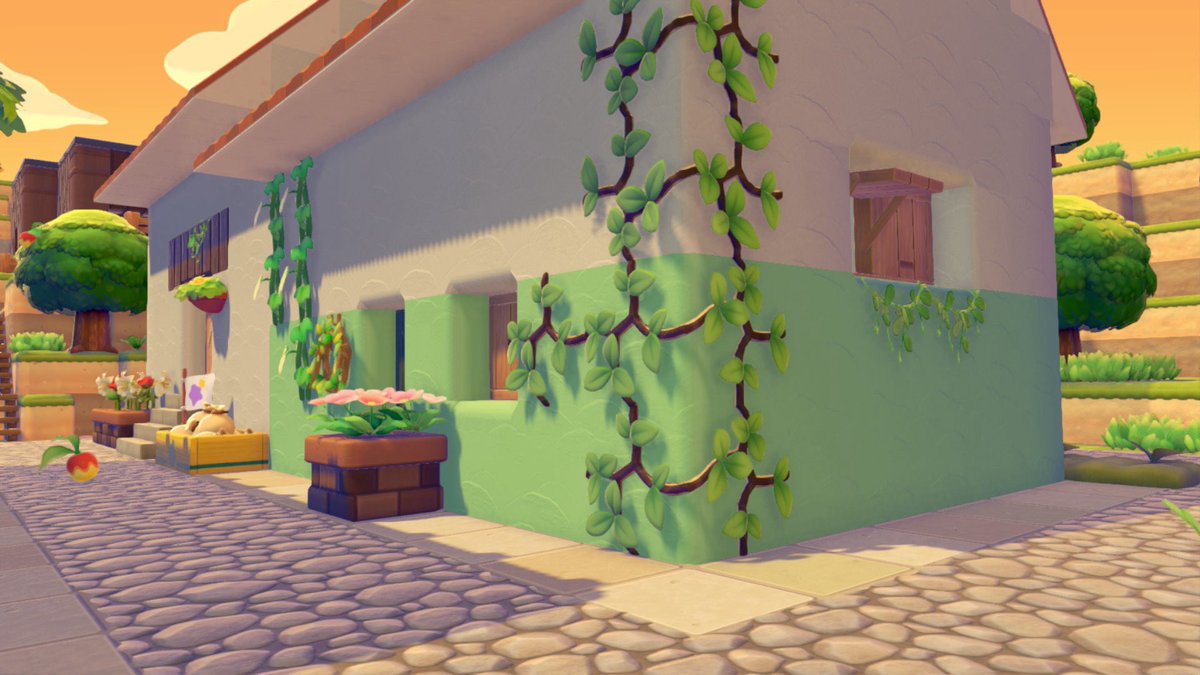
@banannerbread I just saw somebody making a Joya de Ceren (a Maya site that was preserved like Pompeii) inspired Pokopia town:
x.com/TheOnlyBaggio/…
It may or may not have convinced me to buy the game 😅
Frikitona 🇸🇻🇲🇽🏳️🌈@TheOnlyBaggio
I’m also doing a prehispanic, “joya de ceren”-inspired area in Rocky Ridges!! El Salvador WILL be in Pokopia one way or another >:) (Note: these are not images specific to ES sites, but they’re similar enough and I’m working with plaster and bricks lol)
English

I’m also doing a prehispanic, “joya de ceren”-inspired area in Rocky Ridges!!
El Salvador WILL be in Pokopia one way or another >:)
(Note: these are not images specific to ES sites, but they’re similar enough and I’m working with plaster and bricks lol)




English
@TheOnlyBaggio Nice!
This mighht have just sold me on the game, ahaha
English
little El Salvador in Pokopia :P it still needs a LOT of work but we’re getting there!!


English
@MichaelESmith I mentioned this in another reply, but your pages on the ASU website like you linked here aren't currently publicly accessible, so here's a link to an archived version of the page you're linking for people to view:
web.archive.org/web/2023032609…
English
Ha ha, the NY Post plagiarized parts of an unpublished report of mine on the "Roman" figurine from Calixtlahuaca, but ignored the logical conclusions and added bogus info to produce a sensationalized account.
nypost.com/2026/03/19/sci…
My account is here: public.asu.edu/~mesmith9/tval…
English
@TrevorAllenMD Where did you find the card artwork here at this quality?
English

Four “pretty rare, but most 90s–2000s kids had at least one them” cards that were fun to try deck building around, but it never quite worked out:



English
Arceus is actually an amazing design IMO
It feels godly and celestial, but also alien and otherworldly with it's face and head tendril thing. It's "neck" also almost feels like a whole torso, but as if it has it's arms knocked off like it's a greek statue
As a "god" pokemon I really feel like it hits all the points you want to with that theme
English


Well, it's a racing spinoff, so it's not super like many other Kirby games, but it's not really like many other racing games either, it's pretty unique.
The main mode of the game isn't even really racing, it's essentially a battle royale mode where you and 15 other players are put in a large level and have to collect powerups and do events and swap out for better vehicles before doing a final minigame with your souped up vehicle against the other players
The main racing mode is also paradoxically both simpler and more competitive then something like Mario Kart: There's only the control stick and a single button, to drift/charge a boost (you move automatically), but there's less comeback mechanics and items/abilities aren't randomized but are in set locations.
There's 2 other major modes as well, if you've played say Smash Bros Melee or Kirby Super Star where there's a whole suite of subgames, it's like that. There's also a pretty robust vehicle customization system with tools to paint and draw on the vehicles with decals.
Each vehicle and character also controls and plays VERY differently: One vehicle might not be able to turn at all except when drifting, another can only charge up a "gas tank" while drifting and requires a steady amount of gas to move, another gets a speed boost each time it deals damage to another player, etc.
The unlock/achievement system is also really addictive, there's a grid of unlocks for each mode, but you can only see the unlock conditions and rewards for the grids next to one you've already unlocked, so figuring out how to unlock the next vehicle or character or cosmetic is super addicting.
That should be a solid overview, but there's also 2 40ish minute presentations by Sakurai about the game you can look up on Youtube that shows the game off
English

@Majora__Z No but I'll check it out 👀✨ I used to be a Kirby enjoyer
English
@DarkGaiaRPG There aren't Llamas in Mesoamerica, they're only in the Andes, where Andean civilizations did domesticate them
English

@Majora__Z That's exactly what I said. Also llamas can be trained as draft animals. They didn't know how to train them. Much like Zebras in Africa.
Horses and cows didn't just walk up to humans and say 'use me however you want boss.' It took centuries of learning to figure it out.
English

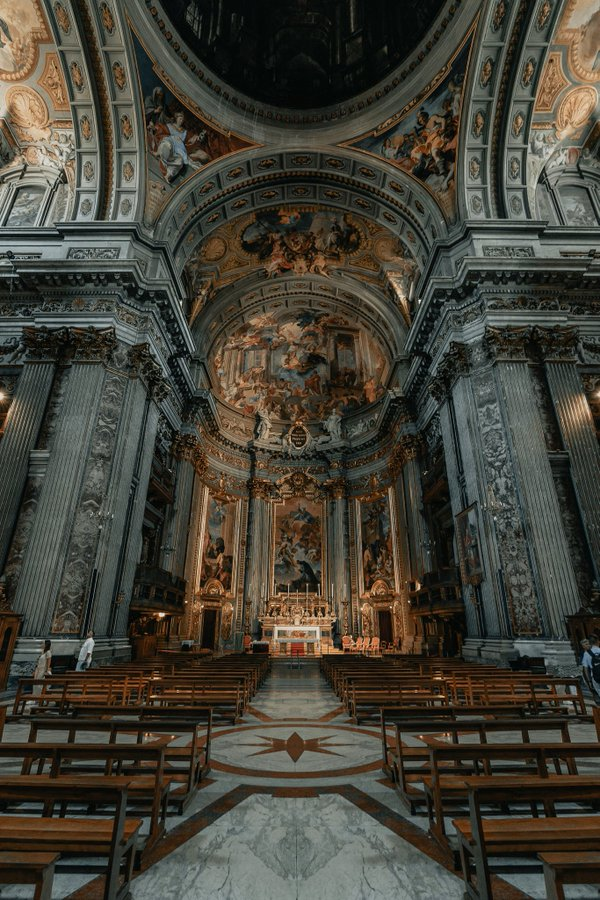
Medieval Christians built this while the Aztecs were still sacrificing babies to make the sun rise.
English
@chowitzer @battery706 Because, again, it's not even inherently about casual vs competeitive, it's about the meta and rulesets changing what makes the game fun
There are players who would want to play competitively and might even have the skill to do so, but they may not like the comp ruleset
English

@Majora__Z @battery706 If that's the case, I reiterate my question: what's the problem exactly? What do casuals care about the "meta" if they don't play competitive? Why can't they just ignore what high-level players are doing if they're just smol bean playing casually for fun?
English

Guy whose entire YouTube channel lives and dies on spreading egregious misinformation on real life animals while ranking them like fighting game characters on a tier list dropping a truly generational scrubquote.
English
Yep, I already linked that page from you, I just had to use a waybackmachine archive of it because your ASU pages all require some sort of ASU sign in to view now.
Was one of the things I was gonna ask you about next time I emailed you, to see if those pages could get fixed?
It's not just that one, your Yautepec, Cuexcomate, and publication pages are all affected too
English
@Majora__Z @Trey_Explainer Ha ha, this old joke. I talk about it here:
public.asu.edu/~mesmith9/tval…
English

Don’t waste your time, this object has been known since the 90s and is most likely of dubious provenance
Why the New York Post has randomly promoted this decades old story with no new information is a mystery to me
New York Post@nypost
2,000-year-old artifact may be evidence that Romans found New World - a thousand years before Columbus trib.al/Xpg40PY
English
@UpdatingOnRome If you wanna read more about the Aztec excavating and collecting artifacts and foreign art, and even them using artifacts and ruins to create new revivalist art movements, I touch on it more and link to papers about in my post about Teotihuacan here: x.com/Majora__Z/stat…
MajoraZ@Majora__Z
As it happens, The (arguably) largest city in both Mesoamerica and all of the Americas during the Roman period (Teotihuacan), had Maya, Zapotec, Michoacano and Gulf Coast ethnic neighborhoods inside of it! For some context, Teotihuacan was a city in the Valley of Mexico (later the core of the Aztec Empire, today Mexico City) and at it's height at 400-500AD, had ~100,000 denizens , a ~20 square kilometer urban grid, with the city as a whole covering 37sqkm (so notably wider then Rome, but not as populated... not sure if the 100k is for the 20 or 37sqkm area) Some sectors of that grid, such as the Merchant's Barrio, the Oaxaca barrio, etc have art, burial practices, and some architectural features associated with those cultures (you can read about the Gulf coast one/the Merchants Barrio here: storymaps.arcgis.com/stories/6bce84… There's actually a theory that Teotihuacan had a longstanding Maya embassy, due to (IIRC) some finds at the Plaza of the Columns compound, as well as some structures potentially identified as Teotihuacano embassies at major Maya cities like Tikal, though there seems to have been a diplomatic breakdown with the compound being desecrated, and some Maya sites have inscriptions of conquests some researchers identify as Teotihuacano invading and installing rulers on Tikal and other Maya sites, and we subsequently see Maya elites adopting a lot of Teotihuacano iconography. Some articles about this, keep in mind though not all researchers ascribe to this, but a fair amount do: science.org/content/articl… science.org/content/articl… science.org/content/articl… Anyways, we do also know Teotihuacan had diplomatic contact with the most powerful Zapotec city, Monte Alban, and Teotihuacano art and architectural influence is seen there in Oaxaca, as I mentioned in the Southern and Central Maya lowlands even down in Guatemala, and other parts of Mesoamerica. Some people even call it the Rome of Mesoamerica as a result, but as the first Science.org article says, it probably only "directly" ruled a kingdom within Central Mexico and just had wider influence, and even then it's "direct" subjects may not have been under direct administration (tho I'm not familiar with the specifics for Teotihuacan here so maybe they were):, Mesoamerican kingdoms/empires tended to be hegemonies, even the Aztec Empire was actually pretty hands off: x.com/Majora__Z/stat… In general Teotihuacan has some weird urban design traits: it lacked ball courts, as mentioned had the ethnic barrios, a huge urban grid, which was aligned to a central road, etc, all of which were unusual in Mesoamerica (typically things were organized around plazas to have ritual alignment/for communal activities in the urban core, then larger radial suburban sprawls). But my favorite unique trait is that basically the entire population was living in fancy palace compounds with dozens of rooms, painted frescoes, some plumbing etc, comparable to Roman villas or Chinese palaces. In most Mesoamerican cities these served as elite or royal residences but in Teotihuacan they acted as apartments even for many commoner families. Due to that, the multi-ethnic setup, a lack of signs of singular autocratic rulership, it might have been a republic or a democracy (we see this during the Aztec period at Tlaxcala, for example: youtube.com/watch?v=FVgNul…) In any case, while there were some earlier disruptions of shifts inside the city, around 550-650 AD, there was a major event, probably a civil uprising, and the city had a major decline. By some models, it still had tens of thousands of people for a few centuries after, and even during the Aztec period some towns were in and around the ruins, but it ceased to be the giant political player it was after the uprising. The Aztec actually did excavations at the site's ruins, brought back artifacts to Tenochtitlan (the Aztec even revived some Teotihuacano art and architectural styles and some urban design elements: see mesoweb.com/pari/publicati… , mesoweb.com/es/articulos/s… , and researchgate.net/publication/28…, plus x.com/ohs688/status/…), and kings preformed pilgrimages there, and worked the site into their creation myths --------------- For people curious for more, I helped out with a nearly 40m video on Teotihuacan here: youtube.com/watch?v=aV6ZZZ… Also, see "ALT" labels for more info about each image and the specifics of what's being shown, how accurate each reconstruction is, etc. Pic 1 by @Trasancos , 2 has credits within image, 3 is by @DavidRo14403650 , and 4 is by @RafaelmenaI (and is the most up to date reconstruction of any part of Teotihuacan)
English