CIRSD

1.6K posts

CIRSD banner
CIRSD

CIRSD

@CIRSD

This is the official account of the Center for International Relations and Sustainable Development (CIRSD)
Belgrade, Serbia 🇷🇸 Katılım Ekim 2010
234 Takip Edilen16.7K Takipçiler
CIRSD retweetledi
Vuk Jeremić
Vuk Jeremić@jeremic_vuk·
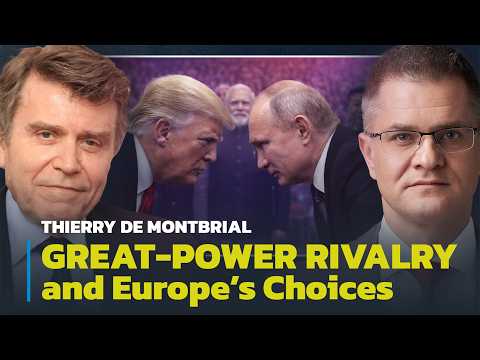
“We should thank President Trump. Europe cannot live under a US protectorate forever.” A fascinating conversation with Thierry de Montbrial—President of IFRI, member of the French Académie des sciences morales et politiques, and one of Europe’s most influential strategic thinkers. We discussed the shifting geometry of global power and the future of Europe in an increasingly fragmented world. A masterclass in clarity and long-term thinking. Listen to the full @CIRSD Horizons podcast below: youtu.be/QvH98gffa88?si…
YouTube video
YouTube
English
1
1
10
2.4K
CIRSD
CIRSD@CIRSD·
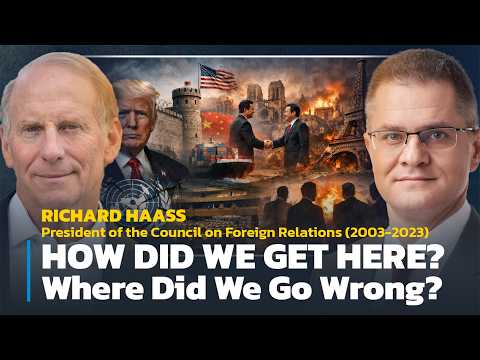
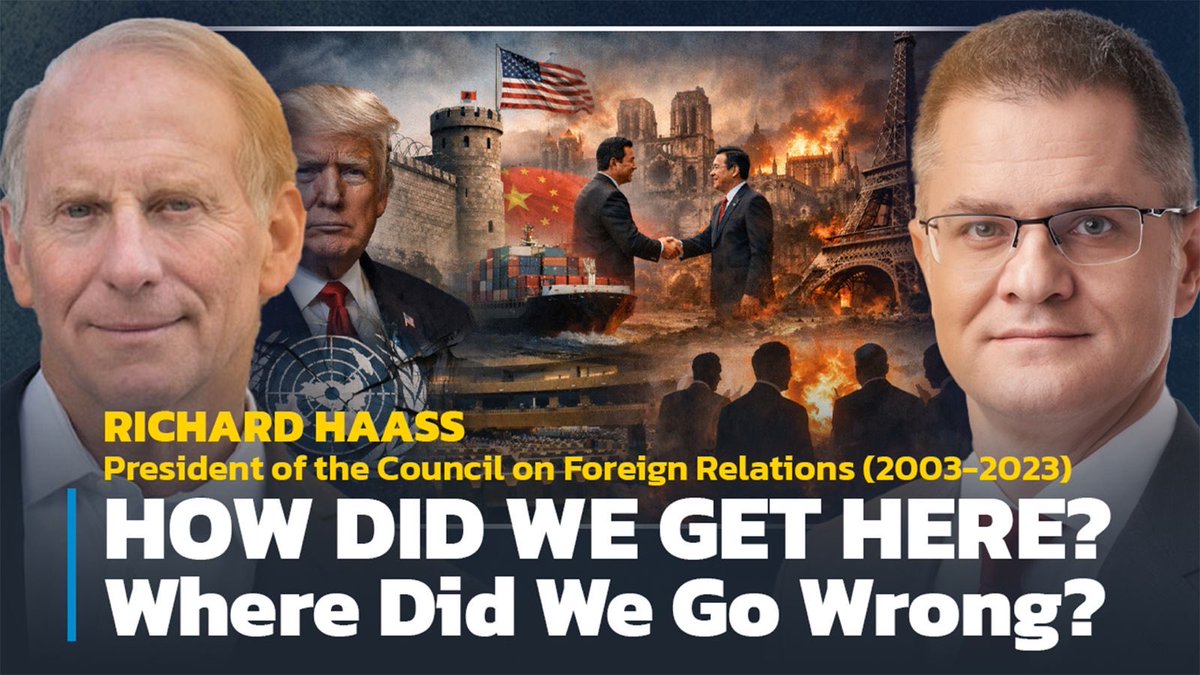
How did we get here—and where did Western strategists go wrong? What should we expect from the Board of Peace? And who is the world’s strongest leader today? These questions and more are tackled in a sharp, fast-paced podcast conversation with one of the most influential international relations thinkers of the past few decades, @RichardHaass , who served as President of the Council on Foreign Relations from 2003 to 2023. youtu.be/iOOXiXZB2k8?si…
YouTube video
YouTube
CIRSD tweet media
English
0
0
1
141
CIRSD retweetledi
Vuk Jeremić
Vuk Jeremić@jeremic_vuk·
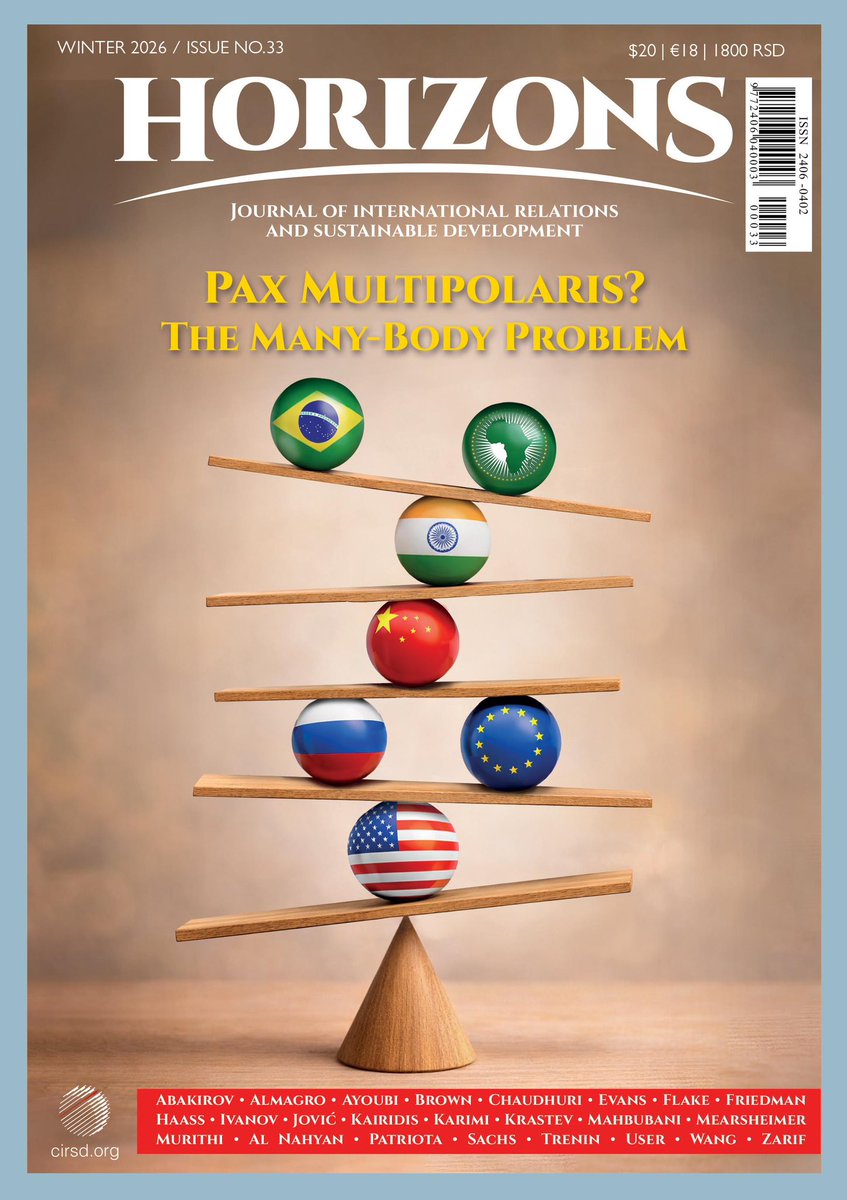
HORIZONS WINTER 2026, VOL.33 PAX MULTIPOLARIS: THE-MANY BODY PROBLEM EDITORIAL IN his science fiction masterpiece The Three-Body Problem, Liu Cixin depicts a civilization trapped in a system besieged by the unforgiving interactions of three suns—its progress condemned to recurring catastrophes caused by celestial disorder. That metaphor resonates powerfully today. As the international system moves away from the imperfect but steady orbit of the Pax Americana, it has entered a far less predictable configuration. The interaction between the incumbent power and the resurgent and rising ones has produced a geopolitical “many-body problem,” raising a fundamental question: can Pax Multipolaris exist—in other words, can a multipolar balance bring lasting peace? THIS issue of Horizons begins with a basic premise: the post–Cold War order is over, but no coherent replacement has yet emerged. The present moment is defined less by transition than by accumulation—unresolved conflicts, overlapping power centers, and institutions designed for a world that no longer exists. The result is not equilibrium, but mounting friction. ACROSS our pages, contributors converge on a central observation: power is dispersing faster than the rules that once used to constrain and channel it. Institutions intended to manage rivalry now struggle to enforce norms consistently or to mediate crises among increasingly self-confident actors. In response, diplomacy has become more situational and transactional, relying on improvised mechanisms rather than durable frameworks. Order has not disappeared, but it has weakened immensely. MEANWHILE, the emerging landscape cannot be reduced to great-power rivalry alone. For many states, particularly outside the neighboring centers of gravity, multipolarity has expanded strategic options. Regional actors and middle powers are asserting autonomy, recalibrating partnerships, and resisting fixed alignment. This diffusion of agency complicates inherited models of hierarchy and challenges assumptions about who shapes the international system. THE unresolved question is whether restraint can keep pace with the widening distribution of power. Historically, multipolar systems have endured only when competition was bounded by credible limits and shared expectations among major actors. Such systems depended on mutual recognition of red lines and a willingness to absorb short-term costs to avoid systemic breakdown. Where those habits were absent, rivalry escalated unchecked. CRUCIALLY, those stabilizing habits are now under strain in the day-to-day conduct of international politics. Economic interdependence has shifted from reassurance to leverage. Technologies that once promised efficiency now compress decision-making timelines and magnify the risk of miscalculation. As trade, finance, and innovation are increasingly weaponized, the margin for error narrows. Managing competition—rather than imagining its resolution—has become the central task of statecraft. ULTIMATELY, the “many-body problem” has no general solution. Whether Pax Multipolaris emerges as a viable order or dissolves into systemic turbulence hinges on three pivotal choices: the depth of diplomatic engagement, the restoration of institutional legitimacy, and the willingness to accept limits in the exercise of power. Those choices, more than any others, will shape the geopolitical landscape of the years ahead.
English
0
1
15
13.1K
CIRSD
CIRSD@CIRSD·
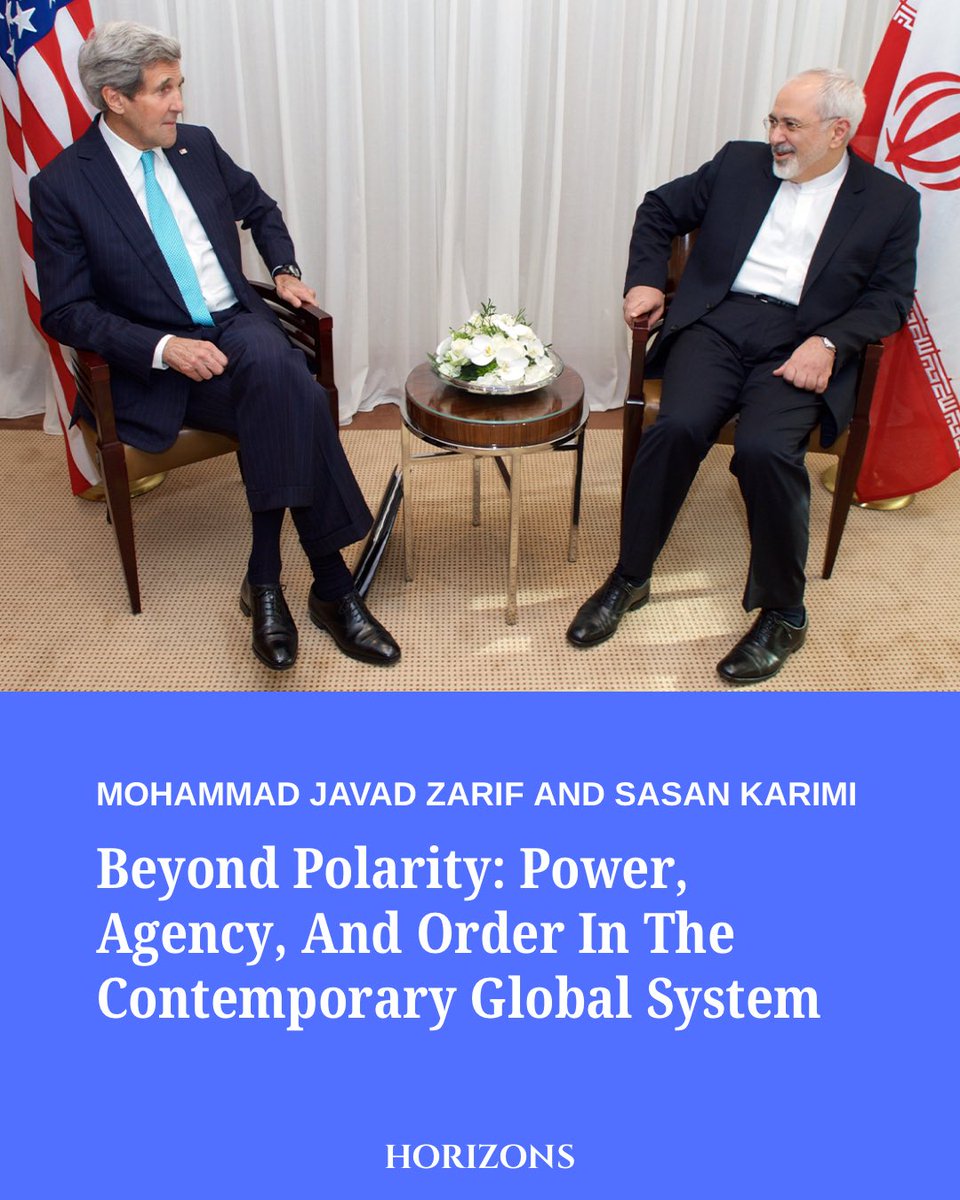
We keep describing the world as if it’s “moving toward” a new polarity. This essay argues the opposite: polarity may already be behind us. In Winter 2026 Issue of Horizons, Mohammad Javad Zarif @JZarif , an Associate Professor of Global Studies at the University of Tehranand and former Iran’s Foreign Minister, Vice President, and Permanent Representative to the United Nations and Sasan Karimi, an Assistant Professor at the Faculty of World Studies, University of Tehran, propose that today’s global system is not a temporary transition to a new bipolar or multipolar structure, but a relatively stable post-polar order defined by: · The Diffusion of Power: Authority is no longer the exclusive domain of states but is shared with tech giants, financial networks, and non-state actors. · Fluid Alliances: Permanent blocs are replaced by temporary, issue-specific coalitions where loyalty is conditional. · A Multi-Layered Reality: Military superiority does not translate into hegemonic control. The result is a world of fluid hierarchies, provisional coalitions, and contested governance where understanding order requires new frameworks, not old labels. Read the full piece cirsd.org/horizon-articl…
CIRSD tweet media
English
0
1
5
611
CIRSD
CIRSD@CIRSD·
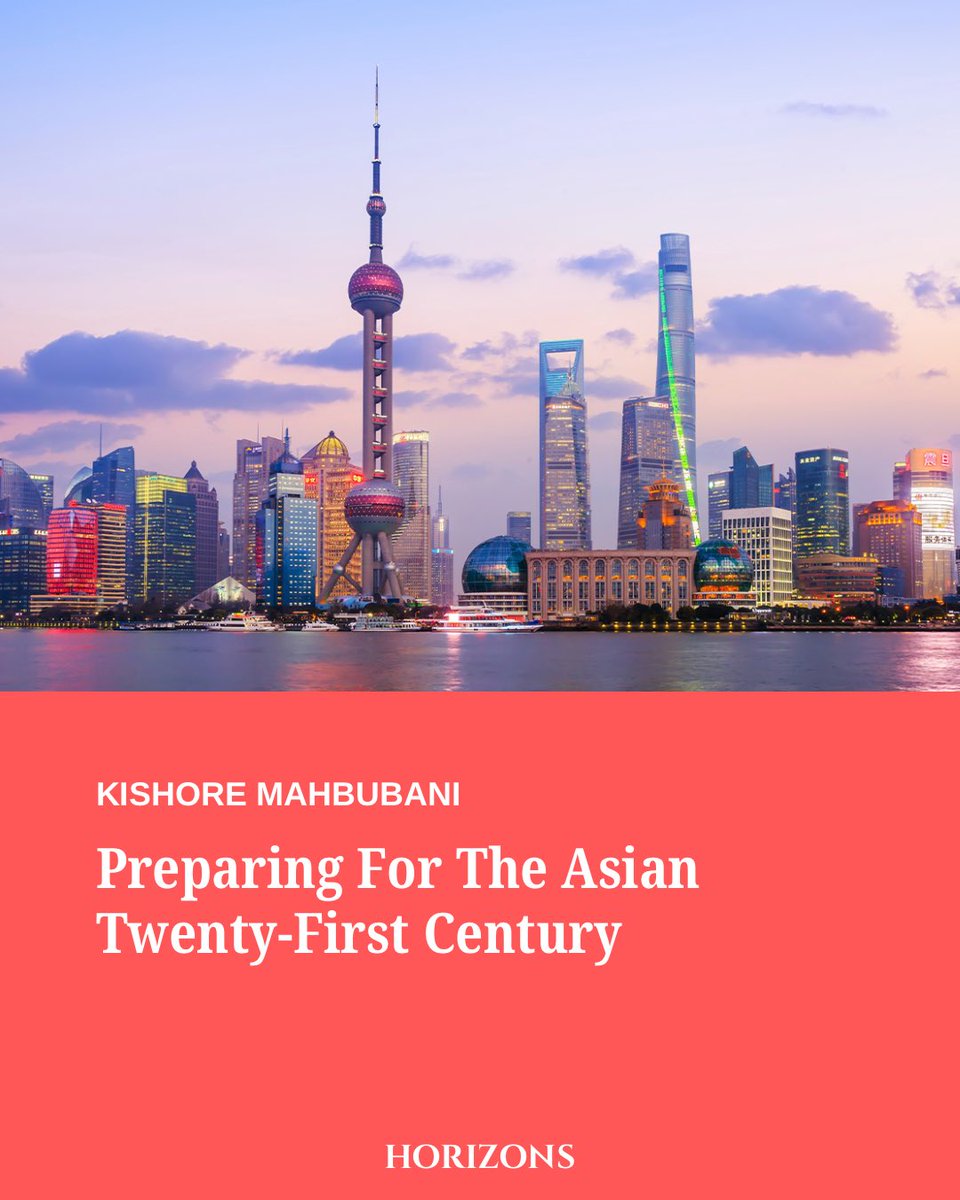
A century ago, Europe was the world’s present center of gravity. Asia was dismissed as the past, and America was the future. Today, the roles have flipped: Europe is the past, America is the present, and Asia is the future. In Winter 2026 Issue of Horizons, Kishore Mahbubani @mahbubani_k, a Distinguished Fellow at the Asia Research Institute at the National University of Singapore, and legendary Singaporean diplomat, argues that we are preparing for the Asian Twenty-First Century; a return to historical normalcy driven by undeniable structural trends: · The Great Inversion: In 2000, the EU’s economy was eight times larger than China’s; today, they are roughly equal. · The “3M” Theory: China’s resilience is powered by Motivation (historical resolve), Momentum (advanced manufacturing), and Meritocracy (competent governance). · Explosive Growth: The Asian middle class has surged from 150 million in 2000 to 1.5 billion today, creating a self-sustaining marketplace. But this trajectory is not a straight line. The Asian Century faces serious challenges. However, despite these risks, the momentum has decisively shifted: The East is no longer just catching up to the West; it is leading the way into the future. Read the full piece at cirsd.org/horizon-articl…
CIRSD tweet media
English
0
9
17
2.9K
CIRSD
CIRSD@CIRSD·
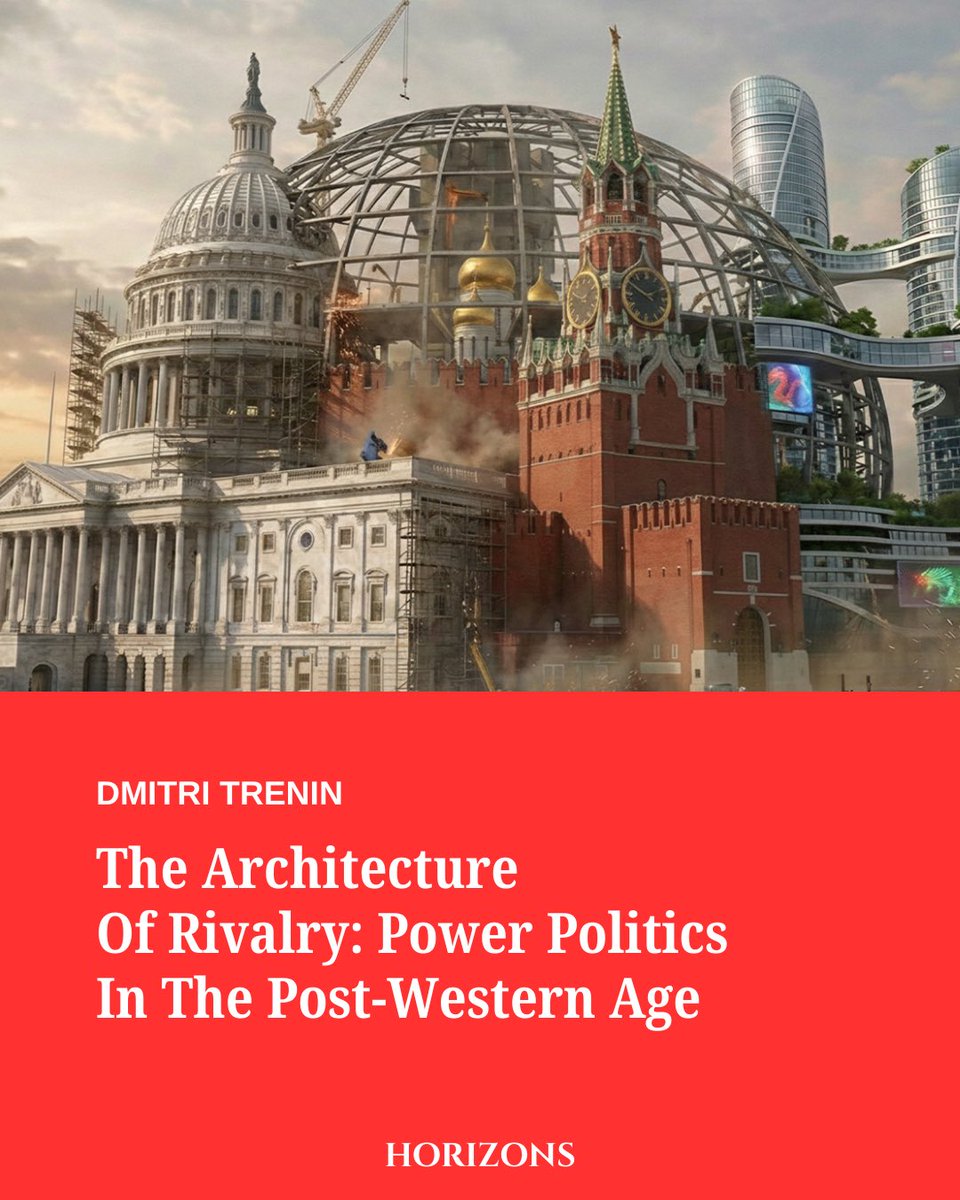
The “new world order” is not here yet. What we have is a world in transition, defined less by rules than by layers of rivalry. In the Winter 2026 issue of Horizons, Dmitri Trenin, Director of the Institute of World Military Economy and Strategy at Moscow’s Higher School of Economics (HSE), outlines the “Architecture of Rivalry”: a chaotic transition period defined not by rules, but by raw power politics. · America’s Counter-Offensive: A strategy to turn alliances into “tributary assets” and push Europe to the front line against Russia. · Russia’s Eurasian Pivot: A historic break with the West, redefining Russia as a distinct civilization-state aligned with the “World Majority.” · The Rise of Regional Orders: From Turkey to Saudi Arabia, a “second tier” of powers is carving out its own spheres of influence. The bottom line: Until a new equilibrium emerges, contestation is the system. Institutions will endure as forums for dialogue, but not as arbiters of power. Read the full piece cirsd.org/horizon-articl…
CIRSD tweet media
English
0
2
4
746
CIRSD
CIRSD@CIRSD·
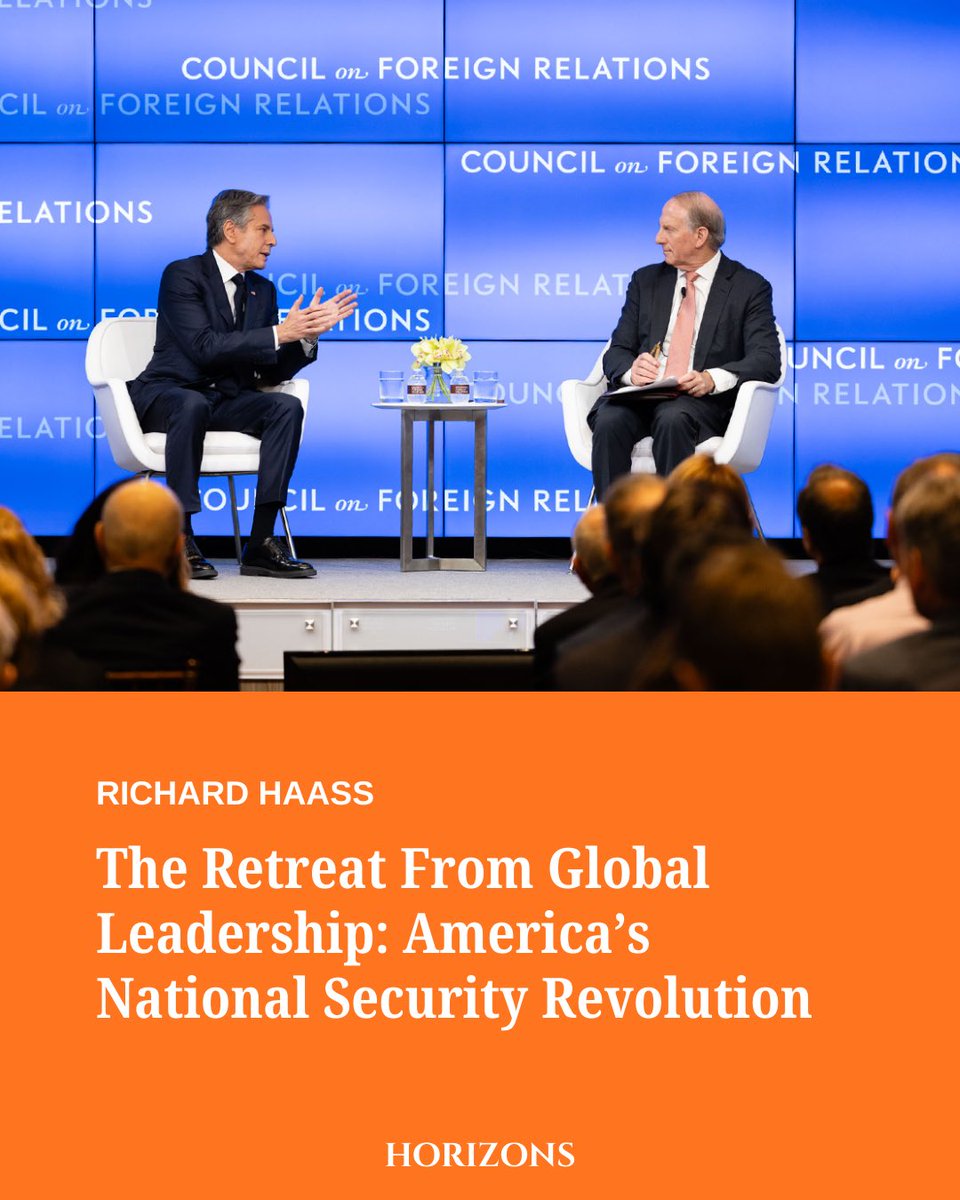
For many decades, the “global operating system” was premised on American primacy. That era is over, argues the president of the Council on Foreign Relations for 20 years, Richard Haass @RichardHaass In the Winter 2026 issue of Horizons, he delivers a eulogy for the international order, dissecting a National Security Strategy that replaces values with “Amoral Realism”: · The Trump Corollary: A “Fortress America” approach that prioritizes the Western Hemisphere and border security above all else. · Transactional Asia: A pivot from strategic architecture to short-term trade truces, leaving allies like Japan and India exposed. · Abandoning Europe: A hostile view of the EU as a burden facing “civilizational erasure,” clearing the path for a sphere-of-influence deal with Russia. The implications of this retreat are profound. Haass is warning that we are entering a messier, less free world, where the strong do what they can, and the weak suffer what they must. Read the full piece cirsd.org/horizon-articl…
CIRSD tweet media
English
0
1
2
566
CIRSD
CIRSD@CIRSD·
Partnership is not something you activate only when it’s convenient - it’s what keeps systems steady when everything shifts. In the Winter 2026 issue of Horizons, His Highness Sheikh Abdullah bin Zayed Al Nahyan, Minister of Foreign Affairs of UAE, outlines a clear thesis: the UAE–Europe relationship should be viewed as a “Partnership for Resilience.” A partnership built to endure polarization, institutional strain, and global shocks by: · Generating Prosperity: A massive economic layer with Europe, reaching €55.6 billion in trade and pioneering AI governance. · Reinforcing Systems: Leading the energy transition with investments in hydrogen and renewables to support decarbonization. · Upholding Stability: A commitment to humanitarian aid—from Ukraine to Gaza—and principled diplomacy in times of crisis. As the world reorganizes around new fault lines, the choice is simple: invest in resilient partnerships or drift. Read the full piece here cirsd.org/horizon-articl…
CIRSD tweet media
English
1
3
2
917
CIRSD
CIRSD@CIRSD·
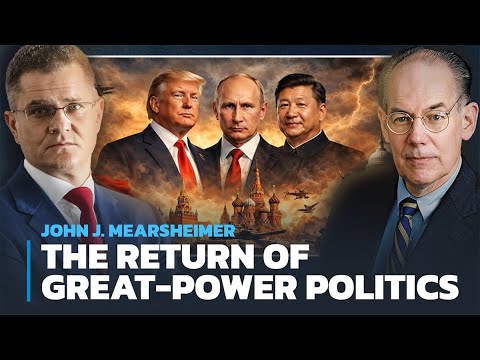
The unipolar moment is over and great power politics is back. In the Winter 2026 issue of Horizons, we explore the accelerating shift toward multipolarity and what it means for global stability. Our Editor-in-Chief Vuk Jeremić sits down for an exclusive interview with Professor John J. Mearsheimer, the leading voice of offensive realism. From stating that “security always trumps prosperity” to the assertion that economic interdependence “has bought us a strategic liability,” Mearsheimer maps the structural forces shaping today’s world—and the flashpoints that could define the decade ahead. Read the full interview here: cirsd.org/horizon-articl…
CIRSD tweet media
English
0
1
6
935
CIRSD retweetledi
Vuk Jeremić
Vuk Jeremić@jeremic_vuk·
Multipolarity isn’t a theory anymore. It’s the story unfolding in real time. That’s among the reasons why the 33rd Volume of @CIRSD Horizons is exceptionally well timed — and why it lands with unusual force. This new edition is built around one defining question: what does a truly multipolar world look like in practice — and what comes next? From power politics and economics to security, technology, and global governance, Horizons convenes voices that don’t just comment on events — they help shape them. Inside Volume 33 you’ll find exclusive interviews and essays by the Foreign Minister of UAE, His Highness Sheikh Abdullah bin Zayed Al Nahyan @ABZayed, alongside some of the most influential thinkers of our time: John Mearsheimer @MearsheimerJ, Jeffrey Sachs, Richard Haass @RichardHaass, George Friedman @George_Friedman, Ivan Krastev, and Kishore Mahbubani @mahbubani_k. The roster spans continents and convictions — from elected leaders and former top officials to leading scholars: Dimitris Keridis @DimKairidis, head of the Greek parliamentary majority; Pramit Chaudhuri @PramitWorld, former National Security Adviser of India; former foreign ministers Antônio Patriota (Brazil) and Mohammad Javad Zarif @JZarif (Iran); Luis Almagro @Almagro_OEA2015, former Secretary General of the Organization of American States; Jonathan Brown, policy head of Nigel Farage’s Reform Party; and a distinguished academic lineup including Dmitry Trenin (Russia), Wang Wen @WangwenR (China), Tim Murithi @tmurithi12 (Africa), Dejan Jović @DejanFpzg (Balkans), and Gordon Flake @lgflake (Australia) — among many others. Nowhere else can you find such a wide range of top-notch authors in one place — debating the same reality from fundamentally different vantage points. Our Volume 33 is out now!
Vuk Jeremić tweet media
English
5
16
31
22.3K
CIRSD retweetledi
Vuk Jeremić
Vuk Jeremić@jeremic_vuk·
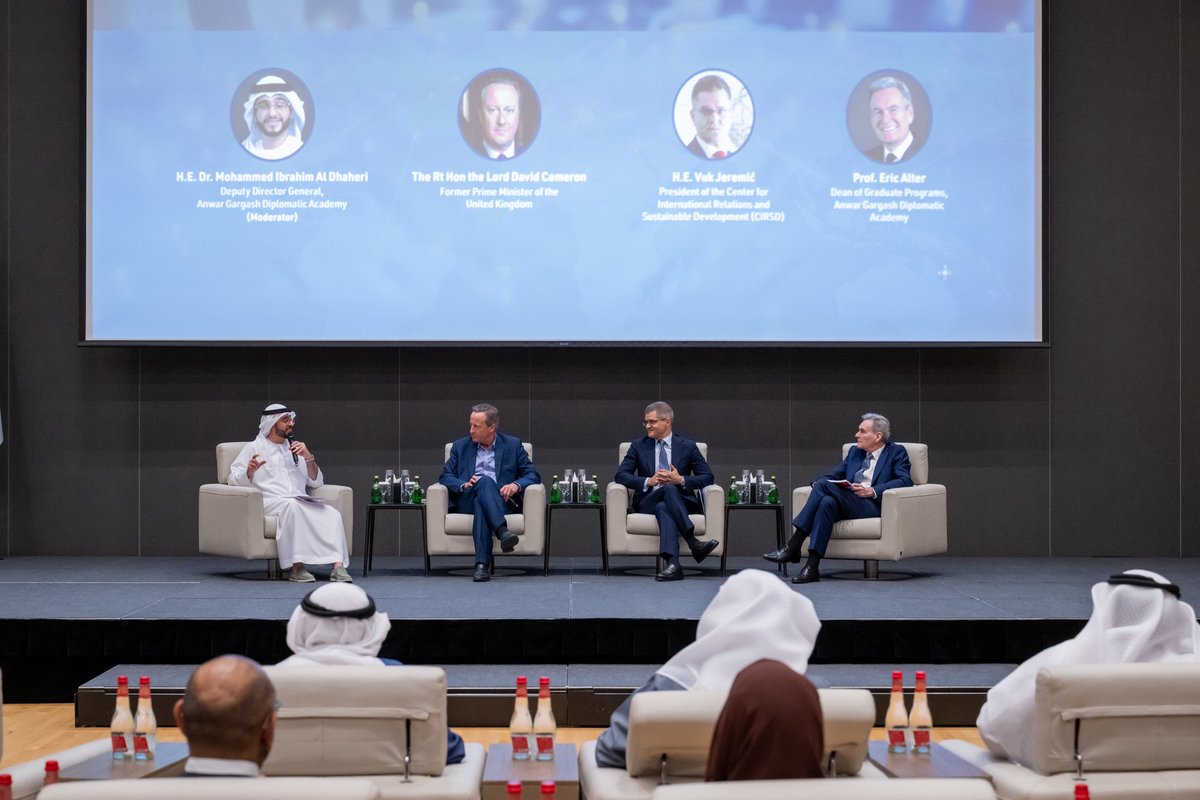
Thrilled to launch the newest issue of @CIRSD Horizons at the Anwar Gargash Diplomatic Academy @AGDAUAE in Abu Dhabi—marked by a terrific panel discussion in these deeply disruptive geopolitical times. I had the pleasure of a lively, wide-ranging debate with Lord David Cameron @David_Cameron, former UK Prime Minister—who was also teaching a J-Term course at NYU Abu Dhabi—and with the Academy’s Dean, my good old friend Eric Alter. Lord Cameron and I were joined by our NYU students, whose sharp questions and energy kept the conversation informed and driven by the perspectives of the next generation. We were also honored to welcome top UAE government representatives and foreign diplomats in the audience. Grateful indeed to AGDA for its hospitality, partnership, and steadfast support of serious dialogue.
Vuk Jeremić tweet mediaVuk Jeremić tweet mediaVuk Jeremić tweet media
English
2
5
29
2.5K
CIRSD retweetledi
Vuk Jeremić
Vuk Jeremić@jeremic_vuk·
Grateful to @TheECSSR for the warm hospitality they extended to me and my @NYUAbuDhabi students in Abu Dhabi. Thank you for the opportunity to share my reflections on today’s global developments and for convening such a thoughtful, engaged audience! The quality of questions and the ensuing discussion underscored how essential serious and open dialogue is in a time of accelerating change and uncertainty. Looking forward to further engagement between @TheECSSR and @CIRSD!
English
1
2
23
13K
CIRSD
CIRSD@CIRSD·
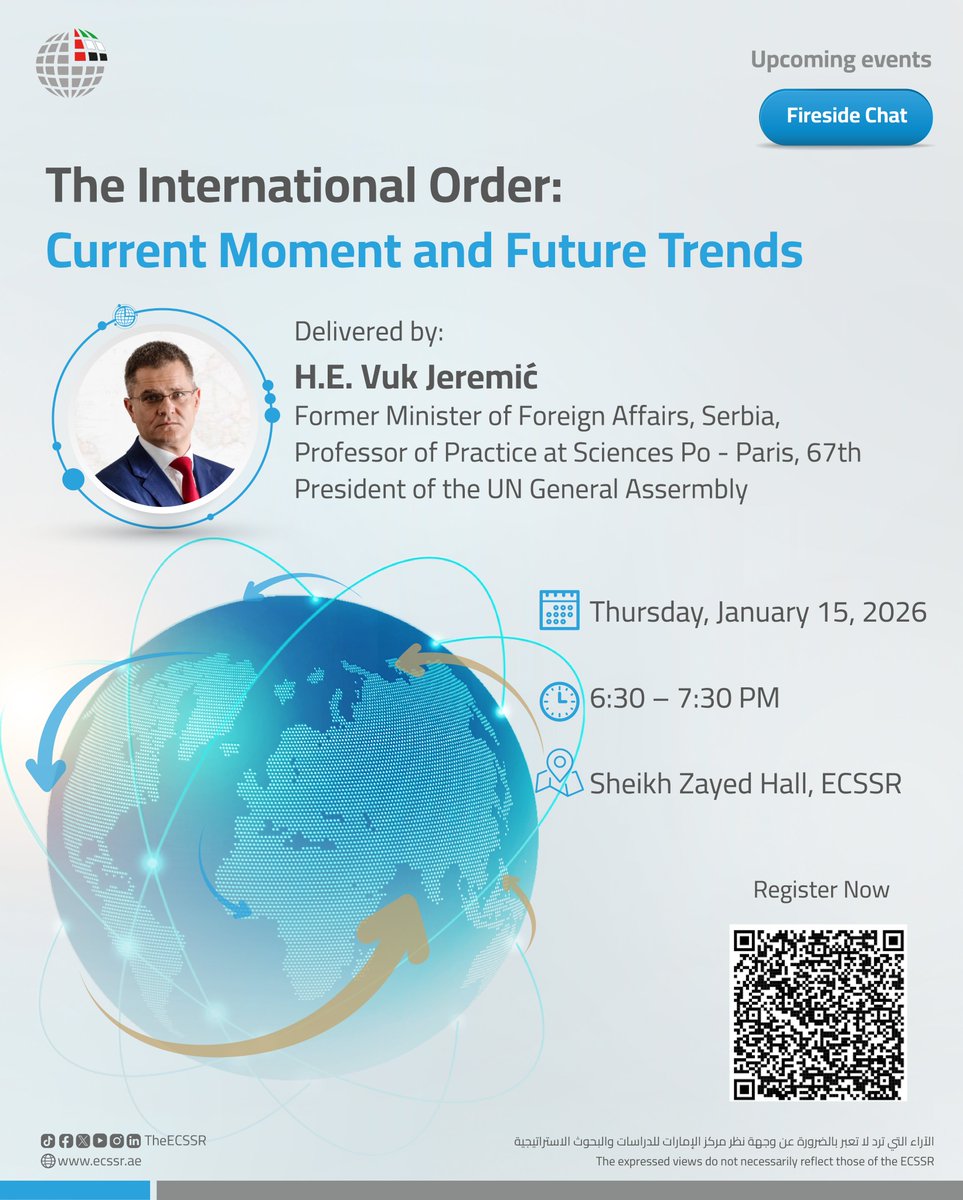
CIRSD President @jeremic_vuk participated in a fireside chat titled “The International Order: Current Moment and Future Trends,” organized by the prominent Emirates Centre for Strategic Studies and Research in Abu Dhabi @TheECSSR
CIRSD tweet media
English
0
5
9
872
CIRSD retweetledi
TheECSSR
TheECSSR@TheECSSR·
This Thursday, January 15, we invite you to attend a Fireside Chat hosted by the Emirates Center for Strategic Studies and Research (ECSSR) titled: “The Global Order: Current Moment and Future Trends.” We will be joined by H.E. Vuk Jeremić—former Minister of Foreign Affairs of Serbia, Professor of Practice at Sciences Po–Paris School of International Affairs, and 67th President of the UN General Assembly—to discuss the evolving contours of today’s international order and the trends shaping what comes next. Join us on Thursday, January 15, 2026, at 6:30 PM, at Sheikh Zayed Hall, ECSSR. Register now: ecssr.ae/en/news-events… #TheECSSR @jeremic_vuk
TheECSSR tweet media
English
0
3
10
990
CIRSD
CIRSD@CIRSD·
Watch the full #Horizons Interview with Professor John J. Mearsheimer, one of the most influential political scientists of our time. He explains how the international system has undergone a fundamental transformation over the past decade and why this marks the return of great-power politics. youtu.be/Z7cxhaQwLb8?si…
YouTube video
YouTube
English
0
2
3
281
CIRSD
CIRSD@CIRSD·
The Center for International Relations and Sustainable Development (CIRSD) has published a new Horizons Interview with Professor @MearsheimerJ , one of the most influential political scientists of our time and the leading voice of structural realism in international relations. The interview was moderated by @jeremic_vuk, President of CIRSD and Editor-in-Chief of #Horizons. cirsd.org/en/news/john-j…
English
0
0
1
128
CIRSD
CIRSD@CIRSD·
Russian in Central Asia: Walking the Linguistic Tightrope Bogdan Lytvynenko is a research and editorial intern at the Center for International Relations and Sustainable Development and a Master’s student at the University of Oxford. cirsd.org/en/news/russia…
English
0
0
1
251