Carlos Parra-Herran MD retweetledi

𝗜𝗠𝗚𝘀 𝗔𝗥𝗘𝗡'𝗧 𝗦𝘁𝗲𝗮𝗹𝗶𝗻𝗴 𝗨𝗦 𝗝𝗼𝗯𝘀:
Amid the noise and baseless accusations that IMGs are “stealing” residency spots, I’ve put together a comprehensive, data-driven breakdown that cuts through the misinformation.
This article debunks these claims with facts, context, and real ground realities, and clearly explains how residency positions are actually distributed between U.S. graduates and IMGs.
Because this conversation deserves evidence, not assumptions.
Let’s kill this myth once and for all 👇
❌ IMGs are NOT “stealing” residency spots:
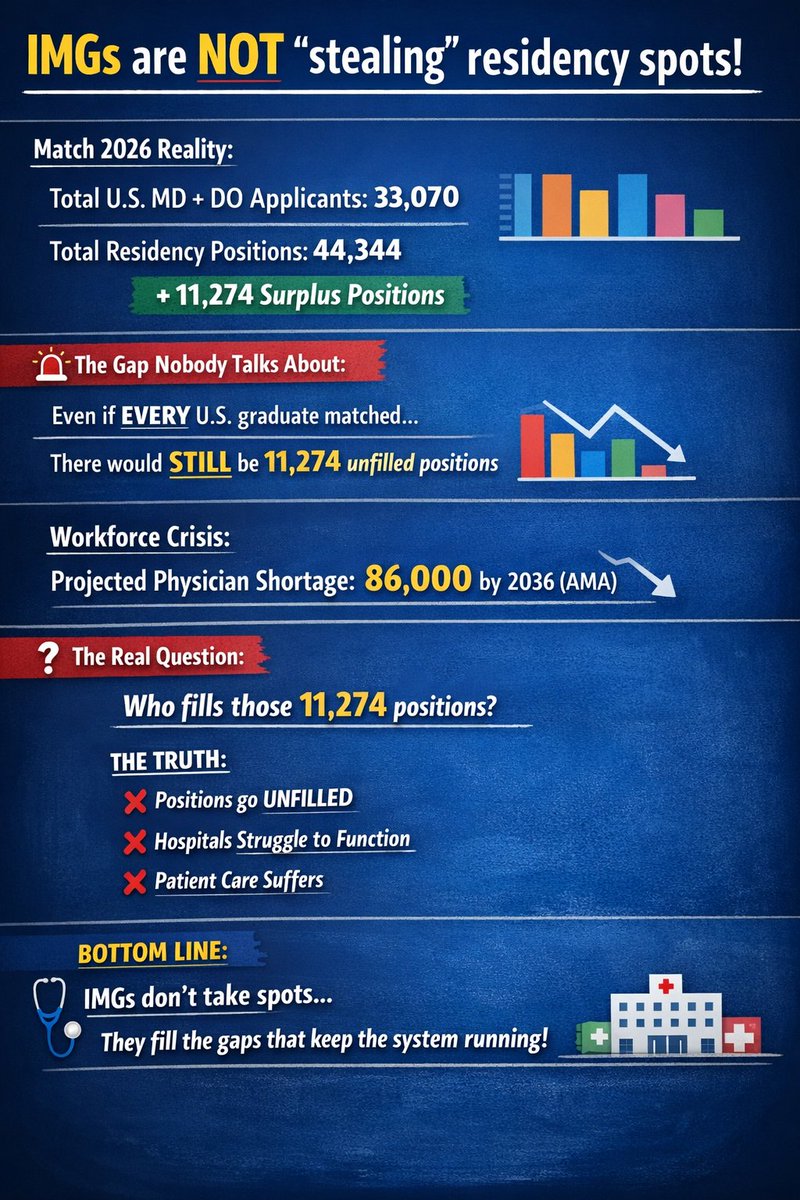
📊 Match 2026 Reality:
🔹 Total U.S. MD + DO applicants: 33,070
🔹Total residency positions: 44,344
➡️ Surplus positions: +11,274
🚨 The Gap Nobody Talks About:
Even if EVERY single U.S. graduate matched… There would STILL be 11,274 unfilled positions
📉 Workforce Crisis:
Projected physician shortage: 86,000 by 2036 (American Medical Association)
🤔 The Real Question:
Who fills those 11,274 positions?
💡 The Truth:
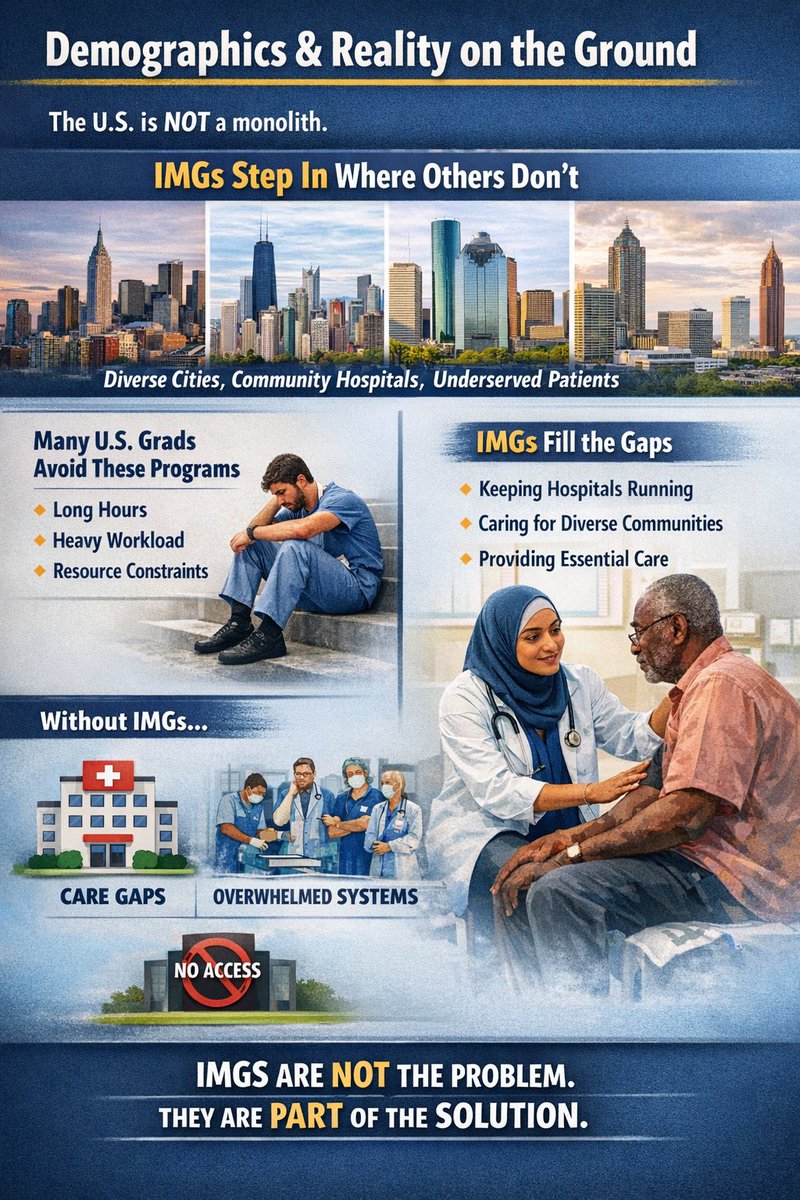
Without IMGs:
❌ Positions go unfilled
❌ Hospitals, especially community and rural, struggle to function
❌ Patient care suffers
🩺 Bottom Line:
IMGs don’t take spots
They fill the gaps that keep the system running
ANOTHER ASPECT:
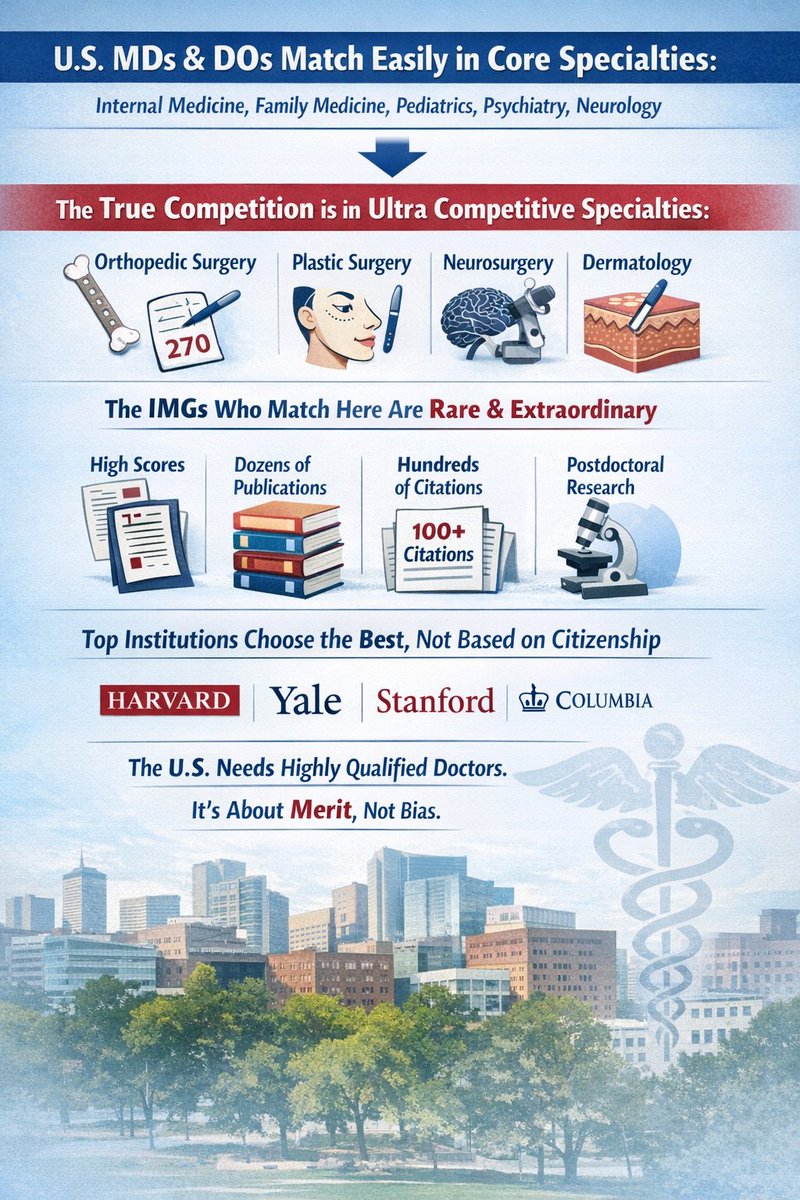
In core specialties like Internal Medicine, Family Medicine, Pediatrics, Psychiatry, and Neurology, virtually no U.S. MD or DO applicant who is willing to train in these fields remains unmatched after SOAP. These are not the arenas where U.S. graduates are being displaced. The unmatched issue arises when applicants, understandably, aim for ultra competitive specialties like Orthopedic Surgery, Plastic Surgery, Neurosurgery, and Dermatology. In those fields, they are competing against other highly accomplished U.S. graduates and a very small group of IMGs who are not average by any standard, but truly exceptional.
The IMGs who break into these specialties are rare, and their profiles speak for themselves, extremely high scores, dozens of publications, hundreds of citations, and often postdoctoral research fellowships, frequently at the very institutions where they eventually match. They have already worked alongside senior faculty, proven their competence, and demonstrated their work ethic over time. When programs rank them highly, it is not favoritism, it is informed judgment based on direct experience.
To suggest that institutions like Harvard University, Yale University, Stanford University, Columbia University would deliberately choose less competitive candidates over stronger ones simply because of citizenship is not just incorrect, it fundamentally misunderstands how merit based selection works in academic medicine. These institutions built their reputation on excellence, not compromise.
And finally, why are IMGs coming to the United States in the first place? Because the U.S. has a large, widely distributed population, a worsening physician shortage, and a healthcare system that actively needs them. For decades, the U.S. projected itself as a land of opportunity, attracting talent from across the world. Now that highly qualified physicians are pursuing that opportunity through a legal, merit based system, some have a problem with it.
At that point, the issue is no longer about residency positions or qualifications. It is about bias, not facts.
#Match2026 #MedTwitter #MedEd
Goshen, NY 🇺🇸 English