

Cameron
16 posts

Thoughts
White people, does this shirt offend you..??

English
@SenWarren The NATO Secretary General disagrees with you, Liz. He said Iran was on the verge of obtaining nukes. He also said that he has spoken to NATO leaders, and they all agreed that stopping Iran was the right thing to do.
English

I just left a classified briefing with the Trump Administration about the war in Iran.
I was worried before, but I’m more worried now.
English

Why are liberal white women SO fucking stupid? Trump was the whistleblower, you indoctrinated twatwaffle. He's the one who brought Epstein down. I think you'd be a lot happier if you shut the fuck up and made your man a sandwich - and would washing a dish every now-and-then kill you?
English

🚨#BREAKING: It has been revealed that the man who DRUGGED, KIDNAPPED, and R*PED a CHILD in Charlotte NC...
...IS AN ILLEGAL IMMIGRANT!!!!
He is also listed as a "WHITE MALE" in arrest records.
There will be no protests for her.
You won't find this in the mainstream media...


English
@Geniustechw John Calhoun's rat utopia experiments comes to mind. Females have become extremely aggressive in our society. Feminazis are destroying the natural order.
English

Does a male student have the right to defend himself when a female student is hitting him? 😡🥊
English

“She didn’t try to run him over. She ran him over.”
Any other US president would be finished, politically, after brazenly lying about the killing of an American citizen like this. nytimes.com/2026/01/08/us/…
English
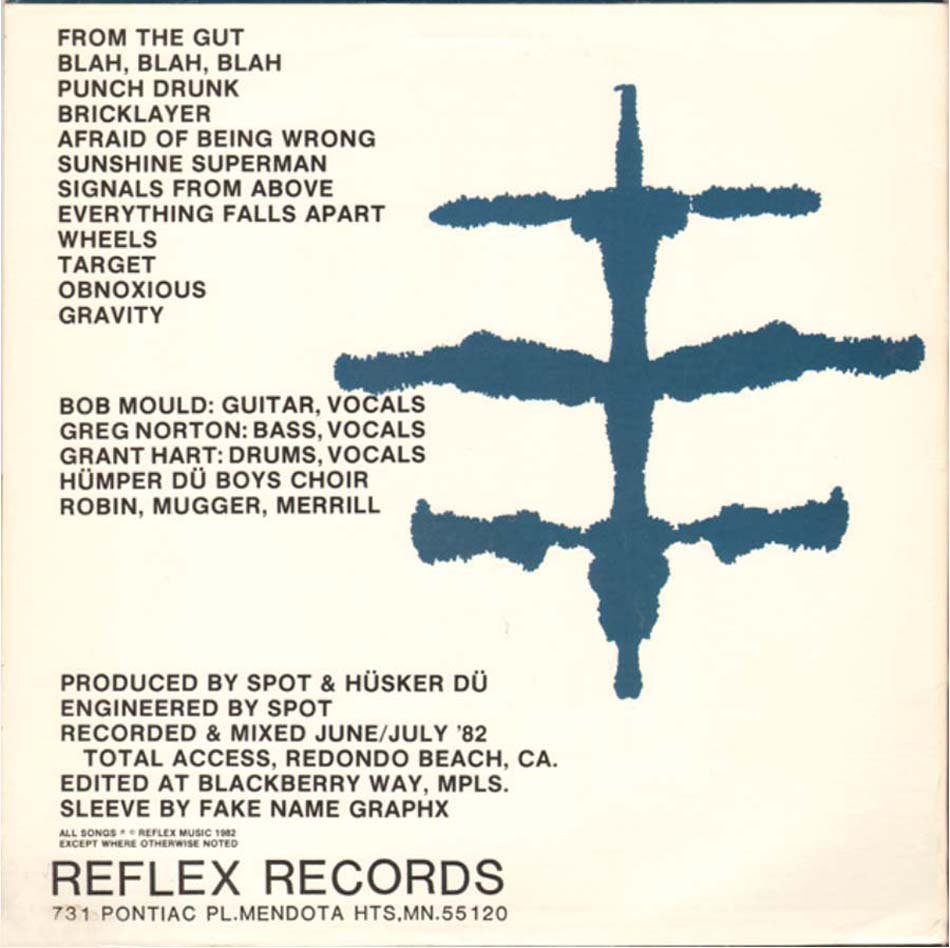
@PunkRockStory Saw them in Dalas when they were supporting this album. Great show.
English


@Garrisonscottk1 @archeohistories Most of ancient Rome is buried under 20 feet of rubble and newer construction.
English
@archeohistories I find it difficult to believe that this has been hidden for 2000 years in rome.
English

After the Great Fire of 64 AD, Rome lay in ruins. Amid the destruction, Emperor Nero began constructing the Domus Aurea—the “Golden House”—a palace designed to surpass anything the ancient world had ever seen. It was more than a home; it was a statement of power, wealth, and imagination. Among its marvels, the most legendary was a rotating dining room that captured the fascination of both contemporaries and later historians.
Ancient writers marveled at the engineering ingenuity. They described ceilings that showered guests with rose petals, streams of perfume carried through the air, and a floor that slowly rotated, giving diners the impression that the room itself moved beneath them. For the Romans, feasting at the Domus Aurea was not just about food—it was an immersive spectacle where architecture, mechanics, and luxury merged in breathtaking harmony.
Yet for centuries, these tales were dismissed as exaggeration. Scholars, relying on incomplete ruins and sparse historical texts, assumed that ancient writers were merely illustrating Nero’s notorious extravagance. The emperor’s reputation for decadence and cruelty was so notorious that many thought the stories of a rotating dining room were symbolic, not factual. “A parable of excess,” some argued, “rather than a literal invention.”
Despite skepticism, Roman engineering was remarkably advanced. Hydraulic systems, gears, and counterweights were already in use for temples, theaters, and aqueducts. It was entirely plausible that architects could have created a mechanism to rotate a large platform, even under the weight of diners and furniture. Yet proof remained elusive, buried under centuries of rebuilding and decay.
That changed in 2009. Archaeologists excavating the area of the Palatine Hill in Rome uncovered remnants that aligned with ancient descriptions. Structural evidence suggested a circular platform capable of rotation, supported by bearings and designed with precision to move smoothly. Traces of channels and pulleys indicated systems that could have lifted and rotated parts of the dining room. Decorative fragments—marble tiles, frescoes, and tiny perforations consistent with perfume dispersal—suggested the sensory elements described in the texts.
The find was a milestone. What had once seemed myth—the rotating dining room of Nero’s Domus Aurea—was now substantiated by archaeology. Historians and engineers alike marveled at the ingenuity: Romans had devised practical solutions to move enormous weights, integrate water and air systems, and craft a dining experience that engaged all the senses. It was a convergence of art, engineering, and spectacle rarely matched in human history.
This discovery changed more than our understanding of Nero’s palace. It forced a reassessment of Roman architectural and mechanical capabilities. Scholars recognized that feats previously dismissed as fantasy were achievable with contemporary technology, revealing an ancient civilization capable of astonishing technical sophistication. The Domus Aurea was not merely a palace of excess; it was a showcase of ingenuity, demonstrating how aesthetics, mechanics, and ambition could coalesce to create an experience that transcended ordinary living.
Visitors to the ruins today can still glimpse fragments of the space. Marble remnants hint at the circular form, frescoes preserve a taste of the decorative richness, and the surrounding structures suggest how water, air, and movement were orchestrated. While the full grandeur cannot be fully reconstructed, the evidence provides a tangible connection to one of history’s most extraordinary architectural experiments.
#archaeohistories

English

THE AUDACITY. 🤦🏼♀️
Watch the way 22-year-old Josiah Hughley stares down his lawyer after getting life without parole.
He is looking at her with pure hatred, as if she is the reason he is going to prison.
Reality Check: You robbed and murdered a high school coach while he was filling up his tires. You confessed to pulling the trigger.
Your lawyer isn't a magician, bro. She can’t get you out of a murder you admitted to doing.
Stare all you want, you have the rest of your life to think about whose fault this really is.
English

@AnonsAnonymus @histories_arch Totally wrong. Two of the wealthiest people I know were high school dropouts that had an antreprenuereal spirit and worked their asses off 7 days a week.
English

@histories_arch Replace "Rome" with "America" and this is what historians will read in the next century.
English

Wealth in ancient Rome was not primarily earned through wages in the modern sense. The highest incomes flowed from power, privilege, and proximity to state. Political office, landownership, and imperial service dwarfed ordinary paid labour.
At the summit stood senators and major landowners. Income from vast agricultural estates, rents, and investment was immense. Mary Beard underlines the scale of inequality: “The inequalities of wealth in the Roman empire were enormous” (SPQR: A History of Ancient Rome). Senators were legally barred from many commercial activities, yet their land revenues alone could reach sums unimaginable to most Romans.
Closely behind came equestrians, especially those involved in tax farming, shipping, mining, and imperial contracts. These were not salaried posts but profit-driven enterprises backed by state authority. As Walter Scheidel has bluntly observed, “The Roman Empire was an extraction machine” (The Great Leveler), and those positioned to extract did exceptionally well.
Senior imperial administrators also ranked among the best paid. Provincial governors could enrich themselves through official salaries, allowances, gifts, and, not infrequently, corruption. Even when prosecuted, many retained fortunes large enough to absorb penalties.
Among non-elites, the highest earnings went to skilled professionals. Successful lawyers, architects, doctors, and surveyors could command substantial fees, particularly in Rome itself. Peter Temin stresses the economic context that made this possible:
“The Roman economy was a market economy” (The Roman Market Economy). Scarce expertise, urban demand, and elite patronage drove high rewards.
Finally, elite entertainers—notably star charioteers and actors—could earn extraordinary sums.
Inscriptions record prize money and gifts that rivalled aristocratic incomes, though such success was rare and precarious.
In Rome, the best paid “jobs” were less about occupation than about access: to land, the emperor, or the machinery of empire.
📷 : Roman marble sarcophagus, dated to around 3rd Century AD, depicting a seated Greek physician.
#archaeohistories

English
@KlimasLarry @harryjsisson Don't waste your time with these lunatics.
English


Trump falling asleep in the Oval Office recently. Nobody can watch this and actually believe he’s fit to serve. He’s mentally and physically declining in front of us.
English
@juggler4071 @seanyt81 @GavinNewsom @realDonaldTrump Record rains in Texas this summer, so we have grass feed coming out of our ears. Beef prices will come down as the cattle herds recover.
English

@seanyt81 @GavinNewsom @realDonaldTrump Ah, so we have to blame whichever party is ignoring the impacts of climate change?
English

English

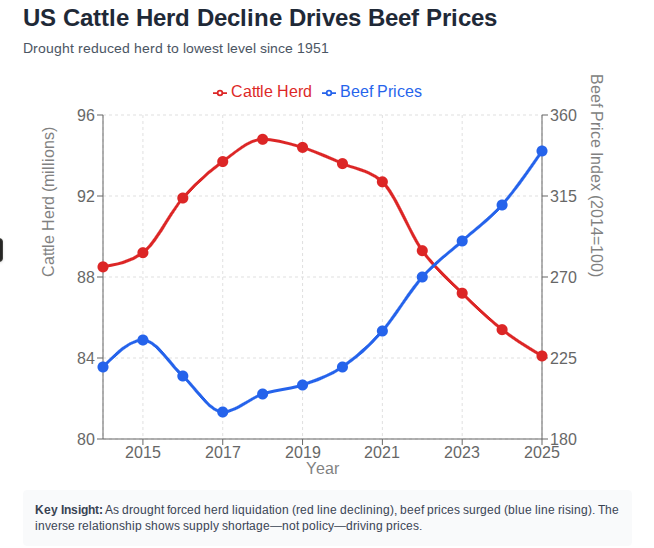
@seanyt81 @GavinNewsom @realDonaldTrump Yea right, so cattle size went down 4.5% from 88 to 84, and that explains the price going up 55% from 220 to 340?
Misleading graphic with different scaling
English
@Frankmacc @seanyt81 @GavinNewsom @realDonaldTrump We had record rains in Texas this summer, so grass feed is abundant now.
English

English
@seanyt81 @GavinNewsom @realDonaldTrump Texas had record rainfall this summer. We have grass feed coming out our ears, so we can expect the cattle herd population to recover within 12 months.
English

This is misleading and just rallying the base. Droughts-not policy-drove beef price surges. Years of severe drought shrank the U.S. cattle herd to its lowest level since 1951, forcing mass liquidations.
While tariffs and grain costs added pressure, they're secondary to drought's impact. USDA forecasts attribute rising prices directly to tight cattle supply from environmental factors.
English
@GavinNewsom @realDonaldTrump My investments are kicking ass, so I think we'll have Filet Mignon tonight!
English