

capn_beefy
982 posts

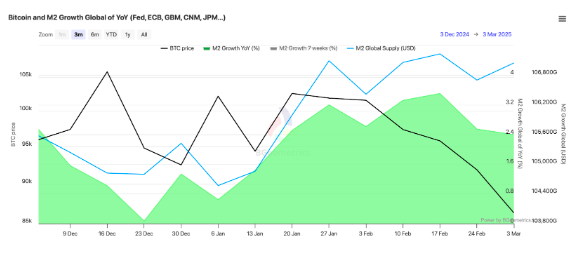

@MrTWestHam4Ever @carolvorders Now show the chart as a percentage of GDP...... of course you won't.
English



@juneslater17 Sound's like you northerners are a bunch of perverts
English

Wigan
African Migrant playing with himself at bedroom window.
Lancaster
African Migrant doing a ritual display using a sword in a local park
Bradford
Migrant repeatedly using hand relief in a woman's back doorway
Burnley
African Migrant begins playing with himself at a bus stop
Preston
African Migrant playing with himself watching porn on an iPhone.
These are just some of the messages I've had in the last two weeks.
We should be allowed to be utterly disgraced by this .
English
@AutismCapital He also became Putin's lapdog and made America the laughing stock of the planet 👏
English

🚨NEW: Today is the one month anniversary of Trump’s presidency. He has signed 73 Executive Orders that sealed the border, stopped DEI, cut fraud/waste, put America first, and restored common sense.
He will be hosting his first official cabinet meeting next Wednesday Feb 26th.

English

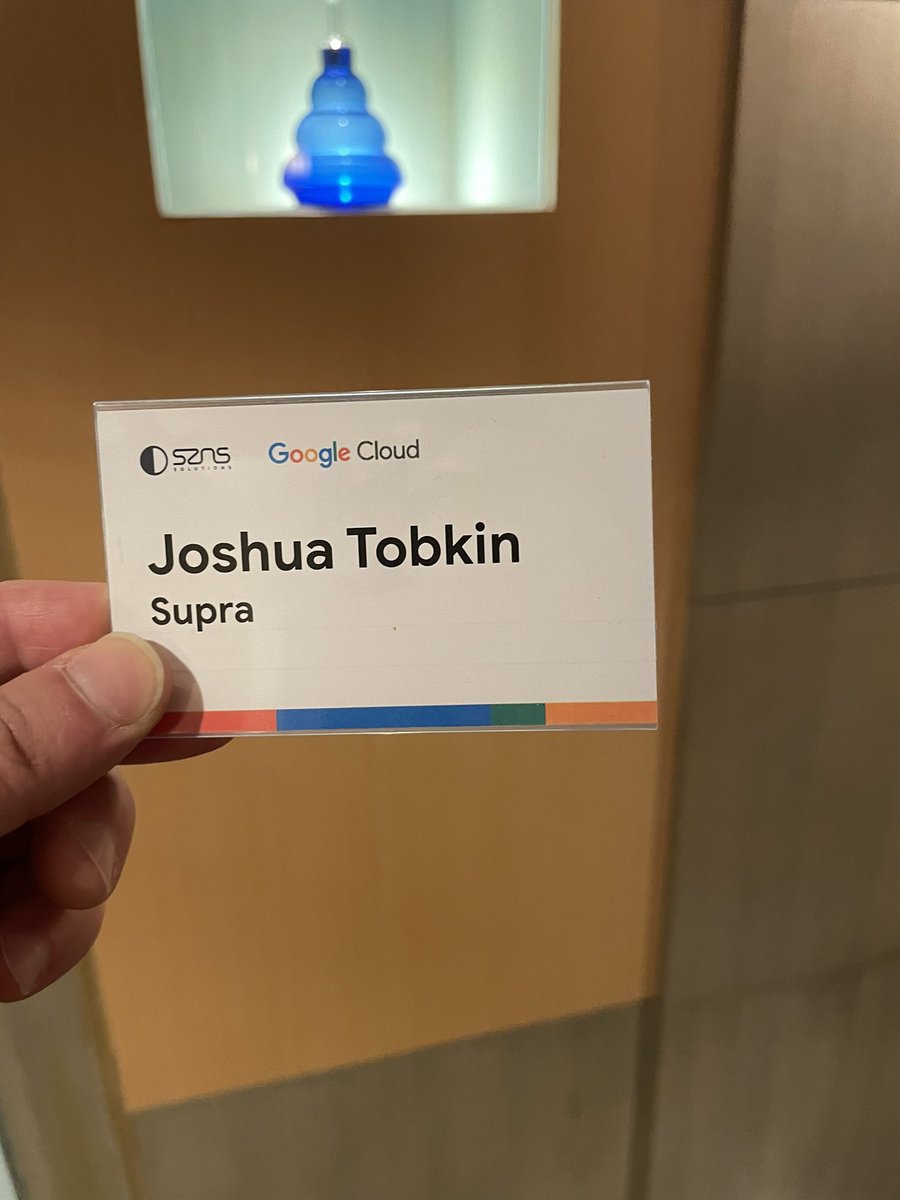
Was real great to meet some good ol frens again
Fwiw Google is making good moves in Crypto
English
@Mediitrade @tmkupisz This is maximum cope. You just set a new cope world record. 😂
English

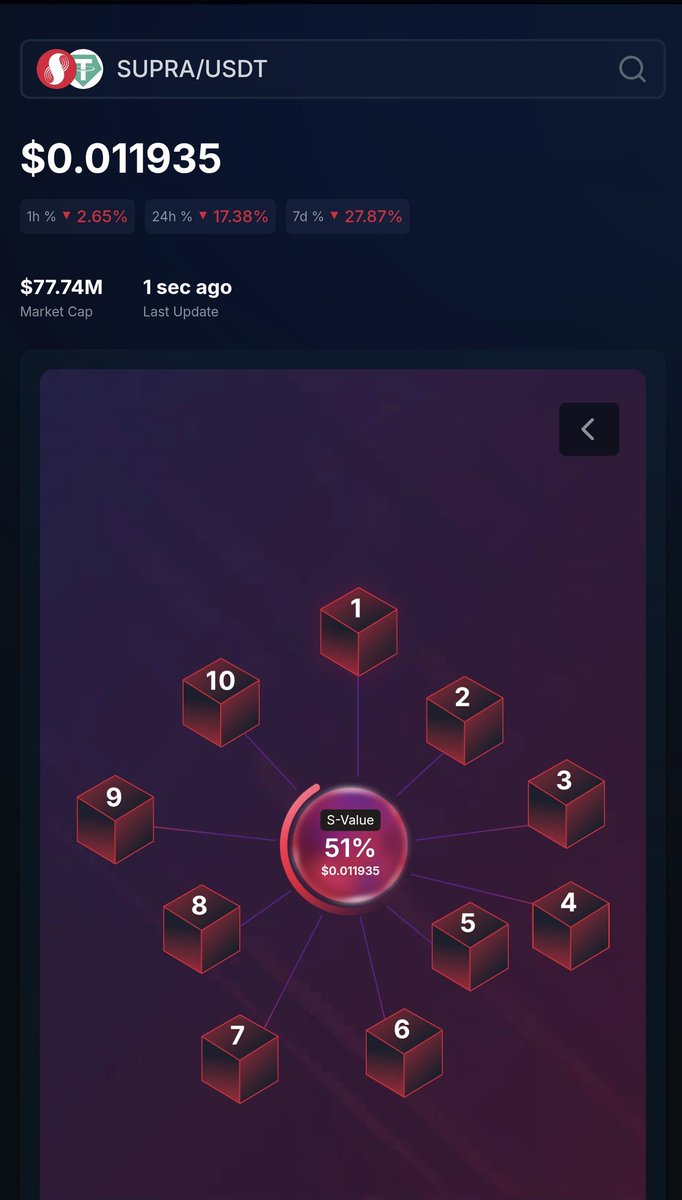
@tmkupisz Dumps almost 100% from the beginning?
That's funny because every major project had doubters before they blew up.
Remember,
$ETH was 'a scam' at $1.
$sOL was 'dead' under $1.
Now, they run the industry.
Fading $Supra's tech because of short-term price action is NGMI.
English
$Supra is not just another oracle project.
It is the fastest, most secure, and manipulation-proof price feed system in Web3.
If you’re serious about DeFi & automation, you need Supra’s Dora Feeds.
Like & RT if you’re bullish on real-time decentralized oracles! 🚀🔥


English

Alt szn has happened
And it continues to happen
We had the meme super cycle alt szn
Then there was the Solana AI alt szn
Virtuals had an alt szn on Base
What you have realise now is these alt szns are fast... like really fast
Idk what catalyst sparks the next one but I'm mentally peppering thy angus to not completely cuck it
English
@DesheShai This was going really well until near the end when it turned into another needless rant. Zero people skills.
English

$kas, I've been brimming all day with how overwhelmingly positive the reactions to this post are. However, some concerns and questions were voiced that should be addressed. I blame myself for not being clear enough in my post. It was so obvious to me this is a positive development that I didn't think it could be misread.
So here are some clarifications
1. Nothing "dramatic" has happened. The UGD project (which was actually renamed to UBAG) and the rest of my work were funded equally by @Kaspa_KEF and @kasmediadotcom. Due to circumstances that have little to do with Kaspa, Kasmedia has decided to pivot into "lite-mode", and my funding didn't fit into this new vision. This was all done amicably and was going to happen at some point anyway, I never expected them to fund me indefinitely. Their eagerness to fund me for several months was very generous and I'll forever remain grateful.
2. There are several routes I can take at this point. The reason I probed for the community funding route is simply that I like it best. It didn't make sense to me to seek community funding for a rough idea, but now that the book is starting to take shape and form, and there's enough of it available online for people to appreciate the depth and quality of my work, it seemed reasonable. There are also many other advantages to community funding and how it can create new forms of engagement with the community. My thought was that if there are people in the community who are interested to fund my content, then it's a win-win.
The other possibilities are essentially:
- jump through hoops to maybe find a business entity willing to pay for the creation of free content
- go corporate and create paywalled content
- stop all my funding, and take a hi-tech job or go be a college professor or something, and only work on Kaspa on my free time
The option to keep doing what I do full time without compensation is not on the table.
3. Community funding is nothing new to Kaspa. Two prominent examples being the Rusty-Kaspa and DK funds. I didn't want to go through the Discord funding route because I felt uncomfortable to request for funding in a platform that I administrate. I wanted to avoid the mere possibility of an abuse of power, so I decided to limit the activity to my personal profiles (this and @UGhostdag). Some people asked if the Rust fund could be used to fund my work and the answer is that it can't. It was raised for a very specific cause with very specific conditions. I am not entitled to this money in any way (outside a small portion I earned by making direct contributions to RK), the Rusty crew deserves it much more than me.
4. All of the above is my personal choice about how to move forward in a way that will allow me to keep doing what I do, because I love what I do and I want to keep doing it. As I said, I have many other options, some are definitely easier and follow a path of much less resistance. But if I listen to my heart and follow my dedication to the Kaspa community, this is definitely the way to go.
5. For the life of me, I don't get why a few people (an abject minority, and still) reacted so poorly to this idea. I mean, you don't have to pledge if you don't want to, that's the whole beauty of it. Using platforms like Patreon for funding projects like this is extremely common. I don't understand people who describe this as "begging for donations". That's just peculiar. When you go to the grocery store, and owner expects you to pay for your shopping, is she also "begging for donations"? Is the concept of people wanting to be compensated for their hard work really this foreign to you? You're weird. Yeah, I know there are differences, but at the end of the day that's me looking for funding to do something beneficial that costs money, so I'm asking the community if they are interested in participating in the cost so that we could make this mutually beneficial thing happen. How entitled are you to call paying for something that benefits you a "donation", as if people just owe you their work? As I said, you're weird.
6. And once again my huge gratitude to anyone who responded positively or is explicitly interested in participating. You've warmed my heart to no end today.
English
@BBCSport Chelsea would definitely win the competition for backroom staff with the most nonces.
English

@John90346 @RachelA1892 Bigotry is the fastest growing sport in the UK right now.
English

@RachelA1892 Yes and l recently joined #ReformUK having been a Conservative all my voting life.
English

Reform on course for a stunning 118 seats at the next GE as Labour popularity tanks and Badenoch fails to make an impression, leaving the Tories trailing in third.
Do you believe the polls?
express.co.uk/news/politics/…
English

My close friend was robbed and extorted for seven figures.
Everything is gone — laundered and withdrawn through OTCs.
He’s not flashy. He barely posts online. He drives a RAV4 and lives in a normal neighborhood.
Yet somehow, someone knew.
He told me only a few family members and friends even knew he had crypto.
That’s it. No flexing. No signals. Just a quiet life.
And yet, they came for him.
He believes someone in his circle tipped them off.
A so-called “friend.”
Because no one just randomly picks a target like this.
He’s filed a report. The police are investigating. But the damage is done.
So from now on, listen carefully:
• Never share how much you made in crypto—not even with friends and family.
• If you ever mentioned you’re in crypto, say you lost it all. Or most of it.
• If needed, make up a business or a job. Keep it boring.
Crypto wealth is being targeted more than ever.
This isn’t the first story like this, and it won’t be the last.
Stay safe. Be paranoid. Trust less.
English
@XelisCommunity @xelis_project HE is slow as balls, good luck with that.
English

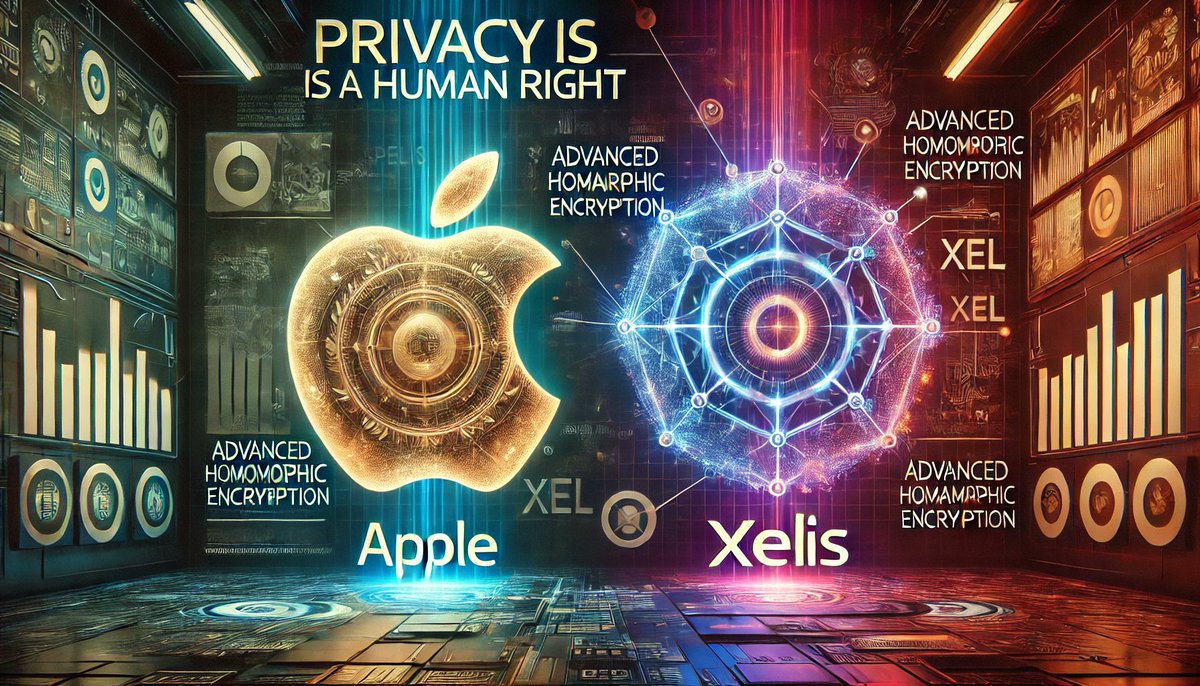
What sets @xelis_project apart from the rest? Like Apple 🍎$AAPL, we believe privacy is a fundamental human right—and both back it up with Homomorphic Encryption. Most cryptocurrencies can't say the same. Does yours? Think hard about what that says about your human rights. $XEL
machinelearning.apple.com/research/homom…
English
@J3Charts I don't think anyone with a tooth in their head ever thought the Kaspa Power Law was a thing did they?
English

$KAS ~ I tried to warn yous... and I did it diplomatically instead of how I probably should've done it. 🔨
There's a reason my main critique was focused on variables... it's not even my field and it was clear that KAS, as young and rapidly evolving as it was/is, would soon have more variables to consider than $BTC may ever have. This made it extremely unlikely that a model based around network effects would be accurate and useful* in the short-term.
To be clear, I wasn't then and I'm not saying now that the idea of the power law can't be useful - it can be, with the right application. What I am saying and what I've said many times is it shouldn't be used to ever try to predict price action across short intervals.
This is because I've still to this day not seen a single correlate between hash rate and short-term* PA.
The right application is to gauge the value of the network compared to price, not price itself.
Within this framework, it's easy to see the network is undervalued. This is the extent of the usefulness of power law, and though it might seem like you could then logically and reliably extrapolate this towards a long-term price target, this is still a misconception.
I will say this, though; I don't necessarily agree with the idea I was pushing in this post about power law being an alternate method to identify regression. I think now more along the lines of it just being a model of growth. Growth is naturally regressive so... you can see the logic. It's definitely weak logic though, and I'm not entirely convinced the level of accuracy needed is there yet and there are just plenty of better methods for this purpose.
All that said, I'm not claiming I predicted the power law would 'break' as quickly as it did, but all the warning signs were there and laid out in the post. The main points were made clear and still stand. Just like in TA and everything else on here, I'm not going to tell you what to do - I just present the information I use to form my opinions and make decisions, and you can decide to use it however you see fit.
As far as everything else in the post, it couldn't have aged better...🌈
J³@J3Charts
$KAS -- Interesting observation on Power Law 🌈 Fun fact: I posted this chart 👇 from this post 👉(x.com/J3Charts/statu…) a month before this guy ever posted a thing about #Kaspa It looks similar, right? Pretty weird how the bottom of the red channel where price bottomed out is in the exact same spot as the power law band, isn't it? Well, it's actually not weird. Like with anything else, there are a number of ways to convey the same idea. From extremely complex to as simple as possible. In this case, the idea is simply the 'type' and 'rate' of progression in price and how it's measured. Without diving too much into the weeds, I can tell you all of this revolves around diminishing returns and logarithmic regression. Power law is just a more systematic approach by identifying proportional relationships between different factors of the network and using orders of magnitude to confine price (or whatever) to a certain regression or trajectory over time. 📈 This is cool. Math is cool. Plus, it's an already proven model* on #bitcoin and, so far, it's served its purpose. But the problem is just that: it's a model. Useful until it's not. Very similar to how S2F was useful for a long time until it wasn't, and just because $BTC and $KAS haven't broken the power law yet doesn't mean they never will. ⏳ Anyway, my point with this post is two-fold: 1⃣ Power Law is nothing special. It's a predictive model. PMs are used in basically every industry on earth (think weather forecasting or a company's projected sales) and they have a 100% fail rate given enough time. They become more reliable the more variables they take into account and, even though I don't fully understand the theory (maybe someone who does could confirm), it seems Power Law only considers 2 variables (network effects) per 'power law' ie. price & time, users & hashrate, etc., and then views them as all being proportional. Regardless, at this stage it's not if but when will this model break and, when it does, what decisions will it have influenced in the months prior? Main point: don't put blind faith into something just because it's worked so far and 'cuz math'. 2⃣ Always be critical and have a solid understanding of something before trusting it to dictate your decision making. On top of that, there's more than one way to skin a cat. Like mentioned earlier, this is just a complex way to forecast a logical path of regression over a period of time. This isn't a revelation. Regression is an inevitable part of growth and if you didn't know this, you've got a lot more to learn before Power Law could have even a small meaningful impact on your day to day. Main point: why is this thing useful (to you)? Do you understand it well enough to use it to make confident decisions? If not, maybe search for a simpler method. By the way, this isn't a dig at @MikoGenno. I like his content. I'm just using this post to make a point. Saying $KAS is behaving 'exactly' as expected is a bit much... Like I said, I had that red line there a month before he made his first post about power law. It's not like I knew price would go there, it was just a high probability area for a bottom. 🤷♂️ In my next post I'll show you that I was actually explaining all of these same concepts with $KAS months prior to even that. Hint: it evolved into the Limit Line chart and allowed for this kind of accuracy 👉(x.com/J3Charts/statu…) over multiple months and what will likely end up being years. Stay tuned for that and let me know what you think about Power Law. ✌️
English
@thedefiedge Shot your load extremely early here. This is newb behaviour.
English

Took some profits, and bought a M4 macbook pro / iPhone 16.
Finding a 10x isn't hard in a bull market - The hard part is selling.
Everyone thinks they're going to magically time the top and sell when it's time. It's NOT that easy. Why do you think everyone's biggest regret is "not taking enough profits?"
It's hard because the entire industry will be financially incentivized to keep the party going.
You'll hear CONVINCING arguments of a supercycle and that this time it's different. And you'll tell yourself "Just two more months of this and I'm set for life."
Guess what? Everyone's thinking the same thing.
• Take profits on the way up - don't try to time the top.
• The whole point of sacrificing your mental health in this industry is to tangibly upgrade your life.
• Selling is a MUSCLE that you have to practice. I literally sold some bags, sent to my CEX, off ramped to my bank, and bought with the same checking account. I did this to make a stronger connection in my head that numbers on a screen = IRL stuff.
• I think I spent roughly ~$3500. Of course, I could've put it in some a.i. shitcoins and 10'xed it in theory. But if you think like that, then you'll also think like that once we're near the top. And you'll end up roundtripping the cycle.
Learn to sell.

English
@DesheShai This clown is determined to fuck this project up isn't he?
English
I have decided to abandon the Kaspa subreddit.
I removed myself as mod, unfollowed and muted r/kaspa
I would no loner suggest it to anyone who wants to experience the Kaspa community, I recommend that you don't either.
Since launch, I have tried to make the subreddit a part of the community that is vibrant, friendly, and interesting, like our X engagement, Telegram channels, and Discord server.
However, it seems to have become a hub to the shallow end of the Kaspa community, discussing price action almost exclusively, treating TA and PA with godly reverence, almost completely sidelining technical discussions (and when they do happen all responses read like lazy ctrl+c ctrl+v promotional pamphlets) and garnering an overall negative and toxic atmosphere. Attempts to discuss Kaspa critically or asking difficult questions are met with poor, misleading answers at best and explicit vitriol at worst.
This is by no means the fault of anyone, especially not the mod team. There have been several attempts at engaging with more technical and educational comments, but the community just wouldn't bite. Communities and subcommunities are an organic thing, and if those who came through the Reddit gate want to spend their time speculating PA and talking shit, it's their prerogative. However, I do not think it is a good gateway into Kaspa, as it makes all the wrong first impressions (I'm sure that if you try to read its front page with objective eyes you will see exactly what I am talking about.)
So my approach from now on, if anyone asks me, is to steer clear.
English
🚀That's right baby!!! Getting oh so close!!! First PoW BlockDAG with Smart Contracts. Oh and with Homomorphic Encryption to boot!! All directly on layer 1, no gimmicks, no indexers, no Layer 1.5/2 nonsense! Full programmability with a Rust Inspired Silex language! 🫰 $XEL #smart
ḜḘṾḯḺ ×͜×@CryptoMX__
A Smart Contract Data Tracker has been created on the Xelis Stats Website (stats.xelis.io), in anticipation of the Smart Contract Testnet Release! $XEL
English
@CryptoMX__ @benni72324170 @gpcryptochief @xelis_project @XelisCommunity Yes that's why security has three tenets, of which confidentiality (privacy==confidentiality) is one. Quadlemma ==marketing.
English

@Capn_Beefy @benni72324170 @gpcryptochief @xelis_project @XelisCommunity You can have security without privacy. Privacy has it's own pillar.
English
#XELIS Community!
Showcase your support for $XEL by adding the “❖” symbol next to your name. This symbol helps represent #XELIS as being the first cryptocurrency to solve the “Quadlemma”💪🏼🔥
@xelis_project | @XelisCommunity

English
@CryptoMX__ @benni72324170 @gpcryptochief @xelis_project @XelisCommunity Confidentiality and Integrity that you have described here are two of the three pillars of security (the third being availability). There is no quadlemma it's just a gimmick.
English
@Capn_Beefy @benni72324170 @gpcryptochief @xelis_project @XelisCommunity Privacy: Hides transaction details and identities
Security: Protects against tampering and attacks
Two different things.
English
@CryptoMX__ @benni72324170 @gpcryptochief @xelis_project @XelisCommunity Which is clearly a subset of security.
English
@benni72324170 @gpcryptochief @xelis_project @XelisCommunity The quadlemma adds a new pillar, "Privacy".
English