
Angeliki Kapoglou 🌔

50.5K posts

Angeliki Kapoglou 🌔 banner
Angeliki Kapoglou 🌔

Angeliki Kapoglou 🌔

@Capoglou

@ESA Human & Robotic Exploration Strategy @IIPP_UCL Space Economy, Space Resources, @openlunar, https://t.co/QQHWDSS2M7 Systems Design, Future Studies #MoonVillage #SBSP

My permanent address is the Future Katılım Nisan 2009
458 Takip Edilen5.3K Takipçiler
Angeliki Kapoglou 🌔 retweetledi
William Harwood
William Harwood@cbs_spacenews·
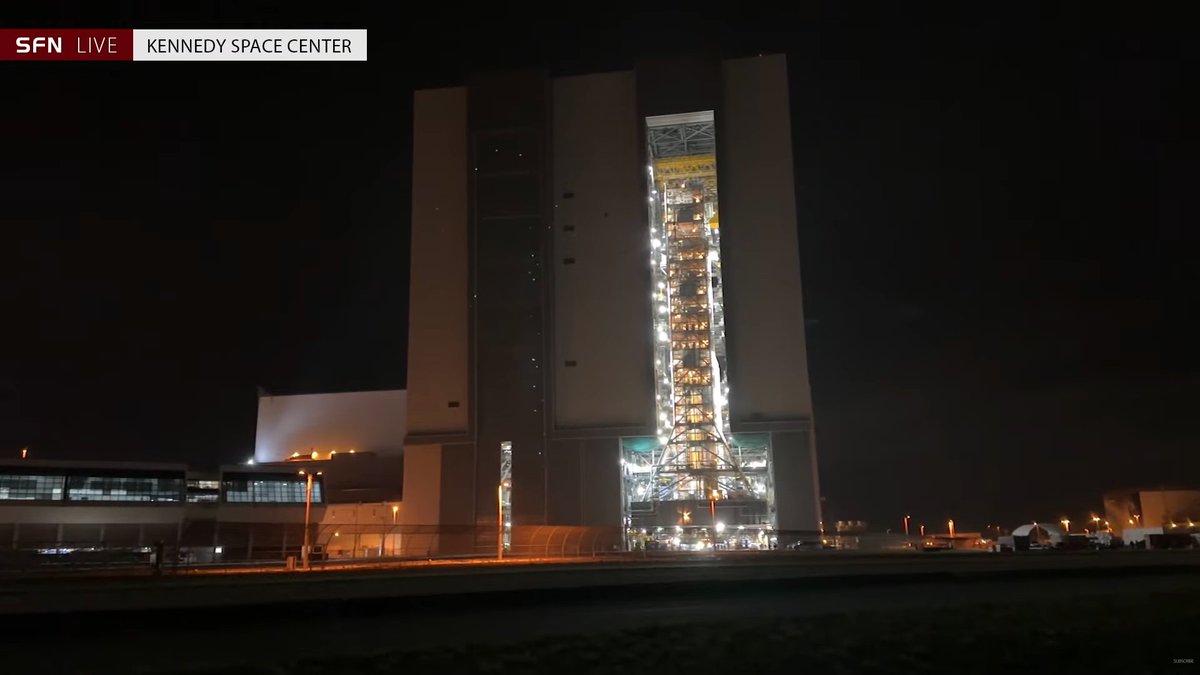
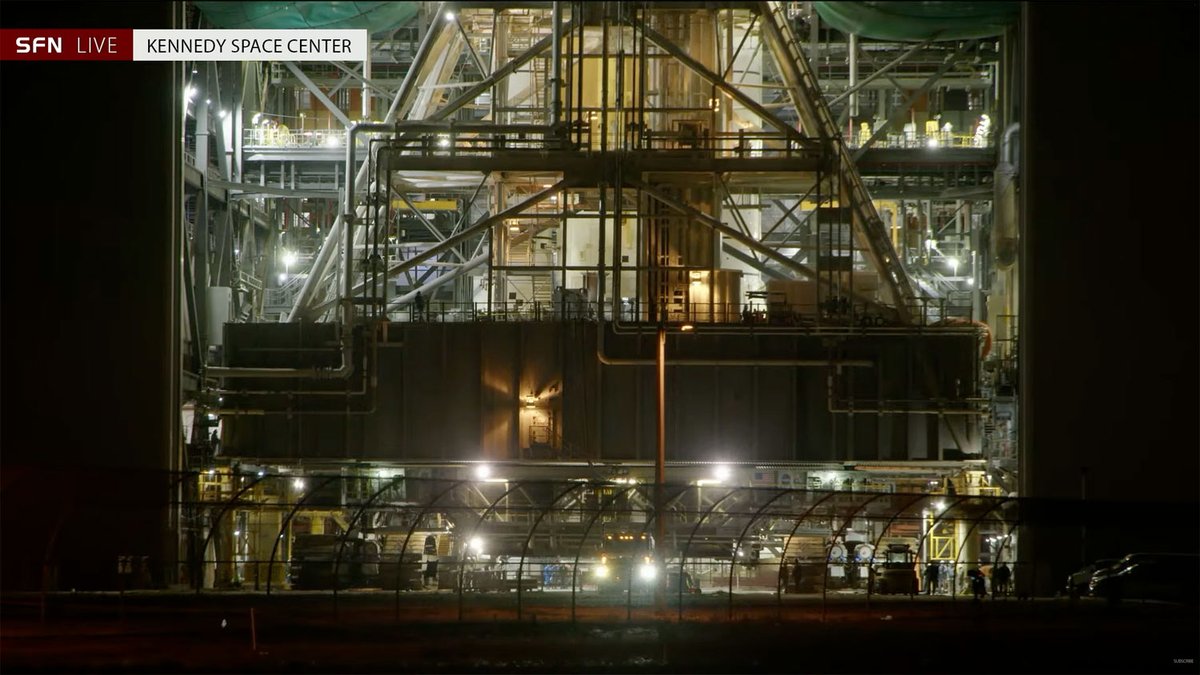
Artemis II: NASA's repaired Space Launch System moon rocket began a glacial 12-hour trip back to the launch pad about 20 minutes after midnight EDT (0420 UTC), slowly exiting the Vehicle Assembly Building atop an Apollo-era crawler transporter; the 4-mile trip to pad 39B got underway more than 4 hours later than planned because of high winds, but the SLS rocket should be "hard down" atop the launch stand by around noon Friday; that will set the stage for a delayed April 1 launch to send four astronauts on a historic nine-day flight around the moon and back
William Harwood tweet mediaWilliam Harwood tweet mediaWilliam Harwood tweet media
English
4
20
78
3.1K
Angeliki Kapoglou 🌔 retweetledi
William Harwood
William Harwood@cbs_spacenews·
Artemis II: NASA is standing by to roll the Artemis II Space Launch System rocket back out to pad 39B; the move has been delayed more than 2 hours now because of blustery winds that are blowing protective plywood sheets about inside the Vehicle Assembly Building; the plywood is laid down in front of the massive treads of NASA's crawler-transporter to protect the building's concrete floor and door fittings when the SLS rocket and its mobile launch platform are carried into or out of the VAB
William Harwood tweet mediaWilliam Harwood tweet media
English
0
13
53
4.6K
Angeliki Kapoglou 🌔 retweetledi
Sawyer Merritt
Sawyer Merritt@SawyerMerritt·
NEWS: NASA is planning a bigger @SpaceX Moon mission role using Starship, in a massive blow to Boeing. With the new proposal, Boeing's SLS would no longer be used to boost Orion close to the moon. Instead, Starship and Orion would dock in Earth orbit, giving Starship the pivotal role of propelling the capsule to the moon’s orbit, before taking astronauts down to the surface. bloomberg.com/news/articles/…
English
265
502
4.5K
426.4K
Angeliki Kapoglou 🌔 retweetledi
Chris Lewicki
Chris Lewicki@interplanetary·
When we want to safely and repeatedly return from the surface of the Moon, everyone will quickly realize this technology is the bottleneck. It deserves SO MUCH MORE than Phase II STTR funding!
Lunar Outpost@LunarOutpostInc

Lunar Outpost and @michigantech just wrapped our NASA Phase II STTR on Lunar Surface Site Prep (LSSP), a two‑year effort advancing the tools and tech needed to construct regolith‑based infrastructure on the Moon. Over the past 24 months, we: • Developed REGOWORKS, an interactive ConOps planning tool for designing roads, landing pads, and foundations in lunar regolith. • Correlated bulk density to bearing strength and bulk modulus through atmospheric and vacuum test campaigns. • Designed a vibrating plate compactor prototype to characterize regolith compaction performance. From roads, habitats, all the way to safe landing zones, infrastructure starts with regolith. We’re proud to help lay the groundwork—literally—for sustained lunar operations. @NASA #TheNextLeap #LunarOutpost #DrivingArtemis #SpaceTech #Innovation

English
3
3
13
938
Angeliki Kapoglou 🌔 retweetledi
The National
The National@TheNationalNews·
Greece is the first country to arrange a repatriation flight from the UAE specifically for pets and their owners
English
50
718
3K
330.5K
Angeliki Kapoglou 🌔 retweetledi
Kegham Balian
Kegham Balian@kbalian90·
Lebanese cellist Mahdi Saheli playing Armenian composer Aram Khachaturian's Andantino in the ruins of southern Beirut.
English
218
6.8K
18.9K
500.4K
Angeliki Kapoglou 🌔 retweetledi
Spaceflight Now
Spaceflight Now@SpaceflightNow·
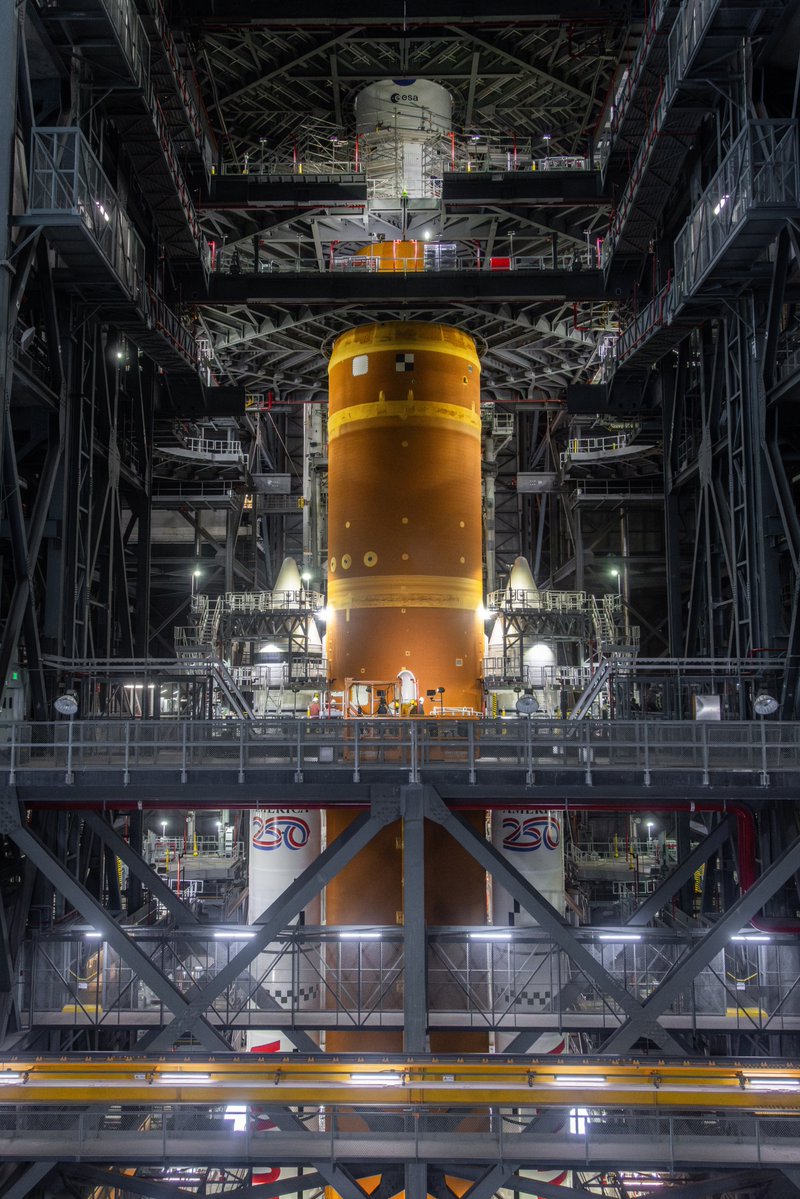
NASA is now targeting Thursday, March 19, for the rollout of its Space Launch System rocket from the Vehicle Assembly Building to the pad at Launch Complex 39B. First motion is expected at 8 p.m. EDT (0000 UTC). 📸: @ABernNYC
Spaceflight Now tweet media
English
6
50
323
12.6K
Angeliki Kapoglou 🌔 retweetledi
The Wall Street Journal
Breaking: Russia is secretly providing satellite imagery and sharing drone technology to help Iran target U.S. forces in the region on.wsj.com/478OhaN
English
2K
4.6K
11.2K
951K
Angeliki Kapoglou 🌔 retweetledi
CBS News
CBS News@CBSNews·
An asteroid weighing seven tons and traveling at 45,000 miles per hour zoomed over the skies of Cleveland and Pennsylvania as a meteor today, causing a loud boom that some residents mistook for an explosion. cbsn.ws/4sa49SS
English
78
276
1K
166.4K
Angeliki Kapoglou 🌔 retweetledi
Planetary Society
Planetary Society@exploreplanets·
We've only visited a handful of comets — and every single one has surprised us. Here's what we've learned so far. Read the full story in our March issue of The Planetary Report: planetary.org/articles/messe…
English
0
15
43
2.2K
Angeliki Kapoglou 🌔 retweetledi
DiscussingFilm
DiscussingFilm@DiscussingFilm·
The first trailer for ‘DUNE: PART 3’ has been released. In theaters on December 18.
English
2.1K
27.3K
163.3K
15.5M
Yannis Koutsomitis
Yannis Koutsomitis@YanniKouts·
#Israel Tech Minister Gamliel: “The time has not come yet for the Iranian people to take to the streets. We are still preparing the ground for them. When the time comes, the call will go out”. Gamliel has been handling the Iran issue since the start of the govt's term and maintains close ties with Reza Pahlavi. /via @arik3000
English
1
3
6
801
Angeliki Kapoglou 🌔 retweetledi
ESA's Hera mission
ESA's Hera mission@ESA_Hera·
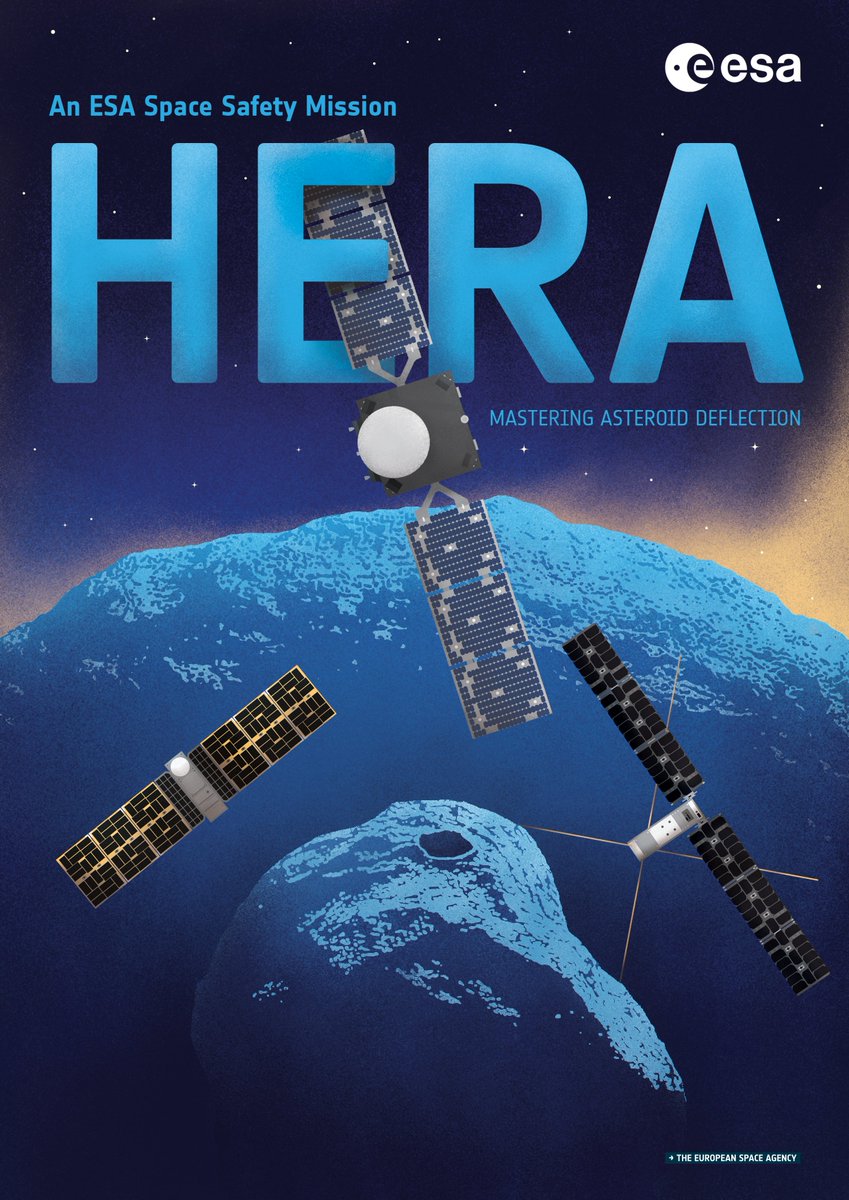
A successful deep-space manoeuvre has put ESA’s Hera spacecraft on course for arrival at the Didymos binary asteroid system later this year! At Didymos, Hera will help turn asteroid deflection into a reliable technique for protecting Earth 🛡️🌍 esa.int/Space_Safety/H…
ESA's Hera mission tweet media
English
6
90
294
26.1K
Angeliki Kapoglou 🌔 retweetledi
House Science Committee
House Science Committee@housescience·
A century ago, Robert Goddard launched the first liquid-fueled rocket and ignited the era of modern rocketry. From that snowy field in Massachusetts to today’s missions to the Moon and beyond, his vision continues to shape the future of exploration. wsj.com/opinion/a-cent…
English
0
2
6
412
Angeliki Kapoglou 🌔 retweetledi
Steve Jurvetson
Steve Jurvetson@FutureJurvetson·
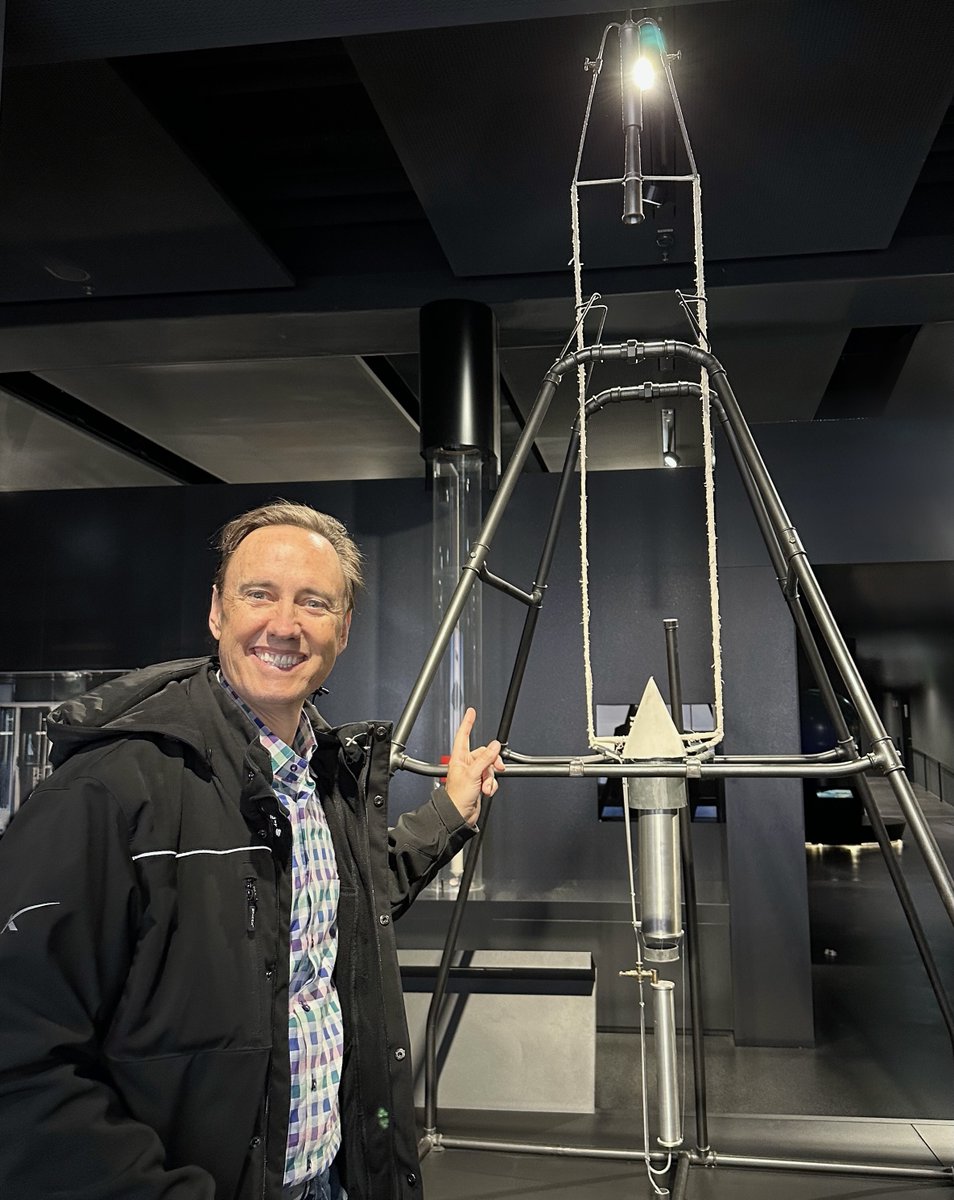
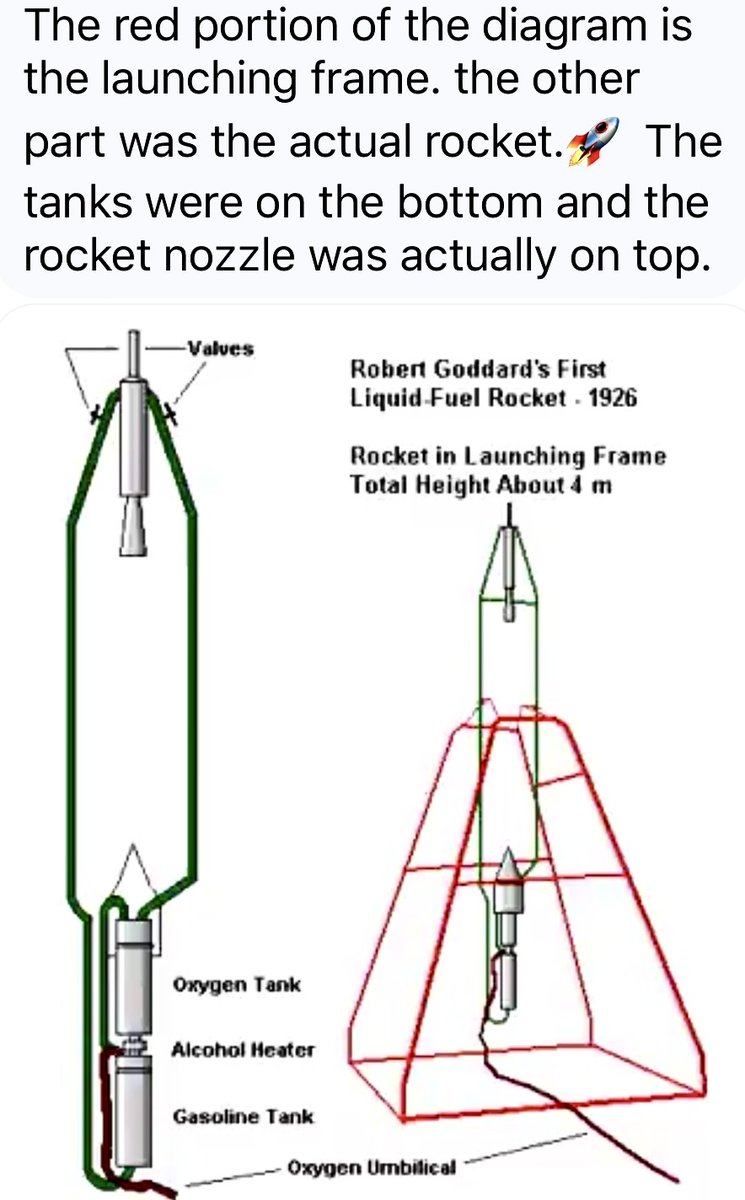
🚀 Today is the 100-year anniversary of the first liquid-fueled rocket launch. Like the Wright Brothers, Robert Goddard’s flight changed rocketry forever, pioneering today's mainstay, liquid-fueled SpaceX rockets. Here are my artifacts from his 1926 flight (last photo). But first, I am pointing to a museum replica of Nell — Goddard’s 10’ tall rocket powered by gasoline and liquid oxygen. It went just 41’ up in 2.5 seconds, hitting 60 MPH, but it marked the dawn of the space age. The New York Times publicly mocked his work in 1920, but Goddard persisted. Fearing further criticism, Goddard kept his 1926 launch secret for nearly a decade. Go Goddard, go, go go! “There can be no thought of finishing, for aiming at the stars, both literally and figuratively, is the work of generations, but no matter how much progress one makes there is always the thrill of just beginning.” — Robert Goddard From the Future Ventures’ space museum, last photo: 1) Inner nozzle from the first flight Starting on the far right, the alundum cement rocket nozzle liner from the liquid-fueled rocket launched by Robert H. Goddard, likely the world's first on March 16, 1926. The piece measures approximately 1.25 x 2.25 x .5 inches and has scorch marks on the interior from use. This artifact was given to Frederick C. Durant III by Goddard’s widow, Esther Goddard, and has been kept in an envelope labeled in Durant’s hand, “Ceramic rocket nozzle liner used by R. H. Goddard in 1920s, possibly from the 1926 (March 16) flight.”   Frederick C. Durant III, the former head of astronautics at the Smithsonian’s National Air and Space Museum, was one of the world’s foremost authorities of spaceflight and rocketry. This is one of several artifacts he received from Esther Goddard, one of the four people on the crew for the launch of March 16, 1926, and from her testimony, he determined the 1926 flight as the likely origin. The small size of the piece lends credence to this conclusion, as Goddard’s rocket experiments grew larger and larger over time. 2) Fuel valve remains from a failed experiment Bottom left. Fuel-feed-rate needle valve from one of Goddard’s early rockets, circa late 1920s/early 1930s. The piece measures approximately 7 x 5 x 2” and consists of a valve passing through a longer pipe segment attached to a fragment of a larger base; a short bracket extends from the base, which was damaged in a blast during rocket experiments. The needle valves were located near the top of Goddard’s rockets and were a critical element in controlling his fuel feed line and tank systems. This artifact was given to Frederick C. Durant III by Goddard’s widow, Esther Goddard. 3) Fuel Tank Baffle Upper left. Bi-level metal rocket fuel tank baffle from one of Goddard’s early rockets, circa mid-to-late 1920s. The piece measures approximately 3.5″ in diameter and 2.25″ tall and consists of two discs connected by four rods. This artifact was also given to Frederick C. Durant III by Goddard’s widow, Esther Goddard. The baffle was an important element of Goddard’s fuel tank design, used to combat the ‘slosh’ of liquid propellant during flight. A couple more Goddard quotes that remind me of @ElonMusk: “Every vision is a joke until the first man accomplishes it; once realized, it becomes commonplace.” "It is difficult to say what is impossible, for the dream of yesterday is the hope of today and the reality of tomorrow."
Steve Jurvetson tweet mediaSteve Jurvetson tweet mediaSteve Jurvetson tweet media
Andrew McCarthy@AJamesMcCarthy

Liquid-fueled rockets had their 100th birthday today. Crazy that the technology has been used to give us so many modern comforts, while also unlocking the stars. Imagine where we will be in 100 years from now.

English
9
38
242
20.8K
Angeliki Kapoglou 🌔 retweetledi
NSF - NASASpaceflight.com
NSF - NASASpaceflight.com@NASASpaceflight·
STATIC FIRE: Booster 19 fires up, but feels very short and potentially aborted early. However, first time for Pad 2, the first time for V3, and the first time Raptor 3's have fired up together. youtube.com/live/z83PHp7A0…
YouTube video
YouTube
English
42
293
2.6K
176.6K
Angeliki Kapoglou 🌔 retweetledi
Danny (Dennis) Citrinowicz ,داني سيترينوفيتش
Tactical success against Iran is masking a deeper strategic dilemma for Washington Without a clear strategic decision diplomacy or a dramatic expansion of the war, the United States risks drifting toward uncontrolled escalation in the Gulf: A. Rarely has the gap between operational success and strategic outcomes been as stark as it is in the current confrontation with Iran. Night after night, Israeli and U.S. forces are striking targets linked to the Iranian regime, exploiting almost complete freedom of action in the air. From a tactical and operational standpoint, the campaign is impressive. Yet paradoxically, the continuation of these strikes may be strengthening Iran’s strategic position rather than weakening it. B. The reason lies in the growing perception in Tehran that the United States has reached the limits of its willingness to escalate. Despite the ongoing strikes, Washington has not succeeded in reopening the Strait of Hormuz, halting missile and drone attacks against Israel, or stopping the broader pressure campaign affecting Gulf shipping. C.As long as the administration threatens escalation while carefully avoiding crossing the Rubicon, such as striking critical Iranian infrastructure—the leadership in Tehran is likely to conclude that the worst is already behind them. That perception could encourage Iran to raise its demands for ending the war, potentially including compensation or even a reduction of the U.S. military presence in the Gulf. D. This dynamic leaves Washington facing a strategic dilemma with no easy exit. 1. If the war continues in its current form, Iran may actually benefit. Oil markets are already reacting to the threat to maritime traffic in the Strait of Hormuz, and prices could climb further if instability persists. That calculation does not even include the possibility of a more active entry by the Houthis into the confrontation. 2. On the other hand, expanding the target set to include core Iranian infrastructure could ignite a far wider regional conflict. Tehran would almost certainly retaliate across the Gulf, likely targeting energy infrastructure and maritime traffic. The consequences for global energy markets and for regional stability could be severe. In other words, Washington now faces three difficult paths: end the conflict under conditions that may allow Iran to claim a strategic victory; continue the current campaign and risk prolonged instability and rising global energy prices; or expand the war and trigger a major regional escalation. Time is not neutral in this equation. Each passing day hardens Tehran’s perception that it can withstand the pressure and emerge from the crisis with the upper hand. That perception makes a diplomatic outcome progressively harder to achieve. If diplomacy remains the objective, the window may be closing. The United States and its partners will soon have to make a strategic decision: move quickly toward a negotiated settlement, or prepare for a far more ambitious campaign aimed at fundamentally weakening the Iranian regime—an undertaking that would carry enormous risks and uncertain outcomes. Continuing the current approach indefinitely may be the most dangerous option of all: a slow slide toward uncontrolled escalation in the Gulf. #IranWar
English
61
180
493
163.7K