Sabitlenmiş Tweet
Captain Saint 🇲🇪
11K posts

Captain Saint 🇲🇪
@CaptainSaint76
Southampton FC "Dream on till you can dream" DeFi | L1/L2 power user | DePIN | testnets | intraday perps 14 vet
Montenegro Katılım Aralık 2018
358 Takip Edilen268 Takipçiler

Nobody wants to talk about it cos it's invisible until it isn't.
The feedback loop is already running - models trained on AI output, generating more AI output, training the next model. It degrades slowly enough that nobody notices until the error is baked into something that matters.
Whoever controls the clean data layer controls what AI actually knows.
English

Everyone's busy talking about AI models.
Bigger. Faster. Smarter.
But almost no one asks the most important thing :
- Is that data they're using really true ?
The problem isn't the model anymore.
The problem lies in its invisible foundation : the dataset.
Today, many AI models are trained on data that :
- Has no clear origin
- Can't be verified
- or Even other AI results
This loop slowly degrades quality.
And what's more dangerous ? We still trust the output.
This is what some call "model collapse." Not a crash. Not an error. But a slow degradation.
The AI continues to work, but it's getting "subtly messed up."
And when this is used in medicine, law, or even public policy, it's not just a bug; it's a systemic risk.
This is where I start to see why @PerleLabs is interesting.
They're not in a model-building competition.
They're focused on something far more fundamental : trust in data.
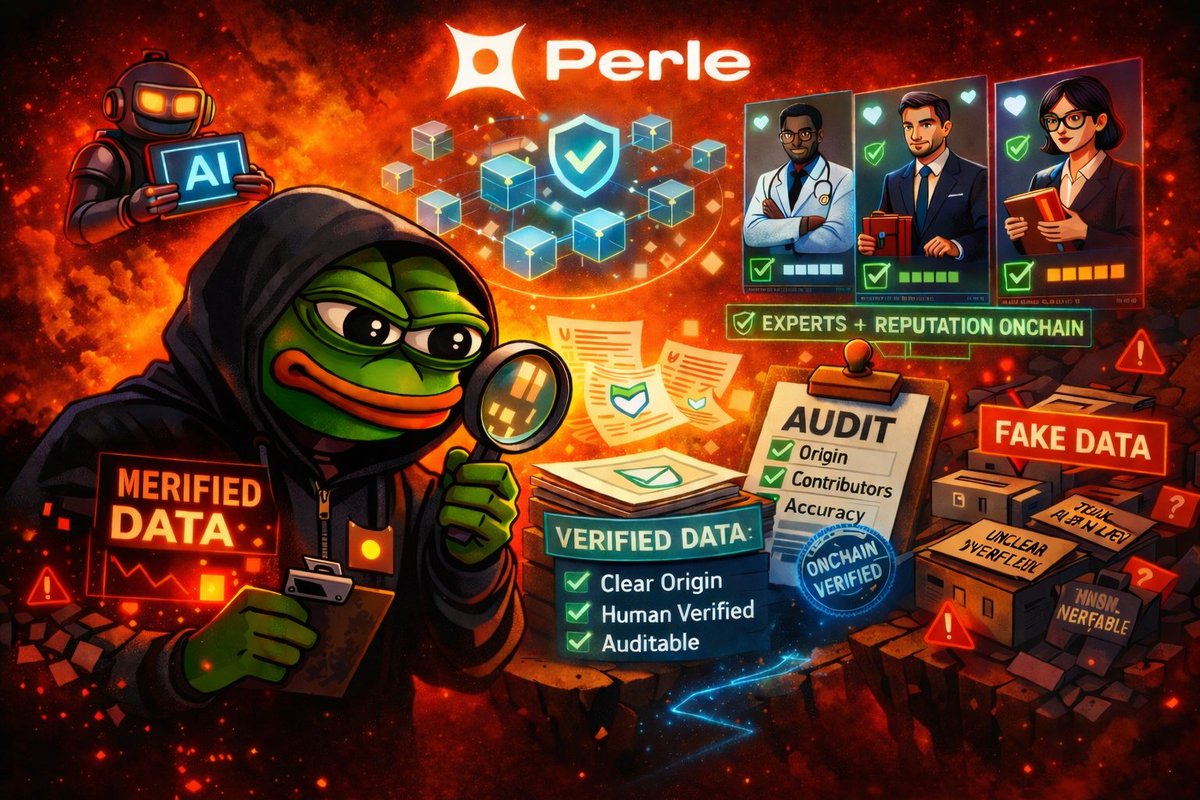
Imagine if every piece of data used by AI :
- had a clear provenance
- was verified by humans, not machines
- could be audited for its contribution
- had a reputation based on accuracy
Not just a dataset. But a traceable source of truth.
@PerleLabs is trying to flip the industry on its head.
From : cheap + fast crowdsourcing
To : expert-driven + on-chain reputation
Doctors validate medical data.
Lawyers review legal documents.
Linguists handle the complexity of language.
And quality becomes something built, not assumed.
Interestingly, this isn't just about AI.
It's about changing the way we view data.
from something we "use"
to something we "own, verify, and trust."
If AI is the future, then the real question isn't "which model is the smartest ?"
but "who can be trusted to train it ?"
And perhaps, those who control verifiable data won't just win in AI, but will determine the reality everyone believes in.
Participating in @PerleLabs community campaign.
#PerleAI #ToPerle
English
@nakamotosignal @CoinMarketCap Fair point. It was slow and weird sometimes. It was still fun. That's the difference.
English

@CaptainSaint76 @CoinMarketCap You probably would’ve said the internet was dead in the early days too: slow, clunky, and full of half-finished products.
English

LATEST: ⚡ Blockchain gaming is dead and "not coming back," says Solana Foundation president Lily Liu.

English
@Monothiez Honestly, yes.
Too much capital sitting in projects with no users, no revenue, and no reason to exist beyond the token. A real reset forces consolidation - the weak hands sell, the bad projects fold.
The survivors always build something worth using.
English

We need a serious bear market to reset the entire crypto industry.
$BTC to 25k
$Eth to $900
$BNB to $150
$Solana to $50
$ADA to 0.07
$Xrp to $0.3
all meme -99%
The remaining altcoins -99%
So many bad projects - close down.
Then everything will be ok again..
What do you think 💬?????
English
The chart tells the story better than any announcement could.
That's not organic growth - that's institutional infra finally switching on. Solana's speed and fee structure always made sense for RWA settlement, it just needed the regulatory green light to attract serious capital.
1.82B is a milestone. The slope is the actual news.
English

🔥 HUGE: Solana's RWA ecosystem hits a new all-time high of $1.82B in tokenized value in March.

English
The more I watch what's actually getting traction, the harder it is to defend the ownership-economy thesis - crypto's original promise.
Didn't quite play out the way any of us thought, did it? What's emerging instead is something more grounded - and potentially far larger. The industry is finding its footing as the backbone of real financial infrastructure. Stablecoins, payments, RWA, privacy, perpetuals, capital markets.
That's where crypto is actually heading. And honestly? It's a bigger bet than what we started with.
Proper one, if it lands.
English
P.S. tbf, the ownership narrative was never wrong exactly - just premature. Infra has to come first. Always does.
English

Could be something, could be nothing.
Every chain you use runs on math from 1977.
I just claimed the Q-Chip for the one that doesn't.
Quantum Ready.
I'm on the waitlist, you can join too 👇 DYOR

English
Not a demo - actual infrastructure.
Few agents can actually interact with the real web. Most hit a wall the moment things get dynamic - bot detection, region locks, real UI elements. Clever, but stuck behind glass.
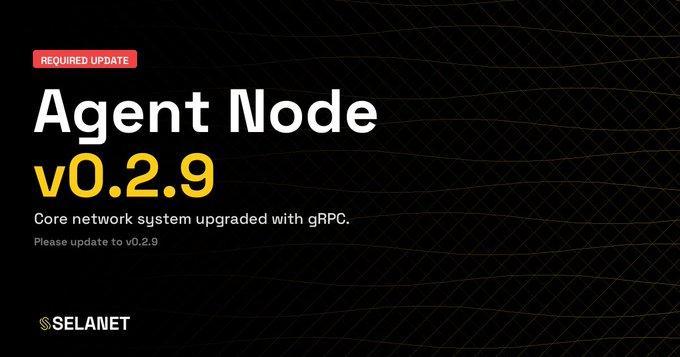
@SelanetAI fixes that. The idea is straightforward: a globally distributed node network where each node acts as a real browser execution point. AI agents route tasks through the network and actually do things on the web - not simulate them.
The more nodes join, the more resilient and globally accessible the whole thing gets. That's the compounding effect most people miss.
If you're already running a node - update to v0.2.9 now. And if you're not running one yet, worth having a proper look at what you're sitting out on.
English
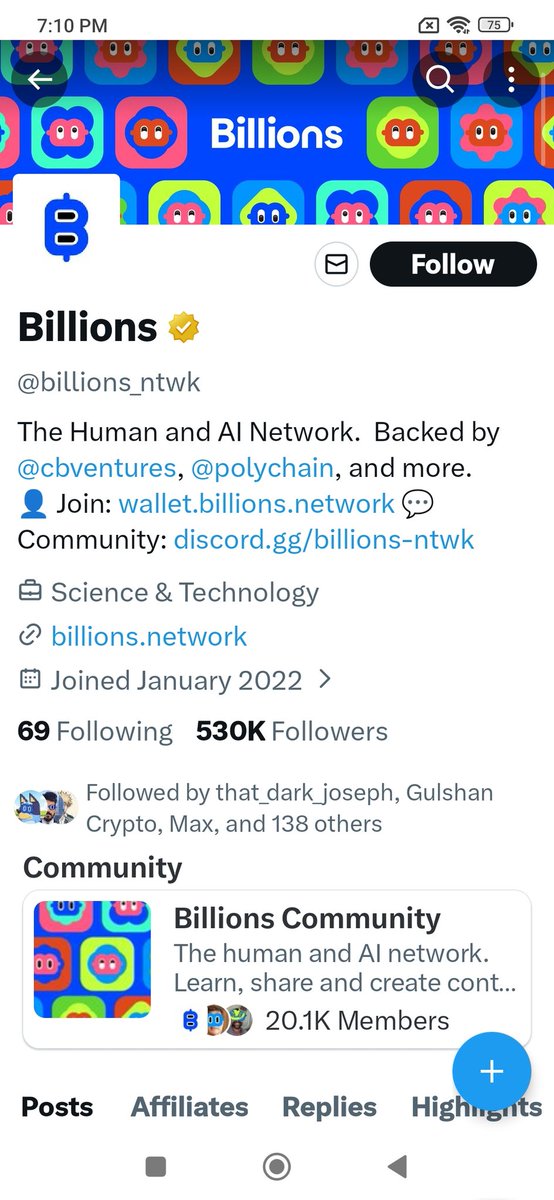
@0xmayankx Billions for sure.
Can't name Seismic as scam... yet :)
English

2 upcoming scam projects
Which one rugs first?
Tell in comments 👇

English
The network that gets smarter as it grows. That's the bet.
Most blockchains scale capacity as adoption grows. While @Autheo_Network is designed to scale intelligence - every new AI agent, every new application, every new sovereign network that joins makes the whole ecosystem more capable and more connected.
They call it a Living OS, which sounds like marketing until you read the architecture and realise it's a fairly accurate description.
Testnet is live. Worth getting familiar with it early.

English
Captain Saint 🇲🇪 retweetledi
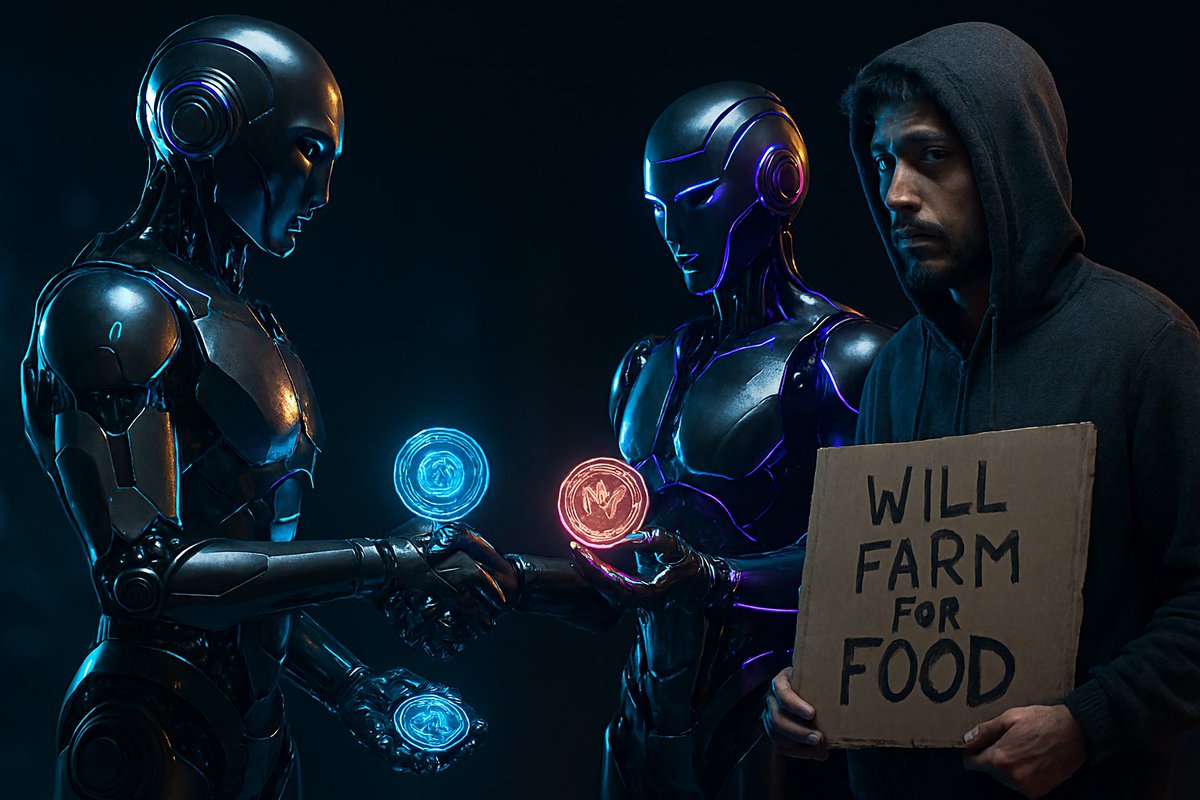
Genuine question: protocols deploy AI to catch sybil farmers, farmers deploy AI to dodge it.
At what point do the AIs just cut us out and airdrop each other directly?
#Airdrops
English
Altseason trending. KOLs bullish. Narratives screaming. Vibes immaculate.
We’ve been here before - Q1, Q2, Q3, Q4 last year. And the years before.
The only thing that actually rotates in crypto is the optimism. And it’s always priced in.
English
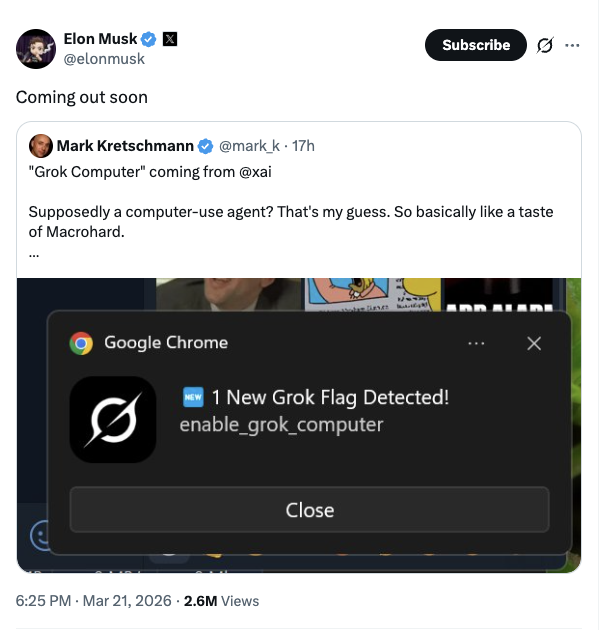
"Coming soon" from Elon has a famously flexible relationship with time.
That said, xAI moving into hardware is the more interesting story than the name. If Grok Computer is actual inference hardware rather than just a branded PC, it puts xAI in direct competition with Nvidia on one end and Apple Silicon on the other. That's a very crowded fight to pick.
The announcement is easy. The supply chain is where it gets real.
English
🔥 NOW: Elon Musk confirms "Grok Computer" from xAI is coming soon.
English
The pitch is right. The latency usually isn't.
Cloud gaming has been "just open and play" in theory since OnLive in 2010. The promise is real - the infrastructure to deliver it consistently, globally, without input lag ruining the experience is still the unsolved part. YOM's distributed node model is a more interesting architecture than centralised servers, but the proof is in the milliseconds.
Show the ping numbers, not just the vision.
English