
Carl Minzner

16.7K posts

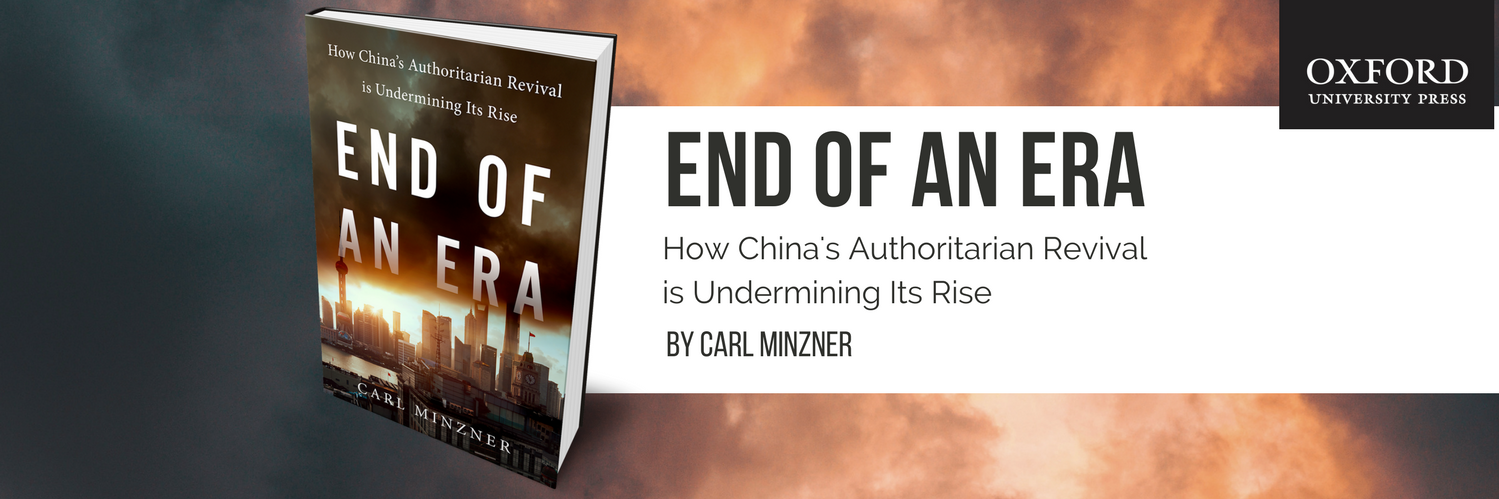
Carl Minzner banner
Carl Minzner

Carl Minzner

@CarlMinzner

Professor, Fordham Law School Senior Fellow, China Studies, CFR Author, End of An Era (Oxford, 2018) https://t.co/q2MwW7hPRB Opinions are my own. RT ≠ endorsement

Fordham Law School Katılım Ağustos 2012
754 Takip Edilen22.4K Takipçiler
Sabitlenmiş Tweet
Carl Minzner
Carl Minzner@CarlMinzner·
(Updated 2019 paperback) China's reform era is ending. Core factors that characterized it-political stability, ideological openness, and rapid economic growth-are unraveling. End of an Era outlines the potential outcomes that could result. amazon.com/End-Era-Author… via @amazon
English
32
36
138
0
Carl Minzner retweetledi
Benjamin Wolf 🇺🇦
If current demographic trends hold, Europe (the entire continent) may soon record more live births than all of China. That would probably be the first time since the Qing dynasty 300 years ago, possibly even the first time in history.
Benjamin Wolf 🇺🇦 tweet media
English
178
658
4.7K
536.9K
Carl Minzner
Carl Minzner@CarlMinzner·
China new law on ethnic unity enshrines Beijing's pivot towards aggressive assimilationism as official state policy. It also reflects a deepening merger of Party ideology and state law. cfr.org/articles/china…
English
0
0
2
566
Carl Minzner retweetledi
Bill Bishop
Bill Bishop@niubi·
fascinating project - "PropagandaScope is a database of over 400,000 articles from 20 Chinese provincial party newspapers. It tracks how political keywords move from the center to the provinces. How often they appear. How fast they spread. Which regions amplify them the most. When I searched for “蒙古族,” the Chinese term for “Mongolians” I expected to find it diminished. I did not expect what the data showed. Out of more than 400,000 articles, exactly one mentioned the term. One. That single article only used it because it reported on a conference named “Mongolian Literature.” The term appeared in the title. The word for my people has been removed from the vocabulary of Chinese state media. What replaced it is a geographic label: “北疆文化,” Northern Frontier Culture. You are no longer Mongolian. You are from the northern frontier. The idea for this project did not come from nowhere. In 2026, I co-authored an article with Professor James Leibold from La Trobe University for Made in China Journal. We discussed using map APIs to document how Mongolian-language schools were being renamed across Southern Mongolia. The technical approach did not work. But the question stayed with me. The evidence of erasure was sitting in plain sight. In Chinese government data. In public newspaper archives. In open digital records. Someone just had to build the tool to extract it. When I started using Claude Code, I realized I could. soyonbo.substack.com/p/before-the-l…
English
1
59
188
18.5K
Carl Minzner retweetledi
Dake Kang
Dake Kang@dakekang·
Albee Zhang writes about China's young, low-cost retirees, quitting careers before thirty and taking advantage of China's slowing economy to chill out in semi-abandoned, shockingly cheap housing complexes: apnews.com/article/china-…
English
35
255
1.9K
320.3K
Carl Minzner retweetledi
Jonathan Cheng
Jonathan Cheng@JChengWSJ·
“In what is becoming an annual event, a spate of bans on the eve of March 8 International Women’s Day has struck numerous WeChat public accounts focused on feminism, women’s rights, LGBTQ+ rights…and promoting mental health.” @CDT chinadigitaltimes.net/2026/03/mass-b…
English
0
7
2
2.3K
Carl Minzner retweetledi
Gavin Jacobson
Gavin Jacobson@GavJacobson·
An extraordinary work of oral history by Chinese worker-poet Zheng Xiaoqiong, who spent over a decade in Guangdong’s factories interviewing migrant labourers. I think it’s unlike anything being published about China in English today. Read it at @Equatormag equator.org/articles/the-m…
English
12
557
2.5K
310.2K
Carl Minzner retweetledi
Henry Gao
Henry Gao@henrysgao·
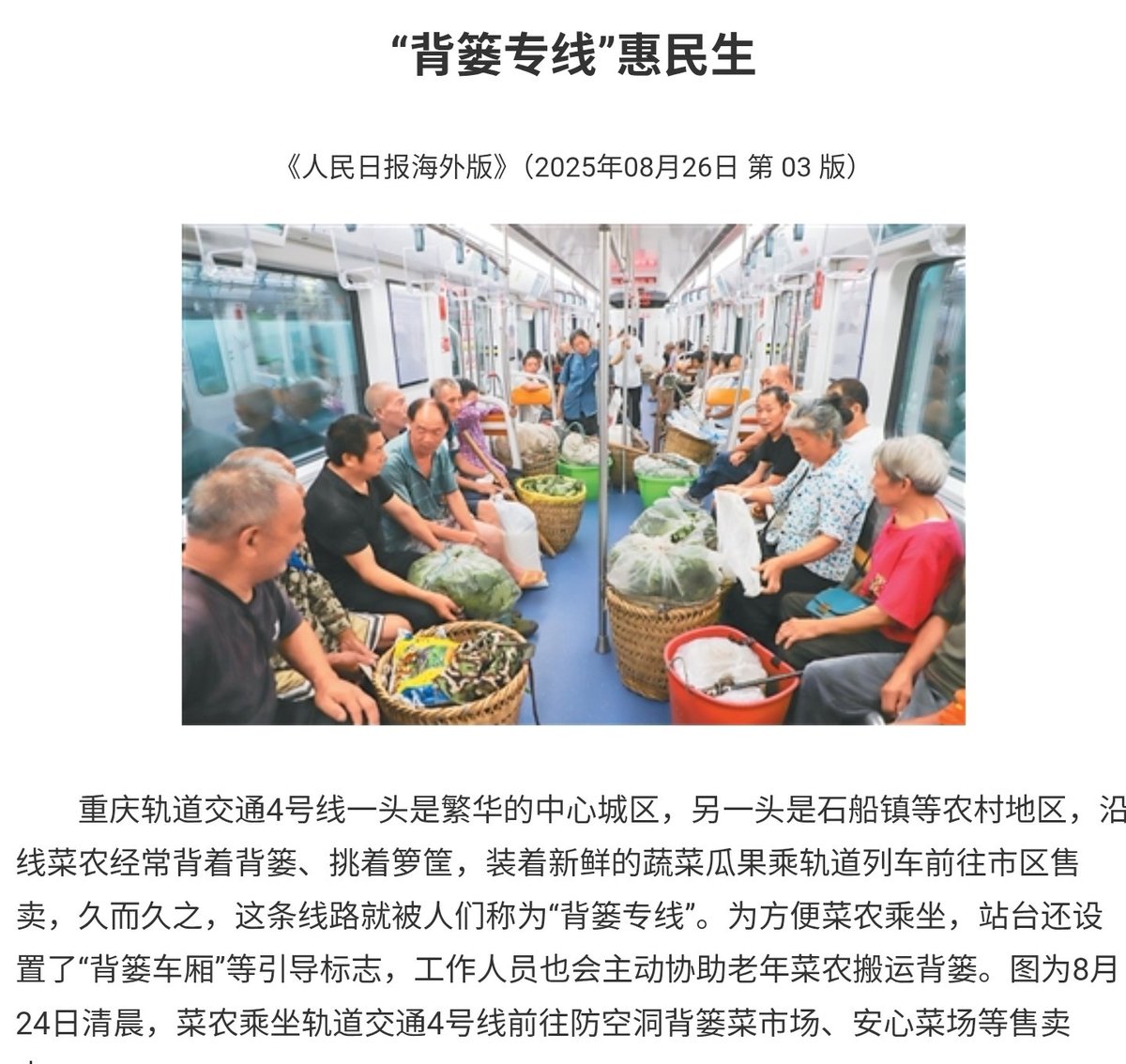
A perfect summary of the Chinese economic model in a single photo: the government would rather build a subway line for peasants to sell their produce in the city rather than simply providing them direct financial support—even though the latter would clearly be the cheaper option.
Henry Gao tweet media
English
94
28
203
248.6K
Carl Minzner retweetledi
Byron Wan
Byron Wan@Byron_Wan·
📍 外强中干 (outwardly strong, inwardly weak) “China has long thrived under an unspoken social contract: The Communist Party granted the people more freedom to improve their livelihoods in return for political obedience. To many Chinese, the government is no longer holding up its end of the bargain.” Behind the orderliness of everyday life, a quiet desperation simmers. On social media and in private conversations, there is a common refrain: worry over joblessness, wage cuts and making ends meet. Chinese people today live with a strange paradox. Internationally, China looks strong. It is America’s only rival in terms of the power to shape the world. The recent meeting between Trump and Xi Jinping has fed this narrative — one that Beijing is only too happy to promote — a resilient nation united in the face of external challenges. That muscular facade is punctured here in China, where despair about dimming economic and personal prospects is pervasive. This contrast between a confident state and its weary population is captured in the phrase 外强中干. Many now feel the very state policies that have made China appear strong overseas are hurting them. They see a government more concerned with building global influence and dominating export markets than in addressing the challenges of their households. A state crackdown launched several years ago on the private sector is widely blamed for undermining middle-class livelihoods, even as financial resources are channeled into industries that the government deems more strategically important, such as electric vehicles, solar power and shipbuilding. Meanwhile, the global chokehold China has secured on the supply and processing of rare earth elements has caused air and soil pollution at home. These days, there is a sense of bitter anger among the people at being the voiceless victims of the state’s obsession with world power and beating the US. That sentiment is likely to grow. The latest 5-year plan — the government’s blueprint of economic priorities — that was released last month makes clear it plans to double down on prioritizing national power over the common good. Youth unemployment is so high that last year the government changed its calculation methodology in a way that produced a lower number. Even the new figure remains alarmingly high. An estimated 200 million people get by in precarious careers in a gig economy. Consumers, many of whom have seen their net worth shrink in an intractable housing market crash, are cutting back on spending, trapping the economy in a deflationary spiral. The sense of economic insecurity is leading people to forgo marriage and starting families, worsening a national decline in population. Popular frustration also is sharpening the divide between the haves and the have-nots — hardening public resentment against those who are perceived as parlaying economic or political connections into opportunity while most people face dwindling prospects. And mental health problems are believed to be rising, as evidenced by a spate of indiscriminate stabbing sprees and other violent attacks in the past couple of years. It seems clear that Beijing can no longer count on knee-jerk patriotism to underwrite its increasingly assertive stance abroad. In Sep, when the CCP staged a lavish military parade to commemorate the 80th anniversary of the end of World War II, many people wondered aloud why that money wasn’t instead spent on addressing the difficulties of ordinary people. The government recently began cracking down on social media content it considered “excessively pessimistic” — a clear sign it is concerned about this public unease undercutting its agenda. But suppressing criticism instead of addressing its causes will only deepen the disconnect with the people and strain the balancing act that the state has tried to strike between its foreign policy priorities and the domestic support it craves. nytimes.com/2025/11/13/opi…
Byron Wan tweet media
English
62
233
810
65.1K
Carl Minzner retweetledi
Damien Ma
Damien Ma@damienics·
Terribly sad news of the unexpected passing of Joe Fewsmith, a giant in the field of Chinese politics, a terrific professor, and just a really great guy. I was privileged to have studied under him. He got a lot of things right on Chinese politics I think, and his "Rethinking Chinese Politics" is as relevant as ever, particularly on Leninist system's evergreen "succession" problem:
Damien Ma tweet media
English
6
92
414
63.6K
Carl Minzner retweetledi
Joseph Torigian
Joseph Torigian@JosephTorigian·
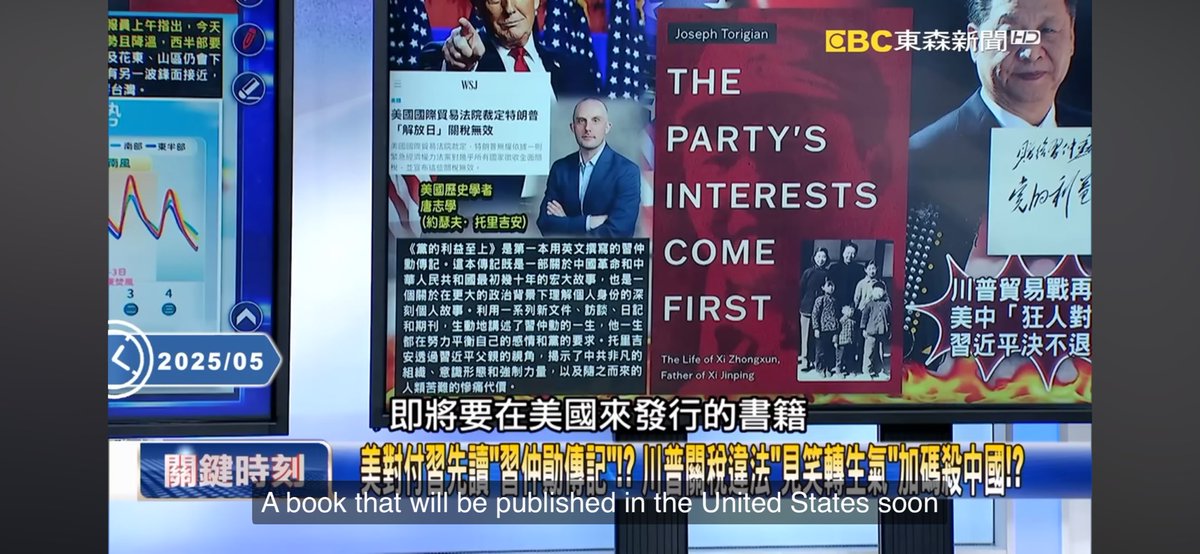
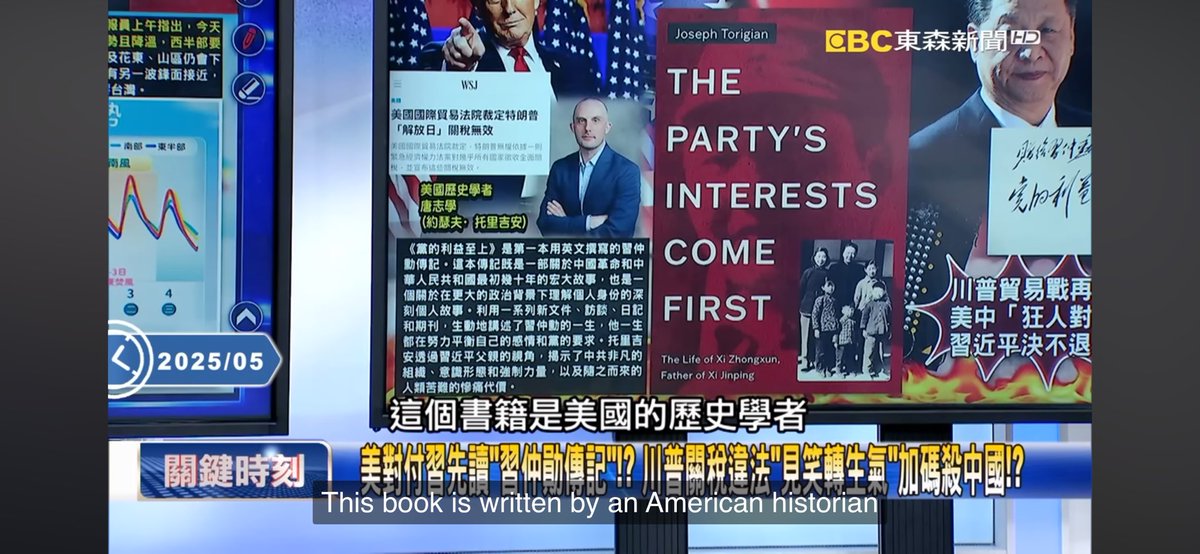
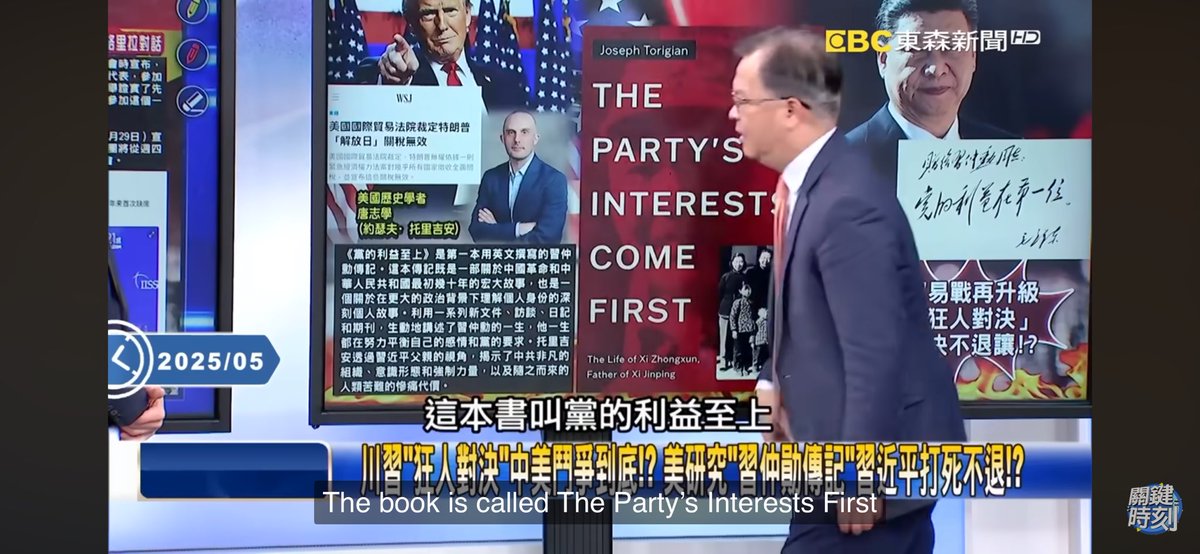
Surreal moment. One of the most popular political talk shows in Taiwan engages in a long discussion of my new book on Xi Jinping’s father. youtu.be/b8Gkd12765w?si…
YouTube video
YouTube
Joseph Torigian tweet mediaJoseph Torigian tweet mediaJoseph Torigian tweet mediaJoseph Torigian tweet media
English
6
12
92
14.3K
Carl Minzner retweetledi
Council on Foreign Relations
Beijing is dramatically pushing eldercare robots as part of its national development plans to promote advanced manufacturing. But it is unclear how effective such policies will be in responding to China’s mounting eldercare needs, writes @CarlMinzner. cfr.org/blog/chinas-in…
English
0
2
6
3K