Jared Voris

128 posts

Jared Voris banner
Jared Voris

Jared Voris

@Carni_Voris

Dinosaur paleontologist in Alberta studying tyrannosaur paleobiology (he/him)

Katılım Ekim 2020
67 Takip Edilen433 Takipçiler
Jared Voris retweetledi
Voyageurs Wolf Project
Voyageurs Wolf Project@VoyaWolfProject·
Folks often tell us there are more wolves than deer in our area (and northern Minnesota). Many folks likely say such things as a euphemism—i.e., as a way to indicate there are more wolves than they would like and less deer—but some do appear to really believe wolves outnumber deer. This video is a compilation of a decent portion of the bucks we captured on camera last fall (and a few from late summer) in the Greater Voyageurs Ecosystem. The video is a distillation of 269 trail camera videos of bucks, of which there are likely 200 or more unique bucks in the footage given antler characteristics and where cameras were set. These probably represent about ~60-70% of the bucks we captured on camera last year. We were going to make a video of literally every buck we got on camera but that just became too much (the video is already 18 minutes long as is). For perspective, this past winter, there were 99 wolves in the GVE (77 pack wolves and an estimated 22 lone wolves), which is a high-density wolf population at 44 wolves/1000 square kilometers. So this video already has twice as many deer in it than the wolf population in the GVE. And notably, our trail cameras obviously do not detect a large portion of the bucks out there. We only have one camera, on average, per every 2.5 square miles in the GVE but our cameras are not evenly distributed across the area, meaning there are large areas where we don’t have cameras. Plus, each camera deployed only observes one small area. All this to say, this footage almost certainly did not capture the majority of the bucks in the GVE. And these videos are just bucks, and does not include adult does and fawns. The sex ratio of the GVE deer population is skewed towards females, which is typical of most deer populations. We do not know the exact buck:doe ratio in the GVE. But hunters in the forested zone in northern Minnesota in 2023 reported seeing 5 does and fawns for every buck, and in 2021, based on hunter observations, the DNR estimated there was 3.8 does per buck in the forest portion of Minnesota. Notably, this is not an attempt to change anyone’s mind about wolf management, what you think about wolves, or whether you think there should be more deer than there currently are. We are simply illustrating that even at a time when deer densities are low in northern Minnesota, there are still many more deer than there are wolves. Lastly, for anyone who hunts in the GVE or northern Minnesota, while there might not be the abundance of deer some might want, there are some very nice bucks out there. And since we know many hunters use trail cameras to scout for good spots, we thought we would share one insight from our cameras: we often see bucks on camera in the rut (i.e., around deer hunting season) that we had never seen on camera all summer or fall. So even if you haven’t captured any nice bucks on camera during your pre-season scouting, it doesn’t mean you don’t have a shot at seeing one once November rolls around. Bucks in the area seem to cover a lot of ground come November. **Note: some timestamps say 2020 instead of 2024 because when batteries die, the camera resets to factory settings. The factory date is Jan 1, 2020. In a few instances, we forgot to fix the timestamp when we swapped batteries.
English
0
11
101
3.3K
Baols
Baols@zihanshen115982·
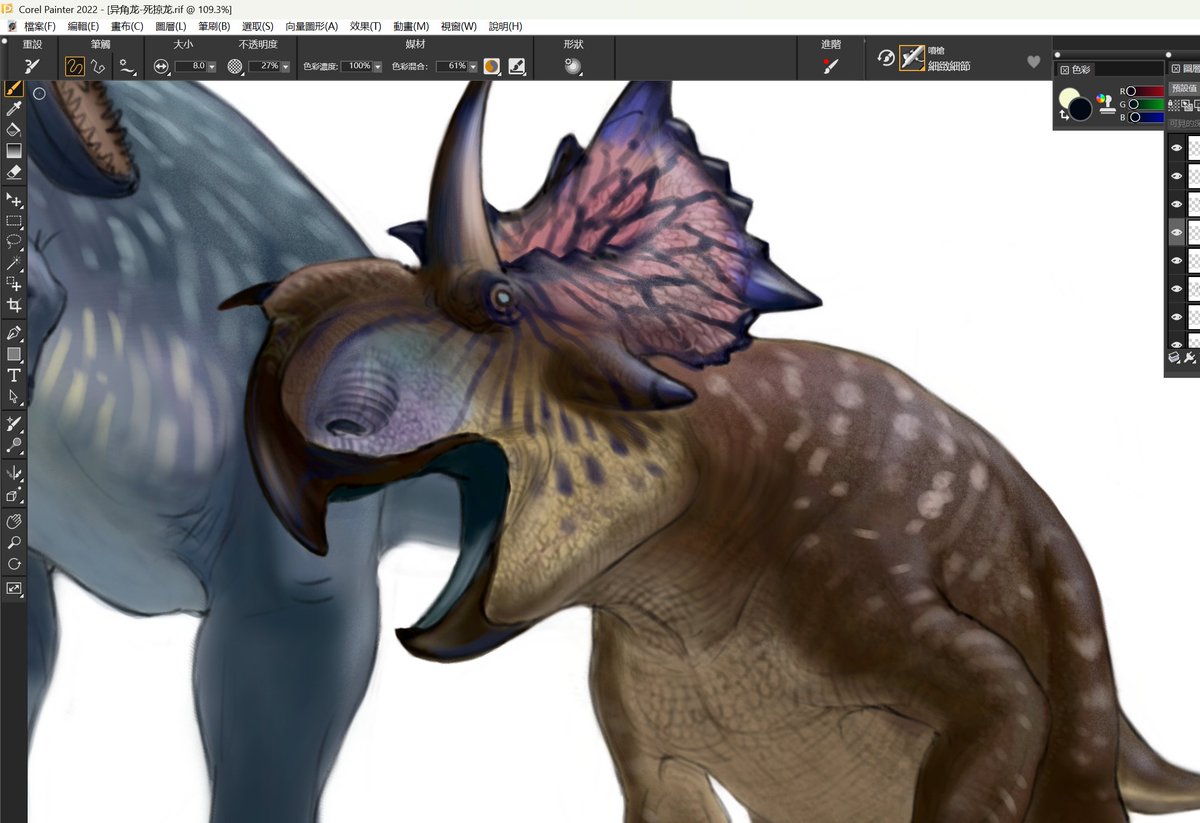
Special Chapter: Thanatotheristes degrootorum VS Xenoceratops forestry
Baols tweet media
English
5
174
1.1K
15.5K
Baols
Baols@zihanshen115982·
Special article in production
Baols tweet media
English
1
51
631
7.9K
Jared Voris
Jared Voris@Carni_Voris·
@SteveBrusatte I'd love to see analyses testing the link between these kinds of high profile sales and fossil poaching rates. The magnitude of more recently poached fossils in places like Mongolian is insane and I'd be willing to bet these high dollar sales are largely to blame.
English
1
4
12
757
Steve Brusatte
Steve Brusatte@SteveBrusatte·
Quoted in this article alongside me is a professor of art, who asserts that these auctions are 'catalysts for increasing research activity on dinosaur fossils.' Um, no, dinosaurs disappearing into private hands is not encouraging research. Signed, an actual paleontologist.
English
2
29
123
3.1K
Steve Brusatte
Steve Brusatte@SteveBrusatte·
Another day, another dinosaur auction. A world where dinosaur skeletons can fetch tens of millions of dollars within a few minutes at auctions is not a world where dinosaurs will long be accessible to educate and inspire everyone. My thoughts for @CNN cnn.com/2025/07/18/sci…
English
9
60
267
9.1K
Jared Voris retweetledi
Dr. James G. Napoli
Dr. James G. Napoli@JGN_Paleo·
Was the key to bird flight 'all in the wrist'? New research, published today in Nature, shows that important adaptations for flight in the wrists of modern birds were present in bird-like theropod dinosaurs . 🧵 Illustration by @Paleoartologist
Dr. James G. Napoli tweet media
English
12
211
904
33.9K
Jared Voris
Jared Voris@Carni_Voris·
@Antrodemus There's also frequently an osteoderm that caps the postorbital hornlet bridges the lacrimal-postorbital ornaments. It's incredibly variable in size/shape and degree of fusion to the postorbital. IMO this osteoderm is where most of the "mass" of the T. rex's horns come from.
English
0
1
4
360
Luigi
Luigi@Antrodemus·
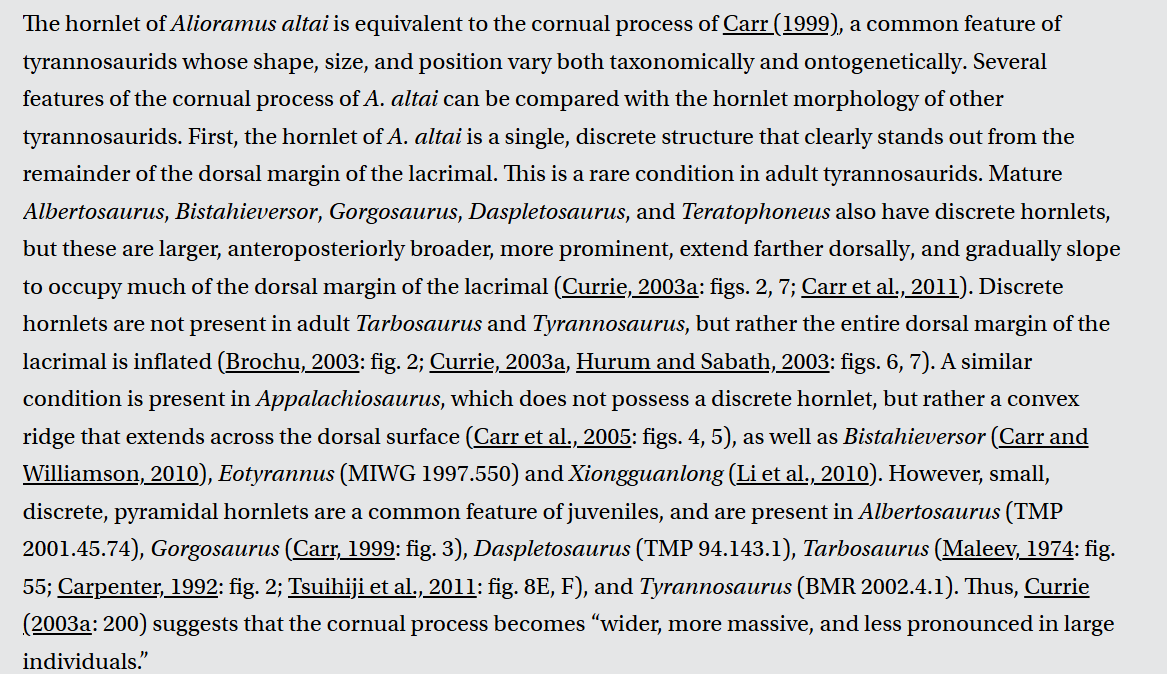
Note the phylogenetic significance of the lacrimal hornlets in tyrannosaurids as mentioned here in the description for Alioramus. Whether they're discrete, sharp, rounded, reduced, vertical, or long are all important details reflective of the evolutionary position of the animal.
Luigi tweet media
English
2
0
29
1.5K
Luigi
Luigi@Antrodemus·
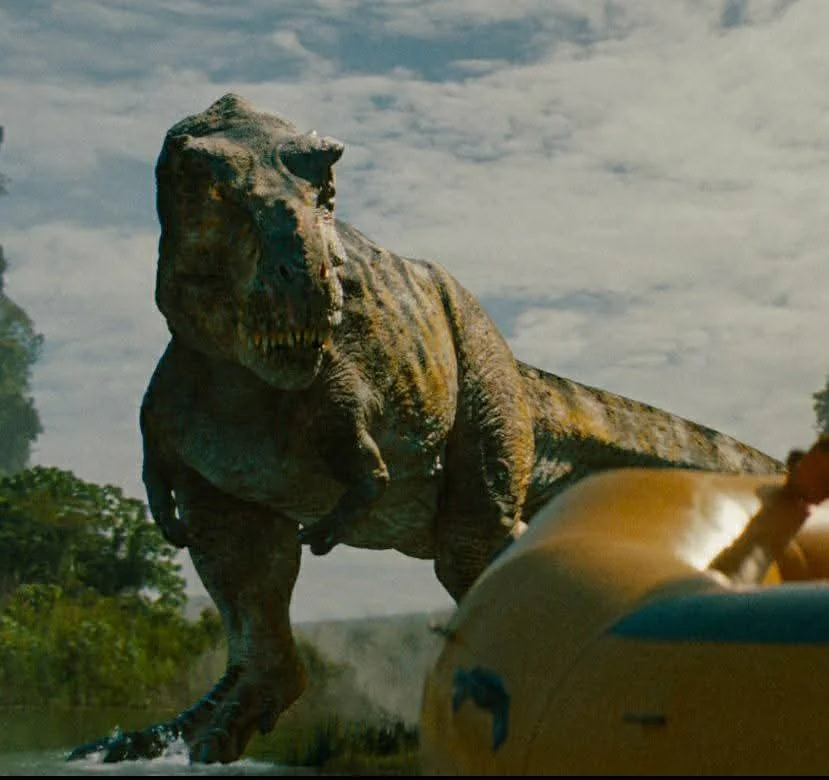
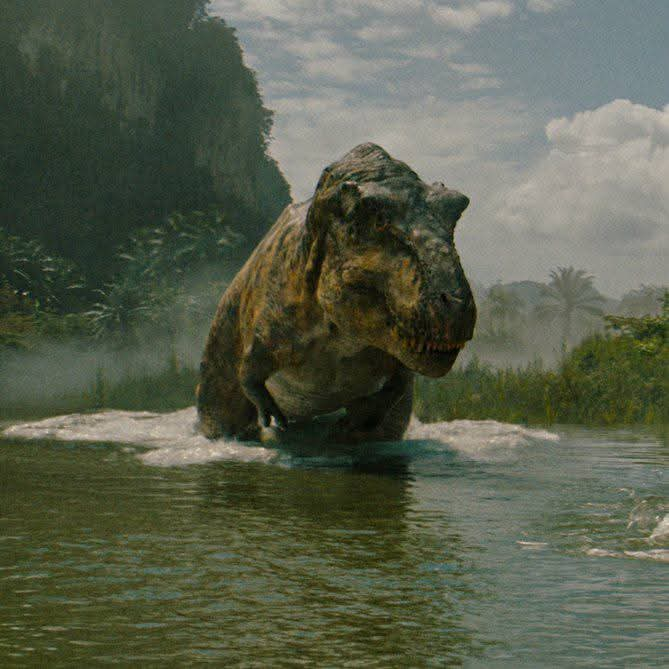
You may have noticed that the T. rex in #JurassicWorldRebirth has two pointy crests over its eyes unlike past on-screen T. rex. These aren't creative liberties - they're actual structures known as lacrimal horns found on tyrannosaurs, supported by the lacrimal cornual process.
Luigi tweet mediaLuigi tweet mediaLuigi tweet mediaLuigi tweet media
English
6
121
985
25.7K
Jared Voris
Jared Voris@Carni_Voris·
PhD completed!
English
16
2
91
1.9K
Jared Voris retweetledi
Gabriel N. U.
Gabriel N. U.@SerpenIllus·
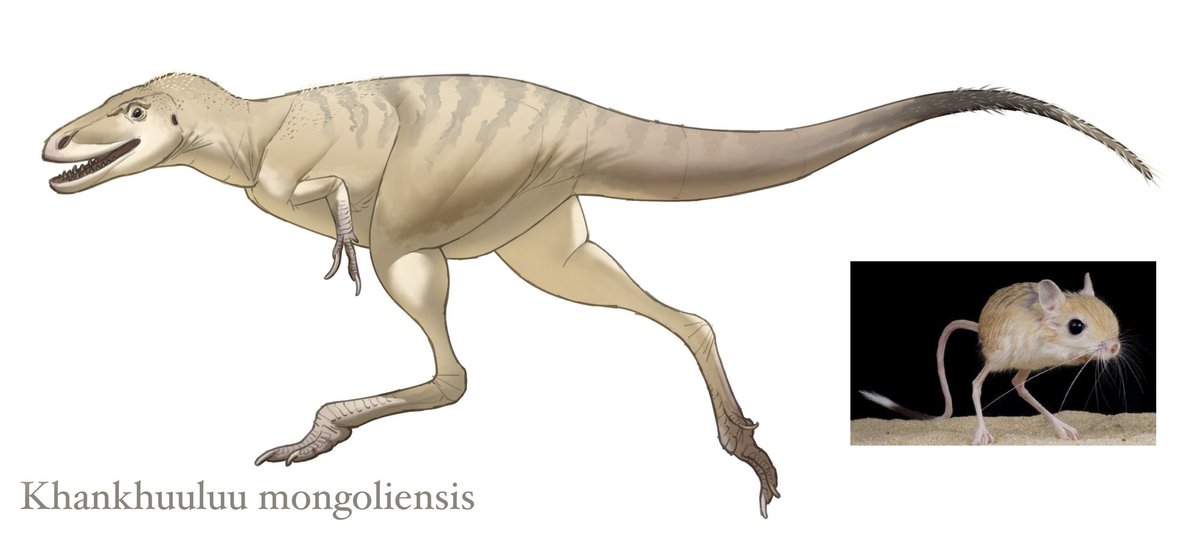
You know I had to do it. This long-legged beauty is Khankhuuluu mongoliensis, a small (ish) Tyrannosauroid from Late Cretaceous Asia The description of Khankhuuluu was published just a couple of days ago. The taxon has a mixed suit of basal and derived tyrannosauroid characters
Gabriel N. U. tweet mediaGabriel N. U. tweet media
English
0
198
971
17.7K
Jared Voris
Jared Voris@Carni_Voris·
@ketogrillbakery Let me know if I'm misinterpreting, but they do have an arctometarsus (pinched third metatarsal in the foot) like eutyrannosaurians!
English
1
0
0
145
Jared Voris
Jared Voris@Carni_Voris·
It has been a looong time coming but I would like to introduce the last chapter of my PhD thesis, the latest non-eutyrannosaurian tyrannosauroid: Khankhuuluu mongoliensis, and on some new insight into our understanding of Eutyrannosaurian evolution (🧵)
Jared Voris tweet media
English
8
135
1K
55K
Jared Voris
Jared Voris@Carni_Voris·
@wesley_atw86608 They were originally reported in the Perle 1977 paper but we weren’t able to relocate them at the time of study. The maxilla is based on a mix of Timurlengia and Appalachiosaurus and the dentary is based on an isolated dentary but from the Bayanshiree Fm
English
1
0
1
86
Stinkersaurus
Stinkersaurus@wesley_atw86608·
@Carni_Voris Question! About the Maxilla and Dentary, are those pending description? I was wondering if the parts of that skeletal are based on them! :)
English
1
0
0
50
Jared Voris retweetledi
QGDM
QGDM@QIgdm11451·
Khankhuuluu mongoliensis The newly identified theropod from last night has a short torso and long legs, which are its most obvious features, similar to a jerboa.
QGDM tweet media
English
6
114
881
18.9K
Jared Voris
Jared Voris@Carni_Voris·
@TM9380 @LiterallyMiguel There were a few things shown that are potentially unique about it. If Qianzhou is distinct (which I think it is), I think there’s hope for AsiaT, it’s just the holotype is immature.
English
0
0
2
79
Taylor McCoy 🦖
Taylor McCoy 🦖@TM9380·
@LiterallyMiguel Yeah, seems like they favor a non-Tarbosaurus situation but it’s hard to say for sure. If it’s distinct could still be named Asiatyrannus if the adult can be matched up
English
2
0
4
277
Jared Voris retweetledi
Baols
Baols@zihanshen115982·
Khankhuuluu mongoliensis This version of body restoration is the author's personal opinion and does not represent complete accuracy.
Baols tweet media
English
1
100
489
9.7K
Jared Voris
Jared Voris@Carni_Voris·
@Arturojose51894 @SomniosusW We knew that would likely be a concern so we addressed it at length in the supporting info. Also it has other adult features like fully fused vertebrae. One of the big features is Khankhuuluu has a huge nasal sinus, like earlier tyrannosauroids, which no eutyrannosaurian has.
English
0
1
3
478
Squirtle Fernández
Squirtle Fernández@Arturojose51894·
@SomniosusW And what would happen if... in reality Khankhuuluu is only a juvenile Tarbosaurus and not a new specimen (just as happened in the West with Nanotyrannus which turned out to be a juvenile Tyrannosaurus)
English
3
0
1
381
Jared Voris
Jared Voris@Carni_Voris·
Darla Zelenitsky, Yoshi Kobayashi, Sean Modesto, @MonsieurPaleo, Hiroki Tsutsumi, @Dino_Chinzorig, and Khishigjav Tsogtbaatar! Truly fantastic coauthors and fantastic researchers!
Eesti
1
2
28
769