
Adrian Kreuzspiegl

11K posts

Adrian Kreuzspiegl banner
Adrian Kreuzspiegl

Adrian Kreuzspiegl

@Castative

Politically minded. Working on global development. China watcher in spe. RTs don't mean consent. Also on Bsky

Katılım Haziran 2011
718 Takip Edilen306 Takipçiler
Sabitlenmiş Tweet
Adrian Kreuzspiegl
Adrian Kreuzspiegl@Castative·
@mxpttr - Erbschaftssteuer - Pendlerpauschale - Radinfrastruktur - Ausweitung d. Wahlrechts - Erleichterung d. Einbürgerung - Tempo 100 - Drogenliberalisierung - Alkoholismus als Problem - Gürtelpool - Parkplätze - Kreuze in Klassenzimmern - Perchtenlauf - Schulbeginn nach 8
Deutsch
3
2
57
0
Adrian Kreuzspiegl retweetledi
Adrian Kreuzspiegl
Adrian Kreuzspiegl@Castative·
@mattyglesias People really should be reminded of how outright disgusted the majority of the thinkers of the liberal canon, think Smith and Mill, oftentimes were of extravagant wealth.
English
0
0
2
97
Matthew Yglesias
Matthew Yglesias@mattyglesias·
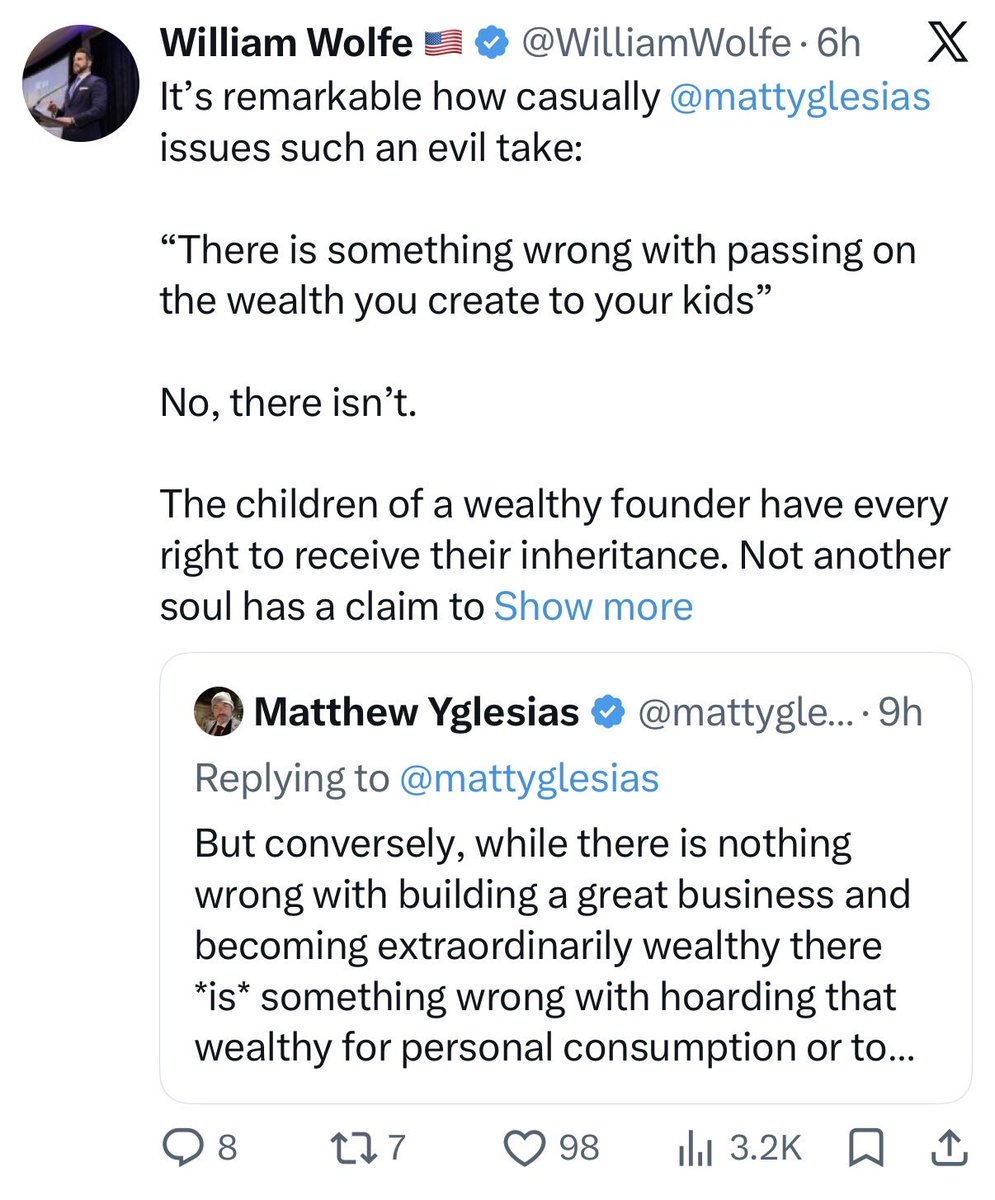
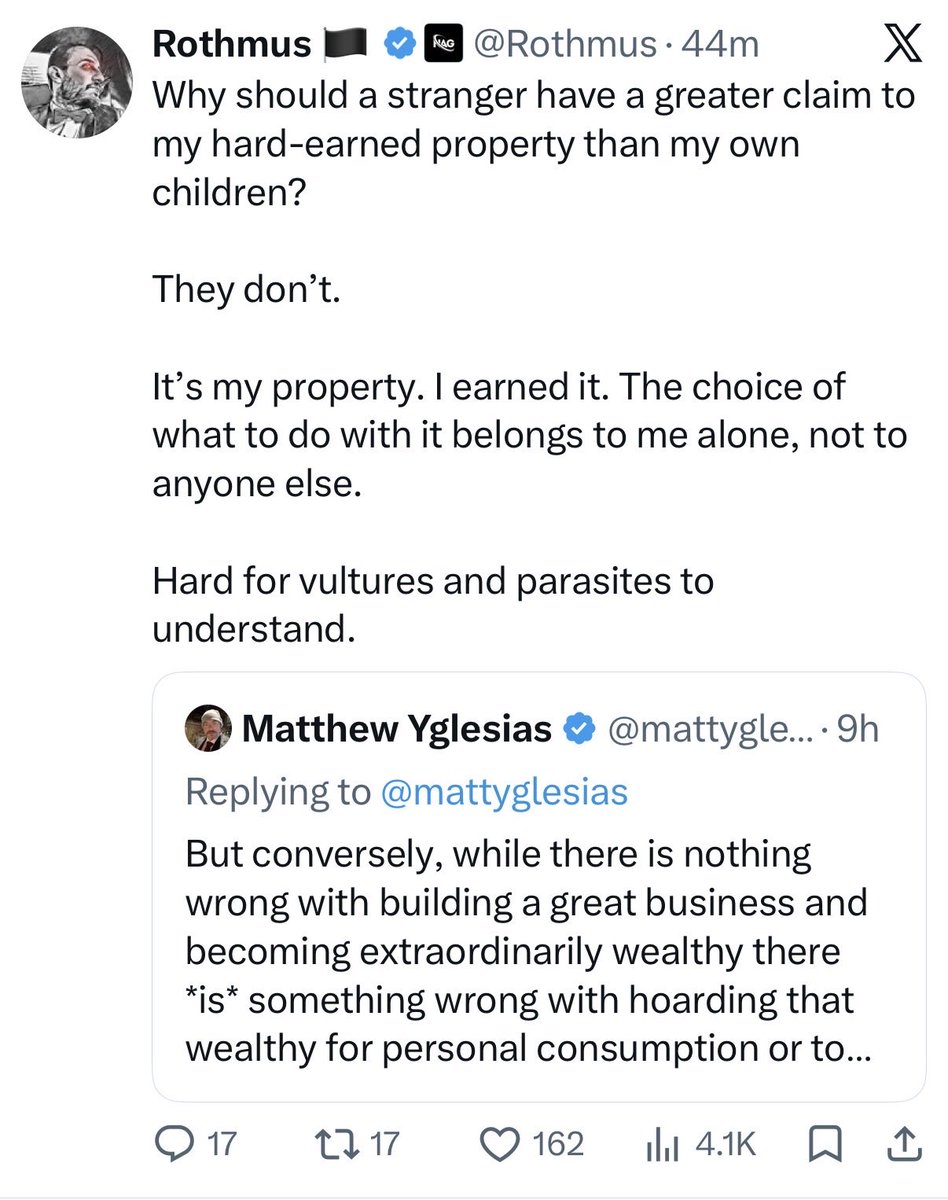
There are a lot of nutty leftist takes out there but I find the rise of explicit amoral familism — overt arguments that the richest and most powerful people ought to behave more selfishly — to be really distressing and at odds with almost all of traditional western thought.
English
41
49
938
52.6K
Matthew Yglesias
Matthew Yglesias@mattyglesias·
Some very sane reactions to my post arguing that successful billionaire businessmen should give generously to charity rather than passing their entire fortune on to their children. slowboring.com/p/the-real-pro…
Matthew Yglesias tweet mediaMatthew Yglesias tweet mediaMatthew Yglesias tweet mediaMatthew Yglesias tweet media
English
113
48
889
173.8K
Adrian Kreuzspiegl
Adrian Kreuzspiegl@Castative·
@sadsackmac @mattyglesias There is immediate and dire need of people under the most severe deprivation, literally dying, that could be helped through well established channels, the fuck does losing control mean.
English
0
0
2
113
Adrian Kreuzspiegl
Adrian Kreuzspiegl@Castative·
@nofakeblake1 @propublica I genuinely have a hard time believing you see no issue with the practices of the lender. Would you get into that line of business if it made you rich, is there really nothing wrong with it whatsoever? Would the immense suffering it produces not affect your conscience at all?
English
1
0
2
269
nofakeblake
nofakeblake@nofakeblake1·
It’s easy, especially in today’s society, to point the finger at the big bad, predatory lender in these situations… However, I find it difficult to find fault with the lender when they are merely offering a product to a consumer and it is the consumer themselves making the decision to apply for the product… If anything, this article points to the horrendous job we have done, as a society, in making sure that everyone is taught basic money management skills in school…
English
126
2
231
101.6K
ProPublica
ProPublica@propublica·
The Flex Loan, a new type of payday loan pioneered by Advance Financial in Tennessee, allows residents to borrow up to $4,000 at a 279.5% interest rate. It has burdened low-income borrowers while generating huge profits for lenders. propublica.org/article/flex-l…
English
369
821
3.7K
5.4M
Adrian Kreuzspiegl
Adrian Kreuzspiegl@Castative·
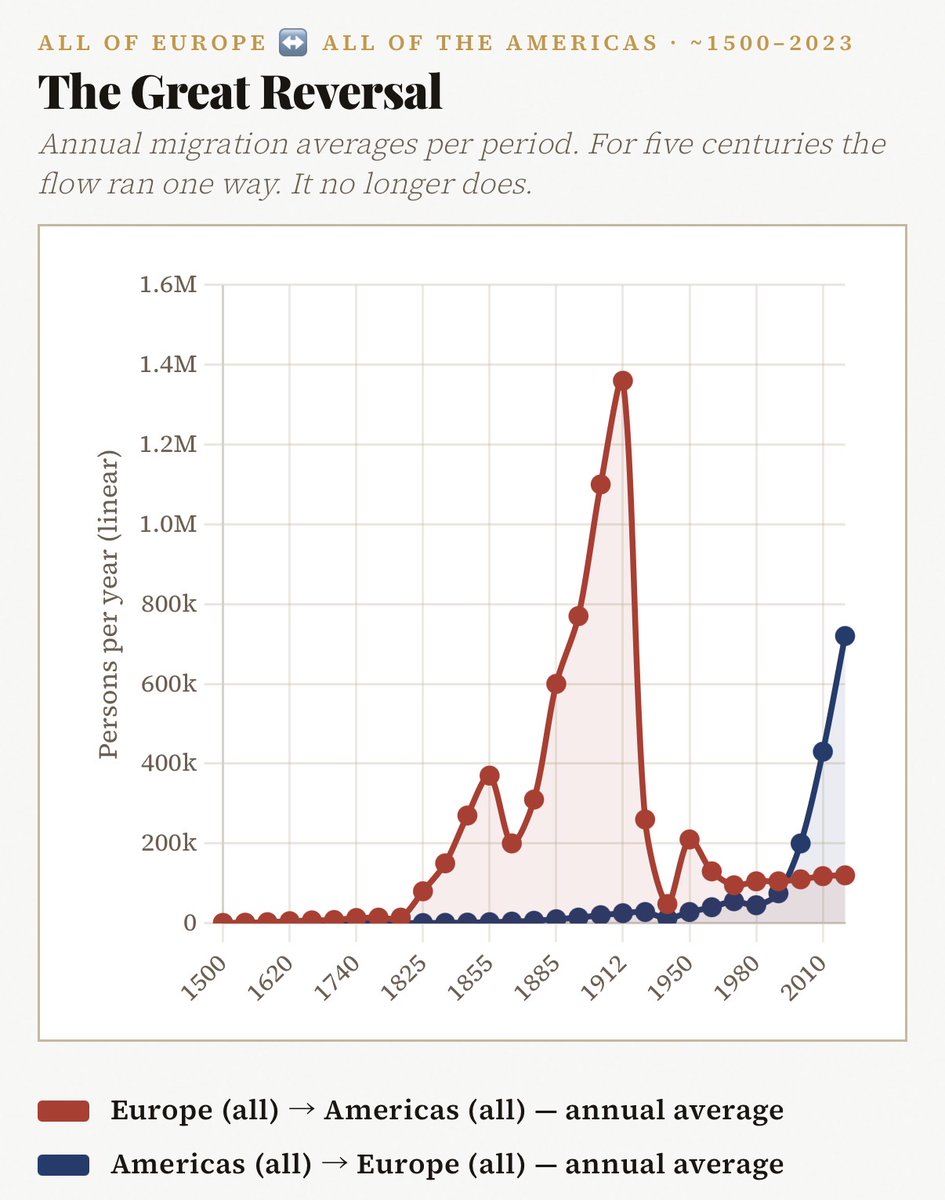
@benbawan Neat graphs, though they need to be read with relative population sizes in mind, otherwise they are quite misleading as to the scale and impact.
English
0
0
0
82
Benjamin Wolf 🇺🇦
Benjamin Wolf 🇺🇦@benbawan·
For 500 years, Europeans have moved to the Americas in large numbers. Since about 20 years, this has reversed - probably for the first time ever. Truly historic change.
Benjamin Wolf 🇺🇦 tweet media
English
8
25
144
9.4K
Benjamin Wolf 🇺🇦
Benjamin Wolf 🇺🇦@benbawan·
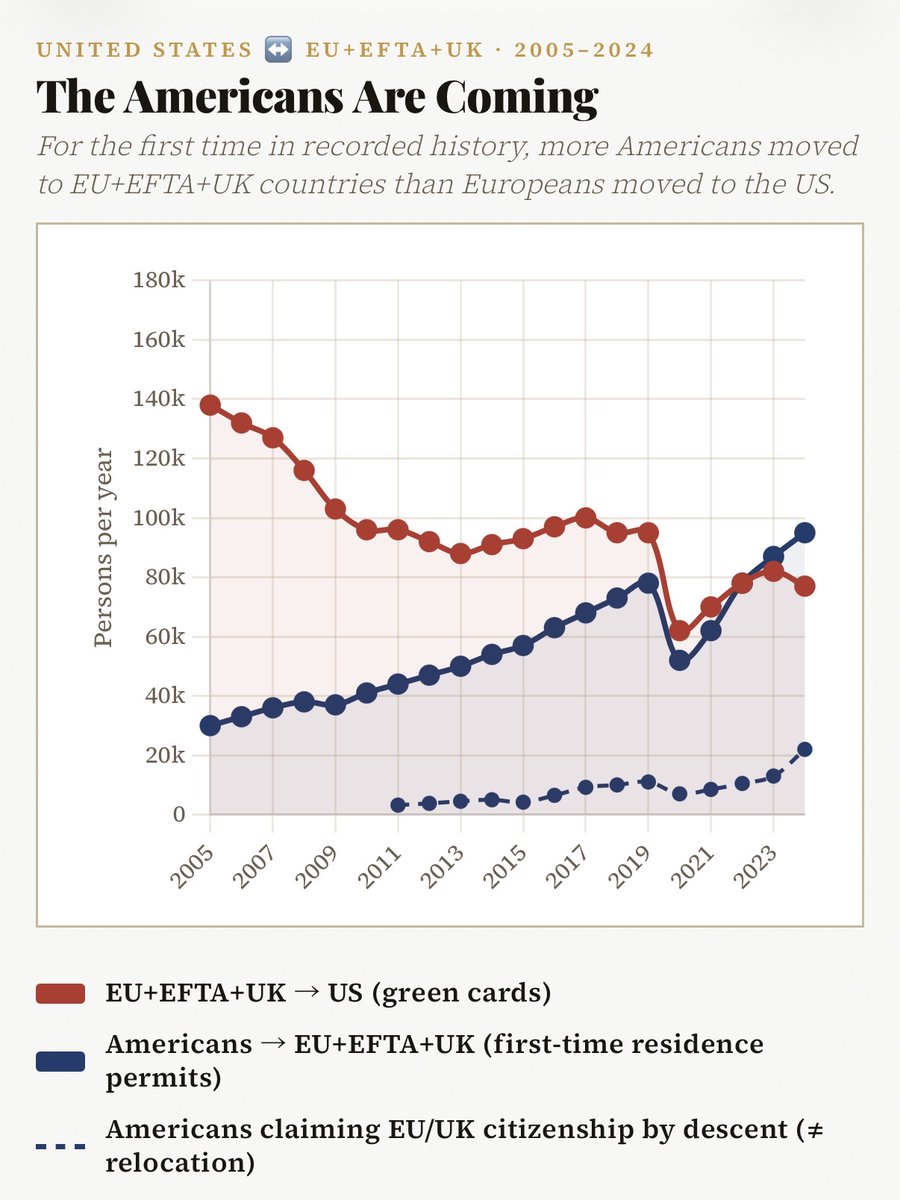
For the first time in recorded history, more Americans are moving to 🇪🇺🇨🇭🇬🇧 EU+EFTA+UK countries each year than Europeans from those places are moving to the 🇺🇸 US. The ratio was 4:1 in favour of the US in the early 2000s. It crossed parity around 2022. This is new.
Benjamin Wolf 🇺🇦 tweet media
English
80
486
1.6K
179.2K
Adrian Kreuzspiegl retweetledi
Sander Tordoir
Sander Tordoir@SanderTordoir·
Erik and I do have to admit, however, that unlike Germany, our small home countries continue to run persistent bonkers surpluses. The Netherlands clocking in at 10% of GDP; Denmark around 12%. Surging chip machinery, and pharma exports play a role. But so does over-saving.
Erik Fossing Nielsen 🇪🇺 🇺🇦@ErikFossing

Europe has plenty of policy issues, but if we look at Europe combined, I don’t see any clear macro imbalance.

English
2
5
79
14.7K
Adrian Kreuzspiegl
Adrian Kreuzspiegl@Castative·
@BarelyTrying92 @ajlamesa They are not though. Besides: Walking distances needlessly absurd, multiple security checkpoints, strictly structured boarding. Take away most of the convenience and flexibility of trains, slow everything down only to then go high speed and still be slower than planes overall.
English
1
0
4
143
oneworld82
oneworld82@BarelyTrying92·
@ajlamesa And then you’d know these stations are perfectly integrated into the very modern urban fabric of their respective cities.
English
2
0
11
237
Aaron Bastani
Aaron Bastani@AaronBastani·
Sanchez model: Re-industrialisation via Chinese FDI. All in on renewables (yes, I know, Britain doesn’t have Spain’s solar potential!) Coalition builder among middle powers. Source of moral authority as US legitimacy erodes. - Smart strategy. Britain should have done it.
EL MUNDO@elmundoes

MG elige España para su primera fábrica de coches en Europa #Echobox=1777048763" target="_blank" rel="nofollow noopener">elmundo.es/motor/2026/04/…

English
45
158
1.1K
169.3K
James Cooke
James Cooke@DrJamesCooke·
I'm happy to announce that I've just started my dream job as Director and Principal Investigator of a new Contemplative Science Research Program within The Centre for Eudaimonia and Human Flourishing at Oxford University.  Find out more at ContemplativeScienceLab.com
English
16
2
62
3.7K
Adrian Kreuzspiegl retweetledi
Daniel Kral
Daniel Kral@DanielKral1·
South Korea and Poland present two distinct solutions to the challenges of late development shaped by their unique contexts. Korea, and other East Asian economies, protected their nascent industries before exposing them to global competition. The aim was to create domestic champions that would become the engine of domestic growth and innovation, bringing the countries to the global technological frontier. They were able to do so in the context of their Western alignment in the Cold War. Iconic global brands from South Korea and Taiwan emerged as a result, though many other countries attempting this path have failed. In contrast, Poland and other Central and Eastern European (CEE) economies underwent a turbulent transition from centrally planned to market economies while facing strict constraints from EU accession and membership rules, which precluded protectionist measures. In this setting, foreign direct investment (FDI) became the primary solution. Rather than complementing or building local capabilities, FDI largely supplanted them. CEE countries integrated deeply into global value chains, typically in lower-value, downstream segments dominated by foreign multinationals. Hence, there are no Polish or Romanian global champions; where local successes exist, they largely function as suppliers for these multinationals. An open question for CEE’s “hyper-integrationist” development model is whether it can achieve full convergence with Western living standards, given its structural reliance on external agents of modernization and limited indigenous innovation capacity (the differences in R&D spending versus Korea a great example). Can an economy attain high-income status without developing globally competitive firms and reaching the technological frontier? This challenge differs qualitatively from that confronting stagnant Western European economies (eg. Germany, France, and the UK). The latter must sustain growth and competitiveness at the technological frontier amid a host of new domestic and global challenges. As a result, CEE experiences offer few direct lessons for Western Europe, which explains their limited prominence in reports such as Mario Draghi’s on restoring EU competitiveness.
Marcin Piatkowski 🇪🇺@mmpiatkowski

A surprising finding: Poland's (and Romania's) speed of income convergence after reaching a $25,000 in GDP PPP pc income threshold has so far been as fast that of South Korea 🇰🇷 even though Poland 🇵🇱 spends on R&D only 1/3 of that in South Korea (and Romania 🇷🇴only 1/10!)👇 Interpretation: - One can become high-income by absorbing technology (including through FDI), not only by innovating at the frontier (and building cheabols to make it happen). This suggests that Polish/Central European growth model can be easier to replicate for developing countries than that of South Korea/Asian Tigers b/c it is much easier to open the economy/absorb technology/attract FDI than to build globally successful cheabols. Question: - At what income level does the technology absorption success story ends? Achieving 100% of the EU average level of income, which Poland may reach by 2035, may be the key threshold. That said, South Korea has stopped converging around the EU-27 income average👇 and its high level of R&D spending (and existence of global companies) seems not to have made much of a difference (although arguably there are other benefits of being at the innovation frontier, including military technological prowess [although UKR, which has had hardly any R&D before the war is proving it wrong], global soft power etc.). @Noahpinion elibrary.imf.org/view/journals/…

English
15
58
221
60.8K
Adrian Kreuzspiegl retweetledi
Elizabeth Tsurkov
Elizabeth Tsurkov@LizHurra·
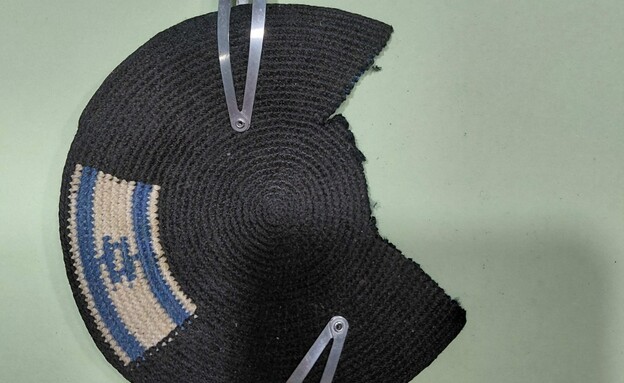
Someone at a coffee shop in central Israel noticed a religious Israeli wearing a yarmulka with the flags of Israel and Palestine and called the Police on him. The Police detained him, cut off the Palestine flag from the yarmulka and then released him. mako.co.il/news-israel/20… The Israeli Police under Ben Gvir has largely stopped upholding the law (actual crime is out of control) and is functioning as a right-wing repressive organ.
Elizabeth Tsurkov tweet mediaElizabeth Tsurkov tweet media
English
223
2K
9.5K
1.5M
Adrian Kreuzspiegl retweetledi
Sander Tordoir
Sander Tordoir@SanderTordoir·
Very interesting post from Daniel with key observations on Poland and central and Eastern Europe more widely.
Daniel Kral@DanielKral1

South Korea and Poland present two distinct solutions to the challenges of late development shaped by their unique contexts. Korea, and other East Asian economies, protected their nascent industries before exposing them to global competition. The aim was to create domestic champions that would become the engine of domestic growth and innovation, bringing the countries to the global technological frontier. They were able to do so in the context of their Western alignment in the Cold War. Iconic global brands from South Korea and Taiwan emerged as a result, though many other countries attempting this path have failed. In contrast, Poland and other Central and Eastern European (CEE) economies underwent a turbulent transition from centrally planned to market economies while facing strict constraints from EU accession and membership rules, which precluded protectionist measures. In this setting, foreign direct investment (FDI) became the primary solution. Rather than complementing or building local capabilities, FDI largely supplanted them. CEE countries integrated deeply into global value chains, typically in lower-value, downstream segments dominated by foreign multinationals. Hence, there are no Polish or Romanian global champions; where local successes exist, they largely function as suppliers for these multinationals. An open question for CEE’s “hyper-integrationist” development model is whether it can achieve full convergence with Western living standards, given its structural reliance on external agents of modernization and limited indigenous innovation capacity (the differences in R&D spending versus Korea a great example). Can an economy attain high-income status without developing globally competitive firms and reaching the technological frontier? This challenge differs qualitatively from that confronting stagnant Western European economies (eg. Germany, France, and the UK). The latter must sustain growth and competitiveness at the technological frontier amid a host of new domestic and global challenges. As a result, CEE experiences offer few direct lessons for Western Europe, which explains their limited prominence in reports such as Mario Draghi’s on restoring EU competitiveness.

English
0
1
15
3.7K
New Left EViews
New Left EViews@NewLeftEViews·
Greatest city in the world and it’s not even close in my opinion.
New Left EViews tweet media
English
19
8
191
48.2K