Sabitlenmiş Tweet
Cees van der Velde
9.6K posts

Cees van der Velde
@CeesvanderVelde
trainer logica en psychologie, kraakt desinfo, luchtfietsen en wappiedenken
Katılım Şubat 2013
2.4K Takip Edilen756 Takipçiler
Cees van der Velde retweetledi

Stop using Microsoft products and paying annual fees! Here are just some of the open source free replacements for popular Microsoft products. I use MANY of these daily:
--- Alternatives to Microsoft Office (Word, Excel, PowerPoint, Access) ---
* LibreOffice (Writer, Calc, Impress, Base, Draw, Math)
The flagship suite. Reads/writes .docx, .xlsx, .pptx. Pre-installed
on most distros.
* OnlyOffice Desktop Editors
Closest visual match to modern Office; arguably the best .docx/.xlsx
compatibility.
* Apache OpenOffice
LibreOffice's predecessor; still maintained but slower-moving.
* Calligra Suite
KDE's office suite.
* CryptPad, Etherpad, Nextcloud Office
Real-time collaborative editing.
--- Microsoft Outlook (Email + Calendar + Contacts) ---
* Mozilla Thunderbird - Mature, extensible, built-in calendar/contacts.
* GNOME Evolution - Full PIM with best Exchange/Microsoft 365 support
on Linux.
* KMail / Kontact - KDE's email and PIM suite.
* Geary - Lightweight, conversation-focused GNOME client.
* Claws Mail - Fast and highly extensible.
* Betterbird - Thunderbird fork with extra polish.
--- Microsoft OneNote / Evernote ---
* Joplin - Closest direct OneNote replacement: notebooks, tags,
web clipper, end-to-end encryption, OneNote/Evernote
importer.
* Logseq - Local-first, Markdown-based outliner with bidirectional
links.
* Obsidian - Knowledge graph with plugin ecosystem (free but not
OSS; included because it comes up constantly).
* Zim Wiki - Desktop wiki for interconnected notes.
* Xournal++ - Best for handwritten notes, sketches, and PDF
annotation.
* CherryTree - Hierarchical rich-text notes.
* Trilium Notes - Powerful tree-structured knowledge base.
* Standard Notes - Privacy-focused encrypted notes.
* AppFlowy - Open source Notion-style workspace.
* SiYuan - Block-based notes with bidirectional linking.
--- Microsoft Visio (Diagramming) ---
* draw.io / diagrams.net - Free desktop and browser diagramming.
* Dia - Classic diagram editor.
* LibreOffice Draw - Built-in vector/diagramming.
* Pencil Project - GUI prototyping and diagrams.
--- Microsoft Project ---
* ProjectLibre - Direct Project replacement; reads/writes .mpp.
* GanttProject - Gantt-chart project planning.
* OpenProject - Web-based, team-oriented.
* Taiga - Agile project management.
--- Personal Finance (Quicken, Microsoft Money) ---
* GnuCash - Double-entry accounting, budgeting, investments.
* HomeBank - Friendly personal finance.
* KMyMoney - KDE-style personal finance.
English
Cees van der Velde retweetledi

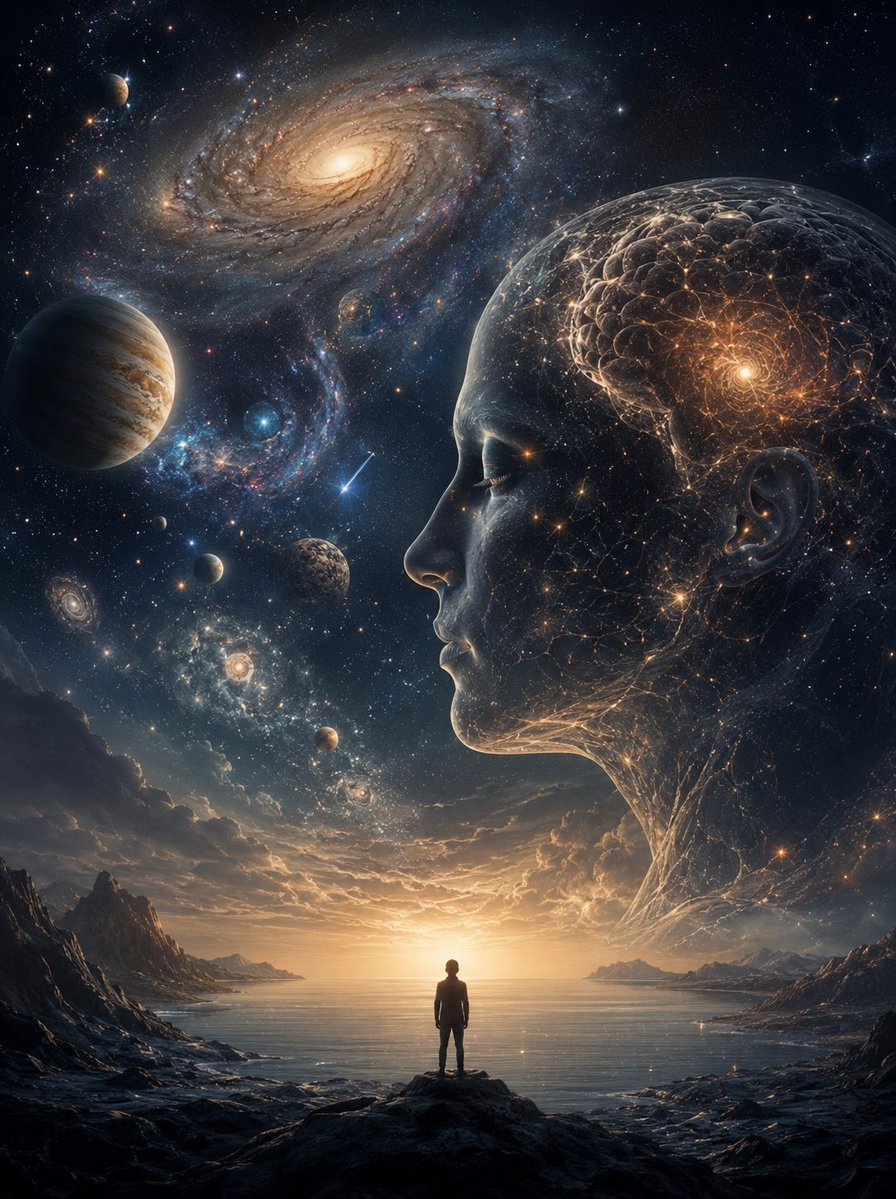
One of the most arrogant ideas humans keep reinventing is the belief that reality somehow depends on us to exist.
The universe existed for billions of years before human consciousness appeared.
Stars formed.
Galaxies collided.
Planets cooled.
Life evolved.
Species went extinct.
All before a single human brain was around to “observe” any of it.
So no, consciousness did not create the universe.
Consciousness emerged within the universe.
And honestly, a lot of modern “reality is generated by consciousness” talk just feels like humanity sneaking itself back into the center of existence again after science spent centuries showing we aren’t.
Different language.
Same ego.
What’s wild is how often people saying this act intellectually superior while skipping the most basic calibration questions imaginable
- Would reality stop if humans disappeared?
- Did the universe wait for brains before existing?
- Why does physics continue behaving consistently whether you believe in it or not?
And before people start hunting for semantic loopholes instead of engaging the actual point
No one is denying consciousness is real, important, mysterious, or worthy of study.
The point is that experiencing reality is not the same thing as generating it.
A map is not the territory.
A model is not the universe.
And your mind is not the source code of existence.
Humility starts when humans stop mistaking themselves for the center of everything.

English

@rooze_gerry @EenExWokeDocent @Patjeto Dat kan, ik bedoelde niet "ALLE". Wel dat het gedachtegoed van Gloria Wekker c.s. ook daar aanslaat, o.a. bij Bonnie Tryana en studenten. Een schril contrast met de eerste keren dat ik er kwam.
Nederlands

@CeesvanderVelde @EenExWokeDocent @Patjeto Bij mijn weten zijn juist Indonesische jongeren niét woke. Ik ken er geen en ook niet gezien in Indonesië.
Nederlands

Ik ben een Nederlander die best wil uitleggen wat het betekent wanneer het land waarin je geboren en opgegroeid bent om je heen verandert in een volstrekt onbekend gebied en wanneer het land waar jouw voorouders aan hebben bijgedragen stukje bij beetje wordt weggegeven door bestuurders die ieder besef van historische continuïteit kwijt zijn.
Wie niet snapt wat er precies behouden moet worden aan Nederland, moet een paar dagen doorbrengen in een wijk waar alle oorspronkelijke omgangsvormen, vanzelfsprekendheden en verhoudingen zijn verdrongen door tribaal gedrag, middeleeuwse opvattingen en waarden die met Nederland niets meer te maken hebben.
Precies hier raakt Wierd Duk in zijn podcast de kern. We moeten het eerst hebben over de elementaire vraag of Nederlanders überhaupt nog mogen benoemen dat hun land een eigen cultuur heeft, een eigen publieke moraal, een eigen manier van samenleven, en of die unieke eigenschappen bescherming verdienen. De werkelijkheid: alleen al het uitspreken van woorden als inheems, geworteld of cultuur is inmiddels voldoende om door talkshowtafels, beroepsverontwaardigden en moraalridders te worden weggezet als ‘verdacht’. Dit is bijzonder veelzeggend: een samenleving die het eigen karakter niet meer onder woorden mag brengen, heeft de capitulatie feitelijk al voltooid.
Het optreden van Gouke Moes toonde maar weer eens aan hoe dit mechanisme werkt. Moes probeerde een vraag op tafel te leggen die in een gezond land volkomen legitiem zou zijn: wat betekent het nog om Nederlander te zijn wanneer de staat decennialang beleid voert dat ontworteling, massale asielinstroom en culturele vervaging normaliseert? Meteen schoot de hele tafel in de deugstuip, waarna het bekende ritueel volgde waarbij de vraagsteller zelf tot probleem wordt verklaard. Wat we zagen was triest poortwachtersgedrag, waarbij het debat niet gevoerd wordt om feiten boven tafel te krijgen, maar om de grenzen van het zegbare te bepalen.
Wat het betekent als Nederland verdwijnt, voel je in de omgedemografiseerde delen van de grote stad. Je voelt het in de manier waarop groepen jongens de openbare ruimte claimen. Je merkt het aan het permanente, onaangepaste en respectloze gedrag. Je ziet het in de agressieve vanzelfsprekendheid waarmee jouw aanwezigheid, jouw gewoonten, jouw vrijmoedigheid en jouw manier van leven als hinderlijk of aanstootgevend worden behandeld. Je merkt het aan de sfeer van intimidatie, aan vervuiling, lawaai, normloosheid en sociale druk die zich meester maakt van straten waar vroeger wederkerigheid bestond. Dan zie je ineens haarscherp wat Nederlandse cultuur óók is: afstand kunnen houden, anderen met rust laten, publieke ruimte delen zonder die te domineren, vrouwen vrij laten bewegen, kinderen leren zich te gedragen, gezag erkennen, de taal spreken, tradities erkennen en de omgeving netjes houden.
Een land leer je vaak pas echt kennen zodra je ziet hoe het wordt afgebroken. Pas wanneer jouw buurt verandert in een plek waar jij jezelf moet inhouden en aanpassen, besef je hoe kostbaar een beschaving is waarin vrijheid, rust, veiligheid en onderlinge herkenning vanzelfsprekend waren.
Link: youtu.be/xBUZMffj6os?is…
Fragment:

YouTube
Nederlands

@LuizaJarovsky @AshishDhawanTCF @PramathSinha But is it feasible, within human limitations? Combinatory explosion maybe a problem. With continuous social media there is already a huge increase of mental burnout. With AI, cognitive overload - speed, masses of variants, need for checks and corrections - explodes.
English

🚨 For all those wondering about their professional future in the "age of AI," don't miss this GREAT article by @AshishDhawanTCF and @PramathSinha.
It's especially relevant for teenagers, young professionals, and parents who are trying to provide the best possible advice to their children about which skills and careers to focus on today.
The AI debate has led millions to rethink their careers and professional choices (as I see in every new cohort of my AI Governance Training).
The interesting part is that it might end up bringing people closer to their interests, values, talents, and mission, in a deeper, more existential sense.
As with previous technological waves, we know that work will be disrupted (although it's still unclear exactly how). Hopefully, we will both individually and collectively manage to adapt and thrive.

English

@rooze_gerry @EenExWokeDocent @Patjeto Niet dat ik weet. Ik citeer de zienswijze die ik van talloze Indonesische jongeren heb gehoord en die rechtstreeks uit het woke gedachtengoed komt.
Nederlands

Reminder: you cannot talk about machine consciousness without first discussing fundamental ontological models of reality.
Most tech bros are not addressing which doxa they are operating by. Materialism? Monism? Dualism? Panpsychism? Something else?
Most are materialist by default, but there are many aspects of reality that are not best explained by materialism.
English
Cees van der Velde retweetledi

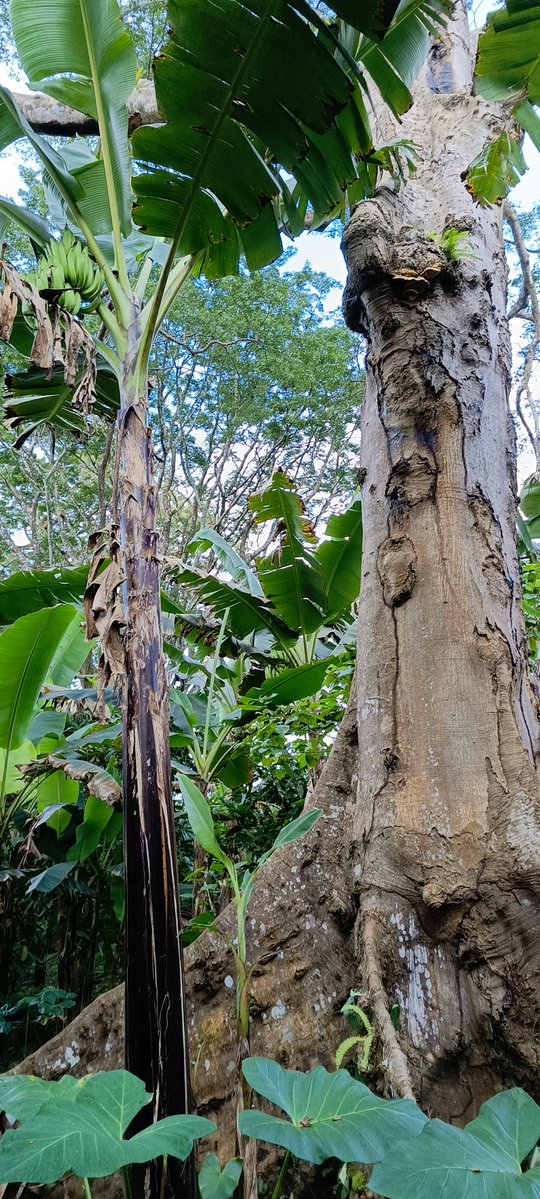
The tragedy is we're destroying what we don't even understand.
✅ The Amazon is home to 10% of all known species.
✅The Congo Basin has over 10,000 species of tropical plants found NOWHERE else.
We are erasing millions of years of evolution daily. #Biodiversity

English
Cees van der Velde retweetledi

Unbelievable to see @kosareftekharii, who was literally shot in the eye by the regime in Iran, be abused on Germany by entitled clueless Western "activists" who think they know better
Disgusting
I stand with Kosar
🇮🇷🇮🇷
English

@DaveShapi Indeed, it seems nowadays Monism is a religious holy dogma in the academic world - either as materialism/physicalism (beta) or idealism (gamma) - ignoring the huge reduction gaps regarding a wealth of real phenomena.
English

@rooze_gerry @EenExWokeDocent @Patjeto Eind 70s Indonesië: vrijwel geen hoofddoeken, overal enthousiast welkom geheten: alle voorzieningen - instituties, infrastructuur- takelden af maar waren nog fantastisch in tempo dulu. Nu, jongeren daar na woke hersenspoeling: alle slechte dingen van nu komen door koloniale tijd.
Nederlands

@EenExWokeDocent @Patjeto Over Indonesia - ja, het is nú Islamitisch. Maar in de tijd van Nederlands-Indië was bijv. Java christelijk. 16 jaar geleden, toen ik daar was, zag je weinig hoofddoeken. Wél op Sumatra, dat is vrijwel geheel Islamitisch.
Nederlands
Cees van der Velde retweetledi

🇳🇬 Nigerian Christians sang “Trusting in the Lord Jesus” as they buried loved ones slaughtered by Islamist terrorists.
Faith in the face of unimaginable horror.
Stay connected, follow @MOSSADil.
English
Cees van der Velde retweetledi

Sure, if you handwave away phenomenology and say "it's just math" but then that doesn't answer "why do we have qualia?"
I mean just say that you're a monist or a materialist. But you literally cannot make the assertions that you're making, it does not follow.
Every phenomenon of the human brain is explainable by physics *except* consciousness.
Anna Ciaunica PhD @annaciaunica.bsky.social@AnnaCiaunica
Consciousness is not separate from the physical world — our “soul” is of the same nature as our body and any other phenomenon of the world | @carlorovelli in @NoemaMag noemamag.com/there-is-no-ha… noemamag.com/there-is-no-ha…
English

@Graham_dePenros The link with intelligence, (irr)rationality, performance/failure, etc. is irrelevant because these are all quantifyable. The unique dimensions of mind/consciousness are qualitative, non-rational. Qualia are profound in our lives, yet unexplained, can't be artificially produced.
English

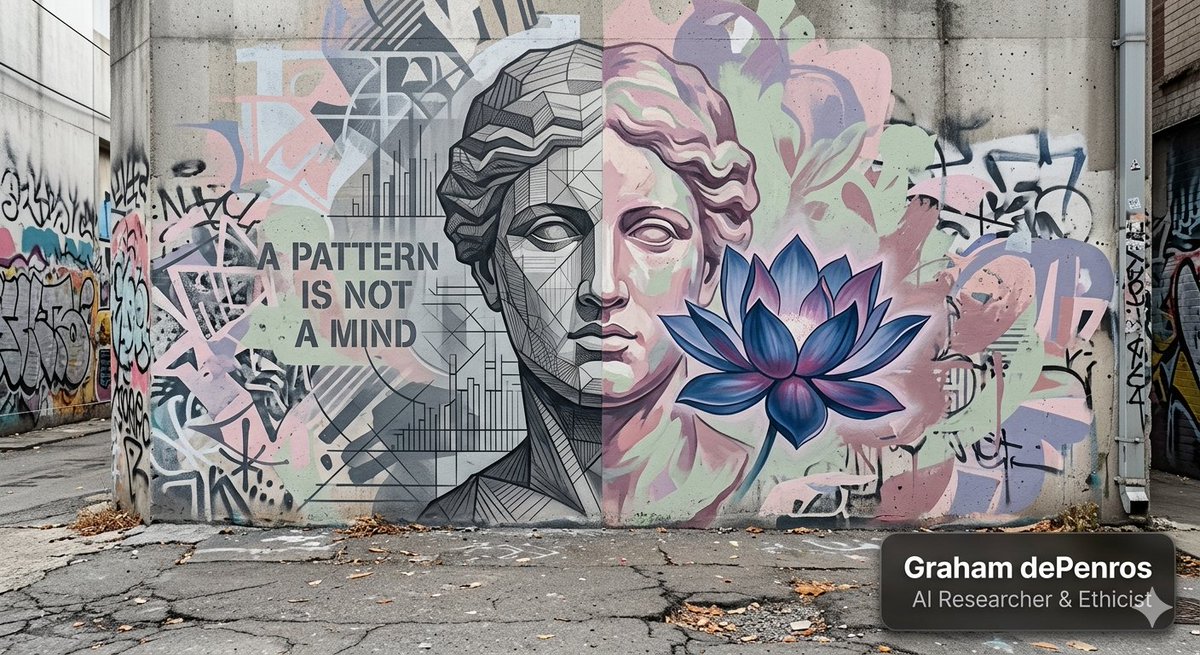
A Pattern Is Not a Mind
AI can copy the contours of our judgement, including our errors, shortcuts, and contradictions. But copying the pattern of a mind is not the same as becoming the condition from which mind arises.
That is the hard question at the centre of AI.
Not simply whether machines can perform intelligence.
Whether computation can ever become the kind of intelligence that we are.
The human mind is not a clean instrument of logic.
That is not merely my view. It is one of the central lessons many readers take from Daniel Kahneman’s Thinking, Fast and Slow: human judgement is shaped by heuristics, bias, intuition, framing effects, emotional salience, and cognitive shortcuts.
The point is not that human beings are simply irrational.
The point is more interesting than that.
Human intelligence is bounded, embodied, emotional, interpretive, socially conditioned, and often internally conflicted.
So there is a serious question at the heart of AI.
If human intelligence is not purely rational, how do we propose to reproduce human-like intelligence inside systems built on formal mathematics, computation, optimisation, and statistical prediction?
Even modern AI, which is statistical rather than purely symbolic, remains a formal computational system. It calculates, predicts, optimises, and generates.
That may produce something powerful.
It may produce something useful.
It may even produce something that performs better than humans across many defined tasks.
But it does not automatically produce something like us.
Human intelligence is not just inference.
It is ambiguity, memory, embodiment, error, emotion, social pressure, instinct, habit, fear, desire, and narrative.
Much of what makes us intelligent is not perfect rationality.
It is our capacity to act under uncertainty despite being incomplete, biased, embodied, and internally conflicted.
That is not a defect in human intelligence.
It may be one of its defining conditions.
This creates a fundamental tension.
Computers can model irrational behaviour. They can simulate inconsistency. They can be trained on human data and learn the statistical shape of our errors.
But that is not the same as possessing a human mind.
A machine can reproduce the outputs of human irrationality without sharing the inner condition that produces them.
That distinction matters.
This is not an argument that machines can never be intelligent.
It is an argument that we should be careful about the standard by which we say they have become human-like.
If we define intelligence only as performance, then machines may appear increasingly human-like.
If we define intelligence as the lived, embodied, self-interpreting condition from which human judgement arises, then the problem is much harder.
The question is not simply whether machines can reason.
The question is whether a system built from calculation can ever genuinely become the kind of intelligence whose power is inseparable from its imperfection.

English
Cees van der Velde retweetledi

In my opinion, yesterday a turning point in the war took place.
Perhaps we still do not fully grasp the significance of what happened.
For the first time, Putin publicly showed his weakness and inability to independently protect his capital, his parade, and himself from our strikes. Because of this, a frightened Putin was forced to publicly humiliate himself and ask Trump, as a mediator, to help stop a strike on Moscow.
De facto, Putin asked Trump to protect him from the Ukrainians.
I consider President Zelenskyy’s order a brilliant informational slap in the face and an additional public humiliation.
It is obvious that before and during the parade, Putin was physically afraid - he felt vulnerable and threatened.
Putin publicly appeared weak and humiliated, and in Russia’s "prison-style" political culture, such things are not forgiven.
A weak "tsar," mocked by everyone, cannot remain a tsar in Russia.
These are very, very hard times for Ukraine. However, Ukraine is strong, resilient, and continues the fight.
Slava Ukraini!

Anton Gerashchenko@Gerashchenko_en
Putin has arrived at Red Square. A massive security presence. It looks like there are almost as many guards as guests. Putin is afraid of his own people - that’s good.
English
Cees van der Velde retweetledi