CELL

703 posts

CELL banner
CELL

CELL

@CellBioSF

CELL: Consortium for the Equations of Life and Living Systems. Fusing MathBio, BioPhysics, CompBio and DescriptiveBio around an aggressive mathematical core.

San Francisco Katılım Ağustos 2025
257 Takip Edilen641 Takipçiler
Sabitlenmiş Tweet
CELL
CELL@CellBioSF·
WHY ARE WE BUILDING CELL? We are building CELL because we want biology to be executable. When we perturb a system, edit a gene, apply a drug, or change a microenvironment, we want to predict what happens next, with uncertainty that is explicit and falsifiable. We want design loops that move from hypothesis to intervention to measurement without turning into a new bespoke modeling project each time. We also want transfer, across organisms, tissues, and contexts, without starting over whenever the assay changes or the experimental setting shifts. If you think mathematically, you will notice that interventions are transformations of state, so we need a language where transformations can be defined, learned, and composed. That is why we use operators. But operators are only as grounded as the state they act on. Biology’s state is hybrid at every scale, discrete choices like genotype, edits, alleles, and cell identity, continuous variables like expression and concentrations, and structured objects like lineage, spatial organization, and interaction graphs. So the first move in CELL is to define a scale-specific hybrid state space (what we call as a 'Mathematical Configuration Space' or a 'Universal Configuration Space') that assays can populate, perturbations can target, and constraints can bound, including conservation and budget constraints where they apply and an explicit accounting of uncertainty. Once that background is pinned, operators become testable objects that map state to state, and scale-to-scale composition becomes a technical question we can validate instead of a narrative we have to defend. In 2026, we are recruiting member volunteers to help galvanize the CELL community from the ground up. The work is concrete. Bring mathematicians, biophysicists, computational biologists, and empirical biologists into the same room for focused sessions on papers, concepts, and shared technical language that can actually move projects forward. If you have the time and the intent to contribute, DM us or email science+collaborate@cellbiosf.org. If you care about open, rigorous science that is built in public and stays accountable to evidence, we want you in the loop. subscribe: cellbiosf.substack.com follow: x.com/cellbiosf #Biology #Math #CELL #AI #OpenScience
CELL tweet media
English
0
2
6
527
CELL retweetledi
Anshul Kundaje
Anshul Kundaje@anshulkundaje·
"When scientists are absent from public conversations, misinformation fills the space". We have to discuss science openly in public. That means not just advertising & hyping & retweeting but also educating, discussing, criticizing, defending, arguing. All of it.
Dr. Catharine Young@DrCatharineY

The hill I will die on - we have to rethink graduate training. “Scientists are trained for a world where data speaks for itself. Where misinformation moves slowly. Where scientific expertise naturally rises above noise. That world is gone.” sciencepolitics.org/2026/03/18/wer…

English
3
10
56
4.8K
CELL retweetledi
Dustin
Dustin@r0ck3t23·
Demis Hassabis says AI won’t just accelerate drug discovery. It will replace the process entirely. The pharmaceutical industry finds drugs the same way it has for decades. Synthesize a compound. Test it on animals. Test it on humans. Wait years for approval. Hope the molecule doesn’t kill someone along the way. Every step is physical. Every step is slow. Every step is expensive enough to make most diseases not worth curing. Hassabis: “We’re focusing on solving the rest of the drug discovery process, which is a lot of chemistry, designing the compounds, checking it’s not toxic, and all the different properties you need for drugs to be safe.” That sounds incremental. It isn’t. AlphaFold solved protein folding. Isomorphic Labs is now working through the rest of the chain. Compound design. Toxicity screening. Safety profiling. All computational. None of it requires a lab. Hassabis: “I think we’ll have that whole drug design engine ready in the next five to 10 years.” Not a tool that assists chemists. A system that replaces the chemistry. But designing the drug was never the bottleneck that killed people. Clinical trials were. A single drug takes over a decade to move from lab to patient. Most of that time isn’t science. It’s bureaucracy, logistics, and the blunt reality of testing molecules on living tissue one dose at a time. Hassabis: “Simulating parts of the human metabolism, also stratifying patients to make sure that certain patients get exactly the right type of drug that’s suitable for their genomic makeup.” Simulate the patient before you treat the patient. Map individual DNA. Model personal metabolism. Test the drug on a digital replica before it touches a vein. Not personalized medicine as a marketing phrase. Personalized medicine as an engineering output. The final wall is regulatory. The FDA exists because humans make mistakes with molecules. Every approval gate was built to catch errors that cost lives. The entire structure assumes the process is fallible. What happens when the process stops being fallible. Hassabis: “Perhaps like the animal testing is not needed anymore, maybe we can go up the dosage ladder quicker, because you can rely on these models.” He’s not speculating. He’s describing a sequence. AI-designed drugs enter the existing pipeline. A dozen compounds go through full traditional trials. Regulators collect data. They back-test model predictions against real outcomes. Hassabis: “Then the government and the regulatory bodies see that and they have enough data to sort of back-test the predictions of those models.” When the models prove more accurate than the trials they’re meant to replace, the trials become the bottleneck. Not the science. The paperwork. Animal testing shortened. Dosage ladders compressed. Entire stages of the pipeline collapsed into computation. The drug doesn’t get discovered faster. The drug gets discovered differently. The laboratory moves from a building to a server. The clinical trial moves from a hospital ward to a simulation. The patient moves from a statistic to a genome. Hassabis isn’t promising a cure for one disease. He’s describing the architecture that makes curing disease an engineering problem with a known solution path. The bottleneck was never biology. It was the speed at which humans were allowed to solve it. That speed limit is about to be revoked.
English
18
97
422
40K
CELL retweetledi
CELL retweetledi
odylith.ai
odylith.ai@odylith_ai·
💥~ Introducing Odylith.AI AI coding agents can be brilliant. They can also be wrong with extraordinary confidence. In chess, the first move does not decide the entire game. But it shapes the position. It defines the risk. It opens some lines and quietly closes others. Working with coding agents feels the same. The opening matters. A repo gives an agent a lot of context. It rarely gives enough intent. It usually does not encode ownership, current constraints, recent decisions, or a rigorous definition of done. Even very strong agents still have blind spots, and once they drift early, the rest of the session turns into cleanup. That is the problem we built Odylith for > odylith.ai Odylith is a repo-local operating layer for agents like Codex and Claude Code. It grounds the agent before work begins, then keeps execution disciplined as the session unfolds. In the current published proof against the raw Codex CLI lane, Odylith reached valid outcomes 12.43 seconds faster on median, used 52,561 fewer median input tokens, and improved required-path recall, precision, and expectation success across 37 seeded scenarios (full bench on github). This is the first public launch of Odylith.AI, which means we are just getting started. If you use AI coding agents on real codebases, I want your read on it. Tell me what feels sharp, what feels rough, and what should improve next. PS: Please share and amplify. Please star the github repo if you like the project here so other operators can benefit github.com/odylith/odylith #Odylith #AI #Agents #CODEX #ClaudeCode
English
1
2
2
195
CELL retweetledi
Freedom Preetham
Freedom Preetham@freedompreetham·
💥Teaser: [logo reveal] Odylith combines “Ody,” suggesting a journey, with “lith,” from the Greek lithos, meaning stone. The result is a name that suggests movement guided by permanence: exploration anchored by a stable core. It reflects the idea at the heart of the product: motion with a center, exploration with structure, and a path toward agentic AI swarms that replace rigid monoliths with adaptive, living networks. Coming soon. April 7th, 2026. Mark your calendars for first access. Just comment #Odylith to this post and I will ensure everyone commented gets access. #AI #Agents
Freedom Preetham tweet media
English
0
1
1
304
CELL retweetledi
Pushmeet Kohli
Pushmeet Kohli@pushmeet·
At @GoogleDeepMind, we believe AI is the ultimate catalyst for science. 🧬 The best example of this has been the AlphaFold database (AFDB) of protein structure predictions which has been used free of cost by more than 3.3 millions researchers across the world! Today, in collaboration with @emblebi, @Nvidia and @SeoulNatlUni, we are expanding the database by adding millions of AI-predicted protein complex structures to the AlphaFold Database. To maximise global health impact, we’ve prioritised proteins that are important for understanding human health and disease, including homodimers from 20 of the most studied organisms, including humans, as well as the @WHO’S bacterial priority pathogens list. Read more here: embl.org/news/science-t…
English
87
401
2.5K
164.1K
CELL retweetledi
Freedom Preetham
Freedom Preetham@freedompreetham·
There are too many companies popping up that market biological root cause inference as though it were already a solved science problem. In reality, any system claiming to infer mechanism across functional genomics and physiology is facing an inverse problem on a massively underdetermined multiscale network, where a thin, noisy clinical snapshot is being used to reconstruct latent regulatory state, pathway activity, cell type composition, compensatory feedback, and causal direction. Even the best research groups across the world working on gene regulatory networks, single cell perturbation biology, and metabolic flux still struggle with identifiability, sparse observability, context dependence, and experimental validation, which is why grand claims built on limited clinical data deserve very hard scrutiny. #genomics #biology #clinical #diagnostics
English
1
1
3
169
CELL retweetledi
Surya Ganguli
Surya Ganguli@SuryaGanguli·
Our work on causal mechanistic interpretability across brains and machines: arxiv.org/abs/2603.06557 to appear at #ICLR26 expertly lead by @melandrocyte @Zaki_Alaoui1, @sunnyliu1220 w/ Steve Baccus Key idea: there are two ways to understand hidden reps in a neural network: 1) how do inputs activate them? 2) what *causal impact* do they have on output? We introduce CODEC (COntribution DECompostion) to find sparse codes for all contributions network elements make to the input output map, combining *both* input activation *and* causal output impact. In both brains and machines we find: 1) sparser codes for contributions than activations 2) separation into interpretable excitatory/inhib effects 3) improved steerability 4) elucidation of causal computations that can't be seen through activations alone For more details see the excellent thread below
melandrocyte@melandrocyte

Trying to interpret how a neural-network does what it does? Activations tell you if a neuron responded. Contributions tell you if a neuron mattered! New paper from myself, @Zaki_Alaoui1, @sunnyliu1220 , @SuryaGanguli, and Steve Baccus: arxiv.org/abs/2603.06557

English
3
47
300
29.1K
CELL retweetledi
Oded Rechavi
Oded Rechavi@OdedRechavi·
A new mechanism for “RNA memory”! 😱 Thrilled to share another crazy paper from the lab (can’t believe we posted 2 in 2 days!), summarizing >10 years of research: Work on transgenerational inheritance of small RNAs in the powerful model organism C. elegans changed how we think about what’s possible in inheritance and evolution, because it allows the most heretical thing: inheritance of parental responses to the environment! However, it’s still unclear whether RNAs are inherited across generations in other animals, largely because the RNA-dependent RNA polymerases that amplify heritable small RNAs and prevent their dilution in C. elegans are not conserved in mammals. In this new work, an amazing collaboration with the Rink and Wurtzel labs, we show that planarians establish long-lasting and heritable small RNA–based gene regulatory states despite lacking canonical RNA-dependent RNA polymerases and nuclear RNAi machinery (that are required in C. elegans). You might say “they are both worms…” BUT planarians are evolutionarily very distant from C. elegans (flatworms vs. roundworms, diverged more than 500 million years ago), making this particularly surprising. These are totally different animals. We find that ingestion of double-stranded RNA induces sequence-specific silencing that persists for months and survives repeated cycles of whole-body regeneration. Even more strikingly, RNAi can be transferred between animals, echoing James V. McConnell’s controversial “RNA memory” experiments from the 1970s (his lab was targeted by the Unabomber terrorist Ted Kaczynski, who sent McConnell a bomb. This and other controversies ended this line of experiments…) Mechanistically, we find that the response transitions from a transient systemic dsRNA-triggered phase to a stable, cell-autonomous post-transcriptional “memory phase” maintained by antisense small RNAs. Using a new luminescence reporter (transgenesis is currently impossible in planarians), we show that silencing spreads along the targeted gene and identify a weird type of planarian small RNAs with untemplated polyA tails. RNAi inheritance without canonical RdRPs establishes planarians as a powerful system for studying RNA-based regulatory inheritance beyond C. elegans and raises the possibility that RNA-mediated inheritance may be more broadly conserved in animals, potentially even in mammals. Here’s a video of a planarian that is treated by RNAi against β-catenin and develops multiple heads instead of just one. This is one of the phenotypes that is inherited. Another phenotype is “loss of eyes” (which we show is not only inherited across multiple regeneration cycles, but can also be transmitted between animals in transplantation experiments). Amazing work led by first authors Prakash Cherian and Idit Aviram (co-supervised by Omri and me). Please read the preprint, the link is in the next tweet, and share!
English
56
336
1.4K
191.2K
CELL retweetledi
Anshul Kundaje
Anshul Kundaje@anshulkundaje·
Check out a vetted Pytorch port of AlphaGenome by GenomicsxAI collaborative team. See QT thread (with links to code & blogpost). Various fine tuning modules + tutorials coming next. Community building announcements coming soon as well. Follow blog for latest updates.
Alejandro Buendia@abuen_dia

Thrilled to announce alphagenome-pytorch, an accurate, readable, and careful port of AlphaGenome's architecture and weights to PyTorch. Work with @gtcaa @m_kjellberg @chriswzou @tuxinming as part of the GenomicsxAI initiative between @anshulkundaje and @pkoo562 labs.

English
2
24
117
16K
CELL retweetledi
Mohammed AlQuraishi
Mohammed AlQuraishi@MoAlQuraishi·
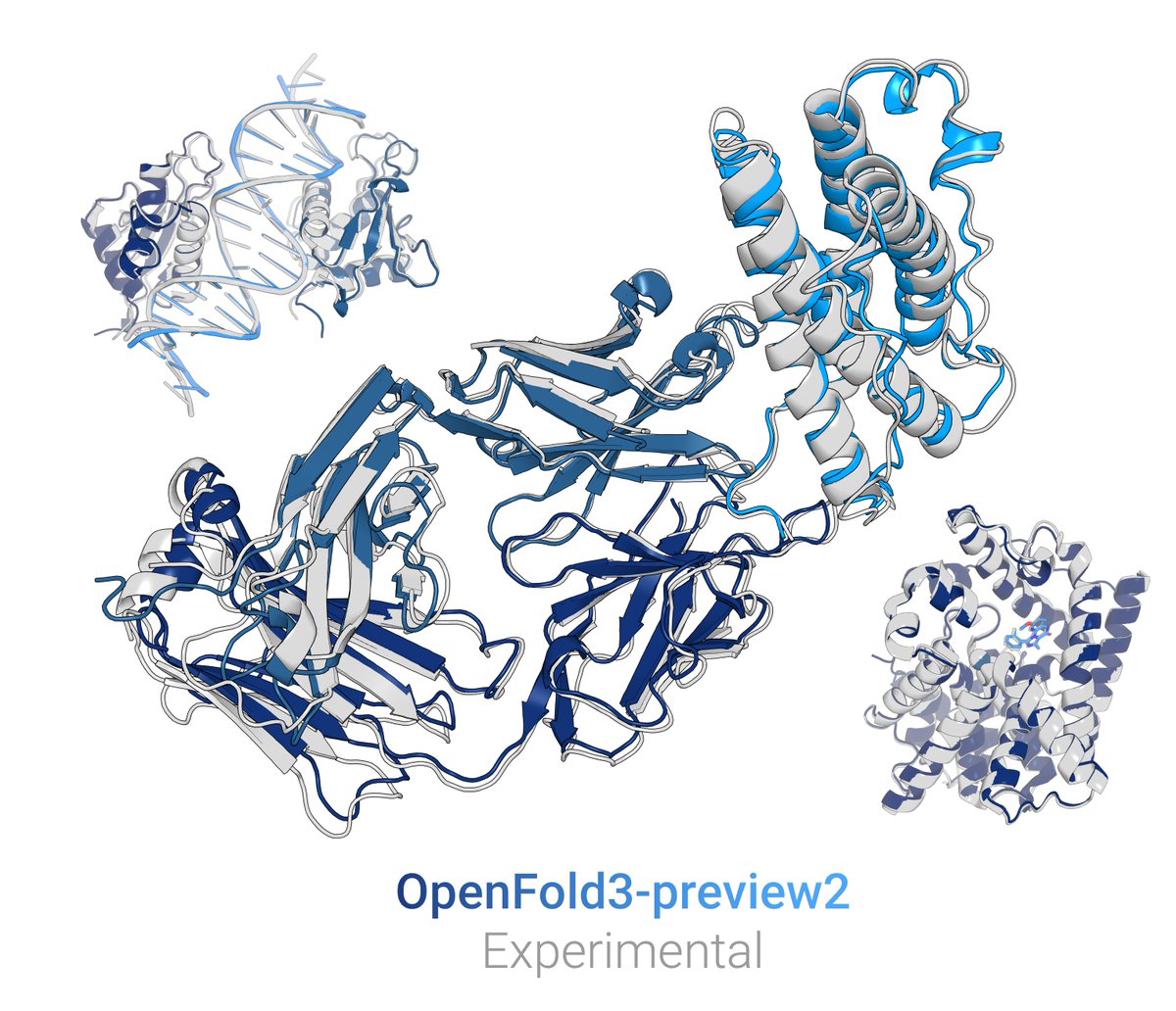
New OpenFold3 preview out! (OF3p2) It closes the gap to AlphaFold3 for most modalities. Most critically, we're releasing everything, including training sets & configs, making OF3p2 the only current AF3-based model that is functionally trainable & reproducible from scratch🧵1/9
Mohammed AlQuraishi tweet media
English
8
180
675
55.4K
CELL retweetledi
biohub
biohub@biohub·
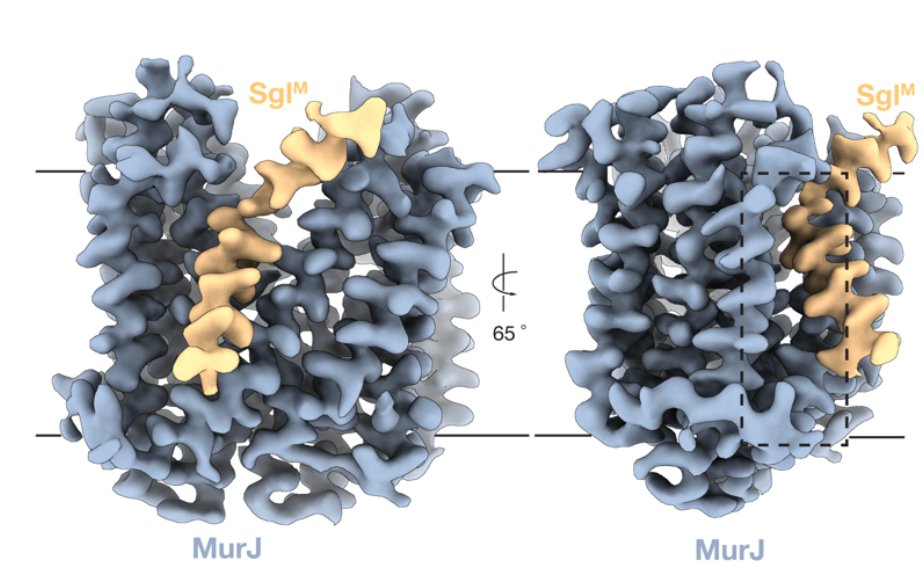
Antibiotic resistance is a public health crisis. But viruses called phages have been solving this problem for millennia. New research in @Nature reveals how 3 different phages attack the same weak spot—a protein called MurJt—potentially leading to a new class of antibiotics.🧵
biohub tweet media
English
1
17
117
7.7K
CELL retweetledi
Isomorphic Labs
Isomorphic Labs@IsomorphicLabs·
We recently released a technical report highlighting how @IsomorphicLabs’ drug design engine is achieving a step change in how we model complex biological mechanisms, consistently outperforming industry benchmarks. Read our blog to discover how we’re bridging the gap between structure prediction and rational drug design. You can find the link in the comments.
English
13
102
609
124.9K
CELL retweetledi
CELL
CELL@CellBioSF·
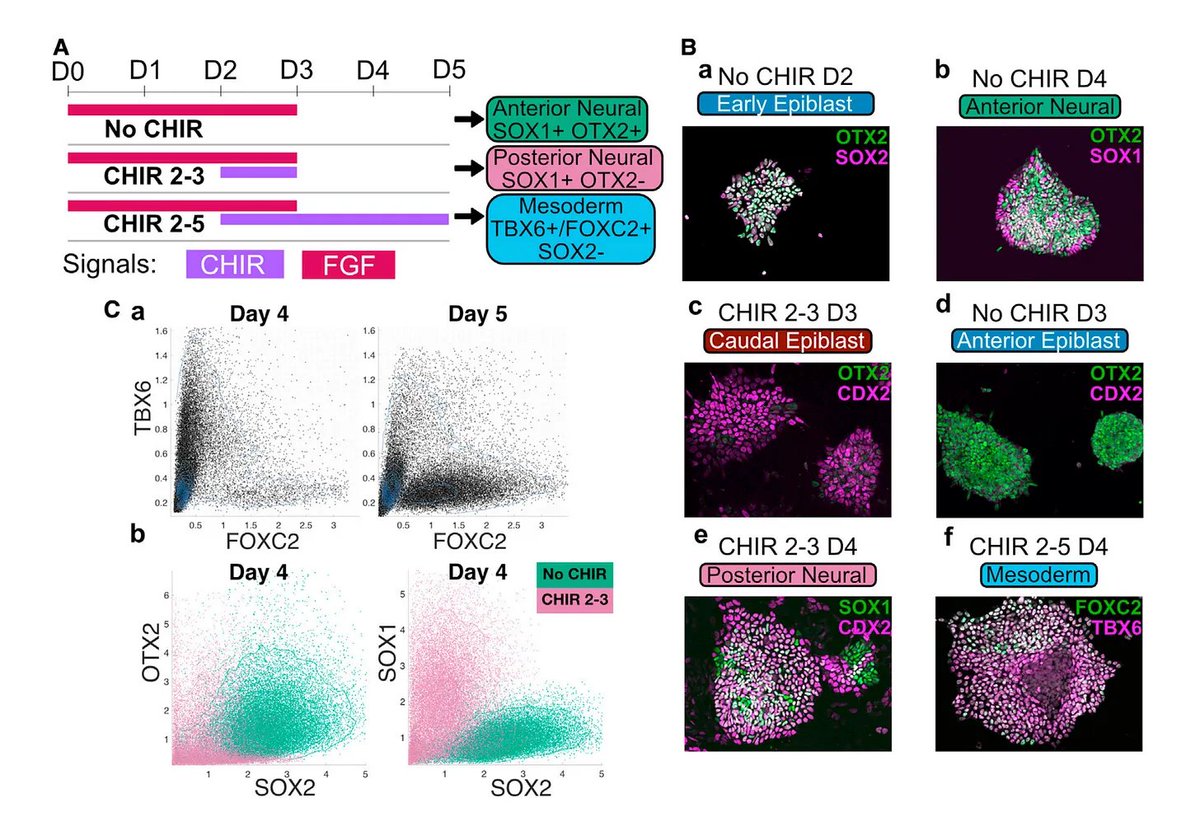
On a good day in the lab you get what you planned for. On a better day you get what you planned for and you understand why. To understand what we are trying to achieve at CELL, the paper I want to anchor this with is by Sáez, Blassberg, Camacho-Aguilar, Siggia, Rand, and Briscoe, “Statistically derived geometrical landscapes capture principles of decision-making dynamics during cell fate transitions.” They take the familiar Waddington picture and turn it into a working instrument for stem cell fate. Not a poster. A model that can be built from flow data, fit to timed Wnt and FGF schedules, then used to forecast new schedules and the split of fates you will actually see on day three, four, five. That is rare and valuable. It is also the right starting point for a universal configuration space for molecular biology that is reproducible, interoperable, and robust across labs and organisms. cellbiosf.substack.com/p/from-markers… #biology #biophysics
CELL tweet media
English
0
1
3
283
CELL retweetledi
News from Science
News from Science@NewsfromScience·
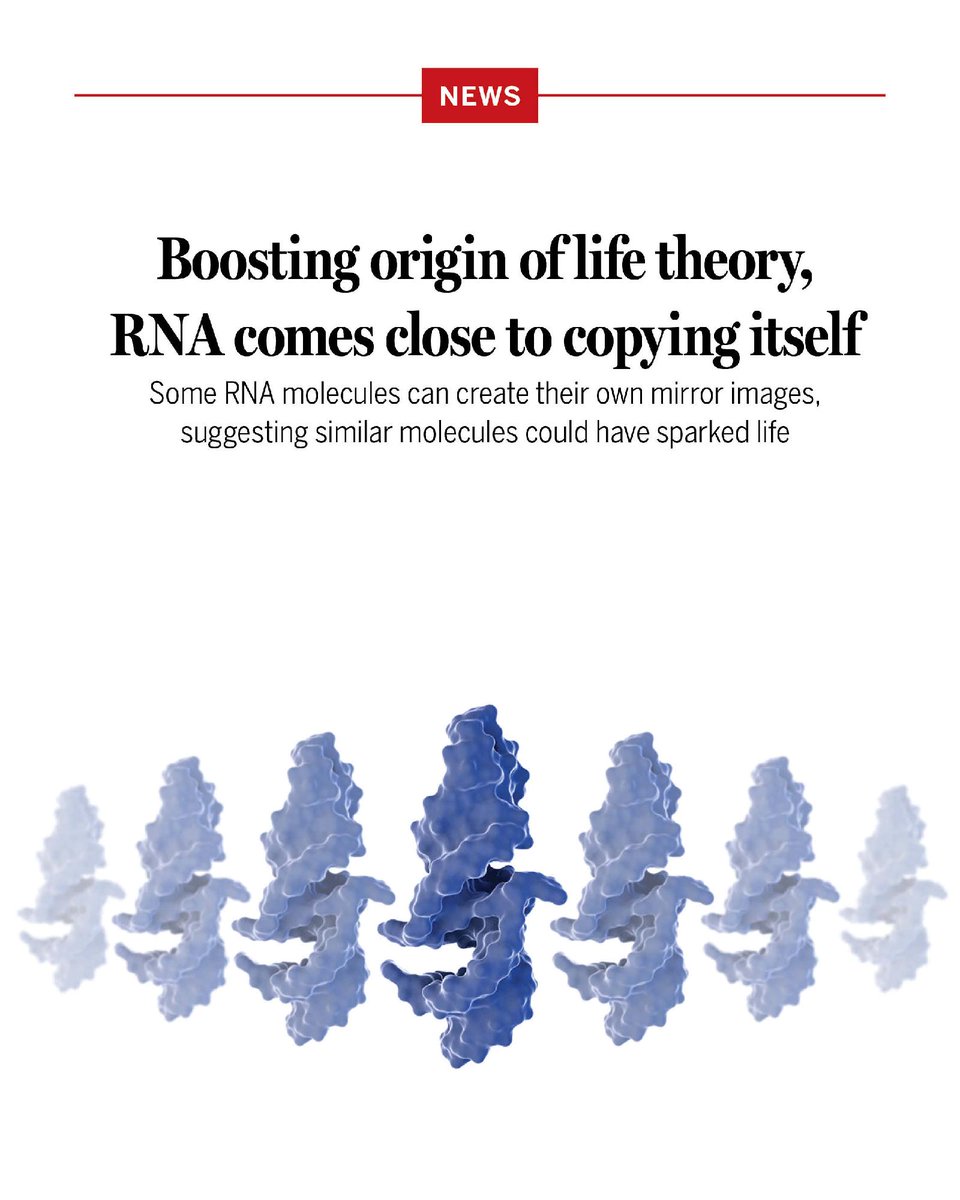
Today RNA may seem overshadowed by its glamorous cousin DNA, but many scientists think RNA molecules were the star players in the origin of life. By both storing genetic information and copying themselves, they might have touched off the march of evolution that produced increasingly complex life forms. So far, researchers haven’t found RNAs that can replicate themselves, a key feature of living things. But they now have something close. In a new paper, researchers report creating RNAs that can generate a sort of mirror image of themselves and use that template to generate the original. Learn more: scim.ag/4awamko
News from Science tweet media
English
10
149
594
33K
CELL retweetledi
Aman Patel
Aman Patel@amanpatel100·
Excited to announce our latest work! We present ARSENAL, a short-context DNA language model specifically designed to learn important sequence features in noncoding regulatory DNA. Why is such a model important? Read on to find out! biorxiv.org/content/10.648…
English
3
29
97
29.6K